

Robin S Webber
This transcript was generated by AI and may contain errors. It is provided to assist those who may not be able to listen to the message.
Looking forward to bringing this message to you as we welcome in those that are on the interlink up here, that are watching maybe from afar today, wherever you might be. We want to welcome you to the United Church of God Los Angeles congregation, and I have a message that is very important for each and every one of us, and I hope that you all listen in the course of this time and this message.
The public appearance campaigns by the United Church of God are less than three months away, and it is my prayer, my personal prayer, and I pray your prayer that God's blessings might be upon them, not merely in the number of people that attend. That's a side issue to me, and it would be nice that we have a number of people attend these, but rather much more so of the quality of those truth seekers that are seeking God, that are seeking a better understanding of the scriptures, and also come with humble hearts.
Hearts that can be molded, hearts that are clay-like, and perhaps people that will be sitting amongst us in the weeks, the months, and the years ahead. God right now is already working with some, as it says that as many as are led by the Spirit, the same are the sons of God. And I really do hope that we have individuals and people that come to God, they believe that He is, and that He is a rewarder of those that diligently seek Him, as stated in the book of Hebrews.
I have news for you today, brethren. So, as they say in the Marine Corps, listen up. And that is simply this. God is not through, and He is not done calling people in this time and in this age to His great truths. Absolutely not done. I want to ask you a question if I might. Do you remember when God began first working with your heart, guiding you by His Spirit? Perhaps you were younger then, and perhaps remember it was your grandparents. Perhaps it was your parents. And perhaps it was just you. Remember the knocking on the door of your heart. Remember that all of a sudden you said, I've never heard that before. But you know what?
It's true. That's what the Bible says. And a number of people, people like you, people like your folks, people like your friends that you are with at the Feast of Tabernacles and or at camp, all of a sudden began to trek that trek. The trek of Abram, who moved away from all that was known, who moved away from what everybody else was doing, because they were a God seeker.
They were a truth seeker, and they gave up all because they had seen the great pearl of great price. And so you might say, well, Mr. Weber, why are you discussing the PAC program today if it's three months away? Thank you for asking that question. I'm going to answer it for you right now. And that simply is this. Preparation is everything. And this PAC program, brethren, is not just simply for those that may or may not be attending two months from now. It is for you, and it is for me.
And God is asking us to be participators. He's asking us to participate in the activity of the heart. One thing about the United Church of God is simply this, and that is that whatever we do, whether it's the UCGLA congregation, whether it's at camp, whatever it is internationally, wherever we are, we are a whole church team, effort, family. We do things as a church, and I'm going to be discussing that.
But I don't want to discuss this a week or two before the PAC programs come. That's what they're called, PAC programs, public appearance campaigns. I'm asking us, and I'm sincerely asking you to listen to this message. Because, indeed, in the next couple of months, you may gain more out of what I'm going to say today than those that may or may not come in the future. Because I think very much this is for us. Because the PAC program, the public appearance campaign, will come and it will go. But you won't, and I won't. And God looking down upon us and seeing how active we are in the body of Christ and wanting people to come to Him through Jesus Christ is very important to Him.
You know, one thing in the United Church of God, we don't need a public appearance campaign away from our church. We are open to the public every Sabbath. Our doors are open, our Bibles are open, our hearts are open. And so, what I'm going to discuss with you today is not just pertaining to something that happens in the first week of March, but I'm going to talk to your hearts today. I want to talk to your heart today.
I want to discuss what God is doing with you and with me, that we might be co-workers in the activity of the heart. Not just a meeting, not just somebody coming and going, but what we do every day. Some of the matters that I'm going to discuss today are not about something that is programmatic, that costs money, but that which is our daily existence and costs you, costs self, and what we're going to do about it. Foundations are essential.
And today, what I want to do is to go back to some of our roots, some of our foundation.
Why are we here? For whom are we here? What are we about? And, frankly, are we about doing it?
In about doing it, I'm not talking about social activity. I'm not talking about hither and yon and making this happen, making this happen, let's show up here and have a potluck or do this or that. What I want to talk about today is the activity of the Spirit. We've been called to the activity of the Spirit. We've been called to be co-workers of the activity of the heart as we follow the head of the church in Jesus Christ.
He's a heart guy. He's always given his heart. The Father gave us his example to show what it means to be a wholehearted when, as it says in the book of Luke, that we seek the lost. We seek those that are out there in following his example. The question is simply this, because what I want to do today, and I'll probably discuss this again in the course of the two months, is to lay a foundation. Foundations are extremely important. Many of you are in the trades. See John Lyons back there. Many of you are in the trades. You work with your hands.
You build buildings. And one thing I learned when we built our edition, some of you were in it years ago when you come out to Monrovi and see Suzy and me, that being always a white-collar person and coming out of a white-collar family, I'd never really gotten a lot into hammers and tools and how to build.
And my father-in-law was Russ Leimbachman, if you know Russ, who was a builder and in the trades. And the one thing that he taught me was simply this. Robin, he said, we're going to spend a lot of time. I was out there, you know, I was digging. What do I know about building? He put a shovel in my hand, I'm going like this, and Russ is over there just looking at me like, you know, Robin. He's saying this in his mind. Russ was kind of a man of few words, but he's back there saying, you know, Robin, you don't really recognize that this is going to take two years to build.
And I'm out there like a little gopher, just going like this. But one thing that Russ taught me was simply this, that most of the time, most of the energy, most of the planning, and most of the expense goes into the foundation. The foundation is everything.
The foundation is everything. And if the foundation is correct, then basically everything that goes up from that foundation will match and go up. If you are an inch off, if you're just an inch off and it's not plumbing, it's not square, you will be fighting that all the way up. And so it's very important that, following the old carpenter's rule, that you measure twice before you cut once. And so I want to talk about foundations today. As we lay a foundation as a congregation, not merely for the PAC program that is coming up, but also for every Sabbath here at the United Church of God Los Angeles.
And as you move forward as a walking, talking ambassador in the world that you exist in and that you are to be a witness. So today, what I want to do is to focus on some items that are spiritually ageless, which will serve us best as spirit-led individuals and our congregation. At the end, what I would hope that this will garner simply this, that we being many might be one in this endeavor. To begin with, are you with me?
I'm going to anchor you in Scripture. Let's go to Psalm 127. Join me if you would, Psalm 127, and let's pick up the thought in verse 1. Because again, this is talking about building. In Psalm 127, verse 1, unless the Lord builds the house, they labor in vain. They labor in vain who build it. And unless the Lord guards the city, the watchman stays awake in vain.
In vain you rise up early and you sit up late. And basically, at the end of the day, it doesn't become anything. So the principle here is simply this. What we do every day of our life, as the church, and we're going to be defining the church in a few minutes, what we do is we come to services every week. And what we pray and we hope and fast for, and I'll be talking about that by the end of this message, what we pray, we hope, and we fast for. If it is not centered on God, if it is not to glorify God, if it is not to be a blessing to other people, it is simply in vain.
So let's begin. The title of the message is this, unless the Lord build the house. Now it's going to be very important as we move forward what is the house and who and what is the church, which will bring and draw you into this to recognize that, dear brethren, you are a very important part of this equation.
A simple question then, how does this occur? How does the Lord build the house? How do we get involved in this activity of the heart? Because that's what I like to frame you with as I'm going to be speaking to all the other congregations about this. This is just not a program. It's not just an invitation to our beyond-a-day readers and those that you might invite. It is an activity of your heart, your heart.
And do I dare say this? Yes, I will. That sometimes our hearts get rusty.
Sometimes our hearts grow cryptic. Sometimes they grow fossilized. Sometimes here we go again. But that's why I'm drawing you into it. Because really these meetings are not about you, but do I dare say that it's about how much you want individuals to know what has become the anchor of your life for months, years, and maybe decades. And the blessing, the blessing that we have, that why we want everybody to know and understand and come to that understanding of what God has so graciously given you and me as a way of life. My question is simply this, then. As we have the public appearance campaign coming up, do we sit back? Do we passively observe? Do we leave all the building just simply to God? Do we leave all the activity and all the effort to the home office team that will come out? Mr. Kubik, the presenters, the backup staff that come up and make everything happen, or do you and I, brethren, consider it a privilege, a privilege, to be in this activity of the heart. If Christ is the head of the church, stay with me. If Christ is the head of the church, and He is, and if He is the Lord of your life, then we, if He is the head, then we are His arms to do His reaching. We are His tongue to spread His word. We are His legs to do His walking in this, the 21st century. This is a spiritual house that God is building. It's called the body of Christ.
It's a way of life, a way of life that the Lord of your life, the head of the United Church of God, the head of that body of Christ that God alone knows who are His around this world, lived and died for, and that you and I have the priceless privilege of being able to spread the net. Allow me to be blunt, and may I be frank. As we look at the Scriptures, and I've taught the book of Acts for many years, as we look at the Scriptures, there are times when God adds to the church.
We like that. There are times when it says in the book of Acts that, and the number of disciples was multiplied. I like that. And sometimes, both in the Old Testament and the New Testament, it says that there's a time, seemingly as you read it, and not being the fly in the wall at that time, of which there was quiet, in a sense of when there was silence, in a time when there perhaps were not too many around. I dare say that's a fair reading of the book. But the only thing is that God is always working, whether He multiplies, whether He adds, or even when it's a time silent. Let's think about the winter that's about to come upon us. Our trees are, and winter came late this year, or the fall season came late. The leaves are dropping. The trees are dry. They almost look dead. They look still. But that, to equate the life of a tree by what you see, is not to equate the life at all. There's a lot happening underneath the soil. Did you know that? There's a lot of activity that's going on that we don't see under the soil in which that tree is already being prepared for the spring.
Over the years, I've had the privilege and the opportunity to speak before thousands. There's times when I've spoken before four thousand. There's times when I was in the auditorium, as the pastor there, that I would speak before twelve hundred when I spoke. There are also times when traveling through Canada and the United States, I've been in basements that nobody knew existed except the people that met there, twelve brethren. I remember the time when we were in Prince Edward Island, right before the feast. So we were there for the Day of Atonement. And we were fasting. We were going hungry, but we were being spiritually fed. But we were in this basement below the ground, below the building, and speaking about the Day of Atonement, with twelve people gathered round. And it's one of the most wonderful fellowships we ever had. One thing that we want to understand, brethren, is simply this. As the public appearance campaigns come up, it's never the size of the audience. Did you realize that? It's never the size of the audience. It's always the size of the message. The message is always incredible. It's the size of the heart of the one that's conveying the Gospel at that moment. It's the size of the individuals that are receiving the Word of God at that moment. For, after all, Jonathan, in speaking to the servant back in the Old Testament, said, the Lord savoueth, whether by many and or by few. And the work of God is not always done in the masses.
It's being done in the individuals, and it's being done in your heart right now. If you join me, please, let's go to Ephesians 2. In Ephesians 2, verse 10, let's talk about the work of God for a moment. The activity of the heart and what God is doing.
Notice Ephesians 2, verse 8, And that not of yourselves, it is the gift of God, not of works, lest anyone should boast. But now notice what it says in verse 10, For we are his workmanship, and we are created in Christ Jesus for good works, which God prepared beforehand that we should walk in them.
God is doing a work today. It doesn't necessarily involve the whole world right now. It doesn't necessarily involve all of those that think they're in the religious world today. For there are many that say, Lord, Lord, but they don't do the things, as he says that I say.
God is at work in you right now. God is in work in your heart. And what he's wanting for you and for me to grasp is, how much do we want to be involved in the work that's happening here in Southern California? As the United Church of God comes out and we'll be having meetings in Monrovia, Arcadia, in Ontario, in Garden Grove, and in Mission Valley in San Diego, how excited are you?
This is what we are about. As I said earlier, 22 years ago, we said that we were going to continue an external work, external activity, reaching out, remembering some of our founding teaching that salvation is not just simply personal. Indeed, thank God that God is working with us personally. But it's to reach out, it's to think of others, it's to share the good news, not only of a kingdom, not only of a kingdom that is yet to come, but of the good news of the King of that kingdom living in us today. So with this thought, as we move forward in talking about building this house, I want to share two questions and give you some answers right out of the Bible. So be ready. It's not going to be three, four, five, or six, okay? We're going to make it simple. But this is fundamental to go back of understanding why we are, what we are, who we are, and why we get involved. The first question is simply this. Just what is the church?
What is the church? Do you know? Could you answer that?
What is the church? Today we have a paradox. We meet in this lovely facility to which we gather every Sabbath. But we must ask ourselves an absolutely fundamental question.
Is this around us right here? Is this the church?
I'm watching your wheels turning. How often do we say it's time to go to church? As if it's over there. It's five miles away. It's 10 miles away. For me, sometimes it's four hours away. I even said that this morning. Susan A. drove two different cars as we went to Redlands, and I was outside in one car, and I said, Susan, I'm outside. I said, it's time to go to church. So we use that as our jargon. But allow me to share what the church is. The word church is an angle-sized term that's used in Scripture, and we use it amongst ourselves. But it's most interesting that the Greek root most often utilized is the word ecclesia. And I know many of you have heard this before, but we're going to go a little bit deeper. Okay? It's ecclesia, and that simply means that which is called out. In Hellenistic terms and Hellenistic literature that we have, it was used as a reference of citizens assembled. So it's an assembly to discuss the affairs of a state. So it's utterly essential to realize that the church is not the building, but it's the people. This defines a biblical reality that Christians don't simply go to church. They are the church. They are the ecclesia. They are the called out ones. They are the church. Not a church of mortar or marble or stained glass, but a church of flesh, of blood, of humble being, of a surrendered heart that looks beyond the culture of today and looks through that city on a hill, following Abraham, following the patriarchs, who turned aside from the country that they were in and put it all ahead of them. And that's what we are a part of. Join me now in another verse, Matthew 16, 18. In the first Gospel in Matthew 16 and verse 18. Let's notice what it says here. It says, speaking to Peter, and I also say to you that you are Peter, and on this rock, I will build my church, and the gates of Hades shall not, or the gates of the grave, shall not prevail against it. When Jesus said, when Jesus said, I will build my church, he laid claim on you and on me. On the building material, the human building material, that God the Father called and put into his charge. That's a mighty big pronoun, and it is capitalized. This is not the church of any organization. This is not the church of any man. This is not the church of any televangelist. This is not Robin Weber's congregation.
I just come and I speak what I've been taught from my heart to you and anybody that will listen.
Because again, it's never the size of the audience, it's the size of the message. And to recognize that we are his, and it is not a building, but it is a cadre, hear me please, a cadre of people who would follow the example of the Lord of their life. And that is simply not my will, but speaking of his Father, your will be done. How incredible that you and I, hear me please, might be able to reach out and touch for a moment during the week on a Sabbath day as we have guest and or at a public appearance campaign that people come into our midst and they recognize that there is something very unique about this person. There's almost something extraordinary or extra worldly about them. They don't act like everybody. I'm not saying to be weird for weirdness sake or to be unique for uniqueness sake, but because we follow the gospel and we follow the example of Jesus Christ, there really is a difference. This ecclesia, unlike the ecclesia of old and Athens, they gather together to discuss the affairs of state. It's called the Kingdom of God. And this body of Christ, these that are known but to God that transcend organizations and fellowships, but are truth seekers and true believers. These are incredible people.
They are owned. Got to share a story with you. Moving experience for me. I went to put some flowers on my mother's grave last week and I took my dad, Jack, he's 96 years of age and we started going through the gravestones over at the Riverside National Cemetery.
And there's always a good reason to go honor those that have loved you and raised you, but I went by and I looked down because sometimes at the National Cemetery, seeing that this guy fought in World War II or this guy was in Vietnam or this individual is in Iraq or whatever it might be. And I looked down and I just stopped for a moment and I looked down at the grave marker. There's just markers, not tombstones, markers and here was an individual and it didn't say I was a sergeant in the Marine Corps or I was a captain in the Army or this or that. And I looked just down and it said, property of Christ.
Property of Christ.
There's three tombstones that I always go back to. This is now the third one. The first one is the one of Corey Tinboom, of whom many of you have read her books and what she did during World War II to save people. And on Corey Tinboom's marker in the Santa Ana Cemetery, it just simply says, Christ is Victor. It doesn't say I did this, I wrote this, I did this, I did that. It just says, Christ is Victor. There's another tombstone that I read about and there's a photograph of the Beyond a Day magazine that I'd written about and it just simply says, forgiven.
And this tombstone said, property of Christ. Do you realize that as living vessels of Christ, flesh and blood human beings, that our greatest witness in glorifying God, when people come into our midst, whether it be in our office at work, at school, learning alongside of us, or as they come into church services here, that if you could have a summary of your life and people see something coming out of you, not by what you... are you with me? By what you know? Because the brain goes to the grave, but what you are. And if your whole testimony of all your life was simply this, that Christ is victor, that you are forgiven, and that you are the property of Christ, you are the greatest advertisement that God could ever have of a way of life. And you know what, brethren? You're my hometown church. I've been with you what? For almost 50 years. And many of you make that testimony and are like that every day. And I'm just telling you, it's not over. It's not over because you're going to meet another person that's going to notice you and your witness of what the church truly is. That it's not made of stone, it's not made of masonry, it's not made of stained glass, but it's made of the Spirit of the Father and of the Son, and they're indwelling in you, that makes all the difference in the world. So we take a look at this. We are a church that is on the move. We are a church that's looking forward, and that's very important.
I'd like to go to point number two. What kind of a church does God desire us to be, now that we know what the church is? What kind of a church does God desire us to be? As we pause today, it's important to ask ourselves what should be the identity and the atmosphere of our congregation. Join me, if you would. Let's open up our Bibles, and let's turn over to John 4, the Gospel thereof, John 4, and verse 24. Let's take a look at what it says. These are the words of Jesus Christ.
He said, God is Spirit, and those who worship Him must worship Him, worship, excuse me, in Spirit and in truth. That's incredibly important. But there's two things that we do as, are you with me? Being that church of called out ones, of emulating Jesus Christ. And that is that we worship God in Spirit and in truth. There are many, many people around this world that open up their Bible, and they have an understanding of the Scriptures. Cerebally, mentally, scholarly, etc., etc. But that only takes us so far. That only takes us so far, because that's just worshiping God in truth.
And God is, wants more than simply your brain. He wants your heart, and He's not going to give up on you. He wants that heart. And it is that Spirit that when people come into our midst at work, at school, in our neighborhoods, when we have people that come in that aren't going to have all the invitations of the public appearance campaign, but come in through a neighbor, through a friend, maybe they saw us on the internet, and they come in, they're watching.
They have a barometer on them of determining the spiritual atmosphere of a congregation.
Not how many cups of coffee you get at a coffee bar.
Not if somebody parks your car for you.
Not how well-heeled everybody might look on wearing their Sabbath best.
But there's something that transcends below that, and you know it when you feel it. You know the converted Spirit when you sense it, and you come into play. Remember what it says in the book of Acts, that when the apostles were brought in, and they said, there's something different about it. This is not your normal Galilean group. It's because it said they had been with Jesus. There was a difference. And also that difference is always before you and I, because Christians are always held up to a higher standard, aren't they? We are to practice what we preach. I remember many, many years ago, are you with me? Many, many years ago when Aaron Dominguez, for some of you that know Aaron out of Garden Grove and recently in Denver and actually a citizen of the world, he's always traveling, love Aaron.
But Aaron came up to me, we were in a spokesman's club setting in Garden Grove, and he came up to me and he just, a young guy at the time, and he just came up and he said, you know, Mr. Weber? Yes, Aaron. He said, you know, when we meet Jesus Christ the judgment, he's not going to ask you what you knew.
He's going to ask you, what did you do with what you knew? Knowledge is of no use unless we put it into action. And the greatest knowledge and the greatest action that we put forth is the love of God. The love of God is the oxygen of the body of Christ. Join me if you would in 1 John 4.
In 1 John 4, and picking up the thought in verse 16, allow me just to read this.
Because what happens is, it's very easy to have a relationship with God. It's easy to read material, but that doesn't really cause you to grow.
God then moves us into the arena of life and with other people, sometimes people that don't think like us.
And sometimes God asks us to develop His love, not with loving people, but with unlovable people. Because that is only where the love of God can be learned, exhibited, demonstrated, as much as Jesus on the cross. When the church people of His day were jeering Him, were insulting Him, and He said, Father, forgive them, for they know not what they do. Thus, when we look at the identifying sign of the church, is the identifying sign of the church alone Sabbath-keeping?
Is it observing the festivals? Is it not eating pork?
What is the identifying sign of the church that Jesus shared with His disciples on that last night of His human life? By this, by this, all men shall know that you truly are my disciples, if, if, one more time, if you have love, one for another.
That love was not Eros. That love was not Philia. The love that was being described there is love beyond measure. Love that does not return, but goes out, outflowing, outgoing, concerned from others, because you do the Father's will and not your own. Join me now in verse 16. And we have known and believed the love that God has for us. God is love, and He who abides in love abides in God, abides in God, stays within the framework of the Holy, and God in Him.
And love has been perfected among us in this, that we have boldness in the day of judgment, because as He is, so are we in this world. And there is no fear in love. But perfect love cast out fear, because fear involves torment, but He who fears has not been made perfect in love. And then notice verse 19. We love Him, because He first loved us. That's how it works.
He first loved us. We say, well, how do we know that God loved us?
What do you mean He first loved us? Because He gave His Son. When that question, that rhetorical question comes up, God says, what do you mean?
What do you mean? I gave my Son.
When we get back to basics, when we get to the foundation of what motivates the body of Christ and why we have been called, our thoughts will change. Our conversations will change.
We will move away from those quiet areas of the Bible that you and I will never know about, because we were not the fly on the wall. We will move away from arguments over words, over positioning of words, over arguing with one another just to argue, to argue when time is a wasting in our life, when the body of Christ needs to come together more than ever, rather than arguing over things that don't amount to a hill of the beans.
Paul dealt with the congregation, dealt with the church, dealt with members of the body of Christ, and sometimes said, well, how did they ever get in?
Well, how did you and I ever get in, other than by God's grace? With the church of Corinth, he said, I have come amongst you, and I preach Christ crucified.
You know, when you think of preaching Christ crucified and you and I being in front of that cross and the blood coming down, you know, if we have that mentality, if we come to that humility of recognizing that we are nothing apart from the great love of God, oh my, how our world would change, how our worldview, our church view, the ecclesia view, would change, how much we would want other people, whether they come through our doors today, or we witness to them at the office, or we talk with them in college, that a person that is a Christian, that holds that deep-seated understanding of what God did for us and his love personified, our lives would change. I could go out of business like a dentist. No more cavities. If everybody thought that you and I are here because of God's great love, his love, the son's love, and while he was a dying, said, Father forgive them, for they know not what they do. When you come into the life of a member of the ecclesia of the church, when you come into a congregation that understands what God the Father did, and that we're not just arguing over doctrine, we're not just arguing over Greek or Hebrew, or we're trying to figure out something that we will not figure out in this lifetime or the next, people will be stunned.
And they will say, I want to be a part of this. This group gets it. You know what? They are indeed Christ's property that God the Father has given them.
First Timothy 3, 15.
Timothy was ministering to Ephesus, Paul writing to him, and he uses an analogy that comes out of Ephesus, which is again, it's one of the seven wonders of the ancient world, the great temple of Diana and or Artemis of the Ephesians. And it says here, but as I am delayed, I write so that you may know how you ought to conduct yourself in the house of God, which is the church of the living God.
It's not the church of any man. It's not the church of any Christian author. We are Christ's property and the church belongs to God the Father.
And this term, living God, many of you that read the Old Testament, realize that this is a verse that is used again and again and again. He's a living God. He's not an idol. He's not in a box.
He's not petrified. And thus, if we are to emulate the Father and the Son, neither can we be fossils. Neither can we just be satisfied with the status quo. God does not live in a box. He does not live in a building. He is not the sole propriety of any one religious organization. He is appointed as son to be the head of the body of a spiritual organism. And that's very important.
I've often mentioned this too, but I'm going to mention it to you again for a moment. As we enter into the body of Christ, to recognize what each and every one of you and I said when we were baptized, think about it for a moment. As the minister came down into the pool with you, and he asked you your name. And you gave him your name. You even gave him your middle name, because your mother named you that. So he gave the middle name. And then he said, he asked you, have you repented of your sins? And you see, because of the work of others and the Gospel going out, you came to understand sin. Because there were others that were already that proceeded at you, that were in the activity of the heart, co-workers. And you came to understand sin.
Have you repented of your sins? And have you accepted Jesus Christ as your personal Savior?
And then he said, presumably yes, didn't you? And then he said, then the minister said, because you have repented of your sins, which is the breaking of God's holy and righteous law. And because you have accepted Jesus Christ as your personal Savior, your high priest, and soon coming King, I am going to baptize you. Hear me now, please. Not into any church, sect, creed, and or denomination of this world. But I'm going to baptize you in the name of the Father and of the Son, of the Holy Spirit, for the remission of all of your sins. And what did you say? Yes. And the minister said, Amen. So be it. And he went down into the water.
You all look alive, so presumably he brought you up out of the water.
You were forgiven, and you began a converted way of life. I have a question for you, may I?
Do you just want to keep that thrill and that joy to yourself? Do you want to join the home office and myself as your pastor in the activity of the heart, of looking forward and praying that others will come along and experience what you have experienced in your life, and all the blessings that have come along since that baptism, and all of the challenges that have come along since that baptism?
The only difference is simply this. You're not alone.
I remember many, many years ago, a gentleman across the freeway, and he'd say, Brethren, you have not been called simply for personal salvation. It's not just about you.
Now, please understand, I'm very glad about personal salvation and God's gift to be individually as well to you. But we've called it something greater, and to be disciples, to spread the net, and to be a part of a whole church activity, and to pray and long for that other men, other women, other young people are going to come along and experience what you have experienced. Can we go back a little bit in your scrapbook, and you remember when you first came to church and what it was like? I'd like to talk about that for a moment because it says that the church is the pillar and the ground, the buttress, the ground, the foundation of truth. Let's talk about some of the truths that you and I came to understand over the years, and truth that comes by asking questions, because if you don't ask questions in life, you don't learn anything. And the greatest question that each and every one of us has been confronted with is simply this, why were we born? Why were we born? Why is God mindful of us, as David said in his plea in the Psalms, why, oh God, are you mindful of man? What is man?
What is man? What are we about? Are we simply an accident of nature, or is there a divine purpose? Is there even a purpose being worked out here below? There are people today, brethren, our fellow citizens, our fellow human beings in a world that is moving apart from God that are seeking these answers. There are truth seekers. And the greatest truth is that God gave his son to us. Not that we might be condemned, but that we might be saved.
There are people that still are designed to know and comprehend and live and exist in an existence that moves towards being made in God's image rather than man-taking God and making it into his image. That's what this secular humanistic society is doing. This is what the religions of this world are doing more and more. They're throwing out the Old Testament. They're throwing out some of the very basic teachings of Jesus regarding human relationships, whether it be in marriage or whether it be about conception. There are people that look at life as being holy, and God by his grace has given us a body of people, an ecclesia, to reach out to them through our joint efforts around the world, much less our individual efforts in our congregations. There are people that seek to understand and embrace and internalize that there is no name under heaven given a name other than Jesus Christ by which men might be saved. There are people that believe that the Bible is the holy word of God, and they want to learn more about it. They look upon it as a gift, and if they don't write now, their minds need to be opened up to it. The Bible is not two books. It's one book.
It's one book about two covenants, but it's not about a bad God in the Old Testament and a new God in the New Testament that did away with his father's law. There is a continuity. There is a systematic movement forward. There wasn't covenant, there's a better covenant, but you have to be willing to open up your Bible. One thing I've learned, brethren, and you've heard me many years, is simply this. There is power. There is power in opening up your Bible in church.
There are men and women that died. They were strangled at the stake and then burnt like Tyndale. And there were women that helped him and co-workers that helped him, that we might be able to read the Word of God, whether it be a Tyndale or whether it be a Martin Luther in the German tongue and whether it be others in their tongues. They gave their lives that you and I could even open up and open up our Bibles. The mantra that I've always used in every congregation that I've ever pastored is real simple. It's not high theology, it's just pure religion. Our doors are open to all, our Bibles are open to read, and our hearts are open to receive.
Our doors are open. Our Bibles are open. I'll tell you one thing. There are going to be people that are going to come to these PAC programs and they're going to look around. You know what they're going to be looking around? They're going to be looking at you, just like I was when I was a 12-year-old boy.
As a 12-year-old boy, I began attending services, and what a change in my life. We had lived out in the suburbs of San Diego, and there was a church high on a hill, away and up in the valley. Beautiful, quote-unquote, religious-looking ataphas. Carpet about this thick.
Pews that were beautiful. Stained glass window, just everything. And the pastor, he looked, he looked, he walked, he moved, and he looked. It had the voice of Orson Welles in his prime. Not the one that you saw on the late night TV shows, but the one back in the 30s, no voice. And boy did my mother, Tommy, love that pastor. And we moved away from that, because God began working with our minds and with our hearts, and we came amongst the ecclesia. And I remember my impression since I came in as a 12-year-old boy.
Wasn't walking on carpet. It was all linoleum. I had never walked on linoleum in a church building.
And there were no pews. There were those old gray chairs that many of us are familiar with in the different facilities that we have rented. And then when church began, people actually were opening up their Bible. Now, being the good little Lutheran kid that I was, that there were always Bibles that were always in the pews in front of us. But we didn't reach for them. We just looked at them. We kind of venerated them from afar. We just kind of, there's the Bible. And then here are these people, and even the children, even the teenagers, they were taking notes, and they were opening up their Bibles. And I kept on looking around, like Disneyland, just looking like this. And then I noticed that some of these adults actually had whole boxes of coloring pencils. And they were coloring in their Bible. And I thought, oh, good Lutheran would never do that, because we just respect the Bible so much. We respected it so much that we never opened it.
We had somebody else reading it to us. My life changed, and has remained changed for 55 years, because of what I witnessed as I came amongst the Ecclesia and their desire to worship God in spirit and in truth.
As people come amongst us, we still have people that are figuring out the Ten Commandments, and then they come to that Fourth Commandment. And there are people that are still coming to terms with that and need to learn. There are people that are wondering what happens after life, what happens after death. Is this all there is to it? Is this the only day of salvation?
One of the great franchise understandings that we have as the Ecclesia, as the house that God is building of flesh and blood and heart, and a tremendous understanding that we are not exclusive, but we worship a God that is so inclusive that He wants every knee to bow to His Son, Jesus Christ, that you and I believe in universal opportunity in God's time and God's way. I did not say universal salvation. I said university, universal opportunity in God's time and way as He lifts the veil. People will come into our midst, maybe next week, maybe into our lives, and they will see that within the Ecclesia there is an expectancy of the return of Jesus Christ. Through us, as being active participants of this heart work, we have a lot to share. We don't think of Jesus Christ in the Second Coming as something that's up on a roof with the thoughts of a man of the 16th to 15th century, but you and I look at Jesus Christ as being the answer, that mankind is not headed towards despair, but ultimately destiny as members of the family of God. We look beyond this crazy, crazy world, just as much as there's tension right now between the world and North Korea, as there was when I was a boy with Cuba and the United States, that we know that the world is not going to end because of what's happening with North Korea. Jesus Christ is going to step in. He's going to return to this world. His feet are going to land on the Mount of Olives, as it says in Zechariah 14 verse 4. We, the Ecclesia of God, have hope, encouragement. We come to the scriptures. We gain strength through the scriptures, and then our lives are transformed through the scripture because we are indeed the property of Christ. Let me conclude here, then.
Where are we going with all of this? And let me finish. The environment of our congregation, you, the Ecclesia of God, the ones that God has chosen, starts with each and every one of you. You're a committee of one.
Congregations are pastor-led, but they're not pastor-dominated. What dominates you is what God the Father has given to dominate you, the example of His Son and the Holy Spirit that is within you. These people that may come to us through a public appearance campaign or next week through our own doors now, or by your witness to them, they're not just simply looking for the house of God. They're looking for a home. They're looking for relationships because they're coming out of a world that has broken relationships. They need you. They need to see Christ in you. They need to see Christ in me as a person. Thus, what can we do as the public appearance campaign comes? I'm going to give you four very quick items. It's going to take about two minutes. Number one, I would like to request most sincerely that you will pray for God's blessing and inspiration on the Home Office team as they come out.
I'm going to ask that you pray for God's blessing and inspiration upon the Home Office team that's going to come out. Mr. Kubik is going to be with us. The three presenters are going to be with us. And all the guys behind all the background, you know how that works. We've all been there behind the curtain. They're coming out. They're giving of their time because they think it's this important.
Brethren, today could be a change in your life. Some of us, even in the Ecclesia, have become jaded, have become cynics, have become cryptic. The arteries of our spiritual veins have gotten clogged.
For some of us, it's time to repent. When does God ever stop working with this world? He gave his son. And who are we to say when it is to stop? You know, Jesus was still sharing the gospel when he was nailed to a cross. And one of the last conversations he had was with the guy next door, hanging with him, nine feet up. A man that recognized that the man that was in between him and his buddy did not deserve to be on that mountain. He said, this man has not done anything. We deserve what we're getting. And Jesus looked over and he said, here's a man that I can do business with. And he said, assuredly I say unto you. And you know the rest of the story. See, God is always at work. He's at work as Christ walks on water. He's on in work as Christ hangs on a cross. He's at work in your life in Reseda and Picoima and Monrovia. He's at work. And we, he's asking us to be co-workers in the activity of the heart. Pray. Number two, fast. I am planning to fast once a month for the public appearance campaigns that are going to appear in Los Angeles, that are going to appear in Riverside County, that are going to appear in San Diego, that are going to appear in Orange County.
If something is really important to you, you will strive to meet it. You will give your all. You will pray.
I plan to humble myself as a Christian. That God might look down and that I might understand his will as he looks down. And that I can be a part of what his family is doing down here below in the body of Christ. Not only for the PAC program, but every time I pick up a... I talked to a number of people all during the week, co-workers, PMs, this or that. You don't always see them. But that my words might be the words of Christ. My motivation might be the words of our Master. My thoughts might not be of pride, but of humility. Fasting is good. I'll be writing more about that. We also, to let you know, that the Home Office is actually sending out three letters right now. You got the first letter in the mail, and it's also on the info desk for those that don't have computers. The Home Office is doing everything that it can to engage the public. I would ask, and I've brought a box here today, we have 750 tri-fold folders. Remember the old days when we used to put out the Plain Truth magazine and the beauty shops and the hair shops and lawyers offices and the dental office and... where's David? Even the IRS office. No, just okay. Just tell them it's non-profit.
We need your help. Brethren, if Mr. Victor Kubik were here, he would tell you simply this, and Larry's heard this in the council meetings. We are so small. We are a small church.
It's not like 25, 30, 40 years ago. We are a small people. But remember the little boy that brought his bread and brought his fish to the master? And the master took that little, and he took that which was little and made it great, so much so that it was left over and he made the disciples, who were doubters, pick it up at the end of the story. Isn't that the kind of ecclesia? The kind of way of life? I didn't say organization. And obviously, I believe in organization. But number one, I'm a Christian. Number two, I'm a member of the body of Christ. And number three, then, this is where God has placed me and rooted me. And where I believe that I can serve as a pastor and grow as a Christian in the United Church of God. Pray fast. Get your hands dirty in the work of the kingdom. Pick up some of those promos today. They're going to be right over there on that table to my right. I hope that you'll pick up 15 or 20 each and every one of you and ask God's blessing as you place them wherever they are. The fourth thing is simply this. Stay tuned. There's going to be more coming. Because again, I believe that this public appearance campaign is not just simply for the world. I think it's for you and I think it's for me. Join me as I conclude. Please come with me, if you would, to 2 Chronicles 6, 18. 2 Chronicles 6, 18. And let's conclude. The title of this message has simply been, Unless the Lord Shall Build the House. And I conclude with this verse in 2 Chronicles 6 and picking up the thought in verse 18. But will God indeed dwell with men on the earth? Behold, heaven and the heaven of heavens cannot contain you. How much less this temple which I have built. Yet, regard the prayer of your servants in the United Church of God, Los Angeles, the Ecclesia, and our supplication. Oh, Lord my God, and listen to the cry in the prayer which your servant is praying before you, that your eyes may be open towards this temple day and night, towards the place where you said you would put your name. That you may hear the prayer which your servant makes towards this place. And may you hear the supplications of your servant and of your people, Israel, when they pray towards this place. Hear from heaven, your dwelling place, and when you hear, and when you hear, forgive. Today we are the temple of God, as Paul enunciates in Corinthians. Thus, let us pray. Let us fast. Let us get dirty with the work of the kingdom. Let's feel the privilege and the joy of being co-workers in the activity of the heart. And in so doing, always recognize it's never the size of the audience, it's the size of the message. And God has blessed us with the greatest story ever to unfold, ever to be told.
And you're here today because somebody prayed for you one time that God would gather the harvest from the field. Let us return a favor in kind.
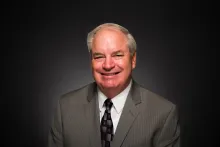
Robin Webber was born in Chicago, Illinois, in 1951, but has lived most of his life in California. He has been a part of the Church of God community since 1963. He attended Ambassador College in Pasadena from 1969-1973. He majored in theology and history.
Mr. Webber's interest remains in the study of history, socio-economics and literature. Over the years, he has offered his services to museums as a docent to share his enthusiasm and passions regarding these areas of expertise.
When time permits, he loves to go mountain biking on nearby ranch land and meet his wife as she hikes toward him.
