

Don Ward
This transcript was generated by AI and may contain errors. It is provided to assist those who may not be able to listen to the message.
Thank you very much, choir. Good to see Mr. Finley up here. Had to move him out of the way so I can give my lessons on Texas geography while they're exiting the stage.
Now, Texas geography, a lot of people think of Texas as a dry place, but Texas is almost surrounded by water. To the north is a red river. It runs the northern border, not all of it.
To the east is the Sabine River that empties into the Gulf. And then to the south and southeast is the Gulf of Mexico, six or seven hundred miles of shoreline. And then to the southwest is the mighty Rio Grande that some people want to cross. Another part of Texas geography was a fellow in East Texas who wanted to be baptized. Young man, he was really enthusiastic, anxious to be baptized, so he goes to a minister there in East Texas and says, I really want to be baptized. And he said, well, before you can be baptized, you have to tell me where Christ was born.
He thought for a while, he said, Longview? And he said, no, not in Longview, so you need to go back and study some more. So he went back and studied more. He went again to another minister and told him he wanted to be baptized. And the minister said once again, well, you have to tell me where Christ was born.
He said, Tyler? He said, no. So he finally studied, got up and nerve to go once again, went to another minister and told him he wanted to be baptized. He said, all right, my son. And he said, well, aren't you going to ask me where Christ was born? He said, no. The man, young man said, well, by the way, where was Christ born? The man said, Palestine. He said, well, I knew it was in East Texas somewhere, but I didn't know just where.
The title today is Raising Up the Tabernacle of David. What has the raising up the tabernacle of David have to do with the Feast of Tabernacles? I believe we shall see today much in every way. We shall see who the chosen people of God really are. We will come to understand what God meant when he told Abraham that through his seed, all the nations of the earth would be blessed. We will also see who will inherit the kingdom blessings. Sometimes I think we forget that the Bible contains a great deal of figurative and symbolic language. We really have to search the Scriptures, in some cases go Genesis to Revelation, to really find out what those symbols mean.
One of the greatest difficulties in properly interpreting the Scriptures is able to distinguish between the type and the anti-type, between the physical and the spiritual. Abraham is a type of God the Father. Isaac is a type of Jesus Christ. Sarah is a type of the church. David is a type of Christ. Zion is symbolic of the church. But one of the greatest symbolic figures of speech in prophecy is a prophecy that the prophet Amos was inspired to write. And let's go there to Amos 9. Amos 9, verse 8. Hosea Joel Amos, Amos 9, beginning in verse 8.
Behold, the eyes of the eternal God are upon the sinful kingdom, and I will destroy it from off the face of the earth. Israel went into captivity under the hands of the Assyrians, 721-718 B.C., and as a kingdom disappeared. Later, about a hundred years or so later, Judah went into captivity in Babylon, did return from captivity, but was never a kingdom again after that Babylonian captivity.
So he says that he will destroy it from off the face of the earth, saying that I will not utterly destroy the house of Jacob. The descendants of Jacob will not utterly be destroyed, says the eternal. For lo, I will command, and I will sift the house of Israel among all nations, like as corn is sifted in a sieve, yet shall not the least grain fall upon the earth. All the sinners of my people shall die by the sword, which say the evil shall not overtake nor prevent us.
Now this prophecy in verse 11, in that day, in that day is what is called a prophetic utterance. It introduces a prophecy, and as we shall see, this is quoted in the book of Acts and was actually what James quoted in pronouncing his sentence at the conclusion of that Acts conference. In that day will I raise up the tabernacle of David that has fallen and close up the breaches thereof, and I will raise up the ruins, and I will build it as in the days of old that they may possess the remnant of Edom.
Now, in the Acts account, Luke wrote probably, does not say Edom, it says men, and the commentators and the scholars debate whether or not here in the Hebrew language the vowels are not given, so they're just little jots and tiddles. Some say this should be translated as Adam. But whether it's Edom or Adam, the next clause there says that all the nations a better translation of he than is nations, all the nations which are called by my name says the eternal that does this.
It says he's going to raise up the tabernacle of David and that all nations are going to eventually build and dwell in that tabernacle. And then it goes into a millennial setting. Behold, the days come says the eternal that the plowman shall overtake the reaper, the treader of grapes him that sows seed, and the mountain shall drop sweet wine, and the hill shall melt. And two more verses about the millennium.
Today we're going to show from Scripture what that prophecy means. It is my view that we tend to overemphasize the physical side of things, and we talk more about how life will be in the physical sense after we're resurrected and born into God's family and into God's kingdom than we do about the spiritual side of things. And, yes, the Bible does equate resurrection with being born into the family of God. Let's notice Revelation 1, verse 5, and I'll repeat what I just said as you're turning there as a point of emphasis.
Once again, it is my view that we tend to overemphasize the physical side of things when we talk about how life will be after we are resurrected and born into God's family and kingdom.
In Revelation 1, verse 5, and from Jesus Christ, who is the faithful witness and the prototichos, the firstborn of the dead. Jesus Christ was resurrected. Here it says He is the firstborn.
Jesus Christ is our forerunner. He's the captain of our salvation. He is the first one who lived in the flesh, and upon resurrection, He was not resurrected to physical life, as it says in 1 Corinthians 15, that He was resurrected a life-giving spirit. So He is the firstborn of the dead, the prince of the kings of the earth, unto Him that loved us, washed us from our sins, and by His blood. So let's note two more scriptures that should help set the tenor in tone of what we'll be studying here today. John 3 and verse 6. John 3 and verse 6. This conversation that Jesus Christ had with Nicodemus, trying to get him to understand the difference between the physical and the spiritual.
In John 3, verse 6. That which is born of the flesh is flesh. And that which is born of the Spirit is spirit. Now we go to 1 Corinthians 15, 50. 1 Corinthians 15 and verse 50. That which is born of flesh is flesh. That which is born of spirit is spirit. And now 1 Corinthians 15, 50. We say that we're here to observe the coming kingdom of God. Who will be in the kingdom of God? Well, we know that there will be some flesh, saved alive, lived over into the millennium, and Christ and the saints will rule over all the nations. But let us notice what it says here. 1 Corinthians 15, verse 50. Now this I say, brethren, that flesh and blood cannot. This is the word of God. The flesh and blood cannot inherit the kingdom of God. Now, once again, there will be physical life in the millennium, and eventually all those who have never heard the gospel preached and did not have the blinders removed from them will have their opportunity for salvation. And so, as we know, we'll be working with physical people to a large degree. And God's goal is to eventually bring everyone into the tabernacle of David.
And we'll see more about what the tabernacle of David really is. I say this, brethren, that flesh and blood cannot inherit the kingdom of God. Neither does corruption inherit incorruption. Now let's notice in Romans, back a few pages, chapter 14, verse 17, the biblical definition of the kingdom of God. In Romans 14 and verse 17.
Romans 14, verse 17. For the kingdom of God is not meat and drink, but righteousness and peace and joy in the Holy Spirit. Now that's the Bible definition of the kingdom of God. Now let's turn to John 6 and verse 63. We're not going to dance through the Scriptures all the sermon this quickly, but I'm turning to them as well. I don't have them written here. So in John 6 and verse 63, every person that's here from the Ruston congregation, every person that's here from Houston South that does not memorize this.
I want you to go stand over here by the piano. It is a spirit that quickens, makes alive, the flesh profits nothing. The words that I speak unto you, they are spirit and they are life. The words I speak, they are spirit and they are life. So in that sense, the word of God is equated with the spirit of God. So if we are here today to worship God, we must worship Him in spirit and in truth. And in fact, that's what John 4, 24, says.
Those who would worship Him must worship Him in spirit and in truth. The theme of the Bible centers on God bringing sons and daughters into His eternal family in the kingdom of God. The kingdom that is coming, a kingdom of kings and priests, is going to rule the universe and eternity. And of His kingdom there shall be no end. So God created humans to become members of His eternal family.
And His love, He wanted to share who He is and what He is with other beings. So He created humankind for that purpose. Man was made in the image of God, but none of the same essence. God is spirit. Man is physical. Man is made from the dust to the ground. He's physically subject to sin and death. God has eternal life abiding within.
And the great mystery of the ages is how can mere mortal human beings made in the dust to the ground, subject to sin and death, be born of the spirit? Now, that mystery is revealed in God's great plan of salvation, a plan of salvation that was planned out between the Father and the Son, the one who became the Son, the Word of God, who would go to Revelation 13.8, from the foundation of the world. Now, some people talk about, well, what is the foundation of the world?
Well, we're going to go to 2 Timothy 1.9 after we read that, and we'll see how old this plan is, the plan of bringing sons and daughters in the kingdom of God. You're here to celebrate and observe and look forward to that time when we will be resurrected and born into the family of God and the kingdom of God to truly bring all of the creation into the glorious liberty of the sons of God, as it says in Romans 8, verse 23-24. Revelation 13.8, And all that dwell upon the earth shall worship the beast, and it says him, but it's the beast and false prophet, whose names are not written, and the book of life of the Lamb slain from the foundation of the world.
Now turn back quickly to 2 Timothy chapter 1 and verse 9, and we get a what we call a time reference. 2 Timothy chapter 1 and verse 9. In 2 Timothy 1 and verse 9, Who has saved us and called us with an holy calling, God the Father is the one who calls, no man can come to me except the Father or draw him. He has saved us, called us with an holy calling, not according to what works, but according to his own purpose and grace which was given to us in Christ Jesus before the world began. And the Greek word for world here is chronos, from which we get chronology.
If you look at Strong's or some Concordans, it will define world as time. Before time as we know it began, the plan of salvation is quite old. God knew that Adam and Eve would sin. The wages of sin is death. But as we have noted, God and the Word in their infinite wisdom developed a great plan of redemption, a plan that would require the Redeemer to pay the ultimate price, a plan in which the sinless Son of God would come and die for the sins of the world and upon repentance and faith and the sacrifice of Christ, we can receive the Holy Spirit.
Go back to Romans 5 and verse 6, and we'll see this summarized. Romans 5 and verse 6. In Romans 5 verse 6, But God commended his love toward us, and while we were yet sinners, Christ died for us. Much more then, being unjustified by his blood, we shall be saved from wrath through him. For if when we were enemies, we were reconciled to God by the death of his Son, much more being reconciled, we shall be saved by his life.
And we receive that life-giving Spirit. Those of us who have received God's Spirit are the spiritual temple of God, and Paul identifies them as the Israel of God. Now, all of this is building, and unless you are... There's no way you can sit here today and just sort of dumb it out. You'll have to stay in it, or we'll leave you behind.
In Galatians 6, Paul identifies those who have received the Holy Spirit as the Israel of God. In Galatians 6, verse 16, For as many as walk according to this rule peace be on them, and mercy upon the Israel of God. See, in Galatia there was a great controversy over whether or not one had to be circumcised according to the law of Moses in order to be justified. Verse 15, Paul says, For in Christ Jesus neither circumcision avails anything nor uncircumcision, but a new creation, becoming a new creation. In 1 Peter, chapter 2 and verse 9, those who have received God's Spirit are identified as an holy nation. 1 Peter, chapter 2 and verse 9.
1 Peter, chapter 2 and verse 9.
But you are a chosen generation, a royal priesthood, and a holy nation. I think there are two places in the Bible that calls the church a holy nation. A holy nation, a purchased people, that you should show forth the praises of Him who has called you out of darkness into His marvelous light, which in times past were not a people. Peter was writing from Babylon and basically writing to the Gentiles. And the Gentiles, as we'll see from the Ephesians at one time, were not a people, but are now the people of God, Loami, which had not obtained mercy, Lo Ruhama, but now have obtained mercy. So raising up the tabernacle of David. The called-out ones who have received the Spirit of God dwells in the tabernacle of David, a building not made by hands. Now remember Amos 9, verse 11, it says that he would raise up the tabernacle of David, and all humankind basically would seek after it. So we need to understand the symbolism that surrounds the tabernacle of David. David built a tabernacle for the Ark of the Covenant on Mount Zion. So we want to trace Zion for just a moment. Go to 2 Samuel, chapter 6, verse 12. 2 Samuel, chapter 6, verse 12.
David, when he first became king, Israel did not control, neither did Judah, did not control the area that now is the location of Jerusalem. David defeated the Jebusites, and the king of there, the Jebusites, was going to give him the area. And David said, no, I'm going to purchase it. And David bought it, that area. And there's an area there, and most people think it's to the southwest, I mean the southeast there in Jerusalem. I'm sorry, I messed it up again, to the southwest, is Mount Zion. Now, Mount Zion is a literal place, and there's argument exactly where it is, but it's probably just southwest of the Temple Mount. Let's notice here in 2 Samuel, chapter 6, verse 12. Now, remember the Ark of the Covenant, that Moses had been instructed to build a tabernacle in the wilderness, and the Ark of the Covenant, and in that Ark of the Covenant were the two tables of stone, the pot that budded, the pot of manna, and Aaron's rod. That Ark of the Covenant was placed in the tabernacle that was reared up in the wilderness, and on top of the Ark of the Covenant was a mercy seat, and above the mercy seat, God's presence appeared called the Shekinah Glory. So when you went into the Holy of Holies, you went into the very presence of God, because He placed His presence above the mercy seat. Now, in the due course of time, the tabernacle in the wilderness was pitched at Shiloh. Shiloh was destroyed, and then the Ark of the Covenant, for a while, was at a person's home. In fact, the Philistines had it for a while and captured it. But David wanted to build a tabernacle for the Ark of the Covenant. So look at 2 Samuel 6, verse 11.
Now, where is the city of David, and where did he build this tabernacle? Go to 1 Kings 8, verse 1. Just forward a few pages. 1 Kings 8 and verse 1. In 1 Kings 8.1, we come to this occasion in which David is dead now, and he had collected the materials to build a temple.
He said, you know, this tabernacle is not good enough. And God said, you cannot build it because your hands are filled with blood. So His son Solomon was allowed to build the temple. And the day came to dedicate the temple. In fact, it was during the Feast of Tabernacles. 1 Kings 8.1. And Solomon assembled the elders of Israel and all the heads of the tribes, the chief of the fathers of the children of Israel, that they might bring up the Ark of the Covenant of the Lord out of the city of David, which is Zion.
So another name for the city of David is Zion. In Psalm 78, Psalm 78 is a great summary, Psalm, a summary of the history of Israel. There are ups and downs. If you're not familiar with it, I would encourage you to read it and put it in your memory bank. But in Psalm 78, we pick it up there in verse 58, Psalm 78.58. 78.58. Sort of a summary of what's gone before.
They provoked Him to anger with their high places. They moved Him to jealousy with their graven images. When God heard of this, He was angry and greatly abhorred Israel. He forsook the tabernacle of Shiloh. We've already mentioned that. That Shiloh was leveled, wiped off the map. The Ark of the Covenant went somewhere else. The tent which He placed among men. He delivered His strength into captivity. For a while, the Philistines had the Ark of the Covenant. And His glory into the enemy's hands. That's where He had placed His presence above the Ark of the Covenant.
He gave His people also under the sword. He was mad with His inheritance. The fire consumed their young men. Their maidens were not given to marriage.
The priests fell by the sword. The widows made no lamentation. Then the Eternal awakened as one out of sleep like a mighty man that shouted by reason of wine. He smote His enemies. He put them to perpetual reproach. He refused the tabernacle of Joseph. See, Joseph was of Ephraim. Shiloh was in Ephraim. So he refused that tabernacle, which would have been called the tabernacle of Ephraim, I suppose you would say, because the tabernacle that was in the wilderness was pitched at Shiloh in Ephraim. Says, he refused the tabernacle of Joseph. He chose not the tribe of Ephraim, but chose the tribe of Judah, the Mount Zion, which he loved.
And he built his sanctuary like high places, like the earth, which he has established forever. He chose David also his servant and took him from the sheepfolds. Now in Hebrews 12, we come to see in the New Testament, see, that's the type. What is the anti-type? What is the spiritual fulfillment of these various places, the tabernacles here and the tabernacles there, and God placed His presence above the mercy seat in their tabernacle? Now, one interesting point I'll throw in here parenthetically, it's a topic sort of to itself, but it surely is relevant here that when the Restoration Temple was built 520 to 515 B.C., when they dedicated that temple, God's glory did not fill that temple.
But you have those words in Haggai that says, The glory of this latter temple shall exceed that of the former. And, of course, that was pointing to the spiritual temple that is to come. Now, the book of Hebrews, as some have heard me say so many times, compares and contrasts the elements of the Old Covenant with the elements of the New Covenant. In Hebrews 12, 18, For you are not come unto the mount that might be touched, and that you are not come unto the mount Zion where God gave Israel the law, and that burn with fire nor unto blackness and darkness and tempest.
You have not come there. See, it's a comparison and contrast between elements of the Old Covenant and the New Covenant. But where have you come? Verse 22, But you are come unto mount Zion. Is he talking about the literal physical place? You are come unto mount Zion to the city of the living God, the heavenly Jerusalem, to an innumerable company of angels, to the general assembly and church of the firstborn, which are written in heaven, and to God, the judge of all, and to the spirits of just men made perfect.
Brethren, that's where each one of us has come that has received God's Spirit. We are the church of God. We are the Israel of God. And as we shall see, God is raising up the ruins of the tabernacle of Zion. And I'm sorry, the ruins of the tabernacle of David, which could be called Zion as well, because we see that the city of David, which is called Zion.
Now, in Luke, in Luke 1, verse 32, Luke 1, verse 32, here the angel is appearing, giving them a word about Jesus, who was to come. And this specifically is to marry us. Read Luke 1.30. And the angel said unto her, Fear not, Mary, for you have found favor with God. Behold, you shall conceive in your womb and bring forth a son, and shall call his name Jesus.
He shall be great, and shall be called the Son of the highest, and the Lord God shall give unto him the throne of his father David, who gets the throne of David, and he shall give unto him the throne of his father David. And he shall reign over the house of Jacob forever, and of his kingdom there shall be no end. And, brethren, we're here today saying that we are looking for a city that hath foundations, whose builder and maker is God. We're saying that we want to be in that kingdom, a kingdom that will last forever and ever.
The spiritual fulfillment of this began with those who received the Holy Spirit of Begetl. Notice I said the Holy Spirit of Begetl. The Holy Spirit can come upon people, as it did upon Saul, and he became a different man. The Holy Spirit of Begetl came upon those assembled there in Jerusalem on the day of Pentecost, when God began to call out a people for his name's sake. Let's go to Acts 2, Acts 2.
Peter stood and preached that mighty sermon, once again basically recounting the history of Israel. In Acts 2, verse 38, he'd been asked in verse 37, They were pricked by what he said, and they said, Men and brethren, what shall we do? Then Peter said unto them, Repent, and be baptized, every one of you, in the name of Jesus Christ, for remission of sins, and you shall receive the gift of the Holy Spirit.
For the promise is unto you, and to your children, and all that are far off. Now, who are those that are afar off? I know in a council of elders meeting somewhere around the year 2000, we were reading here, and I said, the afar off are the Gentiles. Some thought, boy, that's different. I thought that was those who lived long ways from Jerusalem. Well, see, there was gathered there proselytes from all over the Mediterranean world, as it says in the first part of this chapter.
And to all that are far off, even as many as the Lord our God shall call. So we see that those afar off, at least we will see, can be grafted into the natural olive tree. Let's notice that quickly in Ephesians chapter 2. Ephesians chapter 2, remember Ephesus, one of the great centers of idolatry and the whole ancient world. Ephesians chapter 2, verse 11. Wherefore, remember that we being in times past Gentiles in the flesh, who are called uncircumcision, by that which is called the circumcision, or the Jews in the flesh made by hands, that at that time you were without Christ, speaking of the Gentiles, being aliens from the commonwealth of Israel, strangers from the covenants of promise, having no hope, and without God in this world.
But now in Christ Jesus, you who sometimes were far off, those who are afar off, who were afar off, are made nigh by the blood of Christ. For He is our peace, who have made both one, say, one body. By one Spirit hath He baptized all into one body. Made all one, broken down on the middle wall of partition, have abolished in the flesh the enmity between the law of commandments contained in ordinances, for to make in Himself of twain one new man, so making peace, and that He might reconcile both, that is, Jew and Gentile, unto God, in one body by the stake, having slain the enmity thereby. So that middle wall of partition was broken down, and Jew and Gentile are joined together in the Church of God, in the Israel of God, as one body. Now, we go back to Acts 1, but in the early Church, the Jews did not yet know, and, of course, we know that it identifies the tribe of Anna the prophetess, that there were representatives from the other tribes there as well from the Scriptures.
But basically, we just say the Jews. Before Jesus Christ ascended, He had appeared to them, at least on three occasions, and opened their eyes of understanding, began to teach them. But even just before He ascended, verse 6, for when they were come together, they asked of Him, saying, Lord, will You at this time restore again the kingdom to Israel? And He said unto them, it is not for you to know the times or the seasons, which the Father put in His own power. But You shall receive power after that the Holy Spirit has come upon You. You shall be witnesses to Me both in Jerusalem, in all Judea and in Samaria, and unto the uttermost parts of the earth. Now, the uttermost parts of the earth is what they seem to forget. They still did not grasp the kingdom of God as a spiritual kingdom, that flesh and blood cannot inherit the kingdom of God. And sometime after Pentecost, you remember this story in Acts 10, a Gentile military officer of the Italian band named Cornelius had a vision in which he was told to send people to Joppa and bring Simon Peter to his house. So the next day, Cornelius sent men, well, the next day they were arriving near Joppa. I don't know exactly when he sent them that day or the next. But about noontime, Peter had gone up onto the housetop to pray, and he received this vision about the sheet coming down, filled with unclean animals and told to arise and eat. And he protested, and we pick it up there in Acts 10, 25, Acts 10 and verse 25. And as Peter was coming in, Cornelius met him. This is after Cornelius's men had come and said, our master has asked you to come to his house. He needs to see you. And as Peter was coming in, Cornelius met him and fell down at his feet and worshipped him. But Peter took him up saying, stand up. I am also a man.
And as he talked with him, he went in and found many that were come together. And he said unto them, you know how that it is an unlawful thing for a man that is a Jew to keep company or come into one of another nation. I mean, you couldn't eat with a Gentile. You couldn't go into their house. According to this part of the law that the Pharisees and Jewish sects, S-E-C-T-S, had added to. You know, even later, Peter was rebuked by Paul for not eating with the Gentiles, but just with the Jews. So this problem of ethnic relationships and racial relationships and all that is very ancient. It's a very old story. But then Peter says, but God has showed me that I should not call any man common or unclean. Therefore came I unto you without gain, saying, as soon as I was sent for, I asked therefore for what intent? Why have you asked for me? Then Cornelius recounts his vision. Then verse 34, Peter opened his mouth and said of a truth, I perceive that God is not a respecter of persons. In other words, the gospel is for everyone. And then we have a short version of the sermon that Peter preached on the day of Pentecost. Verse 42, he commanded us to preach unto people and to testify that it is he which was ordained of God to be the judge of the living and the dead. To him give all the prophets witness through his name, whosoever believes in him shall receive remission of sins. While Peter was yet speaking, the Holy Spirit fell upon them which heard, and they of the circumcision which believe were astonished. How can this be? I mean, we're God's chosen people. I mean, we've received the Holy Spirit. You mean to tell me that these Gentiles are going to receive the Spirit of God? Because on the Gentiles, verse 45, was also poured out the gift of the Holy Spirit. For they heard them speak with tongues and magnify God, then answered Peter, Can any man forbid water that these should not be baptized which have received the Holy Spirit as well as we? And he commanded them to be baptized in the name of the Lord. Then they stayed there and taught them more of that way. About this time that this was happening, the Apostle Paul was struck down on the road to Damascus, and it was revealed to him that he would be administered to the Gentiles or the nations. Turn back a page or so to please to Acts 9.15.
Remember the story of Paul being struck down? He was blinded, and he had to be led into the city. And finally, his sight was restored supernaturally. Acts 9.15, But the Lord said unto him, Go your way, for he has a chosen vessel unto me. Speaking of Paul, To bear my name before the nations and kings and the children of Israel.
For I will show him how great things he must suffer for my name's sake. The raising up of the tabernacle of David is a great step in fulfilling the kingdom prophecies. Let's notice now in Acts 15 and verse 7. So Paul and Barnabas went out after Paul was converted, and Barnabas, as it were, took Paul under his wing and helped him. Sadly, eventually, Paul and Barnabas parted ways over Barnabas' kinfolk, Mark. Evidently, both continued to do the work, as we call it, but only the work of Paul is recorded.
But Paul and Barnabas went on evangelistic tour, preaching the gospel of the kingdom. They would start at the synagogues and wind up preaching to the Gentiles. In several of the cities he preached, he was severely persecuted by the Jews, who believed that the worship of God was anchored in the law of Moses, with circumcision being necessary for a convert to be justified before God. Now, this controversy, and it really boiled over in Jerusalem, finally became so heated that they wanted Paul to come to Jerusalem for this conference and give answer. So notice Acts 15.1. Certain men which came down from Judea taught the brethren and said, Except you be circumcised after the manner of Moses, you cannot be saved. When therefore Paul and Barnabas had no small dissension and disputation with them, they determined that Paul and Barnabas and certain other of them should go up to Jerusalem under the apostles and elders about this question. Do the Gentiles have to be circumcised according to the law of Moses in order to be justified, in order to dwell in the tabernacle of David, in order to be a part of the church of God, in order to be a part of the Israel of God?
They finally came to Jerusalem, and various ones rose and spoke. Verse 12, Then all the multitude kept silence, gave audience to Barnabas and Paul, declaring what miracles and wonders God wrought among the nations by them. And after they had held their peace, James answered, saying, Men and brethren, listen to me. Simon had declared how God at first did visit the Gentiles, and we read that from Acts 10, how the Holy Spirit came upon the Gentiles to take out of them a name for His people, for His name. And to this agree the words of the prophets, as it is written.
I bet you've read this a million times more or less, and you never associate it with that prophecy in Amos 9 and verse 11. And what does it mean? And He says, it agrees to the words of the prophets. What we've seen here is that the Holy Spirit came upon the Jews and upon the Gentiles. And this agrees with what the prophets prophesied. Verse 15, After this I will return and will build again the tabernacle of David, which has fallen down, and I will build again the ruins thereof, and I will set it up that the residue of men, everybody that the residue of men might seek after the Lord in all the nations upon whom my name is called, says the Lord who does these things. The raising up of the tabernacle of David is a great step in fulfilling the kingdom prophecies. The church of God is the kingdom of God in embryo. Notice Colossians chapter 1 verse 13, Paul writing, Colossians 1 verse 13. Interestingly here in Colossians 1 and verse 13, it says that we have been translated, and once again this is in a figurative sense, but enjoying many of the kingdom blessings even now.
And Colossians 1, 13, who have delivered us from the power of darkness, had translated us, translated us into the kingdom of his dear son, in whom we have redemption through his blood, even the forgiveness of sins. Notice verse 26, even the mystery which had been hid from ages, from generations by now, is made manifest to his saints, to whom God would make known what the riches of his glory of this mystery among the nations, which is Christ in you, the hope of glory. And that is the only hope the world has. Jesus Christ, the Prince of Peace, gave his life that her sins could be forgiven, and that we might receive the Holy Spirit, that we might receive life from above. And as we have seen, Jew and Gentile join together in one body, and God is raising up the tabernacle of David.
In Romans 2 verse 26, a Jew is defined.
Romans 2 verse 26.
Remember, in Romans, in chapter 1, we'll be talking about the book of Romans in the seminar.
In chapter 1, Paul takes the Gentiles to task, showing that they had sinned, and they had forgotten God and worshipped the creation more than the Creator. In chapter 2, he takes the Jews to task. They boast of the fact they had received the Word of God and the promises and all of that. But Paul then defines who a Jew really is. Starting in Romans 2, 26, You're transgressing the spiritual law, For he is not a Jew, which is one outwardly, neither is that circumcision, which is outward in the flesh. But he is a Jew, which is one inwardly, and circumcision is that of the heart and the spirit, and not in the letter whose praise is not of men, but of God.
So in this age of the Church, it is my view that we have overemphasized the physical at the expense of the spiritual. The Bible is first and foremost about how all nations, God is not a respecter of persons, how all nations can become members of God's eternal family, born sons of God, inheritors of God, and join heirs with Jesus Christ.
When reading the promise made to Abraham, we need to think first and foremost in spiritual terms. Let's read that promise. Genesis 12, Abraham was called out from beyond the river, Tiger Shufreides in what is today modern Iraq, told to come into a strange land, and God gave him promises.
In Genesis 12, verse 3, this is the great verse that is quoted over and over by the Jews in the wrong context today. I will bless him that bless you, curse him that curses you, and in you shall all the families of the earth be blessed.
In you, are all the families in outer Mongolia blessed through the Jews? Are all the families in Siberia, in eastern Russia blessed because of the Jews? Are those huddled masses in Africa, or any other poverty-stricken people that you want to name, are they blessed because of the Jews, or any ethnic group? How can all the nations of the earth be blessed? How can all the nations of the earth be in the Israel of God? Well, Paul gives us the answer very clear. Let's go to Galatians 3, verse 14.
Galatians 3, verse 14. That the blessing of Abraham might come upon the nations through Jesus Christ. That we might receive the promise of the Spirit through faith. Brethren, I speak after the manner of men, though it be but a man's covenant.
Yet if it be confirmed, no man disannuls or adds thereunto. Now to Abraham and his seed were the promises made. He said, Not and to seeds, as of many, but as of one, and to your seed, which is Christ. How are all the nations of the earth going to be blessed from the seed of Abraham through Christ?
Now, the summary of this, verse 26, Galatians 3, verse 26. For you are all the children of God by faith in Christ Jesus. Remember one of the big problems there in Galatia, the Judaizers who said you had to be circumcised. For as many as of you have been baptized in Christ, have put on Christ, there he is neither Jew nor Greek. There is neither bond nor free. There is neither male nor female in the spiritual sense. Now obviously we are still in our ethnic group. We still have our same gender.
But in Christ, we are all one in Christ Jesus. And if you be Christ, then are you Abraham's seed and heirs according to the promise. This is the Word of God. So the politicians of the day debating the Palestinian question, the Jews claim they have the God-given right to the land because it was promised to them. And it's perhaps just that piece of land. Maybe they have an argument there. But the way that the rest of the world is viewing this, much of the rest of the world is putting a bad light on both Christians and Jews. When Jews make so much over this, we are the chosen people and the fundamentalist Christians like John Hagee and others who make so much of this.
I'm reading here from an editorial. It's quite sarcastic in a way, but it gives you some insight as to how many of the people view this chosen people line. For we have to assume, given the incalculable sufferings presently taking place, that had He the Almighty to do over again, He would probably leave out. I will bless those who bless you and curse those who cursed you.
You see, the world doesn't understand, and even the churches haven't explained how you are blessed through Abraham. You're blessed if you are in Christ, then are you Abraham's seed. That's what the Bible says. I'm not saying this. And if you be in Christ, then are you Abraham's seed and heirs according to the promise. This is through Christ that all the nations of the earth are blessed. I will bless them who bless you and curse you who curse you. This is used over and over, but not explaining the total picture.
And there are very few who do explain the total picture. This writer says, nonsense, get right down to business with you shall nots and you shall nots. And he is very sarcastic and even makes fun of God in the Bible. After all, he's considered a wise and merciful Creator, is he not?
Not just wise and merciful, but the shrewdness of all investors as well. And one has his supposed aggrandizement of this tiny microbe of chosen people, profited him and his business interest. Answer, war, exploitation, deception, greed, envy, assassination, genocide, enslavement, the bitter fruits, and so on it goes. The only difference between then and now is that 4,000 years ago, the chosen knights didn't have nuclear weapons. See, this is how much of the world views that situation at the present time. He goes on to write, for those who have not put two and two together in this matter, what we are of course discussing is the present clash of civilizations being waged against Israel's proxies in the Western world, being waged by Israel's proxies in the Western world against those in the Middle East and elsewhere.
He goes on to say that eventually this will lead to Armageddon, and that's what the world is facing. And to some degree, he's probably right. You know, Satan is on this insatiable quest to be worshipped. Satan, the demons, the beast and the false prophets deceive the nations, and they come against Jerusalem and surround Jerusalem, and if God had not and does not intervene, there should no flesh be saved alive.
So Satan has deceived and confused the world on these promises, with the Jews applying these promises to them physically and to the rest of the world hating the Jews because their claim that they are the chosen of God and indeed superior to all other peoples. Whereas these promises, as we've just seen, are first and foremost spiritual, and the one promise here, the one I'm sorry, the one that God sent that would make it possible to receive the promises, was rejected by Israel, the Jews at that time.
They handed him over to the Roman authorities to be crucified, and both sides are hopelessly deceived. And this debate will be one of the principal causes of events leading up to some of the great wars that lie ahead. So we see here clearly from the Bible. You know, there are prophecies in the Old Testament that show clearly that the Jews would be, I mean, sorry, the Gentiles would be grafted in to the Israel of God. Let's notice, Paul summarizes this in Romans 15.
I have just a couple more things to go here. In Romans 15, we tend sometimes to overlook, and one of the things that the book of Romans contains is a blueprint to world peace, and if you accept Jesus Christ as Messiah, that will be one of the great answers to world peace. You know, it says in Zechariah 12 that when those armies surround Jerusalem and God begins to intervene, it says, and they shall look on Him whom they pierced, and they will mourn their houses apart.
See, the true restoration of Israel and all nations and being in this tabernacle of David, the Church of God, the Israel of God, cannot take place until you look on Him whom they pierced and repent and exercise faith in Him. Romans 15, 8, now, I say that Jesus Christ was a minister of the circumcision for the truth of God to confirm the promises made unto the fathers, and that the nations might glorify God for His mercy as it is written for this cause, I will confess to you among the nations and sing unto your name. And again, He said, Rejoice, you nations with His people, and again, praise the Lord all you nations and laud Him all you people.
And again, Isaiah said, there shall be a root of Jesse. That's Jesus Christ. And he that shall rise to reign over the nations, in him shall the nations trust. For the kingdom of God and the millennium, that is going to be the case. And one of our great jobs will be to help bring all nations, races, kindreds, and tongues into that relationship with God. We're destined to rule and reign with God and Christ in eternity.
Let's notice Psalm 87. We often sing this psalm, at least we've sung it in the past. It's in our hymnal. Psalm 87. Remember what we've talked about. The city of David, which is Zion. God chose Zion over the tabernacles of Ephraim. Psalm 87.1. His foundation is in the holy mountains. The Lord loves the gates of Zion more than all the dwellings of Jacob. Remember, Zion symbolizes the church. You have come to Zion, to the city of the living God, not to Sinai.
Glorious things of thee are spoken, O city of God. I will make mention of Rahab Babylon to them that know me. Behold, Philistia, Tyre with Ethiopia. This man was born there. Where? Zion. And of Zion it shall be said. This and that man was born in her, and the highest himself shall establish her. Many of the Jews want to be buried on the Mount of Olives. As you stand on the Temple Mount, you look over to the Mount of Olives to the east, you will see little dotted tombstones. I asked, well, what are those white specks over there? The tour guide said, well, those are tombstones. The Jews believe that they'll get a head start on the resurrection if they're buried there, because it says in Zechariah 14, and in that day his foot shall stand on the Mount of Olives. But this says you're born in Zion, but not the literal physical place. The Lord shall count when he writes up the people that this man was born there. Where? Zion. The kingdom is acoming. Now Revelation 21, and we wrap it up. Revelation 21. If you notice this beautiful tapestry of the Bible, how it is woven together from the tabernacle in the wilderness. The tabernacle pitched at Shiloh, David's tabernacle, Solomon's temple, the Restoration temple that pointed toward the spiritual temple that's to come, that you're come to the city of the living God, that God is now raising up the ruins of the tabernacle of David, that all nations will seek to it. Revelation 21.1, I saw a new heaven and a new earth. The first heaven and the first earth were passed away. There was no more sea. And I, John, saw the holy city, New Jerusalem, coming down from God out of heaven, prepared as a bride adorned for her husband. And I heard a great voice out of heaven, saying, Behold, the tabernacle of God is with men, and he will dwell with him, and they shall be his people. And God himself shall be there and be their God. So, brethren, do you want to dwell in the tabernacle of David, in the church of God, in the temple of God, for ever and ever? That's what you're doing right now. God is raising up the tabernacle of David, and we have these great promises that we have read here today. The kingdom is coming, and we must be prepared to dwell in God's tabernacle. He who hath an ear, let him hear what the Spirit says to the churches.
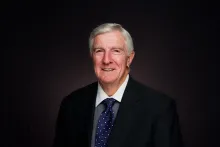
Before his retirement in 2021, Dr. Donald Ward pastored churches in Texas and Louisiana, and taught at Ambassador Bible College in Cincinnati, Ohio. He has also served as chairman of the Council of Elders of the United Church of God. He holds a BS degree; a BA in theology; a MS degree; a doctor’s degree in education from East Texas State University; and has completed 18 hours of graduate theology from SMU.
