
Don Ward
Zion appears in scripture scores of times. How important is Zion to you? How much do you know about Zion? And when did Zion begin and when will it end? Where is it now? And where will it be in the future? What does this have to do with the Feast of Tabernacles?
Okay, today we don't have a sermonette, so I thought I would exercise your fingers and give you about 50 scriptures. We'll steady the Bible.
You know, with all of you, nearly all of you, you have been in the church 30, 40, 50, 60 years. Some I think 60 plus years. And you know it all, you've heard it all, and all of that. But let's see if we might learn something today, and you know what to do already. So let's see what we can learn. The title today is Zion and Raising Up the Tabernacle of David. Zion and Raising Up the Tabernacle of David. Zion appears in Scripture scores of times. You ought to look up Zion and do a study of Zion. And I asked the question, how important is Zion to you? How much do you know about Zion? And when did Zion begin? And when will it end? And where is it now? Where will it be in the future? And what does Raising Up the Tabernacle of David mean?
And what does each one of these have to do with the Millennium and the Feast of Tabernacles? We've seen the moving hymn, Glorious Things of Thee are Spoken, Zion, O City of Our God. We are singing about ourselves, because we are the ones that are going to occupy that city of God in the Millennium. So in this study, we're going to address these questions and more. Zion plays one of the principal roles in the Millennium, the when, where, what, why, and who is Zion is one of the most inspiring studies and yet sobering understandings that one could possibly have. So let's look at the origins of Zion first. David took it from the Jebusites. So let's go to 2 Samuel 5 and verse 6. In 2 Samuel chapter 5 and verse 6.
2 Samuel chapter 5 and verse 6. And the king and his men went to Jerusalem unto the Jebusites, the inhabitants of the land, which David spoke unto David, saying, Except you take away the blind and the lame, you shall not come in here, thinking David cannot come in there.
Nevertheless, David took the stronghold Zion, the same is the city of David. So those two terms are interchangeable. The city of David is Zion. Zion is the city of David.
And David said on that day, whosoever gets up to the gutter and smites the Jebusites and the lame and the blind that are hated of David's soul, he shall be chief and captain. Wherefore they said the blind and the lame shall not come into the house. And you can read the rest with regard to David took the city of Zion, took Jerusalem from the Jebusites. Let's go to 1 Chronicles 11. 1 Chronicles 11 and verse 5.
And 1 Chronicles 11 and verse 5.
And the inhabitants of Jebus said to David, you shall not come here. Nevertheless, David took the castle of Zion, which is the city of David. And so it's basically repeating what we read from 2 Samuel. So you know for sure that David is the one who took Zion. David built Zion, the physical place. Jesus Christ is building the spiritual Zion. Jesus Christ is building the spiritual Zion. David is a type of Christ.
He took Zion physically. And now, as we shall read from Hebrews a little later, that Jesus Christ is building a building, a temple not made by hands, a tabernacle not made by hands. And that is the Church of God. So God is raising up the tabernacle of David through the Church. In fact, the Church is the tabernacle of David. That is not to say there will not be a literal temple. The last eight chapters, especially, of Ezekiel, describe that temple that is going to be built during the millennium.
The prophecy of Amos predicts the raising up of the tabernacle of David. And just reading this, you may not see at first, Hosea Joel Amos. Hosea Joel Amos, so minor prophets, so-called. And so it's after Joel, the book of Amos. In Amos chapter 9, and we'll start in verse 8. Amos chapter 9 and verse 8. Behold, the eyes of the Lord God are upon the sinful kingdom. And that, of course, Amos was a prophet sent to Israel to warn them of what was going to happen. But yet at the same time, in virtually all of the minor prophets, the prophet went and prophesied what was going to happen to them unless they repented. But at the same time, the prophet brought words of restoration.
Behold, the eyes of the Lord are upon the sinful kingdom. And I will destroy it from off the face of the earth, saying, that I will not utterly destroy the house of Jacob, says the eternal. Now the house of Jacob. Jacob, of course, had 12 sons, and his sons became the 12 tribes, and the 12 tribes became the nation of Israel, and so on. And I know that the kingdom of Israel was divided, the northern 10 tribes to the north, with their capital Samaria. And Benjamin and Judah were their two tribes, and their capital was Zion and Jerusalem. Now continuing here, verse 9. For lo, I will command, and I will sift the house of Israel among the nations, like his corn is sifted in a sieve, yet shall not the least green fall upon the earth. So God has not forgotten Israel. Of course, we read about in chapters 6 and 7 about the sealing of the 144,000 that live over into the millennium, because seed from Israel has to be saved alive and to restore that nation in the ultimate sense. They're talking about, and the fundamentalist preachers are talking about, oh, the coming of Christ is near, and perhaps it is, because Israel has returned to the land. Well, not nearly all of the tribes have returned to the land, and the restoration that God is going to perform pales into insignificance in one sense what is happening now, but what is happening now must happen in order for prophecy to be fulfilled. Now verse 10. And all the sinners of my people shall die by the sword and say, the evil shall not overtake nor prevent us. In that day, in that expression, that phrase, in that day is what is called a prophetic utterance. That means that a prophecy, a prediction, or an explanation of what is going to happen is about to follow. In that day, will I raise up the tabernacle of David? So Zion and raising up the tabernacle of David is our title. That is fallen and close up the breaches thereof, and I will raise up the ruins, and I will build it as in the days of old, that they may possess the remnant of Edom.
Now, the scholars have a great debate over the translation here of translating that into Edom. Remember, in Hebrew, the vowel points, they're just points above the consonants, and it could easily be a dom, and that's what really it is as evidenced by the following phrases, and also when we get to the book of Acts, how James applies this to the church. So, and Adam or Adam means, of course, mankind, man. That they may possess the remnant of mankind, and all the nations, all the heathen, which are called by my name, says the Lord that does this.
And then a description of the millennium, the days come, when the plowman will overtake the reaper. Now we go to Acts chapter 15, Acts 15, and on the way there, after Abraham was circumcised in his household, including Ishmael, and of course the Ishmaelites and the Moslems, most of them practice circumcision to this day, and of course the Jews do, and many do practice circumcision.
Circumcision is, I think, a very healthy and wise thing to do. So after Abraham was circumcised, it became the hallmark of those who were of Israel. They taught that a person had to be circumcised in order to be saved or to be justified. Peter, Barnabas, and Paul gave testimony in Acts 15, the so-called Ministerial Conference of Acts 15, which is very important to the understanding of raising up the tabernacle of David. So we read here what I've just said basically verbally, chapter 15, verse 1, and certain men which came down from Judea taught the brethren and said, Except you be circumcised, after the manner of Moses, you cannot be saved.
When therefore Paul and Barnabas had no small dissension and disputation with them, they determined that Paul and Barnabas and other of them should go up to Jerusalem unto the apostles and elders about the question, and so they did. Also there were the assembled the apostles and the elders of Israel, and Peter was the first one to speak. You look at verse 7, and then there had been much disputing.
Peter rose up, and Peter, of course, had gone to the house of Cornelius, and the house of Cornelius received the Holy Spirit showing that the Gentiles would be grafted into Israel. And then Barnabas spoke and Paul spoke about the great works that they had seen among the Gentiles. Verse 12, Then all the multitude kept silent, gave audience to Barnabas and Paul, declaring what miracles and wonders God had wrought among the Gentiles by them.
And after they had held their peace, James answered, saying, Men and brethren, listen unto me. I'm going to tell you what this means. And guess what he tells them? He says, that prophecy in Amos chapter 9 of raising up the tabernacle of David is applied to this situation right now. Then James says, verse 14, Simeon has declared, or Peter, how God at the first did visit the Gentiles to take out of them a people for his name. And that's going up to the house of Cornelius. And to disagree the words of the prophets, as it is written, after this I will return. Notice this, and I will build again the tabernacle of David.
I will build again the tabernacle of David which has fallen down, and I will build again the ruins thereof and I will set it up. So he quotes almost verbatim from Amos and even further in verse 17, that the residue of men, you know that question about Adam or Dom seems to be answered here, that the residue of men might seek after the Lord, and all, all, all, all the Gentiles upon whom my name is called says the Lord and does all these things.
Known unto God are all his works from the beginning of the world. Wherefore my sentence is that we trouble not them which from among the Gentiles are turned to God. So the raising up of the tabernacle of David actually began on Pentecost, 31 A.D. when Peter gave his inspired sermon as some 5,000 or 3,000, I forget which one it is, 3,000, I think souls were added to the church, and now the Gentiles are coming in, and Peter's trip to Cornelius demonstrated that fact. So James applied the prophecy of Amos to what was happening with the ministry among the nations that actually applied to raising up the church of God.
Zion is also called the city of God as we have noted, we said the city of David. Zion is also called the city of David, we read that. God is the one who actually chose Zion. God is the one who chose Zion. We're going to turn to a prophecy here that probably you haven't really noticed. In Psalm 78, we're going to look at this prophecy in Psalm 78. We'll start in verse 67. Psalm 78 and verse 67. Psalm 78 recounts much of the history of Israel, their ups and downs, how God would raise up a judge, and he would write things, make things right, and then they would go into a dollar tree again, he'd raise up another judge, and so on.
It went for quite a long time in the period of the judges. But then this prophecy, verse 67, moreover he refused the tabernacles of Joseph. Now the tabernacles of Joseph remember that Ephraim and Manasseh received the birthright and chose not the tribe of Ephraim to receive the birthright, but chose the tribe of Judah, the Mount Zion, which he loved, and he built his sanctuary like high places, like the earth which he has established forever.
And Jerusalem and Zion are built in a high place, so you go there, I've been there, and walk the streets of Jerusalem. Jerusalem is elevation about 3,000 feet, and yes, it does occasionally snow in Jerusalem. From following the ewes, great with young, he brought him to feed Jacob his people and Israel his inheritance. So he fed them according to the integrity of his heart and guided them by the skillfulness of his hands. So God, notice verse 68, he chose the tribe of Judah, the Mount of Zion, which he loved. God literally chose Zion. Now we go to Psalm 132 and verse 13.
Psalm 132 and verse 13.
One of the days one of you can write the Bible in chronological order.
In Psalm 132 and verse 13. For the Lord has chosen Zion. He has desired it for his habitation. And time after time you can read in the various major prophets in Isaiah and Jeremiah, in Ezekiel. God has chosen Zion, and there are other places as well, for his dwelling place. That's where God is going to eventually dwell. Zion is a type of the church. It is symbolic of the church. Perhaps you already have picked that up and those who are in regular attendance here would know that you've heard this many times. Let's go now to Hebrews chapter 12.
In Hebrews chapter 12, Hebrews is a fascinating book. Of course there's discussion as to about Hebrews, who wrote it. Some say Paul didn't write it, and scholars have a debate, all of that, even some of our church people have doubted. I believe Paul wrote it. And we're going to tell you what the book is about. It's pretty simple in one way. In the book of Hebrews, Paul compares and contrasts the elements of the Old Covenant with the elements of the New Covenant. He shows in the book of Hebrews that the elements of the Old, of the New Covenant are far superior to the elements of the Old Covenant.
So here in 12 he talks about Sinai verse 19, in the sound of a trumpet, the voice of words, which voice they that heard it, and treated that the word should not be spoken to them anymore. So they said, oh, we don't want to hear God speak, let Moses speak to us.
Then we come to verse 22 and tells us where we have come to. They had come to that, those who had been called out at that time, but you were coming to Mount Zion and under the city of the living God, the heavenly Jerusalem. And of course you heard for special music, Jerusalem, the holy city. Zion and Jerusalem are somewhat interchangeably. Scholars do make a distinction between the two in the sense of Zion deals more with the spiritual side, Jerusalem deals more with the physical side, but that's not to say that Jerusalem doesn't deal also with the spiritual side.
Zion, the city of David, is just below the Temple Mount. If you've ever been to Jerusalem and just off the Temple Mount, just below the Temple Mount is like an abrupt drop off and out toward the south, especially there is the city of David, south and southwest. We had a dig going on there with the ambassador students for years in the city of David in Zion, or we call it the Jerusalem dig, one and the same.
So you were coming to Mount Zion under the city of the living God, the heavenly Jerusalem, to innumerable company of angels, to the general assembly and church of the firstborn. See, that's where you've come. You're the firstborn, first fruits, which are written in heaven, the Book of Life. If your name is not in the Book of Life, you worship the beast system. And to God, you're deceived, worship the beast system, Revelation 13.8.
And to God, the judge of all and to the spirits of just men made perfect and to Jesus, the mediator of the new covenant and to the blood of sprinkling that speaks better things than that of Abel. Of course, Abel offered an animal sacrifice and Cain did not. Abel's offering was accepted. Cain's was not. This sacrifice is so far superior to what Abel offered, what was offered during the period of the judges and during the time of the priesthood that appeals it into insignificance. So we see all of this very clearly. David built a tabernacle, a dwelling place on Mount Zion, which symbolizes the Church of God, which we just read here. He set the Ark of the Covenant in Mount Zion. Now we go back to 1 Chronicles 13 and verse 6. 1 Chronicles 13 and verse 6.
We've got Kings and then we've got Chronicles. And then we got 1 Chronicles 13 and verse 6. 1 Chronicles 13 verse 6.
1 Chronicles 13 and 6. And David went up and all of Israel beloved, that is, Ker-Jeth-Sarim, which belonged to Judah, to bring up from there the Ark of God, the Lord, that dwells between the caribbean, whose name is called on it. And they carried the Ark of God in a new cart out of the house of Benedict and Uzzah. And Ohio drove the cart. And this is where, of course, Uzzah touched the cart, and he, because the Ark was shaking and Uzzah fell dead and David was instructed on how to move the Ark, which he did. So David eventually brings the Ark into Jerusalem or into Zion. So in chapter 15 and verse 1, And David made him houses in the city of David. Remember, the city of David is what? The city of David and Zion are interchangeable. So you could say he built houses in the city of Zion. It says here, the city of David, and prepared a place for the Ark of God and pitched for it a tent or a tabernacle. Then David said, Now not to carry the Ark of God, but the Levites, for them hath the Lord chosen to carry the Ark of God, and to minister unto him forever. And David gathered all Israel together to Jerusalem to bring up the Ark of the Lord unto his place, which he had prepared for it. And David assembled the children of Aaron and the Levites, one of the sons of Kohath, Uriel the chief, and his brethren, a hundred and twenty. And then it lists those various ones that came up to Jerusalem.
So God today, the Ark of the Covenant contained the Ten Commandments and the scroll of the law and the errands of rod that butted. Today, in essence, the Ark of the Covenant is written inside of us on our inward parts. So we go now to Hebrews 8 and verse 1.
Hebrews 8 and verse 1, Hebrews compares and contrasts elements of the Old Covenant with elements of the New Covenant. And this verse right here, in succeeding verses, shows the superiority of the New Covenant. So in Hebrews chapter 8 and verse 1, every time when I get to the place I'm going, it sticks together, I have to lick my fingers and get pages separated. 8-1, now the things which we have spoken, this is the psalm.
We have such a high priest who is set at the right hand of the throne of the majesty in the heavens. See, the priesthood of Melchizedek is so far superior to the priesthood of Levi that there is no comparison. And there is, in an earlier chapter in Hebrews, it talks about the superiority of the priesthood of Melchizedek. A minister of the sanctuary of the true tabernacle. See, David and the Leibniz pitched a tabernacle that was physical. God is building a spiritual tabernacle, a temple, which is the true tabernacle which the Lord pitched and not man. For every high priest is ordained to offer gifts and sacrifices, whereof it is a necessity that this man has somewhat also to offer. For if he were on earth, he should not be a priest. See, he's from Judah, he's not from Levi, that is Jesus Christ. Seeing that there are priests that offer gifts according to the law, who serve unto the example and shadow of heavenly things. But now you have come to the actual reality of it, to the real thing. For see, as he said, you make all things according to the pattern shown to you in the mount. So what was built on earth was a pattern, was a shadow of what is in the heavenly. It was a copy of that which was in the heavenly. But now hath he obtained a more excellent ministry by how much also he is the mediator of a better covenant, which was. Now I have tried to point this out to our ministry on Passover and so many different times, this word established means furnished with law. The new covenant is furnished with law or by the law.
It is not lawless. I mean, in essence, the Protestants are teaching that the new covenant is lawless. Then they talk about, oh, you can break all the commandments and then still be saved, but you got to go to church on Sunday. What does this word mean? It means it's nomotheto, n-o-m-o-t-e-t-e-o, nomotheto, which was nomotheto upon better promise, furnished with law or with better promises. And this verse right here shows you that the law of God. And of course, we know this from other verses as well, but this is so direct right here that this covenant was furnished with law.
The tabernacle that God instructed Moses to build was pitched initially in Shiloh and Ephraim. And Ephraim was the leading tribe for quite a long time. So we go to Joshua 18 and verse 1. Joshua 18 and verse 1. And Joshua 18 and verse 1.
And the congregation of the children of Israel assembled together at Shiloh and set up the tabernacle of the congregation there, and the land was subdued before them.
So the Shiloh, the tabernacle that was built by Moses and the Levites and others, were pitched there on Shiloh. Because of Israel's sins, God forsake, He forsook Shiloh. For a short time, the tabernacle moved to Nob, and the only way basically that I could find that it was in Nob, N-O-B, for a short period of time, was it says it was the city of the priest.
And if the city of the priest was there, then maybe the tabernacle was there. Then for sure it was at Gibeon. And we notice in 1 Chronicles 16 and verse 39, 1 Chronicles 16 and verse 39, how that the tabernacle was at Gibeon for a while. It was a high place. And of course the pagans, when they began to build their altars and their idols, they would seek out a high place, because God had basically sought out a high place to pitch the tabernacle. Of course, pitching it on a high place had many physical benefits to it, as well as whatever spiritual ramifications there might have been. So in 1 Chronicles 16-17, Zadok the priest and his brethren the priest before the tabernacle of the Lord in the high place that was at Gibeon. So eventually the ark was taken into a person's house, and David rescued the ark and brought it into Jerusalem.
Eventually the ark of the covenant was placed in Solomon's temple. So we go now to chapter 5 of 2 Chronicles. 2 Chronicles chapter 5, and we'll see that the ark of the covenant. Remember today, as we read from Hebrews, that the law is written on our inward parts, and God does not dwell in buildings made by hands. He dwells in each one of us. So in Solomon's temple, the same thing happened that was happened at other times when David brought up the ark of the covenant in the tabernacle that he had pitched on Zion.
Let's look at 2 Chronicles 5 verse 2. Then Solomon assembled the elders of Israel and all the heads of the tribes, the chief of the fathers of the children of Israel unto Jerusalem to bring up the ark of the covenant of the Lord out of the city of David, which is Zion. Wherefore all the men of Israel assembled themselves under the king in the feast, which was in the seventh month.
And so that tabernacle, our temple that Solomon built, was dedicated during the time of the Feast of Tabernacles in the seventh month. Then you notice verses 13 and 14. Verses 13 and 14. And it came to pass as the trumpeters and singers were as one, to make one sound to be heard in praising and thanking the Lord.
And when they lifted up their voice with the trumpets and cymbals and instruments of music and praised the Lord saying, for He is good, for His mercy and doers forever. And then the house was filled with a cloud, even the house of the Lord. When you see that it was filled with a cloud, that symbolizes the presence of God, the presence of God filled the house. Now the presence of God did not fill the second temple that was built under the auspices of Zerubbabel and Joshua.
But it was a type of which was to come. And we've already read that now the Holy Spirit is in each one of us. And God dwells in us. We are His temple. Verse 14. So that the priests could not stand to minister by reason of the cloud, for the glory of the Lord had filled the house of God.
The Jews call that the Shekinah, S-H-E-K-I-N-A-H. The Shekinah glory, or some pronounce it Shekinah, but it's Shekinah, probably is a better pronunciation. Shekinah glory filled the temple. When Judah went into captivity, the temple and the ark were destroyed. So that is Solomon's temple and the ark of the covenant. And of course to this day they are still looking for, and movies have been made about, they're looking for the ark of the covenant.
Well, they look inside of you, maybe they find it, the ark of the covenant. And of course there is a tribe in Ethiopia, they claim that they have the ark of the covenant. You remember the queen of Sheba made a visit to Solomon and some claim that there was a connection between Israel and the Ethiopians, and they have the ark of the covenant, but that's not been proved either. The Jews thought that God would not destroy the temple because his presence was in it.
And you know, you can have a lot of parallels off of that. Let's be turning to Jeremiah chapter, let's see, chapter seven and verse one. Jeremiah seven and verse one. You know, you don't think that because you're in the faith now you'll always be in the faith because if we go astray and not do what God has commanded us to do, we too will have God's presence taken from us. And after if we have tasted, as it says in Hebrew six, once you have tasted the heavenly gift, the good gift, and it is departed from you, it is impossible to renew it.
Now, how long a person can drift apart from God? I don't know. I used to in classes use a rubber band and you begin to say, when is this rubber band going to break? And eventually you stretch it far enough, it breaks, and there's no way back. And so it is with God's presence in you. If God has placed his presence in you, then you can go a certain point. There are people who have been gone from the church for 10 or 20 years and they have come back and they seem to be in step and in stride with everything.
I know in one or two cases where they've been rebaptized and wanting to quote, make sure. So in Jeremiah, chapter seven, I asked you to turn to you. The word that came to Jeremiah from the Lord saying, stand in the gate of the Lord's house and proclaim there this word and say, see the Lord's house. So stand in the temple and tell the people this Jeremiah. Hear the word of the Lord, all you of Judah that enter in at these gates to worship the Lord. Thus, as the Lord of hosts, the God of Israel, am in your ways and your doings and I will cause you to dwell in this place.
Trust you not in the lying words that say the temple of the Lord, the temple of the Lord, the temple of the Lord are these. For if you thoroughly amend your ways and your doings, if you thoroughly execute judgment between a man and his neighbor, then he goes on really to to expound the weightier matters of the law. The weightier matters of the law are judgment, mercy and faith. And it was a call for them to repent.
But of course, they did not repent and they went into captivity and a certain contingent of them returned. It's interesting to note that Iran played the see, Iran was the one who defeated the Babylonians and allowed the Jews to return to build the Second Temple.
And then, you know, the book of Esther, it was the Iranian Persian king, which is Iran. It was a Persian king who invited Esther in and went along with what Esther wanted to do and saved it saved Judah from being destroyed there.
And so there has been a close relationship through the years between the Jews and between Iran. But today it is a very strange, strained relationship. Now, some of the news commentators are saying I heard this the past few days that there is quite a movement toward Christianity.
And in Iran, we just have to wait and see. But Iran is listed or Persia is listed in one of the final battles against Jerusalem as being a part of that group. So I wouldn't put too much stock in Iran turning around and being Christianized at this point.
Now we go to verse nine.
Will you steal a murder, commit adultery and swear falsely and burn incense on the bail and walk after other gods whom you know not and come and stand before me in this house, which is called by my name and say, we are delivered to do all these abominations.
We're in the house of God. How stupid can you be? Well, some of that kind of stupidity is being manifested today.
Is this house which is called by my name become as a den of robbers in your eyes? Behold, even I have seen it, says the Lord. But go you now into my place, which was in Shiloh, where I set my name at the first and we read Joshua 18 one and I and see what I did to it for the wickedness of my people Israel.
So it doesn't matter if sin is present and God finally says I've had enough, whether the where the temple has been there or the temple hasn't or whether you have received the presence of God's spirit within you. If you go far enough, God can take it from you. So how we could ask ourselves, how are we using God's presence in us today? How are you using the knowledge of the truth?
You know, Paul said in first Corinthians eight one eight one knowledge puffs up charity edifies charity is the greatest of these, as it says in the last verse of a first Corinthians thirteen.
Now buys these faith, hope and charity.
But the Jews were allowed to return to Israel or to Palestine. Just a few words about Palestine. They talk about Palestine, the Palestine Liberation Front and various facets of the political movements that advocate the second, a second state for the Palestinians. Palestine is a really it's a derogatory term, which was put on that area of land. It really means Philistine.
And of course, God said, remove all the Philistines from the area when you come into the promised land.
In today's world, you go preach that somewhere. Let's let's take all the Philistines out. I mean, you would have trouble. But see, God is not a respecter of persons. The Philistines and every tribe, nation, ethnic group on the face of the earth is going to have their opportunity for salvation. So because someone is dead today doesn't mean they're not going to live in resurrection because that's one of the great understandings that the church has. That this is not the only day of salvation, but at the same time, we can't flirt with that because we know that what Peter says, judgment is now on the house of God.
So in Ezra, chapter one, we see that Ezra, who was a Persian king, issued a decree that the Jews could return and a contingent of them did return and they built the second temple.
See, all of this history, there are parallels in it and it's leading to what we've already covered to some degree, and that is God's spiritual temple, a sanctuary, a tabernacle that God is pitching and not man.
So Ezra one, verse one, now in the first year of Cyrus, King of Persia, that the word of the Lord by the mouth of Jeremiah might be fulfilled. The Lord stirred up the spirit of Cyrus, King of Persia, which is Iran. You see, God can use a Gentile king. He can stir up their spirit. He stirred up the spirit of Nebuchadnezzar to come and destroy Solomon's temple in the first place because he used them as his battle acts to razz Jerusalem. They burn it to the ground kind of thing. They took the Ark of the Covenant and they took the sacred instruments that are used in worship services and took it away. And you can read about Mel Chasar in his night in which they were feasting with those elements they had taken out of Solomon's temple. But they destroyed the building razzed to the ground. He made a proclamation throughout all his kingdom and put it all in writing saying, best as the King of Persia, the Lord God of heaven had given me all the kingdoms of the earth, which he hadn't given him quite all.
And he has built me and has charged me to build him a house at Jerusalem, which is in Judah. So a contingent of them went back to build that temple.
Now, the books of Zechariah and Haggai take up a lot of this about rebuilding this temple. So now this temple is a type of the temple that God is building now. So we want to go to Haggai chapter two and verse three.
Interestingly, I don't know if you probably you don't.
Mr. Armstrong did use this as a type and showed that it was referring to the church back in his day.
So we have a sandwich between the Zephaniah and Zechariah, Haggai.
And I'll get there eventually. And Haggai chapter two happens every time.
And Haggai chapter two verse three, then came the word of the Lord by Haggai the prophet, saying, is it time for you to dwell in your sealed houses and this house be lie waste?
A lot of the houses weren't sealed. Of course, dust and all kind of things could come into them. Now, therefore, that says the Lord of hosts, consider your ways.
You have sown much and bring in little you eat, but you have not.
You not have enough.
You drink, but you are not filled with drink. You close, but you're not warm.
And he that earns wages, earns wages to put it into bags with holes.
Thus, says the Lord of hosts, consider your ways.
Go up to the mountain and bring wood and build the house of God. And I will take pleasure in it and I will be glorified, says the Lord.
Now, chapter two verse three, who is left among you that saw this house in her first glory?
That is Solomon's simple. By comparison, it was nothing yet.
Herod had spent a long time eventually in refurbishing this temple, but when it was first built, it was a not to be compared with Solomon's simple.
Who is left among you that saw this house in her first glory? And how do you see it now? Is it not in your eyes in comparison of it as nothing?
Yet now be strong, O Zerubbabel, says the Lord, and be strong. O Joshua, O Joshua, son of Joseph, the high priest, and be strong, all you people of the land, says the Lord, and work, for I am with you, says the Lord of hosts.
His presence was with them, but it was not in them.
His presence was with them, but it was not in them.
According to the word that I have covened with you when you came out of Egypt, so my spirit remains among you. Fear you not. For thus says the Lord of hosts, yet once in a little while, and I will shake the heavens and the earth and the sea and the dry land.
Of course, that's the second coming Christ. And I will shake all nations, and the desire of all nations shall come, and I will fill this house with glory, says the Lord of hosts.
You see, that house that they built, when they dedicated it, the Shekinah, or second of glory, God's presence, cloud, did not fill that house in the Restoration Temple. But now God's Spirit fills you. You are the house, the temple, the tabernacle of the living God. And we're raising up the tabernacle of David. Now, that temple was missing five things.
Which are fulfilled in, and we're going to list those five things, the Ark of the Covenant. Now, we've already covered that. The Ark of the Covenant is being written today on our inward parts through the Holy Spirit.
Second, the sacred fire burned continually.
They offered sacrifice morning and evening, and the sacred fire was kept going all the time. Today, we are to become living sacrifices. God is not well pleased with the sacrifice of animals, but he is well pleased with the sacrifice of his people. That temple was missing the Urim and the Thummim.
The priests wore on them, the Levitical priests, wore the Urim and the Thummim, and the Urim and the Thummim would help them decide what was the word of the Lord. Would they act on it, or would they not? Today, we have this book. We have the Bible as our guide to let us know what to do. It's very clear in the scripture, we'll hide upon line here a little there a little, we have the word of God to rely on to make decisions.
The spirit of prophecy was not in that building.
Today, we have the testimony of Christ and the sure word of prophecy that Peter talks about. You have the sure word of prophecy, that's 2 Peter 2.19. We have all the prophecy that we need, but the church is not. I've told the local congregation here, the church is not about just prophecy. The church is about bringing sons and daughters to glory in the family of God, into His kingdom, into His tabernacle, into His temple. That's what the church is about. Now, as Mr. Armstrong cried out in his radio broadcast through the decades, the kingdom of God is at hand. Get ready, the kingdom of God is at hand. And the kingdom of God has not come, and we are, what, 38 years from His death. And the kingdom of God has not come. No altar has been built or temple in Jerusalem, no restoration of sacrifices, none of that, it's yet to be fulfilled. So people said, oh, I guess we were sold a bill of goods, it's not coming. Oh, yeah, it's coming. It is at the set time. It is at the appointed time.
That term, the appointed time, I gave a sermon on that recently. You ought to look it up, the appointed time. So now, what is the role of the church today? We are the Church of the Living God. We have the Holy Spirit. We have a sure word of prophecy. We know what the future eventually holds. It may not come in our lifetime. Many think, well, could things get worse? Yeah, things can get worse, and time could go on. God is in control. 144,000 haven't been sealed, and much less some of the other things that I mentioned, like the building of a temple in Jerusalem and the restoration of animal sacrifice and all of that. So the role of the church today is probably what you heard on the Feast of Trumpets. Let's go to Joel. Joel is back just a little bit in chapter 2 and verse 1. It's interesting how verse 1 is so often the key verse in what we're talking about here today. Blow you the trumpet in Zion. Now, in Revelation 1 and verse 10, the trumpet is likened into a human voice as a voice. Blow you the trumpet. Isaiah 58.1 says, Sound the trumpet in Zion, or sound the trumpet in the church. Lift up your voice. Show my people their sins and their transgressions. Blow you the trumpet in Zion. Sound an alarm in my holy mountain. Let all the inhabitants of the land tremble, for the day of the Lord comes, for it is night hand. A day of darkness, of gloominess, a day of clouds, of thick darkness. As the morning spread upon the mountains, a great people and strong there has not been ever the light, which neither shall be any more after it, even the years of many generations. And then it goes on to describe what this army is going to do. But God delivers Zion. God finishes his work. Let's look at Isaiah 30 verse 9. Isaiah 30 and verse 9. And Isaiah 30 and verse 9, this is a, that this is a rebellious people, lying children, children that will not hear the law of God. But God is going to intervene. He is going to deliver Zion. 19, for the people shall dwell in Zion. At Jerusalem, you shall weep no more. He will be very gracious unto you. At the voice of your cry, when he shall hear, he will answer you. And though the Lord give you the bread of adversity, hard times are coming, hard times are upon us. We haven't yet really felt the impact. And the water of affliction yet shall not your teachers be removed unto a corner anymore. But your eyes shall see your teachers. And the ears shall, and your ears shall hear a word behind you saying, this is the way walk you in it. When you turn to the right hand, when you turn to the left. Yes, God is going to fight for Zion. Let's go to Micah. Micah is to a large degree a parallel of, in Micah chapter 4, Micah to a large degree is a parallel of Isaiah. In Micah 4 and verse 13. A rise and threshold daughter of Zion. For I will make your horn iron, and I will make your hooves brass, and you shall beat in pieces many people. And I will come concentrate their gain unto the Lord and their substance of the Lord of the whole earth. Yes, the great battle of the day of God Almighty is going to come.
And God is going to deliver Zion.
One of the great things about Zion, we tend to overlook this, I think, in singing about the city of God. Let's go to Psalm 87. The resurrection is, of course, going to come.
And note Psalm 87.
So what did we say at the beginning? Zion and raising up the tabernacle of David. We have shown how that the tabernacle of David is being raised up through the church. We have shown that Zion symbolizes the church. We have shown that the law of God is written on our inward parts and all the facets that were mentioned in the restoration temple are fulfilled in us in the church. And we could go on of the things that are fulfilled. Here we see that we are resurrected in Zion in the church. Where are people buried today? Well, they're buried all over the place of the earth. Some are buried in the sea.
But does that stop them? Does that stop God?
Psalm 87. His foundation is in the holy mountains. The Lord loves the gates of Zion more than the dwellings of Jacob. We read that from Psalm 78. The Lord chose Zion. Glorious things are spoken of you, O City of God.
I will make mention of rehab and Babylon to them that know me. Behold, Philistia and Tyre, with Ethiopia, that man was born there. Where? As we shall see, they were born in Zion.
You see, we are going to be born in the family of God. Jesus Christ is the first born, the first person who ever lived in the flesh and was born as a glorious, radiant spirit being in the kingdom of God, sitting now at the right hand of the Father. We are going to be resurrected. We are heirs of God. Join heirs with Jesus Christ. Romans 8, 17.
And of Zion it shall be said that this man was born in her. Where? In Zion.
And of Zion it shall be said that this man was born in her. And the highest himself shall establish her. The Lord shall count when he writes up the people that this man was born there. Where? In Zion. In the church. From all over the world, the trumpet shall sound. The dead in Christ shall rise first, meet the Lord in the air, and so shall they ever be with the Lord. That's what it says. In 1 Thessalonians chapter 4.
As well as the singers of the players on instruments shall be there. All my springs, springs represent God's spirit, God's presence are in you.
So, we've had a little study here of Zion. As we heard, Zion and Jerusalem are sometimes used almost synonymously. Zion points more toward the spiritual side. Jerusalem more toward the physical, but both are to be the spiritual headquarters. The Holy City of Jerusalem. Jerusalem, Jerusalem, the Holy City.
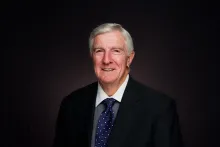
Before his retirement in 2021, Dr. Donald Ward pastored churches in Texas and Louisiana, and taught at Ambassador Bible College in Cincinnati, Ohio. He has also served as chairman of the Council of Elders of the United Church of God. He holds a BS degree; a BA in theology; a MS degree; a doctor’s degree in education from East Texas State University; and has completed 18 hours of graduate theology from SMU.
