

Jorge de Campos
This transcript was generated by AI and may contain errors. It is provided to assist those who may not be able to listen to the message.
Well, brethren, as we travel to places like Brazil and others, we cannot but agree that the world needs restoration. The world needs to be restored, and particularly in third-world countries. Some places, it's just shockingly, shockingly in bad conditions. For instance, about one hour before we got to Manaus, when we were driving from Bovista, we wanted to get a bit fill-up. Again, the tank was getting a bit low. We had enough to get, but we just wanted to eat. It was like ten-thirty, ten-thirty at night. Well, the place is just... we went up into a place which was like a little playground where you have the wheels and little things for children to play. But the place was so shockingly bad. It's the stench, the filth, the dirt. And this is where children play. People are sitting on the floor. The dirt is unbelievable. It's really...
I cannot understand how people can live that way. And then I was talking to somebody with us, and I said, I can't understand how people can live that way. And then he said, which was an interesting observation, he said, well, you don't see a lot of old people. And it's true, you know, because they don't live that way. Not in those conditions. It's just sad. The world needs restoration. And not only at a physical level, it needs restoration at the physical level. I mean, I beg your pardon, at the spiritual level. Not just the physical level, but a spiritual level. Now, what do we use this restoration at the spiritual level? We normally use the word reconciliation. It's probably a better word because reconciliation between people and between people and God, the world needs reconciliation. That's a spiritual issue. It's a spiritual matter.
We live in a situation in a world where that is blatantly needed. We look forward for God's kingdom because it's the only solution. No man can solve the insurmountable problems that exist, physically speaking and spiritually speaking, mentally speaking, emotionally speaking. It's even worse. So we need God's help. But look at Revelation chapter 12. Revelation chapter 12. Revelation chapter 12. And we're going to start reading from verse 9 through 11. Revelation 12 verse 9 through 11. And this is a time when there is a war in heaven and it's slightly thrown down to earth. And then it says, so the great dragon was cast out, that serpent of old called the devil and Satan, who receives all the war. He was cast out onto the earth and his angels were cast out with him. So there's a time in which, and I believe it's very near, and Satan knows that the pressures of God's brethren in the church are everywhere. People are struggling. And it said, he was thrown. And then I heard him stand a loud voice, you know, because the accuser of our brethren has, who accused him day and night, has been cast down. So in verse 10, in the verse 11, he's talking about us, the brethren, and he says, and they overcame him. It was weird as God's people have overcome Satan, how? By the blood of the lamb, by the word of the testimony, and they did not love their lives. To the death. In other words, we are, we're going to be victorious over Satan, because of Christ's blood, of course. And because of God's word and the testimony of the apostles and God's word, yes. But also, that because it says, because we did not love our lives to the death. In other words, we have put God first. We have put God first, even first before our very death. But what is therefore that God's got a plan for us? God has got a plan for us, a great plan, which is a mystery. You and I can read that mystery in Romans chapter 8 verse 19. Romans chapter 8 verse 19.
Romans chapter 8 verse 19.
And basically it says, for the great, for the earnest expectation of the creation, eagerly waits for the revealing of the sons of God. Reverend, when I looked at areas that I've seen in the last couple of days that are so terribly destitute, this all earth is but, as it says here, is but expected. The only hope. But the people don't even have that hope. But they expected the only hope, which is Christ coming. That's the only hope. But part of that, why they're expecting is that when Christ comes, as we read the app, we'll be revealing of the sons of God. That means us, as God's children, we're going to be revealed as spirit beings to work with Christ to restore this earth. What a blessing that is! What a blessing that is! Obviously, therefore, we see there is a need for us to now be prepared. I appreciate the sermon, because in the sermon, we were hearing about that the fear of the Lord, the fear of God, is in a sense, I call it like a starter engine, a spark plug to your engine to get the engine going. And during the feast, I continuously refer to what I call a virtuous circle. And that is kind of kickstarted and continuously stirred by the fear of God. The fear of God is so important in this virtuous circle. And this virtuous name has got faith, and it's got belief, and faith, and it's got our obedience, and our commitment, and then it requires us to do what we believe and what we're taught. And then, as we do, we learn more, and we have more faith in self, but continuously is being sparked by the fear of God. So, I really appreciate that sermon, and thank you. But as we go through that process of growth, which is growing in the grace and knowledge of our Lord Jesus Christ, as we go through that growth process, year by year, we learn a little bit more, and we grow in God's truth. So that you and I may be counted worthy to escape and to stand before Christ that is coming, as we read in 21. So that we can be children of God. But there is one basic foundation in this, which is Christ. We're going to go through Christ. He is the one that made it possible. He is the one that suffered and died for us. And as we are growing, there's going to be a richer point that at our resurrection, when Christ comes back, we will then be ready to marry the groom, which represents Christ and we the bride. We are then ready to marry. And then that is the revealing of the sons of God, as it's mentioned here in verse 19. Now, as we go through this preparation, we as a church have a job to do. And that is described very aptly in Malachi chapter 4.
Malachi chapter 4 is right at the end of the Old Testament in our Bibles, just before Matthew. And right at the end in verse 5 and 6 of Malachi chapter 4. Malachi chapter 4 verse 5 and 6, it says, Behold, I'll send you Elijah the prophet. In other words, we are doing a work in the spirit and power of Elijah, as you may have covered during the feast. There's going to be under Christ a section of the kingdom of God that will be established. There will be of kings, because Christ is the king of kings. And there will be a section of lords, because he's the Lord of lords. And lords are basically the teachers, are basically the priests, are those functions of teaching, while kings will be the governing responsibilities. Under the lords, our understanding is that we'll probably be Elijah as the one, one of the men they run that, let's call it department, that section. Whilst Moses, maybe you, for whom, must probably run the kingly part, and then we've got King David and all the other kings and the other David, for the Israelites, and then there will be the Gentile kings as well. So Elijah, the responsibility, we understand and we look at Elijah. Elijah is the one that said, don't believe in these false priests. Look to God. It was Elijah's mission and job, and he's the one pointing to God. And therefore, us doing a work, the work of Elijah, of his, let's call it, department of teaching, we are going to be doing that work of preparing God's people. And that's what I said. We all are saying to Elijah the prophet before the coming of the great and dreadful day of the Lord. We believe that the work that God started in his last 80-90 years, initially I don't stop strong, and now we're continuing it, is the work, Elijah's work that we are doing. And this is before the coming of the great and dreadful day of the Lord. And here is one of the big functions of this Elijah's work, and that is described in verse 6. And that says, he will turn the hearts of the fathers to the children, and the hearts of the children to the fathers. And yeah, it shows it's the parents' first role to show unconditional love, and to win the hearts of the children, and it is then the children attribute, because of the example of the parents, and that heart is one, and there's that bond. And that is important, why? Because that is setting up the foundation of physical people, pioneers in all tomorrow, that will set an example for other generations, like children and grandchildren that will be in all tomorrow. So today, God is preparing leaders for the world tomorrow, and as part of that preparation, we have to have a right family relationship.
So, the very first thing we see, therefore, is Elijah did the work of reconciling the families, people towards God, and today the church has to do the same thing, help us to reconcile to God, and reconcile to one another.
And so, how do we do that? What are some of the steps that we have to do? It's very similar to what John the Baptist did. So, if you look at Luke chapter 1 verse 15 through 17, let's look at Luke chapter 1. Luke chapter 1 verse 15 through 17. Luke chapter 1 verse 15 from 17. It says, For he will be great in the sight of the Lord, and shall drink neither wine nor strong drink. He will also be filled with Holy Spirit, even from his mother's womb. So, it's talking about John the Baptist when the angel was talking to Zacharias and Elizabeth, the parents of John the Baptist. And then he says, And he will turn many of the children of Israel to the Lord the God. So, John the Baptist was doing a work in the spirit of power Elijah, or before Christ's coming, first coming, and he says, And he will also go before him in the spirit and power of Elijah to turn the hearts of the fathers to the children. And it is obedient to the wisdom of the just to make ready a people prepared for the Lord. And yes, John the Baptist had to do it in a way to prepare people, point them so that they could be baptized, and they have a baptism of repentance. But likewise, we have the same role today of turning the hearts of the fathers to the children, and it is obedient to the wisdom of the just. So that's our role today. Prepare the people for Jesus Christ's coming. We have to do that. So, continuing, we know that Christ did come. We know that Christ suffered for us. And he died. We now have to repent. And then we have to be baptized and receive God's Holy Spirit, as Peter mentioned in the sermon in chapter 3 of Acts. And he says, when the people recognized they had killed Christ, they said, What shall we do? And Peter said, Each one of you repent and be baptized in the name of Christ for the remission of service. So we have to repent and be changed. So the question is, what are we doing about ourselves? Are we, as members of God's Church, preparing ourselves and doing that? Let's go back to Acts 2, Acts 2, where I made reference to this in Acts 2. I made reference to verse 38, when it says, Acts 2, verse 38, it says, And Peter said to them, Repent, and let every one of you be baptized in the name of Jesus Christ for the remission of sins, and he shall receive the gift of the Holy Spirit. Right, so we need to repent. But before that, in verse 36, look at verse 36. Therefore, let all the house of Israel know surely that the Lord has made this Jesus, whom you have crucified, both Lord and Christ. You see, they had to come to a point to realize what they had done. We have to come to a point to realize what we've done, because then, verse 37, when they heard this, they were cut to the heart. In other words, it hit them. And you and I likewise, as we hear the truth, and really what Christ has done for us, it's got to cut us to the heart. There's a different word for that than we often use for that. It's being convicted. Are we convicted? I mean, it's like convinced, but it's more than convinced. It's convicted. Are we convicted?
By God's way. Are we stirred, as we are in the seminary, by that fear of God, realizing what we have done as human beings, what we are, and is that touching us? Then we've got to change. Not only in our church life, but us individually and in our families. Are we convicted? Now, what is it that convicts you and I? Is it me as a minister preaching and speaking?
Is that going to convict you? The us is not. Because I can speak until I'm blue in the face. And you know, there's an English phrase that says, somebody convinced against his own desire, or something like that, is of convincing against his own will, is of the same opinions, too. You know, it's just, you can't convince somebody. So what convicts somebody? What cuts them to the heart? Well, the answer is basically two things. God's only spirit and God's word. It's basically two things. God's only spirit and God's word. Turn with me to John 16. As you know, the section of John, a way for you to remember, is from John 13 to John 17, is that section of Scripture related to the, let's call it a Passover ceremony, that Christ, the third, and the sermon, and his prayer.
And you know, the sermon, I mean, the conversation that he had with the disciples and his final prayer. So as you look in John, let's just quickly look at that to get that synopsis.
It's a good for us to kind of remember section of Scripture and what they speak about. I usually remember this section of Scripture, if you look at it carefully. If you look at it from John 13. John 13, basically, it's got the foot washing. Then from John, the second half of John 13, through John 16, it's that section we normally read during the Passover ceremony. And then John 17, which we also read during the Passover ceremony, is Christ's prayer in front of the disciples after that Passover ceremony.
So this section of Scripture is that. So as we look at it, in John 16, in that section, Christ talks about that the Holy Spirit will come. And in John 16, verse 6 is, John 16, verse 6 is, but because I've said these things to you, sorrow has filled your heart. Yeah, now you feel sorry because I've said these things. Nevertheless, I tell you the truth, John 16, verse 7.
It is to your advantage that I go away. Yeah, so they were sad because Christ was leaving. And he says, okay, I gotta go. But he says, hey, there's a positive thing in here. There's a positive thing in here. Basically, what he's saying is, I go away so that the helper, in other words, God's only Spirit will be given to you, which is the promise of the Father.
So I go, I make intersection for you, so that God's only Spirit is given to mankind, so because I've paid for your sins. And verse 8, and when God's only Spirit has come, God's only Spirit will convict the world of sin, and of righteousness, and of judgment. It's God's only Spirit that convicts. And again, as I said, it's more than convince.
Convict is cut the heart, and you inside you know, and you know that you know, and you know it. It's not just, well, I'm convinced, and well, I don't even, it's, it really cuts it, you're convinced, and you know it's true.
That's convicted, and God's only Spirit convicts us. So the whole God's only Spirit is a convicting agent. It's what convicts us. It's what convicts us. It's absolutely touched in the heart. So the Holy Spirit is one of the convicting agents, but with it is also God's Word.
Turn with me to John 6. John 6. So it's the same book, just 10 chapters, yeah? So John 6. So John 6. John 6. And we're going to read verse 63. John 6 verse 63, and it says, it is the Spirit who gives life.
It's God's only Spirit that gives us life. Flesh, prophets, nothing. It's God's only Spirit that gives us eternal life. Flesh, prophets, nothing. For the words that I speak to you. It was the Bible, the words that Christ was telling to them. The Bible is basically Christ's words. The words that I speak to you are Spirit, and they are life. So this Bible is also Spirit. This is structure. It's spiritual. And so, as we study God's Word, we get instruction, which is life, and which is spiritual, and our spiritual nature.
And it's God's only Spirit, and God's Word that convicts us. So we're going to grow, as we heard in the sermon, from the fear of God, and then as we grow and start applying, then we start believing. Look at Romans chapter 10. Romans chapter 10. Romans chapter 10.
Verse 14 through 17. Romans 10, verse 14 through 17. How then shall they call on Him, for no, they have not believed? How can people call on Christ if they don't believe? And how shall they believe in Him, of whom they have not heard?
How can they believe if they haven't even heard? And how shall they hear without a preacher? So there is a need to not only have the Bible, but there is a need to have a minister of God to expound us the Bible, a preacher. And how shall they preach unless they're sent? Oh yeah, a lot of people say, I'm a minister, I'm a pastor. You can't preach the truth unless you're sent by God, unless you are a true minister of Jesus Christ. As it is written, how beautiful are feet of those who preach the gospel of peace, who bring glad tidings of good things. For they have not all they, but they have not all obeyed the gospel. But humanity have not listened to this gospel and have not obeyed. Lord, who has believed our report? So then faith comes by hearing and hearing by the Word of God. So we got to hear. It has to be preached. God's Word has to go out to complement what is spoken. And the hearing is together with the Word of God, with the Bible, and then God's Holy Spirit works with that. So it makes like how we hear the truth. It must be preached. Preaching is required, and that leads us to be convicted by the Word of God and God's Holy Spirit. So therefore conviction is not just an apparent physical demonstration by acting certain things. It's not a physical, emotional thing. It's a genuine, genuine in the heart, a conviction on the heart. And that conviction is what drives truth, repentance.
Because you and I are convicted. It touches our heart, like in Acts 2 verse 37. It says, well, they're convicted. They were touched to the heart. They were cut to the heart, and they said, what shall we do? And then we just said, repent and be baptized. So we've got to repent.
And repentance is an act of us realizing that we've got to change, but not only realizing that we've got to change, but that we have to be committed in really making a change. It's not just a thing that says, oh well, I'll change and tomorrow we can keep doing the same thing. It's got to be like a really commitment. Commitment. And that's what we do at baptism. At baptism we do a commitment. In other words, we commit that we're going to change. At baptism, we know we count the cost. The minister says, well, Luke 19, count the cost. It's a commitment. You've got to do it. And then what do we do?
Turn with me to Joshua chapter 1, verse 5 through 9. Joshua chapter 1, verse 5 through 9. And Yah is with these reliance. Then we're going into the promised land. And Joshua had now the responsibility of leading after Moses. And so Joshua, in this new role, he was encouraged by God to do what? Look at Joshua chapter 1, verse 5 through 9. He says, no man shall be able to stand before you all the days of your life. So God is encouraging Joshua. He says, just as I, God, was with Moses, so I will be with you, and I will not leave you, nor forsake you. Therefore, verse 6, be strong and of good courage. For this people, for to this people you shall divide as in inheritance the land which shall swallow their fathers to give them. Only be strong and good courageous, and be very courageous, that you may observe to do according to all the instruction of evil unto you, so that you don't turn to the left or to the right, but you may prosper. Look at verse 9. Ever not commanded you, be strong and good courage. Do not be afraid or dismayed, for the Lord your God is with you wherever you go. Brethren, that's instruction to us. As we learn, as we are convicted in our hearts, as we commit at baptism to do it, you will be encouraged to go ahead, even though we have trials and difficulties. We are going to be courageous. And these are kind of three things that go together. Conviction, commitment, and courage. As Dr. Ward refers to them as the three C's. It's key for true God to be courageous. It's key for true conversion for us to be convicted, for us to be committed, and for us to be courageous. Then we have a job to do. Preach the gospel and prepare the people. It's not preaching the gospel to convert the world, it's preaching the gospel as a witness to the world and preparing people. And amongst them is ourselves. We've got to prepare ourselves.
I mean, if we are not preparing ourselves, how can we tell others to prepare themselves? Because if you and I are not preparing ourselves, you know where we are? We're hypocrites. How can I say to others, do this when I don't do it myself?
I've got to do it myself. It's inside. It's at our home. We've got to start at home. We've got to start at home.
And God has given to the churches, to the seven churches in the Book of Revelation, various messages. And the very first message to the first church in the Book of Revelation, it's actually telling us something very interesting. Look at Revelation chapter 2. Revelation chapter 2. Revelation chapter 2.
The message to the first of those seven churches.
And it says, to the angel of the church in Ephesus, right, this thing says he who holds the seven stars in his right hand, who walks in the midst of the seven of all golden book of the next answers, talking about Christ. And he says, I know you're works, I know your life, and I know your patience, that you cannot bear those who are evil. And that's what we hope that we all are in that spirit. And you, and just those who say they're apostles and they're not, they're founding lions. Yes, you have proven those that say they are religious ministers, that they say they are Christians, religious ministers and religious organizations out there, but they're not. They're not following Christ. And he says that found them lions. They are preaching wrong things. And you know what I'm referring to. You all have gone through that. And you have preserved and have patience. Now, are we remaining faithful and having patience? And have labored, for my name's sake, have not become weary. How many of us can say that? I know it's hard, but we just have to persevere. And he says, you're not weary. I mean, there were a lot of trials in the early church, a lot of trials, a lot of difficulties, a lot of people bringing in false heresies into the church. It is as if we go in a circle and this is kind of gets back again, and this happens. Nevertheless, we've got to be careful against this. That you have left your first love. And here is a big question.
We have left, they have left the first love. Have we left the first love?
And you know, quite often it's referred to first love and that initial excitement. You ask the truth, you got that initial excitement, and you study all night, you search, yeah, this is it. Do we still have that same zeal?
But there's more than that. And I want to look additionally to something else about that first love.
Because it says, remember therefore, verse five, from where you followed the Bible, repent and do the first works.
What are the first works? Is the first works just being enthusiastic and studying the Bible? Or is there more to it?
And so, as we are, as we know the truth, we know we're going to build this brotherhood between us and our families, the fathers towards the children, the children from the fathers. We're going to build the church. We're going to become a victor. We're going to be committed. We're going to be courageous. We're going to do. And it says, yeah, you've done well. You've tested those in our lives. You're sticking to the truth. You've preserved. Are we persevering? And are we laboring now without becoming weary? Yeah, maybe we are. Maybe we are. But the question I'm asking is, have we left the first love? And what is the first love?
Yes, indeed. We have a job to do to preach the gospel of the kingdom of God.
Yes, we need to be justified. We need to be reconciled. But what is the first love? What is the first works that we have to do? In a Christian process. Turn with me to 2 Corinthians chapter 5. 2 Corinthians chapter 5.
2 Corinthians chapter 5 verse 18. Starting in verse 18. Now all things are of God who has reconciled us to himself. Yes, Christ did the first reconciling. God through Christ reconciles to himself through Jesus Christ and has given us the ministry of reconciliation. What is our first job? To reconcile with one another. To be at peace with one another. Our first work is reconciliation with God and with man. That is, that God was in Christ, reconciling the world to himself, not imputing the responses to them, and has committed to us this word of reconciliation. Now then, we are ambassadors for Christ as though God were leading through us. We implore you in Christ be reconciled to God. So our first work's got to be reconciliation to God and to each other. For he made him who knew not to be sent for us, then we might become the righteousness of God in him.
Christ's first work as our right priest of the pain for ourselves for ourselves. How? Through his death, right? Through his death. Then he was resurrected, right? What was his first work that he did when he was resurrected?
Isn't it? The wave sheath. The wave sheath offering.
And what it does to the wave sheath? He reconciles us. It's the offering on our behalf reconciling us to the Father so that we can go through that veil, which is his body. We can go through that veil to the Holy of Holies as you and I read in Hebrews 10. And he says, we can go there in a new and living way. So what's our first work? Our first work is to be at peace and reconcile to God. And then with one another. That way we become the righteousness of God. That's what we read there in verse 21. There we might become the righteousness of God in him. It's not my self-righteousness. It's not your self-righteousness. It's not our self-righteousness. It's the righteousness of God in him. Because we'd be reconciled. If we have Christ in us, if Christ is living in us, if indeed we are obeying, we're doing what's right, our robes have been washed in the blood of Christ from both sins. And now we reconcile to God.
And that, that is nothing else than the weightier matters of the Lord. Justice, mercy, and faith. Matthew 23, 23. There is the first works. There is the leadership you and I need to exhibit. And that starts with me, with you, and then at home, and then from home to the church, and then beyond. We're going to be convicted in our hearts. Then we need to change. Then we need to be reconciled to God. We need to have that commitment to be reconciled to God. And that's the first work. That's the very first thing we're going to do. And then we're going to have the courage to walk in faith. And it says, sin no more. Do you know the story of John Hayek, where there was that woman that came to Christ, she had committed adultery, and everybody wanted to stone her, and Christ wrote something on the on the floor and said, and then they all left. And then the woman said, the woman wears you accuses, well they're all gone. So what did Christ tell the woman? Go and sin no more. We need to have the commitment, the conviction, the commitment and the courage to walk in faith that it is through Christ's reconciling ministry that we can be reconciled with God. And therefore we have to do our part in that walking in faith, in that position of being reconciled with God and with Jesus Christ.
So whenever there's a problem, whenever there's a problem, whenever there's a challenge, whenever there's a difficulty, what do we do? How do we go and tell other people? Oh, Jesus, oh, did you see what he's done? Did you see what she's done?
Look at Matthew chapter 5, verse 23 and 24. Matthew chapter 5, verse 23 and 24.
It says, therefore, if you bring your gift to the altar, therefore, in our modern language, it would be, let's say, you are praying to God by bringing your gift, by bringing your desires, your time, discussing God and talking to him, these are the sacrifices I'm doing. When you're praying to God, it says, yeah, in verse 23. And then remember that your brother has something against you. If at that moment you think, oops, there's something, yeah, I have not quite done right, I haven't apologized, or whatever it is, leave your gift there before the altar. Say, well, excuse me, Father, I've got to sort this out, and you go and sort it out. First, be reconciled, your brother. That's how first works. And then come and continue praying.
Agree with your adversary quickly, while you are on the way with him. Lest your adversary deliver you to the judge, and the judge hand you to the officer, and you be frowned to prison. So, we've got to make our part to be reconciled. Now, granted, granted takes two to tango. It takes two to tango. It's not like the modern dance, which one does, is it? Nobody else is testing. But a tango is different, it takes two. So, yes, you're going to do your part, and the other person is going to do their part, but that first work is a ministry of reconciliation. We're going to be at peace with others, and we're going to do, from our part, everything that it is possible to do.
Turn with me to Ephesians chapter 5, verse 25. Ephesians chapter 5, verse 25. Ephesians chapter 5, verse 25.
It says, Husband, love your wives, just as Christ also loved the church, and gave himself for her. He has an example of reconciliation. He's through love, and it shows Christ gave himself for her. Life is a sacrifice. Love is a sacrifice. And the leader's got to set an example. The husband's got to set an example. And then wives, it says in verse 22, it says, Wives, submit your own husbands as to the Lord.
When a husband does their part, the wives are only too happy to do this. But their responsibility is to submit to the husband's house. We need to submit to Christ. And that's why it says, and going back one verse, verse 21, submit to one another in the fear of God. We've got to submit to one another in the fear of God. So there's got to be this mutual submission, and back to the message of the sermon in the fear of God with that deep respect for God, because there's a judgment, because I heard this. Justice, mercy, and faith. There has to be justice, there has to be mercy, and we have to walk in faith, the free will and the nay. We've got to be convicted, we've got to be committed, we've got to be courageous, and we're going to do our part and walk in faith and do what needs to be done. And look at the there in Ephesians chapter 6 verse 1 through 4. It says, Children, obey your parents in the Lord for this is right.
Honor your father and your mother, which is the first commandment of promise. So, as we, therefore, are doing our part, we are turning our hearts, the fathers towards the children. The children are turning their hearts to each other. What do we have? Reconciliation. Reconciliation, first with God. Reconciliation between ourselves and reconciliation in our family. And that's why we read in Malachi chapter 4 verse 5 and 6, turn your hearts towards one another lest God will come and cause utter curse on the earth. That's why we need to be doing those first words. And so, first words can also imply not only being excited for God's work, but we gotta be working in reconciliation. And that message to the first church was around that very point that they left first words. And therefore, they started having divisions and schisms because of they're not sorting out their little problems. They left first words. So, brethren, the world does need reconciliation. Through worldwide reconciliation will only come when Christ will come back. But you know what? God's eyes are on us. How can you bring reconciliation to the world through us if we today as a church are not practicing reconciliation with one another? We have to be ready. We have to be putting that in action. And so, the question I have is, are we doing the first words? Will you and I be ready? Will you and I be accounted to be worthy to stand with the Son of Man? Because amongst other things, we're doing the first words of reconciliation and still persevering till the end and being faithful till the end. Reverend, it's our responsibility. It's our calling. It's our duty. Let's all the time remember to do the first words.
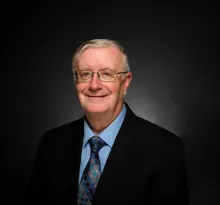
Jorge and his wife Kathy serve the Dallas (TX) and Lawton (OK) congregations. Jorge was born in Portuguese East Africa, now Mozambique, and also lived and served the Church in South Africa. He is also responsible for God’s Work in the Portuguese language, and has been visiting Portugal, Brazil and Angola at least once a year. Kathy was born in Pennsylvania and also served for a number of years in South Africa. They are the proud parents of five children, with 12 grandchildren and live in Allen, north of Dallas (TX).
