

Jorge de Campos
We are on the verge of serious difficulties that could lead to many disagreements and arguments. The world needs leaders that are skilled and adequately trained in "Reconciliation". For us to fulfill that role in the Wonderful World Tomorrow (in the Milenium) we need to undergo in this age a best practices reconciliation training program. God is putting us through such a program! Are we mastering it?
This transcript was generated by AI and may contain errors. It is provided to assist those who may not be able to listen to the message.
We live in a time in which there are terrible world events. And there's a lot of people saying a number of things that we could have very difficult times in the next week or weeks ahead. We live in difficult times. And anyone that stands up for godly values is attacked. And what we see not only in this country but we see around the world, there's a lot of corruption everywhere there's corruption. And that brings a lot of instability and anxiety. But what the world does need now is what I would call reconciliation leadership. It's leaders that are well trained to address issues and bring people to reconcile. And in the end that really starts from a spiritual angle. And it requires wise, strong and well trained leadership in that specific skill. So reconciliation leadership is something that you and I do need and the world needs badly. And we as true Christians, following the example of Jesus Christ, we need to practice. And as we practice we learn the skills of reconciliation so that we may be leaders in the world tomorrow helping Christ bringing reconciliation of peoples to people and in fact bringing a reconciled world to God. So you and I are going through a training program today. A training program to become leaders in reconciliation. And today I want to talk a little bit about that. And I want to talk about some key steps in this training that you and I are going through. Interesting, this training starts at the very core with ourselves and God. And then in our own families between husband and wife and us and our children and vice versa. And then to our brothers and brethren in the church and then in society as a whole. And so reconciliation is a training program that you and I are going through. And let me say it actually is not an easy training program. It is a difficult training program.
Now I want to emphasize one simple point about reconciliation and forgiveness. In an analogy, I'll say reconciliation is a two-way street. In other words, both parties have to do their part for there to be reconciliation. Forgiveness, yes, it should also be a two-way street, but if it's not, it needs to be at least a one-way street. That's important to understand. And so to actually give a starting point onto this message, let's look at the big picture. It's always good to kind of get the details of it further away and look up from a big picture. And what is the big picture? The big picture, and it can't be bigger than this, is that God has a plan for you and I. God has a great plan.
And turn with me to Revelation 10, verse 7.
Because I just want to bring a point here about this. And it says, in the days of the sounding of the seventh trumpet, that is what we understand, one of the symbolisms of the day of trumpets, when it is about to sound, the mystery of God will be finished. The part that I want to emphasize is the mystery of God will be finished. The mystery of God will be fulfilled, will be explained, will be revealed, will be shown to mankind.
Now what is this mystery of God? What is this great mystery of God? Turn with me to Romans chapter 8, verse 19. What is this great mystery that is going to be revealed? And it talks about that the earnest expectation, that's Romans 8, verse 19, of the creation eagerly waits the revealing of the sons of God. The revealing of the sons of God is when the mystery of God will be revealed.
People don't understand, they don't comprehend that you and I are to really be in the God family, in the God family, in the family of God. And we'll be part of the God family.
God, this is a great mystery. And when the first children are then made spirit beings, now with God's only spirit and with the help of God's only spirit, we're overcoming and going through this training program. When will be revealed? The world will be aghast. It is, it's a mystery that God will reveal, and indeed this mystery has a number of other steps, which by themselves are also mysteries. So quite often you see in the Bible talking about this is a mystery, and that's a mystery, but it's all steps building up to that big one, which is when the children of God will be revealed as sons of God. Now the interesting point is, and this is a big picture, is that God is building a family. God is building a family, and the whole of mankind, the whole of mankind sooner or later will be part of that family unless they reject it, because that's God's plan. Now some will be earlier and some will be later according to God's wisdom and timing, but his desire and intent and his plan is for everyone to be part of that family.
But the foundation is the family. Think about it. The building block is the family, and the family at a small physical nucleus level is the building blocks that builds society and that will build God's family. And that building block, the cornerstone, the real cornerstone that sets the example and the principles for that family is no other than Jesus Christ. He is the cornerstone. Now, once again, looking at the big picture, regrettably, we, mankind, we, human beings, you and I, all of us, we all have sinned. There's none of us that has not sinned, and we all still sin. We'll all be naive and liars if we say, well, I never sin. John says that very clearly. If you say you don't sin, you're a liar. So we all do sin, and sin separates us from God, creates that separation, that barrier. And when I'm saying we're talking about reconciliation, the first reconciliation has to be between us, between you and I individually, and God. And again, remember, it's a two-way street. So God's going to do his part, and we're going to do our part for it to be real reconciliation. The beauty is that God has done his part by sending his only beloved son, and he died for us while we were yet sinners. He took the first step, and we, unbeknown to it, we've kept sinning and sinning and sinning and sinning, but he already had done the first step. So, understand this under the concept we're talking about, this is a training program for us, because as we practice our part in walking in the other direction of reconciliation to God, there is a training program. Which then we've got to expand it to our spouses, and our spouses to us, and to our children, and our children to us. And this all is a training exercise. So that we, when we become spirit beings, at Christ's coming, at the last trumpet, at the revealing of the mystery of God, when we are spirit beings, we have been adequately trained to help others to also reconcile. In other words, we will be efficient, well trained, well equipped reconciliation leaders. So that's our program. Now, obviously you and I know that the reconciliation between us and God could not be started by us because the wages of sin is death, and there's no way I can pay back my life, because I'm dead. Dead. And what can I do? I'm dead. And what's more, even if I say, well, I'm not going to sin anymore without God's only spirit and with pure carnal mind, carnal nature, human nature, you and I will continue sinning. So there's no way you and I can initiate this breach, to breach that gap. And so Jesus Christ initiated the first steps, crossed that abysm, or that great divide, by paying for our sins, gratis, freely, gratis.
You see, righteousness is imputed upon us, like you read in Romans, like it was imputed upon Abraham because he believed. And believe means you do what a person tells you to do. You believe him, you trust him, so you do what he tells you to do. And repent means that you commit and you actually are going to do it, you're actually going to do it.
And now, therefore, you are walking in the other direction towards reconciliation. This is a two-way street. It's a two-way street. So the foundation is Christ. He did the first step. Our sins are forgiven freely, gratis, by his grace, by his kindness and goodness and gracious act. Gratis. So that we could be reconciled, but we must do our part, which is walk back in the same path, but in the opposite direction, by believing what he says and repenting, by committing to obey and actually doing it. So indeed, salvation and justification, and let's start with justification, being made right with God, being at one with God, having our sins being forgiven, in other words, having God's righteousness being imputed upon us, is free.
Conditioning. On the condition. The condition that we do our part and we practice and we live it, we do it, and as we do it, we are being trained. You know, training is something that you do and then you don't quite do it quite well. You've got to go for training and then you've got to go for training and you go for training until you actually do it better and better. I know that some of the brethren here do a lot of exercise, weightlifting and things like that, and they know you've got to keep training to actually become better and better and in a sense become an expert in that training or in that discipline.
Once we are experts in that discipline of reconciliation, we can now be kings and priests in the kingdom of God, teaching others reconciliation. Now, in Revelation 19 verse 7, if we look at it very carefully and I'm just going to focus on one point, Revelation 19 verse 7 talks about blessed are those who are called to the marriage supper of the Lamb. Now, that is a blessing to be called. Now, I know a number of people get tied down with technicalities or where it is and blah, blah, blah.
And yeah, that's kind of okay to talk about it, but be careful because sometimes we don't know everything for sure. But I'll tell you something that is even more important than a technicality because in the end, to me, the important part is to be there. To me, the important part is to be there. It doesn't matter whether it's in the clouds or whatever it is. It doesn't matter. It's to be there. Will you and I be there? Will you and I be like the wise virgins in Matthew 25 1 through 13? Will you be like the wise virgins that are ready? Or will you and I be like the foolish virgins which are not ready?
Now, understand they are all virgins. Now, what does that mean? It means to me that they all between inverted commas are in the Church of God because they are virgins, right? They are working. But some are wise and some are not. So some will be ready for the wedding supper and some will not. What a waste. If I'm sitting here in church and I'm not going through the training program to be ready to be in the kingdom of God. And one of the areas of the training program that we need to be trained on is in reconciliation.
I mean, there are many other areas that we need to be trained on, but today I'm focusing on reconciliation. So the question is, will we be ready? Now, what is it that we at this end time, particularly this end time, that we need to be working on very carefully? I would say Malachi, the book of Malachi gives us a clue. Now, Malachi, the book of Malachi has got five messengers. There's five messengers. The first messenger is Malachi himself in Chapter 1. The second messenger are the actual priests in Chapter 2.
The third messenger is John the Baptist in Chapter 3, verse 1. The fourth messenger, which dedicates a lot more space to it, is obviously Jesus Christ in Malachi Chapter 3, verse 2 through 2, Chapter 4, verse 4. And the fifth messenger, which is the one I want to focus on, is Elijah in Chapter 4, verse 5 and 6.
And in Malachi Chapter 4, so let's turn to it, Malachi Chapter 4, verse 5 and 6, we read, Before the coming of the great and dreadful day of the Lord. And brethren, the great and dreadful day of the Lord, we know, is that last year of the three and a half years of tribulation. And Elijah the prophet will come, and he will turn the hearts of the fathers to the children and the hearts of the children to their fathers, lest I come and strike the earth with a curse.
Our job description for the Church of God at this end time, we have a responsibility of fulfilling this role of Elijah the prophet. And our role is to build the relationship in our families, particularly between parents and children, and vice versa. Because the family is the building block, and these little families that we have, God will protect them as little jewels.
Your family, our families, God will protect them as little jewels through these days so that they will be pioneers in the beginning of the world tomorrow. God needs you, young children. God needs you to be there. And so God wants you to draw your heart to your parents, and God wants your parents to draw your heart to you. He wants these families to be bound in this complete unity. So if there is any separation, we need to reconcile and go through this training program of binding in unity, because God needs you. Well, God could create stones, but he chose not to. God needs you to be the pioneers of the world tomorrow, to be examples of families to other people that come out of the world.
God needs you to be there. You and I have to trust God. We have to have faith in God that that's what he's going to do. And that's why he says right at the end time he wants that bond to be there strong because there is something beyond for the physical young families at the beginning of the world tomorrow.
Young people, you're not losing anything. You're gaining a lot. You're gaining such a blessing to be leaders in the beginning of the world tomorrow, which you cannot even fathom how beautiful, how wonderful that will be. So our job today is to be well equipped and trained in reconciliation so that we can be examples to those coming out of disasters to the promised land, which the Bible, which we call it the second Exodus, which would be nothing to be compared with the first Exodus.
So God is giving us, you and I, a great responsibility for the beginning of the world tomorrow. And he wants to make sure you don't become a foolish virgin. That's why he says in Revelation three verse eleven, Revelation three verse eleven. That's why he says, Behold, I'm coming quickly. It's going to be sudden, suddenly when it's going to happen. Brethren, things are going to appear, get worse, it's going to get better, get worse, get better.
And then boom, suddenly, suddenly, and says, Hold fast, hold fast to what you have, that no one may take your crown. Your crown, young people in the church, you little ones, teenagers, you have a wonderful crown to be physical leaders in the world tomorrow. Can you see it? Don't throw it away and get involved with the faith that you get at school. Don't get involved with that rubbish. Just stay faithful.
Don't let anyone take your crown. It's beautiful. It's beautiful. You see, Christ opened the way for us to be reconciled with the Father. He gave his life for us. He died for us. And he is preparing you and I, adults and young people, to be leaders in the world tomorrow. And you and I have to be prepared to give of ourselves. Now look at Revelation chapter 12 verse 11.
Revelation chapter 12 verse 11. And it says, we need to overcome Satan because he's talking about the dragon, he's talking about Satan. In other words, we need to overcome this world, the problems we have at school, the challenges that we see in our schools and things.
We need to overcome them. How? By the blood of lamb. In other words, because Christ has suffered for us, has died for us, is reconciled us to the Father. Number one. Number two. By the word of their testimony. In other words, by the word that we read in the Bible from the apostles, the testimony of the apostles, that what they speak is true. They are God's apostles. And thirdly, and because they did not love their lives to death.
Those apostles did not love their lives to very death. In other words, they were prepared to give their lives for us. And some of us may have to give of our lives at the same time. I understand that. But I believe, I believe that the vast majority of you and I will be protected because God wants you there as physical human beings, balanced emotionally, not emotionally completely destroyed. He wants you there as balanced young people to rule in the world tomorrow.
Because if everybody was going to die that is in the church, then where would be that building nucleus to start to build? It's like the starter engine of the world tomorrow. It wouldn't be there. God wants you to be there. So I strongly believe that most of you provided you and I remain faithful to God till the end will be protected.
How? I don't know. But God knows. And I think in his deliberately wisdom, he's decided not to tell us so that we trust him in faith. And imagine if everybody knew they would kind of be destroying that methodology or whatever it is. But it's not going to be, I believe, something purely just physical. I believe it will be angelical, angelical help from angels that will help you. I don't know how, but they did. Lot and his and his family and he did. Angels intervened. Why can't they intervene for you and I? They there. Those things are written there for our examples. We just have to trust God, but we got to do our part and not let and not allow anyone to take our crown to just remain faithful to the end.
But degree young people, because you got a great help. And so as we look at it from a family, look at example of a family. Doesn't God say that the husband is to love his wife like Christ loved the church and gave his life for the church so that he may present the church as a spotless wife. We as husbands have to give our lives. Have to give of our lives and what is the job of the minister? The minister is to teach you and encourage you on this process of reconciliation.
Turn with me to 2 Corinthians chapter 5, 2 Corinthians chapter 5. And we're going to read starting in verse 18. 2 Corinthians chapter 5 starting in verse 18. He says, now all things are of God who has reconciled us to himself through Jesus Christ. Correct. Christ did the first step, opened up the way and reconciled us to him. He's done that first direction of the process of reconciliation. And as given as God's ministers, the responsibility to preach the ministry of reconciliation.
Our job is to tell you in a loving and kind way that we all need to practice reconciliation. That is that God was in Christ reconciling the world to himself, not imputing the sins, the trespasses on them. And as committed to us as God's ministers, the world of reconciliation. Now then we are ambassadors for Christ.
What? In this ministry, in this job description of reconciliation. As though God were pleading through us, we implore to you. We ministers in the church implore to you on Christ's behalf, be reconciled to God. You do your part. So the core of the gospel is reconciliation. Sure, it is for us to be in God's kingdom, but you and I can only be in God's kingdom if we are fully reconciled with God. We have to be fully reconciled with him first. And that starts right inside YAH and from YAH to those that we interact with closer. With our spouse and our spouse with us, two way street and our children. Let me ask you, let me ask you, is your relationship in your family one that you are trying to understand the issues and the concerns and the problems of your children and you're loving them and you're caring for them? Instead of being a dictator, are you? Are you a dictator? To for instance your 20 year old children? Because if you are, you're not fulfilling Malachi chapter four, verse four and five. You've got to draw your hearts as mom and dad to your children and likewise the children to you. Now I'm not saying that this is happening here, but what if it is? We need to analyze ourselves and examine ourselves carefully.
We need to be reconciled to God first. Look at Romans chapter five, verse 10. Romans chapter five, verse 10. For if when we were enemies, we were reconciled to God through the death of his son. So Christ did this first step, the first part of the road. Reconciling us to God through what Christ did much more now that we have been reconciled and we've accepted and we responded to that. Right. So we reconcile. Why? Because it's a two way street and we got to do our part. So we have responded. We've done our part now. Which basically means after baptism to we die now in this period. Now we have to continue in that path because it says we shall be saved by his life. You see, after baptism, Christ is now in heaven at the father's right hand side as our high priest intervening for us when you and I slip up and sin. And please be honest. We all do sin. There's nothing wrong that you go to God and says, I admit I did wrong. Help me to change now. I need your spirit. I need your help. Help me to change. It's nothing wrong that you go to the person you've done something wrong with. Maybe it's your child or your child to you and say mom, dad or dad and mom say son or daughter. I'm sorry after this to you in a spirit of meekness and gentleness because Satan is trying to use the opportunity to destroy you.
He doesn't waste a chance. He's accusing you in God's throne. But Christ is your defense advocate and he's defending you. That's why it says we shall be saved by his life because he's living. Number one, he's sent as his Holy Spirit to help us overcome. And number two is our high priest in heaven, our defense advocate saying, and I'm going to put my name, but you put yours. Say, look, George did do this wrong, but George has repented and he's coming to you in repentance. So my blood has washed him clean again. Now, you also and I commitment is not to do it again or strive not to do it again. You and I are human beings. And he says, we will fail because we've got human nature, but we are trying and getting better and better and better at that. That's part of the training program. It's like you go to the gym and practice and you get better and better at it. It's just that it takes time. There's a training program. And so just like Christ deals with us. He forgives us while we were sinners. We got to forgive the others while they still sinners. While they have not yet repented. You see, it talks about this man. You look at the story in Matthew five. Let's look at it very quickly. Matthew five was 21. Matthew five was 21. It says. Matthew five verse 21.
You have heard that it said you will not murder. And then it says, but if you say in your heart, in your mind, or if you're angry without a cause, maybe you call him you angry or you call him rock or you call him you fool. I mean, I remember one situation I was in Brazil and somebody was doing something. I said to them, hey, don't do that. And you know what that person said to you, to me, you are a fool. You're mad. So I said, well, I hope that doesn't go against him in the judgment, you know, but just leave it. But the point is, if it says you're fool, you're in the danger of hellfire. You see, we got to first be reconciled with your brother. That's what we read in verse 24. When you're praying to God, stop praying. I mean, what's the good of praying? If you hold the garage, just stop the prayer right there and you go and sort it out of your brother. Give him a call. Say, I want to talk to you. Or maybe it's your child. I want to talk to you. Or it's your parents. I want to talk to you in the spirit of humility. And likewise, the spirit of humility must be in both sides because it takes two to reconcile, right? It's a two way street. And so you go to them and say, but it says, be first, be reconciled to your brother and then continue your prayer. That's what it says in verse 24, Matthew 5, 24. First be reconciled with your brother. First go and sort it out and then come back and continue your prayers. Because I'll not hear your prayers if you're not reconciled. So your prayers are all in vain. It's like hitting a wall and bouncing off. So really, our first training key, our first training key, right, is to show meekness, humility, kindness. For instance, in Colossians 3 verse 12, talks about that, show kindness. In Galatians 6 verse 1 says, go there with humility, not of pride. Brother, pride, arrogance, is the biggest enemy of peacemaking.
It's the biggest problem. So we go and talk to him. You know, scriptures like Matthew 18 verse 15. And yeah, maybe a separate sermon will then address that. But I'm just showing some basic keys. You go and reconcile to your brother. Now, what happens? Oh, I can't go because he hasn't repented, he hasn't apologized to me. He needs to repent first. You see, forgiveness is a one-way street. I mean, ideally, it should be a two-way street. But if it isn't, don't let that hold you back. You must forgive. Imagine, imagine that you feel, I've got to fix that person. I've got to get that person, I've got to get his neck and shake him up and get him to repent. And he doesn't. And then you die. And because you haven't forgiven and you haven't cleared this out of your internal root of bitterness, because you are called, the other one maybe is not called, you lose eternal life. And maybe the other person repents in the second resurrection. And you just forgiven, that person may repent later. They haven't repented yet to Christ. How much more to you and I? So, we have to do our part. I don't expect necessarily the other person to apologize. They should. If they're Christians, they should be walking the same road of reconciliation, in humility and all that. But the first key is clearly meekness, humility. And the second key is that we've got to die. What do you mean die? Now, Christ died for us. John the Baptist ended up dying, right? We must die as well. But what I mean is, our will must die. We have to do what Romans chapter 12 verse 1 and 2 says, a living sacrifice. We die, but we continue living. So what I mean is not physical death, but I mean is you give up your right to make the other person right. That's a living sacrifice. That is a living sacrifice, which is your reasonable service. As you read in Romans 12 verse 1, it's your reasonable service. Because you and I need to be trained as reconciliation leaderships. And the leader takes the first step. He leads, not follows. And so the first second point is our second training key is we need to be a living sacrifice. And in the end, think of it. It's like the weight of matters of the law. You know, Matthew 23 23, you have neglected the weight of matters of the Lord, justice, mercy and faith. Yeah, we've got to do what's right. We've got to forgive the other regardless. And we've got to walk in faith the right way. Regardless, trusting God to sort the other person out in his time. Let vengeance be God's. You read that also in Romans later in chapter 12. We're going to walk in faith in this reconciliation path. And the third training key is actually go and do the training. Do when you don't feel like doing it, you know, like if you go out and go to the gym, you don't feel like going, well, do it and do it. Well, I don't feel like doing it today. Well, do it. The third training key is just do it.
I want to conclude with an interesting scripture. I'm not saying that is actually the meaning, but I just want to bring that as a possibility. And that's in Revelation chapter two verse five. It's talking about the first year of the church. I mean, the two chapters that describe the seven letters. That's what I meant. The two chapters that describe the seven letters to the various churches of God in Revelation. One of the meanings reflect or possible meanings. One is obviously the actual locations at that time. Draw some analysis from that. Another is churches at the different eras. And the other one is attitudes that you and I can have, which reflect those different attitudes in those different eras or a multiple of any of those three. But in Revelation two verse five, it's talking about in the context of that era. It's talking about them. It says, well, let's start reading from verse four. Nevertheless, I have this against you that you left your first love. So yeah, it's the first love. Now, what is the first love? Well, you could be that zeal that you have right at the beginning when you come to the church. You're just zealous. It could be. But then look at it in verse five. Remember therefore, from where you have fallen, repent and do the first works. Do the first works. So that first love is connected to the first works and what where the first works. And you could draw various conclusions. Right. But let me just put a possibility in there and a possibility that could imply that the first works where that they were reconciling with one another at the beginning, they were practicing the ministry of reconciliation because that is what Christ's done for us. And that's what we need to do. And that's the first works. I'm just saying as a possibility. I'm not saying that is for sure. But if the first works is the ministry of reconciliation, are we are we in our case, in our attitude, are we falling from working in reconciling with others?
How? First, I mentioned being very humble. Secondly, being a living sacrifice in our families and to others, even though others may not repent, we got to do our part and to just keep doing it. Those first steps of reconciliation. If that is the case, brethren, we need to be practicing these first works. The society today, brethren, is in a crisis because we need reconciliation leadership. We don't have it. The world needs reconciliation leadership. God's eyes are upon you and I. Will you and I will we be ready to rule and serve with Christ as reconciliation leaders? Will you and I will be at that wedding supper ready to lead in reconciliation? Are you today? Are we today us? Are we trained so that you and I may be qualified in the ministry of reconciliation for the world tomorrow?
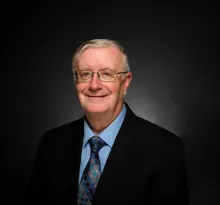
Jorge and his wife Kathy serve the Dallas (TX) and Lawton (OK) congregations. Jorge was born in Portuguese East Africa, now Mozambique, and also lived and served the Church in South Africa. He is also responsible for God’s Work in the Portuguese language, and has been visiting Portugal, Brazil and Angola at least once a year. Kathy was born in Pennsylvania and also served for a number of years in South Africa. They are the proud parents of five children, with 12 grandchildren and live in Allen, north of Dallas (TX).
