


Robin S Webber
This transcript was generated by AI and may contain errors. It is provided to assist those who may not be able to listen to the message.
Well, good evening to all of you, and welcome. Thank you for all that were able to come from outlying church congregations, and we appreciate your braving the rain and the weather, and you're certainly welcome at this old home we care in Garden Grove. So we appreciate the chance to be able to fellowship with you all here today as well. And as Mr. Segley said, we look forward to the time when we'll be able to drink this new with our Savior in the kingdom for certain. So as we know, the book of Deuteronomy is a book of remembrance, so that's what we're going to be doing a little bit of tonight, similar to what was covered in that book with regard to Israel's journey through the wilderness. And now that we've had a chance to go through 50 years with Garden Grove congregation throughout the years, we'll be sharing stories of all the episodes and events and activities that many of us have experienced. And for the first one, I'd like to bring up Jean Updegraff, who has been the kind of the church historian over the years. She kind of has that talent and skill, and it has fallen to her, and she's gladly accepted the challenges to even since she and Dave were here since 74. So she's been able to keep track of a lot of the information, and Dave's been an excellent photographer preserving that in pictures for us. So to give you a little hint of some of the history of Garden Grove congregation, here's Jean Updegraff.
Thank you, Dave. Can you hear me? Okay. Today we are celebrating 50 years at the Church of God in Orange County, and that is a milestone. As Dave mentioned, I am functioning as a church historian, so I wanted to give some history. And as you've also heard, we've taken many, many photos over the years. And when I had to select photos to put out in some of the photo displays in the lobby, it was a trip down memory lane. For one thing, we looked very much younger at that time. And another thing, it brought back memories of activities and friends and joys, and also some little bit bittersweet because you're reminded of people who've moved away, who've died, people who have quit attending. But I want to mention that if you look at the overall picture, the modern Church of God started 90 years ago, 1927, when God called Mr. Herbert Armstrong and his wife, Moma, and they began to follow God's way and truth. The Church began slowly, became known as the Radio Church of God because the Gospel was presented via powerful radio broadcast. In 1968, it was renamed the World Wide Church of God. Those who were here in 1966 in Orange County could go to Long Beach, as mentioned today, or Pasadena. But on December 24, 1966, the Church began the Anaheim Eagle Club. Albert Pertun Sr. was the minister. 167 were there.
And that includes two of our founding members, Brenda Hayes Washner and her very young daughter, Randy Hayes Hilmjig.
From 1966 to 1972, there was one church. It was Anaheim Eagle Club, and then it moved to Norwalk in 1969. They had their own church building. In 1972, Santa Ana started. When we came in 1974, there were probably about 300 there. And we stayed there until 1979.
In the north, in Norwalk, they had a fire that damaged their hall, and for a while, they did not have a place to meet. They were referred to as the Nomad Church of God, or the Wandering Church of God. And finally, in 1976, they found a home at the Orangewood Academy in Garden Grove. And a year later, went to the La Mirada Civic Theater.
In 1980, it was a big day. It was January of 1980. Both north and south combined at the Orangewood Academy in Garden Grove. Orangewood Academy is only about five minutes from here. It's a Seventh-day Adventist school serving elementary through high school.
And the church grew. Until 1988, we were probably about 600 packed into the school auditorium, sitting even on the front roads. So, Santa Ana began again at the Santa Ana E-Bell Club.
In that time, we had a lot of activities. A lot of teens. At one time, I counted 50 to 55 teens in our congregation. And those of us who were there involved, remember just about every Sunday during the school year, either practices or games with other churches, volleyball, basketball cheerleading, and track, and then other activities. And then we went back to one congregation in 1992. So this is the history of the Church of God in Orange County in a nutshell. In 1996, we had one church. In 1972, we had two. That was at Santa Ana. Back to one in 1992, we had two churches. That was at Santa Ana. Back to one in 1980, back to two in 1988, and back to one in 1992.
So that's been the history. A few times, the Orangewood Academy had special activities on the Sabbath. And we were able to meet here, arranged by them. And when we wanted to find a hall in 2000, we approached them, and they agreed. And we've been in this fine facility since the November of 2000. It's quite a long time. I want to also mention in an overall sense the how many pastors and wives we've had over the 50 years. The last almost 30 years, we've only had three sets of pastors and wives and some associates. From 1987 to 1996 was Dennis and Lee Ann Luker. The associates were Dr. Warren Wayne and Pam, his wife, Jerry and Mary Ann Ost.
Robin and Susan Weber came down in the fall of 1994. They became pastor and wife when the Lukers left in 96 were there until the fall of 2001. And then in November 2001, Mario and Cottie Sigley came and been here ever since. This was not the case in the North.
If you add up, or the first 20 years rather, if you add up all those who served in the ministry in North and South, I counted up 11, excuse me, 10 pastors and wives. This is less than 20 years.
And 11 associates and assistants. And that brochure that you got, just a little plug, that has a history in there and it's a very good reference tool of who, what, and when. Our church has been peaceful, especially the last 30 years. I do want to mention one difficult time, and that was April 1995, when on the last day of Unleavened Bread, our congregation under our pastor, Dennis Luker, formally separated from the worldwide church of God to do major doctrinal differences. And those of us who were there that time, remember, I think, it well, because we didn't know which who would be coming to the Orangewood Academy, which became the United Church of God, or who would go to the worldwide Church of God service.
And about 250 or so came to Orangewood Academy, and probably about a third went to the worldwide Church of God. So we've had a rich history here. We've had all sorts of activities. We've had from potlucks and coffee socials and teen activities and singers and talent shows and dances, formal dances, sock cups, casual dances. A lot of us remember good old Camp River Glen.
And we also remember the bonding and the fellowship that we've had in all those times on getting to know each other. We've also learned a lot in Sabbath scrivices and Bible studies and special seminars, Sabbath school for the youth, and a lot of spiritual growth has taken place and many lives have been changed here. So it's 50 years of history. In a way, it's just a beginning. Time to go on. We have a lot of memories. We have goals. And of course, the final goal is to be in the kingdom of God for all eternity.
Thank you very much, Jean. We appreciate that coverage of that time together for many of us over the years.
I'd like to take a minute to have all of us thank the Appie family, Jesse and Linda, and the whole family for the wonderful food they provided for us tonight. We appreciate that very much, Jesse and Linda, and your whole family. Thank you. The food was wonderful.
We can't thank them enough for their tireless service and dedication. They just have a skill and talent that way, and they love using it and sharing it. What a wonderful gift.
The next individual I'd like to bring up was here from about two months after the founding of the Orange County Church of God at the Ebo Club in Anaheim. I'd like to since 1967. I'll ask Mr. Knuth-Joseph to come up and share a few minutes of the history from his perspective.
Thank you, Mr. Walz. Notes? If I had an hour, I wouldn't need them, but if I'm going to stay on track, you better stick to them. Back in the Spokesman Club days, if you overran your talk, you've got a buzzer, and they called me Buzzer Joseph Ecker a long time ago. 50 years ago this coming July, my wife and I were baptized in the Orange County Church. Well, we were baptized into the Body of Christ here in the Orange County Church. What I want to really bring, especially to you young folks who are here with us today, and I don't mean necessarily in age, you know, 20-year-olds, but those who are fairly new in the Church, which is vaguely referred to those who have been here, I think it's just one of the two of you mentioned that, you know, those who've been here for five weeks, five months, five years, and thank to be to God that we do have new people.
But, you know, after 50 years, we're still here. Many, many of us here 40-50 years.
And how did we do that? Because you want to do that, I'm sure. And some of it is in the telling of this tale. Back in February, February 27, 1967, which was two months after the start of the Orange County Church and the E-mail Club, in those days you had to be invited to church. My wife and I were invited to start attending there at the E-mail Club, and we were greeted at the door by a giant of a man by the name of Bill Lovett. Some of you remember him.
He's still with us, but he's just not in this neighborhood anymore. But he warmly greeted us and took us inside the door and introduced us to another big guy. Everyone likes big guys, but the rest of the people were normal. But John Reed. And John took us around and just introduced us to as many people as he could before services. I remember when he came up and was introduced to me. I said, hi, my name is Knut Joseph Fick, and this is my wife.
Well, I have always called her Sweetie and Honey for five years. It was just the two of us. You know, I had to stop and think what her first name was. But, at any rate, in those days it was like a big family. It was, I mean, we're a family here now. It was just a very, very close knit because we were all of one mind. We thought that Christ was coming really soon, and we had to dedicate ourselves to getting ready for the coming of the kingdom. And be what it may. It was good times. It was good times. In a world that was going crazy with hippies—what was it? Hippies, happiness, and hypocrisy or something like that.
For those of you who weren't there, it was a title of one of the church's books, or roughly the title of one of the church's books. And we had Spokesman's Club, which was a men's club based on the Toastmasters type of format, but very strongly biblical. And we, you know, the men would get together and do these speeches, and we would do table topics and have to, you know, really, really get to know your Bible. And it was fun. It was an expression in Proverbs about iron sharpening iron, and that's what it was. And it built a tremendous camaraderie between us.
We were a band of brothers. And the same thing with the ladies. The ladies had activities.
They would—some of the ladies would get together and cook dinners for the Spokesman's Club meetings. We had dinner meetings, and it was really a lot of fun and a lot of, you know, getting together. And the women would get together during the week for—they'd go somewhere for tea or for lunch or Tupperware parties and things like that to where they would have this camaraderie also. And it was a fairly tight-knit group. Early on, I think it was the first year, there was a lady, elderly lady, that died in the church, Mrs. Gibson. Some of you will remember she was Vernon Norton's mother. And my wife and, of course, were brand new. And they said, everybody's invited. So, I think it was mentioned earlier about everybody being invited. So we went to the funeral to see what a church funeral was like. And it was so different. We've both been raised Lutheran. That's a problem in itself. But anyway, especially I was raised Norwegian Lutheran. She was raised German Lutheran. They were a little better. At any rate, the service was uplifting. It was based on 1 Corinthians 15 about the resurrection. That this lady had died. It wasn't gone. She wasn't up there in heaven looking down on us. The minister would explain the whole plan there that's in 1 Corinthians 15. And, of course, family members and friends of the family would get a good dose of the gospel right there at the funeral. By the way, that's what I wanted in mind. No, it's not soon. Don't take me away. But it was really exciting. Another time, in that first year, I believe it was in the first year, there was a wedding. And it was announced in church that in a couple of Sabbaths, there was going to be a wedding after church right there at the meeting hall. The E-mail Club there in Anaheim. And everybody was invited. My wife and I looked at her and said, wow, hey, we get a chance to go see a church wedding. That would be exciting in itself. Again, we were married in a Lutheran church. And so we'd see how it was done in God's church. How wonderful it would be. So we were going to go, how in the world are they going to afford that? I mean, are these people rich? Then it turned out it was really simple. The church just had a pop-up. And they turned all the chairs around the church so that everything was facing the back of the building. And in the back of the building was this beautiful window. And they put some decorations that the church had in storage right there. Everybody got to use and decorated it up a little bit. And then they had the wedding right there. By the way, for those of you who remember Bob and Mandy Fisk, it was their wedding. So it was really a fascinating time. So this was the way it was back then. We would... Oh, here's something, Sade. We would go to the feast. You'd sign up for the feast, and you'd have a list of places that you wanted to go. And then you waited for the church to tell you which hotel you got. And they sent you there. Which v-site and which hotel. But hey, it was fine. It was very simple. It was very well organized. And we'd had 20,000 people at a huge arena down in Tucson, as an example. I mean, we met here and there, but that was where we went most of the time in the early years. And I just noticed there was a thing in Mr. Kubik's letter about some retirees, and I see Chuck Zimmerman. Now, I think most of you know who Chuck Zimmerman has passed route in Arizona and other places. And then I go, wait a minute. I knew his dad. His father, Clint Zimmerman, was one of the, who we refer to as the top ministers in the church when we were new. And now, so much time has gone by. His son is retiring.
I'm talking about feeling old. But Mr. Zimmerman, at the feast, would always take a glass like an imaginary glass in his hand at the end of his sermon at the feast. He'd lift it up, and he would look out over the audience. 20,000 people, he would say, to the kingdom. And 20,000 people would get up on their feet, raise their hands with imaginary glasses, and shout back to him to the kingdom. And the plates would just roar. Everybody had kind of the same thing going on. Now, some of the things weren't practical. Christ did not come when we thought he would. But hey, Paul had the same problem. So I don't make any apologies for the church, or for me, or anybody else. Paul said, and those of us who are alive, so that's been the church of God, I think, all the time. We all hope that it's coming in our day. So, how did we do it, kids?
I'm referring to some of those who are older, too, because from my point of view, you're all kids.
How did we do it? Well, it was mentioned today in the sermon that had been alluded to. And I think you talk to any of the folks that have been in 40, 50 years in the church, they'll give you pretty much the same answer. They'll use different words, maybe different scriptures. But I'm going to give you mine to put in your hearts and to think about this very carefully. Number one, keep your eyes on the kingdom. Matthew 6, 33. That goal has always got to be sharp in your mind. The kingdom of God is where we are going. Secondly, keep your hand on the plow. Don't turn back. Do the work. Serve in the church. Be active in the things going on in the church and support the church and the work.
That's very important. And lastly, keep your feet planted firmly on the rock, and that rock is Jesus Christ. Thank you, Mr. Joseph. We appreciate your longevity and stick to it of this dedication in our congregation. And many of you remember the time when we were the wayfaring church of God, moving around between buildings and so forth, the La Mirada, the Norwalk Church Building, and so forth. And in the years from 1975 to 79, we had a beloved pastor named Wayne Dunlap, and he was delighted to be able to share his comments in a letter which I will read from him. And he was here from 1975 to 1979, and he lives up in Idaho now, either with or near his daughter, one of his daughters. He says, it was a self-free summer in 1975 when my wife Vivi and I arrived in Orange County with our two daughters, Elizabeth and Jeannie. Vivi and I eagerly looked forward to serving in what was then the Norwalk Church. It was the beginning of a wonderful adventure. My first sermon would establish a doctrinal position. It was to be a three-part sermon. Part one was titled, Did the Apostle Paul Abolish God's Law? It seemed to be well accepted in conservative Orange County. I was preparing to present part two on the following Sabbath, when on Friday evening, the Friday evening before, there came a resounding knock at the door. It was not your everyday sort of knock, like from a salesman. This knock had a message of its own that seemed to say, problem. I hurried to the door and flung it open. To my surprise, there stood a salesman from Durkis, John Reed. But he wasn't there to sell me cooking oil. John and Dan Salcedo looked at me intently and exclaimed, The church is burning! The church is burning! I said, Do you mean the hall is burning? Yes, they replied, The hall is burning! The hall is burning! My Orange County adventure was starting off. It was coming to my adventure. It was off to a warm start. One lady wrote to Mr. Armstrong, saying, We liked Mr. Reitenbach, but then you sent us Mr. Dunlap, and he burned down our church. The letter was forwarded to me. I kept it, hoping one day to apologize for the arson, but was unable to find the sweet lady. Our congregation began a period of wandering in the desert in search of a hall. We went from place to place until the Orangewood Academy in Garden Grove was secured to us, I think, by John Reed. From then on, we were known as the Garden Grove Church. At last, we had found a home. Many enjoyable musical programs were presented by the New Horizons Singers, led by Maestro Dan Salcedo, bringing rich inspiration and joyful celebration to the hearts of one and all. The Holbrooks family, Roy Tower, Dave Wallach, and other talented musicians put on a rousing country in western and pop shows that enhanced many local activities. The wonderful brethren of the Garden Grove Church were a delight to serve, and thanks to them and their families, our time there was one of the happiest for me and my family.
I'm most grateful to have been given the precious opportunity to serve the Garden Grove congregation and wish you all heartiest congratulations on your 50th anniversary. May God, our Father, continue to pour out His manifold blessings upon you all, and may He send our Lord and Savior, Jesus Christ, to this troubled earth and bring it peace at last and life everlasting. Love and remembrance, Wayne H. Dunlap. Now, I asked the SDA congregation if they would leave the drum set here, and I tried to get Dan to do a drum solo for us, but he decided to just remain the choir director. But for the next few minutes, I'd like to bring up Mr. Dan Salcedo, who has been in this congregation since 1971. Mr. Dan Salcedo.
Thank you, Dave. And I hadn't heard Wayne Dunlap's letter, but quite a letter, actually. Anyway, I'll just go ahead and read what I have so we can move on. First, I'm going to mention that my wife Esther and I were baptized in 1964 there at the Pasadena Ambassador College Pool, and that's a long time ago, as you can realize. But let's go ahead and continue. And I'm going to begin with the Freeway Church. It's been called all kinds of names, and I'll call it the Freeway Church. It says that at one time some of us called us the Freeway Church because for quite a while we were trying to find a place to have services after the famous fire, as Mr. Dunlap was mentioning, that destroyed the Norwalk building in 1972. We finally were able to secure the Orange Wood Academy to be our building in 1976, and Mr. Terry Mattson was our pastor. And in 1980, we were able to hold Sabbath worship services and holy day services, choir rehearsals, Bible studies in the evenings, weddings, Sabbath school classes, and other activities as needed. The choir performed a beautiful cantata, Jesus is Coming, some of you perhaps sang in it, at the Feast of Tabernacles in Fresno in 1978. And usually we had a big choir back then. 45-50 singers were in our choir at the Orange Wood Academy. We rehearsed before the service, as we do here. We had plenty of sopranos, which you don't usually have, altos, tenors, basses in the choir then. And we were invited to sing with a headquarters choir when John Schroeder was the director. And we had our children's choir that sang by itself for special music at our Orange Wood Academy several times. One thing that was mentioned already earlier was Camp River Glen, but I'll mention it now. In the 1980s, the Camp River summer camp program was very successful. Mr. Terry Mattson was our pastor, and it was very well organized. It began on a Sunday and went until Friday morning, and that was mentioned earlier regarding Mr. Reed. He and his wife, I understand, were the cooks, along with others, for that whole few days. The program included the use of the cabins. There were counselors, Bible studies, swimming, organized hiking, eating, of course. Parents volunteered to prepare meals and help with the arts and crafts. The ages began as young as five. We had five-year-olds there, or six, into the teenage years. And, of course, there were counselors with them and helping them. This was a tremendous program that our children and young people really loved. We had it for about seven years. Could I see the hands of those of you that took part in this camp program?
They're still around here. I'll leave that for now. Then, we also had the YOU program, the Young Youth Opportunities United program that began by the Worldwide Church of God. And that was extremely loved by our young people in the 1980s. And in 19... go ahead. The young people participated in the sports programs of girls volleyball, boys and girls basketball, track, baseball, with the teams of other congregations. And we could rent high school gyms and track facilities to play in. Again, this took place in the 1980s. So, the 1980s was very busy in the early night and the early 1990s. It was abruptly halted, however, by the Worldwide Church of God. And there were many, many young people who were very disappointed. And many of them just dropped out and stopped coming. And that's so sad about that.
The Men's Spokesman's Club meetings. We had three clubs at the same time that met weekly in the evening when Mr. Mattson was our pastor. Now I'm going to skip to the fact that from there, the Sabbath at the Park services from our current pastor, Mr. Sagley. We've had a morning service and we have that Sabbath at the Park twice a year, which is very successful. After the service, we have fellowship with a very enjoyable potluck lunch. And pre-teen services, there are also at a park, at the Park, have been very successful. Fifth Sabbath potlucks have also been very successful in our congregation. Special pizza occasions for seniors to fellowship after services are also very well received. And we've had Deacon and Elder's workshops.
We've had morning workshops for Deacons and then, of course, for Elders. They are interactive activities that focus on Bible scriptures that apply to Christian living. We have also had monthly after-the-service Bible studies by our pastor. And they're very well received. We've had them by Mr. Sagley for several years now. We've also had after-service refreshments for years. They've been very successful and well received.
We also have had a Family Christian Club program that's been a part of our church activities. I'll just make a few more comments now and I'll be concluding. In 1996, as has been mentioned before, Mr. and Mrs. Luecker were able to return to pastor the Seattle Washington congregation. They had been there since 1987, with us, rather, where their home was.
And our new church pastor became Mr. Robin Weber, who had been working closely with Mr. Luecker for several years in pastoring our Garden Grove congregation. A few years after he had left Orange County, Mr.
Luecker was selected, and I think many of us understand that, he was selected to be president of the United Church of God. That was a new established group that we are all a part of now. Mr. Weber, in November 2000, was able to oversee the transfer of our Garden Grove congregation from using the Orange Wood Academy to the 9th Street, 7th Day Adventist Church of Garden Grove, which is obviously this building we are not using, and has been our permanent home for many, many years.
So that happened in the year 2000. Now, there was really not much complaining taking place during those days without a permanent building to worship, and this is something that's very interesting, because we were simply a congregation, happy and grateful to be able to worship and serve our loving God, our Savior, Jesus Christ, and of course to serve one another as brethren. Very, very, very few complaints, actually, as we were driving here and there, but nevertheless, we were actually what we could just be called happy campers. We appreciate all the loving service that Mr. Weber and his loving wife Susan did for us while they were with us in Garden Grove.
Shortly after beginning to use this 9th Street, Sabbath Day Adventist Church of Garden Grove, Mr. Weber became the pastor of the UCG Los Angeles congregation, and Mr. Mario Sagley, who at the time was the pastor of the Santiago, Chile congregation, became our UCG Garden Grove pastor. The date that he began his service as our pastor was in November of 2001. So, we're very pleased. He's been here for quite a few years since Mr.
Mario Sagley has been our pastor, actually. The last 16 years, we have been blessed to be able to utilize this beautiful and comfortable building in different ways. Many thanks to him and his caring and devoted wife, Cottie, for their continual loving service to all of us here in Garden Grove. As Mr. Salsedo mentioned, there were those years between 1987 and 1996 when Dennis Luca and his wife, Leanne, were able to be here with us. And because of the fact she was not able to attend this event with us, although she will be here for the Women's Weekend at the end of the month, she was able to record and send a greeting which I'll play for all of us now.
Hello, everyone! Congratulations on this jubilee celebration of the Garden Grove-California congregation. When Danny Heiber transferred to Garden Grove in June of 1987, it was a difficult transition. For the first time, we were leaving behind our children in our very first grandchild. Maybe you may remember how hard that was, especially for me. But very quickly, the warmth and the love of you brethren made the move so much easier.
At that time, I think the congregation was around 600 people. However, there were also so many fine elders and deacons and deaconesses and others to help be a part of the team that looking after such a large congregation was not that difficult. We were so appreciative of everyone's support. Some of my personal fondest memories of those years are the wonderful music, the beautiful choir that we have directed by Dan Salcedo, and every Sabbath as well as fine pianists. We had other people playing wonderful instruments, and the organ was played by Barbara McCormick.
I remember the wonderful cantata presentations during the Holy Days, and like me, I'm sure many of you also remember the new thoughtful prodigal son and drummer musicals that were performed during those years. Garden Grove was by far the most musically talented congregation we ever had the opportunity to serve. We also faced another challenge in those years in a very large transition in 1995. Those were difficult and painful times for all of us, but we faced all of that together, and at that time we became a part of the United Church of God.
It's hard to believe, but it's now been over 20 years since Danny and I were transferred back to the Northwest. But you always remained very dear to our hearts, and I know Diddy would want you to know how special you were to him, and how much he admired your dedication, and your faithfulness, and your continued involvement in the Church and the work of God.
Personally, I'm looking forward to seeing many of you ladies at the upcoming Women's Enrichment Weekend that will be held at the end of January. May God continue to bless the Garden Grove congregation with an abundance of his good and precious gifts. Have a wonderful, joyous celebration today, and know that I love you all.
Mr. Weber mentioned that his family came to the Long Beach congregation in 1963, and we were there to greet you. Our family was there in those days, too, and I believe that was the first year that the Imperial School bus ran from Orange County and Long Beach up to Pasadena to take a few of us back and forth to Pasadena. But I'll let Mr. Weber go through the years, starting with 1994 when he was here at the end of the years when the Lucre's were here, and he can tell you about his years here in our congregation. Mr. Robin Weber.
I do not have any notes other than in my heart, because I'm amongst friends and family. What a pleasure to be able to share the stage with David. I've known David since he was about 12. I was about 14. I do have roots in Orange County. I lived in San Diego for some time, and then my folks moved to Newport Beach, and we started attending the Long Beach congregation in 1963. And those were, as was mentioned, about the Radio Church of God days and the Worldwide Church of God days. Those were very, very happy times.
When I think of Garden Grove, I was up in Pasadena, and every so often we would have regional events, and everything in Pasadena, I had that responsibility of keeping everything organized.
And then we'd have a regional event, and Orange County would come. And when Orange County came, there was just an energy that came with it, that you still have. You always knew when the Orange County Garden Grove group came in. They were so energetic, vibrant. Church of God, but just energetic and vibrant, and had their own style, and they had their own personality. And I say thank God for that, because how dull it would be if all of us were the same. And so you would come, and you would go into that well-organized machine called headquarters, that in part I was responsible for. But then the call came that I had already been in Pasadena for more years than most people.
I'd served full-time for 15 years in the pastured there. And because of some of the transitional items that were happening, it's like the old story about Dodge. This town isn't big enough for the two of us. And so I was basically invited to choose wherever we might go to live and wherever we might go to pastor. But I was told, well, you know, Robin, just go down to Garden Grove for the summer. Kind of go down for the weekends, you know, kind of help Denny as you can. And I said, no, if I'm going to go down, I'm going to be a full part. We will. My wife and I will be a full part. I'm not a half-time person. We're going to go down and we'll see how it happens.
Mr. Luecker, being a little bit older than myself, even though I'm getting older, we had not really crossed paths that much. As you well know, our personalities are very different. I'd always look at him as kind of a, what do I dare say, a leader and ahead of me in that sense as far as years. But I remember the very first time that Susie and I went out with Denny and Leanne. It was not magic. It was destined. Because what he had and what we were able to share with Leanne and Susie and me, we knew that we had a role to play in a very important time within the Church of God community.
And that we did. You know, today I was talking about thresholds and we remembered what happened in 1994. We have our dear Redlands brother and an LA brother and some of our San Diego brother here, but the epicenter of standing up for the truth of God in Southern California started right here in Garden Grove. And I think it's because of that vibrancy. It's because of that spirit. It's because of that can-do attitude that we had to harness a little bit. I'm glad that both Denny and I were here in 94 through 96. It took, can I tell you something folks? It took a little harnessing.
Because we were moving into something that we had never been a part of before and our culture was in transition. And I remember that second high day of the days of Eleven Bread. It was 1995 and Denny was up front and Denny was kind of always an up front guy, front row guy, you know, front row. I'm always kind of in the middle or in the back row with Susie. Always in the back row with Susan. Anyway, so that, you know, I like to just be with the people and I went up and said, Denny, I said, this is going to kind of be a tough day. I think you and I had better go out to the front door because I think some people may need to be pulled over the threshold because they've never done anything like this before since they've been in the Church of God. And a lot of you, it was so exciting to see all of you. And I remember Denny and I being at that front door welcoming all of you. And it was a great moment. I also remember a friend of mine, Susan and I, were talking about Garden Grove for an hour coming in from Riverside this afternoon or this morning. And we talked about something that's really funny. You may, you know, we were in just a whole new culture and the Church was still in transition. It was not yet what it is today in that sense. And a lot of people were, do I dare say, a little bit more congregationalistic in sense? You will remember our dear friends well. And they are dear friends because Susan and I were smiling about some of them today, even though they may not be with us today. We do love them. They went their way and we're still here. But I remember we were having a meeting and somebody, you know, Denny had mentioned that he and Leanne were going to go to Seattle. And that we would be the new pastoral couple. And one hand went up. I won't give you his initials. No, I'll draw it to Susan. One hand up and said, well, we want to vote for the pastor. You may not remember that. And I always remember Susan saying, do we have to be here? And I don't think that's ever happened in the Church of God before or since to vote for the pastor. But all the hands went up. It's just that in Garden Grove, they wanted to vote and they wanted to be a part. And I think they wanted to assure that there will be a reasonable and peaceful and calm transition as they had already made that first step.
So that's kind of a humorous thing that we're thinking about today.
One thing I will mention about children in Garden Grove, it's very special to Susan. I think a lot of you remember our daughters, Laura, Julie, and Amy. They were in a transition at that time. They had grown up in Pasadena with all the institutionalism of Pasadena with the college, with Imperial schools, etc., etc., and then so much of that dissipating of that time in 94 to 95.
And I cannot but speak for their mother and myself. Our heartfelt thoughts towards all of you, because Garden Grove, as we heard about the number of children and many of us having children or young adults, etc., you were so wonderful to our girls when they were here. There was such a love, and there was such a family sense as Knut was talking about the church at the time.
I remember, you know, just always remember Dan. Dan said, you know, you're trying to get teenagers to talk, but Dan being the principal, he'd go up and say, and how are you? You know, here's Dan, so here's my Dan-sales, and how are you girls doing today? But that was Dan, or there'd be Bob Schmidt, you know, Bob with that gigantic smile and just that vibrancy of life, and he would come up, and there would be so many of the others that would come up, Cheryl Nakashima coming up and going, how are you doing today? You know, you know Cheryl.
And, you know, just on and on and on. And I know in a sense that over the years we tease about this, but that we are supposed to guide and lead you and to train you, but you really made an impeccable mark on the life of Susan and I. You know, growing up in Pasadena, which was so institutionalized as headquarters, and being called Mr. from the time that you're 24, you kind of do something to your head, you know? And then we came down here, and it was Robin, and it was Susan. And it's not that the respect was not there, but it was just the realism and the camaraderie. It was the just the feeling of family striving and doing something unique together that was so very special to us. And wherever we've been, we've always taken Garden Grove with us. We've taken the lessons that you, in that sense, taught us as every Sabbath, when we go some place, we always ask God, God help us to to touch others, and in turn to help others touch us, to help us, to where we need to be helped. Well, you touched this many years ago, and you continue to touch us by hopefully what you see in the life of Susan and myself now. I would mention one thing, because Mr. Luecker and Mrs. we just heard from Leanne, we heard, and all of us, I think it'd be remiss if we didn't talk about Mr. Luecker for a moment, who was, again, we were so very different in personality, and remained so, but we became close in that 94 to 96 scenario. And then, as the United Church of God was going through a different transition in 2007, 8, 9, 10, 11, and when Denny was the president, and I was the chairman of the board of the United Church of God, it drew us in together very closely, very deeply, because we really recognized in 1995, as Mr. Sheekely was bringing out today in his message, that we wanted to hold on to those ageless truths, but we recognized that the vehicle, the manner of treating one another, the relationships, these are those matters that needed to change. We needed to be more respectful to our members. We needed to appreciate the Spirit of God in every individual, not just somebody with a rank and serial number, or a title, or in a box. We needed to focus on our relationships. And so, during that transition time, the Lukas and Susie and I became very, very close again, because of the challenges of possibly derailing the hopes and the dreams that you set forward on that second high day of 11 Brett, 1994. And what a joy and what was a pleasure sometimes to some of us that were on the council. We'd be in a room with Denny, and Denny would just say, okay guys, let's get down on our knees. This is the only way that things are going to be able to happen and happen. And, you know, Denny being an old halfback knew what it was like to be on his knees on the football field, but he also knew what it was to be on his knees before God, and leading other leaders of the church in prayer. I tried to emulate that later on as chairman sometimes, when we would have prayer and we would get on Denny for very specific things.
Something that I'll share with you, because I know all of us respect all the ministry that we've had over the years. And I know if you're deep in abiding respect for your current pastoral couple, Mario and Cottie. But let me share just a little something in a book that I will never write, but you get a little peek into it for a moment of my experience in the church.
I'll always remember the last time I talked to Dennis Luker.
Susan and I had taken a day. We were down at Laguna, you know, the park, Sunset Point. Most of you have been there at one time or another, and got Denny on the line. And it was a very meaningful conversation. I said, you know, Denny, you and I, we've been through a lot over the years.
And I want you to know that your life has been worth it. The impact that you have done and created, the vista that you have shown that it's not just about rules, but it's about relationships and about the foundation that God the Father has given us to emulate and to understand Jesus Christ, and how we treat our ladies and their ability to add to this church.
I want you to know something, Denny. You are not forgotten. Your contributions will not be forgotten. And for the rest of my life, when and where as I am able, we will try to continue to move that vision forward. I thought you'd like to know that. The next day, Denny died.
But he lives. As all of us as pastors and our wives with our different personalities and our different ways of being, we come, we go, we come, we go. But to recognize that the rock that God the Father has given us, Jesus Christ, remains. After all, he is the head of the church.
He is the Lord of our life. And what a blessing that we have today to serve him as much as we did in 1966. Oh, yes, we don't have the buildings anymore up on the campus. And no, there are not as many of us as there used to be. But I will share something with you, dear friends. These are the golden years. These are the golden years. These are the years that we've come to recognize that God is not simply building an auditorium, but he's building the household of God. We are that temple of God. God's always had a building program. And sometimes we will be with many, and sometimes we will be with few. But I will share this with you. Being with many of you today, and those that are not with us tonight, I'm looking around. I see different faces that are not here tonight. I think of Viv Fakuri, I think of Bob Schmidt, I think of Lamont's brother. I think of just so many. I could go on, think of Gordon Barr, I think of the Norton's. I think of so many, many, as do we.
They are dead, but they are not gone. I wish that I could go over to a corner this evening, and there'd be two ladies over there that I would just love to see, because I knew that I was going to be tackled with wit and wisdom. It would be Esther Salcedo and Nola Wells. The wit of the West and the wit of the South come together at the Mason-Dixon line.
What a joy it's been with all of you today to speak God's word during services, to share a few thoughts. I thank you for your indulgence, your patience, and what I say. And as I say today in services, it will always give us a proud moment in our hearts and in our minds, and wherever we go, to say that we are always members of the Garden Grove congregation. Thank you very much. God bless you, and God keep you.
And a warm, loving thank you to you and Susan for the blood, sweat, and tears you provided to this congregation all those years.
And now to the pastor and the shepherd and his wife that have given more years than any other pastor in the history of this congregation, our current pastor, Mr. Mario Segley.
Thank you, all the ones that have preceded me. I will keep this short, and mercifully so.
There's so much that can be said, but I'd like to just take up the story of how we got here, because it was in the year 2000 when two of our four daughters had already moved to the States, and they had no intentions of going back. And so we saw the handwriting on the wall that we wanted to keep the family united. Cady and I had been in Chile for 20 years, and we had been in Latin America for two previous years to that. And at that time, there were two openings here in the U.S., and they said you will be more than welcome to pick either of these two congregations.
And at that time, the Spanish director really did not want us to move. He wanted us to stay, as well as the president. But I was the one that said, look, we've been here 20 years, my daughters are all American citizens, as well as Chileans, and it's time for a change. I need to serve somewhere else. And I also felt I could contribute more here to the U.S., also already part of the Council of Elders. I was teaching at Ambassador Bible Center. I was doing writing, and I just thought I can make a bigger contribution to God in the church, as such.
And so they went ahead and approved our transfer. And so of these two churches, we decided to visit the Garden Grove Church first. And so Adi and I got here. Robin and Susan, we had known for many years, were very gracious. And we spent the Sabbath with the brethren.
And they were, like Robin said, so friendly, so service-oriented. And we fell in love with the Garden Grove Church. So we never looked at that second church. We just said, this is the one that God is guiding us to. And as Robin had said, he thought we would be a good fit here. He said, these are people that love God's Word. They want to learn more about God's Word. And so I thought, boy, this is my cup of tea. This is what I can really do to get them to learn even more about that.
And so we moved with our two twin daughters that were 15 at the time. And we moved over here to Garden Grove. We stayed in an apartment over in Corona because we thought we'll never be able to afford the area of Orange County. And the three-bedroom apartment we had in Corona, we were all stuck in there with the boxes. And my daughters were going, the two older ones, to college. And the younger ones were going to get started in high school. And after about a month, the daughters said, dad, this isn't going to work. We're going to go to the valley even if we have to live in a dog house. But we have to go there because it's centrally located. And so we went ahead, did the search, and we started out at kind of what we thought, well, we can afford this.
And all we saw, the first 20 houses were all trashed. So we thought, well, okay, let's go a little higher up. And so we finally did that. And we found this wonderful place that we live in Anaheim. It's been very ideal for the kids. But for the first two years, I had a crisis with five women at the house. And they were just trying to adjust to a new culture, new society. And I felt like, have you ever planted a tree that's already pretty big and you planted something? It started withering. I was trying to water the thing. I was trying to fertilize it. And I just saw the leaves falling. But finally, they made the adjustment. And everything's worked out. Now they're all four, married. And I've enjoyed thoroughly being here, serving the brethren, because I don't feel I'm the one that has to be, again, the person that is just trying to micromanage people's lives.
I'm here to work with the people, bring out the best that we can, and to work as a team. We have a wonderful team here. We have the four elders, Dan Salcedo, Homer Moore, Lincoln Marini, Roy Tower, their wives. And then we have deacons and deaconesses. And I think we have the record of the number of deaconesses. Somehow here, we've got such leadership in the women. And that was the way we inherited that. And they have been a big support. So you see, God is not a respecter of persons. And we have a good example of how this has developed. We have loved this area. It's kind of ideal for us, because we can fly and be three hours into Mexico City or to visit South America.
And this Los Angeles airport takes us all over there. And so it's an ideal mix. We have Latin brethren. We have Filipino brethren, and other nationalities that we fit right in. We're bilinguals. We can serve the brethren in whatever different cultures they have. And it has been a real pleasure. And we hope to serve you. I hope we never get run out of town. You have to keep putting up with us. But it has been a blessing. And what we want to do is for all of us to finish with success this wonderful race of faith.
Thank you, Mr. Sagley, and thank you, Cottie, for all that you've contributed and put up with and worked with over the years as well.
There have been many people in this congregation who started at the beginning and who have been with us for over 40 years. And it's fitting and appropriate to recognize that and to recognize those people. Here are some of the members that are listed in the program that started off back in the Anaheim-Norwalk congregation in December 1966 through 72 when Santa Ana congregation was started. First, we have and have had spoken about Jesse Barr, who is now attends the Redlands congregation. And Deborah Barr is here, her daughter, Virginia Dichus, and Mark and Judy Dichus, who are not able to be here tonight. John Fisk and Ken Frick, currently attending in Redlands. Caroline Greinke, as well as Randy Hilgen and Knud and Patty Josephek, whom you heard from since 1967. I'd like all of you to stand, please. All those whose names have been called, I'd like you to stand and we'll have an applause and congratulatory applause afterwards. You can do it afterwards, as well. These are the people who have been with the congregation all this time. Homer Moore and Dan Salcedo, Tom and Christa Sanchez, Roy and Ann Tower, Dreda Hayes at Dreda Wozner. And then there were those of us who were Long Beach members who attended Norwalk congregation from 69 or the earlier mid-70s before the the church began again in Long Beach. Roland and Diane Clark, who currently attend in San Diego. David Clark, Curtis Clark, Linda Kosuchenko, Anna Snyder, Anna Moore. Bertha Poindexter, who now attends in San Diego. Gary Snyder, Mitch Snyder, and myself, Dave Wallach. Diane Weiss. And then we had those members who began in Norwalk and attended La Mirada congregation between 1972 and 76. Mel Bennett. You had to leave a little bit ago. Kerry Heesch and Bill Lucegenheide. There he is.
Gene Marini. Gene Marini, the wife of Mr. Lincoln Marini. Nancy Murphy, Steve and Gladys Reed, Erica Schmidt and David Schmidt, and David and Gene Optograph, as well as Bob and Sharon Ma. We appreciate the chance to see them again coming over from Arizona. Welcome as well.
So we'd like to have all of those whose names I've just called to come up to the podium here for a photograph. Mr. Optograph will take a picture of all those whose names we just called. But before that, I'd like to mention Cheryl asked that we announce that the flower arrangements in the middle of every table are available for anyone at the table to take home. So you can draw lots and determine who gets to take it home. I'll leave all that up to you. Cards, toss a coin, whatever. It's up to someone. Yes.
Oh, okay. Anyone who wants to take the balloons home, just think you can have a balloon with the number 5-0 on it. Anyone of the kids can take the balloons home as well. So the balloons and the centerpieces from the tables are available for the taking, so please feel free to take those home. So now for the photograph, and we'd like to thank you all for enjoying the dinner and celebrating this 50th Jubilee anniversary with our congregation here in Garden Grove.
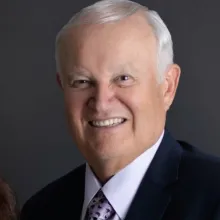
Mr. Seiglie was born in Havana, Cuba, and came to the United States when he was a child. He found out about the Church when he was 17 from a Church member in high school. He went to Ambassador College in Big Sandy, Texas, and in Pasadena, California, graduating with degrees in theology and Spanish. He serves as the pastor of the Garden Grove, CA UCG congregation and serves in the Spanish speaking areas of South America. He also writes for the Beyond Today magazine and currently serves on the UCG Council of Elders. He and his wife, Caty, have four grown daughters, and grandchildren.
