
Frank Dunkle
This transcript was generated by AI and may contain errors. It is provided to assist those who may not be able to listen to the message.
Just got back from the General Conference of Elders meetings.
There were a lot of meetings. Started Friday night. We have a reception.
Which is, you know, that's the first nice thing. Sabbath we have services, and of course you saw that online.
Services by Mr. Shaby gave the first split and Mr. Martin gave the second one. Before that we had a Bible study.
And that was by Dr. Ward. That was very well attended because everybody wanted to hear what he said.
And then we had some meetings that evening.
That is Saturday evening after we had a dinner there. It's cheapest and best. Everybody eat together. We used to madly go out to go to dinner and so on.
Almost nobody does that. You don't have time. Just eat and get back to it.
So it was great because we were able to see friends and people that we needed to have discussions with.
All kinds of things happened. But it was a rush from start to finish. And very useful and helpful. And very encouraging but also somewhat exhausting. That happens too.
So what I wanted to do here was give you a general idea of what we did.
Most of these, as you've noticed, I've been here, I don't usually take too much time to go over it because there's a lot of business.
And there are general subjects that are useful and so on.
But not that much that has that much to do with our daily lives on a normal basis.
A lot of it is teaching, which comes out in sermons and other things and programs and so on.
But in this case, I thought there was enough substance. I wanted to go back to what we used to do.
The ministerial conferences in times past, especially if you consider refreshers, but they were all week.
And the pastor would miss one or two Sabbaths. And sometimes there were two.
And you just had a lot to come back and report on.
There were new churches all over the world and people were ordained and new groups had been organized and new media.
And so we don't have that kind of business to that extent in one way we do.
But this time there's quite a bit of substance. So that's why I'm doing this, to take the whole time.
And I will try to be quick about it. I'll try not to bore, but the substance of this was exceedingly great.
I'm going to skip over, of course, the two sermons. You heard them or had the opportunity to hear them.
I do want to go back and review a little bit of what Dr. Ward said, and that will come out in a couple of Bible studies as well.
In the evening we had the recognition ceremonies, people who had been newly ordained.
We started off, actually, with those ministers and wives who have died during the past year.
We were up to quite a few last two years, and this year there were 12, which is less. I'm pleased with that.
But seven men, and seven men, five women, 12 and all.
You probably remember Carmelo Anastasi, or you might announce that when he died.
He was well known from Italy, but was quite the character and did a lot, made reports, and made things come to life.
We saw at least one presentation here. At any rate, he died early.
They were left with just one elder, his brother-in-law.
I think there's another man that may be either a couple of deacons.
I was impressed around the world. The churches, for the most part, are between 15 and 40.
A lot of them, just 20 to 30, right there, like us, here are these two churches.
I was amazed to see that. At any rate, they have quite a few people in Italy scattered around, but it adds up to a small church.
Then you might have known Dwayne Hudson. He was here to visit, on rare occasion, from Kansas City, the Kansas area, Topeka, actually.
His brother was up here, and a presence here, was an elder here for a long time, too.
Dwayne Hudson died in, I think it was, 97.
Phyllis Canacal. Anybody know the Canacals in Illinois?
Probably a little too far in this direction, but they're well known all up in the whole area.
He's been an elder for 40 years, maybe 50, I'm not sure, a long time.
His wife died, and Mr. Canacal is doing okay, and we've had a couple of announcements about that.
Others you might know, Don Pirwitz from Springfield, Missouri.
Maybe you have run into him.
This is a nice little book that if you would like to look for somebody that you might have known, or know of somebody, I'll have it after service. This is my only one this year. I usually try to get more than one copy.
But that was done, and then we had one man who got his 50-year anniversary plaque, like I did last year.
He got this year, and that was Rainer Saloma. You must have heard of that name sometime in Canada. He was on the board up there, and he's been part of the Council of Elders.
If you go through a long list of these things, it can get boring, but you think we're able to have a meal with him.
What all has gone over the time, what all has happened in 50 years, the world is just so different. We remember each other. We didn't know each other well in school, but we went to a square dance.
I don't know if we knew that before our dates did or not, but anyway, Saloma did a square dance at the college. A few snippets like that.
He's a rather quiet Canadian, and clever. He's funny.
You just have to get to know him to get to know him. He's not out there in front. He's slugged it out for 50 years as well, so we're all happy about that.
Then other employee recognitions and so on.
Those were done on Saturday night.
Then we had some snacks, I think.
Was that the dessert reception? I think that was the dessert reception. We have paid less attention to those things in later years, so I don't even remember. I think we did have a couple pieces of something. Those things were kind of preliminary, and we used to do them on Sunday during the business meeting. We realized it was much better to have them done with. Very important. I don't want to skip anybody, but let's do this Saturday night. I'm going to go back to the schedule.
I wanted to cover some things that Dr. Ward went over. He only had one hour. I knew what he was going to say. He was going to talk about the seven great questions of life. I think he gave five this time, and two were inferred, obviously. I've heard him give nine, one time, thirteen, I think, or fourteen. They're all related, and you know what they are. I knew that he was going to talk about the two convicting agents, the convicting agents in our conversion. I knew that he was going to talk about zeal, etc., because he does. He is a man of great experience, and he has taught a lot of the ministers who are there.
I was out of college before he came along, but I got a few classes the last few years that have been online. He has all this information and knowledge, and to squeeze it into an hour is not possible. So he talked fast. I wrote fast, and I'll review those, because I've reviewed most of them with you, and will again.
He started out, and he said, and he's retired, he doesn't have an official job now, but he's still working like crazy. So he stood up and he said, well, they say, you know, Pershing. You know, Pershing said, old soldiers never die in his famous speech at West Point. He said, they just fade away. Everybody just roared, because he was talking about himself.
And he says, but, and he had a twist on it, of course, he says, but we don't really have to worry about fading away. He says, there are a lot of people who have gone before us, and it seemed like they faded away and then dropped dead and are buried. But that's just temporary. You don't fade away. You prepare to burst forth in glory.
And so he just kind of made a twist on that comment, but it's the right way to look at it.
If you look at death as the gateway, I'm under pressure to get everything I possibly can done for God in His service. That's totally different. It puts you in a whole different mindset than worrying about, oh, I could die. It's coming. Well, everybody has that. But if you focus, if you focus on what we need to do, you're going to be mentally healthy rather than fighting off mental, not exactly illnesses, but things that drag you down.
Anyway, so he started that off and went back to 1 Peter 1.12. Poor Peter said, I'm not going to keep nagging you. I will not be remiss and not remind you. And so we knew what we already knew. He was going to talk about stuff he's talked about before. Okay, so the two convicting agents. How many here can say that? I've said this many times here. The two convicting agents in our conversion. I know it's just cold turkey and you might not think in this context.
And we don't have time to fiddle around, so I'll tell you. Anybody want to guess on one? Okay. Holy Spirit convicts us with all the Holy Spirit. You can't do anything. But the Word of God is the other thing. It works together.
We used to have a saying I heard many times before I even got into college, the headquarters sermons. The Holy Spirit doesn't, you know, it flows. It's like water. It flows. Water, mountain stream, it doesn't decide to have a wild idea. It decides to flow up this next little canyon over the hump and just for the fun of it and go around. Water flows down where the riverbed is.
That's Lewis Point. But in this case, the Holy Spirit flows down the riverbed of the law of God. That's where the Holy Spirit will lead you. And if you're doing something and say, I'm not sure, oh, that's really not included in the law there. It wasn't the Holy Spirit. It was just your ideas. So this is really important. Those are the two convicting elements. We have to read and study and know what God's will is.
A conscience must be honed. He didn't go into this. I'm just adding a little bit here. Your conscience must be educated. You know, the word is constructed with two parts. Science means knowledge. Con means with. With knowledge. If you never heard that such and such is breaking the law, you might just walk along and go do it. Then there's the park ranger or somebody that says, did you know you just incurred a $3,000 fine because you grabbed it and stole a picon or something.
Well, some places you can steal pine cones and other places they have some may that don't worry. And to use an absurd example, I think, but I saw a woman who just felt totally guilty. She stole a pine cone out of the park. She was going to make it a decoration. And she saw that I saw her and she almost had a meltdown apologizing and explaining, forget it, enjoy your pine cone. Who sits around making laws that you can't steal pine cones from under the pine cone? Anyway, don't want to get off on that.
But you do have to have knowledge about whether it's right or wrong, or else you might just do it with a clean conscience but still wrong. So the law of God is our anchor. That tells us what to do. And the Spirit of God, that works just so that we can understand it or even agree with it. That's right, even agree with God.
Agreeing, we have to have God's help in our thinking. So those are the two convicting elements in our conversion. The law of God, the Word of God, and then the Spirit, His help in our thinking so that we recognize and understand it and so on. Okay, that's all. That's all. Until the next test. That's a big one. I'll probably... But I didn't catch this the first two times. I went, what were those two? I knew the Holy Spirit. But that's really important to understand. Mr. Shaby went into, in his sermon, the importance of words, in the meaning of words, the power of words, while speaking the same thing.
He started out with God's just giving him peace. There was one source of the right thinking and words, and then Satan comes in, and you have more than one, and you're distracted from away, away from what God said, and torn away, pulled away. And so that was his sermon. Wasn't going to go over that. Dr. Ward mentioned John 663, definitely, a memory scripture. There's an emphasis throughout the Bible on God's words. New Testament, Old Testament, and Christ in 663 of John just states that it's the words. He had just given the discourse on bread, and he made the statement, you have to eat, imbibe, drink my blood, eat my flesh, and drink my blood, which was an abhorrent thought to the Jews, to anybody.
On his face, it's cannibalism. Horrible, terribly horrible thing. And a lot of people left him, and he said, in verse 63 towards the end of the chapter, he said, it's the words that are life. This is what I was talking about. So that's a real big, important verse.
You know, don't worry about memorizing too much. Think about it. If you review it enough, it'll start coming back. And then with just a little bit of effort, oh, that's right. That was in 6 or 63. So, but Christ emphasizes the words, and he was talking about, to us, ministers, speaking and preaching the word. Went through a section on that.
He told us we all needed to improve on our zeal and passion, because God has a zeal, and that's his state. He's very zealous, very interested, very intense, interested in us. And we are his work that he's doing. And then he gave this rendition of the seven great words. He gave five that I counted, the seven great concepts or questions that we have to answer as humans. Number one is, who is God?
And number two is, what is God? Number one is the existence of God. Pardon me. That's the first one. Next is, who and what is God? Or you can make two out of that. And then third is, what is man? That thou art mindful of him? You know the scripture? Well, we're dust. Other people think we are advanced pond scum, slime, lightning strikes, the right chemicals there, and bingo comes life.
Not true. We are dust. We are physical, in other words, made of physical things. So who is man? What is man? Or vice versa. And then, what is the purpose of man? That's all I mentioned specifically. The others are to be drawn from that, but I'll go on with a couple. And that was mentioned later anyway. But next, what does God say to man? Did he leave his word? Is there a word?
Something, you know, if he is as great as we believe he is, and actually look around, he has to be with his creation, he surely would have communicated directly in a way we could understand. And of course, he does.
It's just that, as he states over and over in the Bible, man doesn't want to hear him, so we tend to run away, go the other way. So, the purpose of man, what is the, you know, and then the existence of a word toward us, or communication between him and us. And the first thing the introduces, of course, besides being there and doing the creation, is the Sabbath and the Holy Days. He creates everything, the final creation of the Sabbath, and the Holy Days come later, part of that creation. But you have to understand that to understand the plan of God.
And seven in this list that I just drew up afterwards, it could be eight or fifteen, because there are others that are important questions. You can just consider them part of another question or not. But that is, what's this thing about the community, in the communication that God left us, the Bible, he says, if we read it, he will help us understand. He'll go along in our reading, because it's a living book. What's this thing about the firstfruits and the true Church of God? That's really one of those great questions. So he went through quite a bit of that, and he said we must distinguish ourselves so that we know what our raison d'être is. He's given that sermon in various few sites. Raison d'être are the purpose for being, French, purpose for being. Why were you born? In other words, what is the purpose for me being alive? Then I could have some focus and some understanding, some clarity and some peace, if I know. And then he talked about preaching and other things that you have heard and that I had. But one focus he did speak a little bit of time on is the idea of begetl and the Greek genao, or genao, and what it means. That has a great deal to do with the Church. I'm going to give that before Pentecost. Include that in one of the Pentecost sermons, which is, what, three weeks now? Or is it two weeks? Well, that'll be next week. Or maybe on Pentecost. I don't know. At any rate, it was an overview that was excellent, like so many. And I've thought many times—I've had this because I've heard him. I guess I'll just point it out. I don't want to necessarily make a handout out of that. But we have the truth. And he said, if we don't preach it, who will? It's our job. And that doesn't mean just somebody who gives sermons on the Sabbath. We, as a work, are doing enormous amount. Now I'm going to skip over the sermons, which you've heard. The power of the spoken word. And then the bride's work.
Mr. Martin's serving on the work of the bride. What are we doing to get ready for the wedding? So that was excellent. Now, going on to Sunday. I'm going to do just some summarizing here. First of all, the women had a meeting in the early slot. It was a two-and-a-half hour meeting. Actually, they had breakfast plus a meeting. And that's a mystery to me because I didn't go and have been briefed. But the women that I talked to all said, that was really nice. We appreciated it. They did a lot of talking. Human beings must talk. We need to talk. In general, women need to talk more for mental health. We make jokes about it, but it's really true. Men will say, uh-huh. And how are you doing? Okay, not bad. That satisfies the other guy. They go on to more important things, presumably. But women will generally spend more time. You know that. Yes, it's funny, but on the other hand, it's human needs. So, God created us. So, it's excellent. Okay, next we went to, during that, the men went in and had our annual business meeting. We had the balloting. We talked to John Elliott. John Elliott and John Miller were voted off, as it were. They weren't really. We had some new possibilities that we had decided on before. And I asked John, because he's a friend from way back. The first time I met John, he was, I think, like two and a half. Because I was about six, or seven. I'm not sure. He might have been. It doesn't matter. We've known him for a long time. He said, well, John, were you happy that you aren't on the board? I said, where were you relieved? He said, oh, I was praying fervently that I wouldn't be voted back on. Work gets you down. And there's a lot of extra work for those men. And John Miller, same thing. That's fine. Let somebody else take things up. They can take where I left off. And I mention those things because there have been some really close votes where there was great angst, worry, and attitude fighting after them. They didn't like the way the vote went. The biggest one was, I'm not sure the years won't say, but it was the only time I've ever gotten all three of the men in the United States, plus the one outside, on the board that is voted on. And that was critical because that was when a split was built. And there was kind of a takeover and effort to get everybody to vote for some people. And it didn't happen. Actually, we were going toward a, not a bankruptcy, but where if we didn't really cut things back, we could go into a very serious financial situation. And we decided not to buy the property in Texas. And there were some who were very unhappy about that. And they were voted off and others were voted on because eventually it gets around. And people knew what others wanted. It was like a clean sweep. And that was a hard emotional thing. I was very happy with it. But I didn't want to show, I didn't want to be unkind and show that to other people.
But so we've been through some hard times. This was the opposite of that. I would have been happy if anybody owned that because we had chosen them beforehand. And we don't have two sides. So thankful for that. It's peaceful.
And so I just bring that up to point out that this was, I asked my wife, well, what'd you think of it? Driving home, you know. Well, it was peaceful. And it was another word for peaceful. I can't remember what the other word was.
But it was pleasant and fine and comfortable and nice. And that's what I thought, too. There were people with different opinions. We had a couple of amendments. And then the way to go about amendments.
What was requiring that somebody, that we had to have a certain number of people on the board who hadn't, who weren't hired, when we had people have gone out in and out of that, that is, who weren't employees.
And that is becoming, as we go along, we have almost nobody who has been to Ambassador College and gotten that training. And now we're going into ABC. And just by the process of time, things are changing that way.
And we don't worry about it. And so I didn't worry about it. I thought it was a bad idea because you limit yourself. And there's a basic principle. Don't limit yourself needlessly unless it's sin.
You know, we limit ourselves greatly by promising God we will try our hardest not to sin. But if you have a decision down the road, you want to make sure that we don't change our mind or something, you know, that's not good thinking.
So that failed. Most people didn't like the idea. It's kind of becoming less of a, less of a, even a thought, because it's changing by itself.
And then the other one is real blockbuster. You'll like this. Changing the method or a detail and bringing a new amendment to the four.
And we have a limit of 300 words. You can only write 300. If you wanted 301, too bad. You have to cut one out, you know. And that's enough to get the idea across.
But there are people who want to talk more. And they want to explain it and be very thorough. And even if it's writing, they still want, you know, that's... And so they say, well, let's raise it to a thousand. So most everybody says, yeah, okay. Put a guess on that.
Now, when you're voting on stuff like this, it shows times are pretty good. We've been, we have been faced with major questions about how to handle the finances and how to handle, handle Dr. Lynch issues and administrative issues. Those were big.
We could have skipped this voting this year and just not done anything and been fine. And not that I would want to change the rules, we need to keep up what we have. But I'm just making the point. We're in some good times. And we do need to use it to really focus on spiritual growth while we have time.
Okay. We had two sessions that took a long time after the balloting. Well, first of all, we had a financial report. Mr. Shaby has done this being the treasurer up till now.
And we were always lost in the numbers. If you have it right in front of you, you know, I have to have them right in front of me. And most people, even those who are treasurers, need the figures in front of them.
And so he did less of that. He did what was required. Mr. Shaby did a real good job of cutting that down just to get to the main point. And Mr. Corte Heiss. I thought it was Cortheus. But it's Corte Heiss.
That's just how you pronounce it. And he is an accomplished, successful account CPA hired by major corporations and impressive. So I wanted to go up and meet him.
You would never know that he is, in fact, a great success, has great knowledge, like the next door neighbor. So I met him. And at least one of the persons in this room knows him.
From Colorado. So that was good. He did an excellent job. He started out with a scripture. And then the next point was a scripture. And the third point was a scripture.
And then he got to the overall. And he did the job. Certain requirements are made for that legal, for that presentation. He did a real good job. OK. Then we had two sessions. These are the time-wise. These are the major sessions. Because others even were additional on that.
The subject of the calendar, we've just finished. We. I contributed by giving my compliments to somebody who did the work.
Actually, I've had some work on that, too, and talked with the bulldog that really pushed it through. That's Mr. DeCampos. And he started five years ago.
Some people have the ability to just go for it and find the information. To any rate, so we have a 124-page report. They figured every question that's come up about the calendar should be answered by this. Everyone that we're aware of. We expect everybody to have it read by Tuesday morning. Gave myself away. You probably won't read this. You'll probably check on some sections. But there is a 12-page summary, which is worthwhile. I will cover that in sermon and Bible study or mix and match. Let me give you some overview things about it. They were long. I said two big ones.
They had four members of the committee and the others as a panel. And then two others. So, big. The reason this is big is that there are many questions that come up periodically. We have never really settled it. Our official doctrine, as of 1995 when we first started, was that our doctrines are the same as they were, but we're going to review everything and see, because you always need to be reviewing doctrines to make sure that you're in sync with the Bible. And God grants growth in knowledge. So we have to do that. So that's our doctrine on the calendar. We had a question session. One man asked that. He said, Well, what would we say? Because people will ask the question, I'm getting ahead of myself, so I'm going to drop it right there. I'm getting distracted. So I refuse to distract. Go away. Bad distraction. Bad word. Bad thought.
First of all, the overall approach is most people who go into the details of the calendar come up with, first of all, the fact that the Bible doesn't tell us when the first day of the calendar is.
You know, what it doesn't tell us? It doesn't tell us the months. It doesn't tell us weeks. It gives numbers. And there's only one holy day that you have to keep it on a particular day. That's Pentecost. Because it has to be the way it counts. It always comes out first day of the week. There's a lot it doesn't say. And you cannot prove the calendar because it doesn't give it to us. And Mario Sigli actually went through from Genesis 1 on down through Revelation where it mentions things that have to do with the calendar. There aren't that many. He pointed out, as we have over years, it does not give us, there has to be some inspiration and some authority that decides.
It makes that decision based on what the Bible tells us to do and what to count from and all those things. So those who get hung up on details of when it should be, most of the time, if not always, miss the whole approach of the reason for the calendar, which is for the Holy Days. You know, God put the celestial clock in there for time and seasons. So seasons, that's annual. Times and seasons and days and years. And so some of those, the days, the months require accommodations on the calendar because that comes from the moon, which is not in sync with the sun.
Except for... Oh, brother. That's my new phone that I can't control yet. But that was just a text, I'm thankful. You should hear it when there's an actual phone call. And I turned it off. I just need the clock here. So anyway, sorry for that. So the overall approach is, what's the reason for the calendar and the Holy Days? It's so people can come together as God's families. I want to see you there at the door of the tabernacle, the Sabbath and the Holy Days and so on.
At least representatives, if they're a huge crowd. We're supposed to come together in unity and worship God. If you keep in different days, you can't be in unity. Simple as that. So the first question on this summary that I'm mentioning, and that is available. I think it is on or will shortly be on the website. But I'll go over it with that, and I thank for that. I'll let you know in advance so that we have a handout. The first question is, who should be calling the keeping of Holy Days? You know, it was given to the Levites under the authority of Moses and then Aaron and the Levites.
And Christ told the disciples they were now sitting in the seat of Moses. You know, sitting in Moses' seat if you make judgment. He actually told that to the Pharisees. And that was transferred to the New Testament church.
So the ministry of the New Testament church is to decide these questions. And I can see on different continents, no connection, not quite sure where the moon is, this and that. You could have some confusion, but if we have communication around the world, we can get it together and keep it on the same day. Although one day lasts for 48 hours from start to going around halfway, you know, and actually two days after the 24-hour ends in the first place, go around. It takes 48 hours for it to go around twice. It goes around once, but if you're...
I'm going to read my notes and get back to that. I'm not going to say that either. But anyway, because we're keeping the Sabbath, and it is whatever time it is here, it's not the same time around the world. So one day, the keeping of a Sabbath, as God looks for it, involves more than 24 hours.
Let's see. Do you understand what I mean? Sabbath goes around, and just about the time it's done at the International Date Line, if there's a boat 30 feet from you, they haven't started the Sabbath yet, so it goes around again.
Okay. So the overall approach, then, is missed by most of the problems with the calendar. And I know people, very sincere people, that are actually my friends, and they just feel conscience-stricken because they just think they have the duty before God to figure it out, and they have to do it like they see it. I've mentioned to them, and pretty much had them convinced, this will help, I hope, that, no, you don't have to do it yourself.
If there is a church there, God's authoritative body in the world, then they decide everybody's in unity, and don't worry about it. So what if the high priest, who was generally the oldest man, or one of the oldest men around, just couldn't see straight about the seventh tishri and missed the new moon by 10 minutes or even a half hour?
So the whole country would be off that year. Does that matter? No. God said for the priest to decide and do it. There were years, I understand, when the priest would look at the flock and say, ooh, the kind of ragged flock has been a hard winter. People are still struggling, and the offerings aren't even ready, and we'd better give it another month.
I don't have that on God's authority. Somebody who was a scholar told me that. But the point is that it could vary. And then another point about the calendar is that I've got three of them here. Which one do I want? Well, I'm going to go back over this anyway in detail, so I won't trouble you with that. I'm trying to find the point I wanted. Overall, why did God make the calendar so hard for us? I mean, it's a mess. We have a chart, and I'll show you the chart, but you have what?
Several months with 30 days, and several months with 29 days, and no matter how you slice it up, you cannot come out at 365. The sun does not match the moon. So you're going to either go get way ahead, or you're going to get way behind, and the calendar gets things way behind.
You figure from the day that the calendar has to be on the new moon, that's trumpets. So you figure that, then you count back, and then you have the Passover, and then you count from the days when you live, and you've got Pentecost, so you've got all of them. But you run short at the end of the year. So how does that work? Well, the answer is you have to adjust it by...we have a leap day. It's actually a leap year, we call it leap year, but it's a day, February 29th. And if you're...sorry, too bad if you're born on February 29th, you don't get very many birthdays. But what if you're off a whole month, or most of a month? Which you are if you have a solar lunar calendar, which God's... when we say God's sacred calendar, we just say the Jewish calendar, or that's probably better, because it's like He lifted up to them. He said, this day or this month shall be the first month, but it doesn't tell us. So they knew, God told them. And it's like He left the figuring of time up to us, leaving us into a world of conflict. And so the overall reason for that is that it forces us to get together, and it forces us to look to the authority of God that He placed on earth. So the minister is responsible for making those decisions. I'm a minister, but I'm not responsible. If I were the only minister around, and we were somewhere, and, you know, then I would do my best, and God would bless that for our church.
And the same with all the other situations between then and between when it was set up and now. But when you have a church, and God gives the authority to call the meetings on the Holy Days, Sabbath and other Holy Days, that puts them in charge of deciding the Holy Days. And it's not just kind of a deduction. He said that the authority of Moses' seat went to the disciples. He talks about that in Hebrews, and He gave them the commission to go preach the Word, and so on. So it involves the essence of holding the church together. Darris McNeely went over this in another session, and he said, The holy times in the Bible look at the big conflicts and the big times of revival.
There almost always, or at least many times around, who has the control of telling people when to keep God's festivals, and who wants the control. And during revival times, if you notice, there were, well, I've given a sermon on that several years ago, but the times when there were revivals, they were all around the Holy Days, mainly the past, spring and fall Holy Days. So the big thing about the calendar isn't the exactness with which we count the days. There's room for judgment, and you have to make judgments if you're making those decisions. However, there's a lot of—you can't just do it on a whim—there's a lot of study, and that's fascinating but quite complicated. Somebody brought up the question. So the purpose of one of the sessions was just to ask all the questions we can think of. And they had all of them answered that anybody knew of. One was, well, you know, that was in the Northern Hemisphere. The idea is to keep the Holy Days in seasons. That's one of the guidelines in the right season. And... I just meant—let me think this through. So the idea is that you are forced to make an edition and have an extra month, a leap month, if you want to keep it in the right season. The Jews even, in 1200 or so, actually moved their calendar back either 10 or 20 years—you might have studied that. The Gregorian calendar made those changes to the Julian calendar as well. Just to keep everything in sync, because we don't have—we don't—you can't have a solar lunar calendar and keep it in sync with the sun without adjustment. So people talk about the postponements, and you may have heard a lot about that. How many understand the postponements? Okay, we have one hand there. I understand the principle, but I've got to use notes to get back to the exactness of it. But the postponements you put in there, they actually—and I've heard people arguing against postponements— that the days are—because the Sun and Moon are out of sync, you gradually gain, and the first of a month might be as much as one and a half days, actually even two, off from the actual full Moon or new Moon. And therefore, does that mean anything? But what the postponements—well, therefore we should make postponements or something like that. But we should just do the observance. But the thing is, what the postponements do is they bring back the months in sync with the Moon. That's what the postponements do. There are seven years out of the 19-year time cycle—it's called the Metonic, M-E-T-O-N-I-C. It was after a man named Meton, as I understand, but the Metonic cycle—you can look it up.
And seven years out of the 19-year time cycle, you have to have a 13th month—I think it's 8-R, but I can't remember that— just to bring the Moon and the Sun back in sync on your calendar. So that point was brought up, and they said, Why is it that we have a calendar in season in the Northern Hemisphere when there are two hemispheres? Should we have a mirror image reverse in the Southern Hemisphere for a calendar? We didn't have it more complicated enough. And the answer is very quick. It might snow, or it might be blazing hot on a particular holiday—that's not the deal. It needs to be according to the calendar that was set down by God in how we count the holidays. And secondly, if you're interested, the vast majority, or like two-thirds of the world, or even three-fourths, live in the Northern Hemisphere. There are not nearly as many people in the Southern Hemisphere. So that was an interesting point, but I had never heard that point answered. So I thought it was interesting. Let's see now. There was one other that piqued my interest. And I wrote it down, but I can't find it. Darris McKeelie made the comment, he says, now we have a tool. We have these four papers and all. We've covered everything we know we possibly can cover. And it wasn't that we were trying to prove that we were right. We were trying to find the truth, and we came to the point where we see we did have that right. There have been items in the calendar that were wrong, and we've changed them. But that's right. This is the way, the very best to do. The Hebrew calendar is the only one that really accommodates the difference between the sun and the moon, solar lunar calendars. Now, I will have actual papers for you to look at sometimes, and do a Bible study. Time-wise, that was a major part of the conference. It was very important for somebody to spend a lot of time, like three years, or five years, actually. And I spent a little bit of time on it. And it was worth our while to spend probably two and a half or three hours on it. It's not worth my while to read through, very carefully, every one of those, of the 124-page thing. Probably not worth yours. It's there if I need to answer a question. I know where to go get it. The 12-pager, I'd say everybody read it, but I will go over that in a Bible study. And it'll be more clear than what I just gave to you, because a couple of things are, you put them in there, and they fall out overnight.
But seriously, it is a very important thing, but it's done. It's done for us, and we can go... He said, we've got a standard. We can say, this is why, and you can read the paper if you want to. We'll discuss it a little bit. We're not getting into a big, long thing. This is our doctrine, and we have done a lot of work to bring it there, and we have confidence it's true.
Okay, then we had, I guess, a couple of more sections that day.
And I have, or we'll go over some of those things. Mr. Shaby says, we need to say the same thing. He's noticed there are inconsistencies in different places, and some things that we either do administratively, which is more allowable, but sometimes doctrinal, some small point.
And it's generally a small point, but sometimes pretty big, too. For some reason, he was, well, he said that, so I won't say it. He said, we need to be all saying the same thing. If you're in unity, you can accomplish. If you aren't, you don't have as much peace, and you don't grow, personally, and as an organization.
Mr. Myers had a final discussion. He gave five points on MMS. They're mainly organizational and structural, but they will come up in other sermons. He'll probably write about it, too, in the weekly report.
And let's see now. I was going to go over, and I certainly can't, but I thought I would show you. This will be available to the information anyway. This is the strategic plan, the operation plan, and the budget plan, you can see. It's about 50 pages long, not 42, I guess. And it goes over three things. First of all, it talks about our mission and what our mission comes from the Bible. And first of all, actually, it's our vision. First of all, what does God tell us he wants us to do? He's bringing many sons to glory, and he wants us to, and here's our vision statement, a church led by God's Holy Spirit, joined in it together by every member, what every member supplies, with all doing their share and growing in love to fulfill God's great purpose for humanity, to bring many children to glory. Ephesians 4, 16, and Hebrews 2, 10, you've seen that in different articles and letters and so on that have come out, and you will see and hear it many times. I hope that's... I don't have this memorized, but I do know the two scriptures. That's our vision. That's what we view, a church that is inspired by God. The mission is to preach the gospel of Jesus Christ and the kingdom of God, Jesus Christ and the kingdom of God in all the world, making disciples in all nations, and to care for those disciples that several scriptures put together. Very simple. From that, we have...from the vision and the mission, we go to underlying principles, scriptures, and then strategic directories, directives. So this is what we want to do. We see our church are supposed to grow that way, and so what we're going to do is preach the gospel and teach and support those God has called. How are we going to do that? Well, the strategies. You come to the big strategies, and that involves another two pages of basic scriptures. We've heard them in sermons. We've studied them, but it's just putting them together in terms of how are you supposed to go out about this job? And then comes the operation plan.
And that's the how and the why and so on. Then comes the what exactly are we going to do? And that's a larger section. It has very detailed planning statements about various... I'm just going to hold the one page up. That's where four pages of these... of what we need to do. Each one of those is a major section, and has scriptures to back up, specifically what we are trying to do.
And that comes down to the details of what I'm going to do and what you are going to do. What we're aiming at in our lives. The Congregational Care Public Proclamation. And then comes the budget. And that's with limited funds. How do we divide it up to get all these things? And I just comment to a few people. I said, boy, that's a big, long to-do list. And a lot of people have been saying that. And Mr.
Shavey said, you know, it's true. And we can't do them all. Somebody said, we can't do all that. There are just too many things. He says, yeah, that's true. We can't do it. But we have to. Because Christ said to. So the answer is, we can't do it all at once. And not everything at every church area. But we have to. He will cover this. If we will do our best to follow His guidelines in the Bible, we'll be accomplishing these things.
So I thought that was an excellent answer and appreciated that insight. Overall, the conference was very rushed and very busy, as always. There were distractions to be annoyed. I'm sorry, ignored. There were annoyances and distractions that you had to focus on.
But it was very instructive and very detailed. Mr. Shavey brought up a list of 28 points. Or was it 38? 28 points of things that we need to change. Not so much big things, but little things. And it will sometimes affect me greatly and not you. Sometimes it will affect all of us equally. Sometimes it will affect just some of those at the home office and not me so much. But there's so much to be done.
I'll leave you with the answer to a question they asked Mr. Shavey about. Looking over it, you've been the president for one year now. What are the main things that you saw? Any surprises? Any things that you didn't know, having been a church pastor and been in the church for 40 or 50 years? I don't know the number exactly. But he said, you know, the biggest thing moving here to Cincinnati, to the home office, is looking around and seeing the reports and getting reports from all over the world and seeing what a huge operation we have with so few people. And I had mentioned that and several others obviously had too, that we are doing so much with so few people.
There's a desire to really carefully allocate the money. And, you know, if it's not doing, if it's kind of wasted there, not doing good, take that and put it over here where it might do more good, that kind of thing. And so it's business. It's the business of the church, that angle. But the business all stems from the hearts of the people and where our hearts are. And so I'll just leave you with this as far as if you want to grow.
Now, I'm quoting Mr. Armstrong of this. If you want to grow, put your heart in the work. So get these things out and read them and pray about those people. I don't mean every report you ever got, but when you receive the prayer requests, the reports about what's going on. We have the weekly report on giving the gospel a free course, which is just a quote from Paul.
Pray that God will give the gospel a free course and I can get in and I can reach the right people. And so I'm connecting that with, if you want to grow personally and spiritually and draw closer to God, then pray for sure and pray for others. Pray for His work that will cause you to grow. At the same time, always being a student, and He will teach you things and cause you to grow, and you will fulfill your purpose in life.
That's the whole idea. So you can tell me afterwards, you just say, well, you went too long. Well, we could have been a lot shorter. Or I wanted to hear more. I doubt if anybody will say that. It's 3.19, so you probably won't say that. Oh, I wish you had gone longer. I'm not expecting that. I'm not going to worry about it.
But as far as taking the time to go over the conference, I haven't done this for several years, and I didn't go over all of it. A lot more will come out as we go. I want to hear from you. And I don't expect to next year either.
I don't want to spend this much time every year. But talk to me about it. If you would be kind, I would appreciate it. And I do hope that you have a better understanding of what we did. And I do hope that that comes through, that you are part of a huge work done by a few people. And I'm going to play, by the way, international. There are five or six of the international reports. I'll come back to that point, just to illustrate the point. Vim Decker from the Netherlands gave an outstanding report.
Remo, no, this is his last name, Bong Remo. That's his name, which I thought was funny, but I didn't laugh. That's his name, you know. But he's from the Philippines. He's a really nice, interesting person. He gave an excellent report. Fascinating. It just shows that this work is bigger than you would think. I'll leave that with you, and let's hurry on to have another song.
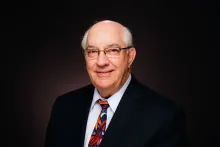
Mitchell Knapp is a graduate of Ambassador College with a BA in Theology. He has served congregations in California and several Midwestern states over the last 50 years and currently serves as the pastor of churches in Omaha, Nebraska, and Des Moines, Iowa. He and his wife, Linda, reside in Omaha, Nebraska.
