
David Schreiber
This transcript was generated by AI and may contain errors. It is provided to assist those who may not be able to listen to the message.
Was that not beautiful? Pretty. Beautiful words. I saw everybody following along in the scriptures.
I believe Psalm 91 as well as Psalm 90 are Psalms of Moses, if I'm not mistaken.
And when you think about it, some of the oldest literature that we have in the Bible.
And I've often looked at Psalm 90 and 91 as what I call the wisdom that comes by being in the wilderness to be able to lean and to look to God. So thank you very much. That was really beautiful. And thank you, Chris, for your first message. And David, please say hello to your mother. Tell her that we really enjoyed that today. Next time we'd like her to be singing it with you, though. Okay, so it's very, very nice. Let me get prepared here for just a second before we take off.
Catch my notes. See what time it is. Potluck starts at what, 7 o'clock tonight? Okay, we're set to go.
I'd like to develop a theme today, and I think it's one that we'll all like because and one that will come to love because it's something that God wants us to have. And it's a theme that centers around freedom. Freedom is a beautiful thing. Let's consider some thoughts about freedom as we begin to more or less move us into the frame of Romans 6 that I want to bring you to today. We oftentimes might look out our garden window and see a butterfly, and you know how butterflies kind of flit and float through the air, carefree. And what did we say so often? Free as a butterfly. Nothing to bring it down. Nothing to pull it down. There's just a beauty in watching a butterfly go through the air. Another form of freedom can be when you have been paying on a house for 30 years and you've got that old man mortgage and every month you've got to put down some money to make sure that you and the bank are still partners. But then there comes that day when you pay off that note and you can take that paper and you can take that paper and rip it up. You are free from that responsibility. You are free from the banker. Now please understand, I like bankers. I'm not trying to demonize bankers today, but I'm using an example of what exhilaration comes with freedom and knowing that you're no longer bound. That you no longer have to be afraid of losing something that's precious to you.
I can think of another form of freedom that comes by perhaps going to a doctor's office.
Maybe you've been under an examination. Maybe the initial surveys basically indicate that there might be something very, very wrong with you. Maybe you went to a pastor or an elder and you were anointed and you go back the following week and the doctor says, you know what was on those charts last week? You know how you thought you might have had and you fill in the bank?
We can put in the C word, cancer.
And the doc says, you know what? I looked at those charts and I don't see anything.
That's a beautiful thing. That is freedom. Freedom from concern, freedom from worry.
To hear good tidings like that. Another form of freedom that we could talk about is one that was experienced 3,500 years ago. When a people that ought not to have been a people, a people that had lived on the banks of the Nile day in and day out for over 200 years, who every day woke up, not their own person, but the property of Pharaoh. And then a deliverer came, led them out, took them to a bank. The sea opened up. They passed through. The sea closed up. And the sea closed up on all those that had oppressed them and their forebearers for over 200 years.
And with that great slash and smash of the waves that came back, no longer on the shore of slavery, but now on the shore of liberty. Oh my, freedom.
What was freedom like maybe 160 years ago?
As a young slave made his way north in this country through Alabama, through Tennessee, all his life and all the life of his family that was now scattered. And for generations, that people had been in bondage. And then to think that he got up into Kentucky, and there was that great western river that runs east to west, the Ohio.
And on one side, he remained a slave.
But he made his way over a river, just as much as Israel of old had crossed sea, and once he was in Ohio, he was free.
Can you just imagine the sensations of freedom and what it means?
It's a beautiful thing. Every time I'm back in Cincinnati on church business, I go back and forth over that Ohio River, and I look down and I think about its mark in history.
That it was not just simply a highway to the western world of the 1820s or the 1830s, but that that river depicted the difference between life and death and slavery and freedom.
How about us now in this room as we talk about freedom? We are coming up to a festival.
In a few weeks, it's called the Festival of Passover. It's a feast.
Different kind of feast because Jesus gave us the symbols of what we are to feast upon.
But nonetheless, it's a feast. It's sometimes called a festival of faith.
But if you'd like to follow with me for a moment, you want to jot it down in your notes so that we'll stay with what I want to bring to you in Romans 6 today. It is a festival of freedom as well. Not only freedom from Pharaoh, not only freedom from Simon Legree, not only freedom from the banker of whom you entered to deal with, after all, but freedom from sin and freedom from death. I'd like to now bring you to Romans 6 with that thought. That's going to be the framework that we're going to be working off of as we go to Romans 6 as we continue this series on the book of Romans. Romans is a tremendous treatise.
It is a book about freedom, and it's a freedom that comes only by God's grace and God's intervention in our life. We've gone through Romans where we find out how futile the world had become. There were the Greeks who felt that they had knowledge, but that knowledge was not transformative. We had the Jews, and they felt that they had the truth, but they had not used the truth properly. They had the law, but it made the law more than God, and thus they were not transforming. And thus Paul offered them a conclusion that the righteousness of God was now revealed. The gospel, the good news, had come, and that should give us rejoicing, and that should give us gladness. Paul reminded us in Romans 4 of how we obtained that right relationship with God that had been thrown away at Eden, had been rejected at the garden. Man had made a choice. God was in the midst of the garden, was in twined with humanity, and humanity rejected that.
Adam and Eve did not take God at His word, and thus the whole course of events occurred of which we are the children of Adam, we are the children of Eve, and we, like they, were apart from God, and even added to it on our own right, in our own generation, in our own way, with our own rejections of the ways of God, whether we knew it or not. In Romans 4, Paul states, here's how a man has a relationship with God, and he pointed to the one who was the progenitor of all those that kept the law, Abraham, and he says, remember Abraham believed God, and it was accounted unto him for righteousness. It was not about him stacking up everything that he had done correctly in his life, but that he took God at His word and believed God, and this is how righteousness then was accrued to the man that we now know as the father of faith.
Paul takes the argument further because Paul is still developing an argument, and you'll find this interesting. So far, Paul is developing an argument that is going to move into another plane today, as we discussed it in Romans 6. And then he comes to the aspect of Romans 5, which reminds us of God's final proof. Final proof of how do we know that God loves us, and how do we know that we're called? How do we know that in our darkest moments that we will not be forsaken? That the great liberator, not a Moses, but God the Father, and through Christ, will keep companionship with us no matter what we go through?
And then we find that in Romans 5, where it says those beautiful words about if a man will even dare think about dying for a man that is a good man.
But what about this, that while we were yet in sin, God allowed His Son to die for us?
And it is that proof that God uses to seal the deal with you and me, and to always remind us to bring us back to the essential moment of our relationship at that foot of the cross, that when Jesus Christ died, the Son of God, the Son of Man, that that was the testament of God's love. That He was not all talk, He was not all bluff, He was not all powder, He was not just theory, it was fact and flesh and blood and the sacrificed Lamb of God who had been God in eternity with God. The one that had created wood, the one that had worked with wood as a young man, was then crucified on wood to show us God's love. God says, never doubt that I love you. Never doubt what I'm about. This now moves us to Romans 6. And a question is brought forth by Paul. What shall we say then? Shall we continue in sin that grace may abound? And Paul moves into Romans 6 with some of the same sense as he's done in other chapters where there's kind of a conversation going back and forth. One is in a sense contrary, almost juvenile. And Paul wants to answer it, and that's how he sets up the conversation. What shall we say then? Shall we continue in sin that grace may abound? You say, Paul, that grace is greater than law in that sense. Grace is significantly supreme, and if that be the case, then why don't we just go about our merry way and the more the sin, the greater the grace?
But notice what Paul says. Certainly not! Exclamation point.
How shall we who died to sin live any longer in it? We who died to sin live any longer in it. And this begins to develop a secondary theme that we find in Romans 6, and you might want to jot it down to stay in thought, and that is simply the theme. And it kind of goes back and forth. Dying to live. You have to die to live. You have to die to live. How shall we who died to sin live any longer in it? Paul says we can't go back to our old home. It is indeed no longer friendly to us. We know what it was. We know where we were. We know what we were of and apart from God. I don't want to go back there.
Now, the questioner says, well, if God loves to forgive, why not give Him more to forgive? And if Paul, as you're saying forgiveness is guaranteed, do we have the freedom to sin as much as we want to? And Paul says, not whatsoever do you. Because such an attitude that would have that would take advantage of God. It would take advantage of God's mercy and God's love. And because God gives us His grace, does not lessen sin. It shows us what sin is and the seriousness of sin. As you and I come up to the Passover 2010. And that is to recognize that, you know, and somebody mentioned today, I think it was Chris, that we observed the New Testament Passover. We're not observing the Passover of lambs and goats and turtledoves and the sacrifices of old. The lamb was sacrificed on the Passover, of course. But in that sacrificial system of old, it was turtledoves and bullocks and lambs by the thousands. By the thousands and thousands.
Now sometimes you go to the book of Chronicles. I mean, they had to have a whole industry just to keep the sacrificial system going at the temple. I mean, they had to have a ranch out there.
Just to keep, in a sense, the sacrificial slaughter moving forward. To remind us of the sins of the people apart from God. But God is saying through Paul that I gave you my own son.
That's how serious our sins are. That the son of God himself had to die.
There is no other equalizer. There is nothing else that could do to bring you and me, bring humanity back into relationship with God. Or do you not know that as many of us as were baptized into Jesus Christ were baptized into his death? Now, the word baptized there is baptizo.
It's not kale. In the Greek, it's not kale. It's not raptizo. It's baptizo.
And the term there is immersed. It means to be buried. Many Christian churches today do not practice the practices of the Bible. People will be sprinkled. People will do this. People will do that. They will baptize babies. I think we'll find later on, right within this chapter as we go through it, the importance of adult baptism and knowing what you're getting into.
But this is literally talking about a burial. This is talking the baptism that you and I partake of. Most of us in this room are baptized. It is a baptism that is a confession of faith.
What we did, and remember this as we're coming up to Passover because this is a good review, what we did at Passover is we severed our roots from the world from which we were called to enter into the world that God has called us to. That that old world is gone.
And that we severed those roots. And notice what it says here that we are baptized into Jesus Christ into his death. Now, it's very interesting, this baptism or this burial. I'd like to just share some terms that in ancient times, in Judaism at this time when Paul was writing this, a proselyte or a newcomer, a gentile coming into Judaism would enter Judaism with sacrifice, with circumcision, that is if you're a man, and with a form of baptism. There was a process and there was a development. It was an elaborate scenario because that individual is going from one world into another. It's also very interesting that it's important what Paul was dealing with. And I want you to think about it as we're coming up to Passover that even in Judaism, it was not only a changed man, that when a man sacrificed, when a man was circumcised, when a man was baptized, he was not only a changed man, he was considered a new man. There's a difference, a new man.
There is a difference between a changed man and a new man. Just think of 2 Corinthians 5, 21. We are a new creation. It's even interesting that in the mystery religions of that time and that age that what they would do is they would actually bury an individual. Get ready for this.
This is spooky. They would actually, in an initiation, right, they would bury an individual right up to their neck as a form of burial. And then, because they would be considered new in the faith and like an infant, they would actually feed that individual what was back then baby food or milk, recognizing his infancy. Now, I'm not saying that what Paul is talking about stemmed from Judaism and or mystery religions. Paul is using this, though, as a concept for the Christian convert to recognize the newness of life, the breathtaking spirit-making event that was occurring to them as they sacrificed themselves, figuratively, to die in Christ and being baptized with Christ.
Therefore, we were buried with him through baptism into death, that just as Christ was raised from the dead by the glory of the Father, even so, we also should walk in a newness of life.
The one thing I want to really hit home today, friends, as we go through Romans 6, the freedom that God offers us cannot come about simply by being new and improved, like a piece of toothpaste. It's about being changed in a different existence.
Christianity, the grace that is afforded to us by faith through justification, by the sacrifice of Christ through the plan of the Father, is not an add-on. It's not like a tinker toy. I will now add on Christ. I will now add on this part. I will now plan a new room. Christianity is not something that you simply add to your life. It is your life. It is all your life, as we're going to find in a moment. For if we have been united together in the likeness of his death, certainly we also shall be in the likeness of his resurrection. Fascinating terms that are mentioned here.
The term here, united, comes from the Greek word. It's a word that deals with botany. The word might best in English be suited to grafted. We are now grafted into Christ. Now, why is that so important? That sounds like so much theological. We are grafted into Christ. What does that mean?
We have to recognize how precious that is, friends, because before this we were grafted into Adam.
The whole flow of Romans up to this point is a world that was apart from God.
There is the first Adam and there is the second Adam. There is the man of flesh that was in the garden, and the son of man of Bethlehem. What Paul is trying to bring out here, there was a time when we were basically grafted simply to what Adam and Eve had done in the beginning. That flow of energy, that way of life, that society apart from God is what you were and what flowed into you and flowed into me. But God in His joy and God in His mercy has grafted us now into Jesus Christ, the second Adam, the one that was promised in Genesis 3.15 at that time. It's quite profound when you think about it, because what happens when you if you take two different kinds of fruit and you take a branch and you graft it into another.
Well, let me hit my hand when I've got this.
And let's just say this is the trunk and here's the tree. You don't see the rest of it up here, but now you've grafted into there. That means grafting is not just something that you do with crazy glue. You can try. But grafting becomes a uniting. The living juices, the life-giving secretions are flowing one to another now. They become united.
They become one. And that which is here in the main part of the now grafted entity is giving its life-giving juices to that which has been grafted onto it. This is the concept that Paul is telling you and me through Romans 6. This is what we are saying that night when we come in here to pass over that thank you, Father, for grafting us, for grafting me into your family.
That you, by offering your son, have allowed me no longer to have the juice, the flow of Adam and me.
But now I have that second Adam. I have the man of God. I have the answer. I don't deserve it. There's nothing that I can do of and by myself be worthy of it. But you, Father, by your grace and by your plan have brought me into this. And I'm no longer apart from you.
I'm no longer given over to my own ways. Remember Romans 1 and Romans 2. God said, I abandoned them. I gave them up. I gave them over. That's not being callous. That was being realistic because God deals in free moral choice. He lets people make decisions and do what they're going to do, even when it grieves and even when it hurts Him. But now you and I have an opportunity to be grafted into the family of God, knowing this, that our old man was crucified with Him, that the body of sin might be done away with, that we should no longer be slaves to sin. We'll be picking up the thought on slaves in a few minutes. For he who has died has been freed from sin.
Now, if we died with Christ, we believe that we shall also live with Him. And that's very interesting. May I make a comment? As we're at Passover and we're sitting out there, and yes, indeed, Passover is a memorial to the death of Christ. Do this as often, and we know the rest of the verse. But death and life come together here. Why would we just simply come before and do a memorial to the death of a man if he was not resurrected and now is at the right hand of God?
In Christ, death and life are one. And that's why, after having partaken of the Passover, as we partake of the symbols of the bread and the wine, that we can go out that evening rejoicing without any regrets, without any sorrow, knowing that we are free. Why is that? Because we recognize the one in whose memory we observed the symbols of his death was taken up from the earth, and he is no longer there, and that he is alive. And as he died, we die. As he lives, we shall yet live. And that is the beauty of what Scripture tells us. Knowing that Christ, having been raised from the dead, dies no more. Death no longer has dominion over him. For the death that he died not the one that you and I are going to die as natural human beings, as it's appointed unto man and woman once to die, but the death that he died, he died to sin once for all. And the life that he lives, he lives to God. Fascinating set of Scripture. Let's focus on this for a moment. The death that he died. And so Paul is singling out this one death, this one individual made of woman. This one individual made of woman is a special death. He died to sin once and for all. Join me if you would in Hebrews 1. We'll go off Scripture here a moment. Hebrews 1, verse 3.
The author of Hebrews makes a fascinating comment here. Speaking of the Christ, who being in the brightness of his glory and the expressed image of his person, and upholding all things by the word of his power, when he had by himself purged our sins, sat down at the right hand of the majesty on high. If you're daring enough and you want to, either with a pencil or pen, you might want to circle the word sat down. Very important.
This means the job was done. There was never again a need for another sacrifice. The sacrifice had been completed. It was in place. When you go home and your work is done for the day, what do you do? You go home and you sit down. Mission accomplished. And no doubt about this. Let's notice verse 11. Likewise, you also reckon yourself to be dead and deehed to sin, but alive to God in Christ Jesus, our Lord. Now, just this section of Scripture that we've gone over, 11 verses, I'd like to give you three major points for you to consider for a moment.
Because there are three great permanent truths regarding your spiritual and personal freedom in this. Number one. Number one, it is a terrible thing to trade on the mercy of God and to make an excuse for sinning. That's not what we've been called to. Our life was to be turned around. God's mercy is not an endless ATM machine that just keeps on cranking out the 20s again and again and again, just because we think we have His pin number.
We don't want to trade in on God's mercy. When you and I partake of the bread and the wine on that evening, we are understanding the stakes. We are understanding what God did. The wine represents the blood of the Son of Man and the Son of God. The bread represents the total full experience. The fullness of the man that was offered to be the Lamb of God.
And when you understand that, you don't want to get into this discussion about grace and law. You appreciate God's grace. You appreciate God's love. You fall down and you say, Father, thank you so very, very, very much that I'm able to be your child. Point number two. What this set of scriptures is telling us is that a new man is born. A new woman is created in Christ. We're not just a new and improved model. If you just think you're a new and improved model and just a little bit better, you're not going to be going in any place on the road of Christianity.
Let's remember that Jesus Christ came to this earth not to make good men better. Are you with me? He came to allow dead men to live again in Him before the Father. Very important. Let's go to the next set of scripture. Now we come to something that is fascinating. There is a transition.
I've said before, whenever you see the word therefore, there's a transition. Therefore, do not let sin reign in your mortal body that you should obey in its lust. And do not present your members as instruments of unrighteousness to sin, but present yourself to God as being alive from the dead and your members as instruments of righteousness to God. Now this is very important. Let's understand something. To this point, all the time that we have been staying in the book of Romans, God through the Apostle Paul has not really given us anything to do yet.
This is the first time... I didn't realize that, but that's why we have sermons. This is the first time Paul actually instructs the audience now to do something. Romans, that great treatise of salvation, now moves from precept into practice. And here there is a direct command in Romans. There's an exhortation here that we need to understand.
And why do we need to understand it? Because Paul's trying to explain to us that Christianity, this way of life that we're being called to, is not just simply an emotional exercise. It is a way of life that is to be practiced on a daily, consistent manner. And that our relationship with God is not some mystery religion. It's simply to be practiced on the interior of our lives and kept into a cave like growing mushrooms in the dark. But it is to be put out in the marketplace of life every day.
If we work in a schoolroom, if we work in a bank, if we work on roads, if we work with concrete, if we're working in the home, wherever we are, it is a testament to the freedom that God has given us apart from sin. And that's very important to understand. Let's notice what it says here. Do not present your members as instruments of unrighteousness to sin, but offer them. It's like a living sacrifice. Remember Romans 12.1? You therefore be a living sacrifice, holy and acceptable, as instruments of righteousness to God. What does that mean? If we are in Christ, if we are God's children, what does God work through?
Well, He works through our voice. He works through our eyes. He works through our arms, our hands, as we reach out to people. He works through our heart and our mind. Because when it's all said and done on earth, we do, in a sense, if we are the body of Christ, we therefore are God's eyes and arms and ears and feet to help somebody when somebody needs help.
We are to be instruments of His righteousness. But also, we can be instruments of that other world that God called us from. We can also be instruments of sin. We can also be instruments of sin with our eyes, our ears, our arms, feet that are swift to spread gossip or mischief or division. Paul brings out that there are these still two forces that are out there. They have not gone away. They are still there. And you and I must make a choice as to whose instrument we will be and who is playing on us.
And we now, in Christ, as Paul says, have the ability and have the freedom because we're no longer pulled down by that gravity that was there of Adam's nature in us, that we have a freedom to understand the issues. That we don't have to go the way of 6,000 years of humanity. That with the sacrifice of Christ in place and with the Holy Spirit in us, that we go out and we view the marketplace of life when we go out there and we can see the two trees.
There's a tree of life. There's a tree of good and evil. And sometimes they can both look good. And the Spirit of Christ, the Holy Spirit in us, allows us, just like those Vietnam night time goggles, to be able to see through the fog, to be able to see through the fuzz, to be able to see through the fancy packaging of the tree of good and evil, and see it for what it is.
And see that tree of life and remember that we have been granted access to it because of the love and forbearance of God. You say, how do I know that? Because of the sacrifice of a Son that we're going to memorialize in a couple of weeks. And thereby then, we have the conviction and the Holy Spirit brings us into remembrance of what God has done for us. And says, that away. And we become then an instrument of God. For sin shall not have dominion over you. That is freedom. Sin shall not have dominion over you. For you are not under law, but under grace. What then? Shall we sin because we are not under law, but under grace?
Absolutely not! No, we're not to sin. No, the law is still extant. Of course, the law represents the love of God, the mind of God. But the law of and by itself is not a ladder to righteousness. It is a ladder, yes, but it always falls too short. Do you not know that to whom you present yourselves slaves to obey? You are that one slave whom you obey. Whether of sin leading to death or of obedience leading to righteousness? You know, today, and I'm sure we've used this phrase often on sometimes, we just say, I just feel like a slave at work.
Just slave away. I'm sure we've all used that term. And there is a certain figuration to it. But back then, a slave was 24-7. A slave never had time off. A slave was not left to its own. He was a full-time person. So in verse 16, we are asked a question, do you not know to whom you present yourselves slaves to obey? You are that one slave whom you obey.
Whether of sin leading to death or of obedience leading to righteousness? But God be thanked. And you see, the book of Romans is an anthem of exaltation and praise. Recognizing where humanity in Romans 1 and 2 were apart from God, whether they were people of the book or people of the Greek temples, all humanity had gone apart from God. All had fallen short of the glory of God. Yes, including, are you with me? You and me.
And then comes this exaltation. But God be thanked that though you were slaves of sin, yet you obeyed from the heart that form of doctrine to which you were delivered. It's very interesting. I'd like to share William Barkley's translation on this. Interesting. He says, though you were slaves of sin, yet by your spontaneous decision to obey the pattern of teaching that you were committed.
It reminds us that our baptism, our dying to live, our being united with Christ, that we might be a slave to righteousness, is not something that is to simply be emotional. It's a decision. It's for mature minds and hearts that know what they're doing. It is interesting. He encourages them that you obeyed from the heart. And that's very important for us to wrap our hearts around as we come up to the New Testament Passover, friends.
It is to recognize that the Passover has got to be so much more than just simply head knowledge. I've met a lot of head Christians. Christians are also to be people of the heart. They are people that are to be wholehearted. Have you ever run into a half-hearted individual? Have you ever run into a half-hearted Christian? God wants us to worship Him with all of our heart, not by a burden as the people of old were under, trying to keep a law that God Himself knew that they could never keep perfectly, but now as the new Israel of God, giving God gifts of love by obeying Him and by honoring Him by what He says to do wholeheartedly.
Just as it says in Deuteronomy 6, Here, O Israel, the Lord your God is one, and you will worship Him with all of your heart, and all of your mind, and all of your soul.
And what is it that the Christ, the greater rabbi said in Matthew 22, 37, if you'd like to jot it down? What is that great commandment? That you will love the Lord your God with all of your heart, and all of your mind, and all of your soul. As we're coming up to this, New Testament Passover, 2010. Let's move towards it. Not in our own worthiness, because there is nothing worthy about us. But allow us, and allow our hearts to be full, to rejoice as much as Paul rejoiced. You know, let's think this through a second. Paul's writing this out. Maybe he's writing it himself, or maybe as was the man of the day he was having a scribe write it out. You know, Paul's pacing. You want to look up here? This is the PowerPoint. Paul's pacing up here back and forth, and he's just talking. You know, this isn't... he's going through this, and the scribe's writing, and you know, it's kind of really heavy, and you know, the sin of righteousness, and whose slave are you, and this and that. And then all of a sudden, just as much as when he... Did you see Chris jump today, or was I the only one? There's a reason for that, because it's going to fold into the end of the sermon. That's just how Paul was. He's in this heavy treatise stuff, this whole argument, this religio-legal scenario of what salvation is. And then he jumps. He says, but thank God for what He has done for us, given us freedom, liberated us from 6,000 years of the way of Adam, and allowed us not just simply to have new parts, just simply be new and improved, like Colgate.
But new and alive, free of the debt of the banker, free of the bad first exam of cancer, free like Crossin River from Kentucky to Ohio, free like Israel of old, when they went through the Gulf that represented the Gulf between the ways of this world and the promised land of God. And they were all baptized unto Moses. When you and I come to Passover 2010, we come to not reflect on the Moses of old alone, but that greater Moses, that second Adam, the Son of God, the Son of Man, the Great Liberator, the One that saved us from our sins and allows us now to live a life of freedom, Mr. God. You probably noticed I didn't finish all of Romans 6.
More later.
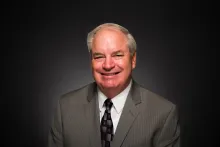
Robin Webber was born in Chicago, Illinois, in 1951, but has lived most of his life in California. He has been a part of the Church of God community since 1963. He attended Ambassador College in Pasadena from 1969-1973. He majored in theology and history.
Mr. Webber's interest remains in the study of history, socio-economics and literature. Over the years, he has offered his services to museums as a docent to share his enthusiasm and passions regarding these areas of expertise.
When time permits, he loves to go mountain biking on nearby ranch land and meet his wife as she hikes toward him.
