

Robin S Webber
This transcript was generated by AI and may contain errors. It is provided to assist those who may not be able to listen to the message.
Have you ever walked into a movie towards the end, and you see almost the final scene, and then you wonder what happened all along the way and what you missed out? Well, I would like to do that for a moment as we continue our series in the book of Romans. And that is to just simply speak out the words of the Apostle Paul, who said, O wretched man, that I am who will deliver me from this body of death.
That's a gripper. That's a showstopper. And that is in the book of Romans. It's found in Romans 7, verse 24. It's a question that the Apostle Paul asks. It's a question that you and I give an answer to tomorrow evening when we participate in the New Testament. Passover. But now that we're almost towards the end of the movie, let's move back towards the beginning as we turn to Romans 7, verse 1, and see what leads to this cry of the heart, this plea for help, and what brought Paul, the man of God, a Christian, a follower of Jesus Christ, to seemingly what is a point of desperation, but a desperation that is not left in doubt, but that will end with an answer that each and every one of us will see by the end of this message.
In Romans 7, we come to a point in this treatise of salvation, called the book of salvation, which points us to the New Allegiance. And it is that New Allegiance that we participate in tomorrow night. It is the Christian discipleship, a Christian discipleship that is also coupled with God's law, but it must be understood. Last time, when we were in the book of Romans and going through Romans 6, Romans 6 left us with a poignant question, simply this, Whose slave are we anyway?
Who do we belong to? Are we the slave of sin? And, or are we the slave of righteousness? These were not just questions that the apostle Paul came up with out of the blue. They were questions that came from a long progression of revealed thought that he was sharing with the Roman community, the church thereof.
It is in our questions that stemmed from his revelation of what God was doing. I'd like to just move real quickly through two or three verses to bring us all into the same stead. Join me, if you would, in Romans 3, verse 21. And as we repeat these verses, and repetition is the best form of emphasis and a proper form of education, these are verses that we can all use as we meditate, as we come up to being participants tomorrow evening in the Passover of the New Covenant.
In Romans 3, verse 21, for this is what you and I are involved in, but now the righteousness of God, apart from the law, is revealed. This does not necessarily negate the law, but it speaks of a righteousness, apart from the law, that is revealed being witnessed by the law unto the prophets. What righteousness? Even the righteousness of God through faith in Christ Jesus, to all and on all who believe.
As we participate tomorrow night in the Passover of the New Covenant, it is a festival of faith. It is a festival of faith. It is not just a festival of Scripture, otherwise it would be just left in black and white. The Bible is about a heart, and it's about a hope. The Passover is a festival of faith, that we have faith in Jesus Christ to all and on all who believe, for there is no difference. For all have sinned and all have fallen short of the glory of God, being justified. That means being made right and being allowed to be placed within the very presence of the Father, and having no space in between.
Being justified freely by His grace through the redemption that is in Christ Jesus, whom God set forth as a propitiation by His blood through faith. What? To demonstrate His righteousness, because in His forbearance God had passed over the sins that were previously committed. To demonstrate at the present time His righteousness, that He might be just, and the justifier of the One who has faith in Jesus. I don't know more of a more personal verse that I can share with you, in preparing you for tomorrow night, than this verse right here. That God is performing something, demonstrating, laying it out before all of us, His righteousness, that He might be just, and the justifier of the One who has faith in Jesus.
That led us to Romans 4 and verse 3, where Paul goes right to the very beginning, to the George Washington, as it were, of those that were of the law, and of the book, of the words of God. Verse 3, for what does the Scripture say? Abraham believed God, and it was accounted to him for righteousness. Then we follow through in Romans 5 and verse 8, as we begin to prepare for partaking of the bread and the wine tomorrow night.
But God demonstrates His own love, not somebody else's thoughts, but this is what God is like. His own love towards us, and that while we were still sinners, Christ died for us. Much more than having now been justified by His blood, we shall be saved from wrath through Him. For if when we were enemies, we were reconciled to God through the death of His Son, much more having been reconciled, we shall be saved by His life. And not only that, but we also rejoice in God through our Lord Jesus Christ, through whom we have now received the reconciliation.
There is a bounce to a Christian's step, and we do have a joy in our life and a joy in our heart. And we have an experience like none other because of what it says here, because of what we have received, and that we are reconciled.
We went through Romans 6, which spoke of freedom, which spoke of liberty. We discussed that last time. And this is the time of liberty. This is the time of freedom. This is when the slaves of Egypt were released at that initial Passover. And even with that, though, there was the concern that we don't and are not pulled back to Egypt and back to slavery. And the question comes then, who's slave are you? Join me if you would as we look at verse 22 before we go into Romans 7, verse 22 of chapter 6. But now, having been set free from sin, friends, Passover is about freedom. Release from slavery and release from bondage. Having been set free from sin and having become slaves of God, you have your fruit to holiness and the end everlasting life.
Notice verse 23.
The stage is now set for chapter 7 because it speaks about the wages of sin is death. But the gift of God is eternal life in Christ Jesus our Lord.
What we are experiencing tomorrow night as we partake of the bread and the wine is indeed a gift. It is nothing that we earn. It is nothing that we can in any sense humanly become worthy of. There is no way that we can rotate a prayer wheel from now until ad infinitum to somehow qualify for what God is desiring to give us.
It is God's kind of love that he sacrificed his own himself that we might have relationship with him. That takes us now to chapter 7 and verse 1.
I must explain as I move forward in this, and I think it will be poignant as we come to the end and meaningful as we come to Passover, but I must share something with you.
You might want to put your seatbelts on and have your airbags deployed. This is kind of rough and tough stuff to go through. It is a very deep section of Romans, which is deep to begin with. It's like when you get into a deep pool and they point the deepest part of it. Because Romans 7 is very, very deep. I am reminded of the Apostle Peter. One of the last things he wanted to share in the last epistle that he ever wrote is what?
Boy, there are some things that our brother Paul says that are pretty tough to understand. We are going to go through some of the most challenging parts of Paul in chapter 7. I will try to, God willing, do it some justice for you. Bring you up with two or three points at the end that you can take home and contemplate on.
Very interesting. One of the commentaries that I read about Paul, and maybe it was good advice to me as I explored this, and maybe I will share some good advice to you. Sometimes what gets people in trouble with the Apostle Paul is they take him word for word. That is, what is he saying? They will get locked on a word, or they will get locked on a sentence. Maybe Paul can be best understood by not just simply what is he saying, but what did he mean? Have you ever been yourself held to a word, just one word, and somebody gets stuck on a word? This is what I really meant. Allow me now to further explain it. Sometimes the Apostle Paul is best understood not simply by a word or just a simple sentence. Not that he didn't necessarily mean what he said, but it gives it broader breath as we go along. I think that is what we find in the sense in chapter 7. Let's understand again, because this is class, this is going to be teaching and a little preaching along the way here. Let's put these two words down so that you will follow me. This is important, and this will allow me to come back to you as a congregation and in that sense as a class. We are dealing with God's law, and we are also dealing with Christian discipleship. We are striving to couple them in the proper sense. That's very important. God's law and Christian discipleship. Sometimes people want to put that on two different planets, but they are to be within one individual. That is the disciple of Christ. But we must understand what Christ and the Spirit of Christ in us is, and what the sacrifice of Christ is done for us. Then we can better understand what the law is about in us. Notice chapter 7, verse 1. Or do you not know, going down to chapter 7, Brethren, for I speak to those who know and are familiar with the law, that the law has dominion over a man as long as he lives. For the woman who has a husband is bound by the law to her husband as long as he lives. But if the husband dies, she is released from the law of her husband. So then, if while her husband lives, she marries another man, she will be called an adulteress. But if her husband dies, she is free from that law so that she is no adulteress. Though she has married another man.
The argument that the apostle Paul is laying forth is based on a legal maxim, that death cancels all contracts.
Notice verse 4, Very interesting. Stay with me if you would, please.
We're talking about the cancellation of one relationship with the analogy of a wedding to a marriage to a family that would bear a certain fruit, being children. That analogy holds all the way through verse 4, where it says now that we are now married to another, to him who was raised from the dead.
But it's not just something that is ethereal, and this is the important thing. It says that we should bear fruit to God.
As we move from one family relationship that was to bear fruit, we move into this new allegiance, this new relationship. It is also to bear tangible fruit to God.
It's very interesting if you want to think about this for a moment and maybe spur some of our speakers on during the Days of Unleavened Bread, that Passover, while it commemorates the death of Christ, the Days of Unleavened Bread are not simply about putting something out, but producing something in the newness and the likeness of Christ with the new allegiance that we are to bear.
I want you to think about this for a moment. Maybe we just thought that we were going to come tomorrow night to wash feet.
I'm always amazed, by the way, how clean everybody's feet look before they come to Passover. Are they that clean every day of the year, or do we just spiffy up before Passover? I'm just asking a question. I'm one of you. Just kind of having fun with it for a moment.
But we're not just smiling, but that... Do we just come to wash feet? Do we come just simply for a moment, partake of wine? To partake of Unleavened Bread? Or are we really... Are you with me? And are our minds focusing that we are covenanting with God, that we are renewing our allegiance to God as the source of life, as the source of all, that we recognize that everything in this human plane, even with all the law that is the revealed mind of God, that the law of and by itself, apart from God, the righteousness of God, often is leaning on the wrong building by the way that we use it, and it's always one wrong, too short to truly reach God and to be saved of and by ourselves.
The allegiance that is being spoken about in Romans is one that not leads up to God, but comes from God. Grace is God's gift. It is based upon His initiative. It is based upon His invitation. It is based upon His involvement of Him performing His works in you and me by the Spirit of Christ, synonymous with the Holy Spirit, performing what God is doing in us. That at the end of the day, you and I come tomorrow night as we renew that covenant through the memorial of the symbols of the Savior's death, that we say, Father, we recognize it is not about us. It's all about you and the love gift that you gave through your Son, so that we could be awakened to the new allegiance to you through Him.
Now, it's very interesting as we go through this that Paul is creating an analogy here that in a sense that there was a time when we were married to another.
But Christ came and nailed our sins to the cross by His death.
And by those sins of ours being nailed to that cross, we were no longer, in a sense, in the line of Adam, we were no longer married to the past, but that a new marriage, a new allegiance could be performed.
And as Christ died, for we that are baptized, we died at baptism in and with this faith.
And we recognize that of and by itself, we need more than just simply the external code of tablets, but that we have been granted the priceless privilege of having God's law written on our hearts and on our hearts.
I want to take you to a scripture. I was going to go much later, but it's the flow of the message. Join me if you would in Jeremiah 31-31. This is the prophecy forward. And, of course, Hebrews 10, 16-17 in the New Testament, recodifies this. But let's read it, Jeremiah 31-31.
That God looked forward to this day in our lives. We hold the days are coming, says the eternal, when I will make a new covenant with the house of Israel and with the house of Judah. Not according to the covenant that I made with their fathers in the day that I took them by the hand to lead them out of the land of Egypt, my covenant, which they broke.
Though I was a husband to them. That husband, there's that contract analogy. But this is the covenant that I will make with the house of Israel after those days, says the Lord. I will put my law in their minds, and I will write it on their hearts, and I will be their God, and they shall be my people.
God is speaking something more than just simply externally. He's speaking of something internal.
We know that God, in that sense of old, literally wrote the law and handed it to Moses, the first Moses, as he carved it out of stone and wrote the law with his own fingers. But here he is saying that there's going to come a time that with people he is literally going to place it, not in the hands of a man, but in the hearts of every man and every woman, and that rather than working from the outside in, it's going to be from the inside out. And the miracle is going to be twice as profound.
And this is the hope that he gave, clear back in the Old Testament, and that it should bear fruit.
Verse 5, for when we were... Oh, excuse me. I want to go to verse 4. This is important. Therefore, my brethren, you also have become dead to the law through the body of Christ, that you may be married to another, to him who was raised from the dead, that we should bear fruit to God. I'd like to review this section to you for a moment. And these are words that are not, or thoughts that are not foreign to you as members of the Church of God, because you and I recognize that the law is holy. And I'm going to be addressing this again in a few minutes. But I want to share some thoughts about this, because oftentimes with Paul... Paul is hard to be understood. You have to understand that. Even Peter said that. The Bible says that. But what does it mean to be dead to the law? And, or at times, what does it mean when Paul says not under the law?
Because that seems to be contrary to the Bible. We so often go to Psalm 119, and we sing the song, Oh, How Love I Thy Law. We know that the covenant community of God down through the ages took great pleasure in the law of God. So it seems as if some kind of battle is being developed between the God that offered law and the law that he offered. So what is going on here? And what do you and I take from it and understand? I'd like to borrow from a moment, and I'll not apologize for reading, but I think it's important to get it right. You might want to be ready to take a note out there, okay? And I'm going to give you a couple scriptures and a couple thoughts, because I'm going to borrow from a gentleman named John R. Stott. John R. Stott is a man who is a nomian. That means he believes in the law. Mr. Stott's writings were extremely valuable about 15 years ago, when we were going through some theological challenges at that time. And many of Stott's writings were used. Let me share this thought with you. It's a brief paragraph. What then did Paul intend when he described Christians as being not under the law? Have you ever wondered that one? Can you explain that right now? I know that you know that we have a responsibility with law, but what does it mean not under the law? Hmm. Let's talk about it for a moment. He used this expression in two different letters and contexts, and so in two different senses. He also clarified the meaning of each by the contrasting phrases he added. Shot down Romans 6.14. You can explore that later. In Romans 6.14 he wrote that you are not under law, but under grace. I think we can all agree with that, but what does that mean? Here, the antithesis between law and grace indicates that he is referring to the way of justification, which is not by our obedience to the law, but by God's sheer mercy alone. Remember what I said earlier about the law? The law is a beautiful thing. Oh, how love I thy law. David reflected on the law. You and I are known as a community that observes the Ten Commandments. We love the law. We sing it in our songs.
But the law of and by itself is not a Savior. It is the mind of God. It expresses the love of God, but it can't save us of and by itself. Like I said, the law at the end of the day will take us basically one rung short of reaching God. It's humanly impossible in that sense. Now, the thought there is we're not under the law, because if you're under the law, then you have to abide by the penalty of the law. And no human being can do that perfectly, and we know what the penalty of the law is. Thus, the book is telling us that we need not needlessly worry any further about the penalty of and by itself, because we have now experienced God's mercy through the sacrifice of His Son. Let's take it a step further. In Galatians 5.18, however, he wrote that if you are led by the Spirit, you are not under the law. Now, what does that mean? Does that mean we... Oh, I got the Spirit! I got it! I've run into people that have said that before. I got it! Got what? Came down on me! I got the Spirit! Now, they're very sincere when they say that. But what does that really mean? If you're led by the Spirit, you're not under the law. Therefore, does that mean that we divorce the rest of Scripture? Here, the antithesis between the law and Spirit indicates that He is referring to the way of sanctification, which is not by our struggling to keep the law. What is sanctification? That is being consecrated. That is being set apart. That is being placed before God in special circumstances, in a special relationship. We are not under the law, but we are led by the Spirit, which is not by our struggling to keep the law, but by the power of the indwelling Spirit. So, for justification, we are not under law, but under grace. For sanctification, we are not under law, but led by the Spirit. Okay. You say, Mr. Weber, this is like a bunch of spaghetti noodles all running together. Please tell me what that means. Can you make it simple? Put it in straight Anglo-Saxon. I will. As we come to Passover tomorrow night, let's remember something. We are here, not because of what we can do, and not simply because of the revelation of God or words on stone. We are here by the invitation of God, and we come to Him not by our rights or by our doing or by what we have kept perfectly because we have not. We are here tomorrow evening because we appreciate and we understand God's love and mercy. A mercy that is visited upon you and me because of the death of one man called the Son of God. What I'm planning in your head through Romans 7 is this, and as we come to commemorate the Savior's death tomorrow night, is the inexpressible, limitless mercy of God that He gives you and me because of what His Son did for us. And thus, we are no longer under simply the black and the white of an external code of which you and I could never measure up to, even by ourselves, in this human tent. But God is granted mercy.
Mercy is a beautiful thing. Just throw it out there and let it just put it out there for a moment.
I want to tell you something as a minister of Jesus Christ, mercy is a beautiful thing. And when it says that we are led by the Spirit and not by the law, that does not divorce the law. The law still has a place in our being. I'm going to talk about that in a moment. But to recognize that under the New Covenant, God no longer works from the outside in.
But that greater Moses, the Spirit of Christ, synonymous with the Holy Spirit, no longer stands on a mountain looking down at the people and offering them stone with writing on it.
But that greater Moses, as prophesied in Deuteronomy 18.15, now enters through the invitation of his Father, and by the performing of the Holy Spirit, literally into our lives, no longer resting on the mountain, but resting and saturating our heart with his existence, with his life, with his love, with his way. And you and I believe in that. And that's what we're saying as we come to Passover tomorrow night. Now, let's take it a step further here. As Thoth does. It is in these two senses that we have been freed or released from the law. Released does not mean that the law is bad. Let's take it a step further. But this does not mean, this is Thoth's words, which are interesting, but this does not mean that we have been divorced from it altogether, speaking of the law, in the sense that it has no more claim on us of any kind, or that we have no more obligation to it. On the contrary, the moral law remains a revelation of God's will, which he still expects his people to fulfill by living lies of righteousness and love. Because after all, when it's all said and done, the law spells love. Verse 5, For when we were in the flesh, the sinful passions which were aroused by the law were at work in our members to bear fruit to death. But now we have been delivered from the law, having died to what we were held by, so that we should serve in the newness of spirit and not in the oldness of the letter. Very interesting that here in verses 5 and 6, it really speaks of two ages, two covenants, two ways.
One is without Christ, and verse 6 is with Christ. Let's read verse 6 again. Now we have been delivered from the law, having died to what we were held by, so that we should serve in the newness of the spirit. The spirit is not same old, same old. There's something different about it. When an individual rules his life with union in Christ. Union in Christ? What does that make? That sounds like something in a commentary. I'll tell you what union in Christ is.
Are you with me? Tomorrow night, when you partake of the bread, and when you partake of the wine, you are saying you are in communion. That's a Greek word that is used in Scripture. You are in union, koinos, with Christ. You are submitting yourself in covenant with Christ.
As you partake of the bread, as you partake of the wine, it's not only commemoration of his death, but as Jesus said, as you partake of this, we become one. Not only we with him, but you and I with one another, as we partake of the same bread and wine. Thus, there is union. When an individual rules his life with union in Christ, he or she is motivated not by just do's and don'ts. For what might happen if I don't? But we're now motivated by a different spirit. A desire, a can, a want to. No longer motivated by fear, but motivated by faith and love. We look at positive outcomes rather than negative implications.
I was many years ago, about 25 years ago, pastor I used to work for, he said, you know, Robin, he said, you know, the difference between a converted mind and an unconverted mind. I know he wanted to tell me, so I said, what? He said, an unconverted mind just looks at the Ten Commandments as don'ts. And a converted mind looks at them as do's. Cans, positivity. But that's because of God performing in our lives by His Spirit and bringing us into that union with Him. We no longer become saturated with this new spirit, with this new living way that you're going to be hearing about during the days of unbred.
We're no longer saturated with the ups and downs of our own performance. But we focus on the life and the love of Jesus Christ, God that was on earth, the one that the Father sent, so that we could understand what God would do if He was in human flesh.
And He did that by His Son. We are stimulated. We are excited. We are encouraged by that example. We see what He did. Thus then we observe God's law with love and gratitude, not just simply eye for eye expectation. And what is God going to give me next? Verse 7. What shall we say then? Is the law sin? And here's Paul. Certainly not. On the contrary, I would not have known sin except through the law, for I would have not known covetous unless the law had said, You shall not covet.
No, Paul brings it right forward here. He says, No, look, the law is holy. The word holy comes from the Greek hagos, which means different. It means it's something that is extraordinary. It's not from around here. The law is divine. And it has, in a sense, what the Jews themselves called the very voice of God. How could the voice of God be anything other than beautiful and wonderful and magnificent? It was just, and it was good. And Paul validates that law. But the law does not save us. The law informs us what the love and the mind of God is like.
But then, in verse 8, he says, But sin, taking opportunity by the commandment, produced in me all manner of evil desire. For apart from the law, sin was dead. I was alive once without the law, but when the commandment came, sin revived, and I died. And the commandment which was to bring life, I found to bring death. For sin taking occasion by the commandment deceived me, and by it killed me. Now, what is Paul talking about here?
Let's put it in these simple terms. He's discussing the exceeding sinfulness of sin. He's basically telling you and me, and I told you to put your seat belts on today and have those airbags deployed, because this is deep, that sin without the law, in a sense, has no existence. Until a matter is defined as a sin by the law, that a man can't know what sin is.
It's just like making rules for a game. That until you make a rule, a rule cannot be broken. And it's very interesting that when you go back to the garden experience, that basically what he's getting at is there's a...
In verse 11, for sin taking occasion by the commandment deceived me, it's as in a sense he's going right back to the Garden of Eden. That it's interesting, you know, God didn't make a lot of rules in the Garden of Eden, but he said this. Of all the trees of the garden you may eat, what? Free lay. But of the tree of good and evil you will not partake of. Well, what is it about human nature? Are you with me?
The one thing that you can't have... I remember as a boy and I grew up reading Greek mythology, along with the Bible. But reading Greek mythology, and I'm sure at one time or another, all of us have read the story of Pandora's box.
Pandora was left alone and her husband said, Don't open the box. Which is really a play off of the Garden of Eden. Which is really a play off of probably when we were raising our children. And when we said, well, Mom and Dad have got to go out for a while, and by the way, don't. The one don't becomes the greatest, what? Temptation. There's something in this... Are you with me? This human tent. That when we know that there's a rule, when we know there's a law... I've got to tell you something. Most of you know that we have this big ranch behind us.
The farmer has been out there. He plowed it. It looked like a Michelangelo work of art of furrows. Just beautiful. There are signs posted every... Susie, help me not to stretch. Every 150 feet. What? Closer. Okay, okay. Every 100 feet there's a sign. Do not trust pass. Do not trust pass. About 200 acres. Some of you have been up there before. Do not trust... I mean, this owner has invested in signs all over. Do not trust pass. What do you think people want to do when they see those signs?
There is something in the human tent. There is something in my wife's nature that called the place about 3 o'clock. When people were trying to make tracks in there the other night. Because Susan loves that ranch. Loves that. But you know what? You put the signs up. The rules are there. The boundaries are set. There's some kind of chewing. Not me.
And the tracks begin to be made again. Adam and Eve did it. Whoever laid down those tracks in the field about 5 days ago, and you know what? Somebody's going to follow along just like we've all followed Adam over the years. It's going to get deeper. It's going to get more permanent. It's going to get easier for people to do it. This is what Paul is talking about. For sin, taking occasion by the commandment, deceived me. And by it killed me. Therefore the law is holy, and the commandment is holy. There he is, lifting up again the laws of God and the commandments of God. That they are good. They are wonderful. They instill in us the love and the mind of God. And yet of and by themselves, that they don't save us.
Has then what is good become death to me? Certainly not. But sin that it might appear sin was producing death to me through what is good. The law is good. The law is beautiful. But once the rules were laid down, there's something in my nature, as much as there was in the nature of Eve, that the serpent comes along and twists and twirls and titillates my mind and my heart.
And like Eve, like Paul, I succumb. So that sin through the commandment might become exceedingly sinful. That the law points out what sin is. For we know that the law is spiritual, but I am carnal, sold under sin. And then we come into this incredible spiritual autobiography. For what am I doing? I don't get it. I don't understand. For what I will to do is that I do not practice. But what I hate is that I do. If then I do what I will not do, I agree with the law that it is good. But now it is no longer I who do it, but sin that dwells in me. For I know that in me that is in my flesh nothing good dwells. For to will is present with me, but how to perform what is good I don't find it. For the good that I will do I do not. But the evil I will not do that I practice. Now if I do what I will not do, it is no longer I who do it, but that sin that dwells in me. I find in the law that is evil is present with me. The one who wills to do good. For I delight in the law of God according to the inward man. There's nothing antinomian about Paul. Some of you are just beginning to hear these words as you've joined our fellowship over the last month or two or three months. It is not that the law is bad. It is not that the law is foreboding. It is not that the law has been buried at Sinai. The law is wonderful and it's beautiful and we sing, oh how love are thy law? It's just simply that the law doesn't save us. And that the law is in that sense designed to show what sin is and thus the conflict comes. But I see another law in my members warring against the law of my mind in bringing me into captivity to the law of sin which is in my members. Now that leads us up to where we began. O wretched man that I am, who will deliver me from this body of death? And that is exactly the question you and I need to ask as we come up to the New Testament Passover tomorrow night. What a great spot to be in the book of Romans. Because Paul is talking about the human situation. Basically he almost sounds like a spiritual psychotic. You know he should probably be in the room with pillows on the walls. He sounds like he's bouncing at this point, doesn't he? What are you going to do with Paul? He sounds like he's in a rage and he doesn't know what he's doing. Let's understand a few of the things that Paul is bringing to us that you and I need to be aware of as we come up to the New Testament. Passover 2010. Very simple lessons. Number one. Simple lessons of this discussion that Paul is offering of the human condition. Number one. If knowing the right thing was all we had to do, life would be very easy.
But you and I know life is not easy. You and I have the same rage inside of us at times with all that has been revealed to us. At times we just fall flat on our spiritual kisser. Why is that? We must come to recognize that we are not the same. We must come to recognize that we are not the same.
We must come to recognize that morality and revelation of and by itself is simply a code.
What the Greeks called religion is more than just simply a code of conduct. It's something that is personal. That revolves around a person. How do we relate that to Christianity? Christianity is simply about the person of Christ. His life, his death, his resurrection. It is what the Father above designed and willed and purposed and agreed with the word from the beginning. For as it says in the book, from the foundation of the world, they sealed the deal. And the deal would come through none other than Jesus Christ. Knowing something and doing something are two different things. This year you and I as Christians, sincere Christians, that live in this human tent, that are still beset with the world around us, the sin that encompasses us, and that nature that is within us. There are many times when we have known to do right. But I've done wrong. Number two, resolving to do something and performance are two different worlds. Join me if you would for a moment in Matthew 26. Matthew 26, verse 35. And this fits in so very, very well with this Passover season. I think there's a little Peter in each and every one of us that wants to trumpet like that Banty rooster.
When all the rest of the flock has disappeared, we stand up on our haunches and like Peter say, Peter said to him speaking to the Christ, Even if I have to die with you, I will not deny you. Oh no, not me. All those other guys, they're fair-weathered friends, but here's old Peter. Peter, you'll know what I'll do as you and I come up to Passover 2010. As we read from Peter and we read from Paul's own raging war that was within him, he came to understand that human nature has an essential weakness called the will.
Each and every one of us have an essential weakness inside of us. It is what human nature is about. It's called the will, especially when the pressures of life mount on us. And left to itself the will, our own human will, our own human strength, fails badly, unstrengthened by Christ, and under pressure is bound to crack. Point number three, simple lesson. Paul knew what was wrong, but he was unable to make it right. Oh, he was in a spiritual and scriptural rage when he wrote that last section of Romans 7.
He was betwixt, betwittered, and in-between. Paul knew what was wrong, but he couldn't make it right. Just like a doctor who can give a good diagnosis, but can't provide the cure. What does he leave us with, then? And this is where we leave you with as we come to Passover, verse 25. Paul, within all of his rage, and it's all right to not have all the answers as a Christian. Even when God the Father has invited us into his family, even when we have his Spirit, even when we observe his law in the proper sense, a Christian can still go through all the motions that the Apostle Paul did.
But it must always come up with this answer in verse 25. I thank God through Jesus Christ our Lord. And that's what you and I are saying tomorrow night as we come to Passover 2010. That we say, thank you, Father, because of Jesus Christ our Lord and your Son. That Mr. Barigas sang to us about today. So then with the mind I myself serve the law of God, but with the flesh the law of sin. When you and I, tomorrow night, partake of the bread and wine, a thought. They are simple symbols that the body of Christ has partaken of for 2,000 years. They are the answer to all of Paul's rajings and all of Paul's longings.
It is the answer. It is the divine cure, as it were. And when we partake of that bread and wine tomorrow night, whether you're here or somewhere else, I hope that you will allow it to linger in your mouth and in your taste buds, but for a moment. For what you're saying is that you desire union by belief and faith with God the Father and Jesus Christ.
And you are not only simply commemorating the death of Christ, but now the life of the risen Christ. And it is a life of the risen Christ with that spirit in you that always, no matter what occurs in your life, that you will come forth from that day forward, that like Paul in chapter 7, you will conclude with an answer in Christ.
That whatever is going to come to you this year in marriage or finances or interpersonal relationships, whatever is going to come, that you are going to add Christ to your life's equation. It is the only sense in a world that is insensible. It is the only way to order in one's life that is confused, left alone in content.
I hope tomorrow night as you partake of that bread and as you partake of that wine, you don't have to say it out loud, and that's all right, that's not our custom or our manner. But like Paul, say, thank God for Jesus Christ. Thank God for Jesus Christ. Romans 7, without the end, would be a little bewildering. I've always found that in life and dealing with life's issues and problems, that the only solutions come when we begin to make Christ beginning, the middle, and the end of our equation.
Otherwise, we're just talking to ourselves. We're just talking to one another, and we're not really looking for answers.
When all down through the ages, Jesus Christ, that Passover for the ages, was given to be the solution. We're going to come up with a song. We'll conclude services. We'll take a 10-minute break, and then we'll come back. The film is just about 20 minutes, and then we don't have to go back and forth today, and we can enjoy the fellowship afterwards.
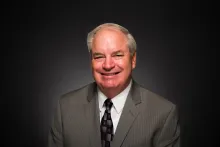
Robin Webber was born in Chicago, Illinois, in 1951, but has lived most of his life in California. He has been a part of the Church of God community since 1963. He attended Ambassador College in Pasadena from 1969-1973. He majored in theology and history.
Mr. Webber's interest remains in the study of history, socio-economics and literature. Over the years, he has offered his services to museums as a docent to share his enthusiasm and passions regarding these areas of expertise.
When time permits, he loves to go mountain biking on nearby ranch land and meet his wife as she hikes toward him.
