
Roy Holladay
Please be aware there is about 20 seconds of dead air at the beginning of the recording that could not be edited out
This transcript was generated by AI and may contain errors. It is provided to assist those who may not be able to listen to the message.
Specifically for getting ready for the Holy Days. I'm sure we are, as far as packing.
We've already started packing some things. I got half of my suitcase packed, and you'd probably do two, and you know, just getting ready. But we need to be using the time, he says, here to prepare spiritually.
That's so true. I'd like to start out today in John 14.3. The general, or the major surgery comment was since Mr. Bryan covered several things, I won't need to do that.
So we can get to... it won't be so rushed, and just can get right to the points that we need to look at, and not be overwhelmed, because it's a big subject. The Feast of Trumpets, or as was noted earlier, never calls it the Feast of Trumpets.
It most certainly is. However, I got up one time when I was a pup, brand new in the ministry, and I got up on a tone, and I'd say, happy Feast of Trumpets, inciting certain, you know, suspicious thoughts. And I said, because every Holy Day is the Feast of Trumpets.
They had trumpets, they blew the trumpets on every Holy Day, and every Sabbath day, and twice a day for the daily sacrifices, every day of the year, along with the morning and evening sacrifices. So, but I say, happy day of trumpets, and happy, but this is the Feast of Trumpets, not just today. So let's start out in Chapter 14 of John, and read a verse that you will recognize, and so will billions, not millions, but billions over the earth.
John 14, let not your heart be troubled. Verse 2, I go to prepare a place for you, and if I go, I will, if I go and prepare a place for you, I will come again. This is the words, these are the words of Christ. He will come back. So that's what the Feast of Trumpets is all about, but a lot of things that go before and after, too. But generally, this is very, very well known.
He would come back to Israel. He would come back to the New Testament Church, personal promises to those of his people in the New Testament Church, and he is coming back to the world because, Job 14, he said, you will have a desire to the work of your hands. God started a job. Have you ever gotten started and you had to leave and this and that, and you want to get back to it, and you're delayed for a long time? And finally, it's not much, not a real important job, but you got the job finished. How much more, if you've started the most important job that could be ever started or ever done, do you want to come back and finish it?
And Christ said, I will come back. I'm coming back. I will come again and receive you unto myself that where I am, there you may go also. Now, Job was talking about, it was a personal prayer about God wanting to finish the work of his hands. It applies to everybody that ever lived, and this is applied directly to the disciples there, but it certainly applies to the whole church and eventually to everybody. So, this is the Word of God about what's going to happen at the end time. Christ is coming back. We have a whole one of the seven basic steps in the plan is the Feast of Trumpets, that is, Christ coming back.
And I'll just note that Mr. Shaby actually mentioned this, I guess, in the next paragraph there that I didn't read, but this is a key holy day in the sense that it is a great transition. In fact, this is almost the greatest transition going from the day of man, and after Christ comes back, he's the one that created it, he's coming back, it's going to be the day of God forever. Now, there was another one that wasn't as big as this. Of course, Christ, the Father through Jesus Christ, created everything, all the physical creation, all people that would be, first two and then more.
But that resulted in a world because he did not arrange the laws like he has, or the administration, actually. And I spoke on this a while back. It was a totally different world. We haven't really appreciated generally how absolutely different the pre-flood world was from this. So many different things. But that was a huge transition, punctuated by a flood, but not nearly as big as this present evil world, Peter's words, plus the pre-flood world, the world then was, putting those two together, calling it the day of man, and then switching and transitioning to the day of God.
It's just huge. As a matter of fact, you can call it, it trumpets the hinge of history. The first three holy days about this world, you know, from creation to now, the men who have lived in. But everything else, the whole focus switches. After Christ comes, after this big hinge, you know, the page is turned, whatever, the doors closed, whatever, you have a future that is unlike everything that's gone in the past.
So it's really a transitional holiday, and there are several more things. There are things about each holiday that are...
I started to think about the next point. That was my first mistake there.
Several things about each holiday that are unique. That's what I was going to try to say.
Now, he's going to come back. He's a promise. Acts 1, verse 9 through 11, the natural question of, oh, well, when, where, what, how? And so we're going to answer the question of how.
So I'm going to refer to several scriptures today just for time's sake. You are familiar with them.
This is Acts chapter 1, verses 9 through 11, and they're gawking up into heaven. The angel says, well, you men of Galilee, what are you looking straight up for? What are you gawking into heaven for? And he says, essentially, he says, get busy. You have a work to do. In the meantime, he says, Jesus Christ would come back in like manner. And you study that. What is in like manner? If you go up, was he acting like he was climbing the stairs, Jacob's ladder style? Or was he, what does that mean? The only hints that we understand is that he is clothed with clouds. That doesn't sound very impressive. When I started studying this many years ago, I thought, well, okay, he's going to come back. There'll be clouds in the sky. But this is special. Remember the cloud that God came down and visited Israel in? And he stood on or hovered above the emergency seat in the tabernacle.
It was that brilliant cloud of fire by night and a brilliant light by day or vice versa. It kind of doesn't really matter. Just this brilliant cloud that was God's covering. So I suspect that when he went up, it wasn't just a few clouds in the sky or a lot of them. It was something that specially covered him or gave him a background. It was a heavenly escort as before. That wouldn't be the most important thing to know about it. But it makes a special point a couple of times, say he's coming back like he went. So it has to do with the clouds. And that also goes back to how he appeared on Mount Sinai, how he appeared in the bush. In that case, it was a fire in the bush. Later, it was the same fire and light that surrounded God. It's a special... it's clothing, but it's an official... like a king's robe. And there's another word that I can't think of right now. But anyway, it gives a matrix. It's like a setting for the jewel. And God doesn't just go around. He has a portable chariot for his throne. A portable throne is a chariot. Try to say it right, you know. But he doesn't just go around. He is important. He represents all he has created, and that's important. And so he presents himself in glory. So to some extent, these clouds made him glorious. We see some references we'll come back to about that. So he is coming back in light manner. It's a promised return. And to quote several commentaries, or to reverence them, this promised return of Christ is a persistent theme all through Acts and the Epistles and Revelation. Christ mentions it, of course, and promised that in the Gospels.
But it's mentioned so often it's a theme in the rest of the New Testament. And that's important.
He's coming back to the church, to Israel, and to the world. Now, I have with me the notes handwritten. This is before, not before computers, but before I was good enough to on the computer type it out. I think we bought our first one in 1982. They had come out in 1979.
It's a 1984. I write data sheets. I write information, several sheets, D1, D2. And then from that I take the sermon. T1, T2, text 1, and so on. And that's how I did this. This is the data sheet. And I wrote out two pages, almost two full pages, and tiny little writing. I'm surprised. Anyway, because I wanted to just gather not all, but a lot of the scriptures on the second coming of Christ. As I say, it's huge. It's a big promise mentioned all the way through. So here are just a few. I'll read just a few from this list. It's a very long list. And actually I took this from the Schofield Bible, the chain reference on the second event of Christ. And so there are a lot more. Deuteronomy 30, verse 3, the Lord will return and gather Israel. That's pretty far back there for the return of Christ. You could say even Genesis 3.15, but that's a stretch, but it still does apply. At any rate, so just pick that one. Psalm 2, you'll come back and rule with a rod of iron. 24, the King of Glory. 45, this is Psalms. Don't take notes. I'm going to say them too fast. Well, I wouldn't want to limit anybody around here. Take notes if you like.
Psalm 45, it's like a love letter, an ode of our adoration of the great King. How great he is.
47, he will choose our inheritance for us. Same theme. Proverbs 50, he will come back to judge the world. I skipped over Psalm 24, I think, the King of Glory, who's coming back to earth. 96, skipping over many others. The world will be established, reestablished, and God comes to judge the world. Psalm 110, I mention this often, actually. Melchizedek, the great King Priest, the beauty of His holiness, and the fact. I mentioned three. I'm sure I will again.
Verse 3 of Psalm 110, it's hard to translate, but it shows the enthusiasm and the joy and the excitement of all His followers. The different translations try to figure out how to put it. All these things are implied. Your followers, speaking to the King, Jesus Christ, joyfully volunteer. They are delighted and happy. They're dedicated and devoted, and they desire to serve when He goes out to conquer and rule. Those who are chosen and elected to be a part of the administrative team, the rulers. So we're only to—I've got to read faster— skipping over a bunch. Isaiah 9, the government will be on His shoulders. He'll come back to earth, and the government will be on His shoulders. Isaiah 11, this is the same thing. The perfect and glorious restored government of God on earth. Jeremiah is equal, same, same. Daniel, I mentioned Daniel 7, the Ancient of Days, will not allow His kingdom to be given away to others that don't agree with Him, that don't have His spirit, that aren't right with Him and devoted in total unity and just joy to be there and included. And Malachi 4, Israel is ruled for Mount Zion. That's Micah Hegai. He will shake the nations. I'm going to be reading New Testament, and it'll say the same things here. He will shake the nations. And Zachariah, just use one from there, while it talks, he's the branch of peace. When He comes back, His feet will touch the stand on the Mount of Olives, and it will split the whole mountain. We're talking about some really major things, cataclysmic, world-changing events, and they all focus on one thing. It's the hinge of history. It's when we go from the world of man ruled by Satan to the world and the day of God forever. And then we get into New Testament, and it really gets complicated because there are just so many. It's just really thorough, and I already mentioned that it's a persistent theme that we go to. Now, also, I wanted to mention I do at least every other or every third piece of trumpets. And that is I have just a sheet, just printed sheet. I gave this as one sermon many years ago, and I've never been able to give the whole sermon since. It was way too big. I don't know how long I went. Those poor people in Wausau, Wisconsin. They seem to be interested, though. It was a different time, and we were younger. But anyway, I have eight here. There's one I could have added. Nowadays, I choose one of them or give a summary and give a smaller point. This one is a huge subject, but I'm treating it not as a thorough study. Impossible. Okay, number one, and I passed some of these out. Sorry for... I didn't get to a couple. I have one I'll give to you after. But first, the warning of war for the entire world. That is a period, a long period of war and devastation for the entire world. And then the Day of the Lord specifically leads up through the translation... not the translation... tribulation. I got the Aeschian right. Anyway, and then the Day of the Lord, mass destruction, return of Christ proper, and that's what I'm talking about today, the Battle of Armageddon, which is in the process, and the resurrection, the regathering of Israel, reconstituting, and from that the world, the marriage of Jesus Christ to the church, the wedding supper, the coronation of Christ, and the firstborn are rewarded. You could put that together. In this, I did not mention the heavenly signs. I think I did that in one of the other lists, and it doesn't matter. But those are the big things, and so I wanted to look at just some of the scriptures on the return of Christ proper, that just the He will, which I read there.
I'd like to go next to Psalm 81 verse 3. They are all over the Bible, so we have plenty of choices.
I'll just sit here.
Now, this is referring to the context of this is the return of Christ and the setting of the kingdom, so it refers directly then as a background to what is pictured by the Feast of Trumpets.
It's more like reverse. That's the context of the Feast of Trumpets. But anyway, it says, Sing aloud unto God our strength, and make joyful noise. It says shout, and it means a cheering shout of praise. Shout before the Lord. Yell before the Lord. A cheering shout of praise. It has several in one word, and we, in this particular one, make a joyful noise unto the God of Jacob. So that's, of course, one of the hymns we think. Make a joyful noise.
Unto the God of Jacob. Well, the God of Jacob was that the most high God, El Elyon, the Father, or was that the one who became Jesus Christ, the Logos, or the spokesman? Well, that was the one who became Jesus Christ, the God of Jacob. The Father, of course, was the God of Jacob, but the one who did the work on the ground was the Father's agent in some senses was Jesus Christ.
Take a psalm and bring hither the temporal and pleasant harp with the sultry.
And then, so it does mention the scene now, just a minute, I've got to think here.
Was that in the sermon I gave and reviewed this week? Or is that something that Mr. Francis...
I think it was in something that I had written years ago. He said, we bring forth the harp and the sultry, the timbrel, and of course there's always singing, or most of the time singing, but you blow the trumpet. You don't play the harp, it's not the feast of harps, etc., and so on. The trumpet has a special meaning. It has to do with the voice of God. It's used as a symbol of the voice of God. It's used for communication and direction, of course, and it's a warning. Those are three main ones. There are four others that aren't quite as big. Interestingly, the ancient world had also used trumpets. Maybe you saw the movie Pagan Splendor about 50 years ago, or more. I didn't see it, but I saw a clip of it, I think.
It wasn't nothing to worry about, but the army was marching back into Rome. They had long lines of slaves, and they had all the troops, and they had all the goodies, all the wealth that they were bringing back on carts, and so on. They had trumpets and glorious music to announce that the conquering hero, the head of the Roman army at that point, was bringing it back.
Trumpets is used, that kind of music, and specifically where there are trumpets, always have been used for this kind of thing. To announce royalty and to make announcements, it's blaring, and you hear it. I just learned a new fact here, because Elaine Johnson here has done a study into the history of the pharaohs.
She actually read a book on Tutankhamun and mentioned the fact to me. In his sarcophagus, they also placed with him two trumpets, one bronze and one silver. Well, that's the kind that were used all over the world. Israel had those, they had special silver trumpets, and then Israel also had the shofar. So different societies have had that too.
Interesting side point. I don't want to go too far on that, but I learned it, and I thought it was interesting. I appreciate that. I'll mention it to everybody. Okay, it says, and now this, the King James always made me laugh. Even when I was a kid, I was snickering. Here it is.
Blow up the trumpet. So here's this guy. He has a stick of dynamite in the trumpet, and he's over here, and he's pushing down on the dynamite generator and blowing up. It doesn't mean that.
It means blow the trumpet. Go up and blow the trumpet. That one wasn't a hard one. I know nobody was confused about that, but I just had to snicker. Anyway, in the noon moon, in the time appointed, the Mo'ed, which means time appointed, on our solemn feast day, the point about this verse that's easily misunderstood is it's not talking about just the feast trumpets, which is the new moon. It's talking about two weeks later, where the full moon... no. Yes, two weeks later on the feast day, which is the full moon. Other translations make this very clear. It's not something that's deep and dark, and it just wasn't translated clearly. So he's talking about the fall holy days. So in fact, not just those four, but the first three are also, as I mentioned, feasts of trumpets.
So, so it's blown first on today, which is the first day of the month, first day of the seven months, seventh month. And by the way, this is the day you count back from or forward to to get to the Passover and know that day. And then the rest of the holy days all the way around, because this is the first of the civil year, I believe. Mr. Bryan mentioned that. And that's just the way it was done. But so the the Psalm notes these designations. It's saying we blow the trumpet on the new moon, and then 15 days later the full moon, the solemn feast day. In between is a real important one that's not mentioned in this particular verse, and that's of course atonement.
And then we go on to the rest of the feast tabernacles and last great day. So this is the statute of Israel in Israel, a law of God. And I just wanted to make that point from verse 3.
And this whole thing is so meaningful. We don't have time. There is one thing, I guess, verse 8, here, O my people, and I will testify unto you, O Israel, if you will listen to me.
So the trumpet is used. There is a the symbolism is it represents the voice of God. To get back to, you know, all the way down to the seven trumpets. And finally, the last one. I presume that last one is the loudest, but I don't know. It's a presumption. It would seem to be, it seems to crescendo as they go. Okay, now let us go to... I've got to arrange a couple of notes here to read a quote. And let's go to Joel chapter 2. Joel chapter 2. And this makes the point that I actually just mentioned, that the blowing of the trumpets on the first day of the year, that is the civil year, the Feast of Trumpets today, had symbolism for keeping the last four of the holy days, not just the one. So Joel 2, 1 through 11, I'm going to read verse 1 and 11.
Blow the trumpet in Zion. So this is a parallel scripture says the same thing.
Sound an alarm in my holy mountain. Let all the inhabitants of the land tremble for the day of the Lord is coming.
Excuse me. This scripture, as well as others, connect the Feast of Trumpets and the blowing of trumpets and the meaning behind trumpets and so on, with the day of the Lord in the end times.
There.
But notice it continues with a description, and that is, it's a day of darkness and gloominess of clouds and thick darkness, like the morning clouds spread over the mountains.
And then it describes this. It describes, it describes the, we have a song called the God's Army that we, I think it's in this songbook, but we have sung that for a lot. And it comes from these verses. Verse 11, the Lord gives voice before his army, for his camp is very great, for strong is the one who executes his word. For the day of the Lord is great and very terrible, who can endure it? So there'll be a lot of death and destruction. You have just many, many, many details of this in the book of Revelation. So I'll reference it too, but don't have time.
Appreciated the comments about there being a whole, a whole series of trumpets, seven trumpets.
And that takes a while. The implication is that you have this first blaring trumpet. After all the other commotion, the world to a large extent has destroyed cities. And you can take a look around.
I always thought that that would be nuclear, and I don't necessarily think that at all now.
We might even be able to put nuclear arms under wraps. Man might be able to do that.
They should try as they build more and better nuclear weapons. There's never been a weapon, by the way, that hasn't been used, that's been invented, that hasn't been used. So I doubt that.
But who knows? What if we did? The destruction doesn't have to come from weapons of mass destruction. Look at our cities! Just portions of our cities in the United States. If you get, if you get down to a place that we will, where God really takes the restrictions off of Satan and the demons, and he says, go at it and punish. Do you think people are going to wait around for somebody to start a war? No. They're inspired and egged on by the demon world. Crime is, has a lot to do with the demon world. You have a crime wave? Well, it's not just the humans that are upset.
And much of the world by this time will be destroyed. Remember, there are earthquakes, tsunamis, and all kinds of things like that. So much of the world is, by the time the trumpets start, will already have a good jump on destruction. But the first trumpet blasts. It doesn't toot.
It's a trumpet, you know. It doesn't go, and then be done. It's apparently, and the way it's written, it seems to be this way. I couldn't prove it. But it starts and it doesn't quit. And so this blaring trumpet all around the world, you know what loud noises do to people? If it doesn't, if you can't get away from it, it will drive you crazy. You just lose your concentration, and it causes great devastation emotionally. And then the second one starts blaring louder or just different tone.
And then, I don't know how long that'll go. I've heard in sermons, you know, I've heard many sermons.
We used to speculate an awful lot of this when I was younger, and before I gave sermons, heard a lot of speculation. But it does seem that this is the way it is. That's what's meant.
And then the third, fourth, fifth, and sixth. And by the time six horrendously loud noises are being heard, people can't think straight anyway. And then the last trump comes, and that's loud enough to wake up the dead. Louder than the other others. That doesn't make sense. It doesn't have to be, you know, you realize a little humor there. A little bit of baloney, just throwing them there to keep you away. Anyway, so the feast of trumpets and the trumpets at the end time are connected to the day of the Lord. That's one thing here. Chapter two then begins and shows—I'm just going to refer this to this verse 12 and 13 and 15 and on a little bit later in the chapter also—but it shows themes of the Feast of Trumpets, the Day of Atonement. God calls for a fast.
Chapter two He calls for a fast, telling the world you'd better fast because it's about to happen to you. Just one last warning. And then, of course, Revelation shows they won't until that very last time. Finally, there's a crack in the armor. Very well put by Mr. Brian. By the way, it must be good because it must have been a good choice because both of us chose it. We usually, you don't usually run into that, but the two—and he mentioned the two or three before that, so we've got a good message going here, I would say. At any rate, then it shows themes of Atonement and then of the Feast of Tabernacles and the Millennial World. And then chapter three shows a lot about this world and what's gone on before this. But anyway, so you have all four of—well, all three going up to Feast of Tabernacles, which will include the Last Great Day, which is a continuation of that world.
So it's for the four holidays. Now, moving along, let's go to the next scripture, which is logical. It's just I have them on different pages because I was reviewing those two other sermons given before. So we mentioned Joel 2 and 3, briefly. So then Leviticus 23 is worthy of a mention because it tells us to keep the Feast with the blowing of many trumpets. So we just mentioned that. Numbers 29.1, chapter 28 and 29 are important. They give the details of all the offerings on the Holy Days. And this is important for many reasons, but one of them is some people say, well, you just bring in three seasons, you bring your Holy Day offerings, but you can give many a little time or just give three offerings. No, they are prepared for every single Holy Day. All seven of the Holy Days, Numbers 28 and 29, you don't really have to look at the details of the physical offerings, but that's when they were given, and that is important.
Because it gives us direction. It tells us what God wants us to do. He wants us to be aware and have a part in giving an offering to the work of God, specifically on the Holy Days, not on the Sabbath, but on the Holy Days. Now, traditionally, the Jews have this, and you have the warnings in Joel. That would be not Joel Bryan, but Joel the prophet. We had warnings in Joel Bryan, too, but this is the prophet. We had the warnings in chapter 2 there. He called for the nation of Israel and the entire world, in fact, to fast. That was on trumpet, so he's calling for a fast, and they take this to mean, and we can very well take it the same way that there's a 10-day period of here between trumpets on the 1st and atonement on the 10th, where we are instructed by God here, by implication of fasting, to really think about our spiritual lives. This would be one of the two or three most intense periods every year in my own life, and possibly yours, where you just have so much to do. This week was like that for me. You just don't know how you're going to get it done.
I know I've talked to several others of you, and God gets you through it, but it would be so easy, it would be so easy, to just put off prayer. And I confess I did that and prayed later in the day, and finally, about Thursday, I got smart and said, okay, enough of this nonsense.
No, it was Wednesday. Put God first. I was taught this when I was first baptized. God just comes first. It's first time, then the rest of the money. It's the first part of the day. But, however, that doesn't mean you have to get up and spend a lot of time and prayer in the morning.
The two places as mentioned by Daniel and David is evening, morning, and noon. The day actually starts in the evening, and that's the best time for many people to pray and meditate. Certainly, a right time to meditate and so on. So, I'm not speaking of minutes here, but I'm saying put God first. A good morning prayer for sure. Just getting up. Spend some time. Get things right between you and God. If you do nothing more than run through the Lord's Prayer, and think about each of those points, they'll straighten things out between you and God. Who's who? Who's the potter? Who is God?
Who is the created being? Anyway, so we have a 10-day—this will be the first of the 10 days—to really seek God and analyze ourselves spiritually. Where is your spiritual center? Okay, hurrying along. Not that that's really important, but I'd like to note that in John 1837 and other places, Jesus is called the King of Kings. And in other places, the first true Church of God, this church, they are told that there will be lesser kings ruling under Christ. There will be, in his administration, I go to Revelation 20, verses 4 and 5. We read this actually on what commonly. It's very, very useful and sort of universal. Revelation 20 in verse 4—and I'll get to it here one more page—20 verse 4, I saw thrones, and that's the point. I saw thrones—it's talking about the first resurrection—but I saw thrones, and they sat upon them, and judgment was given unto them. They become judges, and I saw the souls of them that were beheaded for the witness of Jesus and for the Word of God, the ones who were persecuted, and they are the judges, and who had not worshiped the beast, neither were the image, neither had received the mark upon their foreheads, or in their hands. And they lived and ruled with Jesus Christ for a thousand years on lesser thrones under Christ. And so that's what the first fruits do as of the second coming of Christ. That's a prophecy, and it has to be fulfilled. In order for that to happen, Jesus Christ has to come back. And so you have these many statements throughout, especially the New Testament, that He is coming back, but it's implied all through the Old Testament, too.
Now, I've already mentioned Daniel 7. It says the same thing. He was going to give the kingdom won't let it go to other people. He's going to have His own people ruling with Him.
First Corinthians 15. Let's go to the resurrection chapter, because we just read about this in Revelation 20 here. And go to Revelation, go to First Corinthians chapter 15, which is generally the resurrection chapter we say in verse 50.
First Corinthians 15. Now, this I say, brethren, that flesh and blood cannot inherit the kingdom of God. So if we were going to inherit the kingdom of God, we had to be changed from flesh to spirit.
And that's what he states here. Neither death, I think, corruption and moth. It says, neither death, corruption and inheritance, inherit incorruption. Behold, I show you a mystery. We shall not all sleep, but we shall all be changed, because there will be some people alive at the Second Coming. In a moment, in the twinkling of an eye at the last trump. Well, there's a lot of information. It'll happen like in the blink of an eye or the twinkling of an eye. I like that twinkled. I've heard people say that, too. I want to be twinkled. Oh, I don't care. I just want to be there and call out what you want. But it's just fast in a blink of an eye. And it will be at that last trump. For the trumpet shall sound and the dead shall be raised incorruptible, and then we shall be changed. And so it goes on with more explanation.
That's the first resurrection. This blink of an eye resurrection. Now, I'm going to refer to 1 Thessalonians 4, which Mr. Bryan did too. It's almost a parallel sermon, not quite. But he comes back. There's this trumpet, but it says, with a shout. And that's one of the meanings we mentioned in Psalm 81, where it comes back with a joyful shout of praise, or the shout of, and sometimes it's a shout of a trumpet. Apparently, the shout isn't... it is the trumpet. But angels can shout very loudly, too. So maybe it's... you know, there's nothing quite like a whole crowd saying, oh, you know, magnified with several thousand. You think of a ball game, or a feast tabernacle. Done that sometimes. There is nothing like singing in unison or speaking or shouting in unison. I saw a movie where on the cliffs of the Dardanelles, they were passing through an allied convoy in World War II, and oh, it was the guns of Navarone. Yeah, no, not the guns of...
big guns on the cliff, and they got by them, and actually destroyed some of the... some of them.
Maybe I'm completing two movies. Forget the movie reference. Anyway, what happened is there are men on all these mini ships around, and they had to do this live. They couldn't just...
and they all shouted, and they were surrounded by sea all around. It was a large two or three mile long thing, and they all went... the guns blew. They all went, yay! And you could hear it even in the movie. You could hear all those thousands of men shouting, hooray! Okay, I believe this is going to be a little louder. This is going to be a really loud shot, and remember, there are six trumpets that have been going on continuously, apparently. Didn't say that they stop. They continue to sound.
So it's going to be an astounding day. It's going to be... you remember Fort Sumter, the first shot, he said it was reported around the world that this was the shot heard around the world. Remember that saying that was famous in American literature, and in language, it's kind of going away. But this is a shot, and it's really going to be heard around the world. Nobody will miss this one. It's just really going to be loud. Okay, so let's review quickly. Isaiah 3. I'm just going to refer to 4.
It says, and the heavens were rolled back as a scroll, or pushed again. Isaiah says, pushed together as a scroll. When a scroll rolls up, and stars fell out of the sky, and the heavens were, you know, discomboburated. All kinds of shooting stars and poetic comments about that.
Go to verse 8, and it talks, the day of the Lord is a day of vengeance. So this is not something we should look forward to. I'm coming back to Amos at the end. Well, let's do it right now since I said it.
Amos 5 verse 18, it says, whoa! And God says, when He says whoa, He's not just talking about whoa, that could be meant also. But this is whoa, or trouble, or suffering, or destruction to somebody who would. Are you looking forward to the day of the Lord? I'm looking forward to the coming of Christ. The day of the Lord actually precedes the coming of Christ. And this is almost a strange statement, except that it's not, because I know what the answer is, because I have experienced it. So in Amos 5, 18, it says, whoa, unto you that desire the day of the Lord. To what end is it for you? The day of the Lord is darkness and a lot in light. It's just very dark and no brightness in it.
It's a horrible time just proceeding. So this is different. This is different than looking forward to Christ coming back. Why would He say, woe to you who are looking for the day of the Lord?
The only people I ever heard express that. Looking forward to the day of the Lord are people in the Church of God a long time ago. And they said, oh, I can't wait for the day of the Lord. So all these people will be punished. They're so rotten. And it was actually a foul attitude towards the world.
And Christ cautions us. We're not supposed to be looking forward to Him coming back and punishing people. He doesn't look forward. He doesn't want to punish them. He warns and warns and warns.
He gives us enough pain that we will change, because human beings don't change without pain.
We do have... that's one of our many debilities. It's a day of vengeance. God doesn't want to be vengeful. He tells us not to be. Let Him take care of it. And He gives as much mercy as possible down to the bitter end. And then He will punish if the goal, which is life, is available only that way. And in that, He is following His own nature. Christ can't deny His own nature, it says, Himself.
Because He didn't want to be crucified, but He was all for it because He knew that it would save the world. It would make life possible. So that's a... He set the example. Just about everything Christ has set the example. Now in Zechariah 14 verses 3 to 4, it talks about... I've mentioned this actually already, but when Christ comes down, His feet will touch the Mount of Olives, and that will split the mountain. Now, I'm going to attempt something here that will take some time.
I think I can get it done here easily enough. You have this horrendous period of time. Huge earthquakes. Most of the earth has experienced a high degree of just devastation. Not everything yet.
And that's when Christ comes. It'll be this tribulation period, world trouble in general, tribulation specifically on Israel, and then specifically on the church. And then the day of the Lord starts, the last year of the three and a half years. Prophesy, Amos 6, I think it is, or Halle Hosea 6. And that day of the Lord, and then Christ finally comes. Finally, the good news, the gospel, comes to a head, as it were, and Christ does come back. So now, what I'd like to do is note here at the end of the sermon... I was going to just use Luke, but I decided to go ahead and use the... harmony of the gospels. I'll go back and forth. It's Matthew 24, Mark 13, Luke 21. Any harmony will have those three together because they are so parallel.
They're not word for word, so you can go back and forth and get extra. And let's just read, because we're after... we're describing the second coming of Christ. What goes before? Not so much.
The day of the Lord. What comes after? Not so much. The rebuilding. That's true.
What will it be like on that day when Christ comes? We've read several things already.
His feet will actually touch on the Mount of Olives and split and so on. But let's go through...
I'm going to read in Luke 21 and refer to Matthew and Mark. And there's not too much of a way you can do that without having a harmony there. So don't worry about it. We're familiar with this. I want to skip over the high points. First of all, we're starting in Luke chapter 21 verse 7. They want to know the when and the what. There are a lot of other questions, but they ask about what's going to be the sign of your coming and when.
And then other questions about it. So verse 7 says that, and they ask specifically, what will be the sign of these things that these things are about to happen or take place?
I'm using the ESV, which is very close to the King James, but I knew King James, but not exactly like it. And he said, and at this point, the rest of the chapter has gone through quite a bit of, quite a bit. Well, no, no, no, I'll just back up on that and say, there's a lot of watch out and be careful and take care. And there's a lot of warnings here. So he said, watch out that you are not misled. So he said, how's he going to get?
When you're coming, when these things are going to come, how will we know? And the first thing he says, he warns us about being misled, because there will be a lot. It's a time when truth is hard to discern, because so many people lie. When most people will lie at times, then it really gets hard to discern. Used to be people would, wouldn't think of lying under oath. They knew they could be nailed for it. And there was a religious part to that too. But people do that and purger themselves a lot. So he warns us about that. And when you hear of wars and rebellions, don't be afraid. It warns and rumors of wars, Matthew said. But for these things have to happen, but the end won't come right away. There will be great. Well, then he said unto them, nation will rise up in arms against nation. Verse 10 of Luke 21 and kingdoms again, kingdom against kingdom. There will be great earthquakes and famines and plagues. Okay, just take one great earthquakes. We just had one in Marrakesh, kind of a famous historical name, and we've had them all over the place.
Earthquakes were going like crazy and they calmed down. Remember the Ring of Fire about 25, 30 years ago around the Pacific Rim, and it's kind of calmed down a little bit. There was a tsunami once a while. We had that bad one a few years ago. But they're coming up. They're coming back. They're starting to get more common now. So earthquakes are absolutely devastating. There will be great earthquakes, famines and plagues. We've had a plague, a pandemic. It was overhyped for in some ways, and a lot of people lost their lives because we didn't know what it was at first.
And there's a lot of confusion about that. But there was a lot of sickness, and that's what God said. God would have plagues. That's what He said we would have plagues in various places. And there will be terrifying sights and great signs from heaven. And Matthew says all these things are just the very beginning of the birth pangs. Then he talks about, verse 12, persecution. That's specifically to the church, so I won't dwell there. And then there's a section I'm just going to skip over, but it's so important, but it deserves its own treatment. And that's about when they persecute you. That'll be an opportunity to bear testimony for me. So he says, settle in your own mind that you don't try to plot and plan and see how you can give your answer and get out of it.
I want you up there to say the truth. I'll give you the words. And don't be a mini, you know?
Don't lack courage. Say it! Remember who you're working for. You're very close to your reward at this point. So we'll come back to that. That's another time. But there's a lot of betrayal.
It would be hated by all. But there will be protection under God. And he says, I love this.
I've quoted this for years, Luke 21, 19. In your patience, possess you your souls.
That's in Matthew. And it's just Matthew... Well, I don't find it. Maybe it's just here.
But I love that in the King James, in your patience, possess you your souls. Your life depends on your patience. And that word is hubomone in the Greek, which means either...
There are two sides to it. It means patient endurance or enduring patience.
It has to have both of those things to go into the English language.
Patience and... So in your patience and in your endurance, spiritually, you have your life in your hands. So we need to be preparing now in our faith and our patience. And build that so that relationship there is very strong with God. And it shows that Jerusalem will be attacked. It's the center of the target for Satan physically, but that changes to the church. Remember, Jerusalem is used as a type of the church. And so the main target of Satan is not any physical place. He has his run of the earth. He's going to destroy it again, as he did before. Beautiful jewel of a creation. He just hates it. So there is an enormous amount of warning here. And Christ is just telling us what's going to happen. There's going to be the beast government. We didn't even say that, but just a controlling and hateful and killing, murderous government, disease, war, famine, destruction of all different kinds from earthquakes and many other different disasters, and all the wars. And when that seventh trumpet comes, it's going to be a shout that will be actually heard around the world, the other six too. But this apparently just is the finale at that point. Is that the exact time when Christ's feet touch the Mount of Olives?
I suspect that just might be. And I read over, actually, I don't think that I read.
I didn't get to verse 28. Wanted to cover that. It's actually verse 30. And this is in Matthew 24.
I read verse 30. This is right after the heavenly signs. Read about that in the prophets.
Joel and other of the prophets mentioned that. The sun will be darkened. The moon will not give it slight. The stars will fall from heaven. And in Isaiah 34, where we read that, it says it indicates just a whole huge confusion. Not all just kind of falling, but just like going crazy.
A lot of meteorites that would be seen. And that indicates that Satan is bashing the planets together as well. But the stars will fall from heaven. It will look that way anyway.
And the powers of heaven will be shaken. And of course, it's in Habakkuk. He said, I've shaken things before. They'll come in time. I'll shake the earth and the heavens. And this is it. It's leading up to, and then this huge cleavage in the earth that creates this from the Mount of Olives when Christ feet touch and creates this enormous valley described in Zechariah.
Then verse 30, the sign of the Son of Man will appear in heaven, and all the tribes of the earth will mourn. They will see the Son of Man arriving on the clouds of heaven, empowering great glory.
In the time of Constantine, it was popular. Christians believed that it was a great cross in the Son of Heaven. It doesn't say that. The sign is Christ. It says it both ways, checking even Matthew twice and Luke. They will see the Son of Man arriving in the clouds.
And so, just like the angel later said in Acts, actually a few days after he said this, but he'll be arriving the same way. Then he will send angels, and they will gather up the elect from the four winds, the ends of the earth, the ends of the heaven. And that refers to the church and the first resurrection that we've already mentioned. And I just thought I would read Revelation 11 and 15. I have that. The fastest way I can get to that is where I have it typed out. Revelation 11 and 15, New King James. Then the seventh angel sounded, that's the seventh trumpet, and there were loud voices in heaven, not chattering, it's indistinguishable, loud voices in heaven of angels, saying, the kingdom of this world has become the kingdoms of our Lord and his Christ, and he shall reign forever and ever.
Revelation 11 and 15. So it's just a fantastic thought. The day that he will come, yes, what leads up to it, and great events before and after, but specifically the day he comes, follows a horrendous time of devastation to the earth, and when he comes, it'll be the culmination of the trumpets. People will be dreaming crazy. The earth will already be destroyed to a very high extent, and he comes and the whole earth shakes. He said the whole earth would be like a drunken man, you know, floating around heaven, I guess, but it will be so disorienting. Everybody will surely see it. Those people that were finally afraid, a few of them were afraid, that'll be the seed, and Christ will start from there and build the best news ever. The Holy Days have the greatest news ever. The Holy Days are the gospel, and I didn't read verse 28. I want to go back and read verse 28 to close with that, because that's, we have a lot of warnings here, but there's a comforting word in Matthew 24 and verse 28. He says, for just like the lightning comes from the east and the flashes to the west, so the coming of the Son of Man be, and I take it that everybody in the world will be able to see him coming, not just the people on that side of the earth, but I take that, that everybody will see that. So the coming of the Son of Man be, verse 28.
Wherever the corpse is, there the vultures will gather. What does that mean?
We try to figure out, humans try to figure out how are we going to do this, how are we going to handle this, how are we going to solve this. We see that the second coming, just the subject alone, is so big you can't, you just can't grasp it all at once. And so here's a comforting thing.
Don't call us, we'll call you. Christ says to us, you don't have to be looking for Him, trying to figure out when He's coming, how to get to Him. The vultures will find the body, which is kind of a gross thing, but it's true. It's a true example. The vulture, the body doesn't have, you know, a fox dies in the woods, you know, doesn't have to, isn't responsible for finding a vulture to eat it up and do its ecological part, you know. Christ said, I'm going to come to you. I will come back to you! That's what it says to every single person. Luke 24, Matthew 24, etc., etc. So end up this feast day of the Feast of Trumpets, which it truly is.
With the best news, news, the best news we could possibly have, the Gospel being fulfilled, Christ coming back as a promise with safety and blessings and resurrection, and then we get to start with the good news, the Gospel. Just the most fantastic thing. All the Holy Days are like this, and Trumpets certainly is joyous and encouraging as much as any of the others. Happy Feast of Trumpets, what's left of it. Happy Holy Days.
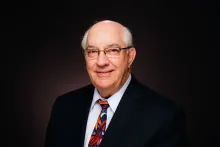
Mitchell Knapp is a graduate of Ambassador College with a BA in Theology. He has served congregations in California and several Midwestern states over the last 50 years and currently serves as the pastor of churches in Omaha, Nebraska, and Des Moines, Iowa. He and his wife, Linda, reside in Omaha, Nebraska.
