
Jorge De Campos
Jesus Christ, our eternal High Priest, ministers in the true heavenly sanctuary. The earthly priesthood and tabernacle foreshadowed greater spiritual realities. Through His perfect sacrifice and superior ministry, Christ mediates a better covenant, established upon better promises, offering spiritual transformation.
This transcript was generated by AI and may contain errors. It is provided to assist those who may not be able to listen to the message.
All right, good evening, brethren. Throughout the book of Hebrews, the author, which one would be believed to be Paul, progressively reveals the supremacy of Christ. As he goes through chapter by chapter, he moves that Christ is greater than angels, is superior to Moses, provides a greater rest than Joshua. He is also a compassionate and eternal priest who was appointed by God to that role and position according to the order of Melchizedek. Then we saw in Hebrews 7 that the superiority of Christ's priesthood was established over that of Aaron and of the entire Levitical priesthood.
The Levitical priesthood, as we understand, as we can see it, and as it's described in the Bible, could not bring humanity to perfection. Its repeated animal sacrifices could not permanently remove sin. And so a change in priesthood from the Levitical to according to the order of Melchizedek to Christ, required also a change in the law governing the priesthood.
Obviously, that did not mean a change in the abolition of God's moral commandments, God's ten commandments. No, but the law governing the priesthood because the priesthood now was being moved from the Levitical priesthood. So unlike the Levitical priests, they were appointed because of their physical descent or ancestry. Christ, on the other side, was appointed because God promised he gave an oath and also because Christ possesses the power of an endless life.
As we know, Aaron died and we went through that, and another priest had to take his place, and so on and so on, from father to son, but of the line of Aaron. Jesus Christ, however, lives forever and therefore continuously intercedes for us.
And we saw in Hebrews 7, verse 25, therefore, therefore, Hebrews 7, verse 25, Therefore, he is also able to save to the uttermost those who come to God through him, since he always loves to make intercession for them. He always loves to make intercession for us. What a blessing we have, brethren, that Christ is continuously interceding for us before the Father. Unlike any human priest who themselves were sinners and needed sacrifices for themselves, Christ, he was without sin, and he offered himself once for all.
And so, through his human experience, through his human suffering that he went through, through his human obedience and sacrifice, he became fully qualified to serve as our compassionate High Priest. And so, the principle lesson is not simply that Christ occupies a superior office or responsibility or priesthood, but it is that through his perfect sacrifice and through his eternal priesthood, we have ongoing permanent forgiveness and a better hope, and let's not forget, we have today direct access to the Father.
Now, this is described very briefly in Hebrews chapter 10, starting in verse 19. Therefore, brethren, having boldness to enter the holiest by the blood of Jesus. That means we have capability now today to have direct access to the Father and enter the holiest through Christ's blood, through his sacrifice.
And therefore, he says, having boldness to enter, how? By a new and living way. You see, the old way was the High Priest on the Day of Atonement, had to offer sacrifices for himself, and he could only go into the Holy of Holies once a year on the Day of Atonement. That was the old way. Now we have a new and living way, which you and I, with us, with all, Christ consecrated for us, as it says in verse 20. Through that veil, that veil, that was that thick veil that was torn at his death from the top to the bottom, we have access through that veil that he is, symbolically, through his flesh.
And verse 21, and we have a High Priest over us. Therefore, because of that, we now have direct access to the Father. That's why it says in verse 22, Let us draw near with a true heart in full assurance of faith, having our hearts sprinkled from an evil conscience, and our bodies washed with pure water.
And so, you and I, we, therefore, can confidently approach God. We can receive mercy, and we can obtain spiritual help to overcoming sin. Our salvation, therefore, rests upon a living, eternal, and perfect High Priest, Jesus Christ. That's where our salvation rests upon. We have a living, eternal, and perfect High Priest, which has compassion for us. And so, when we read in Hebrew 7 verse 22, Hebrew 7 verse 22, where it says, By so much more, Jesus has become a surety of a better covenant. He has become, and in my margin, for surety says, therefore, a guarantee, a guarantee of a better covenant.
And so, a question that we could have at this stage is, if we have a superior High Priest, what makes the covenant under which He Christ ministers superior? And that's what Hebrews chapter 8 introduces the subject, which is then developed extensively throughout the following chapters of Hebrews. And so, let's now read verse 1 of Hebrews 8.
Now, this is the main point of the things we are saying. We have such a High Priest, we seated at the right hand of the throne of the majesty in the heavens. That's the main point.
That's what it says. Now, this is the main point. We have such a High Priest, we seated at the right hand of the throne of God the Father. And so, through these few verses from verse 1 through verse 6, we see six important truths which emerge in these following six verses. First, Christ's priesthood is established in heaven. We can see, yeah, we have a High Priest who is seated at the right hand of the throne of the majesty in the heavens. His priesthood, Christ's priesthood, is established in heaven. Now, under the Sinaitic covenant, the High Priest served where?
On earth, on an earthly tabernacle, and yes, later in a temple, but it was on earth. So, his ministry, the High Priest of the Sinai covenant, the ministry of those priests was restricted to a physical sanctuary. Christ, however, serves in heaven itself in the presence of God the Father.
In Hebrews 9 verse 24, it confirms that. Look at that. Hebrews 9 verse 24. For Christ has not entered the holy places made with hands, it was not on earth made with hands, which are copies of the truth. It was the ones made on earth with basically copies of the true, true holy place in heaven. But Christ entered into heaven itself now to appear in the presence of God for us. Christ is now appearing in the presence of God for us. So, that's one point that we get from this verse 1. But there is another point here in this verse 1, which is that Christ is seated at the right hand of God.
This fulfills Psalm 110 verse 1. Psalm 110 verse 1 is a very significant psalm. And so, let's go to it. Psalm 110 verse 1.
It says, The Lord said to my Lord, sit at my right hand, till I make your enemies your footstool. The Lord, God the Father, said to my Lord, Jesus Christ, sit at my right hand, till I make your enemies your footstool. And so, you can see, yeah, that is a very important prophecy written by the time of David, you know, which describes Christ, the Messiah, seated at God's right hand. And what do we have in comparison? We have the Levitical priests, whose sacrificial work was continuously repeated. And what do we have Christ? He offered himself once for our sins and now sits at the right hand of God. In Hebrews 10 verse 11 and 12, Hebrews 10 verse 11 and 12, we read, By that will we have been sanctified, made right with God, through the offering of the body of Jesus Christ once for all. You see, Christ offered himself once for all. And in verse 11, and every priest, Levitical priest, under the Levitical Sinai covenant, every priest stands ministering daily and offering repeatedly the same sacrifices, which can never take away sins. The sacrifices of goats and bulls and lambs could not take away sins. And they were continuously repeating it, but Christ offered himself once. And so by Christ being seated at the right hand of the Father, emphasizes, number one, the completion of the sacrifice. That sacrifice is complete. And two, it's sufficiency. The sacrifice is complete, it's done, and it's sufficient. But because he's sitting at the right hand of the Father, his ministry of intercession continues. You see, the sacrifice is done once, it's complete, it's done, it's done. We are perfected. He's done the part, and it's sufficient. But his ministry of intercession for us continues. It is ready, continuously intercedes for us. Look at Hebrews chapter 10 verse 14. It says, for by one's offering, he has perfected forever. That one sacrifice is complete and sufficient.
Those who are being sanctified, those who are being corrected, cleaned, interceded for. And so his ministry of intercession continues. So let's now read Hebrews chapter 8 verse 2. It says, a high priest who seated at the right hand of the throne of the majesty in the heavens, a minister of the sanctuary and of the true tabernacle, which the Lord erected and not man.
The true tabernacle, which the Lord erected and not man. Christ ministers in the true tabernacle. It was the earthly tabernacle, which was constructed according to divine instructions given to Moses. Was only a representation of the greater true heavenly tabernacle. Let's turn briefly to Exodus 25. Exodus 25 and Exodus 25 verse 8 and 9. Exodus 25 verse 8 and 9.
It says, and let them make me a sanctuary that I may dwell among them. According to all that I show you, there is the pattern of the tabernacle and the pattern of all these furnishings just so you shall make it. And then in verse 40 it says, and see to it that you make them according to the pattern which was shown you on a mountain. And so the earthly tabernacle was built, was constructed according to a pattern that was given to him. It was a specific design pattern layout, which was a representation of the greater heavenly true tabernacle. And Christ's ministry takes place in that true heavenly sanctuary. And so what is the key lesson for you and I, Yah? Is that our high priest Christ is not limited by death, by geography, or the restrictions of an earthly sanctuary. He lives forever and ministers directly, he ministers directly, in the presence of God the Father on our behalf.
And so we continue our reading in Hebrews chapter 8 verse 3. For every high priest is appointed to offer both gifts and sacrifices. Therefore it is necessary that this one also have something to offer.
And with Christ it's necessary that he also have something to offer. And so as we see every high priest was responsible, had a responsibility to offer gifts and sacrifices. But Christ as our priest therefore must also have something to offer. That's what it says then. He must have something to offer. And what did he offer? We know very well. He's our life. You see under the Levitical priest, priesthood under the Levitical system, priests offered animals repeatedly. These sacrifices were temporary and could not permanently remove sin. As we showed a little earlier, but that's also read in Hebrews 10 verse 1 through 4. He says for the law, that's the priesthood law. That's the ceremonial law. That's the law of these sacrifices. Having a shadow of the good things to come with purely a shadow, a representation, a type of the reality of the anti-type of things to come and not the very image of the things. So they were just a shadow. They were not really even image of the very things. And these laws, the ceremonial law, these sacrifices through the ceremonial law of offering bulls and goats, says, yeah, can never with these same sacrifices, which they offer continually year by year, make those who approach perfect.
You see, these sacrifices could not permanently remove sin. Verse 2, Hebrews chapter 10. For then would they not have seized to be offered? See, if they removed sin, why offer it again and again and again? For the worshippers were once purified, would have no more consciousness of sins. They would have begun, erased. But in those sacrifices, there's a reminder of sins every year, particularly on the day of Atonement. That's what's referring that when the high priest would go to the Holy of Holies on the day of Atonement. So in those sacrifices, there's a reminder of these sins every year.
Verse 4, for it is not possible that the blood of bulls and goats could take away sins. However, as we know, Christ offered something infinitely greater. His own life has the perfect sacrifice for sin. For instance, in Hebrews 7, verse 26 and 27. Hebrews 7, verse 26 and 27 we see. For such a high priest was fitting for us with only, harmless, undefiled, separate from sinners, and has become higher than the heavens, who does not need daily as those high priests to offer up sacrifices. First for his own sins, and then for the people's. For this he Christ did once for all when he offered up himself. See, Christ was sinless, and he offered himself once for all. In Hebrews chapter 9, verse 11 through 14 reads, And it was symbolic for the present time in which both gifts and sacrifices are offered. Yes, at that time the terms were written, the temple was still there, and they were still offering sacrifices. So it was symbolic, and it for the present time in which both gifts and sacrifices are offered, which cannot make him who performed the sacrifice perfect in regard to the conscience. The sacrifices, verse 10, concerned only with foods and drinks, various washings, and fleshly ordinances, imposed until the time of Reformation, imposed until Christ's sacrifice, which changed it all. Hebrews 9, verse 11, and continue that. But Christ says, Yeah, as I, priest, have the good things to come with the great and more perfect tabernacle, not made with the heavens, not made with hands, that is not of this creation. And therefore, we read that he entered the heavenly sanctuary. And then it says, for us to have eternal redemption. You read for this reason, by your pardon, in verse 14, he says, How much more shall the blood of Christ, who through the eternal Spirit offered himself without spot to God, cleanse your conscience from their works to serve the living God?
Christ, as sacrifice, is able to cleanse our consciousness to serve the living God. And then look also at Hebrews chapter 10, verses 10 to 14. Hebrews 10, 10 to 14. By that will we have been sanctified through the offering of the body of Christ once for all, and every I, priest, stands ministering and offering repeatedly the same sacrifices, which can never take away sins. But this man, after he had offered one sacrifice for sins forever, sat down at the right time of God from that time, waiting till his enemies are made his footstool. Remember, we read that in Hebrew, in Psalm 110. And then he says, for by one offering, and this we read earlier, but I just want to emphasize, he has perfected forever those who are in the process of being sanctified. You see, so the Levitical I priest needed sacrifices for his own sins before interceding for the people. You see, that I priest, remember in Leviticus 16, he first had to offer a bull for himself, for his own sins, and then he offered the goat to represent the sacrifice of Christ. You see, so, but first he had to present a sacrifice for his own sins before interceding for the people. But Christ, being sinless, needed no such sacrifice. And so what do we have? It's two things, a perfect I priest and a perfect sacrifice. And so what the right Ia is showing the superiority of Christ and of Christ's priesthood, which then is inseparable from the superiority of his sacrifice. And therefore Christ is both our high priest and the sacrifice through which our sins are forgiven. So it's amazing how Paul, the writer, I believe to be Paul, how the writer, yeah, emphasizes this very strongly.
And now we go to verse four. For if he Christ, where on earth he Christ could not be a priest. Since they are priests who offer the gifts according to the law. If Christ was a physical human being and he would he could not be a priest, if at that time and when he was a physical human being, of course you understand what I mean, but he could not act as a priest, as a physical human being. Why? Because he was not of the tribe of Levi, more specifically of one of Aaron's descendants. He could not because he was not part of that Levitical system because the law assigned those priestly responsibilities to Aaron's descendants. And as we know, Christ descended from Judah, not Levi. Hebrews 7 verse 13 and 14. Hebrews 7 verse 13 and 14 says, For he of whom these things are spoken, belongs to another tribe from which no man has officiated at the altar. Yes, he was from the tribe of Judah. For it is evident that our Lord arose from Judah, of which tribe Judah, Moses spoke nothing concerning the priesthood. The priesthood was for the tribe of Levi and more specifically the children of Aaron.
Right now, let's read verse 5. So he's saying that he could not be a priest, since there are priests who offer the gifts according to the law. Verse 4 verse 5, Who serve the copy and shadow of the heavenly things. We discussed that the copy and shadow of the heavenly through sanctuary. As Moses was divinely instructed when he was about to make the tabernacle. For he said, See that you make all things according to the pattern shown you on the mountain. And we finished reading that a little while ago in Exodus 25 verse 40. And so Moses constructed the tabernacle according to God's instruction to him. And God gave him very specific detailed instructions on the mountain of the detail of the pattern of the construction that had to be done. And so the earthly sanctuary, its furnishings, the sacrifices, the priestly services, and and as we see the whole priesthood was purely a representation of the greater heavenly through tabernacle. And so when we look at that act that was done annually on the day of atonement in Leviticus 16, we have the earthly in Levitical ministry and we have Christ's heavenly ministry. The earthly physical ministry had a physical tabernacle. Christ's heavenly ministry is on a true heavenly sanctuary. The earthly Levitical ministry had a high priest descending from Aaron. Christ on his heavenly ministry is a priest, a high priest, according to the order of Melchizedek. In the earthly ministry there were animal sacrifices. In Christ's heavenly ministry, he offered his own sacrifice. In the earth's Levitical ministry on the day of atonement, that annual entrance, they entered only once into the most holy place. Christ has entered there once for all. And those repeated sacrifices in Levitical ministry are compared to now only one sacrifice which is sufficient for us. And finally, those priests were mortal and we have an eternal high priest. And so was the earthly system meaningless? No. No. Why? Because God established it to teach his role about what? Sin, about holiness, about the need of sacrifice, and the need of a mediator. However, this earthly system was only a shadow, was only a type, and could never accomplish everything that represented. Because it represented what? It represented the reality, the anti-type, the true heavenly sanctuary. And so that earthly system pointed to the eternal heavenly sanctuary. And now in verse 6, But now he Christ has obtained a more excellent ministry inasmuch as he is also mediator of a better covenant which was established on better promises.
You see, this is the pivotal. This is like the principal theme of this chapter. This is it. And so we need to appreciate this statement and to really appreciate because remember, yeah, let's just read it for emphasis. In verse 6 says, Christ has obtained a more excellent ministry that is the mediator of a better covenant established on better promises. And so to really appreciate the statement, I want to recall the three broad elements of the Sinai covenant. And we went through that, which is from Exodus 19 through to Exodus 24, and we said there were basic three broad elements. First, in Exodus 20, the first part of Exodus 20, it was between God and the individual. It was between God and us. And that is the moral law defining to us righteous conduct, such as the Ten Commandments. So that section of Exodus 20, the first 20 or so verses, it was about the Ten Commandments. Then, from Exodus 21 through Exodus 23, we had the relationship between God and the nation. In words, the civil law, the civil judgments that governed a nation, Israel, of which the king was God. And so they had civil laws, civil judgments, certain things to do if there was this, for instance, this crime or this action or act of robbing or whatever it is. There are certain things that had to be done. And so, in the Sinai Covenant, as I mentioned, there were three broad elements. The first one was the moral law, the first part of Exodus 20. The second element was the civil law, that's from Exodus 21 to 23. But in the middle, between run about Exodus 20, 20, and the end of that chapter, it was the sacrificial, basically brief summary of the ceremonial law. The sacrificial and the priestly system, which then was expounded in a lot more detail in the Book of Leviticus. In other words, how is that relationship between God and the sinner? And therefore, that sacrificial system and that priestly system provided a means of approaching God.
You see, so the problem with the first two broad elements that I mentioned, the moral law and the civil law, was not that God's moral standards and God's civil judgments were defective.
Rather, the Israelites lacked the spiritual transformation, strength, and capability, and intent necessary to obey God faithfully.
And in fact, as an example for that, God's law, therefore, was written on tables of stone. It was not internalized in their hearts. That was the problem. And Deuteronomy 5 verse 29, God expresses His desire. Deuteronomy 5 verse 29, Oh! That they had such a heart in them that they would fear Me and always keep My commandments, that it might be well with them and with their children forever. You see, God expresses the desire that His people would have the hearts inclined to fear Him and obey Him. Also in Deuteronomy 29 verse 4. We read, Yet the Lord was not given you a heart to perceive an eyes to see and years to year to this very day. In other words, they had not received spiritual understanding. And so the ceremonial law, it was a sacrificial and a priestly system, had limitations. And those limitations, because the law was not written in the people's hearts. But it had other limitations as well. Its sacrifices could not permanently remove sin. Its sacrifices could not cleanse our conscience. And its sacrifices could not provide unrestricted access to God. Right? And so Hebrews 9 verse 9 describes these limitations. Hebrews 9 verse 9, it says 9 9. It was symbolic for the present time, which both gifts and sacrifices are offered, which cannot make Him who perform the sacrifice perfect in regard to the conscience. And Hebrews 10, which I also read a little earlier.
And it says in verse 4, 10 verse 4, For it is not possible that the blood of goods, the blood of bulls and goats could take away sins.
It basically explains these limitations of the old covenant.
But the new covenant addresses these weaknesses through Jesus Christ. And so that's why we have in Hebrews 6, Hebrews 8 verse 6, a bigger part, Hebrews 8 verse 6 at the latter part, or the second half, says that Christ is a mediator of a better covenant, which was established on better promises.
You see, so we have three important, let's call it expressions here. Christ was as obtained a more excellent ministry. So it's a more excellent ministry, because he's the mediator of a better covenant, which is established on better promises. So we covered about his ministry. But let's look, what is a covenant? A covenant establishes a relationship. A relationship. It's an agreement. It's a contractual agreement, which involves what?
Commitments, obligations and promises. Think about it, if you sign an agreement to buy a house, there's certain commitments. I will do this, I'll pay this, but you have the house. You have some obligations. You've got to pay monthly so much. And there's promise that says that once you fully pay that, the house is now fully yours. You see, so a covenant is agreement, is a relationship, which involves commitments, obligations and promises.
Under the old covenant established at Sinai, God promised Israel, what? Predominantly physical and national blessings, which were conditional upon their obedience. If we look, for instance, at Exodus 19, verse 5-6, we see God saying, you have become a special treasure, a kingdom of priests and holy nation. But then we can see that there were conditions. You read the Revelation 26 and you read the Deuteronomy 28. When it says, you do these, there'll be these blessings. You don't do that, there'll be these cursings.
If you do that, there'll be blessings, which included agricultural abundance, prosperity, protection, peace and national greatness. You don't do it, just the opposite. And what we read at the end of that covenant, which I mentioned was between Exodus 19 to beginning of Exodus 20, we read there when the signing, let's say that way, the signing of that covenant was done in Exodus 24, verse 3-8.
It says, it's like they sign and they say, agreed to obey and the covenant was ratified with blood. Let's just read that for verification on that. Exodus 24, Exodus 24, verse 3-8. Exodus 24, verse 3-8. So Moses came and told the people the words of the Lord and all the judgments and all the people answered with one voice and said, All the words which the Lord has said we will do.
So they made a commitment. And Moses wrote all these words of the Lord and he rose early in the morning and built an altar at the foot of the mountain and 12 pillars, according to the 12 tribes of Israel. Then he sent young men of the children of Israel offered burnt offerings and sacrificed peace offerings of oxen to the Lord. And Moses took half the blood and put it on the basins and half the blood is sprinkled on the altar.
And you can see, yeah, they signed basically the symbolic, they signed the covenant. And then he took the book of the covenant. That's in verse 7, 24 verse 7. And he read it in the earring of the people and they said, All that the Lord has said we will do and be obedient. And Moses took the blood sprinkled on the people and said, This is the blood of the covenant which the Lord has made with you according to all these words. In other words, they signed the covenant.
That's basically the sealing of the old covenant. Israel agreed to obey and the covenant was ratified with blood. It was signed, ratified, sealed. So, however, we know they disobeyed. Why? Because they didn't have the mind to do it. The laws were not written in their hearts. But the new covenant provides something far greater than the physical prosperity. Isn't it? Our new covenant, we sign it baptism. We make a commitment to baptism. And then God, upon the laying on of ends, gives us His Spirit.
This new covenant provides us the means by which we can be spiritually changed, transformed. And ultimately, we then can receive eternal life as members of the family of God. And so it's far greater than spiritual prosperity. It's a change of us to become or develop godly character and to become members of the family of God for eternity.
And so the new covenant offers forgiveness, offers justification by grace through faith, and offers us God's Holy Spirit in us, offers us the capability of walking according to the Spirit. Read Romans chapter 8, verse 1 through 4. It says, we gotta walk according to the Spirit, not according to the flesh. And also we read many scriptures, for instance, in Colossians 3, verse 5 through 10, where it talks about us putting off the old man, the previous self-oriented, oriented way of life, and put on the new man, so that we may fulfill the requirement of the law.
And what else? The new covenant gives a greater expectation. Look at that expectation in Romans 8, verse 19. Romans 8, verse 19. It reads, yeah, it says, for the earnest expectation of the creation eagerly waits for the revealing of the sons of God. There's a whole expectation. What a blessing it will be when human beings will be revealed as spirit beings. Wow! That is an amazing expectation.
And then it's also part of the new covenant, as we read in Hebrews, is a better priesthood. And as we read in Hebrews, verse 6, better promises. Better promises. So it's a better covenant that gives us better promises and also gives us a better hope, because you read in Hebrews chapter 2, verse 10. Hebrews chapter 2, verse 10, it says, for it is fitting for him for whom all things and by whom all things are all things in bringing many sons to glory.
Our hope, brethren, is to be glorified, to be children of God in the kingdom of God. And so, indeed, it's a better covenant. And what are the better promises? Well, we can mention many, and you could come up with others. For one, it's a promise of God's Holy Spirit. We read that it gives us a new heart and enables genuine obedience. God's laws, the other promise, God's laws are written in our hearts and minds. You read that in Hebrews 8, verse 10. God's laws are internalized in us. We also read that in Jeremiah 31, verse 3, a promise. So it does not abolish God's moral law. Instead, through God's Holy Spirit, God transforms our attitudes, our motivations, our desires, so that we increasingly love and obey according to His commandments. Another promise is genuine forgiveness and reconciliation. In Jeremiah 31, 34, we see promises that God will forgive iniquity and remember sins no more. And so Christ's sacrifice foreshadows that forgiveness that animal sacrifices only foreshadow. But Christ's sacrifice provides that forgiveness, should I say more correctly. Christ's sacrifice provides the forgiveness that animal sacrifices only foreshadow. And we have direct access to God through Christ. We went through that. Through that eternal priest, we can approach the Father confidently. We went through that in Hebrews chapter 10, verse 19 through 22. We no longer depend upon a succession of mortal priests or an earthly sanctuary. We have direct access to God.
And we have, what another promise? The promise of eternal life. The Old Covenant emphasized national prosperity, physical blessings and inheritance in the Promised Land. The New Covenant offers a greater inheritance, eternal life in God's kingdom. And so why is the New Covenant this better? It's very easy. The Old Covenant, the laws written on stone, on tablets. The New Covenant, the laws written in our hearts and minds. The Old Covenant, people did not have God's Holy Spirit. In the New Covenant, we receive God's Holy Spirit. In the Old Covenant, animal sacrifices. In the New Covenant, Christ's perfect sacrifice. In the Old Covenant, mortal high priests. In the New Covenant, an eternal high priest that has compassion for us, can feel for us, and is panting for us, and is our eternal advocate. The Old Covenant was an earthly sanctuary. The New Covenant is a heavenly sanctuary. And the Old Covenant was basically physical and national promises. The New Covenant is spiritual blessings and eternal inheritance. And so, the New Covenant is not just superior, but... And it's not because God's standards of righteousness have changed. It is superior because God provides a means of forgiveness of spiritual transformation and eternal life through Christ Jesus. The weakness in the Old Covenant was not the law, not God's law, but the inability of the people to obey it faithfully, without the necessary spiritual transformation with the help of God's Holy Spirit. And so, as we conclude, Hebrews 8, verses 1-6, as the writer Yah of Hebrews has moved from demonstrating that Christ is a greater high priest, he's moved to revealing that he, the high priest Christ, ministers in a greater sanctuary and mediates a greater covenant. And so, he shows that the Levitical priesthood and its sacrifices were temporary, serving as shadows of what Christ now is accomplishing. And through his Christ's perfect sacrifice, his eternal priesthood and his heavenly ministry, he provides something that the former system could not do. Genuine forgiveness and direct access to God, and the help, the spiritual help, through God's Holy Spirit, to develop God's holy righteous character. And so, the key message is that the New Covenant provides not just better promises, but through Christ, the means by which those promises can be fulfilled in us. And therefore, this section prepares us for the rest of the chapter, where the author explains why a new covenant was necessary, and then quotes Jeremiah's prophecy concerning God's law being written in hearts and minds of the people. And that, brethren, will cover in the next study.
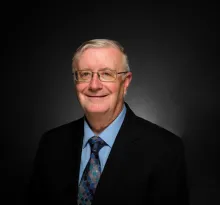
Jorge and his wife Kathy serve the Dallas (TX) and Lawton (OK) congregations. Jorge was born in Portuguese East Africa, now Mozambique, and also lived and served the Church in South Africa. He is also responsible for God’s Work in the Portuguese language, and has been visiting Portugal, Brazil and Angola at least once a year. Kathy was born in Pennsylvania and also served for a number of years in South Africa. They are the proud parents of five children, with 12 grandchildren and live in Allen, north of Dallas (TX).

