


Tim Martens
This transcript was generated by AI and may contain errors. It is provided to assist those who may not be able to listen to the message.
Well, thank you once again, Mr. Housen and Mr. Graham. Appreciate your service to God's people today.
Well, today we are going to cover the second part of the sermon series, How Can We Grow Spiritually? In both our spiritual and physical lives, you may not have thought of it this way before, but we receive one gift that is the most powerful possession that we have. Spiritually, the one gift that we are given that is the most powerful possession we have is the gift of the Holy Spirit. Physically speaking, the one gift that we are given that is the most powerful possession we have is the gift to choose. I want you to think about something regarding choice. We are constantly making choices. Eventually, we always make a choice. And those options are to choose to do something proactive to induce change, or the choice to do nothing and experience the consequences of that choice. Those are two very powerful choices. The key to spiritual growth is that when we are using both of those powerful gifts together, the gift of the Holy Spirit, and that wonderful physical gift we are given because of the human mind to choose and make a choice, that together is what transforms our lives. Let's begin today. If you'll turn with me to Matthew 26, verse 37, I'd like to look at the most difficult struggle Christ Jesus ever experienced when he became flesh and walked on earth. This story, this example of what he experienced on the eve before he would give up his life and become a living sacrifice, is so powerful because it reflects also the choices and struggles that you and I have in our human lives. Matthew 26 and verse 37. Let's pick it up there and read about this experience he had that was his most difficult human struggle. It says, and he took with him Peter and the two sons of Zebedee, and he began to be sorrowful and deeply distressed. Something's bothering him. Yes, he's got the full measure of God's Holy Spirit, no doubt about that, but something is bothering him. And what's bothering him is the knowledge of what the next 24 or so hours are going to be like. Verse 38. Then he said to them, My soul is exceedingly sorrowful even to death. I am so sorrowful, I'm so broken up, that it's like I want to die. I'm really struggling with something inside. Stay here and watch with me. And he went a little farther and he fell on his face and he prayed. So outside of your shot, he asked them to stay there and be watchful, pay attention. And he went a little farther away and he fell on his face and he prayed. And he said, My father, if it is possible, let this cup pass from me. Nevertheless, not as I will, but as you will. So he's struggling with something here. What is he struggling with? He's struggling with his humanity. He's a human being, just like you and I are human. And he knows what prophecy says. He knows what he must do. He knows what will happen to his physical body within the next 24 hours. He knows that nails will be hammered to his hands. Have you ever thought a few minutes about what it would feel like knowing in advance what nails being hammered through your hands, what it might feel like? Have you ever thought and pondered what it might feel like if you knew in advance that you were going to be whipped with leather straps that had bone tied into the ends of them that would literally tear the flesh off of your body as it struck you and was pulled back to strike you again? He did. He understood what must happen. He lived in a world where people were crucified all the time. He knew what crucifixion was like. He knew that oftentimes, unless God was merciful, that people would sit there and torture for days and days hanging on across before they would expire. He understood. He knew all of that. Verse 40.
But the flesh is weak. You see, with Himself, His Spirit, He knew what He needed to do. He had the full measure of God's Holy Spirit. He knew what His mission was. He knew why He'd been called to this earth and walked on earth as a man. He knew why He emptied Himself of His Godhead and came to earth to become the ultimate sacrifice so that you and I could have reconciliation with God.
But it was that human side, thinking about what He would be experiencing. That was tough. That was hard. The Spirit is willing. But the flesh is weak. The flesh has doubts. The flesh is fearful. The flesh has anxiety. And again, a second time, He went away and prayed, Oh, my Father, if this cup cannot pass away from me unless I drink it, Your will be done. If there's any other way that this could be worked out without me having to go through what I know lies ahead, and then He would catch Him. No, it's not my will. It's Your will be done. Verse 43, He came and found them asleep again, for their eyes were heavy.
They were tired. They were sleepy. Probably the middle of the night. Verse 44, He left them and went away again and prayed the third time, saying the same exact words. Why does He make this prayer three times? Because He needs that strength. His Spirit needs to be in unison with His flesh.
His flesh must give up and say, Okay. I'm all right with this. Saying the same words, verse 45, Then He came to His disciples and said to them, Are you still sleeping and resting? Behold, the hour is at hand, and the Son of Man is being betrayed, and the hands of sinners arise.
Let us be going. See, my betrayer is at hand. We would say in 21st century vernacular, He said, We can do this. Let's go. We can do this. By now His Spirit, His flesh, was in sync with His Spirit, and He was ready with confidence to complete the task that was ahead of Him. This is an example of the struggle between the Spirit of God and our own human, physical desires. Jesus needed to pray about the struggle within Him to gain strength from that prayer. Spiritually, He knew what He needed to do as Savior of the world, because He was ordained to die from the foundation of the world.
So He knew His spiritual side, the Holy Spirit within Him, exactly what He needed to do. But physically, mentally, He had seen crucifixions. He knew how torturous, how agonizingly painful the death that He faced would be. But the third time He prayed, His human nature made the conscious choice to accept His destiny. And once His Spirit and His flesh were in agreement, were in unity, He was able to go through the things that He needed to face.
Now that His Spirit and His human mind were in agreement, He could have the strength to face the events during the next day. The same is true with us. The Spirit indeed is willing.
We have the right motives. We have the right intentions. God's people have His Holy Spirit. But it's the flesh that's weak. It's oftentimes, as Paul would talk about, how His flesh was at times at war against His Spirit. He knew what He needed to do. He knew what He should do. But He oftentimes lacked the strength to get in unison with what God's Spirit was telling Him. Well, the Spirit of God, brethren, is always willing to promote our spiritual growth.
Always there, ready, willing, and able to promote our spiritual growth. It's our own carnal human nature that holds us back. Paul said in Ephesians 4 and verse 30, Do not grieve the Holy Spirit of God, by whom you were sealed for the day of redemption. So we can grieve God's Holy Spirit. We can saddened God's Holy Spirit by not using it, by not taking advantage of that wonderful tool, that gift that God has given us.
As I've said before, I've used the metaphor that if someone gives you a gift and you never open it, it's useless. I had a birthday a while back. My wife has a birthday coming up on Monday, and she'll probably receive some gifts. And those gifts are only useful to her if she opens them up and enjoys them. Otherwise, they're useless. And the same with the Spirit that God has given us. We have to put it to use. And if we don't use it as a tool to change our lives and develop the mind of Christ, we literally saddened it.
We grieve that Spirit of God. He also said in 1 Thessalonians 5 and verse 18, In everything give thanks, for this is the will of God, in Christ Jesus, for you do not quench the Spirit. And the metaphor there is like putting out a fire. Don't put that fire out of that flame that God has put within you. If we don't use it for a while, it becomes just a little flicker, barely hanging on there with just a little bit of a glow. And we need to fan those flames and use that powerful Spirit that God has given us, because He's given us that gift for a purpose.
Again, I want to reinforce that the Spirit of God is willing and waiting patiently and longing for us to develop the mind of Christ. The only thing that holds us back is our own human nature. And that usually is because of our resistance to make difficult choices. It's only human to back away from choices that are difficult and painful, because we can just stay in the rut. We can just stay in the status quo.
Not making hard choices, however, can result in a kind of spinning our wheels, spiritually speaking. Ever got your vehicle stuck in mud? I have numerous times. You'd think I'd learn by now. But what happens? And you're deeper in the mud. Now you're even deeper in the mud. It's harder and harder to get out of it the more that you spin your wheels. Because getting out of the worldly muck means recognizing the muck that we've sunk into in finding a new way out so that we can grow.
So what I'd like to do in the sermon today is discuss four very common ways that we can get stuck. Again, we may have all the right intentions, and I don't doubt that we have God's Spirit. But there are so many ways that we can literally get stuck in our lives, and we need to be able to recognize what those are. And there are four common ways that we get stuck in our spiritual growth, and that's what I would like to talk about today.
Here's number one. The first way that we can get stuck is sticking with what's comfortable. Oh, we like comfort, don't we? We like sameness because there's no challenge there. There's no fear. There's no anxiety with something you know that you're used to, that you're comfortable with.
Doing only what is easy or expedient may be comfortable, but it doesn't build our character. It doesn't promote spiritual growth. In time, it promotes a sense of entitlement, an attitude that God owes me, everyone else owes me. And I've seen this, unfortunately, within people in the world and within the Church for many, many years. Again, the first way that we often get stuck is sticking with the comfortable.
Let's go to the book of Esther. Esther, chapter 4 and verse 10, a little bit of background. Esther was an orphan, and she became the queen of Persia. And the king loved her, and the king chose her. He kind of had a beauty contest. I know that's not politically correct by our standards today, but I don't think the king really cared about our standards today. And he had a beauty contest, and he chose this Jewish girl named Esther. Esther didn't reveal immediately that she was a Jew. The Jews were a persecuted minority in Persia. At about the same time, a man named Haman became prime minister.
Prime minister of Persia. He hated the Jews. He was what we would call anti-Semitic. And so we got the king to agree to pass a law that said, on a certain day, that any Persian who wanted to could exterminate any Jew that he wanted to and take all of his possessions. And there would be no retribution. It would be open hunting season on Jews.
And that became the law of Persia. By the way, you could not rescind the laws of the king. We'll see that in a minute. So that's a little bit of background. So let's read this story here. Because Mordecai warns Esther, you've got to get out of your comfort zone. You've got to make a tough decision. You've got to make the right choice. And the choice is to do something and not to do nothing. Chapter 4, verse 10. Then Esther spoke to Hathak. He was the intermediary. So she gave him a command. The servant to give the Mordecai.
All the king's servants and all the people of the king's provinces know that any man or woman who goes into the inner court to the king, who's not been called, has but one law. Here's the automatic law. If you dare to go to the king without being invited, that is death. And there's just one little exception. In the king, in his great grace and mercy, if you have the boldness and the audacity to do that, and he should hold out his golden scepter, you get to live.
But if he chooses not to do that, and you've rudely, audaciously come before the king without being invited, there's only one law for that. And that's death. She says, make sure that Mordecai understands that. Yet I myself have not been called to the king these 30 days.
You're asking me to go to the king, and I haven't seen him for 30 days. I'm his wife. I haven't even been intimate with him for 30 days. I don't even know where I stand with him. After all, he got rid of his first wife. Maybe I've upset him and don't know. I can only tell you this. He hasn't even called to see me in a month. So that's the message that he sends to Mordecai. So, they told Mordecai Esther's words. Let's continue now in verse 13.
And Mordecai told them to answer Esther, do not think in your heart that you will escape in the king's palace any more than all the other Jews. He's saying, look, Esther, you have to make a choice, and doing nothing is not an option. Choosing to do nothing is a choice, but it's a choice that's going to end up in your death. Verse 14, for if you remain completely silent at this time, that's the comfortable route.
That's the easy road to do nothing, to say nothing. Just try to wait it out. Hope no one discovers that you're Jewish. Do not think in your heart that you will escape the king's palace any more than all the other Jews, for if you remain completely silent at this time, relief and deliverance will arise for the Jews from another place. Mordecai says, I don't know how God's going to do it, but I'll tell you this. I believe he's going to save his people. Somewhere, somehow, if you don't make the right decision.
But you and your father's house will perish, because you had a chance to do something remarkable and bold and courageous, and you chose to do nothing. That's a choice, but it's not the right choice. Yet, who knows whether you have come to the kingdom for such a time as this? I want you to think about this, Esther. This whole thing may have been orchestrated for God.
You were an orphan girl that no one ever heard of. God may have been behind Vashi refusing to go to the king's presence when he called her. God may have been behind you being chosen to be the king's wife. And all of that may have been set up for this moment in time for you to save your people.
Verse 15, then Esther told them to reply to Mordecai. You've had time to think about it since these interchanges gone back and forth. It got to the point the first time the spirit was willing, but the flesh was weak, the first method she sent back to him. But by now, her spirit and her human flesh are synchronized in that she knows what she's got to do, and she's okay with it.
Then Esther told them to reply to Mordecai, Go gather all the Jews who are present at Shushan, and fast for me, eat or drink for three days, night or day, my maids and I will fast likewise, and so I will go to the king, which is against the law. And if I perish, I perish.
You see, she had come to agreement, just like Jesus had come to agreement that third time that he prayed, something that was a very difficult decision. He wasn't going to take the comfortable route. He was going to do what was right and best. And what's right and best usually is not comfortable. Again, like the third prayer of Jesus we just read about in Matthew chapter 26, her human nature made the conscious choice to accept her destiny. Now that her spirit and her human mind were in agreement, she could have the strength to face the events of the next three days plus, of fasting and whatever would happen beyond then.
Again, brethren, the truth is that either way she would be making a choice, the choice to do something uncomfortable, that's one option, or the choice to do nothing. But either way, it's a choice. One fosters change in opportunity and growth as an individual. She learned a lot about courage by doing this, I might add, that she would have learned no other way. She learned a lot about faith in God by making this choice, that she would not have learned through any other experience. All the prayer and Bible study and singing hymns about God would not have built the kind of faith that she learned by saying that I will go to the king which is against the law and if I perish, I perish.
She learned more about courage and faith through this experience than singing all the hymns in the world. Tending all the Bible studies and Sabbath services there are, because she had a tough choice to make, and she made that choice.
Either way, brethren, again, it's a choice. One fosters change in opportunity, the other to do nothing. And when we do nothing, it simply digs us deeper and deeper and deeper into that rut. We only waste precious time that we can't ever get back.
As humans, we don't like to be pushed out of our comfort zones, do we? I know I don't like to be pushed out of my comfort zones. We protest, I like my rut! I know what to expect, even if I don't like it. Even if I'm tired of the same old, same old, it's at least comfortable. It's like an old slipper. It's at least comfortable. The problem is that being comfortable is seductive. We begin to make our greatest goal physical and emotional comforts, rather than spiritual things like the kingdom of God, and what it takes to develop the mind of Christ, which is very hard.
C.S. Lewis once said, I didn't go to religion to make me happy. I always knew that a bottle of port wine would do that.
Then he continues, If you want a religion to make you feel really comfortable, I certainly don't recommend Christianity. This is a way of life that we've been called to. It's very, very hard. To encourage spiritual growth means that we must start making positive choices to change. They are going to be uncomfortable, and they're going to be risky, because we might fall down a few times and have to get up again. Just like a small child learning to walk falls down over and over again. They keep getting up, and eventually they learn to walk. In Deuteronomy 30, verse 19, God said to ancient Israel, He said, I call heaven and earth as witness today against you that I've set before you life and death. See, there are two choices. Life that's proactive. You have to do something to have life. You have to be obedient. You have to live faithfully. Or death. You can just stay in the way that you are. Israel, you can continue mumbling, grumbling, whining, complaining. That's a choice. The choice to do nothing. But it has consequences. I've said before you today, life and death, blessing or cursing? Blessing is a choice. It's proactive. It comes as a result of obedience to God's law. Of staying close to God, praying, studying, and doing the things that we need to do. Cursing? That just comes from not choosing to do anything. Just leaving things the way that they are. Staying in a comfort zone. Not making any changes. Just staying there.
Life and death, blessing and cursing? He says, therefore, choose life. Make the right choice. Make the proactive choice that both you and your descendants may live. That's Deuteronomy 30 and verse 19. Let's see another example from the book of Esther, chapter 8. We're going to talk about the second way we can get stuck. That is believing that once made, choices are set in concrete. Once I make a decision or a choice is made that they're set in concrete, I can't go back. Number two. Again, believing that once made choices are set in concrete. Esther, chapter 8 and verse 4.
So we fast forward a little bit in this story. Haman has been exposed for the fraud that he was, and he's being hung on the gallows that he had built to kill Mordecai, the Jew. So now how are they going to deal with this law that had been passed, that it was open hunting season on Jews? Verse 4. And the king held out his golden scepter towards Esther when she approached him. You can imagine she said, that's good. So Esther arose and stood before the king and said, if it pleases the king, and if I found favor in his sight, and this thing remains right to the king, and he was pleasing in his eyes, let it be written to revoke the letters devised by Haman, the son of Hamadatha the Egeite, which he wrote to annihilate the Jews who are in all the king's provinces.
For how can I endure to see the evil that will come to my people? Or how can I endure to see the destruction of my countrymen? She didn't quite understand that when the king passed a law, that the law could not be rescinded. It couldn't be revoked.
That wasn't the answer. But the king gave her the answer, something he could do. Verse 7. Then King Esther said to Queen Esther and Mordecai the Jew, I have given Esther the house of Haman, and have hanged him on the gallows, because he tried to lay his hand on the Jews.
Verse 8. You yourselves write a decree concerning the Jews, as you please, in the king's name, and seal it with the king's signet ring. For whatever is written in the king's name and sealed with the king's signet ring, no one can revoke. I'm going to read and interpret this through Riri's Bible notes, because the translation here into English doesn't quite reveal to us what the king is saying here.
So this is the Riri Bible notes for this verse. Though the king could not revoke the previous decree Haman had devised back in chapter 6, there was no reason why a counter-degree could not be issued. Mordecai proceeded to issue such a decree with the king's approval, thereby permitting the Jews to defend themselves, kill their attackers, and take spoils on the day Haman's decree was to become effective.
So he couldn't pull back the old law, but he could have a new additional law that would say that the Jews had the right to protect themselves and their property, and they could be armed that day. The day that it was open hunting season on Jewish people. This rut that sometimes we fall into is simply due to our own vanity. This law of the Persians was due to the king's vanity.
After all, the king is superior. The king can't make mistakes. Why, that might show vulnerability. That might show human weakness if he changed his mind, if he showed that he made a mistake. Therefore, the laws of the Medes and the Persians said that when the king said something and they sealed it with his signet ring, it was a done deal and could not be changed.
Why? Because of human vanity, because of autocratic thought and ideas. The reason for thinking that once a decision is made that is final is, frankly, selfless stubbornness and pride. People are afraid their authority is somehow going to be diminished if they changed their mind, if they admit that they were wrong.
Some falsely think it's weakness to change your poor decisions. I'm no CEO of companies who made really dumb decisions. They're losing customers, some of their best employees are going to the competitors, and they're just too stubborn to admit that they made a mistake. To the harm of the organization, they will not reverse their decision because of their vanity and stubbornness. I've known many religious people who also suffer from this dysfunction. But it's even contrary to what we know. The word repentance itself means to change your mind.
You were walking in one direction and you said, alright, I'm going to walk in another direction. How about this? A statement from General Dwight D. Eisenhower. This was when he was a military general. He obviously participated in winning World War II. He's talking about making a strategic decision here. This is not about human relationships. This is about making a strategic decision. He said, quote, a wrong decision is better than indecision.
So why do you think that a military general would say that? Well, a wrong decision, if you're wise and humble, you can immediately see that it's wrong. You can quickly change it. You can modify it. You can pull back. But an indecision only wastes valuable time and you learn nothing.
You just spin your wheels and you lose opportunity. So it's pretty wise what General Eisenhower said. And again, regarding a strategy, even though what we may do with things financially or in our own lives, a wrong decision is better than indecision. Because indecision gets you nothing. It just wastes your life away and lets wonderful opportunities go right by you. You know, in contrast to human vanity, what we've been talking about here with the king, after Moses pleaded with God and Mount Sinai not to destroy the children of Israel, you remember the story.
He's giving Moses the Ten Commandments and God understands that Israel was having... they've made a golden calf. And it says they went out to play, which is a nice biblical talk, meaning they're having sexual activities. And Moses has to cool God down. God becomes very angry and says, you know what? No, Moses. I'm going to destroy all of them. I'm going to start a nation through you. And Moses points out some things to God. And here's what it says in chapter 32, verse 14.
God's decision wasn't in concrete. He was willing to relent on something he had decided to do. How about Jonah, chapter 3, verse 10? He sent Jonah to preach the Nineveh with a definite timeline on when the city would be destroyed. It says in chapter 3, verse 10, then the Lord saw their works, that they turned from their evil way, and God relented from the disaster that He said He would bring upon them, and He did not do it. What did God do? Does He believe even His own decisions are in concrete?
No! Then why should we believe our decisions are in concrete? God knows that circumstances and people sometimes change. The encouraging news is that even if we've made poor choices in the past, or avoided making choices in the past, those don't have to be in concrete either. It doesn't matter how many poor decisions you've made in the past. They do not have to be in concrete either. Today is a whole new day. Tomorrow is a brand new day. You can wipe the sleek clean. You can start all over again.
You can start anew. We've all heard stories of people who decided to make a sudden change in life, rather than live their life with regret. Occasionally, social media and the newspapers often post stories about people who did certain things. I saw in my news feed yesterday the story of a man who had been searching for his son for years.
Through a DNA test, he was linked through a DNA test, and he was able to find out who his son was. What a great thanksgiving they had together, after not knowing each other their entire lives. You've probably heard stories about people who decided to go to medical school at 50, or overcame an addiction they had had all their adult life. Or reconciled with a relative they hadn't seen in 40 years, or started another career doing something that they truly loved, rather than just making a buck. Others might consider them crazy for doing these kinds of changes and doing these kinds of things.
But they each had a moment when they recognized that to reach the potential they needed to make a change. They needed to do something different. To get out of the rut. To get out of the sameness. And realize that my future does not have to be tied to the mistakes that I've made in the past.
Our change doesn't have to be that drastic, as some of the examples I just gave. Usually we can do something small to generate change where we already are. We don't have to change our jobs. We don't have to find a long-lost relative we haven't seen in 40 years. We don't have to go to medical school. For most of us, right within our lives and where we are now, we can make small changes that will have wonderful benefits.
Again, please don't accept that your past choices have to be set in concrete. Remember that gift you were given physically. The one great gift your most powerful possession in your physical life is the gift to choose. To choose different. To choose new. Our third way that we can get stuck is expecting different results from the same methods. Expecting different results from the same methods. John, chapter 5 and verse 2, let's see this story of a gentleman who was paralyzed or had obviously some type of issue that made him lie down all the time.
He had the good benefit of coming across Jesus Christ in his lifetime. Let's read about this story in John, chapter 5, verse 2. Now there is in Jerusalem, by the sheep-gate, a pool, which is called in Hebrew, Beth-sezda, having five porches. In these lay a great multitude of sick people, blind, lame, paralyzed, waiting for the moving of the water. For an angel went down at a certain time into the pool and stirred up the water. And then whoever stepped in first after the stirring of the water was made well of whatever disease he had. Not the second person, not the third person into the water, not the fourth, not the fifth, only exclusively the first person who went down in the water.
Verse 5, now a certain man was there who had had an infirmity thirty-eight years. That's a long time. And when Jesus saw him lying there, he knew that he had been in that condition for a long time. And he said to him, Do you want to be made well? The sick man answered him and said, Sir, I have no man to put me into the pool when the water is stirred up. But while I am coming, while I am trying to get to the edge of the water, and here I am, I am laying down, so I am obviously not very fast.
On my way to try to get to that water, I am never first. Another steps down before me. And Jesus said to him, Rise, take up your bed and walk. And immediately the man was made well. He took up his bed and walked, and that day was the Sabbath. So his faith, in simply what Jesus Christ said to him, made him well. Now, what's remarkable about this story is that if this man would have been like many of us, he would have said, No, thanks. Just walk me down closer to the water. He might have said, Just let me know when you see the angel coming down.
Two sets of eyes are better than one. No? He was tired of expecting different results from the same methods. He was sick and tired of the sameness of that angel coming down and people who were faster than him getting there to be healed before he was healed. He was tired of having the same results by repeating the same thing over and over. You may have heard that it was Albert Einstein who once said that the definition of insanity is doing the same thing over and over and expecting different results. And that's a way that we con ourselves in our lives, brethren. When we could make a choice to change and do something different, we keep doing the same dysfunctional habits and thinking over and over and over again, and then we wonder why nothing changes.
Why it never gets any better? Why problems aren't solved? Dysfunctions aren't overcome? It's so important that we realize that we have to make the choice, oftentimes risky, almost always uncomfortable, to do something different and hard. You know, I see this in people all the time who expect different results from the same methods. The woman who repeatedly gets involved with the same kind of inappropriate partners. It's like a magnet. They're always attracting the wrong kind of men. The person who volunteers and gets overwhelmed and drops out.
The individual who keeps spending more than they make, and when they make $20,000, they overspend. When they make $60,000, they overspend. The person who keeps starting things and then quitting soon after they start.
Are you stuck in the same problem, different day scenario, like the movie Groundhog Day? It's just repeated, the same monotony over and over again. Well, if you've ever seen that movie, you know that the loop was only broken. When the main character realized what a selfish jerk he was and decided to demonstrate love and genuine concern for others, rather than just trying to find a way to get the girl virtually every day.
So if we're stuck in that same old problem, the different day scenario, it's time for a new perspective. And that new perspective begins when we begin making the difficult choices. This means we need to make some choices to get out of our comfort zones. It's time to stop the insanity and do things differently, because then we'll get different results. But only when we begin to do different things in different ways. James wrote in chapter 1 and verse 5, If any of you lacks wisdom, let him ask God, who gives to all liberally and without reproach, and it will be given to him. So if we need wisdom, God says, I'm here. Just ask for it. I'll help you to make the right decisions. Just get out of your comfort zone and come to me and say, I need help. And I'll be there for you.
The fourth and final area I would like to discuss today, the way that we can get stuck, is really a warning. Because this one can be fatal. This one can be really serious. And it comes from none other, the fact that it's serious, and it's a warning, from none other than Jesus Christ himself. Let's go to Matthew 25. I thought Tim was going to cover this scripture today, but he was kind enough to actually cover the extension of how Jesus goes on.
Where I stop, Jesus continues teaching from this parable of the talents, and that's what Tim was covering today. So actually we tied in together real well and didn't intrude on each other's territory. Matthew 25, and we'll begin in verse 13. This is the last way that we can get stuck in a rut, and this one is really serious. So many people don't understand the meaning of this parable, but I think it's important that we truly understand it.
And hopefully motivate ourselves to make sure that there is some growth going on in our lives. Matthew 25, verse 13. Watch therefore, for you know neither the day nor the hour in which the Son of Man is coming, in which Jesus Christ is going to return. For the kingdom of heaven is like a man traveling to a far country who called his own servants and delivered his goods to them.
And to one he gave five talents, and to another two, and to another one, to each according to his own ability, and immediately he went on a journey. So that's all code there, for the very fact that Jesus Christ was going to go away to heaven, was going to become a great high priest for generations, and he was going to be going on that journey, but he would be returning. And when he returns, it's the time of the judgment.
Verse 16. Then he who had received the five talents went and traded with them, and made another five talents. And likewise, he who had received two gained two more also, but he who had received one went and dug into the ground and hid his Lord's money. Now, the original Greek word for money there, it means money, is piece of silver. So, according to the scholars and those who studied these parables, one talent was worth fifteen years worth of labor for a common labor.
Fifteen years worth of work. And obviously, this is a metaphor. Jesus isn't talking about money. He's talking about the abilities and opportunities and skills and gifts that we are given in this physical life. It's a very revealing metaphor. So, he's calling individuals from each generation, is what he says, and giving them different skills, different spiritual gifts, physical gifts, unique opportunities. And while he's in heaven as our great High Priest, he's given each of us a personal commission to grow and to multiply those gifts and skills and abilities that he's given to us personally through the gift of the Holy Spirit.
Again, for each of us, what he gives us is different. And we're only accountable for what we're given. I'm not accountable for what you've been given in life. You are not accountable for the things that I have been given in life. As we will see, the servant with one talent was not expected to achieve the same thing as the guy with five talents. He was not expected to receive two talents. Not at all. He was only given one talent in life. And we'll see in a little bit what the Lord expected. Let's pick it up now, here in verse 19.
After a long time, so the Lord returns, it's judgment time now. After a long time, the Lord of those servants came and settled accounts with them. So he had received five talents, came and brought five other talents, saying, Lord, you delivered me five talents. Look, I've gained five more talents beside them. There's Lord's head to him.
Well done. Now, good and faithful servant, you are faithful over a few things. I will make you ruler over many things. Enter into the joy of the Lord. Well done. The Lord says in this parable. Done a great job. Verse 22, then he would receive two talents, came and said, Lord, you delivered me two talents.
Look, I gained two more talents beside them. His Lord said to him, Well done. Now, good and faithful servant, you have been faithful over a few things. I will make you ruler over many things. Enter into the joy of the Lord. I want you to notice the Lord gives the same reward to both. He does not expect five talents to the man he gave to. It's the same reward as the man who had five and earned five.
He expects us to grow and develop what we've been given in this physical life using the power of the Holy Spirit. But unfortunately, in this parable, it includes an individual who refused to even try. And God can deal with a lot of things. He does not expect us to be perfect. He does not expect us to do everything right. He knows we're human. He knows the Spirit is willing, but the flesh is weak. We have an advocate in Jesus Christ who knows what a struggle it is with our own human flesh and weaknesses. But one thing that God expects is he expects us to at least try to make an effort. Verse 24. Then he would receive one talent came and said, Lord, I knew you to be a hard man, reaping where you have not sown and gathering where you have not scattered seed. In other words, I knew, Lord, that you have great expectations, that you have laws, and you hold people accountable, and you expect people to be responsible for the things that they're given. I know that. I understand that. Verse 25. And I was afraid. Which is an interesting comment when you realize, as Paul said in 2 Timothy chapter 1 and verse 7, God has not given us the spirit of fear. But I was afraid, he says, and I went and hid your talent in the ground. Look here. What you have is yours. So what's the growth on that? Zero. Nothing. No growth. Didn't make an effort. Didn't even try. Verse 26. But as Lord answered and said to him, You wicked, you lazy servant, you knew that I reap where I have not sown and gather where I have not scattered seed. You know I'm a person of great expectations. You ought to have at least deposited my money with the bankers, and at my coming I would have received that back, plus my own with interest. If you had at least done that, there would have been some growth. Jesus does not say I expected you to provide me with one talent. He doesn't say that. But what he does say is I expected there to be something additional beyond what I just gave you. Verse 28. Therefore, take the talent from him who give it to him who has ten talents. For everyone who has more will be given, and he will have abundance. But from him who does not have even what he has will be taken away. So, in this parable, brethren, the Lord is most angry with that servant because he didn't even try. He didn't even make an effort. The Lord didn't expect the servant to grow his money into five talents, two talents, and he doesn't even say that he expected one talent. He implies that the servant at least needed to show something. To show an effort. To show some growth. Even a deposit with a little interest on it is something. It's a little bit of growth, even if the interest rate is low. So, the moral of the parable is that the Lord expects to see some growth in our lives. One thing that often hinders our growth is procrastination. Procrastination is putting things off, oftentimes, into the last minute. Oftentimes, waiting if there's a deadline until just before the deadline, we go ahead and get it done. So, instead of making the choice to be proactive and do it, we push it off, we push it off, we push it off. And, as I've said before, if we push everything off to someday, eventually we run out of days. Someday never comes. The time to change is now. The time to do something bold and different in our lives is right now, not someday. Behavioral science has found that the number one reason people procrastinate is because of the fear of failure.
We're growing up, and as we grow up, maybe we're criticized by our parents, or criticized by a teacher, or, heaven forbid, maybe criticized by a minister. And, what happens? We acquire fear of failure. Therefore, I don't like failure. And, a common strategy to avoid failing or avoid criticism is to do nothing. The less I do, the less I open myself up to failing. The less I open myself up to being criticized if I do absolutely nothing. Or, the minimum, oh, wait till the last minute to get something done. And then, we can excuse ourselves by claiming we didn't have the time, or we didn't have the resources, or we didn't have the support of others to get it done or do it right. Therefore, the bottom line is we quit trying. We don't try anymore. And, that's the one thing that God will not tolerate. The three servants had choices, and they all made choices. The first two made a choice to do something with what they had. The third servant, he made a choice, too. His choice, conscious choice, was to do nothing. And, sadly, he was motivated by fear. And, the consequences are tragic. So, what have we seen today, as we begin our concluding remarks for the sermon today? We've seen that spiritually, the one gift we're given, that is our most powerful possession, is the gift of the Holy Spirit. Physically, the one gift that we're given, that is our most powerful possession, because we were created with human minds and creativity. And, free choice is the ability to choose, at any moment in time, to choose to move away from comfort, to take some risks, to make the difficult choices for our lives to be better, and for us to develop the mind of Jesus Christ.
We choose by doing something. We also choose by doing nothing. Those aren't the kind of choices we really want to make. So, let's be proactive. Let's choose to get out of our comfort zones. Let's choose to realize that if we've made mistakes in the past, that they're not in concrete, that we can change, we can wipe the slate clean, and tomorrow is a whole new day. As new creatures in Christ, we have the spiritual tools, the Holy Spirit that's waiting, willing, able, eager to do anything it can to help us to get to another level in life. The only thing holding us back? The Spirit is willing, but the flesh is weak. That's what's holding us back. So, let's be proactive. Let's choose to change our past decisions that don't serve us well and let them go. And let's choose to decide for ourselves, rather than allowing time and chance to make all of our decisions for us. That's our sermon today. Next time, we'll be part three, and we will talk about basic and advanced spiritual tools for growth.
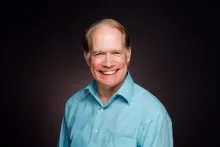
Greg Thomas is the former Pastor of the Cleveland, Ohio congregation. He retired as pastor in January 2025 and still attends there. Ordained in 1981, he has served in the ministry for 44-years. As a certified leadership consultant, Greg is the founder and president of weLEAD, Inc. Chartered in 2001, weLEAD is a 501(3)(c) non-profit organization and a major respected resource for free leadership development information reaching a worldwide audience. Greg also founded Leadership Excellence, Ltd in 2009 offering leadership training and coaching. He has an undergraduate degree from Ambassador College, and a master’s degree in leadership from Bellevue University. Greg has served on various Boards during his career. He is the author of two leadership development books, and is a certified life coach, and business coach.
Greg and his wife, B.J., live in Litchfield, Ohio. They first met in church as teenagers and were married in 1974. They enjoy spending time with family— especially their eight grandchildren.
