
Bob Fahey
This transcript was generated by AI and may contain errors. It is provided to assist those who may not be able to listen to the message.
So as we enter the sermon last week, we made the clarification that when it comes to the seven seals of Revelation, that Jesus Christ is the only one who is worthy to open those seals. We covered that in Revelation 5. And in that scenario that John sees, the Father possesses the scroll that is sealed with seven seals, and there's a question about who can open it, and only Jesus Christ is able to open it. He's the only one worthy. And then in Revelation 6, Christ begins to open those seven seals. We enter the sermon in Revelation 17. And in Revelation 17, verse 7, it said, But the angel said to me, Why did you marvel? I will tell you the mystery of the woman and of the beast that carries her, which has the seven heads and ten horns. I presume most of us know the background of this verse. If you've been around the church for a while, you're aware of that. And we have more things to learn about that, that's for sure. We don't understand every aspect of it. But it pictures the seventh or final revival of the Roman Empire. Revelation 17, verse 8, says, And those who dwell on the earth will marvel, whose names are not written in the book of life from the foundation of the world. When they see the beast that was and is not and yet is. And then verse 9, here is the mind which has wisdom. The seven heads are seven mountains or nations on which the woman sits. So empires, this woman rides these empires and controls them and guides them and directs them. It is a religious system pictured by the woman. There are also seven kings. Five have fallen. One is, and the other has not yet come. And when he comes, he must continue a short time. The beast that was and is not is himself also the eighth and is of the seven and is going to perdition. So what we find in those things that I've read there in chapter 17, John was projected forward in time with a vision that turned out to be the book of Revelation. And he was projected in time to the time of the sixth revival of the Roman system on which the woman would ride. Interestingly, the sixth revival of the Roman system was the time when Mr. Armstrong began to gain understanding of the book of Revelation. And that understanding has been passed along to us. And today, we can say six of those risings of that empire have fallen, and one is yet to come.
So six have fallen and one has yet to come. And as we go through the sermon today, we're going to go back and forth between Matthew chapter 24 and Revelation 6. So our understanding of Revelation is not perfect. But we do understand certain things that only God can reveal, and it helps us to understand where we're at.
I was talking to somebody about, somebody was mentioning something to me about this subject that we covered last week, and he went back and was looking at commentaries, and they're all over the place as far as understanding the things of Revelation and Matthew chapter 24. So let's pick up in Matthew chapter 24 verse 3 with the big question that the disciples had for Jesus Christ.
It says in verse 3, And with verse 4, Jesus Christ begins to answer that question. And Jesus answered and said to them, and it's interesting where he begins. He doesn't say, you need to spend all of your time figuring out who the beast and the false prophet are. You need to be figuring out who the two witnesses are. You need to figure out the day and the hour when Christ is going to come. He doesn't tell us that. He instead, in verse 4, says, So he begins with a warning.
He begins with a warning saying, And if he begins with that warning, he's telling you this is a serious issue that you need to be aware of as a member of the church. And as we said, when we looked at Matthew chapter 23, Christ is talking to the multitudes, his disciples, and the Pharisees.
But when he begins Matthew chapter 24, he's talking to the disciples. Now, other people can look at it and seek to understand what it's saying, but he's speaking directly to us as members of the church. So verse 5 says, So he's not saying a few are going to be deceived, but he says many are going to be deceived, and this is a threat to you and your salvation. Mr.
Douglas talked about the book of life. He's saying, you're being written in the book of life, and you're ending up in God's kingdom forever is at stake. So take heed to what I'm saying. Now, if you go to Revelation chapter 6, something interesting is said. Revelation chapter 6, beginning in verse 1. He says, Now, as you look at this horse and the horses that will follow, if you go to the book of Zechariah, you find horses mentioned in chapter 1 and 6 of the book of Zechariah.
And when people look at this particular horse and what's depicted, different ones of them, Adam Clark and the Jameson Fawcett Brown commentary, say that this first seal represents Jesus Christ. And that's a common take on this particular seal. But is that accurate? Is that accurate? Let's go to Revelation chapter 19 and look at beginning in verse 11. Revelation 19 verse 11. So we have, the seal is open, and here comes this white horse. And you can see why, as we read what we're going to read beginning in verse 11, why somebody might say this is referring to Christ.
Verse 11, On his head were many crowns. He had a name written. Doesn't the other horse, the horseman, have a crown? He does. So here we see that the one depicted in chapter 19 has a crown. He had a name written there that no one knew except himself.
He was clothed with a robe dipped in blood, and his name is called the Word of God. I wonder who that is. Verse 14, And the armies in heaven, clothed in fine lemon, white and clean, followed him on white horses. Now out of his mouth goes a sharp two-edged, sharp sword, that with it he should strike the nations, and he himself will rule them with a rod of iron. He himself treads the winepress of the fierceness and the wrath of Almighty God, and he has on his robe and on his thigh a name written, King of kings and Lord of lords. So we see here that it depicts the Word of God.
We would know this is Jesus Christ. Now people see that what's depicted in chapter 6 represents Christ, but when you compare the two, you see that it's not depicting the same being at all. In chapter 6, the writer there has a bow in his hand. What does the writer of Revelation 19 have? He has a sharp two-edged sword that proceeds from his mouth.
In chapter 6, the writer had a crown. If you look at the word there, it's stephano. It is stephano. However, which was given to him to represent his position of power. But then you look at Revelation 19, it says that the writer of that horse has many crowns. And it's not stephano, it is diademi. Chapter 6, it says that in this depiction, the writer is bent on conquest, control and order.
So he's bent on conquering and to conquer. So his goal is the extension of his empire and the control of people. But as you look at Christ, he returns, he judges, he applies the law and he makes war. And you have to think about, isn't he conquering as well? Why does he make war? All Christ's intention when he returns in Revelation 19 is to touch down on the Mount of Olives and begin the reign of the Kingdom of God. All he seeks to do is to gain a foothold. And once he gains the foothold, then the word of God will spread and God will open the way for others to become a part of that Kingdom.
But God is not going to do it by conquest. Christ is not going to be a conqueror as the rulers of the various manifestations of the Roman Empire have been. In chapter 6, he's part of the four terrible horsemen. But in chapter 19, Christ is called faithful and true. In chapter 6, no name is given to the person riding the horse. No name is given. In chapter 19, he's named the word of God. His robe is dipped in the blood. So you can see this is obviously Christ. Obviously, depiction of Christ in John spells out very clearly who it is.
However, this other character that's depicted in Revelation 6 is a white horse and comes with a crown and a bow. And if you looked at him without care, you would say, this is Christ. And you have to realize, as this manifests itself in reality, people are going to conclude, this is a representative of Christ or it is Christ when it comes to pass. So when you look at the white horse, and the white usually symbolizes purity and righteousness. But interestingly, you have to realize that that first horse ties in with what Christ said in verses 4 and 5 of Matthew 24.
And it symbolizes false teachers, those who look like Christ, but they most assuredly are not Christ. It is similar, but it is not Jesus Christ. Today there are many groups, including Church of God groups, who claim to be Christ-chosen leaders. If you've been around a while, you probably hear that. We are Christ-chosen people. We are the true Church of God, and nobody else is the Church of God. But as you look out there and look at all of this, you have to conclude that I can't see any of those who have proclaimed themselves to be God's chosen leaders, that God has specifically designated them to oversee all the Churches of God.
We didn't have that view when we started as the United Church of God. We couldn't see any one man that had been designated in that way. So the best thing for us to do until that was sorted out was for us to all seek to work together cooperatively.
That was the goal. We've not always met that goal, but that was the goal when we started. Hopefully we can meet that goal as time goes along. It tells us in Matthew 24 that many appear like Christ, but they're not Christ. He says, Be careful. I'm warning you about individuals who are going to come in my name and they seem to be my representatives. You need to be careful. Let's go back to 2 Peter 2.
What's interesting as you go through Matthew 24 and look at the warning against false teachers, that's mentioned three separate times. Three separate warnings that God gives to the church to be careful. 2 Peter 2. Let's begin in verse 1. But there were also false prophets among the people. When Moses was leading Israel out of the land of Egypt and moving on to the Promised Land, there were false prophets among the people. There were false prophets throughout the history of Israel, there were false prophets in the time of Jeremiah, and there have been false prophets down throughout history and will continue to be false prophets until it's all said and done.
There will be false teachers among you who will secretly bring in to set destructive heresies, even denying the Lord who bought them, and bring on themselves swift destruction. So there are going to be people who come along and they offer you teachings, and by their approach they deny the one who bought them.
And what's that telling us? It tells us that Jesus Christ is not their leader, that they're not being led by Jesus Christ. They don't follow what He says. And so they come and they may be very impressive, they may be very charismatic, but we have to discern where they're coming from. And sometimes you have to watch them for a while. And what does Christ tell us in Matthew 7? He said, you'll know them by their fruits. So you have to look at what they teach and you'll have to look at their fruits, and you'll have to look at the whole approach that they use. So Peter is warning. He's warning the people of God and delivering the same message that Jesus Christ did, and he's delivering this message because it's still a problem. It was already a problem in Peter's time. It was a problem in Paul's time. And they mentioned that deception was coming their way. It says in verse 2, And many will follow their destructive ways, because of whom the way of truth will be blasphemed. So they're going to seek to represent themselves as Christians, but the approach that they use is not Christian. And many times as they're exposed, their conduct is reprehensible, and they actually cause people to blaspheme the name of Jesus Christ, because they look at them. These are Christians? If that's Christianity, I don't want anything to do with it. Verse 3, By covetousness they will exploit you with deceptive words. So they're preaching to you, but they want something. They want something from you. So if they're preaching to you and they want something, you've got to ask, well, what do they want from me? And then you've got to become wary of these individuals that may have that approach. For a long time, their judgment has not been idle and their destruction does not slumber. So he's saying that eventually when, you know, they may be able to carry on for a long time, but eventually they're going to be brought to task for the approach that they have. And when they fall, it will be quick. But they may carry on for quite some time and have quite the impact. And let's go to look at a second place here. Peter mentions this, and so does the Apostle Paul. In 2 Corinthians 11, and these aren't the only places where false teachers are mentioned. 2 Corinthians 11, verse 2.
And so he says that, He says in verse 3, And that's one of the things that Paul noticed. You know, he was working with the Galatians, and they accepted Christ openly. They began to walk in faith, and then he comes back, and they've taken a totally different path, and they're no longer walking by faith. They're walking by sight. And circumcision is a must-do, and the law of Moses is a must-do. They've completely lost sight of what he taught them. And he says, what's happened to you? Were you bewitched? And he's very concerned for them, as he was the church in Corinth. And he's seeking to, you know, he presented things in a simple, straightforward manner, and continue on that path. It's a simple, straightforward path. Stick with it. So he speaks to them, and then he goes down to, then let's go down to chapter 11, verse 12. He says, but what I do, I will also continue to do, that I may cut off the opportunity from those who desire an opportunity to be regarded just as we are in the things of which they boast. They were dealing with people who called themselves prophets.
Not necessarily prophets that he was not aware of, but they took on that title, and they were not the true prophets of God. And he says in verse 13, for such are false apostles, deceitful workers transforming themselves into the apostles of Christ. So they're coming across as the apostles of Christ. They're appropriating some of the message, and they're preaching that message, and they're seeking to lead these people astray.
He says, and no wonder for Satan himself transforms himself into an angel of light. So if you were to meet Satan and see him in all of his glory, he would be a glorious being. He would be full of light. He would portray himself an angel of light. But is he an angel of light? Absolutely not. It says there's no truth in him at all, so there is no light there. It's only darkness if you really look carefully. He says in verse 15, if Satan can do that, he goes on to say, therefore it is no great thing if his ministers also transform themselves into ministers of righteousness, whose end will be according to their works. So you have people that come along and represent themselves as representatives of Jesus Christ. And they're going to be saying, I've got new ideas, new doctrines, things that you don't understand, but I understand and I'm willing to share them with you. And our ears should perk up when that happens. And that's why it is so essential that we come to know the truth.
You have to know the truth and love the truth. You have to become familiar with it. So when these offerings are made, you say, wait a minute here, this is not the truth that I know. But you've got to know it. And you're only going to know it as you study the Bible and drink in of God's Word and you become familiar with it. And when somebody says something, I don't think that's right. Then you know what's right and what's wrong, and you can rightly address it if necessary.
So why would false religion be the first horse? Why begin there? Why does he designate the false prophets as the first horse? Is there a reason for that? Well, the reason is false religion leads to war. False religion automatically leads to war. If you examine the cause of wars, many times religion in some form is at the core of the conflict.
And this is especially the case of religion seeking to control either lands or people. Consider the intensity of warfare between nations and kingdoms while the Roman Catholic Church dominated Europe. Read a world lit only by fire. The Catholic Church was predominant throughout the Western world. And what do you find the world like at that time? It was a world filled with conflict and warfare, slaughter and mayhem and plague and all sorts of problems.
And they declared, this is the kingdom of God. And if I were living back then watching my village burn to the ground or whatever else is going on, I'd have to say, this is it. That kingdom is not much of a kingdom. So they dominated Europe and it brought nothing but problems. And as I said, if you want to read about the Hundred Years' War and a distant mirror, you'll see a hundred years of unbelievable slaughter and suffering.
It's really quite incredible. Look where Islam is headed. Islam's goal is to rule the world, to establish Sharia law throughout the world. And there is an ongoing war with Islam all the time because the very foundational principles of Islam is jihad. And you may not be killing infidels, but your goal is to support the jihad either by what you say or by your finances or other efforts. And others are fighting the jihad on the front line by blowing themselves up, stabbing people, running people over.
And their goal is world dominance. And if you will not come into compliance with their particular view of the world, the goal is either you're going to pay us a tax or you're going to die. And that's where they're headed. They're headed toward world conquest. So if your goal is world conquest, how's that going to work out long-term? We're going to have conflict. And that's where we're headed. The first horsemen, the false prophets and the false religion, are the cause of the horsemen that follow, beginning with the red horse of war.
Now, when this horse, the white horse, began to ride shortly after 31 A.D. in the establishment of the church, and it continues to this day. And it's going to continue to the end of the age. Let's go to the second horse in Matthew 24, verse 6. Matthew 24, verse 6. In verse 6 it says, And you will hear of wars and rumors of wars. See that you are not troubled, for all these things must come to pass, but the end is not yet. So you're going to hear of wars and rumors of wars.
Don't be troubled. These things must come to pass, but the end is not yet. So if you have false prophets, war follows on their heels, and when war breaks out, we shouldn't be surprised. It's the consequence of the false prophets. In Revelation 6, verse 3, it says, When he opened the second seal, I heard the second living creature saying, Come and see. Another horse, fiery red, went out, and was granted to the one who sat on it to take peace from the earth, and that people should kill one another, and there was given to him a great sword. And as you look around the world today, peace is being taken away.
The red horse of war, and the color of that horse, answers the mission of the rider, which is blood and death and destruction that comes from war. And it says that the rider was given a sword, but does the rider do the killing? If you look at what it says, it says that people should kill one another. People do the killing. People do the killing. In light of the red horse of war, let's look at Matthew 24, verse 21. Where's this all going? Where is all this warfare going? Matthew 24, verse 21. Where is it ultimately leading? Verse 21 tells us. It says, For then there will be great tribulation, such as has not been since the beginning of the world until this time, known or ever shall be.
There's going to be warfare with an intensity that we've never seen. We thought World War I was bad. Then World War II was worse. What's coming is going to be the worst ever. And the death and destruction is going to be absolutely incredible. And the weapons that we've developed now are so much more sophisticated than what they used to be. You can kill a lot of people at a distance.
You can drop the big one on them from a long distance away. And it makes it easier. A, I wasn't there to see the carnage, but I did see that mushroom cloud way off there in the distance. But you're still annihilating a lot of people. Verse 22, it says, This is going to go so far, and unless those days were shortened, no flesh would be saved. But for the elect's sake, those days will be shortened. And it tells us, unless God stepped in and shortened time, there would be no flesh saved alive. That everybody would be annihilated. There would be no flesh saved alive. So it's a scary scenario, and that's exactly where Satan is leading us to the annihilation of all flesh.
That's his goal. That's his purpose. And we're well on our way to that. And as you look at the world, it's not becoming more stable. It's becoming less stable. Chapter 24 verse 7, back to that, it says, For nation will rise against nation, and kingdom against kingdom. The word there for nation is the Greek word ethnos. It's the word from which we get ethnic. So it's one ethnic group against another. And is that what we see on the earth?
Consider, we see the Israelis pitted against the Palestinians. We see the Persians of Iran against the Arabs of Iraq. We see the Turks in their part of the world against the Kurds, an ongoing battle between those peoples. The North Koreans against everybody, but they're against the Southern Koreans and the Japanese and the US. We keep hearing that they're going to drop the big one on us, and you know, he keeps working at it. And I would say that if he keeps working at it, eventually he's going to find one that's going to go the distance, unless we deal with it.
The Russians against the Ukrainians in the Baltic states, and just about every conflict on earth involves one ethnic group pitted against another ethnic group, or one religious group against another. So you also have kingdom against kingdom, and what's that talking about? Well, you tend to have not only nation against nation, but you have coalitions of nations joining together to take on other coalitions. One kingdom pitted against another. So the signs of our war is very much a sign of the time, and the conditions in our world aren't getting better.
Things seem to be little by little escalating, and sometimes they get hotter, sometimes they cool off. But eventually it's going to get out of control. You know, you think about World War I. Think about this. You have this Austro-Hungarian prince shot in Sarajevo. You're going to go, okay, bad.
You're going to go to war over this, but that's exactly what they did. And the carnage was unbelievable in World War I. You know, sending people out of the trench against the machine gunners that just mowed them down. One at, you know, just a slaughter. And you just think, who's thinking this through? Obviously somebody's missing something there.
In the second half of verse 7, Jesus Christ said there would be famines and pestilences and earthquakes in various places. So he says that at the end of verse 7. And then we go to Revelation 6, verse 5. He says there, When he opened the third seal, I heard the third living creature say, Come and see. So I looked, and behold, a black horse. And he who sat on it had a pair of scales in his hand. And I heard a voice in the midst of the four living creatures saying, A quart of wheat for a denarius, And three quarts of barley for a denarius, And do not harm the oil and the wine.
Well, a quart of wheat cost a denarius. And what does that mean? It doesn't mean anything to us unless you do some research. A denarius was the wages that somebody received for a day's work. So you work one day, and you can buy a quart of wheat. You can buy a quart of wheat. And that doesn't mean much to us. Or with a day's wages, you could buy three quarts of barley. So to help us to understand that, normally you could buy 16 to 20 measures of wheat for a denarius, or more barley than that for a denarius.
And as you think about that, all your money was going to be spent on this quart of wheat. And you have no money for anything else. You have no money for rent or a house payment. You have no money for meat or vegetables or utilities or clothes. You have no disposable income. All you're able to do is buy a little bit of food. And the same thing with the barley.
He says, hurt not the oil and the wine? Well, what does that mean? It means to be sparing. Sparing with these. Use them not as delicacies, but use them very carefully, because the vines and the olives are not going to be productive. Warfare brings great destruction to the croplands. You can't plant when there's warfare. And tanks rolling through your crops tend to lessen your yield.
Dropping an A-bomb would definitely diminish your yield. So the thing is, as warfare unfolds, it destroys the crops and makes life tough for people. I'll just quote this, speaking of a time of great trouble. Leviticus 26 speaks of this as well. Leviticus 26, verse 26 says, When I have cut off your supply of bread, so your supply of bread is greatly diminished. Ten women shall bake your bread in one oven, and they shall bring back your bread by weight, and you shall eat and not be satisfied.
So you will get your bread by weight. So we'll give you that quarter slice of bread. That's all you get, because that's all we've got. So false religion reads to war, and war leads to scarcity and famine. And what happens to people as they don't have food to eat? When their food supply is diminished, what's the outcome of that? That's revealed for us in chapter 6, verse 7.
Remember, in chapter 24, verse 7, it talked about famines and pestilences. And that's the next thing that Christ reveals in Revelation 6. In Revelation 6, verse 7, He says, When He opened the fourth seal, and I heard the voice of the fourth living creature, saying, Come and see, so I looked, and behold a pale horse. A pale horse. And the name of Him who sat on it was Death and Hades, followed with Him.
And power was given to Him over a fourth of the earth to kill with sword, with hunger, with death, and by the beasts of the earth. So as these four horsemen ride over the earth, it says that a quarter of the population is going to be impacted. It's going to be a most unpleasant time. The fourth horse, the pale horse, is talking about disease and death, which follows famine and shortage. You get sick, and then death follows. The word for pale is chlorose, the same word that we use for chlorine. So it's kind of a sickly green horse. The rider of this horse has no bow, no sword, no scales.
In the name of him who sat on him is death. And the grave, Hades, follows him, follows right behind. Let's look at something interesting in this regard in Ezekiel chapter 14. Ezekiel chapter 14.
In the Bible reading program, I was reading Ezekiel today, the chapters that correspond with this day.
In the part I was reading, there's not a lot of good news there in chapters 9 and 10, and they're not good pictures. It's really kind of scary what is laid out there. But let's look at Ezekiel chapter 14, beginning in verse 12. Ezekiel chapter 14, verse 12.
The word of the Lord came again to me, saying, When a land sins against me by persistent unfaithfulness, I will stretch out my hand against it. I will cut off its supply of bread and famine on it and cut off man and beast from it. So, you know, if a nation becomes persistently evil, then there's a consequence to that. You cannot continue down that path without any consequence.
Verse 14, Even if these three men, Noah, Daniel, and Job, were in it, if they were in it, they would deliver only themselves by their righteousness, says the Lord. So God is not going to spare that nation, even if you have a Job, a Daniel, or a Noah in that land. I'm not going to spare it. Verse 15, For if I cause wild beasts to pass through the land, and they empty it and make it so desolate that no man may pass through because of the beast, even though these three men were in it, as I live, says the Lord, God, they would deliver neither sons nor daughters, nor only they would be delivered, and the land would be desolate.
So God's not going to relent. Verse 17, Or if I bring a sword on that land and say, Sword, go through the land, and I cut off man and beast from it, even though these three men were in it, as I live, says the Lord, God, they would deliver neither sons nor daughters, but only they themselves would be delivered.
And if I send a pestilence, he tells us the same thing. I'm not going to spare it, even if Noah, Daniel, and Job are in it. But then you say, well, man, that's pretty disturbing and pretty negative, but God ends here beginning in verse 22 with a positive note. Verse 22 says, Yet, behold, there shall be left in it a remnant, who will be brought out, both sons and daughters.
Surely they will come out to you, and you will see their ways and their doings. Then you will be comforted concerning the disaster that I have brought upon Jerusalem and all that I have brought upon it. And they will comfort you when you see their ways and their doings, and you shall know that I have done nothing without cause, that I have done it, done in it, says the Lord God.
So there is hope at the end, but before God intervenes and stops it, it's going to be a very difficult time for people. And that's what he's portraying when he looks at the four horsemen of the apocalypse, which tie in with Matthew 24. Now let's go on to... And the thing that you have to realize is, are the four horsemen of the apocalypse riding at this point? To a degree they are. Is there false religion? Yes. Is there war? Yes. Is there famine? Someplace. Is there pestilence?
Yes. But what it's portraying for us, and what we have to understand, is there's going to be a greater intensity than we've ever seen when this begins to unfold. So you're going to see a religious revival, where this false prophet is going to ride out and seek to conquer and to bring people into the fold of the beast, bring it as part of their empire, and that religion is going to be central to it.
And as far as I know, I don't see any figure on the world scene that is having that type of religious impact. So if you don't see that, then you can't conclude, this is all unfolding in its fullness. It's not yet. But there will come a time when you're going to see somebody that is like riding on that horse, seeking to conquer, and they're going to have a tremendous religious impact on the world. And we have to be aware that's coming. And when that begins, you have to realize, I think I remember that once that starts, there's supposed to be intense warfare.
And you will see that too. And when all of it begins to heat up, you've got to say, you know what, I think it's time to pack my bags if you haven't already. So it's a warning to all of us to be ready. Let's go to Matthew 24 once again. And this will probably be the last section we'll cover.
Matthew 24, and let's look at verses 9-14. Matthew 24, verses 9-14. You have the four horsemen of the apocalypse that are riding roughshod over humanity, described as riding roughshod over them. And then something else comes along. That isn't the end. Matthew 24, beginning in verse 9. It says, Then they will deliver you up. Now who is you? That's us. You. Christians. Then they will deliver you up to tribulation and kill you, and you will be hated by all nations for my name's sake. And many will be offended, will betray one another, and will hate one another. So you're going to have a time when the people of God are going to be persecuted.
And when that persecution begins, you're going to have people begin to evaluate, You know, I've been a Christian, I've been a part of that church for a while, but you know, I don't really believe it. I wasn't really with them. I attended church, but I'm not really with them. And people are going to begin to say, Hey, I was never part of that. They're going to begin to recant. And they're going to be willing to turn people who are truly Christians in. Oh yeah, that guy's one of those people.
Turn us in. Because it may give them better standing with the powers that be at the time. And then many will be offended and will betray one another and will hate one another. Hard to believe that, isn't it? Then many false prophets will rise up and deceive many. Again, the false prophets, they will rise up and they will deceive not a few, but many.
And because lawlessness will abound, the love of many will grow cold. But he who endures to the end shall be saved. And this gospel of the kingdom will be preached in all the world as a witness to all nations. So what does it say? Where's the tie-in with this in the book of Revelation? That's in Revelation 6, verse 9. The fifth seal ties in with what we read in Matthew 24, beginning in verse 9.
So the fifth seal ties in with Matthew 24, verses 9 through 14. And what we read in Revelation 6, beginning in verse 9, says, When he opened the fifth seal I saw under the altar the souls of those who had been slain for the word of God, and for their testimony which they held. So this is describing people who in past ages have died because of their faith in Jesus Christ. They died because of what they believed in.
And he goes on to say, They've been slain for the testimony which they held. Verse 10, And they cried with a loud voice, saying, How long, O Lord, holy and true, until you judge and avenge our blood on those who dwell on the earth? So here you have these voices crying out and asking, When are you going to resolve this? How long are you going to allow this to go on? Then a white robe was given to each of them, and it was said to them that they should rest a little while longer, until both a number of their fellow servants and their brethren, who would be killed as they were, was completed.
So notice that in the first four seals one of the living creatures commented and explained it. In this particular seal it's opened, and he who had been slain for the word of God, and he opened the fifth seal. And that is Jesus Christ is the one who opened the seal and allowed John to see under the altar the souls of those who had been slain for the word of God, and the testimony which they held. So what did John see? In vision he beheld a book or scroll sealed with seven seals, and he sees them being opened.
Four of them have opened. He sees the fifth one being opened as well. And he sees all of this taken place as he's in the spirit, and God is guiding him in his understanding. So the events he saw were not actually happening in his time, but therefore a future time that are going to unfold. So when the fifth seal was opened, John saw under at the base of the altar the souls of those who had been slain.
So what does that mean? We don't believe in an immortal soul. So it says right there that these souls are speaking. And it's right there at the altar, at the saw under the altar, at the base of the altar, the souls of those who had been slain. Now, think about this when the altar that it's talking about here is the altar in which the burnt offerings and sacrifices were made.
So when you made the sacrifice, you killed the animal, and you would put various parts as instructed in the book of Leviticus on that altar, and then you would do certain things with the blood.
For instance, there were these things that looked like horns on the corner of that altar, and you would put blood on them. And then other times you would take the remainder of the blood, and you would pour it out at the base of the altar.
So here we have this blood of these martyrs at the base of the altar, and you have to realize this is a vision. Now, how would you understand that? Who's he talking about? Well, we can gain understanding into that by going back to the book of Genesis. Let's go back to the book of Genesis. You might keep your finger there in Revelation, but Genesis 4 gives us a little bit of understanding of that.
Genesis 4, you put one Scripture together with another, here or there, here or there or there or there. And in Genesis 4 it speaks of Cain killing Abel. And then God confronts Cain in verse 9. And he says, where is Abel your brother? And he said, I know not. Am I my brother's keeper? And God said, what have you done? The voice of your brother's blood cries out to me from the ground. Abel was dead. He wasn't crying out, but his blood has been spilled, and in essence it cries out for the avenging of that blood. Just as the martyrs who have died in Christ's service and for faithfulness to God, their blood cries out.
Their blood cries out that God would avenge them. And God said, I'm going to, but not right yet. You need to be patient. And as he says, and they're not alive at this point, he tells them to rest a little while longer. That is, remain in the grave, resting a little while longer. Those who have died as martyrs are to continue to rest until God has avenged them, which he is going to do. So this gives us a little bit better understanding of what's unfolding here.
If you follow the heavenly pattern, as you look back at the altars, as I said, there's that altar that was outside of the holy place, where you had the menorah and you had the table of the showbread and you had the incense altar. And that altar was called the bronze altar, and it was described in Exodus 27. But there's another altar that was described as well, and that is the golden altar, which is described in Exodus 30. And it was inside the holy place right before the veil that separated the holiest of holies, where God dwelled from that section of the tabernacle and the temple.
In the book of Revelation, the word altar appears eight times in seven verses. And it appears that the only altar that is mentioned is the golden altar. And remember, in the heavenly temple there would be no need for an altar for sacrifices, but in an earthly one you would need an altar for sacrifices. The heavenly temple just has the golden altar of incense. In Matthew 24 verses 9 through 14 speaks of the persecution of the saints. And we already mentioned the great tribulation, which is described in Matthew 24 verses 21 and 22.
Let's go to Romans chapter 8. So there's going to be this martyrdom, this slaughter of those who are faithful to God. And look at Romans chapter 8, beginning in verse 35.
Romans chapter 8, and this is something that God's people hopefully will keep in mind as this comes to pass. Romans 8 verse 35, it says, "...who shall separate us from the love of Christ?" So if you're martyred, have you been separated from the love of Christ? Only temporarily. "...shall tribulation, or distress, or persecution, or famine, or nakedness, or peril, or sword..." Nothing can separate you from the love of God. "...as it is written, for your sake we are killed all day long, we are counted as sheep for the slaughter. Yet in all these things we are more than conquerors through him who loved us." I hope that none of us have to die as martyrs. But that's what he says is coming. And, you know, if it becomes your lot that you're to die in God's service, what will you do? If you're not sure of what you believe or why you believe it, you're not sure that if I die, then I'm going to be raised to life as Christ returns, then you're probably not going to go through with it. You're not going to be willing to go through that persecution and death.
Paul said, "...for I am persuaded that neither death nor life nor angels nor principalities nor powers nor present things present nor things to come." Nothing can separate us. "...nor height nor depth nor any other created things shall be able to separate us from the love of God which is in Christ Jesus our Lord." Yes, they can kill the human body. But God's not forgotten. Those who died, He's already telling you, I've forgotten all of those down through the ages who have been faithful to me. And as push has come to shove, they have said, I'm going to follow God. Do what you have to do. And they have died in Christ's service, but God hasn't forgotten one of them. And He won't forget you or me. So if that eventuality comes about, we are called upon to be faithful.
So, just a... I think we'll stop there as we talk about the martyrs and things. We'll end it on such a happy note. It does get happier, but, you know, these are the realities that we have to face. And God didn't put them in there just to scare everybody. He put them in there because these are things that are going to play out prophetically, that we need to be aware of and realize this is unfolding and what we need to do at this time is to be making sure that our names are written in the Book of Life and that we're ready for whatever comes. And I think the primary thing that we need more than anything else is the truth. I think most of the people that went through the traumas that we went through back in 1995, the reason they made it through was because they loved the truth. They loved the truth. And that's what seizes through. I know that as I thought about what took place there, I did my best to buy it. And for some reason, God was merciful on me and said, Don't go there. Don't go down that path. And I had at least a little wee bit of gumption and said, I'm not going there. I can't do that. And God brought me back from that brink.
Because I did love the truth. And I didn't know what the truth was. And I didn't know that what we were being taught was leading us away from the truth. And I just couldn't see how that could be. The hard thing for me was, I trusted the people that were telling me these things. They wouldn't lie to me. They wouldn't deceive me. And then I had to realize, yes, they would and they are.
So at that point, I said, you know what? I'm going to follow the truth. And as you know the truth and you have these things unfold, you can say, You know what? I know that's not right. And I've got to stand up for what's right. So hopefully this gives you some insight into Matthew 24. We will continue it next time I give a sermon. We're going to be on vacation for a few days at the end of this next week. And so we'll pick this up in a couple of weeks when I give the next sermon. So anyway, thank you for your attention. Please have a wonderful remainder of the Sabbath.
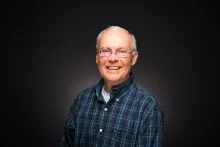
Gary Smith was born in Charlotte, North Carolina, but spent most of his youth in the Pasadena, California area. He graduated from Ambassador College in 1976 and he and his wife, Liz, moved to Peoria, Illinois. For the next six years he worked as a nursing home administrator in Illinois, Ohio, and Texas.
In 1982, he and Liz began to serve in the full-time ministry. Since that time, they have served in a number of congregations in the Midwest.
Gary and Liz now pastor in Houston, Texas near their two children and grandson.
Apart from pastoring, Gary enjoys hiking, playing and watching sports, reading and spending time with family.

