

Mario Seiglie
This transcript was generated by AI and may contain errors. It is provided to assist those who may not be able to listen to the message.
As I mentioned previously, God's fall seasons are just upon us, and it's a wonderful time for us. It gives us so much hope to know about God's plan of salvation that this world is not going to end up being destroyed by mankind. God will intervene as He has done before in the past, just like He did when He came and intervened and brought a flood upon the earth. Because mankind had gotten so corrupt, He had to begin all over again with Noah and his family. And He did intervene and brought Lot out of Sodom and Gomorrah and punished the people. There's this principle in the Bible that universal sin brings about universal punishment. And so, we haven't gotten to the universal sin part completely, but we're certainly increasing every day as it goes by. And God, in His mercy, is waiting for man to repent before He intervenes again.
Now, one thing you learn about God's feasts is that they are multifunctional. They have many different functions, and they include multifunctional truths in these feasts. Many truths come out of each one of the feasts of God. And that's the way God does things. He can create something that has multiple purposes, not just one. Most of the time, man can only invent something that does one thing and hopefully good, but not much more. He invents an elevator. Well, it can go up and down, but it can't move anymore. You can't take an elevator to the store, can you? A car, it can go down a road, but it can't act like a boat or fly. And so, each thing that man invents usually has one main purpose. But God isn't that way. He can create one thing that has multiple purposes. Let's take two examples. One is a tree. We see trees around us, but talk about something that is multifunctional. It provides shade. It provides housing for the birds. It provides food by fruits that it produces. It provides wood to build and also as fuel for fire. You can actually use the bark of a tree and create tiles for roofs. Even in places like in Norway, they still use birch bark to cover homes, and then over that they put sod on top. But it's very good waterproofing. So you can use bark for multiple things as well. It's also a way to avoid erosion of the ground where trees are. They protect from the wind. The soil doesn't blow all over, and then with the roots it protects the soil. So it has multiple functions. Secondly, we have water. What I have here, water is also multi-purpose. It serves to produce what we need in our bodies for a biological purpose. Cells use water to be able to transport things. They can't have cells without some type of water inside as a transport system. Water is also in three different states. It can be liquid, it can be gas, or it can be solid like ice. Water is what helps us with the weather that we have. The storms, the water that comes down, brings fertility. It's also a solvent. It dissolves things. So many times you need to have that type of multi-purpose solvent. And so when God creates things, he has multi-purposes. And certainly God's feasts are the same way as we will see. And it is the genius of God that he can bring all of these multi-purposes into each feast and give it a key symbol to remember each one of these feasts of God. That's the way God works. Multi-purpose. You'll find out about the Feast of Trumpets and all of its different purposes on, God willing, Monday morning and afternoon because that's what we focus on. The multi-purposes of God's feasts.
With these feasts, we can understand God's plan of salvation and to keep truths along the way. Each step in these feasts is a way of walking and going toward the completion of God's plan of salvation. And so on Monday, we will celebrate, God willing, the fifth feast of God of the year, the Feast of Trumpets. And so it's a good time to rehearse those seven key symbols of these feasts. So you can better remember them, just like what was brought out by Ray in his first message about having some key concepts when they try to explain why the rapture is not a biblical concept. People are not going to be taken before the Great Tribulation into heaven. No, they're confusing when the saints are going to be raised up, but that's when Christ is coming down to meet him in the air. And so there are these key symbols for each one of the feasts, and that's the purpose today, to go over each one. So let's go to the first of these key symbols, which is for the Passover. Now, what is the key symbol for the Passover? The Lamb. The Lamb is the key concept for the Passover. Notice in Exodus chapter 12, Exodus chapter 12, in verse 3, God is speaking. He says, speak to all the congregation of Israel, saying, he's speaking to Moses, on the tenth of this month every man shall take for himself a lamb according to the house of his father, a lamb for a household. In verse 6, it says, now you shall keep it, the Lamb, until the fourteenth day of the same month, then the whole assembly of the congregation of Israel shall kill it at twilight. So this is the beginning of the fourteenth. This is when it's from twilight to twilight, from sunset to sunset. The fourteenth of the month is the Passover. It's not the fifteenth, it's not any other time. And he says here, and he shall kill it at twilight. That's when we keep the Passover, the New Testament Passover, at twilight, at the beginning of the Passover day. It says, and they shall take some of the blood and put it on the doorposts, two doorposts, and on the lintel of the houses where they eat it. They shall eat the flesh on that night, roasted in fire with unleavened bread and with bitter herbs they shall eat it. So this is the fourteenth. The Passover ceremony is carried out on the fourteenth, because on the fifteenth, that's the first day of unleavened bread. That has another symbol. That's not when the lamb is slain and eaten. It says, do not eat it raw nor boiled at all with water, but roasted in fire, its head with its legs and its entrails. You shall let none of it remain until morning. So it had to be totally consumed that day, the fourteenth. And thus you shall eat it with a belt in your waist, your sandals on your feet, and your staff in your hand. So you shall eat it in haste. It is the Lord's Passover. So of course, once that night was over, they had to leave. They had to burn the remains of the lamb, and then they would leave with their households, because of course that death angel was going to strike the Egyptians that evening at midnight. So a lot of things are going to happen. This isn't a time to lollygag, to just say, oh well, I'll take off my pajamas, and I'll have a leisurely breakfast, and I'll think about how to pack things. No, sir. This was one of those flights. They had to flee. Everybody had to be ready at the dawn, because of everything that was going to happen. So you had to get dressed. You had to be packed, because you were going to leave. You were going to get together that evening, and then on the 15th, that evening, you departed from Egypt. It takes a lot of logistics to try to join everybody and get everybody together at that time.
In verse 12, it says, for I will pass through the land of Egypt on that night, and will strike all the firstborn of the land of Egypt, both man and beast, and against all the gods of Egypt. I will execute judgment. I am the Lord. Now the blood shall be a sign for you on the houses where you are, and when I see the blood, I will pass over you. That's where the term comes from, pass over. I will pass over you.
Now that's in English, but also in the Hebrew, the same type of meaning. The pass over, and the plague shall not be on you to destroy you when I strike the land of Egypt. See, these are all symbols of what? Not the first day of unleavened bread. This is a symbol of the Passover. Everything's happening at that time. That has to do with the blood. That has to do with the passing over of people.
That's why we keep Passover on the 14th, at evening, at the beginning of the 14th, from sunset to sunset, is that Passover. Now let's go to the New Testament. Let's see how that same symbol, what is the symbol of the Passover? The Lamb.
Notice in 1 Corinthians chapter 5 verse 7. It says, therefore purge out the old leaven. This is Paul talking here because they were preparing to take the Passover and they had to remove the leavening from their homes. It says, therefore purge out the old leaven that you may be a new lump since you truly are unleavened. For indeed Christ our Passover was sacrificed for us.
And so we see here again that the symbol of the Passover is Christ as the Lamb. Just like they had the Lamb in the Old Testament, physical Lamb. Now He's the one and He died on that 14th of that year. He didn't die on the 15th, no He died on the 14th because the 15th was going to be where they put Him in the grave, the tomb, and then that was a Holy Day, first day of Unleavened Bread.
Again, the symbol, let's keep all the symbols at the same place, at the same time. Passover, Lamb, our Passover services, everything happens at that same time. We're not authorized to do it at any other time than what the Bible says here.
Let's continue in Revelation chapter 19. When we look at these symbols, it's so much easier to maintain the harmony and unity of each one of these feasts. Revelation chapter 19 verses 7 through 9 it says, Let us be glad and rejoice and give Him glory for the marriage of who? Talk about Jesus Christ, the Lamb. That's the symbol that He has adopted, the sacrificial Lamb for all of us.
And the Lamb has come and His wife has made herself ready. And to her it was granted to be a raid in fine linen, clean and bright. Notice it was granted to her. It's not that she deserves it, but God is the one who purifies us through Christ, gives us that white linen, for the fine linen is the righteous acts of the saints. We are obeying God. We're keeping Him and through His mercy He forgives and He does clean us.
Then He said to me, Right, blessed are those who are called to the marriage supper of the what? of the Lamb. He's recalling the Passover sacrifice He did for all of mankind. And He said to me, These are the true sayings of God. So that's the first symbol. If we can keep that symbol in mind, all the other truths about Christ, the sacrifice, faith in God, faith in Christ, what He came to do in His first coming, everything is clear about that.
That's why it has such rich meaning for all of us. The second feast, which the world doesn't understand hard at all, are the days of Unleavened Bread. This is the second holy feast of God. And what is the key symbol for the days of Unleavened Bread? It is unleavened bread. It doesn't take a rocket science to figure out that the main symbol of this day is, or these days, is unleavened bread.
Notice in Exodus 12, verse 15, Exodus 12, in verse 15, it says, seven days you shall eat unleavened bread. On the first day you shall remove leaven from your houses, for whoever eats leavened bread, from the first day until the seventh day, that person shall be cut off from Israel. In other words, he's in a state of rebellion, of disobedience. Once you come to the knowledge of the truth, there is a responsibility involved that the rest of the world doesn't have. But once we know these are things that God expects us to keep, and he says that he can cut us spiritually off, and from his spirit and his truths, if we're disobedient to them.
It says, verse 16, on the first day there shall be a holy convocation, and on the seventh day there shall be a holy convocation for you. No manner of work shall be done on them, on those two days. But that which everyone must eat, that only may be prepared for you. So, have to eat, have to prepare certain food for yourselves. That can be done. Doesn't mean, you know, cook a full meal and spend the whole day at the kitchen. But you are to at least provide for your own on that day, prepare the food.
And then we go to 1 Corinthians 5 again, seeing that symbol of unleavened bread. Was that used by the Apostle Paul? 1 Corinthians 5, verse 7. This is what he's telling the Corinthian church. He says, therefore purge out the old leaven, that you may be a new lump, since you truly are unleavened. So he's saying, brethren, you've removed the unleavening from your home? Okay, well, that's supposed to be an attitude that you have. You don't have your former carnal ways. No, you're supposed to remove sin from your life. And then he says in verse 8, therefore let us keep the feast, not with old leaven, nor with the leaven of malice and wickedness, but with the unleavened bread of sincerity and truth. So he's saying, brethren, this isn't only a physical thing you're doing. It has to be spiritual. It has to be of the inner person, having the attitude that he says you're not of wickedness or malice.
And he goes on to say in chapter 6, 9 through 11, the brethren were being compared with those that are leavened with sin and those that are unleavened, avoiding sin. Notice what it says in verse 9, 1 Corinthians 6 verse 9. It says, do you not know that the unrighteous will not inherit the kingdom of God? Do not be deceived, neither fornicators, nor idolaters, nor adulterers, nor homosexuals, nor sodomites, nor thieves. That has to do with more like the same type of homosexual activity, plus being more effeminate, nor thieves, nor covetous, nor drunkards, nor revilers, nor extortioners, will inherit the kingdom of God. If they have that habitual type of sin that they're doing this, they're not going to make it into God's kingdom. It's that simple. He says, and such were some of you. So people came with all of these different types of sins to the church, but what did they do? Did they continue in that? Did they continue with the leavening of the world and sin? No, they didn't. They cleaned their lives. He says, but you were washed. How are they washed? Through baptism. But you were sanctified. How are you sanctified? By receiving God's Spirit. But you were justified in the name of the Lord Jesus. You were forgiven of your sins and by the Spirit of our God. Then in verse 19, it says, or do you not know that your body is the temple of the Holy Spirit, who is in you whom you have from God and that you are not your own? For you were bought at a price. Therefore glorify God in your body and in your spirit, which are God. So something special. We have to take on that nature and that attitude of unleavened bread. So that's the symbol of the second feast. Of course, Jesus Christ is our perfect example of unleavened bread. He never sinned. He never had leavening in his mind or actions. And so, of course, he is the unleavened bread as an example and that we are to follow that way of life. We're never going to reach that same type of perfection at all. We understand that, but God expects us to strive, make the effort. Then we come to the third key symbol. And this is for Pentecost, the third feast. And that symbol is the flame of God's Holy Spirit, the flame of God's Spirit. Notice in Acts chapter 2. What I'm saying to you was something that we never understood in the churches that we came from. And it was Mr. Herbert Armstrong. He kept God's feasts for seven or eight years because he read in the scriptures and God opened his mind that these should be kept. But he didn't know for the first seven or eight years what was the spiritual purpose. What meaning did they have? He just kept them. And after that faithfulness of simply obeying God, God opened his mind that these were steps toward the plan of salvation. And so we are the benefactors of it. Mr. Armstrong did not invent this. No, he discovered it through God showing it in the Bible. But this is one of the most wonderful truths we can have. And so then the key symbol for Pentecost is the flame of God's Spirit. Notice Acts chapter 2.
Verse 1. It says, when the day of Pentecost had fully come, which means those 50 days had been counted, that this was the day, the 50th day. Pentecost means 50th. They were all with one accord in one place. So they were keeping these feasts of God. Christ had already died. He'd already been resurrected. He had already explained to them many of the truths. He never abolished any of these feasts. It says, and suddenly there came a sound from heaven as of a rushing mighty wind, and it filled the whole house where they were sitting. Then there appeared to them divided tongues as the fire, and one sat upon each other. Do you notice here that where it talks about, it says, or tongues as of fire, from the margin I have. So it says there appeared these tongues of fire as a fire, and one sat upon each of them, and they were filled with the Holy Spirit and began to speak with other tongues, which means languages, as the Spirit gave them utterance. I have here another translation, makes it even clearer, in the easy reading version of the Bible. It says, they saw something that looked like flames of fire. The flames were separated and stood over each person there. And so that's a symbol of God's Holy Spirit as it came upon them. Also, 2 Timothy chapter 1, 2 Timothy chapter 1, 2 Timothy chapter 1, starting in verse 6, Paul says to Timothy, therefore I remind you to stir up the gift of God, which is in you through the laying on of my hands. In the New Living Translation, it says, this is why I remind you to fan into flames the spiritual gift God gave you when I laid my hands on you. And so you can compare God's Spirit to a type of a flame in a fire that produces something in you that gives you fervency, dedication to God, but it can also be put out. Notice in 1 Thessalonians chapter 5 and verse 19. 1 Thessalonians chapter 5 and verse 19, it says, do not quench the Spirit, because it can be quenched just like a fire. Another translation also brings out the term quench, means putting out like a flame. So it's something that you have to stir up, you have to work on, you have to get closer to God, to strengthen yourself, so that that flame, that fervency, that dedication to God doesn't wane, it doesn't get extinguished.
That takes us to the fourth feast, and the key symbol for this feast has to do with the Feast of Trumpets. By the way, I just realized I had said that it was the fifth feast. It's actually the fourth feast. Sorry about that, but it is the fourth feast. The fifth is the Day of Atonement. So this is the key symbol for the fourth feast, the Feast of Trumpets. And what is that symbol? It's a trumpet.
Notice in Numbers chapter 10, verse 9. Numbers chapter 10, verse 9. It says the following. And the Lord spoke to Moses, and he said in verse 9, When you go to war in your land against the enemy who oppresses you, then you shall sound an alarm with the trumpets, and you will be remembered before the Lord your God, and you will be saved from your enemies. Also, in the day of your gladness, in your appointed feasts, and at the beginning of your months, you shall blow the trumpets over the burnt offerings and over the sacrifices of your peace offerings, and they shall be a memorial for you before your God. I am the Lord your God. So here it brings up the point that you will be remembered. And during the feasts, God sees who is keeping them, who is being faithful. You will be remembered, protected, and blessed by God, because he says it's this day of the trumpets, and not only this one, but every Sabbath, every feast day, that was a blowing of trumpets. On Monday, we're going to actually have some come here and blow the shofars. So that's going to be interesting for you to watch, because it's a day of blowing the trumpets. Notice in Matthew 24, trumpets are intimately related to the coming of Jesus Christ. Matthew 24, verse 30.
I want to focus on the trumpets part of it. It says, then the sign of the Son of Man will appear in heaven, and then all the tribes of the earth will mourn, and they will see the Son of Man coming on the clouds of heaven, with power and great glory. He will send his angels with a great sound of a trumpet, and they will gather together his elect from the four winds, which are the four cardinal. Points. From one end of heaven to the other. Talking about, of course, the heaven here on the, what is, where the clouds are, and it's actually the atmosphere. Also, in 1 Corinthians 15. There are many places that talk about the coming of Christ being announced by trumpets, the blowing of trumpets. Notice here.
Talks about the coming of Christ.
It says in verse 51, Behold, I tell you a mystery. We shall not all sleep, but we shall all be changed in a moment, in the twinkling of an eye, at the last trumpets. For the trumpet will sound, and the dead will be raised incorruptible, and we shall be changed. So again, it just marks Christ coming, and then that first resurrection taking place. This is also found in the last book in the Bible, Revelation. Let's go to Revelation 8. Revelation 8 verse 6. It says here, So the seven angels who had the seven trumpets prepared themselves to sound. And then verse 7, the first angel sounded. So God uses trumpets as announcements of things that are coming, and these will be heard. Notice as well in chapter 10 verses 5 through 7. It says, The angel whom I saw standing on the sea and on the land, raised up his hand to heaven and swore by him who lives forever and ever, who created heaven and the things that are in it, the earth and the things that are in it, and the sea and the things that are in it, that there should be delay no longer. But in the days of the sounding of the seventh angel, that one with the trumpet, when he is about to sound, the mystery of God will be finished, as he declared to his servants the prophets. So that announces the end of the present civilization of mankind and the beginning of the civilization with Jesus Christ in charge. So that's the fourth feast. And then we come to the fifth feast. And what is the key symbol for the day of atonement? It is the scapegoat. The scapegoat. That might be a strange term, but it's used in the Bible in reference to the day of atonement. Notice in Leviticus 16 verse 8. Leviticus 16 verse 8.
Talking about the day of atonement, it says, Then Aaron shall cast lots for the two goats, one lot for the Lord, which means representing the Lord, and the other lot for the scapegoat. He represents, and the term here is azazel, which has to do with the term the expelled one. He has been removed because this one is expelled.
And it says here verse 20.
This one is not sacrificed, like the first one, which represents Jesus Christ and his sacrifice.
This is his time of judgment.
A suitable man means a man that's strong, that can overpower that goat to take him out into the desert. The goat shall bear on itself all the iniquities to an uninhabited land, and he shall release the goat in the wilderness. Again, symbolic of putting him in that place of confinement, that he doesn't have any place where others are around. He's in a place of confinement. Well, that is symbolic of Satan's fate. Notice in Revelation chapter 20 verses 1 through 3. That's why there's a lot to the Day of Atonement, of course, with the sins of the people, and it's a way to expiate their sins. But there's a chief individual involved, and that's Satan. And his fate is described by this feast of the Day of Atonement, Revelation 20 verses 1 through 3. Notice the symbols, how the similarities with that goat that was laid hands on and responsible for so much of the sins. It says, Then I saw an angel, just like there was a strong man, coming down from heaven, having the key to the bottomless pit and a great chain in his hand. Well, this is the same way. This man comes and he has to tie firmly that goat, and he's going to pull that goat all the way to a place of banishment. Well, here also an angel does that to Satan. And he laid hold of the dragon, that serpent of old, who is the devil and Satan, and bound him for a thousand years. And he cast him into the bottomless pit and shut him up and set a seal on him so that he should deceive the nations no more till the thousand years were finished. But after these things, he must be released for a little while. See, a symbol of that scapegoat can't be killed because at that time it's symbolic of Satan being cast into this place and being confined, and he's going to be let go later on for a short time, it says. So it's not the time of the final reckoning of Satan. Notice in the easy reading version what it says here in verse three of Revelation 20, then the angel threw the dragon into the bottomless pit and closed it. The angel locked it over the dragon. The angel did this so that the dragon could not trick the people of the earth until the thousand years were ended. After the thousand years, the dragon must be made free for a short time, and he will deceive mankind for a short time. So that's the fifth feast. Now we come to the sixth feast. And what is the key symbol for the Feast of Tabernacles? It is a tabernacle or a tent. Leviticus 23. Leviticus 23 starting in verse 34, talking about the feast, and that's what we are going to observe, God willing. It says in verse 34, to speak to the children of Israel, saying, the fifteenth day of this seventh month shall be the Feast of Tabernacles for seven days to the Lord, to God the Father, to Jesus Christ. These are their feasts. They set them up. They send out the invitations to His people. On the first day there shall be a holy convocation. You shall do no customary work on it. It's Holy Day. For seven days you shall offer an offering made by fire. This is while the sacrifices were still binding. We know now Jesus Christ did it. And then it says on the eighth day you shall have a holy convocation, and you shall offer an offering made by fire to the Lord. Verse 37, these are the feasts of the Lord, which you shall proclaim to be holy convocations. So these are things that we proclaim. We announce these feasts are going to be kept by God's people. And of course, we see in Hebrews 11 verses 13 through 16 what the tabernacle actually symbolizes. Hebrews chapter 11 verse 13.
It talks about the chapter of faith and those that are the men and women of faith. Verse 13, these all died in faith, not having received the promises. In other words, they haven't been resurrected yet, but having seen them afar off about that promise of eternal life, they were assured of them, embraced them, and confessed that there were strangers and pilgrims on the earth. Yes, we are on the earth. We are in the world, but we're not of the world. This is not the world that we are looking as our system. It is God's system that we're looking forward to the establishment of it and confess that there were strangers and pilgrims on the earth. For those who say such things declare plainly that they seek a homeland. So they're looking for a kingdom, but it's not here. It's coming from heaven to the earth. And truly, if they had called to mind that country from which they had come out, they would have had opportunity to return. But now they desire a better that is a heavenly, and it should be here, a heavenly kingdom, the one that's coming down. Therefore God is not ashamed to be called their God, for He has prepared a city for them. Jesus Christ is coming back, as it was mentioned in the first message. He's going to establish Jerusalem as His capital. We are going to be gathered together. We are going to be under Christ. And that takes us to the final feast, the seventh. And what is the key symbol for the eighth day, also called the last great day? That symbol is the great white throne, the great white throne. Notice in Revelation 20, in verse 11, this is when the meaning of the feast is going to be fulfilled. Revelation chapter 20 verses 11 through 12. This is after the thousand years, after Satan rebels, and he's put out. And then verse 11, after Satan has been removed, says, Then I saw a great white throne, and him who sat on it from whose face the earth and the heaven fled away. He's much more powerful than the earth and heaven, and there was found no place for them. They're insignificant in comparison. And I saw the dead, small and great, standing before God. These are resurrected at the time. This is the second resurrection. And another book, it says, and books were opened, the term in the Greek is biblia, which is always basically it refers to the Bible, the 66 books of the Bible, the 39 Old Testament books, and the 27 New Testament books. And another book was opened, which is the book of life. And the dead were judged according to their works by the things which were written in the books. Yes, just like we are judged by what is written in the books, so will they be and have an opportunity for repentance to know the way of God in a period of time of evaluation, because they have to also show fruits of repentance. It's not just saying, I accept God or I accept Jesus and my Savior. No, let's show the fruits, show the results in a concrete way. They will have a chance to do that then. And so that is the last key symbol, the great white throne.
And so there are these seven key word pictures for us to remember God's feasts, and his plan of salvation. So now I'm going to ask some of the ushers to come. And Cottie and I made this for you, a little gift for the coming feasts. It's actually a page marker or a book marker. So this is going to be handed out to you. And so I'll just wait for a moment, because these are the seven key symbols of God's feasts that we have covered today. And with these seven symbols, you can remember the key truths about God's plan of salvation.
Now, if I would have given them to Enrique, they would look a lot better.
But I just thought of this this morning. And Cottie was the one that cut them all up and prepared them. So we both did a work. But this is just a little gift. And so I'd like to go over them. The seven key word pictures for us to remember God's feasts and the plan of salvation.
So as we see, the first one is the lamb. The second one is unleavened bread. It's funny how as the season comes, the Passover, we're thinking about the lamb. We're thinking about coming together, taking the wine and the unleavened bread, which is symbolic of the lamb's sacrifice for us. And then, of course, we're busy removing the leavening from our homes. And we're buying this unleavened bread because we're going to change our diet for seven days. And we're not going to eat any leavened products. The third is the flame of God's spirit. A reminder of that time in the book of Acts when they received God's Spirit in this way. The fourth is a trumpet. Symbolic of the silver trumpets is also of the other type of trumpets, the shofars that they used for the feast days. Then the fifth one, we have the scapegoat. He's going to be eventually focused on, and the sins of mankind will be brought against him. He's the insider. He's the tempter. He wants people to sin. The sixth is the tabernacle. We are going to go and dwell in temporary dwellings during the feast, if possible, if health and everything else permits. But still, if we do it in our home, we're still keeping the feast, the same spirit. And then the last one, the great white throne, where people will be shown God's way of life and opportunity to also be converted, repent of their sins, and follow God and receive God's Spirit, and one day be part of God's kingdom. So to finish, let's go to one last scripture, Colossians chapter 2.
Verse 17. It says about these feasts, that they are, quote, a shadow of things to come. That is, a shadow of future events in God's plan of salvation, of which Jesus Christ is the central figure.
That's the message for today.
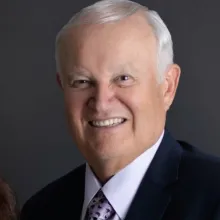
Mr. Seiglie was born in Havana, Cuba, and came to the United States when he was a child. He found out about the Church when he was 17 from a Church member in high school. He went to Ambassador College in Big Sandy, Texas, and in Pasadena, California, graduating with degrees in theology and Spanish. He serves as the pastor of the Garden Grove, CA UCG congregation and serves in the Spanish speaking areas of South America. He also writes for the Beyond Today magazine and currently serves on the UCG Council of Elders. He and his wife, Caty, have four grown daughters, and grandchildren.
