

Mario Seiglie
This transcript was generated by AI and may contain errors. It is provided to assist those who may not be able to listen to the message.
I've had the opportunity to serve the Latin brethren and also here in the U.S. for almost 50 years.
In Latin America, I've had the opportunity to go to different museums and see some of the remnants of those great civilizations over in Mexico. They have a very fine national museum in Chapultepec Park, Mexico City. If you ever get to visit Mexico City, it's worthwhile to just see all the Aztec ruins. Also, just a little over an hour's drive from Mexico City, you can go to the ancient city of Tenateclin, where they still have two large pyramids.
One is to the sun and the other one's to the moon. And also, fantastic museum there. Also, in Central America, I had the chance to go and see one of the great museums of the Mayan civilization, the area of Copán, Honduras. And then, over in Peru, been able to go to the city of Cusco, seen the museum there, where it talked about the Inca civilizations. And all through this western hemisphere, with all the different Indian populations of the past, there was one thing that was very interesting, and that is that despite all of these advances in these civilizations, they never invented the wheel for transportation.
Have you ever seen some of these old cowboy movies where the Indians are taking their people, and they just have this little hitch at the back of the horse where they take their things? Because they never invented the wheel, and yet they manage very well to build these great civilizations. But there's one thing that's very interesting, is that of all these great civilizations, and they basically count like 20 civilizations, all the way from Babylonian to the Egyptian, then you got the Assyrian, you got the Chinese, you got the Indian civilization, you can go through them all.
And one thing that they all have, maybe they don't have the wheel, but guess what they all have are these histories and stories about their past that are primary principles of every civilization. Every civilization has its great stories to build their culture and religion. Not one of them is missing that element. And of all those great civilizations, very few have survived to today with those stories. Many were based on myths. As you know, the Greeks had their god Zeus and others, and Mount Olympus.
Well, some people climbed up to Mount Olympus. They didn't find anything there. And the Romans and the Romans had their gods, the Chinese had theirs and Hindus. But there's one civilization that has made its mark on the entire world. And that's a civilization that we see in the Bible. We can call it the Israelite civilization based on Abraham's faithfulness to God, and that he would bless Abraham's descendants. And that through the Old Testament and through the New Testament, you see how God is calling a chosen people, starting with these stories, these principal ideas and concepts that up to today we have them.
We are part of that civilization, of God's people, that God started developing the Old Testament Church and the New Testament Church. And one of the things that we have is that it wasn't based on myths. It was based on true historical accounts. God's truths are contained in all of these stories. When people read these Bible stories, they're reading about biblical truths. And archaeology and history has confirmed they just discovered the pool of Siloam over there in Jerusalem, and it's a fantastic discovery.
And in John 5, that's where God healed the blind man. It said at that pool of Siloam. And it's just one little more incident that it wasn't some myth. There actually was a pool there.
Actually, people were taken to it. And so, as we look at the biblical principles, if we look at the entire Bible, they look toward the seven feasts of God as stories that establish the fundamental truths in the Bible. And those seven feasts are the ones that focus on all the stories in the Bible. So it's this beautiful quilt work that all these threads are interspersed. They're all connected together.
There's no other religion in the world that can say the same thing. I like what one professor of ancient religion said about all of these religions from the east, the Hindu, the Chinese, and also from the west as well. This is what Professor Monteiro Williams said about all of these books, the Hindu books, the Muslim books, the Buddhist books. He says, pile them up, if you will, on the left side of your study paper table, but place your own Bible on the right side. You put it on this side. You put all these piles of ancient religious books on this side. And this is the conclusion. There is a gulf between it and the so-called sacred books of the east, which severs the one from the other utterly, hopelessly, and forever.
There's just no comparison between the two. And so the narratives in this Bible, they all point to God's seven feasts and the seven feasts all point to the rest of the Bible. So let's look at how that works as we approach one of God's feasts coming up, the Feast of Trumpets. Which one of all of these books have the best foundational teachings?
Do you see people still following the Greek gods? No, you don't see them or the Roman gods or others. But you do see so many based on this book, because it is the one that contains the truths of God.
God had in mind that he was going to give these stories to the Israelite people and these laws and this way of life. What was mentioned in the special music, that very narrow and very special road. A lot of people don't take that straight and narrow road, but it's the one where God says, this is the way to go. This is what we need to live by, because it is the true way that we have. Let's turn to Deuteronomy chapter 4. Deuteronomy chapter 4.
And let's just see the intention of God with the Israelite people, which later would turn out to become the church of God. It says in Deuteronomy 4 verse 5, he says, Surely I have taught you statutes and judgments, just as the Lord my God commanded me, this is Moses speaking, that you should act according to them in the land which you go to possess. Therefore be careful to observe them, for this is your wisdom and your understanding in the sight of the peoples who will hear all these statutes and say, Surely this great nation is a wise and understanding people. You're going to be familiar with these narratives, these foundational truths, these stories that start in Genesis chapter 1 and end in Revelation 22. These are the ones that we learn about God's way of life. And then he says, verse 7, For what great nation is there that has God so near to it, as the Lord our God is to us, for whatever reason we may call upon him? And what great nation is there that has such statutes and righteous judgments as are in all this law which I set before you this day?
And so, talking about the great civilizations, now they have all come and gone, but the God of the Bible still remains to this day. And his stories and his narratives, those are the ones that we can look to. And so, let's see how these stories in the Bible all weave together in these seven feasts of God, which are like the seven principle points that everything looks toward it in the Bible, and they at the same time point to everything in the Bible. How can that be? How can you have seven principles that the whole Bible could be fit around it? Only in mathematics with the formulas and calculus can you get the preciseness that we have about these seven feasts pointing to all the Bible and all the Bible pointing to the seven feasts. So, let's see how it happens, especially since one of them is coming up next week, trumpets. Let's go to Leviticus chapter 23. Leviticus chapter 23 starting in verse 1. God is revealing his sacred feasts here in the Bible. Leviticus 23 in verse 1. Notice it's God speaking, the God that created the entire universe. The one that created all the billions of galaxies out there that created you and me. This is him speaking. Verse 1. And the Lord spoke to Moses saying, speak to the children of Israel and say to them, the feasts of the Lord, which you shall proclaim to be holy convocations, these are my feasts. So God is revealing to the world, I'm giving you feasts to keep with holy convocations, which means holy meetings. This is a holy meeting. That's why it's special to us. It's not just a regular church get-together. No, it's a holy convocation on the Sabbath. It says, we are to meet that way. And in verse 4, it says, these are the feasts of the Lord, holy convocations, which you shall proclaim at their appointed time. So it doesn't tell us when we choose to keep them. He's got appointed times, which has to do with the certain dates in God's calendar. And he says here, verse 5, on the 14th day of the first month at twilight, is the Lord's Passover. And every year, on the first month, in the 14th of the month, at twilight, we keep the Passover.
We call it the New Testament Passover because it was transformed by Jesus Christ, and he is our sacrifice. We're going to go into that in a moment. But this is the first great feast of God, and it is a symbol of God's sacrifice for us through Jesus Christ, the Messiah. Now, even Abraham looked forward to that coming of the Messiah. And its fulfillment. Let's read in John chapter 8.
So even Abraham, in his day, he knew there was going to be a Savior to come. That was going to fulfill the role of taking away the sins of the world. In John chapter 8, verse 54, Jesus answered, he says, Your father Abraham rejoiced to see my day. Rejoice because he knew that Messiah was going to come one day, and he saw it. In other words, he had the faith. He knew it was certain and was glad.
Then the Jews said to him, You are not yet 50 years old, and have you seen Abraham? Jesus said to them, Most assuredly I say to you, Before Abraham was, before he existed, I am. I existed. I was the word. I was the one that was interacting with Abraham. And so this first Passover points to the fulfillment of a sacrifice that Jesus would come. In Abraham's day, it hadn't come.
But they looked forward and celebrated that future event. We are fortunate because we already live after Jesus Christ did this. So we can look back to that sacrifice because it was fulfilled just as God promised. So this first fundamental story in the Bible has two parts. It has to do with the two comings of the Messiah. The first, to sacrifice himself. The second, to come to rule the earth. The earth. So you see how the entire Bible first focuses on who? Not us. Not on man's civilizations, on Jesus Christ.
He's going to fulfill these two roles. The first, he already did. He already died for every one of us in our sins. There's no sin that cannot be forgiven. If you go before God and sincerely repent, I compare it to one of those safety deposit boxes that they have in the banks where people put their wealth and jewelry and things. What God did was, through the sacrifice of Jesus Christ, he's paid for every one of us. There's a safety deposit box with our name, and it's ready to be claimed.
Yes, I accept. I want that sacrifice to be placed over my sins and to be removed. But for that, you need faith. You have to believe that safety deposit box is there for you because it doesn't do any good unless you claim it. You have to have the faith to claim it. And so, the first story in the Bible has to do with these two comings of the Messiah. Let's look at Hebrews 9, verses 27 and 28.
It's a good summary of what I have just said. Hebrews 9, verses 27 and 28. It says, As it is appointed for men to die once, but after this the judgment. So Christ was offered once to bear the sins of many. That was in his first coming. To those who eagerly wait for him, he will appear a second time. That's the second coming, apart from sin. He's not coming to get rid of sin.
He already did that in the first coming for salvation. He's coming for our salvation. So every time we keep the Passover, we're focusing on that first coming of Christ and how he forgave our sins. And every year, God wisely says that we should examine ourselves spiritually and come before him on that first month, at the 14th of the month, at twilight, and take the bread and the wine, symbolizing the acceptance of Jesus' sacrifices in our stead of our sins.
So it's not just when you're baptized. Every year it's recurring. Because we have to continually be overcoming and confessing and repenting. It's a long, lifelong process. It doesn't end after a year or two. Let's go to the second great Bible story. It has to do with the days of unleavened bread. It tells us there in Leviticus 23, after the Passover, it talks about the seven days of unleavened bread. And the second fundamental story has to do with the purifying of a people for God. In other words, Christ died, but who is it going to be applied to? Who are going to be purified by that sacrifice? So the second feast has to do with a feast of unleavened bread.
For seven days, we don't eat any leavening because it symbolizes sin. And it represents us eliminating, eschewing, getting out of the way of sin. And we eat leavened bread, which has to do with a symbol of being purified by Jesus Christ. Not because we're perfect or anything, because it is Him Him who does it. We become unleavened through Him.
Notice in Matthew 21, I told you about purifying a people for God. And now Christ gave the Jews of His day and the leaders the opportunity to accept Him as the Messiah, to repent of their sins, to be baptized, as some did, but they refused. Notice what it says, Matthew 21, 41 through 45. Matthew 21, 45 through 41 through 45.
So they said to Him, talking about this parable of the wicked vine dressers, He will destroy those wicked men miserably and lease his vineyard to other vine dressers who will render to Him the fruits in their seasons. Jesus sent to them, Have you never read in the Scripture the stone which the builders rejected has become the chief cornerstone? This was the Lord's doing, and it is marvelous in our eyes. Therefore, I say to you, the kingdom of God will be taken from you and given to a nation bearing the fruits of it.
So He was telling the Jews and the religious leaders, If you reject the Messiah, God is going to call other people, and they will bear the fruits.
Notice what it says, verse 44, And whoever fails falls on this stone will be broken, talking about who will reject Christ as a Messiah. But on whomever it falls, it will grind him to powder. Now when the chief priests and Pharisees heard His parables, they perceived that He was speaking of them. But when they sought to lay hands on Him, they feared the multitudes because they took Him for a prophet.
And so God is calling people to be part of those that are going to be purified through the sacrifice of Jesus Christ. Notice this feast of unleavened bread and of the Passover. It's mentioned in 1 Corinthians 5, verses 6-8. Here is one of the congregations of the Church of God at that time, and Paul's giving them instructions about keeping the Passover and the days of unleavened bread. 1 Corinthians 5, verses 6. He says to them, Your glorying is not good. Do you not know that a little leaven leavens the whole lump? Therefore purge out the old leaven, that you may be a new lump, since you are truly unleavened, for indeed Christ our Passover was sacrificed for us. So he said, purge out the old leaven. And what was that old leaven? It was sin. It was sin in the congregation. Notice in verse 1, what he said, It is actually reported that there is sexual immorality among you, and such sexual immorality is not even named among the Gentiles, that a man has his father's wife. So here was this illegal and immoral relationship. And he says, and you are puffed up, and have not rather mourned, that he who has done this deed might be taken away from among you. So they were just tolerating it. And once that happens, other people start saying, well, if he can get away with it, I can get away with it. And so he says, no, you have to remove that sin from the congregation. So he goes on to say in verse 7, Therefore purge out the old leaven, that you may be a new lump, in other words, purified lump, since you truly are unleaven. For indeed Christ our Passover was sacrificed for us. Therefore, let us keep the feast, not with old leaven, nor with the leaven of malice and wickedness, but with the unleavened bread of sincerity and truth. So you have to really be sincere. You have to have a church where we are obeying God, and we confess our sins before God, but we're not going to be tolerating that type of sins among us.
So that has to do with the days of unleavened bread, the second of the feasts. Notice the third. Again, this is another story. Now God reveals it's not just about the Passover and Christ coming. It's not just about the days of unleavened bread and the purifying of a people, but now these people, they not only need to be purified, they need to receive God's Spirit, God's Holy Spirit. The third feast has to do with the feast of Pentecost, the receiving of God's Spirit. Notice in Acts 2, Acts 2, verse 1. The whole church was together at this time. They were having a holy convocation. Verse 1, it says, when the day of Pentecost had fully come, they were all with one accord in one place. And suddenly there came a sound from heaven as of a rushing mighty wind, and it filled the whole house where they were sitting. Then there appeared to them divided tongues as a fire, and one sat upon each of them, and they were all filled with the Holy Spirit and began to speak with other tongues as the Spirit gave them utterance. So here is a time when God intervenes directly in church, well in history. It wasn't just about Christ and what he did, but now he actually intervenes at this church service, and they receive, and they can see these flames on top of each one of them, which is symbolic of God's Spirit. So that phenomenon of receiving God's Spirit is still happening today, though it's low key. When you receive God's Spirit, you're not going to have you know flame and everything else. Why? Because people got vain, they got prideful, it does what happened with the Corinthians, that they started misusing these gifts. And so when we receive it, you're going to feel God's Spirit in you. But it's going to be something it's going to take some days as you start feeling that strength, that relationship with God grow. Because human beings, they can really get vain if, oh look at this, look I've got the Spirit, look how holy I am. Then you ruin it all. You lose that humility, you lose that realization that we are nothing without God. It's His Spirit that's working in us.
And that takes us to the fourth of these feasts, which in a week from now, we're going to have a holy convocation here because that's what God commands in His Word. It is another one of these fundamental stories of Christ's return in glory and majesty. That's the next step in God's feasts. We've already fulfilled the three past feasts in history. We've already had the Passover that has taken place. Christ died on a Passover. And we've had the unleavened bread, the purifying of a people, the church, they've received the Holy Spirit. Almost 2,000 years ago, the church started that. We're in the 21st century and people are still receiving God's Holy Spirit today. And so we are in this church history between the third and fourth of these feasts. Christ has returned. He has established. He came first, purified the people, gave them the Holy Spirit, but He hasn't returned yet. So that's going to happen. So this is the feast that points to that return of Jesus Christ to the earth. Notice in 1 Thessalonians chapter 4, and that's the sad part is that you can read the Bible all your life. And if you don't realize the key functions of these feasts, you don't understand the stories in the Bible that all point to these great events. And these great events point to the realization of the Bible. 1 Thessalonians chapter 4 and verse 16.
Talking about the return of Christ, it says, For the Lord Himself will descend from heaven with a shout, with the voice of an archangel, and with the trumpet of God, and the dead in Christ will rise first. Then we who are alive and remain, talking about remain alive, shall be caught up together with them in the clouds to meet the Lord in the air. And thus we shall always be with the Lord. So this is the major point here.
It's not just being resurrected, having a wonderful spiritual body that can never be diseased, it will never weaken, it's not necessary to eat, to maintain it. You will have immortality at that time. But notice the key phrase here. It's not just meeting Him, it's being always with the Lord. So that's a lasting relationship. That's when Christ's mentorship begins with His resurrected saints.
And it's more than a mentorship. Mentorship is when somebody, like a coach, is preparing the person, whether it's an athlete, so he can do better, he's helping them. Christ is more than a mentor because this relationship is so intimate, it's compared to the love of a husband and a wife.
Which, to me, is the greatest happiness that a person can have, is having a happy marriage. If people are privileged to do so. But the interesting thing is that the marriage between Christ and the bride, the church, is going to be infinitely greater than any wedding, than any marriage here on earth. Notice what it tells us in Ephesians chapter 5. Ephesians chapter 5.
Verse 25.
Ephesians 5 verse 25, talking about the roles of the husbands and wives in the church.
And in the marriage, it says verse 25, husbands love your wives, just as Christ also loved the church and gave himself for her, that he might sanctify and cleanse her with a washing of water by the word. So he purifies, he forgives, prepares her for matrimony, that he might present her to himself a glorious church, not having a spot or wrinkle or any such thing, but that she should be holy and without blemish. That's only through Christ's sacrifice that that is possible. So husbands ought to love their own wives as their own bodies. He who loves his wife loves himself. For no one hated his own flesh but nourishes and cherishes it, just as the Lord does the church. For we are members of his body, of his flesh, and of his bones. For this reason a man shall leave his father and mother and be joined to his wife, and the two shall become one flesh. Then he reveals this. Just like there's this love between a husband and wife, there's even a higher level. He says this is a great mystery, which the word mystery in the Bible means revelation, but I speak concerning Christ and the church. It's going to be that type of relationship. And so, personally, I've been blessed with very happy marriage, and I would say the happiest moment in my life was on our wedding. When we were married, that was the happiest moment of my life. Nothing else compares it, because I was going to have a partner for life, and she loved me and I loved her, and we're almost we're getting close to 50 years, and it was a moment of great happiness. The other moments of great happiness, guess which ones they are? You have your own list. I have mine, which are the birth of every one of our daughters, the four daughters. That was the second happiest times on our life, and the third is the birth of each one of our grandchildren. That has been the happiest moments of my life. And so, if you can think of that ultimate happiness that you had at that wedding moment when you did it, what Christ is carrying out through these feasts is having forever happiness with Him, with God the Father, with all the resurrected saints. It is going to be ultimate. It is going to be complete happiness, like no human being has ever shared, has ever experienced. We can just have maybe these very happy moments in our lives, but this is what Christ is saying. This is concerning Christ and the Church, the relationship. He's not only going to be a mentor, we're going to follow Him, just like a husband is there with his wife, and she goes and she supports Him and loves Him and carries it out. And so, let's continue with the fifth feast, which has to do with the Day of Atonement. Now, the Day of Atonement is the story in the Bible which reveals the origin of sin and of evil. Where did evil come from? Well, this fifth feast focuses on that. All the Bible focuses on the Day of Atonement to reveal that. The Day of Atonement develops it all throughout the Bible. The whole message is based on that. Notice in Revelation chapter 20, we're just a little over two weeks away from that time of the Day of Atonement.
Revelation chapter 20 verse 1. In God's plan, this is the next great event. After Christ coming, which is represented by the Feast of Trumpets, comes the putting away of Satan.
It says in Revelation 20 verse 1, Then I saw an angel coming down from heaven, having the key to the bottomless pit, which means a place that's so deep you can't see the bottom of it, and a great chain in his hand. He laid hold of the dragon, that serpent of old, who is the devil and Satan, and bound him for a thousand years. And he cast him into the bottomless pit and shut him up and set a seal on him so that he should deceive the nations no more, which means he is still deceiving them today, because he hasn't been put away till the thousand years were finished. But after these things, he must be released for a little while. So the point here is that God deals with the origin of evil, why it exists. It did not exist in God. It did not exist in Jesus Christ. They have never sinned. They never will, because they've got perfect spiritual character. But there was one angelic angel. Well, there was an angelic being who was Lucifer. He rebelled against God, and sin and evil were conceived by him, and he developed it, and it has affected us. So who do we follow today? Do we follow Christ, or do we follow Satan? Society is trying to make us follow more and more Satan, and that's why he can deceive us.
And this then leads us to the sixth great feast of God, the Feast of Tabernacles. Boy, what a story here! Things are just getting better. Satan has been put away. Now human beings are not going to have that influence upon them to want to sin, to want to lust, to want to steal, to want to lie, to want to corrupt. Politics and all of these other systems, they're going to be gone. And so what a great story. It's called The Wonderful World Tomorrow.
Herbert Armstrong wrote a book. It's a PDF file. It was one of the most wonderful books I ever read in my life. Anybody who can just read The Wonderful World Tomorrow, because it pictures what it's going to be like. I fell in love with that story. I wanted it to happen as soon as possible. I'm looking forward to it, because it's described in the Bible.
Notice a little further in Revelation 20, verse 4, right after Satan has been removed. Boy, here comes the fun. Here comes ultimate happiness. Verse 4, and I saw thrones. Oh, people are given positions of leadership, but of servancipe too. They're not going to be these abusive autocrats and these abusers of power. No, they've already shown. They've got God's Spirit. They've got that righteous character, so they will not sin. It says, and judgment was committed to them. They are going to have the authority to judge the nations, and decisions have to be made every day. But these are the righteous rulers under Christ.
And among these people, some gave up their lives for following Jesus Christ. And the Word says, then I saw the souls, which means the lives, the life of those who had been beheaded for their witness to Jesus and for the Word of God, who had not worshiped a beast or his image. This is a false religion, and had not received his mark on their foreheads or on their hands. And they lived and reigned with Christ for a thousand years. God is calling every one of us. We all have a potential to be part of that wonderful world tomorrow. Notice in verse 6, it says, Blessed and holy is he who has part in the first resurrection. Over such the second death has no power. They will never die again, but they shall be priests of God and of Christ, and shall reign with him a thousand years. They'll be in charge of religious meetings, holy convocations. During those thousand years, and they will also rule because they have perfect, godly character. We'll still have our own personalities, but we do have God's spiritual character in us, which makes the big difference. And so we go to the final, the seventh of the feasts. We call it the last great day or the eighth day. And again, what a story! What a story the world doesn't know about, because they don't keep these feasts. This is a story where we know that the majority of mankind has not been lost. And people that are out there in the gutter, or they're in the parks, they're homeless. No, they die, but they're not lost. They will have a chance to live a decent life, to know the sacrifice of Jesus Christ. The little baby that died in the hospital before it could even start living. They are all going to be resurrected. They're going to have a chance to live a life in that wonderful world tomorrow, after the thousand years. That's the period we call the Great White Throne Judgment, which is being described. This is the hope for human beings that were deceived by Satan. Revelation 20 verse 13. It says, sorry, verse 12. It says, And I saw the dead, small and great. This is after the thousand years. This is the second resurrection. Standing before God, and books were open. The term is biblia. That's where the term Bible comes from. It was open to their understanding. And another book was open, which is the book of life. When they receive God's Spirit, their names are written in that book of life, and they have a right to eternal life and entrance into God's kingdom. So this is why we love God's feet so much. We love these stories, you see, but they're not fiction. These are part of God's stories for mankind. They don't have any myths. And what a difference. Celebrating something like Christmas, that's not one of God's stories. Christ was not born in the middle of the winter.
That wasn't the right time, and all of the things that they celebrate during that time, that isn't part of God's stories. Those are pagan, false, religious terms and teachings. How about Easter? That's not in the Bible. That's not one of God's stories. How about Halloween? That's not one of God's stories. The Immaculate Conception of Mary. That's not one. I learned all of those. Those were false narratives. I had to erase them from my mind, because they weren't part of God's stories. And so we have all of these different religious stories in the world, but nothing compares with God's stories, with his truths. And so, next Sabbath, we have one of these great feast days, the Feast of Trumpets, picturing the return of Jesus Christ in glory and majesty. So let's spiritually prepare, brethren, for it, and be faithful to these wonderful, fundamental stories of God that one day will bring ultimate happiness to all.
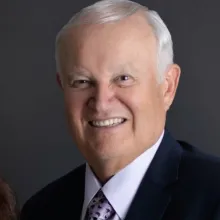
Mr. Seiglie was born in Havana, Cuba, and came to the United States when he was a child. He found out about the Church when he was 17 from a Church member in high school. He went to Ambassador College in Big Sandy, Texas, and in Pasadena, California, graduating with degrees in theology and Spanish. He serves as the pastor of the Garden Grove, CA UCG congregation and serves in the Spanish speaking areas of South America. He also writes for the Beyond Today magazine and currently serves on the UCG Council of Elders. He and his wife, Caty, have four grown daughters, and grandchildren.
