
Ben Light
This transcript was generated by AI and may contain errors. It is provided to assist those who may not be able to listen to the message.
Well, we certainly do appreciate the lovely special music. Thank you very much. Whether it's by word or by melody, it all rises up to God as sweet and wonderful praise. Well, glad that you're all able to be here today. And the message that I'm about to bring to you, I hope it will be a blessing. And be a blessing to those that are listening on the webcast today, or will be hearing this message in the days, the weeks, months, sometimes the years ahead. I certainly did appreciate Mr. Liu's opening first message, and I hope to build upon that in very definite and firm ways.
Here we are on Thanksgiving weekend, a wonderful weekend, and I hope you had a blessed Thanksgiving with you and yours. On this Thanksgiving weekend, there are two things that I think of that I am thankful for, and I'd like to share them with you. And number one is that for the God-ordained institution of marriage. And then number two, for the Ten Commandments.
And in this message, we're going to bring both of those together today. And I'd like to give you the title of my message right up front so you'll know exactly where we are going. This afternoon, we're going to be discussing the Seventh Commandment. The Seventh Commandment goes like this, you shall not commit adultery. But the subtitle of that is simply this, beyond the what, why?
God doesn't only inform us and educate us in the scriptures as to what not to do, but why we should be doing what we ought. I'd like to begin by sharing some familiar words to all of us. Many of us that are in this room, not all, but many of us have been married within the confines of the Church of God. And so many of us will be familiar with what I'm about to read to you and allow me to do so.
The marriage ceremony basically goes like this. There can be no more joyous ceremony than that which we now enter. And it says marriage is a natural union, but it's a divine institution ordained of God. Both. It's a natural union, but it's also a divine institution ordained of God. In other words, God has His signature on marriage. It was established, not by man, but by the eternal God at creation and derives its authority, not from civil codes of man, but from the divine laws of God.
Immutable. Unchangeable. From creation. To go any further and to be sealed by the ceremony, the ones that are hearing it are those that believe that God is creator, that there was a creation. And not only that God is first cause, but He continues to be the intervening force in the macro world around us and in our own micro world, whether that be our marriage to another person and or in our own lives. Therefore, it is fitting that we should consider the laws of God governing this union.
And there are laws, not suggestions, but laws as revealed in the holy scriptures. And then the ceremony goes into sharing the scripture. And Jesus said, from the beginning of creation, again, creation, God made them male and female. And for this cause shall a man leave his father and mother and cleave unto his wife. And they, twain, shall be one flesh. So then they are no more twain and or two, but one flesh.
And what therefore God has joined together, but God, but God has joined together. Let not man put asunder. And He said unto them, whosoever shall put away his wife and marry another, commits adultery against her. And if a woman equal footing here, and if a woman puts away her husband and shall be married to another, she commits adultery. Do you then, so and so, faithfully promise and covenant with God in the presence of these witnesses to take so and so to be your lawful wedded wife and to cleave, kind of stretch that out for a reason, and to cleave to her unto death, to love her, to cherish her, to honor her, and provide for her?
And do you, so and so, faithfully promise and covenant with God, not just the man but the woman, in the presence of these witnesses to take to be your lawful wedded husband for the remainder of your natural life, and as God has ordained to submit yourself to him in everything and to respect him? Now most of the weddings that I have performed over the years, and I probably performed up to maybe 30, 35 weddings perhaps, don't quite know the number, very few have come back and said no.
Most of them had said yes, and that is a joyful thing. Let's talk about the wedding ceremony here for a moment before we go further. A couple words I'd like to bear out for a moment. I hope I'm gaining your interest by what I'm sharing with you. The first thing is that it says that both the man and the woman are to cleave to one another. I like to share what the word cleave means there.
Cleave there comes from the Greek. It is the word callo, K-A-L-L-O-O. And the derivative of that, to anglicize it, means glue. You are to be glued to one another. Glued. To join fast. To be, another word or another phrase out of the commentary, to be cemented. You know, it's one thing to glue. It's another thing to cement. That's how tight God desires for the marriage compact to be. Now, another thing I'd like to share with you, that's point one. The other point is that we promise and we covenant with God.
Let's understand that marriage, are you with me, friends? Marriage is not a contract.
That's the legal part of marriage. But marriage is not just a contract. People move in a contract. You know why there are lawyers? Because people have contracts, and contracts so often have loopholes.
The marriage that is performed before God, the marriage that is performed before God is not just a contract. There's a legal setting for that. You have to go down to the county courthouse. That's the contract. That's the legal mumbo-jumbo. But what we do in the church, what the saints do in the church, is we make a covenant. And that covenant is not just between the man to the woman and the woman to the man, but God is involved in that covenant. He is a partner in this ceremony. In other words, let's put this down. If you want to do kind of a word problem, one plus one plus one equals three. There are three parties that are involved in the marriage, and that's what God ordained. And that's very, very important, and to understand that. So we come to understand some very basic, very basic scenarios as we start out just with the ceremony, that probably two-thirds that are married in this room were married, too. That number one, we are to cleave. We are to be glued to our mate. Number two, then, we recognize that it is a covenant, a covenant which is to be broken by death, not to be escaped by loopholes. Now, to remind us of our vows of eternal scope and lifetime faithfulness, God adds an exclamation point at the end of that in the midst of the Ten Commandments. Join me if you would. Let's anchor ourselves, as we do with everything that comes across this podium. Let's anchor ourselves in the Word of God. I presume you brought your Bibles today to open them up, so please join me in Exodus 20. In Exodus 20, let's go right into the midst of the Ten Commandments. In Exodus 20, and let's pick up the thought in verse 14. Notice what it says. You shall not commit adultery.
You shall not commit adultery. Now, allow me to share something when we study the Bible, and as students of the Bible, there are times when we study the Bible, and there are things that are very loud in the Bible. Loud, like this. Loud! They just... on volume 10.
There are other things that are quiet. That are quiet. That might even be implicit or implied, but they're not explicit. They're not demanding. Are you with me? They're not demanding. And there are some things in the middle that are not loud or quiet that we can use about and philosophize about, etc., etc. I want to share something with you, dear brethren, here in Los Angeles and those that are hearing this message later. This is not quiet. This is loud.
God places this, the seventh commandment in Scripture, thou shalt not commit adultery to set apart marriage, to keep it holy, to keep it in its sacred state. Just as Jonathan was bringing up, know the thresholds before you get to them. That it's not just a matter of touching, but be involved with what you're seeing and understand that you're seeing also needs to come under control. So here we go. A specific purpose statement. This afternoon my intent is to explore because it is a journey. Marriage is a journey. Marriage is not just an event. It's not just an event, and it's not just something that you experience on one day and not the other. Marriage, when you're glued to somebody, and not only to somebody like I. D'Souzi here on the second row, but we're glued to God. Have you ever thought of that? We are glued to God. He is in this covenant relationship. So we're going to explore the spiritual and some of the physical components of this vital safeguard, this threshold, this threshold to human happiness. And we're going to move beyond simply the condemnation of the wandering eye, but more importantly, explore the intent of God's purpose regarding marriage for humanity, why He put it in the human framework, and to focus on the heart of the matter, to merely not focus on the don'ts, but the whys of what we do, why we do. But before we get there, we have to go back a little bit. Sometimes we have to go back before we can go forward, and for you to understand why I, as a concerned pastor, and as a fellow Christian, and as a growing Christian myself, give this message to myself and share it with you because of the history that we have undergone this past century and what is happening in the world around us today. Today, we live in a society that is reeling from a tremendous setback in the human experience. It's called the Sexual Revolution. It's called the Sexual Revolution, the latest form starting in the 1960s. Now, there's nothing new underneath the sun. Are you with me? Nothing new underneath the sun. There were also sexual revolutions that occurred at the time of the Romogreco world. There is also the sexual revolution that occurred in the 1400s and 1500s with the Renaissance as humanism actually triumphed over Christianity. And you see it in the art, you see it in the statuary, and you see it in the morals that occurred during that time. But the 1960s and Susie and I are just... don't date us, but we're a little bit on the other side of that growing up when we were young. The world changed in the 1960s. A puritanical society after the war, straight-laced, had rules. And yet also there was hypocrisy throughout the old rules. They threw them overboard. In 63, 64, 65, 67, we go back to the thinking of the Lovins that occurred in the... occurred right in Pasadena, occurred down in Brookside Park. There were Lovins. And to recognize that everybody threw the rules overboard. What happened is, and to where we are today, stay with me, would you please, where we are today, where people started to jettison and to throw overboard the old rules that had been extant in a puritanical society. We've come today... think this through, friends, and I think you will agree with what I say. We today are in a world where there are no rules.
There are no rules. There are no rules when it comes to mores between human beings. There are no boundaries, because once you begin to move one boundary, one boundary, just like the boundary that God imposed that a man should marry a woman, Adam should marry Eve, Adam should not marry Steve.
When you begin to change the goal post, take it down. There are no more rules. And that is the world that we are moving to and entering, where people decide who they are. Today we have people that are just running around based upon stimuli, their own instincts, and their own feelings. People today feel, feel that, well, this is who or what I am. And because I am, and because I feel, therefore, I am whatever I want to be, even though you look like somebody something else. We have moved into a world of feelings, of stimuli on steroids, of humanism. And what brought this about, and we need to understand what happened over the last 40 or 50 years, because unless you were ahead of the story, you think this is how it's always been, over the years terms have been developed, what we might call commercials for Satan, where we have terms, user-friendly terms have come into play, of where when Susan, and some of the things I'm going to say to you, you're going to go today, you're going to say, oh, Mr. Weber, you shouldn't be that tough or that rough on people. Well, God is tough, and God is rough on people. God in Malachi 3 verse 6 says, I change not. When I was growing up, when I was growing up in the late 50s and early 60s, a man and a woman that were living outside the bounds of marriage were simply called, they were shacking up. They were shacking up. Now we call it by the user-friendly term, living together. And or on a forum, we'll talk about our significant other.
Some of you are nodding your heads. You see the challenge. We have a world where, when I was growing up, it was called adultery. When a man or a woman walked out on the relationship and had relationships with another person and abandoned their marriage, it was called adultery. Today we call it extramarital arrangements. Today you can read, and whatever I'm going to say today, I know you've read it in the newspapers, so don't act shocked, is that people, you know, beyond extramarital affairs, will talk about having an open relationship within their marriage.
When we were young, just some decades ago, we would talk about fornication, people that fornicate. Today people don't use that fancy Latin word. They just talk about, be sure you have safe sex. There is no safe sex in God's Word or God's Bible outside of what the Creator has ordained that physical relationships be between a man and a woman in marriage. So we look at this. This is the world, do I dare surprise you, this is the world that you and I live in. And like that famous line out of Lord of the Rings where the one guy said, Mr. Frodo, what kind of a story have we fallen into? Well, it's actually developed over the years. If you go back to the 1950s, there began to be a loosening of censorship, of literature, that which you buy in a book rack and in the movies. And that was coupled with the convenience of what we call the pill that became very extant in the 1960s and the proliferation of modern theories, different thoughts about what the contract was between a man and a woman. And over those years, the divorce rate skyrocketed and became more and more what it is. You know, it's interesting. Bob Dylan, for we that are in the Baby Boom generation, remember Bob Dylan singing the song, the poet of the 1960s, the times they are a-changing. And absolutely they did. Let me share a thought with you for a moment. When I use the term adultery, that's kind of an old-fashioned term, but it's alive and well all around us, even though that term is not used today in this country and in fortunate times in the lives of Christians. One thing about adultery that happens in the human experience, there no one wins. Everyone loses. No one wins. Everyone loses. You see, I'm as a pastor taking you down that aisle of the toys are us and giving you some instructions to understand the walk that you need to walk and where your focus needs to be and what you don't need to touch and what you have been called by the grace of God through the sacrifice of Jesus Christ not to touch again. But all around us, you just look at it, what we have these days where everything is sexual. Everything is about couples. The aspect of adultery. You know, Susan and I can barely these days get into a series. We love historical series. We love to watch, you know, I'm a history major, and Susan loves history and we'll want to sit down as a couple and watch something. But I find more and more I can't sit down and watch something. I am not as a Christian going to sit down and spend my time and Susan is going to spend her time watching what should be done in private or at all if it's adultery. But why would you do that? Why would you do that? Why would a Christian watch people hurting one another, hurting the mates that are not in the bedroom with them where they should be in the bedroom with their mate, and yet we call that entertainment today. God says it's an abomination. Absolutely.
Absolutely. Why? See, sex was never designed for voyeurism. It was designed to be a participation sport. And I say that with a smile. But what I'm saying is it was not meant to be viewed by everybody else. It's sacred. It's a gift. It's not all of marriage. It's that which binds a marriage together, cements it together, creates a oneness together that is very, very special. What does God think about this? Join me if you would in Isaiah 5 and verse 20. The society that you and I are in. Now, I want to share something with you, can I? God wants us here. Remember on that last night of Jesus' life, He said, Father, I pray that you do not take them out of this world, but that you keep them here. We're to be lights. But in Isaiah 5 verse 20, God makes a commentary through His prophet. In Isaiah 5 and verse 20, notice what it says here. Woe to those who call evil good and good evil, who put darkness for light and light for darkness, who put bitter for sweet and sweet for bitter. Woe to those who are wise in their own eyes and prudent in their own sight.
I run into such people every so often. I run into people, and they come up, and they share with me maybe the movies that they've seen. They're the books that they're reading, and they have no thought. They have no thought that what they've gone and seen is forbidden in the Bible. But they've made themselves the little God. They don't realize that today, our, in the movie theater, does not stand for restricted. It stands for raunchy. But you don't even have to go to the movie theater anymore. Now it's streamed into your house. It's streamed into your life. You know, sometimes we've heard sermons in the past, you know, we'll go back about how David was a man after God's own heart. And you recognize we'll go to the story sometimes how David repented after he committed adultery with Bathsheba. And we always deal with the story. Well, he was one night on the porch, and he looked down, and he saw women bathing. And he goes, oh! And everybody goes, in horror. Oh! And yet today, between the movies, televisions, pornography, most people have seen more than one Bathsheba in the last year. How far is this world and this age, this society, moving, moving from the ways of God? Let's take a little bit further. Here's my concern, and I hope it's your concern. Join me if you would in Jeremiah 6. In Jeremiah 6. Jeremiah. A man who's very, very concerned about his own nation. But we find over here in Jeremiah 6 in verse 15, notice what it says here. It says, Were they ashamed when they had committed abomination? No, they were not ashamed at all. Nor did they know how to blush. Therefore they shall fall among those who fall. At that time I punish them, then shall they be cast down, says the Lord. Chapter 8 and verse 12, join me there for a moment. Were they ashamed when they had committed abomination? No, they were not ashamed, nor did they not know how to blush.
Members of the Church of God, the world around us and America around us, the same America that has the coins in their pocket, minted with, in God we trust, have lost the ability to blush.
I remember years ago, I think it was 1964, wasn't it, when Mr. Herbert Armstrong wrote the book, God Speaks Out on the New Morality, of which we've been discussing here. And I remember doing those years that was mentioned that there would become a time when it was no longer just about the new morality, which was really immorality, but that it would be amorality. That means no morality at all. And brethren, that is the world that we have to stand up against, be fortified in, knowing that God has given us the gift of marriage and also the gift of sex in marriage. Not as the whole package, but the bow, the tie that brings it together.
That's the world that we live in. That's the world that God has called us to come out of. I remember in 1980, 81, there was a voice coming from the stage across the royal, pounding in the church at that time in Revelation 18 and verse 4, Come out of this world. Not original. It comes out of the book of Revelation. I have a question for all of us to bring you into this text. How much are we willing to come out of this world? And better still, a more personal question. Can we still blush? Can we still blush as a people? Or have we become so understanding that we understand more than God? We're really big about all of these relationships that are out there. And we're very understanding. And who am I to judge? Now, I'm not asking you to get up on a skyscraper over here in Glendale and start shouting. That's not the purpose. But you can shout in your own life by what you allow in your life. By what you allow in your life. And not practice sin as Jonathan brought out. There's a difference between falling and stepping. Stepping and falling and slipping. That is sin. But to practice sin? To practice sin as a lifestyle? To be going over the thresholds that we ought not go over? Whether it be with our body, our mind, our soul, or our eyes? Perhaps some of us have homework. Some of us have hard work.
Let's talk about why God has allowed marriage, which is very important. I'd like to talk to you a little bit. The only way I can talk about this as a Christian to other Christians is to go to Ephesians 5. Let's go to Ephesians 5, verse 11.
I think just sometimes you let the Bible kind of speak to you just straight. Shortest distance between two dots is a straight line, and just take the Word of God straight, what he says here. Ephesians 5. Let's pick up the thought in verse 11.
There were very few morals. That's where the temple of Artemis was, Diana of the Ephesians.
Let's go down to verse 15.
The term there for redeeming is a time of, it is now harvest time. It is now time to act. Not tomorrow, not manana, but now to understand what is going on.
Then let's drop down to verse 20. Now let's notice as we move into that, which speaks about marriage, submitting to one another in the fear of God.
Submitting to one another in the reverence and or in the respect of what God is doing in the human framework. Submitting to that covenant that you made together with him. One plus one plus one.
You see, brethren, I've told you this before. I do not believe that my great-great-granddaddy was a love-sick amoeba in a slimy pond during the Plastocene period. That all of a sudden got a little juice and got a little life with a little sun ray. And then saw a little mis amoeba.
My great-great-great-great-uncle was not a gorilla, was not an ape, was not a chimpanzee. I firmly believe with all of my being, and I think I'm speaking to the right audience, aren't I? That we're a creation. That we were designed. Yes, man has similar designs to the mammalian world around us, but we're not an animal. God placed his Spirit in us. We're that special creation. After he created man, it said, it is very good. And he said, and he blessed the man, and he blessed the woman. He said, be fruitful and multiply and replenish the world. Finish what I have begun. But the world, thinking is bigger and wiser than God, is tossed off God, as is in the first chapter of Romans. And because they did not give God thanks, he turned them over to a reprobate mind. A mind that is void of judgment. To do that which is even unfamiliar in the creation. And they became God. They made themselves little God with a little G, and said, I will make my own rules and do my own things. That's not what marriage is about. Submitting to one another, notice, in the reverence and or in the respect and the awesomeness of God. Wives submit to your own husbands, notice, as to the Lord. God's involved in this. The husband is the head of the wife, as also Christ is the head of the church, and he is the Savior of the body. Therefore, just as the church is subject to Christ, so let the wives be to their husbands in everything.
That doesn't mean you don't have a brain. That doesn't mean that you don't exercise your will. But that you recognize the structure that God has placed. Husbands. No, when you first read it, boy, you know, kind of heavy on the women, isn't it? It says, husbands love your wives, just as Christ also loved the church. Nobody gave himself, nobody gave himself, and was more loyal. More loyal. You know, back, it's interesting, in the Old Testament, it says that Israel was the apple of God's eye. Gentlemen, is your wife still the apple of your eye? Is she your sweet point? Is she your sweet spot? I know Susan is the apple of my eye.
Is your mate the apple of your eye? Husbands love your wives, just as Christ also loved the church. He gave himself, he gave his life for it. He was solely, totally focused on the covenant relationship. That he might sanctify and cleanse her with the washing of the water by the Word. That he might present herself to himself a glorious church. Not have any spot or wrinkle or any such thing, but that she should be holy and without blushing. So, husbands ought to love their own wives as their own bodies. And he who loves his wife loves himself. You know, one of the ways and one of the means that we are able to love our wives, gentlemen, is the Scripture says that we are to love the wife of our youth. We are to love the wife of our youth.
Do your children know?
Do your children know that you gentlemen love the wife of your youth?
You see, one thing that we do as parents and grandparents, have you ever noticed that children are always watching? Always watching. Always absorbing. And they're watching you even when you do not think they're what you think their eyes are closed with. They've got eyes up here. They're always watching. Kind of interesting, I do a lot of memorial services and funerals, and what happens is so often, you know, it's kind of, you know, because it's a gripping experience. But then the kids and the grandkids get up, you know, during the eulogies, and they start talking about grandma or grandpa or mom or dad, and you go, wow, I'd forgotten that.
I didn't realize that. Where were they when that was all happening? Children are always watching.
Dads, they're watching you. As to whether or not your wife is the apple of your eye. As to whether or not you are pleased and that you are dwelling, and you are loyal, you are loyal to the wife of your youth. They're watching.
One thing that we do as parents and grandparents is we put down, we give the next generation two things. We give them, we give them, in that sense, roots, and we give them wings. We might say we give them an anchor and we give them a sail. We give them a sail.
And one of the greatest sails that we give is not what we say, but what we do as a husband and a wife, that we are committed to our marriage vows. Committed to our marriage vows. I speak for myself that, you know, looking at my parents and my in-laws, and if you knew my mother, Jack and Thomasina Weber, my parents were married for 66 years.
Doesn't mean that their relationship was easy. Anybody that knows my dad knows it had to be interesting. I say that with a big smile because I really, truly respect my father.
But they made a vow, and in that generation you stuck it out through thick and thin, through hill and dale, through valley and mountain peak.
Today people are looking for the first alley out of town, the first highway out of the relationship. As soon as his parents, many of you knew Russ and Shirley Leimbach. They were married, I think, for 61 or 62 years. A couple farm kids that got married when they were 18, of course you say, well, why did they get married at 18? Because that's the oldest they'd ever been at that point. They thought they rolled. And that's what you did on the farm. You went to high school, then you started the farm, you started working after World War II.
Susie and I have been married now for 44 years. I think some of you, like the Helgies, were at our wedding, if I'm not mistaken.
Where did the time go?
Where did Susan and I go?
We didn't go anywhere. We're still married. It doesn't mean that life is always easy, marriage is not easy. It's interesting that opposites, most of the time, attract, don't they? They attract. Don't know what that's about, but there's something just psychological and very, underneath that they attract. And most of you know this about Susan and I. There can be nobody different than Susie and I, but we love one another.
She's from the country, I'm from the city. By the way, she's a girl, I'm a boy.
I tend to be an extrovert, she tends to be a mid-vert. That's on the high side of introvert.
I'm right-handed, she's left-handed. And it can just go on, and we just smile. We smile sometimes because if I go right down, she'll go down and left. But God brings us together as men and women and with our personalities, as we submit to Him and stay true to our vows, to fill those holes that we would either rise, maintain.
And God has given us marriage. God has given us marriage to become complete in Christ. That's what all of Ephesians 5 is about.
Absolutely.
Absolutely. And so we look at this, and we recognize that in marriage, we talk, let me use the phrase for a moment.
We talk, we use the word, it's in the Scripture, we worship God in what? Spirit and in truth, right? John 4.
Do we just go to a place to worship God?
Do we just go to a place to worship God? Or is worship in existence? Is worship, which is an old Anglo-Saxon word, which means to give God His worth, worthship? Is that not what I do by staying true to my wedding vows? And you staying true to your wedding vows, have you ever thought of marriage as being a form of worship, of honoring God, giving thanks to God for the marriage union, for the marriage state, for physical relationships in marriage?
In marriage, not outside of marriage. Remembering our family name. Remembering how we were brought up. Remembering that, as Jonathan brought out, that Christ died for us. Not that we would get near the fire or into the smoke, not the fire but into the smoke. But to recognize that there are thresholds. Thresholds. Join me if you would in 1 Corinthians 6, 18. In 1 Corinthians 6, 18.
Notice what it says. It says, "...I flee sexual immorality. Every sin that a man does is outside the body, but he who commits sexual immorality, sins against his own body." A body that was initially created and designed by God to be utilized after a commitment and a covenant has been stated and made.
Flee.
For anyone that's listening to this message and is involved in pornography, that is adultery. If you are married, that is adultery. If you are not married, that is fornication.
You are looking at somebody else's person.
If we are just titillated by going to the movies. I mentioned the last time I gave this message that back in 1939, they made the movie with Clark Gable and Vivian Ley. It was called Gone with the Wind. It should have been called Gone with the Lust.
Those movies just...they just grind on me.
I told Susan a week ago, done. If there's something about adultery, I deal enough with people as a pastor who have ruined their lives for the moment, broken up their relationships. Why should I watch that on a box in between commercials?
God has called us to be a holy people.
He's called us to be sanctified.
Sex again was never designed to be a spectator sport. It was designed to be a participant activity between two committed people that have given their all and their life and put their name, put their honor on it. I want to share something with you, some of you that are going to be baptized or just have recently been baptized or just recently married. In the Church of God, we look at it this way. We do not swear. That's how we read the Scripture. We don't swear. But there are two vows that you take in your life. Two vows. You take the baptismal vow and you take the marriage vow. When we take the baptismal vow, and I really appreciate it, Jonathan's message, when you take that baptismal vow, you are saying that Jesus Christ is your fiancée. As Paul says so eloquently in Scripture that we are espoused to Christ. We are to be loyal to Him. We are to be pure for Him as our sutur, as our fiancée, as our one-day husband at that consummation at the resurrection.
The other vow, that's for life. Baptism is for life. You take it once. It's very important because with that covenant exercise, it's about blood. A covenant is about blood. And then the marriage ceremony is based on the same. It's a covenant. And we said that we are going to be loyal, one to another, one to another. As we begin to conclude in this message about the Seventh Commandment. And on this Thanksgiving weekend, I am so, so thankful for the Seventh Commandment. The Seventh Commandment. You know, the First Commandment tells us that you shall have no other gods before Me. But we recognize with human nature, God has a rival. It's called that little God, called the Father. It's called self.
And in baptism, you say that God will be God. And I will allow God to be God, and I will let the Word that was manifested in the Old Testament to reside in Me by His Spirit. The Second Commandment says that you shall not make any graven images. You will not limit God. You will not make God over into what you think God should look like.
Today we have many, many churches that don't read the Bible. They talk about the Bible, but they don't read the Bible. They don't talk about the commandments of God. They don't talk about the exercise of character, as Jesus Christ spoke about, that He said that even if a man looks upon a woman, he has committed adultery. See, one thing about the law, Jesus did not come to do away with the law. That's a misnomer.
That's a big mistake. When that law is written in our minds and in our hearts, the laws of God that are in the Old Testament, the moral laws, the Ten Commandments that God gives us, are actually more binding. More binding. Not less. More binding. I am to be faithful to Susan in mind, heart, and soul, and in touch, seeing you brought up the comment of touch. Mind, heart, and soul. I'm just using us as the guinea pigs here, because I'm a human being. Susan's a human being. We're not saying that, you know, we're not perfect.
But God lays out perfection before us. And today what has happened, brethren, and I'm just speaking from my heart, is that humanity around us, we have entered another renaissance, an age of humanism, to where the rules have been thrown out, to where there are no rules. No rules. And it is no wonder that Jesus Christ has got to come back to this earth, because this is what we are going to be instructing people as the millennium develops, and you cannot preach what we do not practice now.
Brethren, I feel very strongly about this. Here we do. We live in Los Angeles. We live in the heart of that which, unfortunately, so much as opposed to God, the Southern California lifestyle. I love Southern California. You know that. I'm a Pasadena guy. But we have to be very, very careful, just like Lot in Sodom, that we somehow become so understanding in our human psyche that we no longer understand the boundaries, the thresholds, the vow that you took. When I'm up here, and I've been married for 44 years, and if Susan was up here, and we're not going to start anything new in church, I'm just joking.
Is that simply this? We realize that there are challenges in marriage. Marriage is not for sissies. Marriage is not for weenies. Marriage is tough. God designed it to be that way because marriage, Susan, your wife, your mate, is the direct object up close and personal of our conversion. As a man, I strive to emulate imperfectly and fumble. But when Jesus Christ said that, when Paul says, Jesus himself gave himself for the church, I give myself as a man in my mind, with my eyes, with my heart, and with my soul.
My wife is my beloved. And the Scripture says that I am to rejoice with the wife of my youth. And, ladies, you can just turn that around for yourselves. You made that same commitment, not just to another human being, but you made it to God. And it's a journey. Marriage is a journey. It's not just an event. And it's also a journey that can start over and over again, just as Christianity is a journey starting all over again with the same Savior.
Marriage, too, is a journey starting over and over and over again with the same individual. Susan and I have been through many, many hurdles over the years, 44 years. Hurdles that came upon us with the church work, hurdles that came upon us with, just as all of you, growing up. And, you know, marriage is really our last, best chance to learn how to grow up, isn't it? And to become complete in Christ. So, brethren, I say this to you as I conclude. Let us rejoice on this day for the institution granted by God and placed into the human framework.
It's called marriage, preparing us for the kingdom of God. And let us rejoice in the Ten Commandments. And let us rejoice that God wants us so much to succeed and to develop in this soul relationship between a man and a woman that He said simply this, Thou shalt not, thou shalt not commit adultery because I've got something, oh my, my, my, I've got something so much better for you if you'll stick with me and stick with your mate.
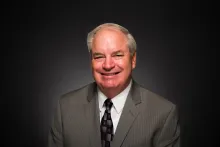
Robin Webber was born in Chicago, Illinois, in 1951, but has lived most of his life in California. He has been a part of the Church of God community since 1963. He attended Ambassador College in Pasadena from 1969-1973. He majored in theology and history.
Mr. Webber's interest remains in the study of history, socio-economics and literature. Over the years, he has offered his services to museums as a docent to share his enthusiasm and passions regarding these areas of expertise.
When time permits, he loves to go mountain biking on nearby ranch land and meet his wife as she hikes toward him.
