
Mario Seiglie
Mount Moriah is where Abraham was to sacrifice his only son, Issac; where his faith was tested by God. Years later, God had His Temple built on this mount by King David and Solomon, his son. With our baptism, we are similarly tested to put God first in our lives, just as Abraham did on Mt. Moriah. The history of Mt. Moriah is mentioned throughout the Old Testament, eventually becoming known as Mt. Zion. Download PPt to view in a separate tab or window.
This transcript was generated by AI and may contain errors. It is provided to assist those who may not be able to listen to the message.
And so, in this message, this is going to be part two of the significance of the most important mountain in the world. And that is Mount Moriah. In the last study, we analyzed what it has to do from Genesis, and we're going to see it goes all the way to Revelation. This one mountain, something happened that God has never forgotten, and His plan of salvation rotates around this place. And so, I'm going to go ahead and mention part one, just briefly, some of the slides that we saw the last time. And then, we'll go to part two, which is the continuation. And so, here's this mountain that many times people have never even heard of, Mount Moriah. Now, you've heard of Jerusalem or Mount Zion, but actually, Mount Moriah is what became known as Mount Zion. And it is the old name for that mountain. And so, we see here in this first slide, Abraham taking his son to this Mount Moriah, where God had said, I want you to sacrifice my son. Now, of course, Abraham adored God. He was following him, but he just couldn't reconcile how this was going to happen. He just knew that God had told him to do so. And so, finally, after three days, he pointed out Mount Moriah. Next slide. So, he climbed up with his son, left his two servants behind, his son Isaac. His son Isaac was old enough to carry the wood. He was probably around 15 years old at the time. He was a young man. He was strong. And he didn't have any idea, because Abraham did not want to tell his son until the last possible moment. And so, he took his son up to Mount Moriah. Let's continue.
And there, he bound his son and then took the knife to sacrifice him. But just before Abraham could descend with the knife, God stopped him. And he said, now I know that you are going to put me first, even your first, your most beloved son, this son of promise. But you were willing to do that. God never forgot that great gesture of willing to sacrifice his son on this mountain called Moriah. And so, after Abraham put the knife down, he saw God had placed a ram or a type of a sheep that he could take up and sacrifice. And so, they descended so happy because it wasn't one person. It was the two of them that descended, but Abraham had proven himself before God. Because the most precious thing that Abraham had was not his own life, it was his son. And so, after this gesture, God glorified that mountain and chose it because he didn't know whether Abraham was going to just run away, do whatever. He didn't. He obeyed him. And so, as a sign and symbol of that sacrifice that Abraham was willing to do, God decided to plan all of his plan of salvation around that place. And remember that everything is conditional, based on obedience. Now, Abraham didn't have to do it. God didn't obligate him. Because God doesn't want somebody to follow him because he's being forced. It's because the person has convinced himself and is willing to do it voluntarily, like Abraham did. And so, it's very similar when baptism comes up and we already have to count the cost, we have to analyze. And just like Abraham, we have to put God first in our lives. God isn't obligating anybody. That's something that's a free choice on our behalf. So, continuing, this Mount Moriah was there in the area, which would be called Jerusalem later. First, it was called Jebus because the Jebusites lived there. But this was the Mount that eventually King David conquered Jerusalem, which is the lower part there of the city. And he took over the whole area. And so then, God told David to go ahead and make him a temple, and it would be on Mount Moriah. And so, with the next slide, you can see there this area above the city. This is the uppermost area of that mountain, that Mount Moriah. And that's where he bought, David bought the area from, a Jebusite, Arana. And that's where he planned the temple to be built. And that temple was built by his son, Solomon. So, let's look at the next slide. So, you see, David built up, and his son Solomon was the one that built that first temple on Jerusalem. It was a magnificent structure, giving glory to God. It was so wonderful, it tells us in 1 Kings 7, you can read later, when Solomon dedicates it, that actually God, in a cloud, descended and filled the Holy of Holies. And that the priests had to leave because the glory of God had descended upon that place, Mount Moriah. The place where God would dwell among men, and all because Abraham was so faithful. And so, we continue with this story. Unfortunately, Israel was not faithful. God sent prophets telling him to go back to follow his laws, or there would be grievous consequences. And finally, some 400 years later, from when the temple was built, God had had enough. And so, he punished them through the Babylonians, who destroyed the temple and Jerusalem. And it would be desolate for 70 years, God said in the prophecy there in Jeremiah, that for every land Sabbath that Israel did not keep, they would be punished one year. And there were 70 land Sabbaths, which goes back to 490 years. They never had the faith to do so. Now, you think, oh, how mean, why is God this way?
If you were a farmer, and your life depended on every crop, and God said, look, if you have faith in every sixth year, I'm going to give you twice as much abundance. So you can rest, and the land can rest that seventh year. The Israelites said, no, God, we can't do it. We need the food. What happens if you don't come across? We'll all die. And they never had the faith.
And of course, we can judge the Israelites very easily. But when you're a farmer, and you don't have all this modern produce and trucks in and out, everything depended on those crops. They didn't have months and months worth of reserves. But you have to have faith, as what was brought out in the first message, about persevering and having patience, the patience of the farmer, as James tells us.
And so eventually, God said, look, you're becoming more corrupt. You're going farther and farther from my laws. And so God is the same yesterday, today, and forever. He's loving, his patience. But if you don't do your part, if you're constantly breaking his laws time and time and time again, there are going to be serious consequences. Because God is not man to shirk or to be a coward. God will apply justice and punishment when it's necessary. And so he did so. And so this beautiful temple with the city of Jerusalem was destroyed. And then Israel was led in captivity to Babylon for 70 long years.
That's where we ended the sermon last week. And so let's continue through the Bible. What happened afterwards? 70 years later, God said, I'm lifting the punishment. And so in the book of Ezra is the story of how Israel was given favor by the Persian king, Cyrus, and then Darius, his successor. And we pick up the story in Ezra, chapter 5. Let's go to Ezra, chapter 5. This is part of the Bible that we don't read very much. But again, talk about faith and patience and how the prophets told the people, you are going to build a new temple. It says in Ezra, chapter 5, verse 1, it says, then the prophet Hagai and Zechariah, the son of Edo, prophets prophesied to the Jews who were in Judah and Jerusalem in the name of the God of Israel who was over them.
So a group, probably about 20% of the Jews, 70 years later, came back. The vast majority stayed in Babylon. They were having such a good time. They were already businessmen, and it was all set up, a big city, a commercial, very much to do. But God said, look, you are not Babylonians. You are my people, and you need to come back. And about 20% came back at that time under the governor Zerubbabel, verse 2, so Zerubbabel, the son of Shillatiel and Jeshua, the son of Joseph, that rose up and began to build the house of God, which is in Jerusalem. And the prophets of God were with them, helping them.
So God was transmitting that encouragement, because they were a small remnant that came back based on faith and patience, but things were not going easy at all. Notice in chapter 6, verse 1, the enemies of Israel at that time around them, they didn't want them to rebuild the temple. Verse 1, then King Darius issued a decree, and a search was made in the archives where the treasures were stored in Babylon, because the neighbors were saying, look, these people are building Jerusalem up. Eventually, they're going to rebel from you. Don't let them do it, King. And so the Jews told the Persian king, we received permission from Cyrus, the great Persian, the first great Persian king.
And of course, Darius was decades later, so he wasn't aware of that. So he said, let's search the National Archives, just like we have in Washington. And so it says here, and at Acacia in the palace that is in the province of media, a scroll was found, and in it a record was written thus. In the first year of King Cyrus, King Cyrus issued a decree concerning the house of God at Jerusalem.
Let the house be built, the place where they offered sacrifices, and let the foundations of it be firmly laid. It's height 60 cubits, and it's width 60 cubits. So he gives all of these instructions. So here, God is intervening in church history, because this 20% of Jews, which were insignificant, part of the Persian Empire, they didn't have power, they didn't have weapons. But God intervened in the mind of the rulers. And so when Darius read the decree, remember the law of the Medes and the Persians was that once it was established by the king, it couldn't be removed or revoked.
It says, verse 13, then Tataniai, governor of the region beyond the river, Cethar Bozal and their companions, diligently did according to what King Darius had sent. So the elders of the Jews built, and they prospered through the prophesying of Haggai the prophet and Zechariah the son of Edo. And they built and finished it according to the commandment of God, the God of Israel, and according to the command of Cyrus, Darius, and Arzocerces, king of Persia. Now, the temple was finished on the third day of the month of Adar, which was in the sixth year of the reign of King Darius.
So everything in the Bible is documented. It didn't say that they just decided to do this, that the Jews were so powerful they could do it on their own. No. It says there had to be a decree from the king. And of course, anything that was written by King Cyrus, it's like the George Washington of the United States, the first president. And so it was venerated. They gave monies, they gave materials, and so they built the second temple. So let's go to the next slide.
And what happened? They built it, but it didn't really impress them very much. Especially, there were people that were probably in their 80s that had been taken to Babylon, that had seen the glory of Solomon's temple. And if you look to the right, you see that basically they just had the temple very sparsely furnished. It wasn't anything like Solomon's at that time. And so we have to pick up the narrative in the book of Haggai, which was mentioned here in Ezra. So let's go to the book of Haggai, the prophet Haggai, in chapter 2. In the story, they completed the temple. Everybody is joyous, but there's a lot of the older people that are saying, Oh, this temple is not anything like the one that we had before. And so God sends a message to the people not to be discouraged because it's a smaller temple, because it's going to be of greater importance than Solomon's temple ever was. How's that? How's that going to be accomplished? Let's look in Haggai chapter 2, in verse 1. It says, in the seventh month, on the 21st of the month, the word of the Lord came by Haggai, the prophet. Again, the Bible documenting, it's not something mythological, some legend. No, it tells you what day of the month and when it happened. Now, people were living at that time. And so if this was all fiction, people would have said, well, we were there. No, none of this came about just like when you are writing a term paper or whatever you're doing, an article, you document it and you put the date and the author of it so people can go back. This is what the Bible is very strict and very firm about documenting what it says. Notice, it says, speak now to Zerubbabel, the son of Shealtiel, governor of Judah, and to Joshua, the son of Jehozadak, the high priest, and to the remnant of the people saying, Who is left among you who saw this temple in its former glory? How many saw that temple of Solomon's?
And how do you see it now? You see the person weeping there. They were very frustrated. They were disappointed. Didn't look like anything like Solomon's. And in comparison with it, is this not in your eyes as nothing? Yet now be strong, Zerubbabel, says the Lord.
Sometimes the work of God is enormous and powerful. And then it goes into a stage where it's much smaller. People can remember great things and they look back. But it's the same God. He's working things out. Just like at that time, should they be thinking, Oh, how great it was? Boy, we had so much money and silver and gold when Solomon was in charge. No, that's what happened then. They had a job to do then, and that was back the work, back that construction of that second temple.
And God is encouraging them. He says here, Yet now be strong, Zerubbabel, says the Lord. And be strong, Joshua had to do with the priesthood. And be strong, all you people of the land, says the Lord. And work, for I am with you, says the Lord of hosts. According to the word that I covenanted with you when you came out of Egypt, so my spirit remains among you.
Do not fear, for thus says the Lord of hosts. Once more, it is a little while I will shake heaven and earth, the sea and dry land. And I will shake all nations, and they shall come to the desire of all nations. And that's talking about the Messiah and Jesus Christ at His return. He's going to shake the world. People don't think God is going to intervene. He is going to do so. And I will fill this temple with glory, says the Lord of hosts.
We're going to see that today. You're going to see a picture of that coming temple that Christ is going to build in Jerusalem, right there on Mount Moriah. There's another temple in the future that is to be built when Christ comes back. He says, verse 8, The silver is mine and the gold is mine, says the Lord of hosts. The glory of this latter temple shall be greater than the former, says the Lord of hosts.
And in this place I will give peace, says the Lord of hosts. So you see there's going to be another temple. Eventually, the one that Christ is going to set up, it's going to be continuous. It's going to rule over the world for a thousand years. Where? From Mount Moriah, where Abraham first was willing to do that sacrifice. And where God was willing to do the sacrifice of his own Son.
Because we're going to see when Christ was crucified, he was looking right at that temple. And he would have died there, except that because he took the burdens of our sins, he had to be sacrificed outside of the city. But he was looking at it straight, where Abraham was willing to sacrifice his Son, but God did not spare the knife for his own Son, who sacrificed him for all of us. So let's continue what happened.
Here, if you notice, this second temple that was built at the time of Ezra and Nehemiah, Jerusalem, in the New Testament times, a little bit before, about 30-some years before the birth of Christ, but it continued to be built. It took a hundred years for this whole complex to be built.
And can you see in the center where the temple is, and what's the name of that mount? What does it say there? Moriah, Mount Moriah. God is still remembering everything he's carrying on. And so, from what was at that time, it's called the Temple of Zerubbabel, or the second temple, King Herod duplicated and made it much larger than even Solomon's Temple at the time. And you can see where the walls were added to it. Let's go to the next slide.
Here's a comparison. To the left is Solomon's Temple. And look at the size of Herod's Temple, how he amplified Zerubbabel's Temple and made it so much greater in comparison. This was the temple that existed at the time of Jesus Christ the Messiah. When he entered it and made it more important than Solomon's Temple. As Christ said there in the New Testament, he said, there is one greater than Solomon among you.
Because he was the Word. He was God in the flesh. And he didn't enter, physically, Solomon's Temple. But he did do so with the second temple that was amplified by King Herod. Let's continue. So what happened after Jesus Christ was born? Forty days later, according to the law in Leviticus, the parents were supposed to present their son 40 days afterwards at the temple. And you remember in Luke chapter 2? Let's go there. Luke chapter 2.
Let's continue here.
It says, verse 22, Now when the days of her purification, according to the law of Moses, were completed, that's 40 days, they brought him to Jerusalem to present him to the Lord. As it is written, in the law of the Lord, every male who opens the womb shall be called holy to the Lord, and to offer a sacrifice according to what is said in the law of the Lord, a pair of turtledoves or two young pigeons. And behold, there was a man in Jerusalem whose name was Simeon, and this man was just and devout, waiting for the consolation of Israel, and the Holy Spirit was upon him.
And it had been revealed to him by the Holy Spirit that he would not see death before he had seen the Lord's Christ or the Messiah. So he came by the Spirit into the temple. So that's where Jesus, his father and mother were. And when the parents brought in the child Jesus to do for him according to the custom of the law, he took him up in his arms and blessed God.
And so here, Jesus, because of his presence, God in the flesh, the one who created the whole universe, God the Father gave the instructions, and the pre-existing Christ, known as the Word, is the one that made everything. And so now he's reduced to this small baby. He's still God, but he has become a human being.
And so he is presented to him. And that is how this second temple is greater than anything that Solomon's temple could have been. Let's continue on. Here we see three different scenes where Christ, again, has to do with the temple. The first, when he was 12 years old, that's in chapter 2, verse 41, says, His parents went to Jerusalem every year at the Feast of the Passover, still chapter 2. And when he was 12 years old, they went up to Jerusalem according to the custom of the feast.
When they had finished the days as they returned, the boy Jesus lingered behind in Jerusalem. And Joseph and his mother did not know it, but supposed him to have been in the company because it was a big group. They went a day's journey and sought him among their relatives and acquaintances. At that time, probably, there were hundreds of cousins and aunts. They all came from the area of Galilee, and the kids were there. And so they weren't too worried. Well, they were probably with Aunt Sue or Uncle Bob or whoever it is.
After a day, nobody was with them, so they got concerned. It says, but verse 45, So when they did not find him, they returned to Jerusalem seeking him. So here we have something like the movie Home Alone. Somebody was left behind. The mother is the one that's most concerned. Now it was that after three days, they found him in the temple. It took a long time.
They were worried sick. Kids weren't even being kidnapped like they were today, but they were still concerned about that. And there they found him in the temple. Another way, he brought glory to the temple at that time, sitting in the midst of the teachers, both listening to them and asking them questions. Now, 12 years old, he knew the Scriptures. He already could stump a lot of these great teachers and whatever.
He had not just been playing around. He had been studying the Scriptures. And he listened to their answers, and he had good questions to ask. And all who heard him were astonished at his understanding and answers. Of course, because the Spirit of God was all in him. It was not given with any limits. And so this is another time he was there. If you notice the picture up above, Jesus Christ, when he came to Jerusalem for that last time, he entered that area of Jerusalem, the temple area, riding on a donkey.
And again, the Messiah fulfilling all the prophecies about him. And then in the final one, if you look at the bottom picture where the circle is, that's Golgotha. And he was right there hanging and looking right at that temple in Mount Moriah. And God did not spare his only son. Let's go to Romans. When we get discouraged, when we think we can't hold on anymore, we're going through so many different trials and sufferings. We just think about what God was going through at this time. In Romans 8, verse 18, Paul, thinking about what Christ was willing to do for us, sacrificed himself, and what God the Father did.
Notice what it says, Romans 8, 18. He says, For I consider that the sufferings of this present time are not worthy to be compared with the glory which shall be revealed in us. Now, whatever we go through in this life, nothing is equal to the glory that we're going to have in the future.
And then he goes on to say in verse 31, it says, What then shall we say to these things? If God is for us, who can be against us? Is there anybody greater than God? Now, he protects us. He guides us. He's in charge. It says, He who did not spare his own Son, but delivered him up for us all, how shall he not with him also freely give us all things?
So again, we see how everything converges on that mountain, not only the Old Testament, but also in the New Testament. And there's more! Next slide. Now, what happened to that Jerusalem, which Christ said, Jerusalem, Jerusalem, how I wish you would have listened and been converted. I wanted to be like a mother hen, being able to protect you like chicks, but they refused to do so.
So, approximately 40 years after Christ was crucified, the destruction of Jerusalem came by way of the Romans. And if you ever get a chance to go to Rome, they have the Ark of Triumph of Titus, who was the general in charge of the destruction of Jerusalem at that time. And there, on the Ark, up above it, they have Roman soldiers sacking the temple of God, taking such things as the golden menorah, the silver trumpets.
And by the way, just about three or four years ago, when they were doing remodeling a bit in that Ark, they noticed there were still flecks of paint where the marble was. And so they started looking at all of them, and they were able to match the colors. So those were the colors that originally appeared in the Ark of Titus.
And so they took away, just like the first temple, the second temple, because of disobedience, rebellion, what happened to Christ, all of that thing came down at that time. Okay, now we're going to come up to our days. Let's go with the next slide. This is what the Temple Mount with Mount Moriah looks like today. And guess what? There's a wrong temple there. It's a Muslim temple. It's called the Dome of the Rock. And this is a satanic way of polluting and causing this abomination that where that Mount Moriah is, now the Muslims came over, conquered Jerusalem, and they put the Dome of the Rock, which is the Muslim temple that they have there in the 600s.
So it's been there for about 1400, I mean 1400-1500 years. But this is going to change one day. God is going to remove that because Satan knew this is a very important mountain in the plan of God. And so he put this wrong religion there. I remember in the Muslim faith, the Qur'an says that on Mount Moriah, Abraham tried to sacrifice not Isaac, but Ishmael, which is the descendant of the Arabs and the Muslims today. And so you got this rivalry between the Muslims and the Jewish, the Old Testament and the Qur'an.
And so this is one of their holy sites that they have. So this is where we're at. So what's going to happen? Okay, next slide. We see here the representation, first of all, in Solomon's day, where they had the temple area, then they have it, well, during the time also of Ezra Nehemiah.
Then it goes to Herod's temple. And then lower is the Muslim area today. The Muslims still are in charge of that mount today. Israel, yes, controls the land, but the ones who officiated are Muslims. And so you see here the same point, Mount Moriah, descending always. This is where we're at today. And then let's go to the next slide. Here is what happened in 2018, where you have Jewish priests that are setting up sacrifices next to that whaling wall, and they want to begin sacrifices.
They want to start the sacrificial system. That was four, now five years ago. They still are not given authority, but they are ready for it. They even had fire there, and they offered it in front there of the whaling wall, which is one of the sides of the retaining walls of the temple of Herod.
So we know things are getting closer and closer. Next, here we have the comparisons between Solomon's, which is in the red, then you have Herod's temple. Now, this other one on the left, the big one, are the dimensions of the temple when Jesus Christ comes back. It's going to be so much greater. This is also in Ezekiel from Ezekiel chapter 40 to 45. It describes this future temple that will be established by Jesus Christ. Let's continue. These are some representations of how that temple is going to look. When Jesus Christ comes back, the lion is going to dwell with the lamb. There won't be violence. It will be a peaceful world. People will all be able to go to Jerusalem. They will all be able to go to the temple. There won't be any racial wars. There won't be discrimination. As you see on the right side at the bottom, families are going to be able to enjoy peace and quiet. There won't be thieves. There won't be any war anymore. This is what's going to happen. This is the way Christ is going to establish that kingdom. That's Mount Moriah. Much better than it is today. A disputed area. Don't you read just about every other day, if you read the paper, people getting killed up there. It's still a scene of violence. It's not going to be that way. Those waters are going to flow and they're going to clean all the waters of the earth during the thousand year reign of Jesus Christ. Next slide. The area of Israel is going to be reorganized. So instead of having all of these different disputes, there's going to be just one king. That's Jesus Christ. The different tribes are going to be divided up in this way that you see very sequentially. In the center is going to be Jerusalem, now renewed and beautified. People are going to be able to go to the feasts of God where Jesus Christ is going to be. Let's go to Zechariah chapter 14 real quickly. I like to document what I say with the Bible and then ask you, is this the truth or not? Zechariah chapter 14. Look in your Bible. This is where it tells you the truth.
It says here in verse 1, it says, Behold, the day of the Lord is coming and your spoil will be divided in the midst, for I will gather all nations to battle against Jerusalem. That's going to happen in the future. The city shall be taken, the houses rifled, and the women ravished. Half of the city shall go into captivity, but the remnant of the people shall not be cut off from the city. Then the Lord will go forth and fight against those nations as he fights in the day of battle. In that day, his feet will stand on the Mount of Olives, which faces Jerusalem on the east. Here it tells us where Christ is going to land when he comes down from heaven. It's going to be in the same place from the Mount of Olives where he was raised up there in Acts chapter 1, where he was taken up into heaven. This is now the continuation, and it says here in verse 9, And the Lord shall be king over all the earth. In that day it shall be, the Lord is one, and his name one. We're not going to have rival religions. We're not going to have all these different types of beliefs. It's going to be one king, one religion. And what will happen? Notice what it says.
In verse 16, And it shall come to pass, that everyone who is left of all the nations which came against Jerusalem. This is at the end time. In Armageddon, all the people that survive all of that shall go up from year to year to worship the king, the Lord of hosts. That's Jesus Christ, and to keep the Feast of Tabernacles. So you see, everything is being organized so that we can have millions of people there when Jesus Christ is there. He will be in charge of the services. We will all be able to hear him.
And it says, And it shall be that whichever of the families of the earth do not come up to Jerusalem to worship the king, the Lord of hosts, on them there will be no rain. Christ will punish them with a complete drought until they repent and begin obeying God. Let's continue. And so, after the thousand years, after the different periods of judgment, then God the Father is going to come down from heaven, and he's going to bring what? The New Jerusalem. Because he has not forgotten what Abraham did. It's still special in his plan of salvation. And so, he's going to bring that New Jerusalem down here on a renewed, and the earth is going to be purified of all the sins of mankind. All of that will disappear, but God is going to place his headquarters here on this earth. And so, that's the last of the story of Mount Moriah. Let's go one final slide. And so, now we're inside the new temple, the new area where God the Father and Jesus Christ dwell and reign. And one day we're going to be able to be there. God willing, that's what we are running the race of faith to be there at that coming time, and that New Jerusalem that harks back to that faith that Abraham showed, and that we are children of Abraham's faith. It requires that same faith so that one day will be before our God and Father, and Jesus Christ, our elder brother, and Savior. That's the significance of Mount Moriah.
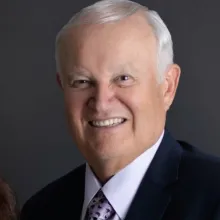
Mr. Seiglie was born in Havana, Cuba, and came to the United States when he was a child. He found out about the Church when he was 17 from a Church member in high school. He went to Ambassador College in Big Sandy, Texas, and in Pasadena, California, graduating with degrees in theology and Spanish. He serves as the pastor of the Garden Grove, CA UCG congregation and serves in the Spanish speaking areas of South America. He also writes for the Beyond Today magazine and currently serves on the UCG Council of Elders. He and his wife, Caty, have four grown daughters, and grandchildren.
