
Mario Seiglie
This transcript was generated by AI and may contain errors. It is provided to assist those who may not be able to listen to the message.
Alright, brethren, we're ready for the main message. Just as a several-course meal, usually you have the sermonette. That's the first course, and then announcements. It's a little lighter, and then you have the meat and potatoes today. So if you like that, hopefully it'll be substantial and very fulfilling. As you know, the fall feasts are coming up. They are what we should primarily focus on to prepare for them. We can become so wrapped up in the things of this world, all the news that's multiplying, it seems daily. All of those things are passing, but the feasts of God will continue long after these other physical, local, national, international things pass. I'm not saying they are not important to stay up with them, but preparing for the feast is far more important. Notice what it tells us in 1 John 2, verses 15 through 17. 1 John 2, verses 15 through 17. I'm going to read it in a contemporary version. It makes it a little clearer than the King James. This is from the Passion Translation. It says, Don't set the affections of your heart on this world, or in loving the things of the world. In other words, talk about the false values. Then it defines it. It says, The love of the Father and the love of the world are incompatible, for all that the world can offer us, the gratification of our flesh, the allurement of the things of the world, and the obsession with status and importance. None of these things come from the Father, but from the world. This world and its desires are in the process of passing away. But those who love to do the will of God live forever. So what are you going to put first? Notice in 1 Peter 1, verse 22, we read about the same concept. 1 Peter 1, verse 22. It says, Since you have purified your souls in obeying the truth, this is the way you purify yourselves, putting in practice the truth of God, through the Spirit, which is in a person, in sincere love of the brethren, love one another fervently with a pure heart. So that's something that we do when we fellowship together, when we are concerned about everyone in a very sincere way, not to gain any service or gain any benefit from it.
You're actually doing it to serve others, not for your own benefit. He goes on to say, Having been born again, not of corruptible seed, but incorruptible, through the word of God, which lives and abides forever, because all flesh is as grass, and all the glory of man is the flower of the grass. The grass withers, and its flower falls away, but the word of the Lord endures forever. So we know what we find in Scripture. Those are the principles that are going to outlast any of the false values of this present world. Let's go to Matthew 13.
I thought this was an interesting discovery this week. Matthew 13, in verse 22, talking about the different seeds that are in different soils. It says in verse 22, Now he who received seed among the thorns, talking about a person's coming to the knowledge of the truth, is he who bears the word. So he is initially converted. He's developing. It says, And the cares of this world, and the deceitfulness of riches, choke the word, and he becomes unfruitful. It's interesting, in two different translations, the revised standard version says, instead of the deceitfulness of riches, it talks about the delight of riches. And that struck me when I saw that. The delight of riches. A person can delight in it so much, he can just get himself so absorbed, because riches provides power, security, comfort, so many things that are not evil in themselves. But you can just use that then and say, you know, this is my central purpose.
I really enjoy just the delight of riches. The other translation in God's word translation says, the deceitful pleasures of riches. So yes, they can be pleasurable, but there's this deceit that it can wrap and absorb the person to the point where they will leave God in second place. It doesn't necessarily mean they completely obstruct or eliminate, but they're just so enthralled with this, oh, I'm making money. Look at all these riches. Look at all of this, and I need to keep it up, and I'm really doing great with this. And then slowly the spiritual life is choked by that.
So these things, as the feasts come along, are important to take into consideration.
And talking about the Feast of Tabernacles, did you know one of the prophets in the Old Testament spoke more about the Feast of Tabernacles than any other, and how it symbolized the kingdom of God and that coming millennium. Who was he? When did he live?
Why was he inspired to speak so much about the Feast of Tabernacles and the kingdom of God?
We will get to know him a lot better today and appreciate more the message that God gave through him. Who was he? Okay, I'm going to leave it up here. Who do you think it is?
Isaiah, that's a good choice, but it's not exactly... there's one more. Anyone else?
Yes, Zechariah. He's a pretty unknown fellow. Now Isaiah had a whole book with many different subjects, but Zechariah was given these messages about the coming kingdom of God and the importance of keeping the Feast of Tabernacles like no other place that we can find in Scripture. Who was he? Well, first of all, the name Zechariah means the eternal remembers.
And many times some of these names are prophetic because Zechariah helped Israel remember God and that God acted. He remembered Israel.
He was the grandson of a famous prophet and priest called Edo.
In Zechariah chapter one, let's go there, Zechariah chapter one.
It says in verse one, in the eighth month of the second year of Darius. Darius is known in history as Darius II.
He was one of the ruling kings of the Persian Empire. You had Cyrus, you had Darius I, and then you had Darius II. So in the second year of Darius' reign, the word of the Lord came to Zechariah, the son of Barakiah, the son of Edo, the prophet. So it just says that his grandfather was a prophet of God. Where do we find that in Scripture? Let's go here to Nehemiah chapter 12. You have to go back a bit in the books. Nehemiah chapter 12 in verse four. It says, these are the priests and Levites, verse one, who came up with Zerubbabel, the son of Shatiel and Jeshua, others. And notice here in verse four, and it says, Edo.
He was one of the priests and Levites who came up. But what about him being called a prophet? Well, we also find that in Scripture. Let's go to 2 Chronicles chapter 9 verse 29. 2 Chronicles chapter 9 in verse 29.
It says, Now the rest of the Acts of Solomon, first and last, are they not written in the book of Nathan, the prophet, and the prophecy of Ahijah, the Shillanite, and in the visions of Edo, the seer concerning Jeroboam, the son of Nebed. So here we have Edo, who was a very prominent priest. And Zechariah, his grandson, was chosen by God to deliver messages and actually to write one of the books of the Bible. This shows how God loves to work through families, especially when the children allow it to be the case. It's hard for various generations to continue the faith of their ancestors, but we have this young man, Zechariah, who came down with his grandfather and his father to Jerusalem to establish Judea, because they had been in Babylon during that long 70-year period. And Zechariah, God used them powerfully to deliver this message.
Now, he was a young man, so people questioned him several times in the book. He says, when you see this fulfill, you will know that the Lord sent me. So there were people that were doubting him, but he just went on and carried out his job. It wasn't pleasant, it wasn't easy, but he carried it out. Now, in the church, it's always wonderful when you have first generation, second generation, and even a third generation that can continue serving God and doing their job. I'll just mention here, we have the Thomases, and we have the grandfather of Graham, who was a church elder. We have Joel, and now we have Graham Thomas helping us in serving the church. We also have the Oppies, many of us who were in Ambassador College in the 1970s here in Pasadena. We all knew Mr. Oppie, because he was in charge of the kitchen and food services, and we really enjoyed. And so we have Jesse here, and now we have Ben, and we have Daniel, Michael helping out in the church. So we see how young men can serve and continue the heritage of their parents and grandparents. How many more could you say? Can you raise your hands? How many are third generation? Yes, Lacey, also Linda. I was going to mention Linda Oppie.
Her grandfather was Fernando Bariga, which I worked under for a time there at the Spanish apartment. But the important thing about this is that we all have a heritage to sustain, and don't take it for granted when you've come down and you are holding up that torch of truth, and that your ancestors expected you to do that. What if Zechariah would have said, well, I'm having a great time here in Babylon. It's a lot better than going into this dry area of Jerusalem and all of the enemies and all these things. But Zechariah, he decided to go, and look how God used them. So you never know.
Just being at the right place, wanting to serve God, putting him first. So continuing on here, I wanted to mention what was the mission of Zechariah. Well, we find this in Ezra chapter 6 verses 13 through 15. I'll read it here. This was the purpose that he came to Jerusalem.
Of course, he had to be called by God. He was just accompanying his family, but he was an earnest and dedicated person, and God used them. It says, then at Tataniai, governor of the region beyond the river, Zethar, Bosnai, and the companions diligently did according to what the king Darius had sent. So the elders of the Jews built, and they prospered through the prophesying of Haggai, the prophet, and Zechariah, the son of Idu. Now, sometimes in the Bible, it's not actually his father, but this was the dynasty. This was an important personage. So this was the one that stood out. And it continues on, and they built and finished it, the temple, according to the commandment of the God of Israel, and according to the command of Cyrus Darius. This is the first, and our to Xerxes, king of Persia. Now, the temple was finished on the third day of the month of Adar, which was in the sixth year of the reign of Darius. So the temple, it took four years to complete from the time of Haggai and Zechariah going out and saying, this is the message from God, because the people had been derelict. They had abandoned the job. In fact, it took 21 years after they were brought back into the land in about 536 BC. This is 520 when Zechariah started his preaching, and then four years after Haggai and Zechariah got them kindled, got them going, stirred up. It's interesting that from 606 BC to 536 BC is the 70-year captivity of Israel, of Judah. This is approximate, but this is pretty much from dates.
And what I didn't know, but studying this subject was that from 586 BC, when the temple was destroyed, 70 years later it was rebuilt. So 70 years captivity, 70 years from the time the temple was destroyed to where it was built. And that's where Zechariah and Haggai were so important, because God had to stir up his people. They had gotten lackadaisical.
This is why God inspired Zechariah to encourage the people. Don't look at this small temple that they built. It wasn't inlaid with gold as Solomon had done, and all the marble and granite and all his beauty. This was a pretty small and very humble temple, the second one they built.
We've got some scriptures along that line. Notice in Zechariah chapter 4 and verse 9.
Moreover, the word of the Lord came to me saying, the hands of Zerubbabel have laid the foundation of this temple. His hands shall also finish it.
Then you will know that the Lord of hosts has sent me to you. One of the times when Zechariah said, you want to know I'm a true prophet, the temple is going to be built by Zerubbabel.
For who has despised the day of small things?
So he says a lot of people looked at that second temple and oh they ridiculed it. Oh, it's terrible looking comparison because some had actually survived those 70 years and they had seen the temple before it had been destroyed in 586 BC. And then he says, for these seven rejoice to see the plumb line in the hand of Zerubbabel. They are the eyes of the Lord which scan to and fro throughout the whole earth. God has angels specially commissioned to inform him what's going on in the world. And so they are looking and they're saying this temple is going to be built. This is very important in God's view, even more so than the people because the people really didn't know how important it was. They were doing a small work. They didn't think it was that important. It's pretty insignificant, but not to God. Notice in Haggai chapter 2, going back a little bit here, a couple of books in the Bible, Haggai chapter 2. Remember, Haggai was a contemporary of Zechariah. In verse 1, it says, in the seventh month, on the 21st of the month, the word of the Lord came to by Haggai the prophet, saying, speak now to Zerubbabel, the son of Shealtia, governor of Judah, and to Joshua, the son of Jehor Zadak, the high priest, and to the remnant of the people, those remnants that came from Babylon, saying, who is left among you who saw this temple in its former glory? And how do you see it now? In comparison with it, is this not in your eyes as nothing?
Brethren, sometimes it doesn't look like we're doing much as far as God's work is concerned. We think we're a small group, not really doing as much as we did in the past, and people can despise or belittle what is being done. And it's a reminder. God knows exactly how important the work is at any given time in history. He goes on to say, yet, verse 4, now be strong, Zerubbabel, says the Lord, and be strong, Joshua, son of Jehor Zadak, the high priest, and be strong, all you people of the land, says the Lord, and work, for I am with you, says the Lord of hosts, according to the word that I covenanted with you when you came out of Egypt. So my spirit remains among you, do not fear, for thus says the Lord of hosts, once more it is a little while.
I will shake heaven and earth, the sea and dry land, and will shake all nations, and they shall come to the desire of all nations, talking about Jesus Christ. And I will fill this temple with glory, says the Lord of hosts, the silver is mine, and the gold is mine, says the Lord of hosts. The glory of this latter temple shall be greater than the former, says the Lord of hosts, and in this place I will give peace, says the Lord of hosts. And of course, Jesus Christ never entered the first temple as far as visiting the earth, but he was there in this second temple.
It was there. It was prophesied that he would enter the temple. Many prophecies were involved with that. Now that temple that was built during Zerubbabel's time was actually amplified enormously by Herod the Great, but Herod the Great did not build that temple. He just amplified it and made it much bigger, much more decorated, but it was a renewal of it. It was an updating of it. But this is the same temple. That's why that period of Jesus Christ in historical terms is called this second temple period, because that's when he lived during that time, all the way from Zerubbabel. Notice in Matthew 24 verse 14 what the church is doing now.
Matthew 24 in verse 14.
It says, And this gospel of the kingdom will be preached in all the world as a witness to all nations, and then the end will come. We're still doing that. We have that as our main focus.
Now we have far more facilities thanks to the new media center we have. You've seen the results of that. How much better? God was opening a door. He's preparing his church for things that are going to be coming. And we have to do the work. It might not be as important as what happened 30, 40, 50 years ago. That was then. This is our job, to be doing God's work. Don't fear. Don't get discouraged. Might not seem like a lot, but you know what? That is what God is doing, just like in Zechariah's time.
And so now let's go for the rest of the message to the book of Zechariah and highlight the sections dealing with the big picture representing the Feast of Tabernacles and the coming kingdom of God. As we know, the Feast of Tabernacle best symbolizes that millennial period, the period of the kingdom of God. Each one of the feasts has a representation, and the Feast of Tabernacles is the one that represents that thousand-year rule under Jesus Christ. Let's go to Zechariah chapter 1 and verse 14. You might want to highlight this in your notes so you can put it in your Bible sometime. In verse 14, it says, So the angel who spoke with me said to me, Proclaim, saying, Thus says the Lord of hosts, I am zealous for Jerusalem and for Zion with great zeal. Remember, Zion is the mountain upon which Jerusalem has that central area where the temple was. He says, I am exceedingly angry with the nations at ease. For I was a little angry, talk about with his people, and they helped, but with evil intent. They overdid the punishment. Therefore, thus says the Lord, I am returning to Jerusalem with mercy. My house shall be built in it, says the Lord of hosts, and a surveyor's line shall be stretched out over Jerusalem. Again proclaim, saying, Thus says the Lord of hosts, my city shall again spread out through prosperity. The Lord will again comfort Zion and will again choose Jerusalem. That's what's going to happen when Christ returns.
And so Zechariah brings up that Jerusalem is very important. You know, right now, Jerusalem is in the hands of the Jews, but they still don't have a place of worship there. They don't have the sacrifices. They don't have a temple. We don't know how far that will go along, but some type of sacrifices has to begin in the future. He goes on in chapter 2 in verse 10.
He says, Sing and rejoice, O daughter of Zion. For behold, I am coming, and I will dwell in your midst, says the Lord. Many nations shall be joined to the Lord in that day, and they shall become my people, and I will dwell in your midst. Then you will know that the Lord of hosts has sent me to you. And the Lord will take possession of Judah as his inheritance in the Holy Land, and will again choose Jerusalem. Be silent, all flesh, before the Lord, for he is aroused from his holy habitation. God's going to intervene in world affairs. And again, Jerusalem is going to be so important, especially when Christ comes back and establishes his headquarters there. Notice in chapter 3, verse 8, it says, Hear, O Joshua, the high priest, you and your companions, who sit before you. For they are a wonderful sign, for behold, I am bringing forth my servant the branch, again talking about Jesus Christ when he returns. For behold, the stone that I have laid before Joshua, upon the stone are seven eyes. Behold, I will engrave its inscription, says the Lord of hosts, and I will remove the iniquity of that land in one day. In that day, says the Lord of hosts, everyone will invite his neighbor under his vine and under his victory. There will be absolutely world peace on the earth. What do those seven eyes mean? We know the Bible interprets itself.
You can leave a finger here and go to Revelation 5.6. Revelation 5.6.
It says, And I looked, and behold, in the midst of the throne, and of the four living creatures, and in the midst of the elder stood a lamb, as though it had been slain, having seven horns, and seven eyes, which are the seven spirits of God sent out into all the earth. So again, talking about Jesus Christ, and he is the head of the church, and he has these angels that inform him.
So it's talking about that witness when Christ returns. Let's go to Zechariah chapter 8, verse 7. Again, prophecy of the coming kingdom of God.
Chapter 8, verse 7, Thus says the Lord of hosts, Behold, I will save my people from the land of the east, and from the land of the west. I will bring them back, and they shall dwell in the midst of Jerusalem. They shall be my people, and I will be their God, in truth and righteousness. Thus says the Lord of hosts, Let your hands be strong, you who have been hearing in these days these words, by the mouth of the prophets, who spoke in the day of the foundation, when it was laid for the house of the Lord of hosts. Then goes on to saying, verse 20, Thus says the Lord of hosts, People shall yet come, inhabitants of many cities. The inhabitants of one city shall go to another, saying, Let us continue to go, and pray before the Lord, and seek the Lord of hosts. I myself will go also. Yes, many peoples and strong nations shall come to seek the Lord of hosts in Jerusalem, and to pray before the Lord. That's not happening, and that's not going to happen until Jesus Christ comes back. But again, it's talking about the regathering and people living in peace and having one world religion. There's not going to be any competing religions at all at that time. They will all come to worship Jesus Christ, and they're going to be able to see Him as He is a spirit being that can materialize. And so there's not going to be any questions. Who is the true God then? In chapter 9, let's see. Yeah, I wanted to read verse 23. It says, Thus says the Lord of hosts, In those days ten men from every language of the nations shall grasp the sleeve of a Jewish man, saying, Let us go with you, for we have heard that God is with you. And so it's talking about, we know salvation comes from the Jews. And in Romans chapter 2, verse 28 and 29, we can read quickly what it says about who is a true Jew before God. Romans chapter 2, in verse 28, it says, For he is not a Jew who is one outwardly, Nor is circumcision that which is outward in the flesh. But he is a Jew who is one inwardly, And circumcision is that of the heart, in the spirit, not in the letter, whose praise is not from men, but from God. Later on in Romans 11, it talks about the olive tree and how the Gentiles have been grafted in. So we become part of the Jewish tradition as part of Israel. And so people are going to know where the true religion descends from.
It descends from Israel. Going on to chapter 9, verses 6 and 7, it says, A mixed race, talking about it in the future, shall settle in Ashdod, which is over there in the Philistine area of those days, and I will cut off the pride of the Philistines. I will take away the blood from his mouth because they were eating blood. They weren't following the food laws in the Bible and the abomination from between his teeth. Yes, that includes pork. It includes shellfish and all of these other foods that God calls an abomination. But he who remains, even he shall be for our God, the person who repents, is converted, and shall be like a leader in Judah, an echron like a Jebusite. Yes, they will be incorporated into that olive tree. There will be spiritual Israel.
In verse 9, this is a famous prophecy describing the first coming of Jesus Christ, but it goes on to show what Jesus Christ is going to do later.
Chapter 9, verses 9 and 10, it says, Rejoice greatly, O daughter of Zion.
These are the inhabitants that live in Jerusalem. Shout, O daughter of Jerusalem, behold, your king is coming to you. He is just and having salvation, lowly and riding on a donkey, a colt, the fall of a donkey, as Christ did in that final week. I will cut off the chariot from Ephraim and the horse from Jerusalem. The battle bow shall be cut off. He shall speak peace to the nations. His dominion shall be from sea to sea and from the river to the ends of the earth. Talking about that future, kingdom of God. Let's go to chapter 10, verses 7 through 9. Talking about the kingdom of God again, it says, Those of Ephraim shall be like a mighty man, and their heart shall rejoice as if with wine. Yes, the children shall see it and be glad.
Their heart shall rejoice in the Lord. I will whistle for them and gather them, for I will redeem them, and they shall increase as they once increased. I will sow them among the peoples, and they shall remember me in four countries. They shall live together with their children, and they shall return. So again, the regathering of God's people in the kingdom of God.
Going on to chapter 13. No, chapter 12. You know, chapter 12 and verse 8.
It says, In that day the Lord will defend the inhabitants of Jerusalem, the one who is feeble among them. In that day shall be like David, and the house of David shall be like God, like the angel of the Lord before them. This is when Christ intervenes, defeats those that have invaded that area of Jerusalem. It shall be in that day that I will seek to destroy all the nations that come against Jerusalem. So that's what happens when they gather at Armageddon, and then they come to the valley of Hinnom there in Jerusalem where God intervenes. Christ is going to destroy them. Notice in chapter 12, in verse 8, it gives us more details about this. It says, In that day, oh, no, I read that. It's chapter 13, verse 1. It says, In that day a fountain shall be opened for the house of David and for the inhabitants of Jerusalem for sin and for uncleanness. It shall be in that day, says the Lord of hosts, that I will cut off the names of the idols from the land, and they shall no longer be remembered. I will also cause the prophets and the unclean spirit to depart from the land. And so there's going to be conversions. The Jews are going to weep when they realized they did not have the right interpretations. The rabbis did not teach them the right things. They were looking for the first coming and it was actually the second coming of Christ. Notice what it says in verse 10 of chapter 12, a little previous to this. It says, And I will pour on the house of David and on the inhabitants of Jerusalem the spirit of grace and supplication. Then they will look on me, whom they pierced. Yes, they will mourn for him as one mourns for his only son and grieve for him as one grieves for a firstborn.
In that day there shall be a great mourning in Jerusalem. So they will come to the realization.
But as prophesied, not many Jews are going to be converted until that time.
Now we get to the final chapter, the most important, where it deals with the Feast of Tabernacles and the Kingdom of God in more detail than anywhere else we find in the Bible. In Zechariah 14 verse 1, it says, Behold, the day of the Lord is coming and your spoil will be divided in your midst, for I will gather all the nations to battle against Jerusalem. The city shall be taken, the houses rifled, and the women ravished. Half of the city shall go into captivity, but the remnant of the people shall not be cut off from the city. This is before Christ intervenes.
Then the Lord God will go forth and fight against those nations as he fights in the day of battle, and in that day his feet will stand on the Mount of Olives, which faces Jerusalem on the east, and the Mount of Olives shall be split from east to west, making a very large valley. Half of the mountain shall move toward the north and half of it toward the south.
So when Christ touches that Mount of Olives, there's going to be a miracle and it's just going to hollow out that big mountain area. It's going to become a valley. So here we see Christ is coming and his feet are going to land on the Mount of Olives. In Acts chapter 1, you can use it as a reference later on, where it says that he was on the Mount of Olives when he rose up, and then two angels were there and told his disciples, this same Jesus that rose up this way, he's going to come back in the same fashion.
So it means he is going to descend on the Mount of Olives, which is a confirmation of what we're hearing or reading here. Continuing on in verse 8, it says, and in that day it shall be that living water shall flow from Jerusalem, half of them toward the eastern sea and half of them toward the western sea. In both summer and winter it shall occur, and the Lord shall be king over all the earth. Very important statement. In that day it shall be the Lord is one and his name one. Not going to be Buddha.
There's not going to be any other competing religions. It's just going to be one religion with Jesus Christ reigning over the earth. Continuing on, it says, all the land shall be turned into a plane from Geba to Rimmoun, south of Jerusalem. Jerusalem shall be raised up and inhabited in her place from Benjamin's gate to the place of the first gate and the corner gate and from the tower of Hennanel to the king's winepress. Notice all the details.
This whole thing has been planned out by God. It's going to expand that area because now it becomes the headquarters of Jesus Christ, and he's going to rule there. Then there's going to be a new temple built. It goes on to say, the people shall dwell in it and no longer shall there be utter destruction, but Jerusalem shall be safely inhabited. So it will be protected during that whole thousand-year period. And this shall be the plague with which the Lord will strike all the people who fought against Jerusalem. Their flesh shall dissolve while they stand on their feet, their eyes shall dissolve. So basically they become disintegrated.
There's nothing left of them. And then we go on to verse 16, to verse 21, the most important, dealing with the Feast of Tabernacles. And it shall come to pass that everyone who has left of all the nations which came against Jerusalem shall go up from year to year to worship the King, the Lord of Hosts, and to keep the Feast of Tabernacles. So again, this is a commanded assembly from year to year during the millennium. They will all come to worship the Lord of Hosts.
And it shall be that whichever of the families of the earth do not come upon up to Jerusalem to worship the King, the Lord of Hosts. So there are going to be other nations. There's going to be races of people.
And a lot of them are fanatics about their own religions. And so there will be some initial resistance, as it says here. On those it says, on them there will be no rain. So let's see how long they last. After a month's worth of drought, then it goes on worse and worse. This is the way God will discipline them with this punishment.
If the family of Egypt, it's interesting the Egyptians today are fanatical Muslims, will not come up and enter in, they shall have no rain. They shall receive the plague with which the Lord strikes the nations who do not come up to Jerusalem and to keep the Feast of Tabernacles. This shall be the punishment. And the word here in the margin, it says sin. And in God's word translation, it says this will be the punishment for Egypt's sin and for the sin of all the nations that won't celebrate the Feast of Tabernacles or booths as they put it here.
So here it shows not keeping the Feast is a sin. Now for the world, they don't know that. They're committing these things in ignorance, but it's still a commanded assembly and Christ is going to enforce it at that time. But for those who have the knowledge, it is a great responsibility because it's telling us here that it is a sin. It's a breaking of God's law. Now, of course, this year we're going to have to keep it sometimes in our homes, but make sure you watch those services.
You can keep the Feast in your home, especially the services are going to be transmitted. You're going to have many variety of services during that day, the first day of the Feast, the last day of the Feast in particular. There are holy days, but then during that week, there are going to be transmissions. So whatever you do, it's important to be faithful.
In verse 20, it says, In that day holiness to the Lord shall be engraved on the bells of the horses, the pots in the Lord's house shall be like the bowls before the altar. Yes, every pot in Jerusalem and Judah shall be holiness to the Lord of hosts. Everyone whose sacrifices shall come. So you see, there are going to be offerings of gratefulness to Jesus Christ for what He did, and take them and cook in them. In that day there shall no longer be a Canaanite in the house of the Lord of hosts.
I thought the Bible knowledge commentary had a good description of this verse. It says, In that day holiness will characterize millennial life, whether it be in public life, in other words, the bells on the horses. Maybe we're going to have vehicles, we have bells, whatever it is, they're going to be decorated. Religious life, which it mentions the cooking pots in the Lord's house, the millennial temple, Ezekiel 40 through 43, it says, or private life.
Every pot in Jerusalem and Judah is going to be remembering God. Maybe we should have a little decoration in our homes during those days just to remember the Feast of Tabernacles.
It goes on to say, perhaps the general thought is the removal of the dichotomy between secular and sacred. In other words, there's not going to be all this divisions between religion and the state and government. No, it's all going to be under Jesus Christ. And so all of our lives are going to be dedicated and it's going to be mixed together, our secular and religious life.
He goes on to say the commentary, In the Old Testament, a Canaanite had become symbolic of anything ceremonially unclean and ungodly. Then it has here in parentheses, the dishonest merchant in Hosea 12.7 is literally in the Hebrew that Canaanite, a person that's unconverted, doesn't care about God. In the millennial temple, no such defilement will occur. Thus, Zechariah's prophetic book, which began with a call to repentance, concludes with the affirmation that all will be holy to the Lord. Because he is the Lord Almighty and the Holy One, he will establish holiness throughout the glorious millennium. Yep, we don't have to worry about dirty things and TV or movies or publications, all this stuff that just constantly bombarding us. We're not going to have any of that. It's all going to be based on God's standards and it's going to be joyful.
I remember a little bit of that when I went to Ambassador College, where you did have a little bit more of the atmosphere there. They called it God's College and it was a pleasure to be there. Not everybody followed as they should have, but I did have a taste of that kind of millennial setting for a while. It's going to be wonderful to see it completely perfected during Christ's reign.
So now we have become better acquainted with the prophet Zechariah and hopefully appreciate much more what he did and how important this book is about preparing and keeping God's feast of tabernacles and, of course, the rest of the feasts. So we have the four fall feasts coming up next Sabbath. Falls on a feast of trumpets on Monday, September 28th. It's a day of atonement, October 3rd through the 9th, the feasts of tabernacles and October the 10th, the last great day. We have seen the importance of the feasts of tabernacles before God, a symbol of that coming millennium and the kingdom of God. So let's put aside anything that distracts us and spiritually prepare for all the feasts that are fast approaching. That's what Zechariah would have done.
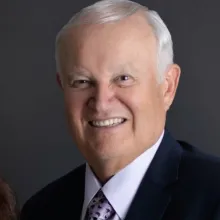
Mr. Seiglie was born in Havana, Cuba, and came to the United States when he was a child. He found out about the Church when he was 17 from a Church member in high school. He went to Ambassador College in Big Sandy, Texas, and in Pasadena, California, graduating with degrees in theology and Spanish. He serves as the pastor of the Garden Grove, CA UCG congregation and serves in the Spanish speaking areas of South America. He also writes for the Beyond Today magazine and currently serves on the UCG Council of Elders. He and his wife, Caty, have four grown daughters, and grandchildren.
