

Don Ward
This transcript was generated by AI and may contain errors. It is provided to assist those who may not be able to listen to the message.
The title of the sermon today is The Sin of Unbelief, the subtitle, The Power of Belief. The sin of unbelief, subtitle, The Power of Belief. Could you be guilty of the sin of unbelief? I submit to you that we are all guilty from time to time of the sin of unbelief. It is said that unbelief has more phases than the moon and more colors than a chameleon. Unbelief dishonors God. Every other crime touches God's territory, but unbelief aims a blow at His very being, His divinity, His godhood. It impeaches His truth, denies His goodness. It blasphemes His attributes, maligns His character. Therefore, of all things that God hates, He hates unbelief, whatever it is. Oh, you may be quick to say that you believe in God, that you believe in Christ, that you are a believer. But do you believe and claim all the promises of God? Do you really believe that God will hear and answer your prayers? I've been thinking about this for quite a long time, for years, in fact, as we see the list as referred to in the sermonette, grow of God's people around the world, and the difficulties, the trials, the many diseases, accidents, and other things that they suffer. And we wonder from time to time, at least I do, does God hear and answer prayers? Is God really with us? Sometimes you might even think that. Several days ago, I was going to do some work outside with the security lights, realigned them, and I noticed that one didn't have a bulb. And so I thought the switch was off, but I tested up and down as I realigned them. So I was very confident the switch was off. So I went and got the ladder and the bulb, and this place I was going to put the bulb was filled with spider webs. So I diddled gently, took my index finger several times, reamed it out, cleaned it out good, put the bulb in, went in the house and saw that the switch was on. And I got to thinking, well, is that just a coincidence, or did God really protect me there? Why wasn't I electrocuted? Then, last week, I was plagued by a lot of pain, especially my left arm and hand, and my neck, where I'd had this surgery because of the nerves being impinged in that area. And I'd been thinking about this thing of belief, and I just asked God to stop the pain. It was no more than a 30-second prayer, and it stopped. And it hasn't come back. Now, you might be a doubter. You may not believe, but I do. So, we want to ask ourselves, do we really believe that God will hear and answer our prayers? And do we really believe that God will heal us? And this is not to say that we shouldn't go to the doctor. This is not to say that the medical profession is of Satan, the devil. But I'm asking here spiritual questions that, in some cases, have physical implications because we're physical beings, and all we have now are physical beings in our minds, hopefully guided by God's Spirit, to manifest whatever it is that God wants us to do. It is through our physical bodies, thoughts, and actions that we can reflect the Spirit of God that is in us. The sin of unbelief, one of the greatest of all sins, as we've already mentioned, perhaps the greatest. Let's note the Bible definitions of sin. And here, I'm just using where the Bible says, is whatever it is, is sin. Let's go first of all to Proverbs 21.4. Proverbs 21 and verse 4.
And Proverbs 21 verse 4. And high look and a proud heart, and the plowing of the wicked is sin. High look, proud heart, the plowing of the wicked is sin. So here, you don't necessarily have to violate a commandment. A high look and a proud heart. But somehow, God knows about this high look and the proud heart. Probably others will discern it as well. It is not necessarily something that you commit where you would say, well, I just broke one of the Ten Commandments in a direct way, but you broke the law of God, at least is the way the Bible defines it by this. And Proverbs 24.9, forward a few pages, Proverbs 24.9, the thought of foolishness is sin. The thought of foolishness is sin. The think on, to dwell on foolish things. The Bible just says the thought of foolishness is sin, and the scourner is an abomination to men. Those who said, oh yeah, oh yeah, the gainsayers, the doubters, the yea-butters, the scourner. The scourner often becomes the cynic. Now to the New Testament in Proverbs, the New Testament in Romans 14 and verse 23. Romans 14 and verse 23.
And he that doubts is damned or judged if he eats, because he eats not of faith, for whatsoever is not of faith is sin. So all of our actions, if they are not of faith, according to this, is sin. And then in James chapter 4 and verse 17, we see another phrase of is sin, James 4 and verse 17. In James 4 verse 17, therefore to him that knows to do good, and does not to him it is sin.
I would imagine, I believe it's the case for myself, that I have committed far more sins, the sin of omission than of commission, of things that I should have done, but I did not do. You know, the Bible speaks and says that that do not withhold good from someone when it is in your power to do good.
So we have here this admonition that just clearly says that he that knows to do good and does it not, to him it is sin. And then in 1 John 3, 4, the one that we generally always focus on and talk about in the church, because over the years we have defended the law of God, and rightly so, but perhaps we should have talked a lot more about some other things as well in conjunction with that.
In 1 John 3 verse 4, whosoever commits sin transgresses also the law, for sin is the transgression of the law. Then one other place in 1 John 5 and verse 17. These are the God is or sin is. I'm sorry that sin is such and such. In 1 John 5 and verse 17, all unrighteousness is sin. Well, in Psalm 119 verse 172, the law of God is defined as righteousness. All your commandments are righteous.
So all unrighteousness is sin, and there is a sin unto death. Historically, in the church we focused on 1 John 3, 4. We're intent on letting the world know that sin is the transgression of the law, but sin is much more than just commandment breaking. Romans 14, 23 that we read clearly states that everything that does not come from faith is sin. Remember the first article of faith?
Everyone in this room should know immediately when we say, what is the first article of faith? Hebrews 11, 6. He who would come to God must first of all believe that he is and a rewarder of those who diligently seek him. So the first article of faith to believe that God is, that he rewards those who seek him. And I quote again, Proverbs 24, 1, 4. A high look and a proud heart and the plowing of the wicked is sin. Not necessarily a commandment that is listed there that is broken, per se. Proverbs 24, 9 again. The thought of foolishness is sin.
So these verses clearly show us that we can sin in far more ways than just failure to do a specific thing. In the devil's temptation of Eve, he said to her, did God say you must not eat from any tree in the garden? Of course, he might have said this in a low-whispering voice.
He whispered or insinuated, and that led to doubt in Eve's mind. And it was by means of unbelief that Eve really believed what God had said. If you eat of the tree of the knowledge of good and evil, you shall surely die. But she ate of the tree of the knowledge of good and evil, and destruction, sin came into the world.
Since that time, unbelief has been the root of nearly all the guilt. An unbeliever is capable of the vilest crime that ever was committed. Unbelief hardened the heart of Pharaoh. Unbelief of those over 20 years of age kept the Israelites who left Egypt after that first great Passover. It kept them out of the Promised Land.
You can read that in Hebrews chapter 3 and 4, that they did not enter into my rest because of unbelief. The unbelief of an apostle named Judas, and then the nation of Judah at that time, murdered the Prince of Peace. When given the choice, whom shall I release unto you? Pilate said, shall I release Barabbas, or shall I release the King of the Jews? There's one who claims to be the King of the Jews. They cry out, release unto us Barabbas, the sin of unbelief. Unbelief. It has sharpened the knife of suicide. God doesn't really care for me. It has mixed many a cup of poison and sent many to a shameful grave.
Those who have murdered themselves and others, causing untold grief and sorrow, leaving behind in their wake those who were grieving and filled with sorrow. So if you don't believe God, there's no way that you can communicate with Him. And to pray in unbelief is farcical. If you don't really believe that God is going to hear and answer your prayers, why pray?
And when we talk about belief, if you would now turn to James chapter 2. James chapter 2, we begin to get into more of the crux of what I want to try to get over to us today to think about, to become more spiritually minded, to understand more the power of belief.
In James chapter 2, verse 19, you believe that there is one God. You do well. The devils also believe and tremble. Satan and the demons believe that there is a God. The demons had several confrontations with Jesus Christ while Jesus was here on the earth during His earthly ministry. The devils believe and tremble. But will you know, O vain man, that faith without works is dead? In simplest terms, faith means to believe God, to do what He says. And this is the concrete dimension. And then James goes on to talk about Abraham, who believed God. And he took his only begotten son, the only one that was begotten through faith, and was willing to offer him up. And at the last minute, God stayed His hand. But in Abraham's mind, Isaac was as good as dead. And through faith, Abraham, through his actions, his obedience, Abraham's faith was perfected. So here is a concrete thing that Abraham was told to do. And he went to do it, and at the last minute, his hand was stayed. But there is also what I would call a spiritual dimension that is a function of the mind and heart that is to believe that God will perform what He has promised. Now, if we go back just a little ways with Abraham, remember God had promised Abraham and Sarah that they would have a son, and sometimes passed. And Sarah was not pregnant, so she suggested to Abraham that he go into Hagar, and Hagar he did, and Hagar conceived, and Ishmael was born. But this was not a faith. This was trying to work it out through the flesh. Then eventually, though, Abraham and Sarah were able to conceive, and this was a child of promise. Now, you go to Romans chapter 4. Romans chapter 4, we see the Apostle Paul briefly recounts this example with Abraham.
In Romans 4 verse 18, "...who against hope believed in hope." What does that mean? "...who against the hope of this world, both Abraham and Sarah were passed away of childbearing, the age, that he might become the father of many nations according to that which was spoken, so shall your seed be. And being not weak in faith, he considered not his own body dead, when he was about a hundred years old, and neither the deadness of Sarah's womb. He staggered not at the promise of God through unbelief, but was strong in faith or belief, giving glory to God. And being fully persuaded, though they had tried to work it out through the flesh earlier, that what he had promised, that is God, he was able also to perform, and therefore it was reckoned to his account for righteousness." Then Paul says here, "...it was not written for his sake alone that it was imputed to him, but for us also to whom it shall be imputed, if we believe..." See, once again, the title of the sermon, the sin of unbelief, the power of belief. "...if we believe on him that raised up Jesus our Lord from the dead." There is great power in belief. This spiritual dimension is the one that I would like to explore more today. It is not necessarily something that you just, well, I'm going to go and take my son up and sacrifice him or any other just direct command, but something that's in addition to that.
If you would turn to Luke 18 verse 8, I've always been intrigued by this verse here, wondering about the various ramifications of it in Luke 18 in verse 8.
"...I tell you what he will avenge them speedily. Nevertheless, when the Son of Man comes, shall he find faith on the earth?" This shows that the faith once delivered to the saints will be a rare commodity in the last days. When the Son of Man comes, shall he find faith on the earth? I know that in our prayers we pray that God's will be done, and it's almost like that is an excuse for our prayers not being answered. And of course, the sermonette addressed some of this.
We tend to follow a prescribed script. I pray and ask God for certain blessings and help and ask that God's will be done, but it seems that my situation does not change. So should we conclude that God's will for us is to plot along the same course with the same old problems? Or is there something else, another dimension maybe that we can reach out for and understand? We can fall into the trap of praying the same prayer every day, and our prayer life to some degree becomes routine, filled with vain repetitions and requests. We go through the form each day, but do we really believe that God will enter our prayers when we call for the elders of the church for them to anoint us? Do we really expect the prayer of faith, the prayer of faith that will save the sick? Or do we just go through the form and leave it there? Well, I call for the elders of the church. They'll come and know it. They'll send anointing cloth, whichever case it might be, and I've done my part. I've gone through the form. Now, these are questions that I don't claim to fully have the answers to, but I believe that we should strive to understand more deeply and to explore this. I believe that we can come to a better understanding of what it really means to believe that God will hear and answer our prayers. God does not answer prayers or perform miracles in the face of unbelief. So, I mean, that's right up front. So, if you don't believe that God will hear and answer, let's go to Mark 6. This is an amazing statement here by Jesus Christ in this context. In Mark 6, we'll read verse 1 through 6. And he went out from there and came into his own country, and his disciples followed him. And when its Sabbath day was come, he began to teach in the synagogue, and many hearing were astonished, saying, Where did this man get these things? And what wisdom is this which he gives unto us, that even such mighty works are wrought by his hands? Is not this the carpenter, the son of Mary, the brother of James and Joseph, and of Judah and Simon? And are not his sisters here with us? And they were offended at him. Oh, he just, we know him. He grew up in Nazareth along with the rest of us. Who do you think he is? And Jesus said unto them, A prophet is not without honor, but in his own country, and among his own kin, and in his own house. And he could there do no mighty work. He, Jesus Christ, the Son of God, could do no mighty work, save that he laid his hands upon a few sick and heal them. And he marveled because of their unbelief, and he went round about the villages teaching. The focus there, he could do no mighty work because of unbelief.
The sin of unbelief, the power of belief. And of course, it involves all of the various dimensions. If we're talking about the sick, we know what the Bible says to call for the elders of the church and have them to pray. And it says, if prayer of faith will save the sick, that word save means to raise him up. And if sins have been committed, they shall be forgiven him. Now sin is not the only cause of sickness, and I don't want to go into that. I'm going to give a sermon on healing, and hopefully sometime in the near future, and specifically focus on the reasons why we are sick and more. But we're not going into that right now, but sin is not the only cause of sickness. Now we go to Mark 9. It seems that there are degrees of belief, and perhaps this relates to the gifts of the Spirit. Faith is the only thing that is mentioned in 1 Corinthians 12, and then also in Galatians 5, 22, 23. Faith is a gift of the Spirit, 1 Corinthians 12, and it is a fruit of the Spirit in Galatians 5, 22, 23. Here in Mark 19 and verse 17, And one of the multitude answered, and said, Master, I have brought unto you my Son, which has a dumb spirit. So he could not hear, he could not talk. And, worse ever, he takes him, he tears him, and he phones and gnashes with his teeth and pines away, and I spoke to your disciples that they should cast him out, and they could not. He answered and said, O faithless generation, or, O generation of unbelief, because faith and belief come from the same root Hebrew word, O faithless gen... I mean, sorry, Greek word, O faithless generation, how long shall I be with you? How long shall I suffer you to bring him unto me? And they brought him unto him, and when he saw him straightway, the spirit tore him, and he fell on the ground and swallowed a foaming, and he asked his father how long is it to go since this came upon him, and he said of a child. And oftentimes it has cast him into the fire and into the waters to destroy him. But if you do anything, have compassion on us and help us. And Jesus said unto him, If you can believe, all things are possible to him that believes.
And straightway the father of the child cried out and said with tears, Lord, I believe, help you mine unbelief. And that's what we all need. We all need help in our unbelief. And trying to identify in some areas why we don't really believe.
Now, we can become so inured, so hardened by this world and the gainsayers and the doubters and the disputers and those who sit in the seat of the scornful with regard to whether or not God is really interested in us and cares for us and whether or not he will hear and answer prayer.
In verse 25, when Jesus saw that people came running together, he rebuked the foul spirit, saying unto him, You dumb and deaf spirit, I charge you, come out of him and enter no more into him. And the spirit cried out and rent him sore and came out of him. And he was as one dead. I mean, he had thoroughly just taken over this child. And when he went out, this child was like a limp, wet dishcloth. And so much that many said, he is dead. But Jesus took him by the hand and lifted him up, and he arose. And when he was coming into the house, his disciples asked him privately, Why couldn't we cast this demon out? And he said unto them, This kind can come forth by nothing but by prayer and fasting. So we get some insight here that through prayer and fasting, to the point that we are so close and in tune with God, that we believe and our prayers are answered. So closely in tune with God and Christ, and so filled with belief, doubting not, wavering not, and prayers are answered. Then we could say, well, at the same time, I've done that and my prayers are not answered. And then perhaps that is the will of God, that it not be so. And we heard the example in the sermonette where David, after he was told that his son, that he had engendered in his adulterous relationship with Bathsheba, was going to die. He fasted and prayed, and the child yet died. So, of course, we all have to pray according to the will of God, but we pray until the answer clearly is there and never give up, as in the case of the importunist widow. Another scripture that I've been intrigued by, let's turn to Acts 14, verse 8. Acts 14 and verse 8.
Paul is in Asia Minor. You see here that verse 1, a great multitude both of the Jews and also of the Greeks believed. And as he went about there doing his work, he then came down to verse 6 into Derby and Laconia, and they preached the gospel. Verse 8. There sat a certain man at Lystra impotent in his feet, being a cripple from his mother's womb, who never had walked. The same heard Paul speak, who steadfastly beholding him, and perceiving that he had faith to be healed, said with a loud voice, Stand up right on your feet, and he leaped and walked.
Does that intrigue you? What about this man? What was it about this man that caused Paul to set his gaze on him and perceive that this man has the faith to be healed?
If Jesus were here on the earth today and he passed by one of us, would he perceive that we had the faith to be healed? See, faith is not something you just work up at the last moment. It also involves a total way of life and a total way of thinking and meditating and hiding the Word of God in our hearts, as we shall see.
When it comes to being healed, it seems that the faith part is much or more the domain of the sixth person as it is the minister. I'm sure that wasn't always the case in Jesus' ministry. At least, I would think it was not always the case. But so many times, even Jesus himself said, According your faith, be it unto you. The Hebrew and Greek words for faith and belief, as I've already mentioned, are from the same root words. Faithless and unbelief are basically synonyms. Faithless and unbelief are basically synonyms. How many times would you say that the word faith appears in the Old Testament? How many times would you say? Would you say 200 times, 100 times, or just twice?
If you would turn to Deuteronomy 32, verse 20, the word faith appears twice in the King James Bible. The word faith appears twice in the Old Testament in Deuteronomy 32, verse 20. And here it is in a negative sense of not having faith. Deuteronomy 32, verse 20. And he said, I will hide my face from them. I will see that their end shall be, for they are a very froward generation, children in whom is no faith. Now, in Habakkuk chapter 2, and Paul quotes this twice in the New Testament, would turn to Habakkuk chapter 2 and verse 4. Obadiah Jonah Micah Nahum Habakkuk Habakkuk chapter 2, verse 4. Blessed, behold, his son, which is lifted up, is not upright in him. Behold, his soul, which is not upright in him, but the just shall live by his faith. Those are the two times that the word faith appears in the Old Testament. Now, the word faithfall appears 108 times. The Hebrew word amon, spelled in English, it's the same root word that you get faith and faithfall from. So, faithfall appears 108 times in the Old Testament. Let's look at two of those cases in Deuteronomy 7. Deuteronomy 7 and verse 9.
In Deuteronomy 7 verse 9, Know therefore that the Lord your God, he is God, the faithful God, amon, which keeps covenant and mercy with them that love him and keep his commandments to a thousand generations. Of course, the Bible brings out that God is always faithful. In 2 Chronicles chapter 20 and verse 20. 2 Chronicles 20 and verse 20. 2 Chronicles 20 and verse 20.
And they rose early in the morning and went forth in the wilderness of Tekoa. And as they went forth, Jehoshaphat stood and said, Hear me, O Judah, and you inhabitants of Jerusalem, believe in the Lord your God. So this word, amon, here is translated faithful and believe. Believe in the Lord your God, so shall you be established. Believe his prophets and you shall prosper. The Old Testament basically focuses on keeping the commandments and the promises of physical blessings. But when you get to the New Testament, there is indeed a transition with regard to the direction of faith and various dimensions of it. Let's look at that. In Hebrews chapter 8, under the Old Covenant, the promises were basically physical blessings, though there was a spiritual dimension as well. But we'll notice here in Hebrews 8 verse 5.
In Hebrews 8 verse 5, Who serve under the example and shadow of heavenly things, talking about the priest, as Moses was admonished of God when he was about to make the tabernacle, for he says he that you make all things according to the pattern shown to you in the mount. And that pattern that they used was the pattern of the heavenly. But now hath he that is Christ obtained a more excellent ministry. His priesthood, of course, supersedes the priesthood of Levi. The book of Hebrews compares and contrasts the elements of the Old Covenant with the elements of the New Covenant by how much also he is a mediator of a better covenant, a better covenant, which was nomotheto, that is, furnished with law upon better promises. So there are better promises with this New Covenant, and the spiritual blessings can only be received through Christ, which involves a dimension of faith and belief in Christ. Go to Galatians 3, verse 14. Galatians 3, 14.
We want to talk about now the promises and how you inherit the promises, how you receive the promises. Now, there are promises about answered prayer.
We are to pray in Christ's name, as you have heard, through his power and authority. In Galatians 3, verse 14. That the blessing of Abraham might come on the nations, the ethnos, the Gentiles, the non-Israelites, through Jesus Christ. And the ultimate blessings comes to us in the same way through Jesus Christ. You do not inherit the blessings that are promised to the people of God through your genetic, ethnic, national endowment, whatever it might be. It is through Christ, according to the Bible. Through Jesus Christ, we might receive the promise of the Spirit through faith. You will never receive the promise of the Spirit, contrary to what John Hagy or any other of the Messianic Judaizers want to talk about any other way. There is none other name given under heaven, whereby men must be saved. There's not a two-track path to salvation. That the blessing of Abraham might come on the nations through Jesus Christ. Verse 15, Brethren, I speak after the manner of men, though it be but a man's covenant, yet if it be confirmed, no man annuls or adds thereto. Now to Abraham and his seed were the promises made. And he said not unto promises, and he said not unto seeds, as a man. He said not unto seeds, as of many, but as of one, and to your seed, which is Christ. And this I say that the covenant that was confirmed before of God in Christ, the law covenant, which was 430 years after, cannot disannul that it should make the promise of non-effect. In verse 21, Is the law then against the promises of God God forbid? For if there had been a law given, which could have given life, verily righteousness should have been by the law. Now all your commandments are righteousness, and you really can't keep the spirit of the law without keeping the letter of the law. I don't know how you would do it. But at the same time, just because you keep the letter, and you don't have this dimension of faith in Jesus Christ, that won't get you there. Remember what Christ said in John 5, verses 35-38, talking to the Jews, in which He said, Search the Scriptures, in them you think you have eternal life, but you would not come unto Me that you might have life. Verse 22, But the Scripture hath concluded all under sin, that the promise by faith of Jesus Christ might be given to them that believe. But before faith came, we were kept under the law, shut up unto the faith which should afterwards be revealed. Now, of course, faith is talked about, and faith fall is used 108 times in the Old Testament. Faith flies. So that dimension of faith, obviously, is there, but to be the recipients of the promises in the ultimate sense, it is through Christ.
Verse 24, Wherefore the law was our schoolmaster, the one who brings you to school, the disciplinarian, to bring us into Christ, that we might be justified by faith. But after that faith has come, we are no longer under a schoolmaster, for we are all the children of God by faith in Christ Jesus. It is not through your physical birth, your genetic endowment, your ethnic background, which ethnic or national or racial group that you came from, for as many as us that have been baptized into Christ, that put on Christ, there is neither Jew nor Greek, there is neither bond nor free, there is neither male nor female, for you are all one in Christ. And if you be Christ, then are you Abraham's seed, and heirs according to the promise. You know, one of these days I might become a preacher. We don't have any preachers, really, in the church.
Well, I shouldn't say that. In the end. Got carried away. The faith and belief element that transcends doing the physical is difficult to explain, and seemingly difficult to comprehend. I mean, I've been trying to grasp it for decades. We know that just because we say we believe something doesn't mean that it's going to happen. But on the other hand, God asked us to ask in faith to believe that He will enter our prayers. Now, I can let's turn to James chapter one, and I mean it specifically here, nails that down. In James chapter one, in verse five. I used to raise my voice a good bit more than I do now and do a little bit of what I might call preaching. We had this older fellow in Big Sandy who came up one day after a sermon. He said, do you think that I'm deaf? He said, why are you preachers always up there hollering? He said, I can hear. You don't have to holler.
So in James one, verse five, if any of you lack wisdom, let him ask of God that gives to all men liberally and upbraids not, and it shall be given him. But let him ask in faith nothing wavering. For he that wavers is like a wave of the sea driven with the wind and toss. Let not that man think that he shall receive anything of the Lord. Double-minded. Verse eight, a double-minded man is unstable in all his ways. If you ask wavering, don't think you're going to receive anything. Well, it may be, I hope it will, believing, believing that God will hear and God will answer.
That verse or that word that's translated waver and wavering here is diacareno. I usually say diacareno, but diacareno. It means to judge, to determine, to decide a dispute, to separate oneself in a hostile spirit, to oppose, strive with, dispute, contend, be it variance with oneself, hesitate, doubt. So God says when you ask, don't hesitate, don't doubt, ask in faith. And don't think that you're going to get an answer if you ask in a wavering kind of posture. You know, the New Covenant focuses more on the spiritual mind and spiritual blessings than the Old Covenant, obviously. The New Covenant focuses on having the very mind of Jesus Christ and God the Father, believing what they say and acting in faith. And the blessings that are promised under the terms of the New Covenant are spiritual in nature when all is said and done. That is not to say no physical blessings, but as we say when we go to do funerals oftentimes, this life is not the real life. This is preparation for the life to come, that we are in training for that wonderful world tomorrow, that spiritual domain, that spiritual kingdom. Flesh and blood cannot inherit the kingdom of God. In Ephesians chapter 1, let's notice this about the heavenly or spiritual blessings. Ephesians 1 verse 1, Paul and the Apostle Jesus Christ by the will of God to the saints which are at Ephesus and to the faithful in Christ, grace be unto you and peace from God our Father and from the Lord Jesus Christ. Blessed be the God and Father of our Lord Jesus Christ, who has blessed us with all spiritual blessings in heavenly places. And it's in Christ. We are allowed to sit in heavenly places, as was read in the sermon at Hebrews 4.14 and also it's in Hebrews chapter 10, that now we can enter into the holiest of all. We can come before the very throne of God, whereas under the Old Covenant, only the high priest could enter into the holiest of all in that tabernacle made by hands once a year on the Day of Atonement. Now we can go into that heavenly place all the time. We can live in the Holy of Holies, as it were, and come before the throne of God boldly. God is blessing us with all spiritual blessings just to know the great questions of life. God exists. We know who God is, what God is, what is His purpose? We know who man is, what man is, what is His purpose? We know why we were born.
Those are blessings that you cannot measure in dollars and cents. You can't say, well, I've had a great life, all material blessings, I've had great health, I've had all of these things. You can sort of put a dollar amount on that, but to know God would be calling in His marvelous light, you can't put a dollar amount on that. Furthermore, go to Romans, please, chapter 8. He has given us, that is, God through Christ and Spirit of God in Christ, have given us the power to act in faith, given us the power to walk in the Spirit, to have the very mind of God in Christ, and as we've already noted, God and Christ are always faithful.
They are never plagued by unbelief. In Romans chapter 8, verse 1, there is therefore now no condemnation to those who are in Christ Jesus. Chapter 7, Paul talks about this warfare that's going on between the mind of the flesh and the mind of the Spirit. In verse 25 of chapter 7, he says that with the mind, he serves the law of God, the flesh, the law of sin. In other words, that battle is always there. But, 8.1, there is no condemnation to them who are in Christ Jesus who walk not after the flesh, but after the Spirit. You can be spiritually minded. We can have the mind of Christ. We can walk in the Spirit. For the law of the Spirit of life in Christ Jesus has made us free from the law of sin and death. For what the law could not do, that it was weak through the flesh, no person apart from the Spirit of God and Christ in them could walk in the Spirit in a perfect way. God sending his own Son in the likeness of sinful flesh and for sin, a redeemer, a ransom, as you heard in special music, condemned sin, judged sin in the flesh. How so? He kept the law perfectly while living in the flesh. That the righteousness of the law might be fulfilled in us who walk not after the flesh, but after the Spirit, totally in faith, totally believing, not plagued by the sin of unbelief. For they that are after the flesh, do you mind the things of the flesh, but they that are after the Spirit, the things of the Spirit, to be fleshly minded is death, but to be spiritually minded is life and peace. And note now in Galatians chapter 5. This spiritual mind bears fruit in Galatians chapter 5 and verse 16. This I say then, this is Galatians 5.16. This I say then, walk in the Spirit, and you shall not fulfill the lust of the flesh. Verse 22, the fruit of the Spirit is love, joy, peace, long-suffering, gentleness, goodness, faith. See, faith is a gift of the Spirit, a fruit of the Spirit. Make nis temperance against such, there is no law. And they that are Christ have crucified the flesh, they put it to death, with the afflictions and lust thereof. How so? By having Christ living in them through the Spirit of God, through the new mind. It doesn't mean that God and Christ do it for you, but that if you are led by the Spirit, and if you will to walk in the Spirit, you can.
They that are Christ have crucified the flesh with the affections and lust. If we live in the Spirit, let us also walk in the Spirit. Let us not be desirous of vain glory, provoking one another, or envying one another. The Four Great Enemies of Faith are identified in Matthew. I'm not going to turn to each one of these, but I'm going to mention them. The Four Great Enemies of Faith in Matthew 6, it's an anxious care. Take no anxious thought for tomorrow, sufficient is the evil of the day. In Matthew 8, it is fear. In Matthew 10, I think it is, might be 12. It is doubt. In Matthew 14, it is human reasoning. Anxious care, fear, doubt, and human reasoning. Enemies of Faith One of the main things that Satan wants to do to our minds is to make us believe that God is unfair, that he doesn't really care for us, and he wants to get us in doubt and back into unbelief, or in certain areas, unbelief. And we quench the Spirit, and we grow weak spiritually. We must believe and understand what faith is all about, and this life is all about. Let's go to Romans 8. Romans 8. Romans 8 and verse 28. I know that some people live by this verse that is their anchor verse for their lives. Romans 8, 28. And we know that all things work together for good to them that love God, to them who are called according to His purpose. For whom He did foreknow, He also did predestinate to be conformed to the image of His Son, that He might be the firstborn among many brethren. Revelation 1.5, Jesus Christ was the firstborn from the dead. Moreover, whom He did predestinate, them He also called, and whom He called, them He also justified, and whom He justified, them He also glorified. What shall we say to these things? Bottom line, if God be for us, who can be against us? He didn't even spare His only Son, as it says in verse 32, that He loved the world so much that He gave His only begotten Son. That we might be reconciled. Brethren, as we approach unleavened bread and pass over, we need to become far more spiritually minded, not be plagued by unbelief. The word spiritual appears 26 times in the New Testament. How do we become this spiritually minded person? And we have this great power of belief. A big key is given here in this song we often sing. Let's go to Psalm 119, verse 97.
Psalm 119, verse 97. Psalm 119, verse 97. O, how love thy thy law! We sing it. It is my meditation all the day. See this spiritual, this mental dimension. This soul, the mind, the spirit, and the heart is so saturated with the law of God in His way that surely you're going to believe. Romans 10, 17. Faith comes by hearing and hearing by the Word of God. You through your commandments have made me wiser than mine enemies, for they are ever with me. Because these commandments are meditation all the day. There's no question about whether or not I'm going to believe. I have more understanding than all my teachers for your testimonies are my meditation. That's what I fill my mind with all the time. I understand more than the ancients because I keep your precepts. I've refrained my feet from every evil way that I might keep your word. I've not departed from your judgments, for you have taught me how sweet are your words into my tashe sweeter than honey to my mouth. Through your precepts I get understanding, therefore I hate every false way. Sin is not going to creep in. Doubt, anxious care, fear, doubt, human reasoning. Easily cast out. The word describes the whole armor of God in Ephesians 6, verse 16. It says, Above all, take the shield of faith, whereby you'll be able to quench all the fiery darts of Satan. How is that so? Because you know and know that you know that no matter what Satan throws against you, that you are more than overcomers through Jesus Christ who loved you and gave himself for you. Your word is a lamp into my feet and a light into my path. So are we focusing and thinking on spiritual things? Is our affection set on the greater reality? The greater reality is spiritual. So we need to ask ourselves, are we thinking in the Spirit, believing in the Spirit, walking in the Spirit, praying in the Spirit, and offering up spiritual sacrifices. Belief and faith are not just products of sitting down and going over and over positive affirmations. Once again, faith comes by hearing and hearing by the Word of God. Jesus states in John 6, 63, the words I speak, they are spirit and they are life.
So I leave you today with the words, some of which were taken from a sermon by Charles Spurgeon. Charles Spurgeon was perhaps the most powerful minister in England in the 19th century. He preached for many years in the leading churches in England. Of course, he's a Protestant, and I edited it. But some of the thoughts come from him, but it does summarize I had to edit it. What we've been talking about today.
And once again, remember the title of the sermon, The Scent of Unbelief, subtitled The Power of Belief. Look at Peter. While he had faith, he walked on the waves of the sea. But suddenly there came a large wave up behind him, and he became fearful and cried out, Lord, save me! He must have thought—remember that human reasoning is one of the great enemies of faith—he must have thought, this wave will surely take me under. I'll drown. So down goes Peter. Faith was Peter's life preserver. It kept him up, but unbelief sent him under. Do you know that you and I, all our lifetime, will have to walk on water? A Christian's life is always walking on water, and every wave could swallow and devour us, but faith makes us stand. The moment you cease to believe, the moment distress comes in, and down you go, oh, why do you doubt then? Faith encourages every virtue. Unbelief murders everyone. Now listen to this. Thousands of prayers have been strangled in their infancy by unbelief. Unbelief has murdered many an infant prayer. Many songs of praise that would have swelled the clouds of the skies and also the chorus in the heavenlies.
Unbelief stifles many a noble enterprise conceived in the heart has been destroyed before it could come forth by unbelief. Many men would have stood in the gap because they were filled with unbelief. Their voices were never heard. Their would-be courage was thwarted by the sin of unbelief. Once a great man stops believing, he then becomes a weakling. Faith is like Samson's hair, but on the Christian cut it off that he is powerless. Christ states, without me, you can not do nothing. So let's cling to the vine. And press forward as we are admonished by the Apostle Paul in Hebrews 10 verses 32-39. And I summarize by saying that Paul says that if any soul turned back, or anyone turned back, God says he'll have no pleasure in them. So brethren, let's not be plagued by what so many, from the Garden of Eden to the present time in human history, have been plagued by. The sin of unbelief. And let's go forward with belief, believing that our prayers can and will be answered, and that God will deliver what he has promised.
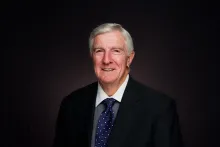
Before his retirement in 2021, Dr. Donald Ward pastored churches in Texas and Louisiana, and taught at Ambassador Bible College in Cincinnati, Ohio. He has also served as chairman of the Council of Elders of the United Church of God. He holds a BS degree; a BA in theology; a MS degree; a doctor’s degree in education from East Texas State University; and has completed 18 hours of graduate theology from SMU.
