
Don Ward
This transcript was generated by AI and may contain errors. It is provided to assist those who may not be able to listen to the message.
I ask you, could you be guilty of the sin of unbelief? I submit to you that we are all guilty of the sin of unbelief. It is said that unbelief has more phases than the moon and more colors than a chameleon. Unbelief dishonors God. Every other crime touches God's territory, but unbelief aims a blow at his divinity, impeaches the truth, denies his goodness, blasphemes his attributes, maligns his character. Therefore, God of all things hates first and foremost unbelief, whatever it is. Oh, you may be quick to say that you believe in God and Christ and that you are a believer.
But do you believe and claim all the promises of God? Do you really believe, and do I really believe, that God will hear and answer your prayers, my prayers? Do you really believe that God will heal you? That's not to say that you should not go to a doctor. This is not to say that the medical profession is an instrument of Satan the devil. I am asking spiritual questions that, in some cases, have physical implications because we are physical beings and profess to have the Spirit of God in us.
It is through our physical bodies, our thoughts, and our actions that we can reflect the Spirit of God that is in us. The sin of unbelief is, I believe, the greatest of all sins. As you have heard me quote so often in Hebrews 11.6, those who would come to God must first of all believe that He is and that He is a rewarder of those who diligently seek Him. Let's note some of the Bible definitions of sin.
Let's go to Proverbs chapter 24. Proverbs 24. In Proverbs 24 and verse 9, Proverbs 24 and verse 9, you might be surprised at some of the things that you read in the Bible that are labeled as sin. In Proverbs 24 and verse 9, the thought of foolishness is sin, and the sorcerer is an abomination to men.
Sorcery in the Bible generally refers to witchcraft, divination, to black magic, to that kind of thing that is in the paranormal area in which Satan is active and at work. It says in Revelation 1823 that through your pharma kia is the King James translation which really means sorcery. And pharma kia, of course, is the word from which you get pharmacy or drugs, and the big drug companies of the world have basically enslaved so much of humankind in which the corporations furnish the money to do the research on a drug, and then they manufacture it, and then they sell it to you, and they advertise it as being the greatest thing ever.
Just this morning, I was reading that two of the drugs for depression had been taken off the market. Well, Brouchern or Bruton is one of those, because it actually made people more depressed and more apt to commit suicide. And there are a lot of class-action suits that are being brought about it because of some of these drugs that were not really researched in the way they should be, because the same people that paid for the research to get it okayed are the same people who advertise it and reap the profits.
Now, in Proverbs 21, back a few pages in verse 4, Proverbs 21 verse 4, A high look and a proud heart, and the plowing of the wicked is sin. The tillage, the stirring of the wicked is sin. A high look, a proud heart, and the plowing of the wicked is sin. In Romans 14 verse 23, Romans 14 verse 23, we see another thing that the Bible labels as sin.
Here the Apostle Paul writing in Romans 14 and verse 23, And he that doubts is damned or judged, if he eats because he eats not of faith, for whatsoever is not of faith is sin. Now, this is somewhat difficult to deal with, because whatsoever is not of faith is sin.
Basically, we are born morally illiterate. Depending on the culture that we are reared in, we developed a knowing within which is called conscience. Our conscience says, I can't, you might say, I I'm not going to violate my conscience. I believe this in my heart, in my being, and to a large degree, your conscience is developed through the culture in which you are reared in. For some people, in some cultures, the things that you would consider to be abominable, from headhunting to many other things, you would not dare do. And then some of those cultures would not dare do some of the things that you do.
But when it comes to a spiritual conscience, the knowing within, that must come through the Spirit and the Word of God. So you may say that it doesn't violate my conscience to do X, Y, or Z, but you have to be careful to see whether or not your conscience, the knowing within, agrees with the Word of God.
In James 4 and verse 17, we have another definition of a statement on what is sin in James 4 and verse 17. James 4 verse 17, But the wisdom that is from above is first pure than peaceable, gentle, easy to be entreated, full of mercy and good fruits, without partiality or hypocrisy.
And the fruit of righteousness is sown in them that make peace. That's good. I read James 3 and 17. Now read James 4 and 17. Therefore to him that knows to do good, and does it not, to him it is sin.
He that knows to do good, and does it not, to him it is sin. We talked about that some recently, the sin of omission. And generally, for those of us in the church, especially those that have been around for a long time, probably the sin of commission is greater than that of, I mean the sin of omission is greater than that of commission.
In 1 John 3-4, the one that probably everybody here could quote, 1 John 3-4, what we consider to oftentimes the Bible definition of sin, 1 John 3-4, whosoever commits sin transgresses also the law, for sin is the transgression of the law. Of course, that is a great summary statement, and if you consider it in its total totality with regard to the spiritual intent of the Ten Commandments and the two great commandments, it would encompass perhaps things that we've already read with regard to the definition of sin. Another interesting one, 1 John 5 and verse 17. Commentators, people in the church, ministers, and others have looked at this scripture and considered it through the years and wondered what is it all about.
1 John 5-17, all unrighteousness is sin. All unrighteousness is sin. You could write Psalm 119 verse 172 in your margin because it says there that all your commandments are righteousness, and it ties in with 1 John 3-4 that sin is a transgression of the law.
All unrighteousness is sin, and there is a sin, not unto death. And there's been a great deal of discussion about what is the sin, not unto death.
Well, the wages of sin is death. The gift of God is eternal life through Jesus Christ our Lord, Romans 6, 23. So the best explanation that I can come up with with a sin, not unto death, would be, if you repent of sin, then it is forgiven, and it is removed from you as far as the east is from the west. We know that whosoever is begotten of God, sins not. He that is begotten of God keeps himself, and that wicked one touches him not. And once again, when it says, who is begotten of God, sins not, it means that he who is begotten of God does not practice sin, because no matter who you are, every person who has lived in the flesh except Jesus Christ, and even after being baptized and receiving God's Spirit, sins. And we know that we are of God, and the whole world lies in wickedness. So we see here some of the biblical definitions of sin, and our title today is The Sin of Unbelief. I submit to you it is the greatest sin, and that we're all guilty of it, and perhaps we're guilty of it far more than we ever realize. Historically, in the Church we focused on 1 John 3.4, he who commits sin transgresses also the law, for sin is the transgression of the law. We are intent on letting the world know that sin is the transgression of the law, but sin is much more than just commandment breaking in the sense of commission. Romans 14.23, that we've already read, clearly states that everything that we do that does not come from faith is sin. And we have to make sure, as we've already noted, that our conscience is in agreement with what we consider to be that which is right. Remember the first article of faith, which we've already referred to today, to believe that God exists and that He rewards those who diligently seek Him. And I quote again what we've already read. I'm quoting now Proverbs 21.4, we've already read it. A high look and a proud heart and the plowing of the wicked is sin. And Proverbs 24.9, the thought of foolishness is sin. And the scourner is an abomination to men, those who sit there and say, yeah, but did you consider that? Did you know that? And all that kind of stuff. The words of the scourner. Does God really exist? Does He really mean what He says? Do I really have to do what it says in the Bible? And what has happened? And one of the reasons why—and this is—I'm getting the car ahead of the horse, I have this later—I am very convinced that one of the reasons why we have had so many splits in the Church of God has to do with this thing of human reasoning, where we begin to reason for ourselves what God would do and what God wouldn't do and what God expects of us and what He doesn't expect of us.
In the Devil's temptation of Eve, he said to her, did God really say? So we see here, this is a seed of doubt. Remember the four great enemies of faith. They are anxious care. Take no anxious thought of the morrow, for sufficient is the evil of the day. Seek you first the kingdom of God and His righteousness, and all these things will be added to you. So, anxious care is a great enemy of faith. Then fear, then doubt, and human reasoning. And human reasoning feeds off anxious care, fear, and doubt. Did God really say, you must not eat of any tree of the garden?
He whispered and insinuated a doubt. It was by means of unbelief that sin entered.
She ate of the tree of the knowledge of good and evil.
She didn't really believe what God had said. God said in chapter 2, verses 15, 16, and 17, where He instructed the man and woman, and setting in the midst of the garden the tree of the knowledge of good and evil, and also the tree of life. If you eat of the tree of the knowledge of good and evil, in that day you will begin to die. In dying you shall die is the correct translation.
And they were as good as dead when they ate of the tree. And unless sin is repented of, everyone who sins, and all who sin, and come sure of the glory of God, according to Romans 3, 23, you're as good as dead until you repent and exercise faith in the sacrifice of Jesus Christ.
Since that time, unbelief has been the root of so much guilt. An unbeliever is capable of the vilest crime. We now have people who are eating the face off of other people, biting the ear off, or whatever it is.
So an unbeliever is capable of all kinds of horrible crimes. Unbelief hardens the heart of Pharaoh.
It is given liberty to many blaspheming tongues.
You don't go around taking God's name in vain and blaspheming the name of God if you really believe.
Unbelief has sharpened the knife of suicide. It has mixed many a cup of poison, sent many to a shameful grave.
Some have killed themselves and others, causing grief and sorrow for those who are left in the wake of it.
In no way can you communicate with God if you don't believe that God means what he says. You may have a so-called spiritual life and tune into the wavelength of the devil, but you cannot have a truly spiritual life apart from God.
Let's go to James chapter 2, back a few pages there.
James chapter 2 verse 17. In James 2 verse 17, even so faith, if it has not works, is dead, being alone. You cannot just say, I believe.
James, one of the main things that he does is he takes to task those who give lip service to the truth. In other words, intellectual assent to the truth, they believe in the intellectual sense, but they do not really believe it in their heart, in their innermost being.
Psychologists and others who are studying this now have come to more accurately see a connection between heart and mind. The Bible speaks often of the heart, and the Greek word kartia can be used for the human heart. But when the Bible speaks of kartia, it is more talking about the seed of the innermost being and belief of a person. Now, they have instruments that can even measure the aura that surrounds a person, like the electrical activity of a person. Some people, according to this, and we discussed this somewhat in our workshop here recently up in Cincinnati, that some people, the aura that they give off is just different from the aura that others give off. When they walk into the room, there's something different, and it can be, on the one hand, positive, and on the other hand, for some it can be negative. James writes here, even so faith, if it has not works, is dead being alone. You can't just have intellectual assent to the truth. It has to come from the heart, from the innermost part of your being.
Yes, a man may say, you have faith, and I have works. Show me your faith without your works, and I will show you my faith by my works.
For years, I taught general epistles, and the most practical definition of faith that I could come up with is this. Faith is to believe God and do what He says. Simple as that. To believe God and do what He says.
And the example that is given here is out of Abraham.
Verse 19, you believe that there is one God, you do well. The devils also believe and tremble, intellectual assent to the truth, but will not humble and submit and surrender themselves to God.
But will you know, O vain man, that faith without works is dead? Was not Abraham, our father, justified by works when he had offered Isaac his son upon the altar?
You could have just as easily put the word obedience there as opposed to the word works, because what he did was to obey.
When the Protestant Reformation took place, the leader of the Protestant Reformation was Martin Luther. Martin Luther came to the point where he declared that the epistle of James is a book of straw, and it is not to be considered, really, by the Protestants. Because of this, the Protestants came and still, in back of a few years ago, there was a concordant signed.
Many of the evangelicals and Catholics met. It signed a concordant in which the topic was, how does salvation come? And their conclusion was, by faith alone.
But they would eliminate this part here. Show me your faith without your works, and I'll show you my faith by my works, by my obedience. And so that aspect still predominates in nominal Christianity from the time of the Protestant Reformation to the present day. Was not Abraham, our father, justified by obedience or works when he had offered Isaac his son upon the altar? Seeing how faith wrought with his works or obedience, and by works, was faith made perfect. And the scripture was fulfilled, which said, Abraham believed God, and it was reckoned unto him for righteousness. Now, this word imputed can be misunderstood. Old King James says, imputed. It means that Abraham did what God said to do without wavering.
He believed God and did what he said to do. Abraham was in no way guilty of the sin of unbelief, and because he did that, it was reckoned to his account. If Abraham had just said, oh, I believe God, I believe God exists, but asking me to go sacrifice my only son, the son of promise, the one that was born of faith, well, that is, no one would ask you to do that. I'm not going to do it, but yet I believe in God.
But you see, just believing, you can't just believe and have that reckoned to your account.
For it to be reckoned to your account, you have to actually do it. You see then, by his obedience a man is justified and not by faith only. And by faith only it means you cannot just say, as the devil will say, I believe that God exists. Likewise also was not Rahab the harlot justified by works for obedience when she had received the messengers and had sent them out another way.
For as the body without the Spirit is dead, so faith without works for obedience is dead.
And last week we talked about obedience is inextricably linked to righteousness. Or you could say it the other way, righteousness is inextricably linked to obedience.
So the devils believe and tremble. But belief in the truest sense of the word must go beyond intellectual assent, as we see here in the case of Abraham. And once again, in simplest terms, faith means to believe God and to do what he says. And if you don't follow through with what you say you believe, then you don't really believe you're no better off than the devils. There's also what I would call a spiritual dimension that is a function of the mind and heart. That is, to believe God will perform what he has promised. So you may pray for whatever it is that you are praying for.
There's not a work or quote, an act of obedience that you can do. You have prayed, and you have prayed, and you left it there with God. But do we really believe that he is going to do what he's promised that he would do? So that spiritual dimension is one that I would like to explore more today. You know, I've always been intrigued by Luke 18.8. Let's go to Luke 18.8.
I believe that we are on the preface, I guess you could say, the threshold of coming to deeper understanding of what God would have us do from the heart and our relationship, one to another, and what it really means to say that we are a Christian, that we are members one of another, that we are linked together.
You see, if we had really understood some of these things, how could we have had so many divisions? Some people are beginning to ask the ministry around the world. There must be something wrong with us, because look at all the divisions and schisms that we have had through the years.
What's wrong with us? If we really believe that we're joined one to another, if we really are family, as you heard in the sermonette, why did God create us in the first place?
The human family. He created us so we could become a part of His family, and we're all joined together by one Spirit. When one member suffers, we all suffer. When one member is honored, we're all honored. To come to that point where we can put out the envy, the greed, the lust, the very things that cause Satan to rebel and for a third of the angels to follow Him, it is that very Spirit that needs to be rooted out. In Luke 18, I tell you that he will avenge them speedily.
Nevertheless, when the Son of Man comes, shall he find faith on the earth?
Will he find the faith on the earth? This shows that the faith once delivered to the Saints will be a rare commodity in the last days.
A lot of people say and believe, and they talk about through the various Church of God groups, that we are, quote, living in the Laodicean era. Of course, that which makes a person a Laodicean is not necessarily dependent upon what organization they're in, though some would lead you to believe that. Your mind and your spirit, your relationship with God, doesn't have to depend upon any organization or man. In fact, when we baptize people, we say, I'm now going to baptize you not into any denomination or organization of man, but into the name of the Father, the Son, and the Holy Spirit.
When the Son of Man comes, shall he find the faith on the earth?
In our prayers, we always ask that God's will be done, or most of the time, and it's almost like that is an excuse for prayers not being answered. Oh, it's not God's will.
We tend to follow a prescribed script. I pray and ask God for certain blessings and help, and ask God's will be done. But it seems my situation doesn't change, and many of us are in the same old rut praying the same prayers over and over.
And we can fall into the trap of praying the same prayer every day, and our prayer life, to some degree, becomes a routine filled with vain repetitions.
We go through the forum each day, but do we really believe that God will hear and answer our prayers when we call for the elders of the Church to anoint and pray for us? Do we really expect the prayer of faith?
If that prayer of faith will save the sick, or do we go through the forum and leave it there, almost like taking an aspirin. All I took an aspirin, headaches should be gone in a few minutes.
I suspect we have more faith in aspirin than we do in God.
And once again, I'm not saying you should not seek medical attention when it's needed. I'm not saying that at all. I hope you understand that.
You know, some of these questions that I posed here, obviously I don't have the full answer to them. I don't know completely the mind of God. Paul writes in 1 Corinthians 13 that now we see through a glass dim darkly. But when he is come, he will make known all these things that there are just so many things I'd like to have answers to. But I believe that we can come to a better understanding of what it means to really believe that God will hear and answer our prayers and to come to understand the deeper things of God so that we will not be guilty of the sin of unbelief. God does not enter prayers or perform miracles in the face of unbelief.
Let's look at Mark 6. Verse 5 and Mark 6 is quite startling. We'll start with verse 1.
And Mark 6 and verse 1. See, here's Jesus Christ himself, the great healer, the great teacher, the great minister, the son of God, God in the flesh, Mark 6.1. He went out from there and came into his own country, and his disciples followed him. When the Sabbath day was come, he began to teach in the synagogue. And many hearing him were astonished, saying, Where did he come from? From whence has this man these things? How does he know this? And what wisdom is this which is given unto him that even such mighty works were wrought by his hands? It's not this the carpenter, the son of Mary, the brother of James and Joseph, and of Judah and Simon, and are not his sisters here with us. And they were offended at him. Oh yeah, we've got to level everybody. We've got to level everybody that may have spiritual gifts or talents or abilities that we don't have. Well, isn't he the same old guy that was down there doing this? Oh yes. But Jesus said unto them, A prophet is not without honor but in his own country and among his own kin in his own house.
And he could there do no mighty work save that he laid his hands upon a few sick folk and heal them.
And he marveled because of their unbelief, and he went around about the village's teaching.
He could do no great work there because of unbelief.
Now let's look at Mark 9 verse 17. And Mark 9 verse 17.
Mark 9 verse 17. And one of the multitude answered and said, Master, I have brought unto you my son, which has a dumb spirit. In other words, this person could not speak. And, wheresoever he takes him, he tears him, and he foams and gnashes with his teeth and pines away. And I spoke to your disciples that they should cast him out, and they could not. And he answered him and said, O faithless generation, how long shall I be with you?
How long shall I suffer you to bring him unto me? And they brought him unto him, and when he saw him straightway, the spirit tear him. And he fell on the ground and wallowed foaming.
And he asked his father, how long is it ago since this came unto him? And he said of a child, the demon possessed for a long time. And this demon had just literally tormented this person, you might say, to death. And oftentimes it cast him into the fire and into the waters to destroy him. And that's what Satan is all about. And that's what unbelief will bring to those who do not believe. But if you can do anything, have compassion on us and help us. And Jesus said unto him, if you can believe, if you can believe, all things are possible to him that believes.
And straightway, the father of the child cried out and said with tears, Lord, I believe, help you mine unbelief.
That's a prayer that all of us need to pray, because we need some breakthroughs in the Church of God. We need some breakthroughs. We need some prayers answered. We need some mighty works to be done. We need people to respond to the call, to the clarion call that goes out.
Lord, I believe, help you mine unbelief. And when Jesus saw that the people came running together, he'd rebuke the foul spirit, saying unto him, you dumb and deaf spirit, I charge you, come out of him and enter no more into him. And the spirit cried out and rent him sore and came out of him.
And he was as one dead. And so many said, he is dead. But Jesus took him by his hand and lifted him up, and he arose. And when he was come into the house, his disciples asked him privately, why couldn't we cast him out? And he said unto him, this kind came forth by nothing but prayer and fasting. Of course, the key to believe to a large degree is to draw nigh to God.
And one of the ways of drawing nigh to God is through prayer and fasting, and that of reading the scriptures. The above answer by Jesus might give us some insight as to why some people believe to the point that they're healed and their prayers are answered. They are so closely in tune with God and Christ that they believe and doubt not. While at the same time others pray and their prayers are not answered. There's another scripture that I've been intrigued with. In fact, I gave a sermon down in Houston centered around this a couple of years ago. If you would turn to Acts 14 verse 8. This verse here, of course, it has a context that surrounds it. As Paul and Barnabas come to this city and they find this lame person, Acts 14, 8, and there said a certain man at Lystra impotent in his feet, being a cripple from his mother's womb who never had walked.
The same heard Paul speak who steadfastly beholding him and perceiving that he had faith to be healed.
Now here is this person who has been crippled from birth, never being able to walk.
Paul comes on the scene and he looks at him and he perceives that this person has faith to be healed.
Verse 10, he said, Will the loud voice stand upright on your feet? And he leaped and walked.
And when the people saw what Paul had done, they lifted up their voices, saying in the speech of Laconia, The gods are come down to us in the likeness of men. And they call Barnabas Jupiter and Paul Macurious because he was the chief speaker. And Paul, they wanted to worship Paul and Barnabas right there, but of course Paul told him not to. So what was there about this man that caused Paul to perceive that he had faith be healed? If Jesus were on earth today and he passed by you or I, would he perceive that we had faith to be healed, or faith to be this, that, or the other? When it comes to being healed, it seems that the faith part is much or more the domain of the sick person as it is the ministry, though the Bible does talk about in 1 Corinthians 12 the gift of healing. So how did this man with a lame feet have the faith to be healed while others do not? It's a very interesting question to consider.
The Hebrew and Greek words for faith and belief are from the same root words faithless and unbelief are basically synonyms.
How many times would you say that the word faith appears in the Old Testament? Would you say 100 times, 200 times, or twice? Answer the word faith appears twice in the Old Testament. And one of these times it is used in the negative sense. Let's go to Deuteronomy 32, verse 20.
And we're entering here upon a very important understanding and discussion.
Deuteronomy 32, verse 20.
Deuteronomy 32 is surely a chapter to be carefully studied and to try to understand because there's a lot of prophetic material in it. Deuteronomy 32 and 20. He said, I will hide my face from them. I will see what their end shall be, for they are a very froward generation, children in whom is no faith. So that's one place in the Old Testament that the word faith occurs. Now, the word to believe occurs 108 times in the Old Testament. So the words faith and believe, they are almost synonymous. Now look at Habakkuk chapter 2, verse 4. Habakkuk, this is quoted by the Apostle Paul.
Nehem Habakkuk, Habakkuk 2 and verse 4.
Habakkuk 2, 4, Behold, his soul which is lifted up is not upright in him.
That is talking about basically the beast power. But the just shall live by his faith.
So these are the two places where faith occurs in the Old Testament.
Now let's look at Deuteronomy 7, verse 9. Deuteronomy 7, verse 9.
Deuteronomy 7, verse 9. Deuteronomy 7, verse 9.
Know therefore that the eternal your God, he is a God, a faithful God.
So here's the word faithful, which keeps covenant and mercy with them that love him and keep his commandments to a thousand generations. So here the emphasis is upon believing God and keeping the commandments.
Also let's go to 2 Chronicles 20, 20. 2 Chronicles 20, 20.
2 Chronicles 20, verse 20. 2 Chronicles 20, verse 20.
And they rose early in the morning and sent forth into the wilderness of Tekoa, and as they went forth, Jehoshaphat stood and said, Hear me, O Judah, and you inhabitants of Jerusalem, believe in the Lord your God. Believe in the Lord your God.
So shall you be established. Believe his prophets. So shall you prosper.
In the Old Testament, time after time, you have 108 times in which the emphasis is on to believe God and to keep his commandments. So the Old Testament basically focuses on keeping the commandments and the promises of physical blessings. Now we go to Hebrews 8.
Remember that Hebrews is a comparison contrast the elements of the Old Covenant with the elements of the New Covenant. In Hebrews 8, Hebrews 8, verse 5, who serve under the example of Melchizedek and Jesus Christ, who serve unto the example and shadow of heavenly things as Moses was admonished of God when he was about to make the tabernacle, for C says that you make all things according to the pattern of the Lord, but now hath he obtained a more excellent ministry by how much also he is a mediator of a better covenant, which was, and here's sort of a side point, this word established is that if those who tried to make the case in 1995, well it started way back before then, but it came to a head in 1995, the year in which United began, with leading up to that, especially from 1993 to 1995, with the Gaudius booklet, the Trinitarian teaching, and then the it's all right to play golf on the Sabbath, and the Ten Commandments are done away with, and all of that. This word established here in the Greek is nomo and nomo, no most, is the great word for law, theyteo, nomo theteo, that's the Greek word for established. If you don't learn anything else today, if you just learn this, you'll be way ahead of where you was when you came in here, way ahead of where you were, not was, but anyhow, it means furnished with love, and that's what we're going to do. But anyhow, it means furnished with law, a better covenant which was furnished with law upon better promises.
For if that first covenant had been faultless, then should no place have been sought for the second. So time after time in the book of Hebrews, it shows that the calling, the promises, the priesthood, the reward, all of that is far superior. And time after time in the writings of Paul, it shows that the spiritual blessings, and we say we are here for spiritual blessings, of course we appreciate the physical blessings as well, but that which is most important, the spiritual blessings, they come through Christ. And if you don't believe in Christ, as we emphasized last week, you are going nowhere. So let's go to Galatians chapter 3.
This understanding in Galatians, we have discussed this quite a bit in our Bible studies there on Wednesdays each month, and some are now coming to understand this as never before I could call names, but I won't. And it's good to come to understand this because when it comes to the promises promised to Abraham in Genesis chapter 12, the church is so much emphasized historically.
The physical blessings that Abraham's descendants would be blessed physically.
You could have all the physical blessings as it says one place in the Gospels, what shall it profit a man if he gain the whole world and lose his own soul? So you look at Galatians 3.13.
Christ has redeemed us from the curse of the law, being made a curse for us.
For it is written, cursed is everyone that hangs on a tree.
And as we read last week from 2 Corinthians chapter 5, he who knew no sin was made sin for us.
Verse 14, that the blessings of Abraham might come upon the nations through Jesus Christ.
It is not through physical dissent.
Paul writes in Romans 9, In other words, through genetic endowment, that the blessings of Abraham might come on the nations through Jesus Christ, that we might receive the promise of the Spirit through faith, through belief. So the blessings, the promises of spiritual blessings, that which is of significance for eternal life, comes through Christ.
Continue in verse 23.
But before faith came, we were kept under the law, shut up under the faith, which should afterwards be revealed.
Wherefore, the law was our schoolmaster, our disciplinarian, to bring us unto Christ, that we might be justified by faith.
And once again, you have this abstract intellectual dimension of faith.
But then, as we've read from James 2, that if that's all you have, you don't have true faith.
That you have to have both dimensions of faith and doing what God says, obedience.
And once again, the Protestant world has brought this upon the churches now for centuries, for the peoples, and the peoples are blinded by that teaching and by Satan the devil. And many want it that way. They do not want the truth, because if they really wanted the truth, they could have the truth. But they do not want to give up what they have made up in their minds of what is acceptable and not acceptable with God.
Verse 26, For you are all the children of God by faith in Christ Jesus.
For as many as you have been baptized into Christ, have put on Christ. Therefore, there is neither Jew nor Greek, there is neither bond nor free, there is neither male nor female, for you are all one in Christ Jesus. And if you be in Christ, if you be Christ, then are you Abraham's seed and heirs according to the promise?
Brethren, that understanding I hope we all understand it.
The New Covenant focuses on the spiritual mind and spiritual blessings.
The New Covenant focuses on having the very mind of God and believing what he says and acting in faith. Notice Ephesians chapter 1.
In Galatians, just follow to page 2 or 3 or 4. In Ephesians 1, Paul, an apostle of Jesus Christ by the will of God, to the saints which are at Ephesus, and to the faithful in Christ Jesus, grace be unto you, and peace from God our Father, and from the Lord Jesus Christ. Blessed be the God and Father of our Lord Jesus Christ, who has blessed us with all spiritual blessings in heavenly places.
And that's what we want are those spiritual blessings. The faith and belief element that transcends doing the physical is difficult to explain and seemingly difficult to comprehend. I wish I had the ability to explain it more clearly, but I think we can come as time goes on as a church, as a people, to more clearly understand it. We know that just because we say we believe something doesn't mean that it's going to happen. Then you fall into the trap of the name-it-and-claim-it gospel and the prosperity gospel that so many are preaching today. The feel-good gospel, the Joel Osteen gospel. I would say that Joel Osteen at times has some very interesting things to say, but God expects us to ask in faith. Now we go back to James.
We go back to James chapter 1. The general epistles are for those who are weaned from the milk and drawn from the breast and ready for strong meat. Oh, no, they are not the elementary. They are for those who are going on to perfection, those who are going on to maturity, because there's hardly a person in this room who could say from the heart, verse 2, James 1, My brethren, count it all joy when you fall into different trials.
You heard about trials in the sermonette. Knowing this, the trying of your faith works patience, but let patience have a perfect work that you may be perfect in entire, wanting nothing. Now, what does this mean? In practical terms, it means this. That if you remain faithful with your eyes firmly fixed on Christ with the shield of faith before you, you know and know that you know that God is going to deliver you. And no matter what happens, He will deliver you. And thus, you can say, as He says here, that you may be entire, wanting nothing.
This word, entire, basically means to be made whole, to be to the point that you're just, you know that you stand and nothing can keep you from standing. And notice further, if any of you lack wisdom, let him ask of God that gives to all men liberally and upbraid not, and it shall be given him. But let him ask in faith nothing wavering, for he that wavers is like a wave of the sea driven with the wind and tossed. For let not that man think that he shall receive anything of the Lord. You've got to believe! A double-minded man is unstable in all his ways.
So there's one of the great keys to answer prayer. The Greek word that is translated wavering is diacrino. Diacrino, dia, is where you get diameter, and it has to do with all the way through judgment. All the way through judgment.
The intent of this is to tell us that if we judge ourselves or doubt whether God will answer our prayers, then we defeat the purpose of prayer in the first place. And I suspect that unbelief that we pray, but we really don't believe. But we feel well it's our duty to pray, but I really don't expect it to be answered.
I'm guilty. I suspect if I'm guilty, you are too.
The four enemies of faith, anxious care, feared out, human reason, they feed off of each other like a chain reaction. We must believe with understanding and in faith. We need to become far more spiritually minded. The word spiritual appears one time in the Old Testament.
The word spiritual appears 26 times in the New Testament. So are we focusing and thinking on spiritual things? Is our affection set on the greater reality? The greater reality is spiritual, and we must put on Christ. In our focus, in our preaching through the years, we have more focused on the negative things. Don't do this. Don't do that. I overcome this, and I do this. We need to focus on what we need to do also as opposed to what, or in conjunction with, I should say, not opposed, in conjunction with what we're not to do. Colossians chapter 3, for example.
Colossians chapter 3.
Colossians chapter 3 verse 10, "...and have put on the new man, which is renewed in knowledge after the image of him that created the image of God in Christ, where there is neither Greek nor Jew, as we read from Galatians, circumcision nor uncircumcision, that's a fleshly theme, barbarian, Scythian, bond, or free, but Christ is all and in all, put on therefore as the elect of God, holy and beloved bowels of mercies, kindness, humbleness of mind, meekness, long-suffering, forbearing one another, and forgiving one another, if any man have a quarrel against any, even as Christ forgave you, so also do you. And above all things put on agape, love, charity, which is the bond of perfectness. And let the peace of God rule in your hearts, in the which also you are called in one body, and be you thankful. Let the word of Christ dwell in you richly in all wisdom, teaching and admonishing one another in psalms and hymns and spiritual songs, singing with grace in your hearts to the Lord. And whatsoever you do, and word of deed, do all in the name of the Lord Jesus, giving thanks to God and the Father by Him. I would encourage you to read the rest of this chapter and to really focus on this chapter in the days that lie ahead.
Belief and faith are not just products of sitting down and going over and over positive affirmations. I believe, I believe, I believe. It's much deeper than that, and it is spiritual.
The apostle Paul writes in Romans 10.17, Faith comes by hearing and hearing by the word of God. Jesus says in John 6.63, The words I speak, their spirit and their life. So you put on the very mind of God in Christ through the words of God. Brother, there are no shortcuts. There are no shortcuts. So this afternoon I'm going to leave you with these words, some of which were taken from a sermon by Charles Spurgeon, and I rewrote it to a large degree, and I leave you with this.
Look at Peter. While he had faith, he walked on the waves of the sea. But suddenly there came a large wave up behind him, and he became fearful and cried out, Lord, save me! He must have thought—remember human reasoning, one of the great enemies of faith—he must have thought that wave will drown me. So down goes Peter. Faith was Peter's life preserver or belief. It kept him up, but unbelief—the sin of unbelief—sent him down.
Do you know that you and I all our lifetime will have to walk on water?
A Christian life is always walking on water, and every wave could swallow and devour us, but faith makes us stand—belief. The moment you cease to believe, that moment distress comes in, and you go down. Oh, why do you doubt?
Faith encourages every virtue. Unbelief kills everyone.
Thousands of prayers have been strangled in their infancy by unbelief.
Unbelief has murdered many an infant prayer.
Many songs of praise that would have swelled the chorus of the skies have been stifled by an unbelieving murmur. Many a noble enterprise conceived in the heart has been destroyed before it could come forth by unbelief. Many men would have boldly stood in the gap, but because they were filled with unbelief, their voices were never heard.
Their would-be courage was thwarted by the sin of unbelief.
Once a great man stops believing, he then becomes a weakling.
Faith is like Samson's hair, but on the Christian cut it off, and he is powerless.
Christ states, without me, you can do nothing.
So let's cling to the vine and press forward as we are admonished by the Apostle Paul, and we will close with this passage of Scripture. Hebrews 10, verse 22 through 39.
Hebrews 10, the brethren today, if we can fully comprehend what we are talking about here today and begin to think more about this and grow an understanding of it, I believe our lives will become richer and fuller. We will draw closer together. God will begin to hear and answer our prayers. Maybe some of the breakthroughs that we need in our lives personally and individually, and some of the breakthroughs we need collectively in the Church of God will come to pass.
Hebrews 10, verse 32. But called to remembrance the former days in which, after you were illuminated, you endured a great flight or fight of afflictions, partly while you were a gazing stock, both by reproaches and afflictions, and partly while you became companions of them that were so used. For you had compassion of me in my bonds and took joyfully the spoiling of your goods, knowing in yourselves that you have in heaven a better and enduring substance. Cast not away, therefore, your confidence, which had great recompense of reward. For you have need of patience, that after you have done the will of God you might receive the promise. For yet a little while, and he that shall come will come and will not tarry. Now the just shall live by faith. The quote from Abacah 2.4. The just shall live by faith, but if any man draw back, my soul shall have no pleasure in him. But we are not of them which draw back unto perdition, but of them that believe in the saving of the soul.
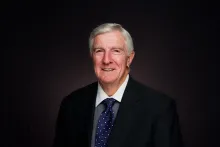
Before his retirement in 2021, Dr. Donald Ward pastored churches in Texas and Louisiana, and taught at Ambassador Bible College in Cincinnati, Ohio. He has also served as chairman of the Council of Elders of the United Church of God. He holds a BS degree; a BA in theology; a MS degree; a doctor’s degree in education from East Texas State University; and has completed 18 hours of graduate theology from SMU.
