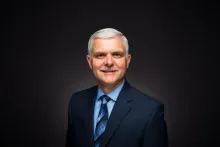

Randy Urwiller
This transcript was generated by AI and may contain errors. It is provided to assist those who may not be able to listen to the message.
Well, today I'm going to speak to you about something you may have noticed. Have you noticed that life is comprised of good times and difficult times? Have you noticed that? I think this is one of the good times. Difficult times often seem to be more than we can number. They seem to be very plentiful. And though common to all people, why is it the worst time seem to belong to us? Such as making ends meet. Times when we have illness and chronic health problems.
When we have to agonize over decisions. Some of our young people are doing that right now, agonizing about what career do they choose? What college do they go to? We agonize about choices in marriage, about family, where to live. Then, of course, eventually a day comes when we have to start thinking about retirement and what comes along after that. Difficult times can wear us down, though. Difficult times can also distract us from staying focused on God and on our calling. Now, everyone loves good times. I do. Good times always seem to be fewer in number, though. When we have enough to pay the bills and to pay the bills on time and in full, that's nice.
And when we're healthy, when aches and pains are far fewer, when all our plans finally work out, then easy street. Boy, that is the place. That is the street to be on, isn't it? And yet, I've noticed that good times can also make us complacent about life. Good times can make us complacent about the way we are. And they can also make us neglect staying focused on God and our calling. My point is this.
No matter the times of our lives, I find we must be ever vigilant about our relationship with God and of being faithful to Him. When we accept our Father's call, we commit to following Jesus Christ forever, no matter what. And in sickness and health and good times and difficult times, for as long as we shall live, we must remain faithful so that we might receive our crown and rule as kings and priests in the kingdom of God. If you try with me to 1 Thessalonians 5, these reasons are part of the reasons, I believe, the big reason why Paul writes in 1 Thessalonians 5, verses 5 through 9, this exhortation to stay awake.
He urges us and all who follow Christ to stay awake and focused on our purpose. And here, 1 Thessalonians 5, verses 5 through 9, he writes this, You are all sons of light and sons of the day.
We are not of the night nor of the darkness. Therefore, let us not sleep as others do, but let us watch and be sober. For those who sleep, sleep at night, and those who get drunk are drunk at night. But let us, who are of the day, be sober, putting on the breastplate of faith and love, and as a helmet the hope of salvation. For God did not appoint us to wrath, but to obtain salvation through our Lord Jesus Christ. Let's also look at 1 Corinthians 9, verse 24 through 27.
Paul again exhorts us here to stay focused on our purpose. At this time, he uses the analogy of a race for the prize. The prize being salvation, eternal life. And frankly, what can be a more invigorating way of staying awake than running a race? Here Paul states, 1 Corinthians 9, 24-27, he says, Do you not know that those who run any race all run, but one receives the prize?
Run in such a way that you may obtain it. And everyone who competes for the prize is temperate in all things. Now they do it to obtain a perishable crown, but we for an imperishable crown. And so Paul's point is that no matter what we face in life, again, good times, bad times, we must remain committed to our calling so that we will receive eternal life in the kingdom of God.
Now my purpose today is to encourage all of us, all of us, to stay awake, spiritually speaking, and to stay in that race for eternal life. And to illustrate the importance of not falling asleep or giving up the race, we're going to consider the life of a man who began his own race quite well, though his race was somewhat different than ours. And he did not finish his race well.
He did not stay awake. And he abandoned his race. The title of my message is, Of Sleeping, Racing, Kings, and Eternal Life. Of Sleeping, Racing, Kings, and Eternal Life. Who was that man? King Solomon. King Solomon began his race well. His mother was Bathsheba, who was dearly loved by his father, King David. And King David himself was dearly loved of God, and was called a man after God's own heart. Could you imagine being taught about fearing God and keeping his commandments by King David?
That would be pretty awesome, I think. And Solomon likely received David's very special attention, because David knew about God's future plans for Solomon. Let's turn back to 1 Chronicles 22. And we're going to be spending times in 1 Kings and over in Chronicles off and on today in my message. But 1 Chronicles 22. And here we learned that David had been told by God about a plan he had for his son, a son yet to be born, who would be named Solomon.
1 Chronicles 22, verse 9 through 13. Here's what God had told David, verse 9, Behold, a son shall be born to you, who shall be a man of rest. And I will give him rest from all his enemies all around. His name shall be Solomon. For I will give him rest from all his enemies... No, for I will give peace and quietness to Israel in his days. Verse 10, He shall build a house for my name, and he shall be my son. And I will be his father, and I will establish the throne of his kingdom over Israel forever.
And so, yes, it's interesting to note that God called Solomon for a special purpose. Solomon was called of God. And David taught Solomon that to succeed as king, he must be faithful to God. Let's look at verse 11. Now, my son, David said, May the Lord be with you, and may you prosper, and build the house of the Lord your God, as he said to you.
Only may the Lord give you wisdom and understanding, and give you charge concerning Israel, that you may keep the law of the Lord your God. Then you will prosper. That means you will succeed. If you take care to fulfill the statutes and judgments with which the Lord charged Moses concerning Israel, be strong and of good courage, do not fear nor be dismayed.
And it seems that Solomon listened to his father, and that he revered God because his reign began with God's blessing. Let's turn to 1 Chronicles 29, just to read a bit here. 1 Chronicles 29, verses 23 through 25.
We read that Solomon then sat on the throne of the Lord as king instead of David his father. After David had died.
And Solomon's throne, his kingdom prospered, we're told. It prospered, and all Israel obeyed him. All the leaders and the mighty men, and also the kings of King David, submitted themselves to King Solomon. So the Lord exalted Solomon exceedingly in the sight of all Israel, and bestowed on him such royal majesty as had not been on any king before him in Israel.
Pretty outstanding. Now, hold place in here in Chronicles, and let's turn back to 1 Kings chapter 3. In 1 Kings chapter 3, we learn that early in Solomon's reign, he offered God 1,000 burnt offerings. We're going to read about that in verse 10 through 13 of 1 Kings 3.
Solomon offered to God 1,000 burnt offerings. It was an expression of his humble and profound gratitude and his faith in God. And that night in a vision, God asked Solomon, in verse 5, he asked, What shall I give you? And Solomon's request for a wise and understanding heart, please God. And I think we remember that. But notice a little bit more here, verses 10 through 13, 1 Kings 3. In Solomon's speech, please the Lord. Please him that Solomon had asked this thing. And God said to him, Because you have asked this thing and have not asked long life for yourself, nor have asked riches for yourself, nor have asked the life of your enemies, but have asked for yourself understanding to discern judgment, justice, behold, I have done according to your words. See, I have given you a wise and understanding heart, so that there has not been anyone like you before you, nor shall any like you arise after you. And I have also given you what you have not asked, both riches and honor, so that there shall not be anyone like you among the kings all your days. And then in verse 14, God charged Solomon to follow his example's walk. He wanted him to walk like his dad. He wanted him to be faithful. And he says, verse 14, So if you walk in my ways to keep my statutes and my commandments as your father David walked, then I will lengthen your days.
And so Solomon indeed became the wisest man in all Israel, foretold. In his wisdom excelled that of Egypt, all the nations of Mesopotamia to the east. He spoke, foretold, three thousand proverbs, and one thousand five songs. Proverbs, Ecclesiastes, Song of Solomon, Song of Songs, those are most likely his best works. And he closely studied and learned from God's creation. He's almost like an early scientist, you might say. But he learned from creation the wonders of God and how glorious and powerful God is. And his renown spread to all nations, and people traveled from afar to hear him and the wisdom from God. Queen Ashiba was just one of very many.
And Solomon extended his control over surrounding kingdoms from the Euphrates all the way to the border in the south of Egypt. And indeed, Israel had peace upon all its borders. And Solomon accumulated enormous wealth. He greatly strengthened the army and his building projects were numerous and magnificent. But of course, Solomon's crowning achievement was the temple, which took him seven years to complete. And in its dedication during the Feast of Tabernacles, something truly amazing happened for all to see. Let's turn now back to 2 Chronicles chapter 5. In 2 Chronicles chapter 5, where there's something we need to also be aware of what Solomon experienced, what he saw. In 2 Chronicles 5, we learn how King Solomon and all the people had gathered there for the dedication of the temple. And while there, they are eyewitnesses of God's truly inspiring presence and power. In 2 Chronicles 5 verse 6, we read, And King Solomon and all the congregation of Israel, who were assembled with him before the ark, were sacrificing sheep and oxen that could not be counted nor numbered for the multitude. And then the priests brought in the ark of the coven of the Lord to its place, and to the inner sanctuary of the temple, to the most holy place, under the wings of the carabin. Now verse 13, And indeed it came to pass, when the trumpeters and singers were as one, to make one sound to be heard in praising and thanking the Lord. When they lifted up their voice with the trumpets and cymbals and instruments of music, and praised the Lord, saying, For he is good, and for his mercy endures forever, that the house of the Lord was filled with a cloud. So that the priests could not continue ministering because of the cloud, for the glory of the Lord filled the house of God. Could you imagine being there? Imagine the thrill they all had, Solomon 2, seeing that with their own very eyes, this incredible, astounding miracle of God's glory filling the temple. But there is more. 2 Chronicles 7. 2 Chronicles 7.
After Solomon had praised God with his heartfelt prayer of thanksgiving, a second miracle occurred. 2 Chronicles 7, verse 1, 3 through 5.
And when Solomon had finished praying, fire came down from heaven and consumed the burnt offering and the sacrifices. Imagine this huge fire. I don't know. What was it? Just fire drops down out of the sky and consumes the sacrifice right there before them all. And at the same time, while the glory of God of the Lord filled the temple, verse 3, when all the children of Israel saw how the fire came down and the glory of the Lord on the temple, they bowed their faces to the ground on the pavement and worshiped and praised the Lord, saying, For he is good for his mercy endures forever. And then the king and all the people offered sacrifices before the Lord. They were very enthusiastic. King Solomon offered a sacrifice of 22,000 bulls and 120,000 sheep. So the king and all the people dedicated the house of God. What zeal! What zeal! What fervency of faith! Especially Solomon's. And then we read in 1 Kings 9, if you still have your bookmark there, 1 Kings 9, 6 through 7, God appeared to Solomon a second time, not just once, but now a second time. And God again affirmed that he would establish Solomon's throne over all Israel forever if he would remain faithful. But this time he added a warning, 1 Kings 9, verse 6, But if you or your sons at all turn from following me, and do not keep my commandments and my statutes, which I have set before you, but go and serve other gods and worship them, then I will cut off Israel from the land which I have given them. And this house which I have consecrated for my name I will cast out of my sight. And Israel will be a proverb and a byword among all peoples. It's a great blessing to be visited twice by God, of course. But why this particular warning? Well, as we know, among the things that Solomon did, among the things that Solomon accumulated during his 40-year reign, was also an abundance of wives, specifically 700 wives and 300 concubines. Solomon apparently strengthened his kingdom through marital alliances with the daughters of other kings. But his wives turned his heart away from God. Let's read 1 Kings 11, a few pages. 1 Kings 11, verses 1 through 8.
It's as if his race is going well and suddenly something's not right. 1 Kings 11, verse 1. But King Solomon loved many foreign women as well as the daughter of Pharaoh, women of the Moabites, Ammonites, Edenites, Sidonians, and Hittites, from the nations of whom the Lord had said to the children of Israel, You shall not intermarry with them, nor they with you. Surely they will turn away your hearts after their gods. 2 But Solomon clung to these in love. Get the idea that he loved his wives more. 3 For it was so when Solomon was old that his wives turned his heart after other gods. 4 And his heart was not loyal to the Lord his God, as was the heart of his father David. 5 For Solomon went after Asteroth, the goddess of the Sidonians, and after Milcom, the abomination of the Ammonites. 6 Solomon did evil in the sight of the Lord, and did not follow fully the Lord as his father did. 7 And then Solomon built a high place for Chemosh, the abomination of Moab, on the hill that is east of Jerusalem. Of course, we know that as the Mount of Olives. 8 And he also built for Moloch the abomination of the people of Ammon. 9 And he did likewise for all his foreign wives, who burned incense and sacrificed to their gods. 9 King Solomon, the wisest man of his time, a man who had achieved such splendor and experienced such great wonders, and who had spoken with God, he turned to idol worship.
Asteroth was a Kenanite goddess of fertility, a rather tawdry goddess. Chemosh was a Moabite version of Baal, and he was known to receive human sacrifices. And Moloch, is also known as Milcom. Moloch received the sacrifice of infants, babies, and fire.
Continuing now, verse 9, quite reasonably so, the Lord became angry at Solomon. The Lord became angry at Solomon because his heart had turned from the Lord God of Israel, who had appeared to him twice, and had commanded him concerning this thing, that he should not go after other gods, but he did not keep what the Lord had commanded. And then, as the remainder of chapter 11 here tells us, after Solomon's death, God allowed his kingdom to be torn asunder. Rehoboam, his son, remained as king over Judah. Jeroboam, a servant, a one-time servant of Solomon, became king over the northern tribes of Israel.
What a contrast. The end of Solomon's life and reign is so unlike his beginning.
Every time I read this account, I just can't be struck with the sadness, the disappointment. And it's all rather heartbreaking. He had done so well. And when I think of Solomon's later years, I can't help but recall Paul's words in Galatians 5.7. And I think you know those. Galatians 5.7. You don't have to turn there, but Paul wrote and said, then, you ran well. Who hindered you from obeying the truth? Solomon, you ran well. Who hindered you from obeying the truth? Well, Solomon hindered himself by not obeying God.
Although he had great wisdom, he lacked the character to endure in practicing it to remain obedient and faithful to God. He failed to fear God and keep his commandments. Those words he wrote himself and placed in the book Ecclesiastes, Ecclesiastes 12-13, he didn't do it. But how? How could Solomon have turned from God to such hideous idolatry? Well, I suspect, just like being slowly overcome with drowsiness, only Solomon's was a spiritual drowsiness. Perhaps he slowly lost his zeal for God. He became tired. He became lazy.
He became lazy about fearing God and keeping his commandments. Maybe at first he merely tolerated the idolatry of his wives. And as he became more accustomed to it, he became more comfortable with it. Then eventually he joined in, worshiping their foreign gods, their idols.
Well, if we've ever given in to the allure of sin, it's not too difficult to imagine how Solomon turned from God. It could happen to us. It could happen to us. Now someone might say, well, what happened to Solomon couldn't happen to me because I have God's Holy Spirit. And Solomon, he only had wisdom. Well, that argument, I think, misses the point. The point is Solomon failed not because he lacked wisdom, per se. He failed because he didn't apply wisdom throughout his life. He quit doing it. He failed to practice what he did know, and he obviously knew enough that he should have kept his heart right with God to the end. Likewise, if we ultimately fail to submit to God and yield to his Holy Spirit, we may have God's Holy Spirit in us. But if we don't use it, don't study God's Word. Don't do what he says. Well, then, quite frankly, we may well not receive eternal life. Now, I'm sure that we will never have 700 wives and 300 concubines that will turn our hearts from God. As we say, it ain't going to happen.
However, what about the 700 other things in our lives that we may love more than God?
How about things like money or pride, popularity, social media? I said I was going to speak to all people. And you old people, you just watch too much social media. We all maybe do too much.
Maybe we love grudges, anger. Maybe we love conspiracy theories, gaming, gossiping, materialism, arguing, jealousy, self-righteousness, and the 687 or more other idols that can turn our hearts away from believing and obeying God, that can turn us away from building a right relationship with God.
You know, tolerating sin in our lives will put us asleep. Tolerating sins in our lives will put us out of the race for life. Our response to sin must always be to repent. Did Solomon repent?
Scripture doesn't tell us. I'd like to believe he did, but we don't know. A more important question for us to ask, though, is this. What will you and I learn from Solomon's example? That's the question to be answered. Clearly, one thing we can learn is that we must stay awake spiritually. We must take to heart Paul's exhortation. Another one. Romans 13. Romans 13 verses 11 through 14.
Romans 13, 11 through 14. Romans 13 verses 11 through 14. Paul writes, with great fervor of heart and sincerity, Paul states, and do this, and do this, meaning obey God, keep his commandments, be faithful, do this knowing the time that now it is high time to awake out of sleep. It's high time to stop being apathetic, tolerating sin, being inactive. For now our salvation is nearer than when we first believed. The night is far spent, and the day is at hand. Therefore let us cast off the works of darkness, and let us put on the armor of light. Let us walk properly, as in the day, not in revelry and drunkenness, not in lewdness and lust, not in strife and envy, but put on the Lord Jesus Christ and make no provision for the flesh to fulfill its lust. We must also do this. We must also stay in the race. We must stay in the race. As we read earlier, we must run in such a way that we may obtain the prize of eternal life. God wants for us to receive that prize so much that He gave His Son to pay our price for sin. And God also gives us the help of His Holy Spirit so that we might both have the will and the ability to do whatever it takes to remain faithful to Him. Let's be looking at that Scripture reference, Philippians 2 verses 12 through 13. But in all this, it's up to us. We must take the action and use what God has given us. He gives us everything we need to be faithful, but it's up to us to use it. Let's read Philippians 2, 12 through 13. Paul urges us to action. He says, therefore, my beloved, skip you down a bit, work out, my beloved, work out your own salvation with fear and trembling. We'll be taking this seriously. It's not a game. Work out your own salvation with fear and trembling, for it is God who works in you both to will and to do for His good pleasure. God gives us all that we need to stay awake and to stay in the race for eternal life. But the choice to avail ourselves to God's precious gifts, that's on us. That's our part.
And so, we cannot allow ourselves to turn from God like King Solomon. I think that's something we need to remember. We cannot allow ourselves to turn from God like King Solomon did. I think we realize the prize of eternal life is much too precious. Therefore, in sickness and in health, in good times and in difficult times, for as long as we shall live, let us remain faithful to God and let us remain faithful to the purpose of our calling. God is doing His part. We must be doing ours.

