
Don Ward
This transcript was generated by AI and may contain errors. It is provided to assist those who may not be able to listen to the message.
We're going to title this Relationship of Love, Relationship of Love, Grace, Faith, Repentance, Obedience, Justification, and Salvation. Now, I know you didn't get all of that. You just put down some of the key elements of salvation.
The plan of salvation was formulated before time began, or began as we marked time. Of course, we marked time according to the movements of the heavenly bodies. You read Genesis 1 and recreation week, and you'll see that God appointed the sun and moon for different things. It's amazing that people who believe in evolution can accept that the earth accidentally is tilted at 23 degrees.
It rotates on its actions, and it revolves around the sun, and you could go on and on with, how did that happen by chance? But that's another subject. So let's see passage in the scriptures that affirms the assertion that the plan of salvation was formulated before time began. We'll look at 2 Peter, not 2 Peter, but 2 Timothy. 2 Timothy 1 and verse 8. 2 Timothy 1a.
Be you not therefore ashamed of the testimony of our Lord, nor be his prisoner, but be you partaker of the afflictions of the gospel according to the power of God. And of course, those who would live godly in Christ Jesus, it says, will suffer persecution, and you will have a lot of trials.
Most people will. Now, some people don't have that many trials, but most people have a lot of trials. Who has saved us and called us with a holy calling, not according to our works, but according to his own purpose and grace, which was given us in Christ Jesus before the world began. Everybody in here will know what the Greek word for world is.
The Greek word for world is chronos. C-H-R-N-O-S is the word from which we get chronology, and it means time. In other words, before time began, as we know it, that's how ancient the plan of salvation is. Now we go to 1 Peter 1, 18. 1 Peter 1 and verse 18. In 1 Peter 1 and verse 18, For as much as we know that you were not redeemed, you were not bought back from sin and death with corruptible things, as silver and gold from your vain conversation received by tradition from your fathers, but with the precious blood of Christ, he gave his life.
He gave all he could give. You can't give more than your life. That's all you got. As of a lamb without blemish, without spot, who verily was foreordained. Foreordained is the Greek word progenosco, and it means to know beforehand. Who verily was known beforehand, before the foundation of the world, but was made manifest in these last times for you. And so a lot of good Jews, as they might say, died without ever really understanding much about Jesus Christ at all.
Then in Revelation 13 and verse 8, we see once again the ancients, the ancientness of the plan of salvation. How it was developed before time began. In Revelation, I said, I don't know what I said, but I mean 13.8. In Revelation 13 and verse 8, And all that dwell upon the earth shall worship him, whose name was not written in the book of life of the Lamb slain from the foundation of the world.
He was as good as dead before time began. That is, he being Jesus Christ. So why did God in the word create humankind? Their motivation was love. Love is the most powerful motivating force in the universe. I believe the most powerful three-word sentence of all time is, God is love. So God in the word wanted to share who and what they are in a family setting. They are co-eternal and they are co-essential. Co-essential means they are the same essence. It's not essential in the sense that you hear it thrown away today.
It's essential in the sense that that's their essence. They are spirit. So God and Christ wanted to share who and what they are in a family setting. God in the word created us and God is our Father and Jesus Christ is our brother.
Now we notice God's creative work through Jesus Christ. People will say, well, God created the world. So he did. He did it, though, through Jesus Christ. We look at John 1 and verse 1. The Gospel of John and verse 1. The Gospel of John and verse 1.
In the beginning was the Word and the Word was with God.
You see, you have three things that are being said here. In the beginning was the Word.
The Greek word there has the connotation of existence. In the beginning, the Word existed. He was, in the beginning was the Word. He existed. And the Word was with God, showing a relationship, a friendship. But at this point in time, he was not the begotten Son of God and he was not the Son of God. That relationship did not exist until later.
The same was in the beginning with God. All things were made by him. All things were made by him.
And without him was not anything made that was made. Now you quickly go to Colossians chapter 1 and verse 16. Colossians 1, 16. By him that is through Christ, all things were created that are in heaven, that are in earth, visible, invisible. Whether they be thrones, dominions, principalities, or powers, all things were created by him. And note this last phrase, and for him. You say, well, for him and he volunteers to die for the sins of the world.
Well, we cannot imagine the joy that Christ is going to experience when he sees you as a glorious, radiant spirit being in the kingdom of God. That will be a wonderful time. So God created us through Christ, and note further that we are now brothers of Christ and joint heirs with Christ. First of all, we'll look at brothers, and now we'll go to Hebrews 2 and verse 9. Hebrews 2 and verse 9. We're talking about the relationship of the Word, the One who became the begotten Son of God, who became the Son of God by resurrection.
What is His relationship to us? In Hebrews 2.8, you have put all things in subjection under His feet. For in that He put all things in subjection under Him. He loved nothing that is not put under Him. But now we see not yet all things put under Him. And of course, everybody from the man on the street to people in the Church of God are talking about when Christ comes again. Everything's going to be set in order. Well, even when Christ comes again, there's going to be quite a struggle.
Yet everybody is going in the same direction. But we see Jesus, who was made a little lower than the angels, for the suffering of death, crowned with glory and honor, that He by the grace of God will have much more to say about grace. Just put in your thinking cap right now. We will cover the Hebrew word. We'll cover the Greek word. It means divine favor.
Grace means divine favor. I know we have gone around in the Church for many years just parroting, saying, God is, grace is free forgiveness of sin. Free forgiveness. And so grace does play a role in that. But that's not what grace is in the totality. Grace is divine favor. That He by the grace of God should taste death for every man.
For it became Him for whom are all things, by whom are all things, and bringing many sons unto glory to make the captain of their salvation perfect through sufferings. For both He that sanctifies and they that are sanctified are all of one. So we are of the same essence as God and Christ. They are spirit. They are of the Holy Spirit. We are, if we have been begotten by God's Spirit, we are of that same essence. They're all of one.
For which cause?
How can you say that you're part of XYZ family? It's because the seed of the mother and the father is in you. See, the seed of God is in you.
For which cause? He's not ashamed. You call them brethren.
And so Romans 817 says that we are heirs of God, heirs of God, and joint heirs with Jesus Christ. I don't think we focus on those two scriptures nearly enough.
But the father and son relationship did not exist until Jesus was begotten by the Father through the Holy Spirit. Now, we don't talk about this generally, but if you look at Luke 1.35, you'll see how Jesus Christ was begotten, and he became the begotten Son of God. As long as he was in the flesh, he was the begotten Son of God. As long as you are in the flesh, you are the begotten Son or daughter of God. Upon resurrection, whether you are alive and remain caught up in the air or whether you are resurrected from the grave, then you become a Son of God.
In Luke 1.35, the angel is appearing to Mary and telling her that she's going to give birth to the Messiah. An angel answered and said unto her, The Holy Spirit shall come upon you, and the power of the highest shall overshadow you. The highest is God the Father. Therefore also that holy thing which shall be born of you shall be called the Son of God. Now, at this stage upon being begotten, he was still the begotten Son of God, and we'll see that as we go along. So now we go to Matthew 20 and verse 24. Matthew 20 and verse 24.
In Matthew 20 and verse 24, And when the ten heard it, I got 20 down here. I'm sorry, I want 124. Matthew 124. In Matthew 124, we're going to back up and start in verse 19. Matthew 1 verse 19.
The Joseph, her husband being a just man, see, Mary is pregnant and she's not married.
She's never known a man. She's a virgin.
And not willing to make her a public example, was minded to put her away privately.
But while he was caught on these things, behold, the angel of the Lord appeared unto him in a dream, saying, Joseph, you son of David, fear not to take unto you, Mary your wife, for that which is conceived her in her is of the Holy Spirit. So we read Luke 1 35 says, that the Holy Spirit shall come upon you, overshadow you, and you shall bring forth a son, and you shall call his name Jesus, for he shall save his people from their sins. So he's called Jesus. So we are talking about the relationship of love, grace, faith, repentance, obedience, justification, and salvation, and more in this sermon. Try to put all this together in as much of a chronological sequence as we can. You know the Bible's written in such a way that it's here a little there a little like a crossword puzzle and you are challenged to put it together.
Now all of this was done that it might be fulfilled which was spoken of the Lord by the prophet saying, and now he quotes from Isaiah 9 verse 6, Behold a virgin, so Mary had never known a man shall be with a child shall bring forth a son and they shall call his name Emmanuel, which being interpreted is God with us. Now that gives his identity that he was God in the flesh. That's a very important point. He is God in the flesh. Now he will he's also called Jesus because he's going to bring salvation. You notice in verse 21 the angel said, you'll call his name Jesus. Here it says, you shall call his name Emmanuel, which identifies him as the Son of God and continuing, then Joseph being raised from sleep did it as the angel the Lord had been in him and took unto him his wife and knew her not till she had brought forth her first born son and he called his name Jesus. So here we see that Jesus Christ was named. Now we notice this is sort of a side point but not a side point. How can that be? I don't know. But in Romans chapter 1, in Romans chapter 1, we'll see when Jesus Christ became the Son of God. He moved from being the begotten Son of God to the Son of God.
Romans 1.1. Paul, a servant of Jesus Christ, called to be an apostle separated unto the gospel of God, which he had promised before by his prophets in the holy scriptures concerning his son Jesus Christ our Lord, which was made of the seed of David according to the flesh. So he was made flesh and dwelt among us and declared to be the Son of God with power according to the spirit of holiness. How? How was he made the Son of God? See, he was born. He became the first born, as it says in Revelation 1.5. He is the prototico, the first born from the dead, declared to be the Son of God according to the Spirit of holiness by the resurrection from the dead. In one sense, John 3.16 summarizes the whole sermon, but we ain't nearly through.
In John 3.16, I assume virtually everybody in here can quote it, for God so loved the world that he gave his only begotten Son that whosoever should believe in him should not perish but have everlasting life. And that's what we're talking about. All of the elements that we can get into this sermon and try to put them in a logical order of what happens. Now, in considering the Father and the Word, developing the plan of salvation, we see the great challenge before them. How could they produce spirit-born sons and daughters?
The angels were created spirit beings. They are sons of God by creation. They can never be the sons of God, born sons of God. We look at Hebrews 1 and verse 5 to show you the scriptural proof of that. Hebrews 1 and verse 5. In Hebrews 1 verse 5, for unto which of the angels said he at any time?
Well, he never did. Which of the angels said he at any time, you are my Son, this day have I begotten you? He did not begat the angels. They were created whatever state they were created. Whereas we are born into the family of God and we become the essence of God and Christ in resurrection. Now we have the down payment, the earnest of the Spirit, as it talks about in 2 Corinthians chapter 1. For unto which of the angels said he at any time? You are my Son, this day have I begotten you? And again I will be to him a father and he shall be to me a son.
Now the angels are called sons of God in the Bible, but they are not begotten sons of God and surely not born sons of God. There's only one born son of God at the present time and that is Jesus Christ. He is the first born, it's Revelation 1.5, that he is the first born among many brethren, the protonicos, the first born. So how could God bring Spirit-born sons and daughters to glory who were of the same essence as they are? They decided that they would create human beings who were made in their image but not of their essence. They were made of the dust of the ground. Genesis 2, 7, 8, 9, along in there, I think it's 2, 7, they were made of the dust of the ground.
The humankind was created with free will and subject to sin and death.
Subject to sin and death. Now note that clearly. Free will subject to sin and death.
God in the Word knew that humans would sin. When he created them through Christ, he knew they would sin and thus be in need of a redeemer. God had clearly instructed Adam and Eve not to eat of the tree of the knowledge of good and evil but to look to him for the knowledge of good and evil. He also made it clear that if they ate of the tree of the knowledge of good and evil, they would begin to die. That's found in Genesis 2, 15 through 17.
From Genesis to Revelation, the Bible teaches us that the wages of sin is death.
I would say the great memory scripture there is Romans 6, 23. The wages of sin is death, but the gift of God is eternal life through Jesus Christ, our Lord. The Word, the one who became Jesus Christ, volunteered to serve as a redeemer for all humankind. When did he do this? He did this before time began. He did it before the universe and mankind were created.
So Jesus Christ volunteered. At that time, he was known as the Word. After Adam and Eve's sin, they were cast out of the garden and no longer had access, no longer had access to the tree of life. God promised them, however, a redeemer. Now look at Genesis 3, 15, the first messianic prophecy in the Bible. The first messianic prophecy in the Bible is Genesis 3, 15.
In Genesis 3, 15, I will put enmity between you and the woman, between your seed and her seed.
It shall bruise your head, and Satan inspired the crucifixion of Christ, thought he would kill him, do him in, and you shall bruise his heel. I reversed that. It shall bruise your head.
Jesus Christ will bruise Satan's head and put him away, and you shall bruise his heel. Satan inspired the death of Jesus Christ, his crucifixion.
Now let's notice further here in Genesis 3 of how Adam and Eve were cast out of the garden, which once again proves that we do not have abiding in us inherent immortality.
What does it prove? We do not have inherent immortality. And Adam called his wife's name Eve because she was the mother of all living. And to Adam also and to his wife did the Lord God make coats of skins and clothe them. And the Lord God said, Behold, the man has become as one of us.
Now the way it's worded in the old King James, it means he's decided to choose for himself good and evil. He just says to know good and evil. In other words, he determines what's good and what's evil. Now a whole philosophy was developed called existentialism. And here you hear quite often on our, there are two phrases now if I could erase, I would do it in most newscasts, the American people. And the other one is our democracy.
And the Lord God said, Behold, a man has become as one of us to do no good and evil. In other words, he took to himself that prerogative. Now lest he put forth his hand and take also the tree of life and eat and live forever. Now this verse shows that he did not have immortality. Therefore, the Lord God sent him forth from the Garden of Eden to till the ground from whence it was taken. Now verse 24 you could read over and say, Oh well, not so important. So he drove out the man and he placed it at the east of the Garden of Eden carabin and a flaming sword which turned every way to keep the way of the tree of life. And basically speaking, human beings were cut off from being begotten of the Holy Spirit. Now notice what I said, being begotten of the Holy Spirit.
The Holy Spirit even came upon Balaam's Delky. The Holy Spirit came upon Saul. He became a different man. But I very much doubt Saul was begotten of the Holy Spirit. But that's a different subject.
So man was driven out of the garden and no longer had access to the tree of life. In volunteering to die for the sins of the world, Jesus Christ gave up his glory. His glory is where he could come and go in the invisible sense of many senses that he could know a man's thoughts. He even told people what their thoughts were before they even spoke.
So he was fully God in the flesh, but he was fully man in the flesh.
People have difficulty with that dichotomy, but he was fully God, he was fully man. And as a man, he made the right decisions in every case. And of course, he did so as being fully God as well. But the pulls of the flesh that he experienced were the same pulls as we experience. So let's note now this one giving up his glory, but not his divinity. In Philippians 2 and verse 5. Oftentimes, though, in sermons we'll read Clive in isolation, but Clive really goes with six and seven and so on. So we want to go to Philippians 2 and verse 5. Philippians 2 and verse 5.
Let this mind be in you which was also in Christ Jesus. You notice there's a colon after that, and that means what is going to follow now describes the mind that was in Christ. Who being in the form of God thought it not robbery to be equal with God, colon, but made himself of no reputation. Now we go back to verse 6. Who being, being means to exist, so existing in the form of God. We already read John 1.1. In the beginning was the word, and the word was with God, and the word was God. Thought it not robbery, a thing to be seized. I don't know one of the King James translators translated that robbery. A thing to be seized to be ISIS, I-S-O-S, Greek, to be equal with God. They were at that point equal in what they were, but it's difficult to explain exactly. At that point when the word volunteered to become the Savior of all mankind, give up his glory, was he in the one who became the Father? Were they equal at that time, or was the word always subservient to the Father? Now I'll let you read the mysteries Mr. Armstrong wrote and see what he said. I don't know for sure the answer to that.
So he took upon the form of a servant who was made in the likeness of men, and being found in the fashion as a man, he humbled himself, became obedient unto death, even the death of the stake.
Wherefore, God also highly exalted him, and given him a name above every name, but at the name of Jesus every name should bow, things in heaven, things in earth, and things under the earth, and that every tongue should confess that Christ Jesus is Lord to the glory of God the Father. Can you imagine some of the people that are alive today that are going to stand before God or Christ and have to confess that? Hopefully they won't be too bitter of an appeal to swallow. But so he was made flesh, and he dwelt among us.
There are several prophecies in the Old Testament that prophesy.
The first messianic prophecy, as we pointed out, is Genesis 3.15. We should look at Isaiah 53. This is one of the most complete prophecies in the whole Bible with regard to what Jesus went through as our Savior in paying for the sins of the world. In Isaiah 53, he is despised, rejected of men, a man of sorrows, acquainted with grief. We hid as it worried our faces from him. He was despised. We esteemed him not. Surely he is born our griefs, carried our sorrows, and we did esteem him stricken and smitten of God and afflicted. Now notice, he was wounded for our transgressions. He was bruised for our lawlessness and equities. The chastisement of our peace was upon him, and by his stripes we are healed. Now, a lot of people try to separate the sacrifice of Christ into he gave his body so we could be healed physically and his blood so we could be healed spiritually. The United Church of God does not teach that. We teach one whole sacrifice. He gave his body and his blood. This word translated healed here means to be made whole. It is ratha, r-a-p-h-a.
It is used many times in the Old Testament. All we like sheep have gone astray. We have turned everyone to his own way, and the Lord has laid on him the iniquity of us all.
So, his purpose was to pay for the sins of the world, to come into the earth.
See, it was part of the great plan and purpose of God that he would give up his glory and be made flesh and dwell among us.
When Jesus Christ was about 12 years old, we look at Luke chapter 2, his parents and him went up to the Feast of Tabernacles to keep the feast.
And on the way home, they got good ways down the road, and they were missing their son, Jesus the Christ. They had assumed earlier that, oh, he's with the relatives, we shouldn't be concerned. And then they instruct them that they should be concerned, and we should always be concerned about our children. So, they went back to look for him. And we look at Luke 2.42. When he was 12 years old, he went up to Jerusalem after the custom of the feast. And when they had fulfilled the days as they returned, the child tarried behind in Jerusalem, and Joseph and his mother do not of it. But they were supposing he was with the company.
Verse 45, they found him in Jerusalem. They were really upset. Verse 46, it came to pass that after three days they found him in the temple. Now, imagine the panic he would be in. Three days you can't find your son. And there's still probably a lot of people in Jerusalem still haven't left because of the feast. He was sitting in the midst of the doctors, both hearing them and asking them questions. And all that heard were astonished at his understanding and answers. Now, that's just 12 years old. And you get the idea he was fully God, fully man. And when they saw him, they were amazed. And his mother said unto him, Son, why have you thus dealt with us? Behold, your father, and I have sought you sorrowing. We will word to death. And he said unto them, how is it that you sought me? Don't you know that I must be about my father's business? And when he was 30 years old, in chapter 3 and verse 23, that's when he began his earthly ministry.
Luke 3, 23. And Jesus himself began to be about 30 years of age, being, as was supposed, the son of Joseph, which was the son of Eli. So both from the genetic point of view and the legal point of view, Jesus' parents were qualified to give birth to the son of David. In his ministry, he called out 12 apostles. And oftentimes, we don't realize. Look at Ephesians 2.19. Ephesians 2.19.
In Ephesians 2.19, you see what the church is built on. Of course, it's built on Christ, as Christ told Peter in 2 Peter 16, 18. I will build my, you, I say unto you, you are Peter, Petros, Little Rock, and upon this rock, Petra, Big Rock, I will build my church. The gates of hell will not prevail against it. The church was built upon, notice this, we'll start in verse 19. Therefore, you are no more strangers and foreigners. They were Gentiles. They were not Jews, but fellow citizens with the saints and of the household of God. You've been converted. If you believe in Jesus Christ, then you are the seed of Abraham and are built upon the foundation of the apostles and the prophets, Jesus Christ himself being the chief cornerstone, in whom all the building fitly framed together grows into the holy temple in the Lord. So Christ built the church upon God himself, the prophets, the apostles, and after his resurrection, he commissioned the church.
I think we take a lot of people who have become, quote, independent Christians, and I say that with a sort of a snarly face. Independent Christians, can you be an independent Christian? If there was no organized effort to preach the gospel, you would have, and that's what we're having more and more, is Heinz 57. Though it's not ketchup, it is doctrine.
Heinz 57, doctrine. And so we need to get back to the true doctrine that Jesus Christ spoke.
So he commissioned the church to preach the word. Matthew 28, we'll start in 21. Matthew 28 and 21.
A lot of people believe me, going way back to when I was passing Big Sandy in the early 70s, that people were saying, you know, since I stopped attending, my life's really turned around. Yeah, I bet it has. You know, I don't have to worry about that tithing. I don't have to worry about the Sabbath. I don't worry about anything. I worry, I don't worry about where I'm going to work. I'm just free as bird. But you look at their lives 10 years, 20 years, 30 years later, it's a much different story. Now, there might be a few exceptions along the way with regard to physical goods. But see, God raised up the church. And basically, because the church was raised up, is it an accident you're sitting here? That I'm here? It was because of the work of the Worldwide Church of God that I'm here and first hearing the message on the radio. Now, you may have heard it some other way, but that's how I heard it. I heard it on the radio, wrote for the literature, and it was seven or eight years before I called for a visit. I had it all figured out.
I didn't know this thing about what you're going to keep the Sabbath sunset to sunset. I thought midnight to midnight! Doesn't everybody do that? No, they don't. So there goes my career and what I started. Coaching. Couldn't coach high school because it's beginning sunset. Couldn't coach college because nearly all the games are on Saturday. So, you gotta switch careers.
Okay, in Matthew 28, the Great Commission, verse 18, Then Jesus came and spoke unto them, saying, All power is given unto me in heaven and in earth.
Go ye therefore and teach all nations, baptizing them in the name of the Father and of the Son and of the Holy Spirit, teaching them to observe all things whatsoever I have commanded you and lo, I am with you even unto the end of the earth.
Just before Jesus Christ ascended, what did he tell the apostles to do? What did he tell the apostles to do? In Acts 1, verse 8, just before Jesus Christ ascended back to heaven, here's what he told the apostles that they were to do. Verse 8, But you shall receive power after the Holy Spirit has come upon you. After the Holy Spirit has come upon you.
Think about that. They were being led by the Holy Spirit. And you shall be witnesses unto me, both in Jerusalem and in Judea and Samaria and unto the uttermost parts of the earth. And the gospel of the kingdom will be preached unto all nations, and then the end shall come. How is the gospel preached? The gospel is preached through human beings. Now we go to Romans chapter 10 and verse 14. So we talk about what is the purpose of the church and why you're sitting here today and why are the people that are in the so-called independent congregation. Where did they first, I don't know what the percentage is, but a large percentage first heard about the truth. We want to talk about the truth. First heard about the truth from the church.
They didn't hear it as a general rule from some independent group. In Romans 10 and verse 14. How then shall I call on him, and whom they have not believed? And how shall they believe in him whom they have not heard? And how shall they hear without a preacher? And how shall they preach except they be sent? Oh, I volunteer. I've got this teaching today.
My teaching is so superior to what you're going to hear up there at Big Sandy or any other place you want to name.
And how shall they preach except they be sent? As it is written, how beautiful are the feet of them that preach the gospel of peace and bring glad tidings of good things. But they have not all obeyed the gospel. For Isaiah said, Lord, who has believed I report. So then faith comes by hearing, and hearing by the word of God. There are two convicting elements. I've said it till I'm blue in the face. It's the Holy Spirit and the word of God. The Holy Spirit and the word of God. Those are the two convicting elements. The fact is, we have to be called. We have to hear the gospel preached. And we have to bring forth fruit, meet for repentance. You remember the account of John the Baptist out preaching, baptizing the river of Jordan. And he told them that they had to bring forth fruit, fitting for repentance. Faith is a fruit of the Spirit, and fruit is a gift, and faith is a gift of the Spirit. Faith and the Holy Spirit are inextricably linked together. Now, on that first day of Pentecost, when the Holy Spirit had been sent, just as Jesus had said, you're going to preach this gospel to the whole world, Peter stood up and he began to preach the gospel. So Acts 2, in verse 36, therefore let all the house of Israel know assuredly that God had made that same Jesus whom you crucified both Lord and Christ. Now, when they heard this, they were pricked in their heart and said unto Peter, the rest of the apostles, men and brethren, what shall we do? Then Peter said unto them, repent. You see, in verse 37, what were they? They were convicted. They were convicted to the point that they wanted to do something. They couldn't stand it. Now, when Stephen gave his inspired sermon in Acts 7, they wanted to kill him and they did. And they did kill him. You see how quickly people can change from one belief to another. Yeah, they can go to bed one way and wake up in a whole new world. And we have seen the witness of that. So Peter says unto them, they said, what are we going to do? Peter says, repent, be baptized, every one of you in the name of Jesus for their mission of sin, and you shall receive the gift of the Holy Spirit. So the gift of the Holy Spirit is conditional. Can you have the Holy Spirit of Beyotl without being willing to repent? I don't think you can.
The Bible says you can't. Acts 5.32, you go forward just a page or so, and it will tell you that God gives His Spirit to those who obey Him. Acts 5.32, and we are the witnesses of these things, and so is the Holy Spirit whom God has given to them that obey Him. So you can't have one without the other. Now, with regard to faith, faith and repentance and obedience are inexorably linked together.
As I've already said, faith is the fruit of the Spirit, and it's the gift of the Spirit. Let's notice, first of all, in 1 Corinthians 12, which is the gifts of the Spirit are enumerated. 1 Corinthians 12, the Spirit and the gifts of the Spirit are enumerated.
And then among those gifts, you look at verse 9. 1 Corinthians 12.9, to another faith by the same Spirit. So faith is one of the gifts of the Spirit.
Then you look at Galatians chapter 5, and you'll see that faith is one of the fruits of the Spirit. So how does this work? When you begin to hear the gospel preached, Haberitz comes to you in print, electronic media, in person, by a preacher, by a neighbor, by whomever. However it comes, you're convicted of it, and you begin to respond to it. You begin to respond while God begins to increase your faith. But you have to exercise some volition on your self. Now, there was a person who was an evangelist here, and he's no longer in this life, and he's in the grave.
We would have long discussions on, in the Old King James, it says, the faith of Christ. New King James, it says, faith in Christ. Faith in Christ is the correct translation. He argues the faith of Christ. That Christ gives you the faith that's necessary. Now, what is the logical contradiction of that? The logical contradiction is, if he doesn't give that faith to everybody, then he's guilty of being a respectful person. He gave it to you, why didn't he give it to me?
You see, we have to exercise. They asked Peter, what shall we do? Peter said, repent. That means start obeying the Word of God. Turn around, go the other way.
So, now the whole plan and purpose of God, which we talked about in the beginning, is of grace. It is of love, it is of grace, it is of mercy, it is of long suffering, it is of calling you, it calls you through the Word and through the Spirit. And then you have to exercise faith. Now, faith is one of the most misunderstood and misapplied things, I think, that we come across. First of all, let's turn to Hebrews 12. No, it's 11. Hebrews 11 and verse 1.
Hebrews 11 verse 1, the oft-quoted definition of faith. Now, we want to to really get into faith in the remainder of what time we have left, and it's not much.
At the home office, they're stopping their sermons after an hour and a half.
Sermonettes are five minutes or less. Just joking.
And announcements are very short as well. But in Hebrews 12, I keep saying 12, but it's 11. In Hebrews 11, now faith is the substance. What is the substance that you desire most in your life? To be in the kingdom of God, I would think. To be like God in Christ, our faith is a substance of things hoped for.
In one place in the Bible, it says you're saved by hope. Then the evidence of things unseen. What is the evidence of things unseen? It is the Spirit of God working in your life.
That's the evidence of things unseen. Now, let's see this in a concrete way from the Scripture. Faith has two dimensions. It has the abstract dimension that goes on in the mind, in the seat of your very being in your heart. Some people would say soul, but soul is your life potential. Your deepest belief, you believe whatever it is. So there's the abstract dimension of belief. Then there is the concrete dimension of action on your part. And James, you know, so often in James 2, he quotes and he says, faith without works is dead. Show you your faith without your works, and I'll show you my faith by my works. He could have used the word obedience just as easily as he used works. So, you know, I want to go to Romans chapter 4, and we'll see I almost got sidetracked there.
Faith is the substance of things hoped for, the evidence of things unseen.
The substance, well, the substance, the substance could be a lot of things you would like to overcome, X, Y, or Z. And you ask God to help you with it. You want to be healed. You ask God to help you with it. Maybe he healed you. That's the substance. That's the evidence of things unseen. I've got a blood clot in the brain. Now it disappears. Looks like to me it's the evidence of things unseen because they didn't do anything to break it up. They just went away.
So in Romans 4, Abraham is often called the father of the faithful.
Verse 17, as it is written, I made you a father of many nations before him whom he believed.
See, there were many nations from his first son, the son by Hagar, Hichmeil, even God who quickens who makes alive the dead, cause those things which be not as though they were. That's speaking about Abraham received Isaac and a figure from the dead, even though he had not yet been resurrected. Who against hope believed in hope. What do you mean against hope? Sounds like a contradiction. The hope of this world. Abraham and Sarah were like a hundred years old. They were past the time of childbearing. They couldn't have a child. Now, what were they hoping for? They were hoping the substance was the son of promise. It was Isaac. So against hope, they believed in hope. They believed what God said, that he might become the father of many nations. According to that which was spoken, so shall your seed be. And being not weak in faith, he considered not his own body now dead when he was about a hundred years old, neither the deadness of Sarah's womb. So even though they were way past childbearing, they had a child. The substance, Isaac. The evidence of things not seen. The spirit permitting Abraham to produce seed and Sarah to ovulate and to get pregnant. He staggered not at the promise of God through unbelief, but strong in faith, giving glory to God and fully persuaded that what he had promised he was able to perform. And therefore, it was imputed. Now the word imputed is a problem word because a lot of people, it's like they think, okay, you have a new pair of shoes. You want to help me. So I pull up, you pull off your shoe and give it to me. So you, that's not what it's talking about. Christ didn't pull off his faith and give it to you without you doing something. Repent, and you shall receive the gift of the Holy Spirit. Abraham didn't receive Isaac by just believing. He believed in hope, and then he acted in faith and went about not considering that he and Sarah were past the time of childbearing. Imputed means to reckon to your account, to reckon to your account. It is reckoned to his account, but it doesn't mean that he gave his faith to you, his righteousness. And I, on the way up here, each Sabbath, I listen to a particular radio station. This guy's really good as far as a worldly preacher, and he put us in shame with a lot of things. But in his preaching, he talks about imputation, that Jesus did it all. You don't have to do anything. You just impute, and he gives you his righteousness. No, that's not the way it works. It works by you doing works of righteousness. Therefore, it was reckoned to his account to him for what?
For righteousness. It was reckoned to his account for righteousness.
Not that he pulled off his shoe and gave it to him, or he pulled off his faith and gave it to him. Now it was not written for his sake alone that it was imputed to him, but for us to whom it shall be imputed if we believe on him that raised up Jesus our Lord from the dead. See, even there is a requirement. Can you believe that? Can you receive the Holy Spirit without believing that Jesus was resurrection? Who was delivered for our offenses? Who was raised again for our justification?
So, one more scripture we need to look at, and that's Ephesians 2 and verse 8. Oftentimes, misused, misapplied.
Ephesians 2 and 8, for by grace are you saved. In the Hebrew, grace is spelled K-A-N-E, and it's pronounced Cain. It's used 67 times.
Then in the New Testament, it's Kara, C-H-A-R-I-S. It's used like 163, I believe, at times.
For by grace are you saved through faith in that night of yourselves. It is the gift of God. Now, the word that is translated, that night of yourselves, therefore the antecedent must agree in gender. Faith is in the feminine, so that night of yourselves cannot modify faith. It modifies saved by grace are you saved. It is the gift of God.
Salvation is a gift, but there are conditions. Now, let me go through this again. I wrote this back in the late 80s when I was in Pasadena. It went through the various channels in Pasadena, and the Greek scholar looked at it and all of that. It's what it's saying, that you have to exercise faith. The word that is translated as that is in the neutral gender, and therefore its antecedent must agree in gender. Faith is in the feminine gender, thus the phrase that night of yourself has to modify to follow the rules of grammar. By grace are you saved. Through faith it is the gift of God. Now, here's Barnes, a noted scholar, Bible commentator, and that night of yourself, that is salvation, does not proceed from yourselves. The word rendered toto is in the neuter gender, and the word faith pisses us in the feminine. The word that, therefore, does not refer to faith as being the gift of God, but to salvation by grace, by which he had been speaking, that salvation is of grace. That is the proper interpretation of the scripture. So receiving the gift of salvation is conditional on many aspects as we have noted here today. Abraham was the father of the faithful, and Abraham remained faithful. Some people say we're enjoying the blessings of Abraham, but I know for sure we're enjoying the blessings of God, because God has blessed the English-speaking peoples of the world like no other peoples. They are the ones that have carried the gospel to the world. No other nation has done that. The seed may have been planted in England or some other place, and it was planted, first of all, in Jerusalem, but then it spread westward, and then in the United States, in England, in Canada, in Australia, New Zealand, and basically the English-speaking peoples of the world. They have received blessings untold. Now, whether or not you can DNA prove it, I don't want to enter into that.
But Abraham, see what is the simplest definition of faith? It's what Abraham did. He believed God did what he said. For us, the simplest definition of faith, believe God, do what it says.
So, brethren, hopefully we will continue to grow in the grace and knowledge of our Lord and Savior, Jesus Christ.
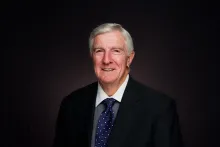
Before his retirement in 2021, Dr. Donald Ward pastored churches in Texas and Louisiana, and taught at Ambassador Bible College in Cincinnati, Ohio. He has also served as chairman of the Council of Elders of the United Church of God. He holds a BS degree; a BA in theology; a MS degree; a doctor’s degree in education from East Texas State University; and has completed 18 hours of graduate theology from SMU.
