
Roy Holladay
This transcript was generated by AI and may contain errors. It is provided to assist those who may not be able to listen to the message.
I'd like to begin the sermon by reading a question that came to me from personal correspondence. This is one of our readers, and this person indicated from the rest of his message that he understands a lot of the basic teachings of the Bible. And he came to the question part. He says, My first question deals with the second resurrection, and how the dead are raised again to a physical body. I am wondering if it matters at all if a person did not end up in the grave when he died, but were cremated, drowned in the sea, or even crazier forms of death like being eaten by a great white shark. Is it safe to say that the grave is just wherever the remains of your physical body end up, with or without bones, and in as many or few molecules remaining?
As I was thinking about this, I was also asking myself, Would Jesus' resurrection have happened any differently if his physical body had been fully annihilated, say by fire, if they burned him, or if they had fed him to a lion? Again, crazy examples, but it helps to illustrate my question. The Bible says that Jesus' body didn't see corruption or decay, but I'm assuming his resurrection wasn't dependent on his body not seeing corruption or decay, correct? That also made me wonder if his resurrection to a spiritual body, similar to what true believers will experience, was dependent somehow on his physical body still existing in some form in the grave. Again, I would assume that he could have been resurrected the same, regardless of if his body was in the grave or not. And even if he had been in the grave much longer to where his body would have seen decay, would you agree? Well, this question got me to thinking, and I think it should get all of us to thinking, how do you go about understanding and the answers to such a question, and how do you go about explaining it from a biblical perspective so that this person understands what God says about it? After all, it's what God says about things that matter, not us. It got me to thinking about what is man, this temporary physical existence, and just how is it that God will be able to resurrect billions who have died in ages past, each one unique and different. No two alike. Each person that will be the same, this resurrected will be the same person that lived in a previous age who long since has turned to dust or maybe indeed died in fire. How will God be able to do that? Well, we know for one thing that he will, whether a person died and was put in the ground and just became dust, nothing but dust in due time, or whether he died in fire, doesn't really matter. For example, and I did mention this in the answer to this person, the people of Sodom and Gomorrah were reduced to ashes. Let's read about that in 2 Peter 2 and verse 6. 2 Peter 2 and verse 6. And here we read, turning the cities of Sodom and Gomorrah into ashes. These people were reduced to ashes. I just took ashes out of our wood stove yesterday. And these people, human beings, were reduced to ashes in Sodom and Gomorrah. And yet, we know that it is God's purpose that they will come back and have a day of salvation. They will be brought back to physical life and have an opportunity to be in God's kingdom. In the Bible, even expresses or does or states that the Sodomites, the people of Sodom, will be there. Let's go to the book of Matthew and read about that in Matthew 11 and verse 24.
The people of Sodom who were turned into ashes, burned up, are going to be resurrected.
All men, women, little children, they're all going to be resurrected and live again.
They'll be resurrected at that stage of life where they were. Little children will still be little children. And adults will be adults, women, and men, whichever. In Matthew 11 and verse 24, Jesus said, I say to you that it shall be more tolerable in the land of Sodom in the day of judgment than for you. Just think about the implications of this verse. Jesus, this is read letters in your Bible, told the people of his generation. He looked out and there were Pharisees, scribes, other Jewish people. He said, I say to you, it shall be more tolerable. In other words, it will be easier for the land of Sodom in the day of judgment than for you. The day of judgment will be the second resurrection for the rest of the dead right after the 1000 years. You need to tie in Revelation chapter 20 and verse 5 with when the people of Sodom will come back to life again. It will be easier for them more tolerable because they will be able to repent. They'll be able to see their sin easily and to change when God gives them an open heart and mind to understand. Then for some of the people that lived in Jesus' time who were so convinced that they were right and could not accept the miracles of Jesus Christ and the message of Jesus Christ. So the people of Sodom are going to be resurrected, every single one of them. How will God be able to do that? Everyone will be just like he was when he died. There may be some minor improvements. Maybe some were sick and they won't be sick anymore. Who knows? Maybe God will resurrect them whole, but He's going to resurrect each and every one. Not a single one of them will be forgotten about. Not a single one. And yet they were burned up. What about people that were burned up? What about bodies that have turned to dust? Others may be dissolved in acid or eaten by some sea monster. How can God do this? And what are the principles of chemistry and physics that allow God to be able to take what has been turned into ashes or dust and bring it back to life again?
This man is wondering how such a thing can be.
Many people, as far as answering the question, what is man? believe that man is an immortal soul. The answer is that man is not an immortal soul, but there is something about man that is different than the animals that helps us to understand the answer to this question.
Let's first of all consider, though, the belief in the immortality of the soul. It certainly is a very common belief in the world. This belief is that man has an immortal soul that must go somewhere after this physical life ends. That is, at death the physical body dies, but the immortal soul separates from the body, and then the common belief goes either to heaven or to hell. Now, for many sermons where people were up in heaven, and they were looking down out of heaven, and they were just up in a blissful condition.
They were having fun, doing their favorite things. Some maybe enjoyed tennis or were playing tennis. Some enjoyed golf, whatever. I've heard sermons along that line. A lot of sermons that have preached people have gone to heaven because of the belief in the immortality of the soul. Now, I have never yet heard a sermon preached where someone, a preacher, got up and said, the immortal soul of this person is down in hell.
He is screaming and shouting right now in agony. He will be screaming and shouting for eternity because he was disobedient. Has anybody ever heard a sermon that preached somebody down to hell, the immortal soul? Yet there is a belief that that's where the evil goes. One person in the Roanoke Church actually had heard a sermon along that line where somebody was sent to hell and was suffering torment down in hell. But the Bible does not teach the immortal soul. The word immortal soul is not found in the Bible. The words immortal and soul are never used together to somehow teach the immortality of the soul.
So where did the doctrine of the immortality of the soul come from? It actually goes back a long time. We'll go back first of all to just over 2,000 years ago to the Greeks. The new Bible dictionary in the article Resurrection, the new Bible dictionary 1996 edition, has this quote, the Greeks thought of the body as a hindrance to true life and they looked for the time when the soul would be free from its shackles. They conceived of life after death in terms of the immortality of the soul.
Plato was one of those well-known philosophers. In Plato's thinking, the soul was self-moving and indivisible. It existed before the body, which it inhabited, and which it would survive. The soul existed before the human body, they believed. He believed and it would exist afterward. I'll read you an exact quote from Plato in just a few minutes. When did the concept of the immortality of the soul enter the world of Christianity? The International Standard Bible Encyclopedia explains, we are influenced always more or less by the Greek platonic idea that the body dies, yet the soul is immortal.
Such an idea is utterly contrary to the Israelite consciousness and is nowhere found in the Old Testament. It's just nowhere found in the Bible. The Interpreter's Dictionary of the Bible, in its article on death, states that the departure of the nafesh soul must be viewed as a figure of speech, for it does not continue to exist independently of the body but dies with it. No biblical text authorizes the statement that the soul is separated from the body at the moment of death.
So there's no Bible proof then. No Bible statement. No Bible teaching on that at all. Actually, the belief in the immortality of the soul goes back a lot longer. The Jewish Encyclopedia has this quote, the belief that the soul continues its existence after the dissolution of the body, after death, as a matter of philosophical faith and is accordingly nowhere expressly taught in the Holy Scripture.
The same article, the belief in the immortality of the soul came to the Jews from contact with Greek thought and chiefly through the philosophy of Plato, its principal exponent, who was led to it through Orphic and illusion, Eleusinian mysteries in which Babylonian and Egyptian views were strangely blended. So the Greek philosophers actually went back to ancient Egypt and Babylon. Socrates himself consulted with the Egyptians about the teachings of the immortality of the soul that they had.
And then, of course, the famous student of Socrates was Plato, who taught that death was the separation of soul and body. Herodotus wrote that the Egyptians were the first that asserted that the soul of man is immortal.
And so the Greeks then got their ideas from the Egyptians and also from Babylonia. And Plato wrote in one of his books, Plato, The soul whose inseparable attribute is life will never admit to life's opposite death. Thus, the soul is shown to be immortal and since immortal, indestructible. Do we believe there is such a thing as death? To be sure. And is it anything but the separation of the soul and body?
And being dead is the attainment of this separation when the soul exists in herself and separate from the body and the body is parted from the soul. That is death. Death is merely the separation of soul and body. That's basically what Christianity believes as well. And this teaching came on over. A Raijan, an early Catholic teacher in Alexandria, Egypt, joined the speculations of Plato with certain parts of the Bible and called his philosophy Neo-Platonism. Here's what a Raijan wrote around 200 AD. Souls are immortal as God Himself is eternal and immortal. And he openly professed to be a true believer in Plato who believed in the immortality of the soul. Tertullian, one of the early influential teachers in the church of Phoenicia, North Africa, wrote, For some things are known, even by nature.
This appeals to human reason. Some things are known even by nature. The immortality of the soul, for instance, is held by many. I may use, therefore, the opinion of Plato when he declares, Every soul is immortal. Augustine and others also brought this doctrine into the Catholic church and hence on over into the Protestant churches as well. You can make a more extensive study of the doctrine of the immortality of the soul, but nowhere does the Bible teach this doctrine. And that's not the answer to this man's question. He understands the resurrection. He doesn't believe in the immortality of the soul. But there is something, a doctrine that he may not have understood that led him to a little bit deeper understanding about concerning mankind. And it's kind of a mysterious thing that most people in the world do not understand. And actually, Mr. Armstrong did not understand this himself until sometime in the 1960s. He came to understand a very important doctrine in the Bible. When we go back to what man is and how man is different than the animals, it's very important to understand what we are going to go into, which helps to answer the question this man has about how can someone be reduced to ashes? How can someone, maybe that's been eaten by a lion or a sea monster, how can this person be brought back to life? He's just totally evaporated. So how can he be brought back? And this man needed some understanding on it. When we go to Genesis chapter 2, chapters 1 and 2, we see that mankind, when it was created, is not described as having an immortal soul.
He's just described as bearing the image of God in chapter 1 and verses 26 and 27.
He's God created man in his own image. And in chapter 2 and verse 7, it explains how God made man. The Lord God formed man of the dust of the ground and breathed into his nostrils the breath of life. A man became a living... If you have a King James translation, King James Version, it will say, a living soul, I believe. The New King James translation says, man became a living being. That is really a better translation. I think the King James translators would have been influenced by the immortality of the soul teaching in putting that man became a living soul. But it's a living being and it's the very same word, nefesh is the word in the Hebrew that is used in chapter 1 for some of the animals that God created. Notice in chapter 1 and verse 20. Then God said, let the waters abound with an abundance of living creatures. My New King James translation even has souls in the margin. But to living creatures or living beings, it is the same word nefesh that is used of man in chapter 2 and verse 7. So the animals that were made in the sea are made or described as the same as man. Man became nefesh. These sea animals then became were created as nefesh. And then in verse 21, God created great sea creatures and every living thing that moves. And so the word again is nefesh.
In verse 24, God said, let the earth bring forth the living creature. And the living creature, the word there is nefesh. According to his kind, cattle and creeping thing and the beast of the earth. Nefesh is in other verses described as certainly capable of death and has no connection whatsoever with a soul that is immortal. Nowhere does the Bible then teach the immortality of the soul. There's no such language. Mankind is made of the same substance that the animals are made of and that is nefesh and is a living being. One verse, two verses indeed in Ezekiel 18 verses 4 and 20 bring out that the soul that sins shall die. The nefesh that sins, it shall die. So certainly again the Bible, it's very easy to show that mankind is made of dust. He is like the grass. He is a bait. His physical life is like vapor that vanishes very quickly and the man is not an immortal soul. One verse says, his thoughts perish at the very day that he dies and that there's no work in the grave where we go. But let's do turn to Ecclesiastes chapter 3. Ecclesiastes chapter 3 and it brings out something very important as far as man and how man is like the animals but yet he is different than the animals. We want to have more in the sermon about that difference. In Ecclesiastes chapter 3 and verse 19, what happens to the sons of men also happens to beasts. One thing befalls them. That is so true, isn't it? Animals get run over on the road but human beings get run over too.
Animals come to untimely deaths in different ways and man comes to untimely death in different ways. One thing befalls them as one dies, so dies the other. Surely they all have one breath. Animals breathe the same air that we breathe. Man has no advantage over beasts for all his vanity. Just looking at it from the standpoint of the nayfish that we are, the living creature, there's no advantage. All go to one place. All are from the dust and all return to the dust. So as far as the physical functioning of our bodies and the temporary life, it's all the same. Animals have temporary life. Human beings have temporary life. But then verse 21, notice, who knows the spirit of the sons of men which goes upward and the spirit of the beast which goes down to the earth.
You know, animals do have an instinct. They're smart little critters in many ways. You can train them and they can learn up to a certain point. But they're very limited, aren't they, as far as man is concerned? And Mr. Armstrong began to ponder that in the 1960s, I think it was more like, as I remember, the mid-1960s, that he began to ponder animal brain and human brain are comparable, let's say, in the higher animals like some of the apes and gorillas and others. Some of their brains are smaller but still comparable in size to the human brain. How is it that the human brain, a human, is able to do so much more than the animal?
Well, there's a difference described right here in verse 21. There's a spirit of the animal which goes down to the earth. It does not continue or go upward, but there's the spirit of the sons of man that goes upward. We begin to understand the thing called the spirit in man. The Bible does mention it quite often. The spirit of man that makes man so much different than the animals. Let's read a few verses about the spirit in man. Let's begin in Job chapter 32.
In verse 8, this young man who listened to all the other friends of Job for a long time, and then he began to speak up and he had some words of knowledge and some words of wisdom. He was the young man that was able to explain things that actually were more true than the older friends had been able to do. In Job 32 in verse 8, this young man told Job, there is a spirit in man, and the breath of the Almighty gives him understanding. So there is a spirit in man. There is something in man that is not an immortal soul, but yet it is something that the animals do not have. The spirit in man. Let's notice Zechariah chapter 12 in verse 1.
God actually is the one that forms this spirit as a person develops in the womb, and a little baby is born, then the spirit in man is formed in him. In Zechariah chapter 12 and verse 1, the burden of the Word of the Lord against Israel, thus says the Lord, who stretches out the heavens, lays the foundation of the earth. And we know that God does that. He stretches out the heavens, and how huge that stretching out is. He does lay the foundation of the earth. The earth rotates on its axis every 24 hours and makes a rotation around the sun every year, lays the foundation of the earth and what else? And forms the spirit of man within him.
So every human being has what is called the spirit of the sons of men, or the spirit of man, or the spirit in man. What is it? We'll define that just a little bit more in just a moment. In Psalm 139, when is this spirit formed? It begins to take its shaping form as a little baby is developing in the womb as a fetus, an embryo, and then a fetus, and later to be born as a little human being. In Psalm 139, verse 13, here David marveled at how a little baby could be formed in the womb and be born. Verse 13, for you have formed my inward parts, you have covered, the margin says, woven me in my mother's womb. I will praise you, for I am fearfully and wonderfully made. It is an amazing thing how the ovum and the sperm unite together, and then very rapidly changes take place in the formation of a little baby in the womb.
It's a marvelous thing. I will praise you, for I am fearfully and wonderfully made. Marvelous are your works, and that my soul knows very well. My frame, and the margin has here, bones were not hidden from you when I was made in secret and skillfully wrought in the lowest parts of the earth. Your eyes saw my substance being yet unformed. God does did see us developing in the womb, and in your book they were written the days fashioned in me, when as yet there was none of them. And he just marveled at it, verse 17, how precious also are your thoughts in me, O God! How great is the sum of them! So when we start to thinking closely about the universe or about even human life and how it develops, when we look closely, we do marvel at God's great power and might. So the spirit of man is formed in him, and it's understanding of the spirit of man that we're able to actually understand the answer to the question this man had and how God can bring back every person. It doesn't matter how he may have died. It doesn't matter what may have happened to his body. His body may have indeed been reduced to ashes, may have been consumed, evaporated in acid, or may have been eaten by a wild animal. Really, it doesn't matter because the spirit in man we're going to understand actually helps to preserve each and every person.
Let's see the human spirit at work. It actually comes down to being the mind or the intellect that of man, man's mind, man's intellect, his capacity to learn that animals simply do not have. Let's go to Psalm 77 now in verse 3. We'll see the spirit in man at work. I think we all can identify with this. We have minds. We're all thinking right now, and our human spirit is at work.
Our minds are working. We're trying to understand what it is that we're covering here in this message, how we are to use this and benefit from it, and maybe help to answer this question this man had. Psalm 77 in verse 3. I remembered God and was troubled. I complained, and my spirit was overwhelmed. His mind, once he comprehended, he had all these problems coming at him, and he was just overwhelmed. My spirit was overwhelmed. You hold my eyelids open. I'm so troubled that I cannot speak. I've considered the days of old, the years of ancient times. In verse 6, I call to remembrance my song in the night. I meditate within my heart. So do we. We ponder. We meditate these things. And my spirit, the spirit of man, makes diligent search.
You know, our minds are always searching. We're trying to figure it out. We're trying to cope with the things that are coming at us all the time. And so our spirit is always searching to understand, to put things together. Let's go to Proverbs 20, verse 27.
Proverbs 20 and verse 27. A good verse on how the human spirit works, the spirit in man, how it works. It's like a searchlight. It's searching. It's pondering. It's trying to put things together. It's trying to solve problems. It's always got the spotlight, searching for the answers. Proverbs 20 and verse 27. The spirit of a man. That's what we're talking about. The spirit in man. The spirit of a man is the lamp of the Lord. God has made our minds to be like a lamp, searching all the inner depths of his heart. And you know, we do search our hearts, don't we? Sometimes we find things we would wish that could be better. Well, that's okay. That's good to find ways we can grow. But the spirit, our mind, is searching the inner depths of our hearts. There's a lot of self-talk that goes on. You ride down the road. You do work around the house. You work on your job. You're kind of... maybe nothing is being said, but there's talk in your own mind about how you're doing. Maybe what is coming up in the near future that you need to be able to handle. Problems that maybe suddenly appear that you need to cope with. There's a lot of self-talk that is going on all the time. So the human spirit, our minds, is at work.
It is searching. It's pondering. Now, animals don't do that. It's only man that does this, ponders and thinks. You ever seen an animal like this pondering, thinking? They don't have that spirit in them, do they? Not that same spirit that man has. There are many verses in the Bible about the spirit of man. Let's go to Numbers 16 and verse 22. We'll just read a few of them. Numbers 16 and verse 22.
Then they fell on their faces and said, O God, the God of the spirits of all flesh, shall one man sin and you be angry with all the congregation? God is the one that's in control over all the spirits of man. He's in control of what goes on in Numbers 27 and verse 16. Numbers 27 and in verse 16.
Let the Lord, the God of the spirits of all flesh, set a man over the congregation.
And so, that's a reference to the spirit in man. Pharaoh dreamed a dream and it says his spirit was troubled. You read that in Genesis 41 and verse 8. His mind was troubled. It's like you wake up from a nightmare and you're troubled. Your mind is troubled. You ponder the meaning, sometimes, of a dream. Jacob learned that Joseph was alive in Genesis 45 and verse 27. It says, his spirit revived. His human spirit, his mind, comprehended. My son, who I thought was dead all these years, all kinds of thoughts came flooding into his mind. He understood also what had happened and that Joseph, after all these years, was still living. His spirit revived. We read that Sihan's spirit, when Israel was on their journey toward the land of promise, his spirit was hardened. His mind was hard so that he could not allow the Israelites to come through.
We read about the spirit of Cyrus and the spirit of other men. Daniel mentions in his book about being grieved in my spirit. We read about the spirit of Zerubbabel and Joshua. There are a lot of verses in the Bible about the human spirit. It's the mind of man. It's that which sets man apart. Man is able to do phenomenal things that animals just cannot. And the size of the brain, the human brain compared to animal brain, does not explain the difference. There's a spirit in man that empowers the human to be able to have ability to accomplish what humans can do.
It's an amazing thing to think about. But the human spirit is something that is not complete of itself. That's why we have all the problems in the world today. Human beings don't realize that. Man thinks he can solve his problems. People come in seeking leadership position. They think they can solve the problems. They deceive themselves. Man needs another spirit. He needs the spirit of God to go with the human spirit that he has by birth. Let's go to 1 Corinthians chapter 2.
1 Corinthians chapter 2. And beginning in verse 7. 1 Corinthians chapter 2. And beginning in verse 7.
1 Corinthians chapter 2. And beginning in verse 7.
But verse 10. Those in the church? No. But God has revealed them to us. Yeah, people in God's church know, but how? Through their own spirit or their own minds? No. God has revealed them to us through His Spirit. For the Spirit searches all things, yes, the deep things of God. So God's Spirit then joins with the human spirit, and then a person begins to understand the things of God. Without the Spirit of God, it's impossible to understand the things of God. We can't understand the love of God, the plan of God, the purpose of God.
We just will not be able to comprehend the true spiritual things of God. Look at verse 11. Let's read on down. For what man knows the things of a man except the spirit of the man? Well, that's what we're talking about, the spirit of man.
What man knows the things of a man? That is the physical things. Chemistry, physics, history.
All of these things. Except the spirit of the man which is in him.
So the spirit in man is able to do a lot of things on the physical level.
Even put a man on the moon, probe out into space, do amazing things, but still not able to comprehend the spiritual things of God. That goes on the last part of verse 11 to say, even so, no one knows the things of God except the spirit of God.
Now we have received not the spirit of the world, but the spirit who is from God, or which is from God, that we might know the things that are freely given to us by God. These things we also speak, not in words which man's wisdom teaches, but which the Holy Spirit teaches, comparing spiritual things with spiritual. But the natural man with the spirit that is in man does not receive the things of the spirit of God, for they are foolishness to him, nor can he know them because they are spiritually discerned or understood. But he that is spiritual, one that has had God's spirit added to his spirit, judges all things, yet he himself is rightly judged by no one.
So the spirit of man is not really a solid, complete spirit.
We're only partially there. You could truly say that without God's spirit, we're not all there. And when you look at the world, don't you agree? The way the world is going, there's something lacking. Now people don't even understand what is lacking. But what is lacking in order to make man complete and make things operate successfully and to be sane and solid, what is needed is the other spirit from God. And if we have that spirit, then we already are in that process of becoming complete. It is a process, the process of transformation or conversion.
But once we have the spirit of God joining with our spirit, then we really do have something. Let's go to Romans chapter 8. Romans chapter 8 talks about these two spirits that are work in our lives. All of those who have been converted, all those who have repented and been baptized and received the spirit of God, there are two spirits that work in your life. In Romans chapter 8 and verse 14, as many as are led by the Spirit of God, these are the sons of God. So once a person has that other spirit from God, he becomes a son of God. There's a spiritual conception that takes place.
For you did not receive the spirit of bondage again to fear, but you received the spirit of adoption by whom we cry of a father. And look at verse 16 now. The spirit himself or itself, actually. The spirit itself bears witness with our spirit that we are the children of God. This verse shows two spirits at work in our life. Now if you think about your life since becoming a member of God's church, you can see that there is the human spirit that you've had all along. And then God's spirit came into your mind at the time of repentance and baptism. And changes did begin to take place. And God's spirit does witness with our spirit that those changes are indeed taking place. We're not the same person as we were at one time. There's a new creation that is going on. Our life is not the same as it would have been if we had not become a member of God's church. In many ways, God's spirit witnesses with our spirit, with our human spirit, that we are the sons of God. So we see how the spirit of God works then upon the human spirit to make those changes in our life. It's an amazing thing that is happening. We are being renewed right in our own lives. We can see that God is working a spiritual creation, a spiritual masterpiece is going on. And we are being renewed. And we are having divine nature and divine character of God that is being created in us.
There's an amazing verse on the spirit of man found in Hebrews chapter 12. Hebrews chapter 12. This book, as we know, is a book of warning. It's warning people that were neglecting their salvation. They were letting down. In Hebrews chapter 12 and verse 12, it comes on to word closer to the end of the book with final warnings. He says, Therefore, and this is an admonition, therefore strengthen the hands which hang down, and the feeble knees, and make straight paths for your feet. It talks about parts of the body that are very important. What can you do? How much work can you accomplish with your hands down? So it says that we need to strengthen the hands that hang down. Get them up where you can do some work. And the feeble knees, how far can you run a race with feeble knees? We need to be strong so that we can run that race that is set before us.
And the warning continues in verse 18, For you have not come to the mountain that may be touched and that burned with fire, and to blackness and darkness and tempest. He's referring to Mount Sinai.
In verse 21, even Moses said, I'm exceedingly afraid and trembling. Verse 22, But you have come to Mount Zion. Members of the Church of God have come before the throne of God then as far as our lives and the way we're living our lives. We do stand before God in judgment for what we do. For you have come to Mount Zion and to the city of the living God, the heavenly Jerusalem, to an innumerable company of angels, to the general assembly and church of the firstborn, which we are the church of the first ones to be born into God's family, who are registered in heaven. Not that our destiny is heaven, but we are registered in God's book of life in heaven.
To God the judge of all, and He is, and notice to the spirits of just men made perfect. I've often pondered that verse, the spirits of just men made perfect. We have come, well that would be who? Abraham, Isaac, Moses, David, Daniel, the Church of God, Mr. Herbert Armstrong, the ones that we've known in our time. We have come to the spirits of just men made perfect, who live their lives, have grown and overcome, and have made it. And now they're just waiting. Waiting for what? Waiting for the resurrection. And there's a verse in the Bible, and I did bring this out in the answer to this man, that really helps to put all of this together and helps us to understand that it doesn't matter how we die, it doesn't matter what happens to our human body. No, it wouldn't have mattered if Jesus' body had decayed as far as God being able to resurrect him. It did matter from the standpoint that the Bible said it would not see corruption, and that was a full film of the prophecy. It would not see corruption, but it wasn't necessary as far as God's ability to resurrect him. That doesn't matter what happens to our human body. God has something that preserves us, and it's this thing we're talking about, the spirit of man. And what happens to that spirit when we die? Let's go to Ecclesiastes 12 and verse 7. Ecclesiastes 12 and verse 7. These verses in this chapter are talking about the end of life, when life is winding down.
And, well, as we say today, we're on our deathbed. Verse 6, Remember your Creator before the silver cord is loosed, or the golden bowl is broken, the pitcher shattered at the fountain, or the wheel broken at the well. It's all talking symbolically about death, life, ceasing to exist, nayfesh coming to its end.
And then verse 7, Then the dust will return to the earth as it was. This nayfesh returns to the earth then. And it goes on to say that the spirit, the spirit of man, will return to God who gave it.
So there is something. It's not an immortal soul. There's something that goes to God at the time of death. It goes to God whether we are one of the righteous or the unrighteous. It doesn't matter.
But if we are among the righteous, then we would be, if we die, and our spirit goes to heaven for God to keep until the resurrection, then we would be in that category of the spirits of just man made perfect. I think of God having a little separation there. I don't know just how He does that. His way of doing things is much different than any human way we do things. But the spirits of just man made perfect is certainly one small category of those spirits that have come up at the time of death. There are billions and billions of the spirits of unjust, the unrighteous of this world, and little babies who died. There are little babies. Billions and billions of those human spirits have gone up to God at the time of death. Those human spirits that go to God at the time of death are a record of our life. It's just like a cassette recording, audio, video, and everything, including our personality, including even our appearance, our facial appearance. We'll be able to recognize each other because the human spirit is able, has encoded in it even our features, our appearance. We're not all going to look exactly the same. We're going to have our individual features. It's all been preserved in the human spirit. The human spirit, then, is like a DNA of everything we are, both from the appearance and character and personality and everything. When we die, that goes to God to preserve until the resurrection. It is not conscious any more than a cassette. If we had recorded everything in this service, video, audio, everything we could record, we could take it out of a player, we could put it on a shelf. It would be inactive until we put it back into a player. Then we would resume. We could resume it again. So the human spirit is very, very important for us to understand. It helps to answer the question this man had. In my answer to him, I brought out to him that there's a doctrine in the Bible that helps to understand how God will be able to resurrect every person, no matter how he may have died or what may have happened to his body. The Scriptures teach there is a spirit in man. I gave verses. The spirit in man is not an immortal soul. Briefly stated, the spirit in man explains the vast differences between animal brain and human mind, enabling man to have mental and intellectual abilities which animals simply do not have. At the time of death, a human body returns to dust, but the human spirit returns to God who gave it. Ecclesiastes 12 and verse 7. Thus, human spirit has no consciousness apart from the body. At death, there's no awareness of anything, but at the resurrection, God will place our individual spirits within new bodies, those in the first resurrection spiritual, those in the second physical body, thereby bringing us back to life again. When we understand the spirit in man, we see that it doesn't matter what happens to our human bodies at death. When we die, our human spirit returns to God who keeps it until our resurrection. I'll give him some articles. By the way, you can do an online search for spirit in man on our UCG website. There's a lot of articles and also even a sermon, I believe, that you can find there about the spirit in man.
It doesn't matter if our bodies, if we somehow were to be burned up, if we were eaten by some wild animal or in some way evaporated, it doesn't matter. The spirit has that record and it will preserve us exactly the way that it was when the spirit was taken out of our body. For little babies that died a day or two old, their spirit will not have, you know, their minds will need some more forming after they are resurrected, which happens after the birth of babies. So God preserves that human spirit the way that it was at the time of death. And then at the time of the resurrection, whether to life, eternal or to physical life, and put back into a spiritual or physical body, then consciousness resumes again. But guess what? It's just the next second as far as the consciousness, the next second after death. There's no consciousness of any passage of time. So this helps to answer the question I think that I brought out at the very beginning. I did comment about Jesus' resurrection. You are correct that Jesus' resurrection would not have been any different if his body had been totally annihilated by fire or eaten by an animal. It is true that his body did not see corruption as the scripture states, but still his resurrection was not dependent on his body not seeing decay.
Just as the resurrection of every human being is not dependent upon whether he died a normal death and was put into the ground or whether he died in a fire or something else. So this is quite an exciting doctrine to understand. The Church began to understand this back in the mid-1960s.
We all have a human spirit. It is capable of thinking, of making decisions. It's capable of understanding spiritual things when it has God's spirit added to it and thereby having a relationship with God and preparing to be a member of God's family. God's ultimate purpose is that all of us, billions and billions, may have that other spirit, the Holy Spirit, added to our minds, our human spirit, and that we'll be able to grow and develop and have God's divine nature and become a Son of God.
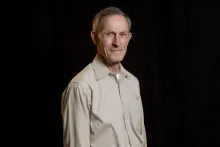
David Mills was born near Wallace, North Carolina, in 1939, where he grew up on a family farm. After high school he attended Ambassador College in Pasadena, California, and he graduated in 1962.
Since that time he has served as a minister of the Church in Washington, Florida, North Carolina, South Carolina, Oregon, West Virginia, and Virginia. He and his wife, Sandy, have been married since 1965 and they now live in Georgia.
David retired from the full-time ministry in 2015.
