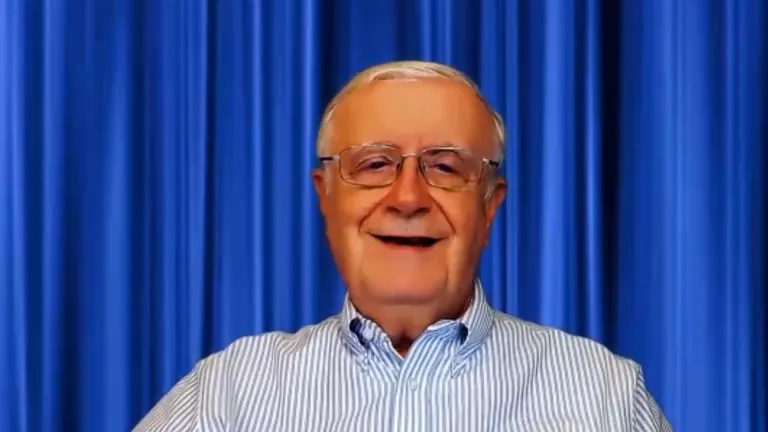
Steve Myers
This transcript was generated by AI and may contain errors. It is provided to assist those who may not be able to listen to the message.
There's an old expression that we often use. It's called famous last words. Famous last words. I think of a couple of rounds of Shakespeare for famous last words. You could say with Julius Caesar and Julius Caesar, A2, Brute, as he looked around and that his good friend, his disciple that he had trained and brought up, was one of those that stabbed him. We can also think of, again, another Shakespearean line, famous last words, where Richard III said, My horse, my horse, my kingdom for a horse. And there's other famous last words. You think of the story of Jefferson and Adams, where once dear friends later adversaries and foes and then reunited. And on the 50th anniversary of the 4th of July 1826, they both lay in their bed and one of them said is, and I believe it was Adams. I'm probably going to get this wrong. The last words, I think it was out of Adams. I'm watching Susan. Pardon? Could be Jefferson. But anyway, they were still, that bond that had been there for 50 years, they were in their deathbed. Actually, Susan and I saw Jefferson's bed where he died and where he uttered, he said, Is Adams still alive? That's what was on their mind. What will be on your mind when you finally give your last words, those famous last words? As we look at different other individuals that come down to us through history, sometimes it's a blessing. Sometimes there is wisdom in those final last words. And sometimes there is a bit of caution and sometimes perhaps a combination of all three. It's always intriguing to learn those final last words to see what was not only in somebody's mind, but in somebody's heart. That is passed on to us, the living for us to be able to consider. I remember well the words of General Norman Schwartzkopf. He was the commander of the International Forces during the Persian Gulf War back in the early 90s. And it's one that has always struck me. And it goes like this. Death places the mind in a wondrous focus. And then, and then the training takes over. And such is the farewell message that I'm going to read to you and impart to you this afternoon.
And that is a gift to not only the young man that he was speaking to and or that generation of the disciples of Christ, but actually comes down to us today. These final last words, the last words that we know categorically that he wrote down and that he sent and that we can get a hold of and be able to learn from. It's interesting that the final last words that are written is probably not in a place that he would choose humanly to be. At this time, the man was in incarceration, whether it be homebound. And I would suggest at this point, he had been in a homebound prison before. And I would suggest because of what he says at the end of this epistle, he is most likely in a dungeon or a literal prison at that time. But it's amazing that writing these last words, the last words that we have from one that literally saw Jesus Christ and was awakened by him on that road to Damascus, is to recognize that from that cramped and from that dark experience of being incarcerated, that light and that warmth and that there was an expansion of the soul and the spirit that came by his writings, speaking of the one that he loved so very, very much and was about to die for. I'd like you to turn with me to 2 Timothy. Turn to 2 Timothy, and we're going to go through God's message. It's God's message, but it came through the vehicle of Paul to Timothy, to us, to invigorate us, to challenge us, to encourage us in this new manner of being, this new man, this new woman, this new creation of being that which is ahead of time, as our first message by Mr. Butler talking about the kingdom that is coming, but that you and I in microcosm today have an opportunity to be experiencing and living out and having that king of that kingdom in the future to be our Lord and our master today and allow him to be our sovereign. It's interesting that when you go to 2 Timothy, and you will probably know this being veterans of God's word that there's 1 Timothy, 2 Timothy, and there's Titus. And they're oftentimes called the, what? The pastoral epistles. And indeed they are, because it's a certain chain that's coming down. Paul knows he's not coming back to Asia. Mine are Timothy is probably an F at this time, so he's kind of giving the last huddle and scroll that's going to Timothy. But first and second Timothy and Titus is not just for those that are elders, not just for the pastors. I would like to call it, if you want to jot this down, an epistle for the disciples of Christ.
An epistle for the disciples of Christ, because all of us are in training. Yes, Timothy was trained by Paul, but all of us are being trained by the heavenly rabbi, by Jesus Christ. And that we're in training to be in that realm, in that kingdom experience. And sometimes it's called a kingdom of priests and kings, and sometimes other translations will say it's a realm of priests. So that's what we're going to be looking at. And I'd like to give you the title of my message so that we'll stay in focus here. And it is simply this, speaking of final last words. This is it. This is what we have in print. This is what's allowed. This is what's clear that comes from the Scripture. And the title of my message is simply this, a spiritual farewell for the ages. A spiritual farewell for the ages. And we're going to be going through 1 Timothy 1. We're going to get into 1 Timothy 2, which has more of a breakdown. We actually experienced some of that the other night with a very fine study that Mr. Howe moderated. But what we're going to do is we're going to go back to the beginning. You always want to, and we were a different story, different focus that night. But when we're studying the Scripture, we always want to find the beginning of the story. Find the beginning of the story. Sometimes it starts in Genesis 1.1, but we don't have all day. And I don't want to press your conversion getting from there to here. But we are going to at least start in 1 Timothy 1.1 to get a feel of what's going on. So if you're ready, we're going to take a deep breath. We're going to go through this together to set the stage then for 2 Timothy 2. Let's notice what it says here. Paul, an apostle of Jesus Christ. He's an ambassador. He is a messenger. He is a bringer of good news of Jesus Christ. Jesus Christ. Jesus being the Greek for Yeshua, being Joshua, being Jesus, meaning Savior.
Meaning Savior and the Christ. Christ meaning the one that is anointed. Christ is the one that was predicted to come. So all these words are very important as we begin to look at it. Notice then, by the will of God, according to the promise of life, which is in, in Christ Jesus.
Now, whenever I look at the opening words of Paul in any message, whether it was his first or whether it was his second, what you really gain, the understanding, Paul is overwhelmed. And he never gets over the thought of being overwhelmed that God has selected him for this calling. It's an overwhelming, it's an overwhelming that comes by being humbled because of where God found him, of where God reached down and touched him. Of all people, he would not think he was deserving of being able to represent Jesus Christ. But that is what occurred. And notice what it says, because of that, again, because he was in a dark spot persecuting the church at that time, but then he was given by the bringer of life, he was given the promise of life, which again is in, in, in, in, not side, not behind, not on the other, wherever, but in Christ Jesus. There is what we call that abiding factor. The framework that we step into and exist in is no longer our life, but his life now in us, and that is our framework of existence.
Then notice what it says. And again, when you read this, you find that this is the rhythm of basically Paul's writing. Paul's writing oftentimes is very familiar. This is how he begins. And then notice what he says here, to Timothy, a beloved son. And then notice the next verse. He says, and mercy and peace from God the father and Christ Jesus, our Lord. Again, notice Christ Jesus, our Lord. Here are the three words that basically make up the great title of the one that came from Bethlehem, that came from Nazareth, but only came from above to below. We have Jesus Christ, and now we have the word Lord.
He is curios. He is salter, to use the terms of Latin and Greek. He is the king of our life. And so we take a look at this and we say grace. That means God's interruption. That means God's intervention. That means God's rescue. And that means God's peace. I'm going to repeat that for all of us and for those who will be listening in the future. What is grace? Grace is God's favor. Grace is God's favor. It is his initial involvement in our lives, and it is his ongoing involvement in our lives. It is not merely an act. It is an ongoing experience for while we draw breath once we've submitted ourselves to God, the Father, and the Lord Jesus Christ. This is again, then not merely a starting point, but a developing fruit in all of us, which is what we're going to be looking at later. I thank God, whom I serve with the pure conscience, as my forefathers did, as without ceasing. I remember you in my prayers night and day. Now, one thing I want to share with you in verse three. Remember, Paul is in prison, and he's thanking God. Kind of wrap your mind around that, humanly speaking. Wrap your heart around that, if you can, humanly speaking, because he never gets away from those first two or three verses. Even in prison, he is overwhelmed by whom he is serving. I thank God, whom I serve with the pure conscience, as my forefathers did, without ceasing. It does not stop. I remember you in my prayers night and day, speaking of his Son and the Lord, greatly desiring to see you, being mindful of your tears, that I may be filled with joy. And when I call to remembrance the genuine faith that is in you, which dwelt first in your grandmother, Lois, and then your mother, Eunice, and I am persuaded is in you also. He's persuaded.
Now the purpose of sharing these final words, therefore I remind you to stir up the gift of God, which is in you through the laying on of my hands.
That was Paul's message 2,000 years ago. That is Paul's message for all disciples of Christ that have lived since. And this falls on our hearts and our minds today, that these words are to stir up the gift of God. That gift of God is not something that we can buy. It's not something that we deserve. It's a gift, and it's a gift that struck us in a way that some of us weren't even prepared for, but God's began working in our minds and our spirit to understand what he was doing. For God has not given us the spirit of fear, but of power and of love and of a sound mind. And this is going to be important as we go to chapter 2, because this is just kind of the opening. We're walking into the living room before we're going to sit down, and Paul's going to talk to us about his final thoughts and his final words. Therefore, do not be ashamed of the testimony of our Lord, nor of me, his prisoner, but share with me in the sufferings for the gospel according to the power of God. Share with me the sufferings. Powerful. Powerful. That he is inviting Timothy to suffer along with him for the sake of the gospel, for the sake of the knowledge of following God the Father and Jesus Christ, for the responsibility of exercising that spirit and having that soul allegiance, which we're going to talk about later, soul allegiance to God the Father and Jesus Christ. You know, in Philippians 3 and verse 10, you can jot this down, because Paul in Philippians, which is an epistle about joy, says he speaks of, I want to know him, that I might be in fellowship with the suffering. He wanted to bond. He wanted to connect with this one called Jesus, that called him out of a life of persecuting others to leading those others into further understanding of what happened on the road of Damascus. And later that three and a half years, or however long it was, when Jesus personally instructed him and to give him the good news that the gospel had come. And now all, all, as we heard in the first message, not only the house of Israel, but those of the tribes, the nations, and the tongues, which always speaks of the Gentiles, that there is now going to be, yes, God has unfinished business with Israel and the people thereof, and he loves that. And he's made promises.
But now in the spiritual Israel of God, Galatians 6 16, there's that broadening, there's that expanding of all of God's children that are made in his image. So then it says, speaking of this God, when it says, for the gospel, according to the power of God, I'd like you to, for you that are just awakening to the word here or listening, when, when, when Paul speaks about the power of God, it's normally underlined with the word resurrection.
That is how Paul sensed the power of God. And he met the one that was resurrected that came out of the tomb. Can you imagine that?
So when it talks about the power of God, this is speaking about the power of the one that has preeminence over life and death.
The power, the power beyond human imagination or human capability, who has saved us and called us for the holy calling, not according to our works, not because of who we are. We were drowning in our own human nature and that strong arm had to come from somewhere and pull us out of the water and the swamp of sin.
According to his own purpose and grace, which was given to us in Jesus Christ before time began, but now has been revealed by the appearing of our savior, Jesus Christ, who has abolished death, brought life and immortality to light through this good news. This eu-gelion as it speaks in the Greek, this good news.
Jesus came as a king. The kingdom had not yet been set up. There's more that's coming as we heard in the first message. But you see, he brought good news. He brought good news.
And Pilate asked him, are you a king? And he said, you said it. See, he brought good news. And he was going to go up against another son of God. He was going to go in that time and age to recognize what was happening in Rome.
That Caesar could be proclaimed God, and Julius Caesar and his divinity was proclaimed God. And then Augustus comes along, otherwise known as Octavian. And Augustus comes along and he says, I've got good news.
Especially after he defeats Cleopatra and Mark Antony and all the other people that were in between him and the throne. He says, there's good news. There's not going to be good news. Good news.
The kingdom is one, and I bring peace to all people. You can see where the conflict would arise. You can see where the conflict would arise. Here's one who was a, called himself a son of God. And then you have one that comes, born in a manger, and he calls himself the son of God. And he brings good news.
The first thing that a Roman Caesar always did, because the same Rome that could conquer the world could never conquer itself, and they were always having civil wars. Once they put down the other guy, good news. We are now, here is peace on earth, and they would mint a coin with his figure on it. They'd go out to all the kingdom, because he wanted to make sure everybody knew whose face it was that saved everybody and brought peace to earth. And now comes this quote-unquote, this Jewish usurper. And you see, this is where the conflict came, why Paul was in prison. So let's just continue this, to which I was appointed a preacher and apostle and a teacher of the Gentiles. Now notice verse 12.
Now let's just open it up.
What's the beginning of the story? These are Paul's final words. Let's go to chapter 2 verse 1 now. Chapter 2 and verse 1. Notice what it says here.
You. And as Dr. Zimmerman used to say, for those that know Dr. Zimmerman, Dr. Zimmerman used to say, and watch your name. Because you're supposed to put your name. His voice was much deeper, like a barrel, than mine. But he said, watch your name. You. Let's make it personal. Let's not just read this. Let's make it personal as if Paul's final words, which they are, are coming down to you, therefore. In other words, let's hear it with everything that's been spoken in chapter 1. Therefore, action time, raise the curtain.
Now this is going to be about you, Timothy, and all the disciples of Christ as they hear these final words. You, therefore, my son, be strong in the grace, in that favor, in that love affair that God wants to have with us, that is in Christ Jesus. Be strong. Jot down Philippians 4.13. Let's get galvanized. Philippians 4, verse 13, I can do all things through Jesus Christ.
Jesus Christ is not theory. He is not fable. He is the Son of God. That is who we focus on.
And the things that you have heard from me and that we're hearing right now among many witnesses, notice, commit these two faithful men who will be able to teach others also.
Paul's going to be sharing the view of what lies ahead in this section, not simply through three, as we covered the other night, but through four metaphors that are portals that we look through to understand what we need to do as disciples of Jesus Christ.
Notice what it says here. And the things that you have heard, commit. What's that word commit mean? I'm going to kind of bring it down to just simple language. It means deposit.
Deposit. Commit. It's a very strong word. Deposit. Now, maybe we're not all preachers. Maybe I shouldn't be a preacher, but we shouldn't maybe be all preachers. But we are all disciples. And you remember that little expression that you will the most effective sermon is not what you're preaching, but what you're living. And it's by the law anybody can speak. It's another thing to live this out. And it says to commit these two faithful men who will be able to teach others also, whether by word and or by example. The word they're faithful, as brought out the other night in our study by Mr. Howe, comes from the Greek word pistos. P-I-S-T-O-S. Pistos. That means now this is important. This means believing. This is important.
This means being reliable. Can God count on us? We heard that in the first message. Are we going to respond to the authority of His reign over our heart? Or are we going to go a different direction? Reliable and loyal.
What this is basically saying simply is this. Do we have, thinking of where Paul is when he's writing this, knowing what he's about to face is our soul. Not S-U-L, but S-O-L-E. Is our soul allegiance to God the Father and to Jesus Christ. I'd like to read something to you about soul allegiance. It comes from Tyndale's New Testament commentary. Tyndale's New Testament... No, that's not the one I want. This is the one I want. Pardon me. This is from another book, Acts for Today. Acts for Today by Michael Green. One that I've always... which I actually recommend it when we're having the hermeneutics class.
Is that what was their message? Not only their message, but it was their life. And what was their aim? On any showing, the preaching of the first disciples was electrifying.
It won converts to the new movement from every people group in the ancient world. There had never been anything like it. What were they trying to do? Why was it so effective? What did they actually say? These are questions to which we would dearly love an exhaustive answer. That may be beyond us, separated as we are by two millennia. But there is fortunately no doubt about the main outlines of their message.
Pause. Subtitle. What was their aim? And I ask you then, what is your aim? What is my aim? Two more paragraphs. Without clarity of aim.
This is a fact. Since I first read this 20 years ago, this has always been something I go back to. Without clarity of aim, one achieves nothing.
These men and women had great clarity of aim. They wanted to see people from every background in antiquity, one to the exclusive allegiance of Jesus Christ.
By exclusive, green speaking, I do not, of course, mean the elimination of all the normal relationships of life, rather the elimination of any other object of worship than the God who had revealed Himself in the coming and dying and rising of Jesus Christ.
And that was quite, quite different, without parallel in that world. And I might say in our world today, which is post-Christian in general, the notion of conversion was strange to the ancient world.
We use the word either to mean that someone, the word conversion, meaning that someone has left one religion or none for exclusive attachment to another.
Or else we use it of someone who has hitherto been a merely nominal adherent of some faith, but has then awoken to its significance with enthusiasm and insight.
And that simply did not happen in the Greco-Roman world. That world was polytheist. It recognized all manner of gods. If you like to take on the worship of a few more, that was your business.
The others got rearranged on the mantle, on your shelf, not wiped off. Some of the philosophers, it is true, spoke of a weight when that goes on to another thing. The key line here is soul allegiance.
When you think of what the first commandment is, that we shall have no other gods, no other gods, nothing between us and God, the very first commandment.
Now notice with that stated then, first thing we want to lock down, soul allegiance. Now we're going to go to some of these metaphors and we're going to work through them in a second.
Notice it says, you therefore must endure hardship as a good soldier of Jesus Christ. You therefore must endure hardship as a good soldier of Jesus Christ.
The word therefore endure is a Greek word. It's a hupomeno. Hupomeno. And that word means simply this, to abide. Remember, in Christ, to abide. Stay within that framework.
It is courageous in manner. And when it says to endure, it means that endurance is underlined with patience. Patience. Patience.
And sometimes that means waiting on the Lord and accepting His will, but with patience. Basically then, not to be conquered by the trial or to be conquered by the issue, but with God's help to master, to put into context that trial, that problem, that person.
Something that dropped into your life that you weren't expecting, and to put that into context in the realm that God is sovereign and knows what He's doing. And you are His disciple. You therefore must endure hardship as a good soldier of Jesus Christ. Now, notice what it says in verse 4.
It's very interesting the word entangles. You might want to take a look at that. We're going to spotlight it for you. The word entangle is important to understand. It comes from the Greek word implikomai. Don't have to spell it right now. I think I basically pronounced it. But it's very important what the Greek word implikomai means. It means don't become overcrowded. That's the implication. The implication is don't get tangled up with the society and the worldliness that is around us. The further implication is in the midst of battle, when you need your sword, watch this is the PowerPoint, when you need your sword and all of a sudden it gets stuck in your cloak, it gets...
When you need it, you're entangled. That's the bottom line. That's the root. That's the color behind this word.
And the Roman soldier had to be focused, and he was trained for that job. And he could not afford to be entangled and be snared, because what could happen any minute or any moment in a thing?
And the encouragement here is, number one, is to recognize that we are at war. We are at war. Absolutely. Let's go to Ephesians 6 for a moment. We're in a spiritual warfare. Remember, these are spiritual.
This is a spiritual message that's coming from Paul. And let's go to another one of his epistles.
Ephesians 6. Notice what it says here.
For we do not wrestle against flesh and blood, but against principalities, against powers, against the rulers of the darkness of this age, against spiritual hosts of wickedness in the heavenly places.
There's a realm, an unseen realm, that we don't think about. I remember many, many years ago in the College of magnesium, listening to that gentleman on stage.
And he would talk about the big headlines are not being made in Jerusalem or in London or in New York. There's things that are happening up above all the time.
And we get locked down below as to what's happening. We think it's all happening down here.
We need to be cognizant of that. Again, as it says in 2 Corinthians 4 and verse 4, that Satan is the God of this age.
He is still loose. There's still a story to be carried out. We know the end of the story, but it's just not there yet.
Because Satan is a created being. God is an uncreated being. This has things that are yet to happen.
God is going to win in his time and in his way. There's no doubt there. But he's allowing this to happen.
And therefore, we need to recognize that when there are issues that are happening here, Jim talked about what's happening in America today.
Let's remember God loves addition and multiplication. Satan loves division and subtraction. It's just a good way of looking at math.
God is a uniter. God loves—when you look at the book of Acts, it says, and the disciples multiplied. Or so-and-so is added to the church.
I have a question for all of us today. Are you an adder and a multiplier, or are you a divider and a subtractor?
By the way that we live our life, especially after we can become overwhelmed, as Paul was, that God had called him.
We're at war! War! It is a war. And we have to recognize that. And God gives us the tools to be able to deal with that.
It says, therefore, take up the whole armor of God that you may be able to withstand in that evil day.
And having done everything—I'm talking about myself. Mr. Weber doesn't have—I have these problems. I'm just like you. Wait a minute.
Ow! Okay. Yeah. We're all together in this.
And notice what it says. And maybe—because we don't understand the Greek that's behind this—and having done all to stand.
Doing what God asked—and you can read the rest of Ephesians 6 down of the helmet and the shield and all that— doing all of that just to stand.
The implication here is—and you've seen enough movies of, you know, Romans and Greeks and this and that— is that there's that moment or the goths coming over the river and there's the Romans. Watch this.
Remember in Two Armies Meet, you have ten thousand coming at ten thousand? And wouldn't you love to be on the front line of that, right? And you come together, this wave of men that have been taunting one another for hours, and then all of a sudden the charge comes, and there's that moment of boom! Impact.
And just to stand doing what God asked. We can't play around with this, brethren. Our soul allegiance has got to be to God the Father and Jesus Christ, and we have got to incorporate the instruction that He gives us about the shield of faith. I want to jot down this note for just for sake of time. I'd like you to go to—later on, I'm trying to follow— go to Psalms—this will be your private study along with the book of Deuteronomy— but go to Psalms 18, 31 through 39. Can I tell you something? It is wonderful. And it just brings the Old Testament and the New Testament together, how David speaks, how God would arm him and bring to him the things that he needed against his enemies. And then take—so you have to start with Psalms 18, read that, and then move over to Ephesians. It will be so encouraging. Let's look at another one here. It says also—and again, one thing that—going back, why do we do this? Why do we watch our soul focus? Because the bottom line is so that we might please Him, who enlisted us as a soldier. Remember, Paul said, I have been chosen. We know that no man can come unto the Father unless first he draws them. John 644, John 665. It is a calling. It is an invitation. And then once we understand that Jesus did give his life, that he did give his death, that he was resurrected, that he did ascend up to heaven, and in heaven was exalted. And then this is the one that we live for and for his Father. Because notice what it says, that we might please Him for the love that was shown to us by the two that are up above, we return that love. We return that love. Verse 5, and also if anyone competes—this is the second metaphor. So the first metaphor is we have the soldier of Christ. The second metaphor we're going to come to, and also if anyone competes in athletics, is not crowned unless one competes according to the rules. So now we go from the soldier of Christ to the athlete for Christ. And here we've just come off the Olympics, and probably some of us saw parts of that. I didn't get much of a chance. Of course, I've had a lifetime of watching the Olympics, and they come around every four years. But it says, the key here is this.
It speaks of a crown, and it speaks of competing according to the rules. I want to share something with you. Now it's Tyndale's New Testament, connecting the New Testament commentary on the pastoral epistles. This is speaking to competing according to rules. The connecting link between the soldier and the athlete—the soldier we just covered, we're into the athlete—is found in the expression, according to the rules, which the Greek word is nomanos. In the Olympic Games, there were strict rules which had to be obeyed. Simpson cites Galen, who was a Roman surgeon early on, long ago and far away, to the effect that this expression includes the idea in the correct style or manner.
Obliged to fully-fledged athletes, professionals, notice as opposed to amateurs. Each athlete for these Olympics had to state on oath that he had fulfilled the necessary ten months training before he was permitted to enter the contest. Any athlete who had not subjected himself to the necessary discipline would have no chance of winning and would, in fact, lower the standard of the Games. There were severe penalties imposed on anyone who infringed the rules of.
The Olympics was not for amateurs. It was not for part-time runners, part-time boxers.
Why Paul is using this concept is simply this.
We are full-time. We are in training. Twenty-five hours in a 24-hour day, as the Beatles used to sing back in the sixties eight days a week. Not to love some girl, but to love God above with all of our heart, all of our mind, all of our soul. He owns us. Can you say that? We're not breaking out. But He owns us. We're bought with a price. We're no longer our own master. And so we take a look at this and we recognize that we need to compete according to the rules. I can just lay down one rule in Mark 12, where the man comes to Jesus and says, what then should I do? And then Jesus, the same one that had given Moses the Shema, what we call the Shema out of Deuteronomy, He puts again, He says, this is what you ought to do. This is competing according to the rules.
And with all of your strength, soul allegiance, and the second is likened unto it.
That's competing according to the rules. That's getting ourself out of the way. And because God the Father loved us so dearly that He gave His Son for us, and His Son desired to be a part of that. It was not against His will. They were in this together that we return that love to them by what is love? 1 John 5 and verse 3. Love is the keeping of the commandments. The commandments of God are God's mind and heart in print before us that we might be able to incorporate and to be able to think like God. Then notice what it says in verse 6. Like the hard-working farmer must be first to partake of the crops. So we go from a soldier who's on the line. We go to the athlete, let's say in one part of the Olympics, a runner. And there were two different kinds of running in that. There was perhaps a sprint.
There was perhaps then what we call the marathon, which we covered the other night. Most of us are familiar with that. The marathon is very important to understand in accordance with running. The marathon was in 490 BC. That was the first wave of Persian attack. It would come again in 480 BC. That would be the battle of Thermopylae and Salamis and all of those. But in the Battle of Marathon, these Greek states that didn't really like one another never got along, but proclaimed peace every four years so they could run against one another up in Olympia. But all of a sudden they gathered together because of the Persians. They won this great battle called the Battle of Marathon. The Persians are coming around from behind.
They're going towards Athens. So word needs to be gotten to Athens. So what happens is this runner, and I forget his name. Do you know his name, Victor? Okay, the man with no name. So anyway, this runner runs 26 miles from the battle site to Athens because they must know. And in that, there's a likeness to the Gospel because here's this man running the course. And what is he going to do to these people in Athens?
He's going to give them the Gospel, as it were. Good news! We have won the victory over the foe. And then he collapses. There's different thoughts, whether he lived or died. Part of it's myth that he died. I would probably die after one mile of running, but anyway, that he ran for 26 miles. Sometimes when we enter Christianity, I'm going back to the runner right now. Sometimes when we enter Christianity, we think it's going to be a sprint. We've been in this way of – Susie and I have been in this way of life since about 1962.
And we thought it was going to be a sprint for a couple of years. Some of you know what I'm talking about. So we thought it was going to be a sprint. Okay, just kind of do this. We have found that it's a marathon. Hello? But that's what we signed up for. God is in charge. He not only created timing, but he's the master of timing. And so we take a look at this and recognize that sometimes in this marathon, it is so important, you know, if any of you ever – Matt looks like he was faster than I'll get out when he was showing.
Did you ever run a 440 or an 880? Oh, you were in the stands? So was I. Anyway, in a 440 or an 880, you know, you just don't run full out. Oh, you can think you are. No. You need to kind of pace yourself. You need to kind of save some for the end when you think you're going to make your big move. Go around. We need sometimes in this marathon God in His grace and in His greatness and in knowing.
He gives us a time out like today, the Sabbath. He gives us a time out as the feast days that we're looking forward to. Because sometimes we can be running for so long that we forget why we're running. And we forget what we're running towards and why. And that we're not running alone. That somebody has gone on before us to run that race. And His name is Jesus Christ. And He says, follow me. And so we take a look at that. And that's why it's so important on the Sabbath to breathe. Watch this.
Just to breathe. Restore. Remember why you're in the game. Remember why you're on the race. Remember who's waiting there for you. That is so important. Otherwise, you're going to become entangled with this world. There are so many voices, so many messages coming to us today that our forefathers never had to deal with. There are more messages coming to us today than if a Roman went into the Pantheon about 150 AD. Pantheon, which had all the gods. That's why it's called the Pantheon of all the idols. That's Schmoseville.
That's nothing compared to everything. Everybody's got an idea. Everybody's got an opinion. Everybody's got a webcast. You go to this news channel. They hate this guy. You go to this news channel. They love this guy. Back and forth. And all sorts of also religious deception that can be out there if we're not careful.
So we need to more than ever soul allegiance to Jesus Christ and God the Father. Keep our heads straight. And on this marathon that we're going through, learn to what? Take a breath of God. Become restored and know what you're doing. Let's go then to the hard-working farmer for a second. There's nothing harm—you know, salt of the earth people work hard. I married into a family that did farming. I came from a white-collar family. You know farmers. Some of you come out of farmer stock. They don't stop. From before sunrise till sunset, they're working.
They're dealing with the cattle. They're dealing with the chickens. They're dealing with this. They're dealing with that. Then they have to plant. Then they have to plant. And they plant the seed. And then they have to cultivate that seed as it begins to grow.
And then the most important thing—get ready—is to harvest at the right time. To harvest at the right time. And sometimes people can forget to harvest. They've waited too long. It's too late. The crop is no longer productive to sell on the market. That's why in the book of Ephesians 5 it says, Redeem the time. Redeem the time. That's harvest talk. It means there's a time when the crop comes just right.
And it's then that you've got to get out in the thin. You cannot wait. It's not manana. You can't do that. And some of us, some of us in our age—and I'm in my eighth decade— I've got to do some redeeming. This is harvest time. This is harvest time for Robin Weber. This is harvest time for a lot of us. And because that last message I gave, you never know what's going to happen in the moment. So we've got to redeem the time. We've got to—the seed that God has put into us, that He's given us to cultivate, that we might develop the fruits of the Spirit.
We need to be dealing with that daily. We need to be harvesting the results of that daily. We need to have that growing daily. Not waiting till tomorrow, not waiting till the next day, but being like that hardworking farmer. Notice in what it says, verse 7—we're going to come to a conclusion here in about five minutes— Consider what I say, and may the Lord give you understanding in all things.
Take it to heart. Moll on it. Remember that Jesus Christ of the seed of David was raised from the dead according to my gospel. Paul never forgot that. That this man that he had been persecuting, this pathway that he had been persecuting, these followers that were following knew about Him being raised from the dead before He was. He never forgot that. For which I suffer trouble as an evildoer, even to the point of chains. But the Word of God is not chained.
This is just a verse that leaves out to us. Let me talk about this. So we know that—are you with me? We're going to begin wrapping up. Number one, we as Christians are called to be the soldiers for Christ. Number two, we are called to be the athletes for Christ, to walk in His ways and to follow in His run towards the kingdom. Number three, we are called to be farmers for Christ. But number four, we are also called—are you with me?
We are called to be prisoners of Christ. You know, what's very interesting is, as He begins talking about the chains that are on Him, and I believe they were literal chains, is to recognize one thing, if you want to jot these notes down, Ephesians 3.1 and Ephesians 4.1-2. Ephesians 3.1, while He was imprisoned more than once, and now big time towards the end. He never called Himself a prisoner of Rome. Did you know that? He did not—boy, that's a big re-arrangement of your life.
He was a prisoner for Jesus Christ. He was a prisoner of the Lord. This was the Lord's doing. Based upon what He'd said from the beginning, that He'd been chosen to do this, He did not look at this world chaining Him down. How about you? How about me? And what comes in our life today? Whether society is a whole or the microcosm of what's occurring in our life. Do you live life like a prisoner of this world? Do you live life like a prisoner of a family member? Do you live life as a prisoner of—you fill in the blank?
Or by your life's actions? And sometimes life's actions will come at us, and there will be challenges. Life is not easy, and we will be challenged, as was Paul. He says, therefore I endure all things for the sake of the like, that they also may obtain the salvation which is in Christ Jesus, with eternal glory. Now watch this, verse 11 through 13. You may not be aware of it, but the commentaries say this was an ancient hymn that was sung in the church.
For if we die with Him, we shall also live with Him. Richard, get ready for that next week, okay? Song lead. For if we die with Him, we shall also live with Him. Cause and effect. If we endure, we shall also reign with Him. If we deny Him, He also will deny us. If we are faithless, even in our moment of human nature, God can be patient and wake us up again. Notice what it says. He remains faithful. Join me if you would in 2 Timothy 4, and let's conclude, in 2 Timothy 4.
In this message, this spiritual message for the ages, in 2 Timothy 4, and picking up the thought if we could, in verse 6. Notice what it says here. Here we go. Paul. The final words that we've gone over. This was what was not only on his mind. This is what weighed and took over his heart. Our mind is only as good as our heart.
Our heart is the seat of all that we are. Not the mind. The mind only reflects what's in our heart. We always get that wrong. We go after, oh, I should have caught those words. No, don't catch the words. Catch what you're thinking. Don't catch what you're thinking. What is the motive behind the thinking? We always kind of get midstream in the game and try to make it work. It's not going to work. It's not a change of words. It's a change of heart. For I am already being poured out as a drink offering, and the time of my departure is at hand.
Now, notice what it says here. You see a combination of the two metaphors. I have fought the good fight. Here's the soldier of Christ.
I have finished the race.
I have kept the faith. Finally, there is laid up for me the crown of righteousness, which the Lord, the righteous judge, will give to me on that day, and not to me only, but also to all who have loved his appearing.
To as Jesus would say in his words in Matthew 24, 13, He who endures to the end the same shall be saved.
The most famous last words ever expressed by one born in the flesh.
It's not from Shakespeare, not from John Adams or Thomas Jefferson, but from one that was nailed to a piece of wood. And his final message to you and me to light the fire in our heart is simply this. Just two statements. He had gone the distance. He had run the course. For the joy that was set before him, he endured the cross. The last two things that he said that we need to hold near and dear to our hearts as we walk out of this room today and into this world around us, the last two things he said was, It is finished. The victory had been won. Only the details now need to be worked out. It is finished. Secondarily, are you a finisher like Jesus Christ? Are you running behind him, running with him towards that kingdom of God? At number two, I commit my spirit to the greatest final last words. No, the greatest, the most magnificent. Let's embrace it. Let's internalize it. Let's go out and fight that good fight. Let's run that race. Let's develop that fruit like that good farmer. And let's be aware that before we bear a crown, we will bear a cross. And that's the deal that we made when Jesus Christ said, Come, come and follow me.
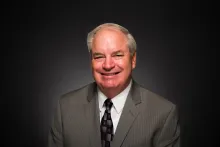
Robin Webber was born in Chicago, Illinois, in 1951, but has lived most of his life in California. He has been a part of the Church of God community since 1963. He attended Ambassador College in Pasadena from 1969-1973. He majored in theology and history.
Mr. Webber's interest remains in the study of history, socio-economics and literature. Over the years, he has offered his services to museums as a docent to share his enthusiasm and passions regarding these areas of expertise.
When time permits, he loves to go mountain biking on nearby ranch land and meet his wife as she hikes toward him.