

Gary Antion
Part 6 of the Pastoral Epistle series presented by Steve Myers and Randy Stiver.
You hung with us on the web as well, as we're working through some technical difficulties here. I'm Steve Myers. This is Randy Stiver. We've got the Bible study tonight, so welcome. Let's ask God's blessing on the study before we get into things tonight. So if you bow your heads. Great, loving Heavenly Father, God Almighty, thanks so much for your tremendous blessings. We love you. We praise you. We honor you. We ask for your presence here tonight. Inspire your words so it can be expounded in a way that brings you glory and honor and really brings the truth to mind. Thank you for your words and prayers to listen, and certainly minds and hands to do your work and accomplish the will that you have set out for us.
So we thank you for this opportunity. We pray for your blessing, not only here, but on all those who are listening on the web as well. So bless the technical side of things so that your word will go out clearly and in power and will really bring glory to you. So we thank you for this and put it into your hands and ask your guidance and blessing. In Jesus' name, amen. Well, Mr. Stiver is going to introduce us to 2 Timothy, so we'll turn it over to him right now.
Well, good evening, everybody. 2 Timothy along with 1 Timothy and then the short epistle of Titus. In the Bible, those are called the pastoral epistle because written by the Apostle Paul, of course under inspiration of God, to give those two men who were pastors that Paul had trained.
There's a lot of specific instruction on how the church should be cared for and how pastoring should be done and generally how the church should function as a unit. With that in mind, then, we look at the historical setting of 2 Timothy. It's sometime after the time that he wrote 1 Timothy. In fact, it is considered generally to be the Apostle Paul's last testament, his last writing.
We know of nothing else that he wrote after this. He was in prison and expected to be executed just almost any time. So, it has a little bit of a sober tone to it, and yet at the same time a very positive tone. Paul faced sobering circumstances fairly fearlessly, which made him hard for those who didn't like him to deal with because it was hard to intimidate the Apostle Paul.
Timothy was, in a sense, one of Paul's proteges, perhaps his most likely candidate as a protege. He refers to Timothy as his son in the faith. Timothy was from the town of Lystra in Asia Minor, the modern-day Turkey. That was where Paul was stoned, taken out of the city, and stoned and left for dead, but he wasn't dead. He was only dead, mostly dead.
Well, he might have been dead. We don't know. Whatever the case, he wasn't dead when God got done with him. The brethren were standing around watching, and I think I commented even on this last week in Bible study, that that seems to be very likely was the time that actually Timothy was there to see that.
So it made indelible and print upon him. Timothy's mother and grandmother, as we'll be introduced to those, we get into the first chapter, were faithful and dedicated members of the body of Christ. Timothy's father was Greek. It doesn't mention him being a part of the church today. It appears that his mother and grandfather were Jewish. Timothy was probably converted by Paul or baptized by Paul in the course of Paul's ministry. And in that sense, Paul looked upon him as a son of the faith. He was deeply attached to him, spent a lot of time training him.
He traveled a great deal with Paul, worked together with him. He could send him on trips to deal with this issue or that issue somewhere, and Timothy therefore got an awful lot of training for Paul. But when Paul sensed that his time was about to expire, then he wanted to give his last piece of advice to Timothy and by giving it to Timothy to others as well. The dynamics of the situation were this.
It appears that this was written around 67 B.C. Sorry, A.D. Just a little ways off. 67 B.C. In 64 A.D., the Roman emperor was Nero, who was apparently a great builder, a degenerate lunatic as well, but a great builder.
And the histories seem to imply that he's the one who burned Rome. He wanted to rebuild Rome, so he burned it first, so he had an excuse, but he blamed the burning of Rome on the Christians. So we really hadn't had a Roman persecution of the Church of significance at all until that time. By blaming Christians on it for the burning of Rome, then Nero could execute many of them. I thought I would mention this as kind of gruesome the way he did it.
He may use them as a scapegoat so that he'd get the political heat off of himself, because some Romans suspected he'd be done it. In and around Rome, this is from one of my Bible handbooks on my shelf in my office, Christians were arrested, put to death in the most cruel ways, and crucified, or tied in skins of animals and thrown into arenas to be worried to death by dogs for the entertainment of the people. Or thrown to the wild beasts, or tied to stakes in Nero's gardens, having pitch poured over their bodies and their burning bodies used as torches to light Nero's gardens, while he drove around in his chariot naked, indulging himself in his midnight revels, gloating over the dying agonies of his victims.
That's a rather demonic sort of thinking. It's also very Roman. When you read the history of Rome, they delighted in watching the agony and death of other people, especially those who weren't Romans. The Roman armies, when they attacked, tended to massacre men, women, and children on a wholesale basis in many areas. Time and again, that occurred. They were effective as a fighting force and capable of doing that. They thought nothing of gladiator—in fact, that was considered to be high entertainment to watch the gladiators kill each other.
As soon as one gladiator was a champion in the field and all the others were dead, for the most part they fought without armor. They had minimal clothing on, and then a small buckler on the left hand and the sword on the other hand, or the trident or whatever tool or fighting weapon they had. And then the crowd would scream for them to throw in more gladiators so that fighting and killing could continue. They thrived on that, delighted in it, especially if they captured slaves from some distant edge of the empire brought back to Rome to entertain people with their deaths.
Rome reminds you an awful lot of the Holocaust. I mean the perpetrators of the Holocaust. There are a lot of parallels. So what Nero was doing was not particularly out of character for an awful lot of Roman emperors down through time, in his time and in those to come later.
Paul then seems to have come under that persecution as well. Generally the commentators think that Paul was freed from the house arrest he was under in Acts chapter 28. Remember, he had appealed to Caesar. He went to Rome. He was imprisoned in one place or another in Jerusalem briefly, then in Caesarea. Then he had the sailing to Rome, which was shipwrecked on Malta. He finally made it to Rome. Then he was under house arrest for a couple of years or so. Then it appears that he was freed. And scholars think that he then was acquitted. Paul expected to be acquitted, actually, of that. If you'll notice in Philippians chapter 119, just give a few verses of background here. Philippians 119. Now remember, he's writing Philippians while he was imprisoned during the book of Acts. For I know that this will turn out for my deliverance through your prayer and the supply of the Spirit of Jesus Christ. According to my earnest expectation and hope that I have nothing, it in nothing I will shall be ashamed. So Paul expected to be freed from that. And it appears that, in fact, he was. The sporadic evidence in the pastoral epistles we can trace some of Paul's travels, or what we would certainly take to be his travels after his imprisonment. He probably visited Crete. You can notice that in Titus chapter 1 and verse 5. For this reason I left you in Crete. You should set in order the things that are lacking. That's what he told Titus. Well, if Paul left him in Crete, then Paul had been in Crete with him. And then he got up one day and said, we're going. Goodbye, Titus. No, I'm sure he prepared him a lot more than that. That he had been in Crete would be one of the places. Come back to 1 Timothy chapter 1 and you'll see if possible the apparent other two of the other places. 1 Timothy 1 and verse 3. He says to Timothy, as I urged you when I went into Macedonia, and we don't know necessarily why he went into Macedonia on that trip, as I urged you when I went into Macedonia, remain in Ephesus, that you may have charge over them and teach no other doctrine, etc. Thus, it appears that Paul had gone to Macedonia from Ephesus, leaving Timothy there. So he had been in Crete with Titus, left him there, left Timothy in Ephesus, he'd been in Ephesus, then he went on to Macedonia.
So we find, again, some evidence of some travels that Paul did after being freed in Acts from Acts 28. In Philemon, a little tiny short epistle that comes right after Titus, Philemon, let me see, verse 22, it's only one chapter, so you don't have a chapter reference.
Paul says here, But meanwhile also prepare a guest room for me, for I trust that through your prayers I shall be granted to you. So he's writing for Philemon, and he asked him to set up a guest room in readiness for him, and he lived in Colossae. So he was in Colossae, and then we go back to Romans 15.24. He was in Spain. Romans 15.24. Romans chapter 15 and verse 24.
That'll be verified in Peter 1.24. Here we go. All right, for this reason, in verse 22, to pick up the context, I have also been much hindered from coming to you, but now no longer having a place in these parts and having great desire—these parts, meaning he's on his way to Rome—having a great desire these many years to come to you, whenever I journey to Spain, I shall come to you. So he planned to go to Spain, and it appears that Paul did. All of those areas were readily available for travel in the era of the Roman Empire. The Mediterranean was a crossroads. It was the highway of the center of the Empire. So Paul appears to have traveled to a number of places and then was re-arrested in that time of persecution around 64 AD. The commentators generally think that he was executed in 67 AD, and it was 67 or 68. That part isn't quite clear. But it appears that Paul pinned the second letter to Timothy when he was aware of his coming death, and the evidence of that is in chapter 4 of 2 Timothy verses 6-8.
For I am already being poured out as a drink offering, and as shedding of his blood in that sense. In the time of my departure as hand I fought the good fight, I have finished the race, I have kept the faith. Finally there's laid up for me a crown of righteousness, which the Lord, the righteous judge, will give to me on that day, and not to me only, but to go all those who love his appearing. So Paul expected execution. He had done his duty and figured that that was what it was going to be. He penned that letter being aware of his death, and also kind of in a lonely state to give you the setting, because we'll touch on these verses later, but also there in chapter 4 verse 16. He was pretty much alone during this imprisonment. At my first defense no one stood with me, but all forsook me. May it not be charged to them. So he was being accused of, one, being a Christian, and two, starting a new religion that was opposing the Roman Empire. So everybody apparently vacated from being around Paul.
The only one actually that was with him was his own version of Dr. Watson. In verse 11, only Luke is with me. Only Luke is with me. I say his own Dr. Watson. Luke was the physician, so he was a doctor. If you can compare Paul to Sherlock Holmes. For sheer brilliance, probably there's a fair comparison, but Sir Arthur Conan Doyle made Sherlock Holmes kind of quirky. The Apostle Paul was not quirky. He was brilliant and feisty and dauntless, unintimidatable. And he didn't want to leave, you know, end his life without seeing Timothy and what I consider to be one of the special joys of his ministry, Mark, John Mark. So that's in verse right after where we just read. Luke is with me in verse 11 of chapter 4. Get Mark and bring him with you, for he is useful to me for ministry. And Tychicus, who I have left in Ephesus, bring the cloak that I left with carpets at Troas, maybe have been at Troas where he was re-arrested. That's one speculation. It may have been a rule, but it may well have been in Troas, which is why he left those things there. When you come, and the books, and the books, especially the parchments. So here, he wanted Timothy to come back, his son in the faith. He also wanted Mark to come. And the only mark that we know this could be would be John Mark, who wrote the book of Mark, and who was the Mark that abandoned the trip with Paul and Barnabas back in the book of Acts. And Paul was not happy with him for that, and refused to take him the next time. So Barnabas took it. So there was a bit of a division between Paul and Mark, but by the end of Paul's life, that was completely gone.
And Mark was considered to be one of his great helpers, and he really desired him to be there. You almost wonder, requesting the parchments, if he wasn't setting in order some of his epistles for canonization. You know, this seems to be a hint of that here. But it's just a special joy to see, okay, here was a difference of personality, Mark, for whatever reason, kind of flaked out on a major trip. And Paul didn't want to give him another chance. Barnabas did. Barnabas was probably the uncle of Mark, anyway. So Paul and Silas. Actually, we worked out for the better. Barnabas went one way and covered some of the churches. Paul took Silas, and they went another way, so they got twice as much done. So it actually worked out for the better. But now Mark, at the end of his life, is truly ready to be a huge help to Paul. So we see it in the overview. We can see sort of the setting here, and the sober tone and the desire, the burning desire, to see these two men, and to try to get a few things, the last things done before the end comes. Finally, look a little bit at the purpose, the overview, the purpose of the epistle, was to offer final instructions to Timothy regarding Christian life, and not only just Christian life. Timothy, Paul was not teaching Timothy to simply know. There are four levels of teaching. There's teaching to know. He'd done that. And he wasn't just teaching Timothy to do, which is the second level, teaching to do. And he wasn't just instructing or teaching Timothy to believe, because that's like a third level of teaching. He was gone, and had long gone, to the fourth level.
He was teaching Timothy to teach. I want you to remember everything that I've taught you, because you must teach it to others. I'm going to be gone. You know, I have spent myself in a worthy cause. I love that phrase Theodore Roosevelt came up with it. To spend yourself in Christ and his work in the gospel of the kingdom of God. And he was ready to lose this mortal coil and go into the long sleep and await the resurrection. And in the meantime, he wanted Timothy to carry on, and Mark and the others who were faithful. So there is a personal, intensely personal nature and tone to this epistle. When we read it, try to capture that, because it helps you appreciate the impact that it should have, rather than just sort of reading it academically.
Soak up everything that you can of the feelings and the thinking and reflecting that Paul must have been doing in that probably dark and damp prison in Rome while he was awaiting execution.
There's much, much to be learned from it, so go ahead and turn over to Mr. Meyers to plow into chapter one. All right, let's plow away then. I think that's an interesting thing.
You think of it in terms of, what if this was written to me? How would I view the words that are written? I think that's a great way to think about the words that are written. If this was a letter that was written to me, how would this affect my view? How would it affect my life? How would it affect the things that I'm going to teach to others? And so that's the impact that Paul wanted this letter to have on Timothy, that it would profoundly affect his service to God and to his people. So to begin with, in verse one, if you remember in the New Testament times, this time when this letter would have been written, when a letter was composed, they always wrote who the letter was from before they said who it was to. So like today, we would write, Dear Timothy, but in Paul's day, he said, Paul. This is from Paul. So it starts out like that and then tells us who it's to. So it starts out, Paul, an apostle of Jesus Christ by the will of God. He wasn't appointed by others. He was appointed directly by Jesus Christ, taught in the wilderness by Christ, was by the will of God. He was one sent. He was an apostle sent forth on a mission to represent God the Father and Jesus Christ. And it's an amazing, at least an address that he gives as he starts out to focus on what the gospel is, what is the will of God when you think of what the work is. And he says, according to the promise of life, which is in Christ Jesus. So when you talk about the gospel, you talk about the will of God, is the will of God judgment and fire and death? And oftentimes, you think of those huge things when you think about the end times and the tribulation and all the difficulties. But here, Paul focuses on the promise, the promise of God. This wasn't a threat that ultimately the gospel is a tremendous promise that God is looking forward to building a family. And so here's Paul focusing on that very promise, the promise of life.
And that's what it's all about, not just life today, but eternal life. So Paul directs Timothy right according to that and says, Timothy, you're my beloved son. Verse 2, he says, grace, mercy, and peace from God the Father and Christ Jesus our Lord. Sometimes when Paul uses the words Christ Jesus or Jesus Christ, it seems at certainly at different times to emphasize who Jesus was. If he says Jesus Christ, oftentimes in the context of things, you'll notice that he's emphasizing the humanity of Christ. When he flips it around and says Christ Jesus, oftentimes it seems like it's referring to his divine nature that he is the one who sacrificed his life for us, that he is at the right hand of the Father. And so it seems to bring that title of Christ, the Messiah, the one sent, the anointed one, brings that to mind and the power and the authority of the Father and Christ as he begins this letter to Timothy. And of course, we also notice here in verse 2, where's the Holy Spirit mentioned? It's not there, is it? So there is no trinity. It's not mentioned here at all. That would be a terrible slight to the third person of the Godhead if there was a third person. But there isn't. And so he directs it to Timothy and he says, peace from God the Father and Jesus Christ our Lord. Then he goes on in verse 3, I thank God, whom I serve with a pure conscience, as my forefathers did, as without ceasing I remember you in my prayers night and day. So there's a couple of things, even in this short little passage right here, Paul is giving some insight into Christianity itself. What is Christianity? Is it just a new improved version of Judaism? No, it's not. This is the fulfillment of that promise that he was talking about. All the way back in verse 1, the fulfillment of the promise is that Judaism, yes, well, they were God's people. Israel was to be God's model nation. And yet that was a physical approach to things rather than the spiritual nature of what God was going to be doing. And so this was the fulfillment of the promise. What came through the forefathers, he says Christianity is the ultimate. This is the plan. This is the promise of life. It could have never happened just through the old covenant. Not a possibility, but through Jesus Christ our Lord, life is possible. Eternal life is possible. And so he says he thanks God for that wonderful plan that God has mapped out. And of course, he not only thanks God for that, personally, he's thanking God for Timothy. When he's having Timothy come to mind, he thanks God for him. Look at what he says in verse 4, greatly desiring to see you. Boy, that would be amazing to have an apostle write that about you. I can't wait to see you. Now there must have been a close personal relationship. He even says being mindful of your tears. Perhaps the last time they left each other, they cried.
Now they probably realized who knows what the future will hold. Paul knew he had to go before the Roman government. What would happen? Ultimately, his death would result. And keeping that in mind, maybe the tears flowed. I know that's a difficult thing to imagine, especially for us men, you know, because we don't cry. But I think putting ourselves back at this time, being emotional was a little bit different. Today, I suppose, we're more staunch, we're less emotional. We don't want to show our emotions as men in that way, but taking into account the time, the culture, emotions, they're a cultural thing. It's not a biblical thing as far as, oh, I can't cry because that's not being a strong character. Well, that's not the case at all. Our reluctance to show emotions sometimes isn't the best thing at all. Does God have emotions? You know, does Jesus Christ have emotions? He showed emotions. You know, when he prayed in the garden before the crucifixion, he cried great tears. God shows emotions. He shows how jealousy is for us to be a part of his way.
And we're made in his image. So it's a good thing to show emotions, especially in a godly way. So here Paul is just writing about that. I remember your tears. He says, I pray that that would be turned around and be filled with joy, he says. He's just looking forward to the time when they could see you again. And he says, when I called a remembrance, the genuine faith that's in you.
As Mr. Stiver said, you know, being in prison, that would give you some time to think about things. And it must have come to mind, you know, what is Timothy doing? What is he about? How are things going with God's people? How is he performing the functions of a good minister in the way that he needs to? And so when Timothy came to mind, or maybe somebody reminded him about Timothy, you know, there were certainly disciples there in Rome that were helping Paul.
And perhaps, you know, some circumstance came up where they just talked about, oh, do you remember when this happened? And when that came up, Paul thought of Timothy and the faithful person that he was. He was a man of God, genuine faith that talks about sincere faith. This is not a hypocritical faith, but a genuine faith that was in Timothy. And he traces it right through his lineage, traces it through his grandmother, Lois, and your mother, Eunice. So Timothy was what we call a third-generation Christian. And that faith was followed right through that line. And he says, I'm persuaded it's also in you. Now, it doesn't come across in English very well there, but persuaded means I am sure there's no doubt that faith is in you. And so he remembered that. And what a great memory that would be. Did I toss in something? Oh, absolutely. A genuine faith. I was reading that as well in preparation for the study and reflecting on that.
Paul seems to have seen that in Timothy fairly early on. And there is something marvelous when a child turns his or her heart to God early that they start to believe. And for some, it's on the young side. And you can see it in their conduct. Some do that initially, and then they are, you know, tempted by the culture that they're in, and they go wandering. But then there are those who seem like just a totally straight arrow right through their turbulent years of teens. In half-teenage years, by the way, in those days, there were no teenagers then.
When you were 13, you were a young adult. And there was no luxury of that. But Timothy had that marvelous, genuine faith and dedication and belief in God, which means his heart was turned to God, he loved God. It was just obvious. Paul says, you can see it in your grandmother, consider the mother that's in you. Absolutely. And an interesting thing about it is, here's the apostle of God who sees that in Timothy. And I think that's an amazing thing. You think about mentoring people, about encouraging people. How encouraging would that have been to Timothy to say, you know, the apostle? He sees it in me. And that would be such an encouraging thing. Would he want to even do better? Would he want to put those things to an effect even more powerfully in his life? I think that would be something that would really be encouraging. That, and as the teacher, which Paul was the teacher, having somebody who learns so well and eagerly soaks it up, you draw strength from when you're in a public speaking situation, you read your audience and you draw strength from the audience and the energy. And for teaching, it's the same thing, and even more so, because it sort of eggs the professor on when he's actually got students who are interested, and their hearts are in the subject. So it works together both ways. Yeah, a good student brings honor to his teacher. And I suppose in that way, what an inspiration it would have been for Timothy to feel that here Paul believes in me. He believes in me, and he's seen my life, he knows who I am, he knows my family, and he still believes in me. And so that's an amazing encouragement there. So Paul gives him a job to do. Verse 6, he says, I remind you to stir up the gift of God that's in you through the laying on of hands.
Now, some of the scholars feel maybe this goes back, if you remember in section 1 Timothy, that perhaps there was some kind of special gift that Timothy had, special things that God had given him. Perhaps it was a way he could speak, serve, do different things. Is that referring to this here in this passage, or would it be referring to something else?
In this case, it doesn't seem to be referring to a special gift in that regard, because it says it's through the laying on of hands, and we know the gift that comes through the laying on of hands. And of course, that's God's Holy Spirit. And he kind of mentions that then in the next verse as well, that God's given us not a spirit of fear, but of power. So it seems that it's more likely referring to the gift of the Holy Spirit. And it's through the Holy Spirit then, Paul's telling him, you've got to stir up that gift. You've got to make it happen, in other words. He literally, the word there is the same word that the word coal comes from, like a burning coal, a fiery hot ember. That's the same word is used. The base word is a word for the fiery timber or ember, or a burning hot coal. And so when he says, stir up that coal, it's like it's there, and it's red, but it needs to burst into flames. And so Paul, in a sense, is saying, fan that thing into flames. Let's really get cooking. That's what he wants to do here. He's got to get the gift of God really cooking. Get it on fire. And it's an ongoing kind of a thing as well, that it's not just a one-time thing, that we get the flames going, and then the fire's going to take care of itself. Because if you're one who likes to camp, you know the fire eventually goes out. Well, you know, there's another laying on of hands, though, that would be involved in Timothy by this time, and that would be that Paul ordained him as an elder. And that's made, you know, obviously inferred, but it's also made clearer in chapter four and verse five, but you'd be watchful in all things, enduring afflictions, do the work of an evangelist. Then Timothy was an elder, and he pastored, but he also was an evangelist, which meant that he preached to the public. So you have the laying on of hands twice over, and actually Paul's hands, because it says the laying on of my hands. So hence, the Son of the Faith. Yeah, well, like you mentioned, was he there at Lystra when Paul was stoned? When was he baptized? Was Paul there at his baptism? Probably all those things, you know, come into play. And certainly the gift of his spirit and then the gift of being called in the ministry. What a fantastic blessing that would have been for Timothy. And so he's telling him that gift that God's given you, you've got to put that into continuous action. If you're fanning this coal into flames, that's an ongoing thing. You've got to keep feeding the fire. And so that's the way that's stated there in the Greek is a progressive kind of thing. It's an ongoing, continuous kind of an action. That's a good reminder for all of us. We can't take things for granted. We can't take our conversion for granted. That we've got to continue to grow. We've got to continue to fan that flame of the intensity of living God's way, putting it into practice, and growing in the character of Jesus Christ. That has to be a part of what we're about. It has to be an ongoing effort throughout our entire life. So Paul says, that's what you've got to do, Timothy.
He says, God hasn't given us a spirit of fear. In verse 7, we can't be timid. We can't be cowards. But it's a spirit of power and of love and of a sound mind. So this is the power that's like dynamite. The Greek word there for power is dunamis. It's powerful dynamo. This is something that is mighty and strength, strong and powerful. And it gives us the capability to accomplish spiritual things. We can't do it without the spirit of God. But God's spirit is one where we can do powerful things. And power, not only to accomplish God's will, power to be an evangelist, to preach the gospel, power to overcome obstacles as well. Here's Paul writing from prison, the work of God at this time certainly was difficult work. It was, here's a young man who has to stand strong in the face of apostasy. Stand strong. We'll see as we go through 2 Timothy, there's a number of names that are mentioned of people who worked against the truth, people who stood against God, who stood against Timothy and Paul, who ardently worked against the truth of the gospel. Timothy had to stand up against it. He had to have the strength of character, the power of God's spirit in order to stand strong for the truth. And so in some ways, when we talk about the power that God gives through His Spirit, for us, for Timothy, this would have been the power and the ability to stand strong when a normal person would break.
It's getting beyond the breaking point, and yet not breaking. And I think we can think of many examples in our life when we might be pushed right to the edge. Maybe we're pushed, for anybody else, we might be pushed right over the edge. But because of the power of God's spirit, because that spirit has a powerful influence and effect on our minds, that we can go beyond our limits.
And God can give us the help that we need so that we can have that self-control of a sound mind. We can have that power that's given through His Spirit. And so he says, Timothy, that's the kind of spirit you've got. Stir that up. Put it into action. It's that character of Jesus Christ that's growing in us. It's what's going to get us through life. It's what's going to help us, and Timothy especially here, to continue to face the obstacles of the ministry, the things that would face him in his ministry, and move beyond those things.
So he says that in verse 8, Therefore do not be ashamed of the testimony of our Lord, nor me, his prisoner. So he says there's nothing to be ashamed of. There's nothing to be ashamed of. The testimony of Christ. What is the testimony? Well, what did Christ preach? What did He teach? That's what that's talking about. His words, the doctrine, spiritual teachings. That's the testimony of Jesus Christ. It's interesting. He uses that word. It's reminiscent of a court case, and the testimony that's given. Christ testified, in a sense, against this world, didn't He? You know, He condemned this world in many ways. He gave hope to the world as well. That His testimony not only condemned evil, but at the same time gave hope for those who would follow God, who would turn to Him. And there's an interesting connection then, as you look forward to time, the two witnesses.
What are they going to be doing? Well, they're witnessing in court. They're witnessing in the court of this world. They are testifying against this world. And so there's another form of testimony as well. Through their words, they're going to be preaching and teaching God's word that is going to be a warning to this world, and their testimony needs to be heard so that people could change. And so Paul says, don't be ashamed of the testimony of our Lord, Timothy, or of me, a prisoner. I'm not sure how he means this. I don't think he necessarily means that, you know, here I'm a prisoner in jail, even though he was. There may be a double meaning here in a sense, but I don't think it's a figurative kind of thing. I think the realistic side of things is that they were prisoners of Christ, you know, slaves of Christ. And don't be ashamed of being a slave of Christ. This is who we are. We are servants. We are God's people. Don't be ashamed of that. Don't be ashamed of me, his prisoner, because you know you're his prisoner as well. We are slaves of Christ.
So he says, share with me in the sufferings for the gospel according to the power of God.
Be a fellow worker. Be a partaker in this together with me. There's going to be difficulties. There's going to be challenges. There's going to be struggles. But that's part of our calling.
That's part of our calling. And it's an amazing thing today. Most of us, especially as good Americans, we try to avoid all pain. We try to avoid all suffering. We try to avoid all difficulties, just about any cost. I think in so many ways we do. But there's things we can't avoid. We can't avoid it. And so he's reminding Timothy, there's going to be hardships. There's going to be difficult. Some of these things we cannot avoid. But if we have the perspective of God in these things, then we're going to be able to endure those things. And we're going to have the power to overcome those things, because it happens through God according to the power of God. Then down in verse 9, he says God, ending up after verse 8, he says, He has saved us and called us with the holy calling, not according to our works, but according to His own purpose and grace which was given to us in Christ Jesus before time began. And so he says some interesting things in this little short passage here in verse 9. He's saved us. How has God saved us? Has God really saved us? Is that already done? Or how do we view that particular passage? Well, it seems that there's a number of ways to begin to understand it. Are we saved?
Normally we say, no, we are not saved. We know that doesn't happen until Christ returns, and we're spirit. And yet, many times throughout Scripture, we see this in the past tense, that we are saved. God has saved us and called us. If you hold your place here in Timothy, go over to Romans 8. Verse 24. Romans 8 and verse 24. Here we see it in the past tense. Talking about we are the firstfruits. We have the firstfruits of the spirit. Verse 24, for we were saved in this hope. But hope that's not seen is not hope. For why does one still hope for what he sees? We were saved. We were saved. It seems to be a done deal. All right, how does that apply? What does that mean? What is it getting at there? There's one that oftentimes the evangelicals use. It's over in Ephesians chapter 2 and verse 8. And that's the passage that says, we are saved by grace. Grace through faith. Well, maybe we should take a look at that one. Take a look at Ephesians 2.8.
Ephesians 2.8, it says, for by grace you have been saved through faith. So that's a past thing. Well, what are we saved from right now? Well, if we're converted, we have God's Spirit. Are we saved from past sins? Absolutely. Are we saved from the guilt that that brings? Are we assured of the fact that God has forgiven us and saved us from that penalty of death? Saved from the guilt? Saved from the penalty of past? Absolutely. There's no doubt about that. But it's also interesting when you follow through Scripture that it's a present thing as well. It's not just a past thing. We're saved. We are already saved as Romans 8, Ephesians 2 here in 1 Timothy as well. But there's also many passages that talk about being saved as a present reality. Maybe look at a couple of quick verses in this regard. How about 1 Corinthians 15?
Well, let's go to chapter 1 first. 1 Corinthians 1, and then we'll flip back to 15. 1 Corinthians 1, 18.
Here we notice this in the present tense. Not only have we been saved, verse 18 of 1 Corinthians 1 says, the message of the cross is foolishness to those who are perishing, but to us who are being saved. We're in the process right now of being saved. It says it is the power of God. The true gospel message is the power of God, and we are being saved through that. Well, what are we being saved at this moment? See if we can gain a little bit more insight here. Now, there are many, many verses that refer to being saved. We were, we are, and in fact, we'll see in a moment we will be as well. 1 Corinthians 15, right at the very beginning of the chapter. Moreover, brethren, I declare to you the gospel which I preached to you, which also you received, and in which you stand, by which also you are saved, if you hold fast to the word which I preached to you, unless you believed in vain. This is a process that's happening right now. We are saved. We are saved knowing that enables us to get back up when we fail. It enables us to move forward. It empowers us to change and to grow. It helps us to hold fast, it says, the word so that we can look forward to the ultimate outcome. The ultimate outcome. That's the future. And in a sense, it is, isn't it?
There's a past sense of it, that our past sins are forgiven. There's an ongoing process that we are saved now as we continue to live and follow the way of God, that we can look forward to the future. Now, if you go to Matthew 10, verse 22, Matthew 10, verse 22, might make an interesting study sometime, just to put together all the passages that talk about being saved, that we were, that we are saved, and that here in Matthew 10, 22, we will be saved. So in Matthew 10, verse 22 here, Christ is speaking. He says, And you will be hated by all for my name's sake, but he who endures to the end will be saved.
So we see this ongoing process. Christ specifically talked about that. There's the ultimate outcome in the saving process, ultimately to be Spirit in the kingdom of God. That's what we're looking forward to. So if we flip back to 1 Timothy 4, not quite 2 Timothy, go to 1 Timothy. We'll look at one more passage here. In 1 Timothy 4, and verse 16. 1 Timothy 4, 16. Here Paul reminds Timothy, he reminds us, Take heed to yourself and to the doctrine. Continue in them. For in doing this you will save both yourself and those who hear you. So we see the ultimate, it's an ongoing process, isn't it? That if someone were to say to you, brother, are you saved? What do you say?
Well, it depends what you mean. It depends what you mean, really. Doesn't it come down to that? Well, what do you mean? Am I saved from past sins because I've been... Yes, absolutely.
Understanding the fact of God's plan allows me to continue to grow in grace and knowledge. It empowers me to put on Christ. And so I am being saved. I'm in that process. But ultimately, that process isn't complete until Christ returns, until we are totally converted as spirit beings in the family of God. That's when the ultimate saving comes. So Paul sees it as it is. God sees it as a reality as well. As long as we continue to strive and work and put on the character of Christ, we'll be a part of the family of God. And so we see this holy calling that he talks about is amazing. It's not just a calling, but it's a holy calling. It's a tremendously spiritual aspect of what God is doing. So if you flip back to 2 Timothy, 2 Timothy, Paul reminds Timothy, he reminds us we don't earn this. There's nothing we can do to be a part of the family of God. God's got to give it to us. Certainly there's family responsibilities. As he calls us, we have to obey. We have to follow him. But that doesn't earn us a place in the kingdom. It's the gift of God that does that. And so he says it's according to his purpose. It's according to the Gospel. It's according to the grace that was given to us in Christ Jesus. It says, before time began. And so verse 10, chapter 1, 2 Timothy, he says, now it's been revealed by the appearing of our Savior Jesus Christ. Remember we talked about the humanity of Christ in the flesh, Christ in the flesh, our Savior Jesus Christ, says who's abolished death and brought life and immortality to light through the Gospel. This has been revealed. It's clear. It's not hidden.
It's hidden to some, but it's visible to those who have that holy calling that he talks about. And that he's abolished death. We don't have to fear death. We don't have to fear the death penalty. Why? Because Christ gave his life. He brought life and immortality to us in that whole process of conversion. And so we have that ultimate possibility of immortality, incorruptibility, you know, being able to have eternal life. It says through the Gospel.
And then in verse 11, he says, to which I was appointed a preacher. He was the preacher of the Gospel. He's an apostle and a teacher. So he talks about three aspects of his calling into the ministry, that he was a preacher, which in this case, it's the one who cries out. The Greek word was sometimes used for the town crier, who would come out and give a message from the mayor or from the town people that needed to go out to everyone. And they would come out to the town, well, we call it the town square, and just proclaim whatever the news was. And so here, Paul is saying, I am one who publicly proclaims the Gospel, the message, not from some governor, not from some mayor, but from the king, the king of kings. And so he was the one who had heralded that tremendous official message to the world, to the Gentiles especially. And so he was called that he was sent forth by God to preach and not only preach, but to teach as well. And so Paul delineates his responsibilities and how he expects those responsibilities now to be carried out by Timothy as well. All right, with that, other things to add to that, or maybe we can carry on from there?
He also is a teacher of the apostle, or of the Gentiles. Paul had a neck of a rabbi, I mean a major rabbi. So he obviously could teach the Jews, but God had selected Paul to be the teacher of those who had none of the biblical background that the Jews had. They had a lot of knowledge of the Torah, or the Old Testament. But Paul goes on in verse 12, he says, for this reason I suffer these things, because I do God's work, I'm happy to suffer these things. Nevertheless, I'm not ashamed. You know, we didn't, we don't sign up in God's way of life when we find out that, whoa, this is a lot different than what any other way of life is, even different than traditional Christianity by a long shot, because traditional Christianity has been distilled down through ages of, well, not looking at what the Bible directly says. Modern Christianity is blinded to some of those things right now. So when your eyes are opened, you know, Paul said, I'm not ashamed. I'm happy to do this. This is what I'm here for, for I know whom I have believed.
I know whom I have believed. One thing that is difficult to get around is the power of faith.
You know, faith is called in Ephesians the shield of faith, and most of the ancient armies used shields reasonably effectively. That was one of the strengths of the Roman legions, is they carried a big shield. Everybody was left, was right-handed in those days because they all carried their shields on the left arm. And one of the ways you defended yourselves in battle is you threw up a shield wall, their left arm's length, so there's a shield right across. Then when the enemy shot arrows or threw javelins at you, they just hit the shields and fell off. And you think, well, that's easy. We'll just throw them until they drop down on their heads. Well, that was the second line of soldiers. They threw their shields up. So they basically you made a hunt, except the Romans referred to that maneuver as the turtle. And then they would move forward as a unit toward the enemy and clash with them, and then they came around with their right hands on their swords. So, you know, that shield, they had to believe in their shield for protection. And likewise, the shield is our shield of faith. And Paul had it. And it's impressive to read the words of somebody who was, as I said earlier, dauntless. He doesn't just say things to ... that are overstated. He just says what he thinks and what he is. Paul had cut through all the flack of life. He used to be one of those whiz kids. When he was a young fiery Jewish rabbi, you know, a bloodthirsty zealot. You know, quite frankly, he was responsible for the beatings and even deaths of some of the church members decades before this. But he was converted and he changed completely. I know whom I have believed. And he goes right back to that indelibly printed experience he had on the road to Damascus. It's recorded in Acts 9 and Acts 22, when Christ struck him blind. When he was going to Damascus with letters of extradition to arrest some church members that fled there from Jerusalem so they could bring them back, throw them in prison, or have them tortured or beaten to try to get them to recant. And Paul was the one who recanted.
And he was brought down by Christ himself. I know whom I have believed. And am persuaded.
He goes on in verse 12, and persuaded that he is able to keep what I have committed to him until that day. And the term for committed carries the concept of deposit. Paul has deposited, in a sense, his life, his energies, his very being in the hands of Christ. And when he dies, that final deposit is made, and he knows that it will come back in spades later on. When the resurrection comes, when Christ returns, that's where he looks forward to. What we affectionately call the long sleep when you go to the grave and you wait for the resurrection. So I know whom I have believed, and am persuaded, that he is able to keep what I have committed to him until that day.
Life, life isn't all that bad in the 21st century so far. So far is a big term.
So we don't often think about what it would be like to die as a martyr for the faith.
Sometimes we need to. It's going to happen. There are going to be some. We don't know who.
But you have to cross that bridge before you get close to it.
Otherwise, you're not going to be Richard or Tammy or George or Sally the Lion-hearted.
You'll be one of those names the Chicken-hearted. Paul was working with some who were a little chicken-hearted at the time. Hopefully they changed as time went by. Timothy wasn't one of them.
Neither was Mark nor Tychicus and a few others. Luke was true blue.
Now we go to verse 13. Hold fast, and this is an important one in staying balanced.
The thing that certainly our adversary would like to do is to throw us out of balance.
Tip us off the edge of truth. Hold fast the pattern of sound words which you have heard from me in faith and in love which are in Christ Jesus. Hold fast the pattern of sound words. Now, the word for pattern in the Greek carries the meaning of a sketch or a plan or an outline, or I guess you could extend that in a modern time, the blueprint.
You know, obviously it's organized. It's not haphazard.
Everything synchronizes and connects. All the dots have lines that go between them.
What he didn't want Timothy to do was when Paul died go off and invent his own religion and lead people astray. There was already plenty of that. There was apostasy in Asia. He had to deal with that. That was weighing on his mind. I mean, the West or part of the Roman Empire, you know, the faith was being destroyed through persecution, except that it didn't destroy it.
It strengthened it in many ways. But from where Paul was, you know, if they kill so and so and so and so, then who's going to carry on? Well, Paul had sowed the seeds of a pattern of sound words that Timothy would use and so would others. But so should we. Let's think about this.
Every day, it seems we get letters that come in for reports of somebody that thinks thus and such. Read it on the internet. Never has there been a time for people to promote half-cocked doctrines and ideas. When I say half-cocked, that's a I'm using the revolver term. You half-cocked a revolver, it's not going to shoot. It's ineffective. You got to get it all the way back, the hammer all the way back to get the shot made. So Paul gives a pattern of sound words. That pattern has a pattern. The pattern has a pattern. For example, when you're trying to analyze what the Bible teaches and what God's will is, you go not to the Scriptures that are difficult to understand. Some of them are. Even some of what Paul wrote was difficult to understand. The Apostle Peter said that at the end of 2 Peter chapter 3. But you go to the obvious Scriptures, the clear statements of Scripture, to get the basic teaching.
That will give you the big picture. The big picture includes such things as the two great commandments, love God above all, love your neighbor as yourself, and the ten commandments.
So then you've got the ten commandments, the basic outline of what God intends for us to do.
And find out then, well, how does that connect to love again? Because law and love, how can they go together? Well, let's try reading the Bible once in a while. Romans chapter 13 and verse 10, love is the fulfilling of the law. They go together. They're been married forever.
And look, we look at the, in the big picture, we see the the history of the Bible. Everything that happened as God has worked with with Israel and then with the church. We have that all recorded for us. And from that, we come to understand God's plan of what He is doing and our part in that. Keep that big picture in mind from the obvious Scriptures. And then where you're trying to understand something more detailed, what has been the understanding of the church? What has been the pattern of sound words that have been taught to us in our age? Timothy was going to lean on that pattern of what Paul had taught him in the years to come after this, after Paul had been executed. What has been the understanding and therefore the teaching of the organized body of Christ operating in good faith? Don't try to be a new apostle with no credentials. Paul earned his apostleship to the Gentiles the hard way. Peter earned his. He was given it by Christ, but they earned it first by three and a half years of teaching, or three years, three to four years of teaching in his ministry between in that time frame. And then they earned it through persecutions and back sets and mistakes. Peter made more than his share of misstatements, but he learned from every one of them. So once you've come to what the understanding of the organized body is, then you can begin to comprehend the more difficult scriptures as we refer to them. So don't try to build a doctrine of your own. Don't assume while the church doesn't know anything, you know, this is obviously the case. In any, quote, one obscure scripture that you read on the internet some place, no, don't do that. There's a pattern of sound words. There is a systematic way to understand God's Word. Granted, we have to have this Spirit as well guiding us, but with that, then it is a systematic way. Here a little and there a little, and it all comes together, and you see the big picture of what God is doing. So beware of those who have this new idea and anything that the church teaches or the organized church teaches is wrong, and you've got to listen to me. I'm the only one who knows this. My response is that person is a wannabe, and they don't have any reason for you to pay any attention to what they say at all. They have no sense. It's all due respect.
Pattern of sound words, which you heard from me in faith and love, and again, in faith and in love. We talked about love connecting to God's law and talked about faith, which are in Christ Jesus, how Jesus taught it. In the Old and the New Testament, remember, he was, before his human birth, was the Lord God of the Old Testament. One thing that came to mind, as you were mentioning, that we're both instructors at ABC, and the purpose of ABC is to try to instruct the students of the truth of God. Not only that they can understand them, but that they can teach them. I think that kind of ties in with that passage there in 2 Timothy. It just reminded me of the one over in Titus chapter 1, verse 9, where it talks about holding fast the faithful word as he has been taught. That's such a powerful thing. Just like you said, we're not inventing this ourselves. This is what Christ taught Paul. This is what Christ taught the disciples, the apostles taught the same things. So when they talked about Christ's doctrine or the apostles' doctrine, they were one and the same. So that was the expectation for Timothy. And then it's interesting, he tells Titus exactly the same thing that he teaches you've been taught.
And you stick to that, you're not going to get in trouble.
Exactly right. And when you stop and think about it, here we have, when we talk about those four levels of teaching, you know, of teach to know, to do, to believe, and then finally to teach, once you believe, to be able to teach what you believe, Paul had been doing that, which is why there was a pattern of sound words that Timothy would learn from. And so the meaning was then that Timothy would turn around and teach it to others as well. And then he would teach it so that they would be able to teach it, just like we should teach our children so that they could teach God's way. That helps them to internalize it. In verse 14, the good, that good thing which was committed to you, keep by the Holy Spirit, which should be the Spirit, not a person, which dwells in us, that good thing. Again, it has to do with a concept of like a bank deposit, this investment that God has made in us, the investment of God's Spirit, a conversion, the investment of God's truth in teaching, the investment of the energy of God's servant who come before us and taught us like Paul came before Timothy, Timothy came before others.
This you know that all those in Asia have turned away from me. And now he's going back to the real deal, real-time circumstances of that day. You know that all in Asia, Asia means Asia Minor.
That was what they referred to as Asia, have turned from me, among whom are Phyjalis and Hermogenes.
It sounds like milk.
Maybe that was his problem. Maybe that was the problem. Just the milk of the word, not the meat of the word. Yeah, it could be. But as I said, Paul was dealing and it was in his head, he was worried about it, and no concerned about it. I don't know if he was worried. I think Paul was past worrying in those days. He was at that concerned level, but he wanted loose ends tied up as best he could, and he knew that there was an apostasy raging in the east, in Asia, Asia Minor.
So that concerned him. He wanted Timothy to be up to speed on that. The Lord grants mercy to the household of, and this is a nice contrast to those other two, Onesiphorus. I'm probably slaughtering the way that was said in Greek, but you know, I can say Yeros, but that's about as good as I get in Greek. The household of Onesiphorus, for he often refreshed me and was not ashamed of my chain.
You know, a lot of people, when Paul was arrested this time, they want to get close to it. You know, maybe because they were worried they might get arrested too. I can understand that. Who wants to have pitch port over them and be turned on fire at night to light the evil emperor's, you know, midnight ride. So they were ashamed of his chain, but not Onesiphorus, Onesiphorus. But when he arrived in Rome, he sought me very zealously and found me. Now, in those days, typically, when someone was in prison, if they had friends, the friends could bring food to them and things they weren't going to get in prison, and they allowed them to do that. We don't allow them to do that so much in our prison. Well, take that. How do drugs get into the prison? How do weapons get into prison? I think things haven't really changed, have they? The more we're different, the more we are the same, historically.
But Onesiphorus found Paul and looked after him, provided for him, and he said it refreshed me. It was just encouraging. But he had so few of those, and Onesiphorus was gone, because you'll find out later in the book, he's back in Ephesus, where he came from. But the memory of him coming. And then finally, for this section, verse 18, the Lord grant him that he may know very well how many ways he ministered to me in Ephesus. So that was where Onesiphorus was from. But look at that! Those several sentences are such a high tribute to, apparently, a church member that was just absolutely fearless and dedicated to God in his way, got to Rome, maybe on business or whatever, I doubt it was a vacation trip, went to find the Apostle, and searched the prisons till he located him, brought him food, maybe brought him clean or repaired clothing, whatever he needed. Spend time with him, as much as the guards would allow him to spend. And Paul would be refreshed, he would feel better, and then Ephesus had to go home. And we have to go home, yet we still have a couple of questions to answer. Yeah, we get time to answer questions.
Okay. Do you want to plow in the chapter?
Do we have any other questions, Aaron? Or are we doing all right that way? I'm not sure if any have come in other than the ones we have. What do you think? Should we launch into those?
Well, let's look at chapter 2, and maybe we'll look at just a couple of quick verses here and try not to leave our questions unanswered here as well. So Paul continues on in verse 1 of chapter 2, "'You therefore, my son, be strong in the grace that is in Christ Jesus.'" He's not saying necessarily to be a graceful person. Yeah, that goes along with our duties. But where do we find the strength that we need? Well, it's not found within ourselves. We find strength in the grace of Christ, in the carousel, the love, the free gift, you know, God's love. And we can be strengthened inwardly because of that. That's going to strengthen us because all these other difficulties are going to work against us. But because of Christ, we can be strengthened. And he says, "'The things that you've heard from me among many witnesses, commit these to faithful men who will be able to teach others also.'" So they were right back to what we talked about. Teaching in order to teach. Teaching so that you're able to teach the truth as you've been taught. So you're to commit them. You're to trust, you know, entrust them to faithful teachers. So Paul could continue to go back. Who was his faithful teacher? Well, Christ himself was Paul's faithful teacher. And so it's interesting that it's not an office, it's teachers. It's these that are following the faith. And they're reliable, faithful men, it says. They're loyal, they're trustworthy. They're not like Phyjellis, they're not like the milkman, Hermon Genese. They're able, they're qualified. It says, "'able to teach others also.'" They have the capability to do that. They have the experience to do that. They're competent in order to do that. And so those are the men, the faithful men, who will be teaching the truth as well to others. And so that takes it to another level. And you've probably been in that situation where you're trying to explain a truth to someone.
And that brings it to a different level. If you know it for a fact, that's one thing. But then to be able to explain it to someone else, and to have all your sources and be able to bring it out in a very clear and concise way, that can be a challenge. And so that's what Paul is telling Timothy. He's got to look for, to trust this, to commit this to people who not only can learn it, but pass it on in the fullness of truth. That's what he's supposed to be able to do. You know, there's another benefit to this as well. We're talking about teaching to teach, as parents teach their children to be able to teach their children, to be able to teach their children. So that's how parents can teach their grandchildren most effectively, teach your children to teach their own kids. That you have reached your grandchildren long before they're born.
But when you study God's way and you listen, you learn, we need to learn not just to know, not just to do, not just to believe, but beyond belief or faith, we have to learn to teach. When you can explain something to others from the Scripture, some principle, some passage, because you've studied it and you understand it, the very act of explaining it or teaching it in that sense is going to sink that truth and that meaning deeper in your mind. God's word is not, the Bible is not just a regular book. I've got a few books that I think are pretty well written, that I like to read. They're kind of subjects I like to read, outdoor stuff, fishing, hunting, things like that. Hunting man-eating tigers from tak. Tak's a little village up in the mountains of Kumaon province in India, and I just read that story the other night. I love to read that author, his name is Jim Corbett, wonderful describer of jungles and scenes, and I can visualize what he's what he's writing. But when I go back and read it, you know, a couple years later, I think, wow, yeah, it was just like it was, you know, when I read it before. But when you read the Bible, you think, yeah, that was just like it was when I read it before, but what's this other thing? I never thought about this. This is a gold mine that has no bottom. You read the Bible, and whoa, there's more precious information and deeper meanings, either about the depth of the teaching itself or deeper meaning about, oh boy, I really do need to clear up that attitude problem I have on that issue, you know, because you read about it. So it's, like I say, a mine, a gold mine without a bottom. There's a richness. Every time you read the Bible, you can't get enough of it. Thus, as you teach something to somebody, you are mining more of what God's Word is teaching you. Yeah, that's a good point. Christ Himself said there's one teacher, that he's the ultimate teacher, and the great part? We got the textbook right here, right? This is the book, and so we've got his Word, and that's what we have to pass on, those precious truths of God. And so he's telling Timothy, that's what you've got to do. Find people who are able and willing to loyally transmit that truth to others. Of course, personally, he says then in verse 3, he says, you therefore must endure hardship. Once again, coming back to that here, Paul has been suffering for a while. He's been imprisoned, and he's telling Timothy, this may very well be on the horizon for you as well, so be ready. You've got to endure hardship. And he says it's like a good soldier of Jesus Christ. And of course, it's an interesting study. You want to put together lots of passages about soldiering. One that comes to mind for me, Ephesians 6, talks about the armor of God. Paul probably wrote that while he was imprisoned, and maybe there were guards right there that he could see exactly what they were wearing and associated the spiritual traits that we need and balance that out and compared it to the armor that the soldiers wore. Let me add a tidbit to that. I've been picking on the Romans in this Bible study, and they deserved it historically. But the Romans were not an empire college, they were an empire power. And their power was their army, the legions.
And they developed a system. That was the one thing they did. They had a system. They didn't have high mathematics. They only needed enough mathematics to build bridges so they could go over rivers to hunt down and kill other people over there and take their lands from them. That was pretty much their M.O. But their soldiers were pretty amazing. When a legion was on the march, every soldier carried his own kit. That meant he carried his food, too. There were no baggage trains, typically in maneuvers of the Roman armies. They carried 100-pound packs. They hiked 18 miles a day in seven hours. For the first two hours of the day, they had to fill in these 12-foot trenches that were dug all around them in their camping spot. They built fortifications. For the last two hours of the day, they would build another fortification 18 miles down the road, digging, you know, two 12-foot trenches, which would then serve as a big impediment for anybody trying to attack them in the night. They made up a strong, defensible readout, as the British term it, or were sort of temporary fortress. And then they would cook their own food, and they'd sit down and eat it, get some sleep. The next day, they would dismantle their fortifications, shoulder their packs, and take off marching down the road or across the land, which is why they were so terrifying. They could go so much faster than most of them, most of the armies, could go. It was amazing. I'll give you an example. Naked March, 18 miles a day, doing that, when Attila the Hun was making his big sweep across Europe. This was in the 400s, 450s AD.
It was 450 to 451, took him so long. Everybody used to think the Huns were only mounted soldiers, and they were so fast. Initially, they were. But by Attila's day, they had these siege engines they liked to drag around with them. So they moved maybe four or five miles a day maximum. That's when everything was working well. So it took them forever to get anywhere. And that allowed it, to Attila's hurt, allowed Rome to throw an army up into France, and the Gauls to get together, and the Celts and the Vandals. And they pretty well wiped out what Attila had as a major fighting force. Because he moved too slow. The Roman army could move very fast. So to do that, though, you imagine yourself picking up a hundred pound pack and then your armor, and take off.
After you've spent two hours with a shovel, and you're going to have two hours of shoveling, easy morning shoveling is easy. You're just throwing it back in. It's digging it out in the afternoon. That takes a while. You had to be able to endure hardship. You were tough. You had to be really tough. And we get in cars, and they don't even have to peddle them. And they take us places, up steep hills, down into steep valleys, and we don't know the difference. We get a hold of that, that accelerator foot is just feeling a little tired, pressing on the pedal. I'm going to use my cruise control more next time. I have that physical toughness. So there's a lesson there on enduring hardship. Soldiers endure hardship. It's interesting, too. He uses it as a complete term that includes more than one. It's not just that you're a soldier, but we are soldiers. We're good soldiers of Christ. We're enduring the hardship together. We're in it together. You know, like you talked about, just the tactics of warfare. The individual wouldn't be protected unless the person next to them were protected as well. And so he makes that connection to our Christian growth, that we're to endure this, and that it's to be expected, because that's the way war is. And so we've got to be properly armored. Christ has to be the leader. He has to be our captain. I think it's Hebrews 2 that talks about that. He is the captain of our salvation, another metaphor that ties us into this whole idea of warfare in soldiers. He says just a little bit ago, 1 Timothy talked about fighting a good battle, the war. And of course, that's what it's all about. Christ, our captain leading that battle, we have to be sure that we are not distracted. And so in verse 4, maybe we conclude with this one, he says, No one engaged in warfare entangles himself in the affairs of this life. So when we're serving as a soldier, we've got to be ready for the hardships. We've got to be ready for the suffering. What is it? 1 Peter 2 talks about we're called to suffering. So you enlist in the army, you're going to suffer. You know what's going to happen at boot camp. It's going to be tough. It's going to be difficult. So that's part of the job if you're a G.I. It's part of the job if you're a Christian as well, that when you face those difficulties, we know where our hope lies. We know who our captain is. And we're going to be able to survive those hardships because we have the ultimate leader. That was just as a final historical aside with Rome. When you enlisted as a Roman soldier, it was for 20 to 25 years. You were a professional that whole time, you know. And so you then after that you could have a life. But you had to have this routine that was existed from then. Okay, do we want me to start with this question? Yeah, why don't you go ahead and do that? Did you say that other question I threw under your door the other day? Oh, yeah, I think is this this one is a different one. Longer. Longer. We'll see that one for the next. Okay. Next Bible study. Our apologies to whoever was in Senate last week. Here's one I love that I love the way this was put. I was asked about the heart being mentioned in the Bible. The question was, what does the heart have to do with man's decision? As God hardened Pharaoh's heart, God said he would change their hearts of stone. Well, I answered with, well, God was talking about their brain. The heart doesn't feel as in a broken heart or think it's just a muscle. But God used it instead of saying, I will change their brain. Is this correct? Let's look at that. Jeremiah would be a good place to go for this.
First of all, go to Jeremiah 17.9. Let me explain a little bit about the brain and the heart. Really quickly. In our brain, we have the gray cells. I don't know why they call them gray cells. They always look hand to me when they're in the jars that they put brains in to look at.
But they're called the gray cells. And the brain has lots of them. Well, guess what? Well, we don't, we now know, and this is a fairly recent discovery, the past 15 years, 20 years, maybe.
There are a lot of brain cells in the heart itself. A lot of them. And not only that, according to those who find them and count brain cells in the gut, in the digestive system, there are as many brain cells in the digestive system as there are in your head. So when you have a gut feeling, you do. It hurts. Yeah, it hurts. Because part of the reason for those brain cells being there, it makes you think you're like a, what was it, a stegosaurus? It was a dinosaur that had the funny little fins that came up on its back and really long. And it was very smart and very fast. It had to have a brain in the hips in order to steer the rear end. And it was like a train, like a rail hook and ladder truck for the fire department. Anyway.
Where's that scripture?
But the fact is that the heart does have brain cells in it, and so does the gut.
In the Bible, the heart was used to be referred to as the seat of the emotion. It wasn't just the heart that was working, it was brain, and somehow those other brain cells get involved in some things. Jeremiah 17, 9 gives you an inkling of the heart. One of the not... this is not a very pretty heart, by the way. The pretty heart is in another place.
The heart is deceitful above all things and desperately wicked. That's Jeremiah 17, verse 9. Who can know it? Well, you can, because God showed it to you right here. The heart is deceitful. So the heart, in that sense, is... the brain is doing the thinking as well. But the seat of emotion is there. And you think, well, yeah, but the seat of emotion is really in the brain. And you're right, yes, it is. It's in the midbrain. And guess what else is there?
Do you know how many times an infant needs to be told, or a little toddler needs to be told? How many times they need to be told...
...as truth? How many times do they have to be told?
Five. Yes, my students know when I start doing this, I'm telling them something. Five times. And the reason is, from that point, based on brain mapping of the past 20 years, that piece of information goes back to the midbrain where the seat of emotion is, because it's also the seat of conviction. That means that's where you place things that you know are truth.
So you see, feeling and thinking do go together.
Always make sure the thinking is in the lead, and the feeling is following.
Now, when God converts Israel, this is in Jeremiah 31, and all Israel, all mankind, quite frankly, and the new covenant is made with them. You know, after those days, this is verse 33. This is the covenant I will make with the house of Israel. After those days, says the Lord, I will put my law in their minds and write it on their hearts. So we get the mind and the heart together. The fundamental thinking is done in the mind, but there is a real intrinsic connection, even physiologically, inside of us. And the heart is not just a muscle, it does have gray cells. And that's part of the reason why we feel things in our torso, in the heart or in the gut, when we are thinking about something that carries some kind of an emotional impact.
Okay, yeah, a lot of interesting studies being done on some of those things, and I guess a lot is being learned as we go along. All right, well, just before we conclude, I know there's quite a few people watching on the web, even some people from Quebec are online, Pat and Marianne Delfino. Hello to them. And just a reminder, if you do have any questions, if you'd like to send those in, we won't get to them tonight, but we can certainly get to them in two weeks from tonight. That'll be our next Bible study in two weeks. One final question before we conclude.
The question came up, where do we find in Scripture that the price of food at some point in the future becomes 12 times higher than normal? Whatever normal is.
That was in the letter, whatever. Whatever normal is, that was here in the question.
Just thinking about it really quickly, the only section of Scripture that came to my limited heart cell or brain cells was Revelation 6, where we find the four horsemen. We're in the midst of the Great Tribulation. We've got false religion. We've got war. And that third horse, the black horse rides. And in Revelation 6, 5, it says, when he opened the third seal, I heard the third living creature say, Come and see. So I looked, behold, a black horse, and he who sat on a pair of scales in his hand. So as a result of war, there's famine, there's difficulties, the crops have failed, the crops have been wiped out. What happens because of that? Food is going to get expensive. Verse 6, I heard a voice in the midst of the four living creatures saying, A quart of wheat for a denarius and three quarts of barley for a denarius. Don't harm the oil and the wine. Now, it doesn't say it's 12 times higher or anything like that.
But the point is, a denarius at this time would have been a day's work. So imagine wages today. If you worked a whole day and you got a loaf of bread, you got a quart of wheat, so you could bake a loaf of bread, that's pretty expensive. And so that's what's going to be happening down the line. We face the tribulation, the economies fall apart totally. And... And it's getting Craig out of business? Yeah, that's right. Exactly. So that seems to tie in that. I don't know if other ones come to mind, maybe, but... Well, the verse that came to mind is exactly the opposite. It's in Isaiah 55. Oh, everyone who thirsts, come to the waters, and you who have no money come and buy and eat, come, buy wine and milk without money and without price. There is a time, oh, great plenty coming when God's kingdom rules the earth. That's the good news. Yeah, the good news. There's no time of famine then. There will be famine in between, but before we get there, but there's this wonderful time. Of course, the bread is talking about really gets down to being the knowledge of God's way of life and that Christ died for your sins and that you can be a part of the kingdom of God, be resurrected. Why do you spend money for what is not bread? It goes on to say.
Listen carefully to me and eat what is good and let your soul delight itself in abundance.
So there is good news and the price may go up for food, but there's a time when it will come back down in the world tomorrow. All right, well, that'll do it for tonight. Thanks for coming out. Thanks for joining us on the web, and we'll look forward to seeing you in two weeks.

Steve is the Operation Manager for Ministerial and Member Services of the United Church of God. He is also an instructor at Ambassador Bible College and served as a host on the Beyond Today television program. Together, he and his wife, Kathe, have served God and His people for over 30 years.
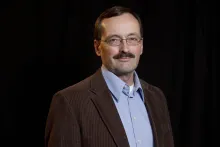
Randy Stiver is pastor of the United Church of God congregation in Rapid City, South Dakota.
