
Mark Welch
This transcript was generated by AI and may contain errors. It is provided to assist those who may not be able to listen to the message.
When we stop to consider the incredible complexities of the human body, it's absolutely amazing. There's one part of the human body that I find interesting because it's a very sensitive part of my body, and that's the eyes.
My eyes have always been very sensitive, a little bit of light, and my eyes water. In fact, when I do the television program, many times they have to stop the production because the intensity of the lights in television is immense. Sometimes I'm crying. I'll hear the director say, Gary's crying again, cut, cut, cut. They have to come out, they wipe my eyes, they put my makeup on me. It's pretty weird, but anyways, it's what you go through.
When I had to start wearing glasses a couple of years ago to do reading, boy, I'd tell you, my ego took a beating on that one. Now I notice that my wife just moved the couch away from the television set. You know the little stuff that scrolls on the bottom? I'm leaning forward. I think losing your eyesight would have to be the most horrible of the senses to lose. I mean, losing any sense is terrible. And there are people here that are suffering that way. I think of Nina Spear, who basically can't see or hear.
As you go visit her in the nursing home, she's not really even functioning anymore in her ability to think or communicate, because she can't hear, she can't see. What's going on inside of her mind is becoming more and more limited. The eyes are an amazing thing. The eyes need light in order to see. If you've ever been in a cave, when I was younger I did a little bit of speelunking, some cave exploring, and boy, you get in a cave and you turn that light off, you can't think. You can put your hand in front of your face, you just can't think. I've told you before, one of the most terrifying things I've ever done was being in a cave alone, trying to catch up with some people, and I dropped my light while I was climbing down something.
I literally just had to sit, I was just shaking. I had to make myself stop and think, because you're in darkness. As soon as that flashlight had hit the ground, it had gone out. From then on I learned to wear helmets with little lights on top. It's just a frightening thing to be in that kind of darkness, total darkness. What the eye does is it collects light that bounces off of objects. So light, you know, you're sitting here, if you're seeing me, it's because light is bouncing off of me and coming back into your eyes, and your eyes are collecting that light.
And then it goes through a very, very complicated process. I have a diagram of an eye that I want to show you here, that you can look at. Now, the study of the eye is a very interesting thing. Just the eye alone proves that evolution is an absolute absurdity, because it's so complicated. It's like a camera. Not only that, but it's what the eye does. The eye is set deep in your eye sockets in order to protect them.
It's a very high lens to keep things from coming into your eye. It also has to keep moisturizing your eye, because if there's not moisture, it'll dry out. And there's a tough layer on top of the eye called the cornea. And it acts sort of like a lens. There's some fluid under there that takes and gathers this light, so now that there's images, and brings it in, and sends it to a little, little hole inside your eye. And the colored part of your eye, we all have blue eyes, or brown eyes, or different colored eyes.
That iris in the middle of that thing is a hole. And of course, the iris gets bigger or smaller, depending on how much light you need. In a dark room, your iris gets bigger. If there's lots of light, it gets smaller, and it funnels the light in, and it hits a lens, then, that's inside the eye. So it's now going through the process of one lens, it's going through all this fluid, and it's the process of being brought down into this little, little piece of, you know, little hole where this light comes inside your eye, because into your eye, hits this lens, and then through a very complicated process, it goes through more fluid, because your eyeball shows fluid.
You know, if someone stuck a pin in your eyeball, it would collapse, just like taking the air out of a balloon. Because as soon as that fluid's going, and I know, doesn't that sound gross? Yeah! I'd rather you punch me in the jaw, than talk about that, okay?
That's... And then it hits the back of your eye. And if you notice on the diagram here, and then, you know, back in the retina part, there's a nerve. But, yeah, I don't know if you can see this very well, but, you know, the little drawing here is that the eye is looking at a candle, you know, light. But if you can see at the back of the brain there, if you can see that little drawing at the back, you would notice that that candle's upside down.
By the time this process is done, the image hits the back of the eyeball, and it's upside down. It is sent to your brain, upside down. And the brain flips it around. Now, I've wondered... No wonder babies look so confused when they come out of the womb. I wonder if they're seeing everything upside down. Because the brain learns very quickly, but it's a learned function. It learns, oh, the flip it up.
Now, how does it know to do that? You know, how many millions and billions of years did it take that human beings walked around like this, because they were upside down, before finally the brain figured, okay, we can flip this up. It flips it right side up, and now you're able to see. You're actually able to visualize what light is bouncing off of. You're able to see colors.
Of course, there's rods and codes in there. It's pretty complicated. Some of you may be a little bit color blind, and that's because you have problems with your rods and your codes inside the eye. So, here's this incredibly complicated way that God has that we process all the reality around us, and we bring it into our minds. And there it is. We can see it inside. Inside your brain, you're seeing these things. The eye is just taking the information, processing it, and sending it to your brain. Your brain is what's seeing it. That's even harder. You just get it, you know. You try to figure that one out.
It's interesting that when we look at the Bible, there's a lot that is said about spiritual vision. You can turn that picture off now. We won't go back to that. But I just want to talk, just briefly introduce this with, here's what the incredible physical eye is. And yet, all through the Scripture, we see discussion and analogies of spiritual vision. Let's look at Proverbs 29.18. Proverbs 29 verse 18. We'll go through a couple Scriptures here to set the stage.
Here in the New King James it says, Where there is no revelation. The Old King James says, Where there is no vision. The Hebrew word actually means a revealed vision. Something that light has been shed on. Spiritual light. It's not talking about in the physical sense. That God has shed light on and revealed something to you. And that revelation has now come in and become part of your spiritual vision. Where there is no spiritual vision, the people cast off restraint. But happy is he who keeps the law.
In other words, when there is no vision of the future, when there is no revelation of what God is doing, people live how they want to live. They cast off restraint. There is no real morality. There is no real right and wrong. Because they have no vision of what God is doing. They can't see what God is doing. Throughout the Scriptures we see that there is this analogy used that people who do not understand what God is doing live in darkness.
It's like they're in a cave. They can't see. They think they're looking at something else, but they're not. God has to shed light. Now remember, you see because of light. Light comes from outside of yourself. If we turn off all the lights, if we can create complete darkness in this room, there isn't one of us that could somehow force our brain to produce light.
Someone has to give us light. Mr. Piper said how wonderful it was to have more light up here. It had been getting darker and darker up here as lights had burned out. You know, you try to read the Bible and pretty soon it's like, you know, then you're embarrassed because now everybody knows how bad my eyes are. Actually, I can see far very well.
It's just reading. That print gets real fine after a while. I don't know why they don't make print 16-point. You know, it just doesn't make sense to me. But this light has to come from without. Let's look at John. Look in the New Testament here, John 12.
John 12, verse 35. Mr. Brooke was talking about the world that we live in. And it's just we have to understand. You know, sometimes we say, why do I hurt to live in this world? Why does it bother me so much? It's supposed to. When it stops hurting, it means we become complacent. It's supposed to hurt if we are following God to live in this world.
It's supposed to be uncomfortable. We have to have a passion for what God is doing. But look at John 12, verse 35. John 12, verse 35. Then Jesus said to them a little while longer, The light is with you. Who was the light? Well, we know if you just read the book of John over and over again, he called himself the light.
John called Jesus the light. God had sent light into the world. Into a dark world, light had appeared of people who wanted to, could see. Walk while you have the light, lest darkness overtake you. He who walks in darkness does not know where he is going. While you have the light, believe in the light, that you may become sons of light.
These things Jesus spoke and departed, it was hidden from them. But although he had done so many signs before them, they did not believe him, that the word of Isaiah, the prophet might be fulfilled which he spoke, Lord who has believed our report, to whom the arm of the Lord is revealed. Therefore, they could not believe, because Isaiah had said again, and this is another quote from Isaiah, He has blinded their eyes and hardened their hearts, lest they should see with their eyes, lest they should understand with their hearts and turn, so that I should heal them. In other words, if God does not turn on the lights, we cannot see.
If this revealed vision must come from God, otherwise we simply make up what we are seeing. If you thought, if you were a person who could only see in shadows, you would make up what you were seeing. Have you ever, I can remember as a child, one time running into the house and telling my dad there was a bear out by the garbage can.
He said, a bear? I said, yeah, dad, it's out, it's by the garage by the garbage can. I don't know how old I was, I'm seven or eight years old. It was my job to take out the garbage and, you know, well, I've told you stories about being bears, so you understand. I just have lots of run-ins with bears in my life. So I remember my dad coming out and walking real slow and looking at me like, what if the kid's right? You know? And looking around the corner and then smiling and saying, come here.
And it was a shadow of something. It sort of looked like the outline of a bear on the wall of the garage. In my mind, it was a bear. That's what we do with spiritual truth. If God doesn't shed the light on it, we take these shadows and we twist them and, well, you see what the world's like today. God has to open our eyes.
That's why, you know, Jesus called the Pharisees what? Blind guys. They could not see. In fact, at one point He says, I speak in parables so that they will not see. God can turn on the light, or He cannot turn on the light. The Apostle Paul saw his job as going to the world to help them turn on the light, to help them be able to see a revealed vision they did not have.
Let's go to Acts 26. Look at what the Apostle Paul said about his own mission, which is the mission of the church. If the light has been turned on for us, then it is our duty to share that light with whoever we can. To share that light with whoever we can. Amazing thing about human beings, though. Many times we would rather live in darkness than accept the light. The light is a little blinding.
The light hurts a little bit. The light shows us things we don't want to know, especially about ourselves. So it's easier to live in darkness sometimes. Acts 26, verse 12. Paul is here talking about—we're breaking in the middle of a long discussion by Paul about his calling. He says, He was persecuting the church at this point. At midday, O King—he was explaining this to Agrippa— Along the road I saw light from heaven, brighter than the sun, shining around me, those who journeyed with me.
And while we had all fallen to the ground, I heard a voice speaking to me and saying in the Hebrew language, Saul, Saul, why are you persecuting me? It's hard for you to kick against the goats. It's hard for you to kick against pointed sticks. Who does that? Who goes out and just takes their barefoot and kicks against pointed sticks? So I said, Who are you, Lord?
And he said, I am Jesus whom you are persecuting. But rise and stand on your feet, for I have appeared to you for this purpose, to make you a minister and a witness both of the things which you have seen and of the things which I will yet reveal to you. I will hear you from the Jewish people as well, from the Gentiles, to whom I now send you.
Verse 18, here's why. To open their eyes. He said, Paul, your job is to reveal the people, this revealed revelation. What I'm going to show to you, I'm going to open your mind and light is going to come in. When that light comes in, you're going to see. And now that this happens, you're supposed to tell other people.
Let me help you turn on the light. To open their eyes in order to turn them from darkness to light, from the power of Satan to God, that they may receive forgiveness of sins and inheritance among those who are sanctified by faith in me. Opening our eyes. This is what we talk about when we talk about conversion. We talk about how God has to come along and convert us. And conversion is a process. It isn't just an event where you say, I give my heart to the Lord.
That's all there is to it. I give my heart to the Lord. That's it. It's interesting. That has become so much a part of mainstream Christianity that there is now a backlash happening in some of the more conservative Protestant groups because they find that people won't be baptized. Nobody wants to be baptized. Why should I be baptized? I gave my heart to the Lord. That's just a ritual, and I'm against rituals. So now there's the Baptist Church. The Baptist Church is now having a problem because nobody wants to be baptized in the Baptist Church.
The falsehood has been taught so long that they're having to fight to baptize people. See, He wants to open our eyes. Now this conversion process, what do we talk about? We are in darkness. God comes along and He begins to open our eyes. We begin to respond. It all depends now. We respond. The more we respond, the more light He gives us. The more light He gives us, the more we respond to the reason to the point where we say, I need your spirit. I need to be forgiven. We go through the process of being baptized and have hands laid on us to receive God's Spirit.
Now the conversion process keeps going. We keep growing in light. We keep seeing the darkness. We keep seeing the darkness and we keep growing in light. Conversion. 2 Corinthians 3. 2 Corinthians 3.
Paul uses another analogy that takes light and sight to make a point. But he shows he is talking spiritually here. He is not talking about physical sight. You can be physically blind and be converted by God. We actually don't need our physical eyes to be converted. We need God. We need Christ. We need God to give us His Spirit. We need to submit to that. But look what Paul says in 2 Corinthians 3.18. But we all with unveiled face behold as in a mirror the glory of the Lord are being transformed into the same image from glory to glory, justice by the Spirit of the Lord. He says what Christianity is like, it's like you are looking into a mirror all the time. There is light reflecting back. And when you look into that mirror, you see your face. That is, we submit to God. Every time you look in the mirror, you should see a little bit of Jesus Christ reflecting back. There reaches a time where we should be able to look in that mirror, and what we see is that we have conformed. We truly are brothers and sisters of Jesus Christ. We should be able to look in that spiritual mirror, and what the light reflects is we look at that and say, boy, because I'm getting older, I look just like my brother. You hear people say that all the time, right? As I get older, man, I look just like my mom. We are all shocked when people say, well, I get older, I look just like my dad, right? I look just like my sister. Someone actually said that to me recently. This week. Forget who I was talking to. It's probably somebody here. They said, I look just like my sister. I didn't know that until they got to a certain age, you know? It's like, wow, we look alike. We should be able to look in that mirror and we see Christ. How we think, how we act, every aspect of our lives. So we're going to stop playing church. We come once a week to church, and there it is. We're Christians.
You know, this process is taking place, and more and more we look in that mirror, and we see that we have a strong family resemblance as we become the children of God. This is what conversion is all about. If you read through chapter 4, we will go there. But Paul talks about how people are blinded in their mind by the God of this world. They're actually blinded. They can't see.
They're in darkness. Because the light comes from without. It doesn't come from within you and me. God gives us that light, and that light comes into us, and we see the inner person, and we see what God is doing. Now, when you look at Christianity this way, I mean it's a nice analogy, but I want to break it down into practicality.
When we look at Christianity this way, what we start to do is we be able to see that when you and I have problems, where there's problems in our faith with God, with our obedience, our attitudes, where there's the problems we're having with wrestling with the world, it's in our marriages, with our families, whatever spiritual problem we're having comes down to a problem of spiritual sight. What are we seeing when we look at life? So what I want to do today is a little bit of a sight examination.
Now, my wife has struggled with bad eyes since she was a child, so she was shocked when I was in my late 40s or early 50s before I went in for an eye examination. I said, they blew air into my eyes. I thought they were going to pull my eyeballs out. What in the world was that all about?
She said, you never had an eye examination? No. Now I find out you've got to do these things regularly. At least once a year, you're supposed to go ahead and have your eyes checked. Well spiritually, we should be doing spiritual vision examinations quite regularly. So what are the problems that we have with our eyes? A very common eye problem is myopia, which is nearsightedness, right? Some of you have nearsightedness. You can focus on close objects, but not on objects that are far off.
So you have no problem reading, but you're looking and somebody walks into the room and you turn to the person next to you and say, who is that? It's just sort of fuzzy off in the distance. That's a physical, nearsightedness is a physical problem that many people have with their eyes. What about spiritual nearsightedness? Spiritual nearsightedness, and I'm going to go through some broad concepts today, but at the end of each one I'm going to give you some questions to ask yourself.
I mean, this is a self-examination you need to do this week on what is my spiritual eyesight? We're just doing a spiritual eyesight checkup here. That's all it is. That you can do yourself, between you and God. Spiritual nearsightedness is a condition in which our outlook on life is predominantly focused on the immediate problems and circumstances. We just focus so much on the immediate problems and circumstances that we don't see the greater picture of what God is doing. What happens many times when a person has spiritual nearsightedness is they feel overwhelmed by the day-to-day problems of life.
They feel with anxiety and worry, because all they can see is, I don't know how, what am I going to do when my taxes go up? And of course, all of our taxes are about to go up. My wife and I have been sitting down and cutting through the budget. We have to cut out this, we have to cut out this, we have to cut out this. We just cancelled the newspaper for the first time in our lives. That was 28 bucks, but you're going to have to start.
The taxes are going to go up, so we're going to have to cut things out. We went into the time order where we get our television, our cable, our phone system, and our Wi-Fi. We said, we can't afford this anymore. Well, they cut $50 a month out, because either you cut money out or we're canceling. It's up to you. So they did. We're going to have to, because we have less money.
But what happens is, is we're nearsighted spiritually. Those things overwhelm us. We become unhappy with life. And so we're always worried. We can't see God's promised outcome. Look at Luke 10. I mean, this example has been used many times in sermons and sermonettes throughout the years, because it's such an obvious example. It makes this point so well. Luke 10, verse 38. Crisis is going through traveling with his disciples. Verse 38 says, Luke 10, Now it happened as they went that he entered a certain village, and a certain woman named Martha welcomed him into her house.
She had a sister called Mary, who also sat at Jesus' feet and heard his word. But Martha was distracted with much serving, and she approached him and said, Lord, do you not care that my sister has left me to serve alone? Therefore, tell her to help me. Now, a lot of times people who are very nearsighted, spiritually nearsighted, are also people who put a lot of effort and work into what they do. Many times they serve the church. Many times they're highly committed to their marriages or to their relationships, and they're highly committed to helping other people.
Seriously, nearsighted people suffer from burnout sometimes, because they work so hard in the moment, and they do that day after day after day until one day, they don't have anything left to give. Because it all seems rather hopeless anyways. It just seems so hopeless. Why even try? I don't have the energy. I don't care anymore. And they give up. They give up. Mary or Martha comes and says to Jesus, I'm out here. I'm working hard. I'm preparing dinner. I've had to clean the house by myself. You know, Jesus just didn't come in by himself. There's a whole bunch of people to come with Him every place He goes.
And I've got to make all this food. And here my sister is. What is she doing? She's in there, sitting with you and all these people listening to you teach what she should be serving. This is a spiritually nearsighted person. She's not wrong. Somebody needs to serve and somebody needs to work. Somebody in this case needs to make food. The issue she's dealing with is all she could see was right in front of her and she burned herself out.
I understand Martha. There's a little bit of Martha in me. I understand Martha. I would have gone to Him and said, you know, Mary is just lazy. Instead of just having her come help me, why don't you chew it out first and then make her come help me?
And Jesus answered and said, Martha, Martha, you are worried and troubled about many things. Verse 42, But one thing is needed, and Mary has chosen that good part which will not be taken away from her. He said, you're worried about many things. But He said, you know, I'll come help you fix the food later. You know, Peter and John, they know how to cook. They're fishermen. We'll come help you do it. Come listen right now. We'll get it done. And that's what Mary's doing right now. When we are scarcely nearsighted, sometimes we have feelings of nostalgia. We try to actually live in the past. Now, sometimes, some of us what we do, and I say some of us, most of us have done this at one time or another. I've done it before, and many of you have. The only reason I know that is you've told me. We live in the past with guilt and anxiety. We look at our past mistakes and our past sins, and we don't let them go and move forward. Deersighted people tend to just get locked into the immediate thing in front of them. Think of a person that all they can see is what is right in front of them. And here's what you think of. Someone's like this. Right? That's how they see life. It's two inches from their face.
And the result is they're missing a lot of other things. Here's a question of examination, if you suffer from deersightedness. A few questions ask yourself. Write these things down. Am I overwhelmed by the daily problems in life and seldom see the bigger picture of what God is doing in my life? Am I overwhelmed by the daily problems in life and seldom see the bigger picture of what God is doing in my life? Do I find myself spending much of my time longing for the past or feeling anxiety over the past? Do I find myself much of the time longing for the past or feeling anxiety and guilt over the past? Deersightedness. Now, the opposite of mafia is farsightedness. This is a person that can see everything way off, but they can't see what's right in front of their face.
Some of you may have that condition. You may have to wear glasses because of that condition.
Spiritual farsightedness is a condition where a person sees the Kingdom of God. But a person sees the prophecies. A person sees that, you know, boy, there's a great tribulation coming, and there's a beast coming, and there's a false prophet, and Jesus Christ is going to come back and set up His Kingdom on the earth. And they can see the prophecy. They see the distance. But right now in their lives is pretty much a mess. They can't take that information, that vision, and transform it into motivating that person's life right now.
So they're very heavily in the prophecy. They're very heavily into the future, which is part of our vision. But they can't translate that into something that happens right now. So what happens is their marriage is a mess. They have a hard time keeping the Sabbath. They don't manage their money right. And so what they end up doing is having a very poor example of Christianity. And of course, if you don't, if you're not right with God now, why would He give us the future? So we have a vision of something we may not arrive at. So some questions to ask yourself. One question about the far side of this is, Is the main focus of my spiritual life prophecy while I ignore my personal conduct, my family, serving others in the Church, or sharing the gospel with those outside the Church? Because we all have a responsibility in all those areas. Our personal conduct, our morality, our obedience to the Ten Commandments, and all the other commandments in the Bible.
We have responsibilities as Christians to our families. We have responsibilities as Christians to serve each other in the Church. Being part of a congregation is a command.
There are so many things we cannot fulfill unless we're part of a congregation that are commanded in the New Testament.
Am I sharing the gospel with those outside the Church? Sometimes we're so farsighted. We study our Bible, but our religion goes nothing beyond ourselves.
It has to flow out of us. The problem with farsightedness. There is another side problem, press biopia, which has to do with blurred vision that comes with age. Young people don't tend to have this. I now find every once in a while my vision is blurred.
It sort of shakes it off. I do some eye exercises and it clears it up. It helps the muscles stretch out, but it's like, wow! Given time, if you don't do something, especially if you don't do eye exercises, you don't just get more blurrier and blurrier. In my mind, I'm still 38.
Spiritually, there is a blurred vision that comes with spiritual age.
You live God's way sometimes a long time, and many of you in this room have lived God's way a long time. Some of you have been doing this for over 50 years. You've kept the Sabbath and you've kept the Holy Days. You raised your family and did the best you can to teach them God's way. And here you are trying to live this way. You continue to do so, you don't keep Christmas. You understand basic doctrines.
But what happens is, in the blurred vision of age, is that we begin to see ourselves, our seniority as having a value in which we judge others by. A new person comes into the church. The new person is struggling with alcohol, or the new person is struggling with smoking, or the new person is struggling with a bad marriage, or the new person is struggling with some kind of sin. And we automatically look at ourselves and we somehow forget that that used to be us 40 years ago. And what we do is we judge them by our seniority in this blurred vision, and in which case we can't help people. We can't help them.
Or it translates into my job. I've handed songbooks out for 40 years. Now I'm making this up because there's nobody here like this. You know, you've got to be careful. There's nobody here like this, okay? But I have seen this. I'm 80 years old and I've been handing out songbooks for 40 years. And some 17-year-old walks up and says, Can I help you hand out songbooks? Instead of saying, wow, what a great way for this 17-year-old to help serve and be part of the congregation. No, that's my job! I've done this for 50 years, son! I did this before your dad was born.
And that's now become my measure of my spirituality. I saw my dad do something once that really taught me a lesson. In his early 70s, he got to the place where his mind just wasn't as sharp as it was. Now, some people don't go through that at that age. But in his case, it did. It just wasn't as sharp. He knew what was going on. I mean, he was fine. But he just, he had always had a really sharp mind. And he started to give the Passover one time, a Passover service, and he messed it up a little bit. And he thought about it, and he prayed about it, and he went to the Passover, and he said, I will not be giving sermons anymore. Now, you have to understand, back in the worldwide Church of God, my dad gave more sermons than any other church elder in the world.
He said, I won't be giving sermons anymore. I'm not sharp enough to do it. And he stopped doing it.
And the minister said, what's wrong with you? And I remember all the family members saying, well, what's wrong with Dad? You know, he just doesn't want to serve anymore. And I remember sitting down and talking to him, and he said, no, there is a point where, for one thing, he said, there are about three or four younger men who should be speaking, and they are not because of me. I'm in their way, and it's time for me to step down. Plus, I'm not as sharp as I used to be. And he made that decision, and he stuck by it the last eight years of his life. I learned a lesson then. He didn't see seniority as an issue.
He didn't suffer from this kind of wrong viewpoint, see? He understood. It's easy for us to do that. The learned vision that comes with age.
A fourth physical problem that people have with their eyes is the stigmatism, which is actually a structural defect. And so it keeps light from coming into a central focal point, so that the images aren't formed right. It's actually a structural problem inside the eye itself. Spiritually, we can have spiritual stigmatisms in a couple of different ways. The image comes in, the light comes in, but it doesn't get formed right, because we have limited amount of knowledge. We have knowledge, but we don't know how to put it together. We continue to make wrong decisions, unwise decisions, unbiblical decisions, over and over and over again.
The problem with the stigmatism, spiritual stigmatism, is that there's always an element of pride. We don't want to admit that I don't see clearly. You ever see people that have an eye problem and don't want to admit it?
I was like that, until I read a verse one time. I will tell you what I said. I read a verse in church, and basically, the way I read it was just about pornographic. I misread that verse terribly. After services, my wife came up to me, and you all know Kim. She's a very mild-mannered person. She never tries to overthrow me as my husband, but she came up to me and said, you will get glasses.
Scared me to death. Yes, ma'am!
I really misread the verse. I didn't want to admit it, see? Sigmatism. We don't want to admit we have the problem. So what happens is we're only understanding part of it. Sometimes we'll hold on to something. In the pastor's update, I put in the frequently asked questions, this time I put, who are the 144,000? You have to understand, in the history of the radio church, because some of you don't have a history in the radio church or the worldwide church of God, but some of you do. In the history of the radio church of God, the worldwide church of God, there was taught three different explanations, the 144,000, over the years. What you believe is what you believe when you came in. So what happens is, what we do is we look at somebody else, who has a little different explanation of that, and we say, Oh, you're a heretic! I didn't know you were a heretic! You're probably a Protestant. Probably a Catholic. No, it basically came in, it's vasa, when you came into the church.
That's where stigmatisms come in. We have part of the information, and we make conclusions and decisions on part of the information. Just like the eye does when it has a stigmatism, it just doesn't make the images right. I don't have a stigmatism. I've talked to people that do it. It must be a strange situation. The images aren't always made right. They don't go to the brain in the right way, because they're formed wrong in the eye.
That's why you see over and over throughout the Scripture, in the Proverbs, in the Psalms, in Isaiah, that we can't trust our own sight, spiritual sight.
We have to make sure that the stigmatisms are healed by God. All these things are healed by God.
Examination question?
Though I continue to make unwise decisions and suffer bad consequences, but I'm just too stubborn and proud to seek and obey God, I'm just going to do it my way, because I know my way is right, basically. Though I continue to make unwise decisions and suffer bad consequences, because I'm just too stubborn and proud to seek and obey God's way. Then the last point here, and I'm going to talk a little bit about how we can be healed through this, but the last physical problem, the major problem that happens in people's eyes, is cataracts.
Physically, the cataract is an eye disease in which the main lens inside your eye becomes opaque. So it just gets harder and harder to see through this cataract. Everything looks sort of milky at first, and then it gets more and more fuzzy and unclear. A lot of times, total blindness is what happens with a cataract.
Fortunately, there are some cataracts now that they can remove. It used to be, once you got a cataract, you just went blind. You just went blind. A spiritual cataract is when we allow sin to turn into a disease. We simply accept our sin. We simply accept what we're doing against God, and we just accept it. And so what it does is it forms a milky cover over the light that God is shining into us and it slowly but surely we go blind again.
We go back into darkness. Ephesians 5. Ephesians 5. And verse 8. Paul says in Ephesians 5, verse 8, For you were once darkness. Now, I find that very interesting. He doesn't say, you were once in darkness. He says, you were darkness. That's what we were before God shed light on us. We were darkness. Darkness was in our minds. It's who we were. You were once darkness, but now you are light in the Lord. Walk as children of light. If God has given us this light, it is such a gift. It is such an outpouring of God's grace to receive any light from Him. And He's given us all this light. He says, so walk like people in light.
Live like people in light. Do like people of light. Verse 9 says, For the fruit of the Spirit is in all goodness and righteousness and truth, finding out what is acceptable to the Lord, and have no fellowship with the unfruitful works of darkness, but rather expose them. Now, it's easy for you and I to expose the unfruitful work of darkness on other people. But how many little dark quarters of your mind are dark, and you just shut the doors and you won't let the light in?
We all have our little closets of darkness, don't we? Little closets of darkness in there. We don't want God's light to come into that. We don't want that to be exposed. We're ashamed. Maybe because we don't want to change. Maybe because we don't even know it's there sometimes.
It doesn't matter how ashamed we are. It doesn't matter how hurtful it is. It doesn't matter what price we have to pay. We have to let light come into every part of who we are. We have to. If we want to be part of the kingdom of God, which is light, we have to let the darkness go. It's not easy.
He says, verse 12, For it is shameful even to speak of those things which are done by them in secret, but all things that are exposed are made manifest by the light, for whatever makes manifest is light. Verse 14, Therefore, he says, Awake you, who sleep, arise from the dead, and Christ will give you light. We have to go pray for that light. God has given us an awful lot of light.
God has given us an awful lot of light. I look at people whose lives sometimes have a little bit of light, just a little bit, to do the best they can, and they hardly understand anything in the Bible, and yet God blesses them through those little pieces of light, little rays of light that somehow gets into their mind.
You and I have had the spotlight showed to us. God turned the lights on. How much more should we walk in the light? But we hold on to some darkness. We hold on to that darkness, and that darkness begins to form a cataract on your spiritual vision, and it will slowly cloud it over. It will make it opaque, and you will go back into the darkness. Now, God won't let that happen if you follow the light.
But we must understand how dangerous a cataract can be. Examination question? Am I honestly trying to live God's way in every aspect of my life, or am I compromising in any way with the world? That's a tough one, isn't it? That's a tough one. Am I honestly trying to live God's way in every aspect of my life, or am I compromising with the world? Let me give you just a couple of symptoms of healthy spiritual vision. We look at these. We have nearsightedness. We have farsightedness. We have blurred vision that comes from age. We have astigmatisms where the image...we ought to get part of the image, and we make decisions on part of the image. We have spiritual cataracts. So the symptoms of healthy spiritual vision. One is hindsight. Now, what do I mean by that? It means you're able to look back into your past. First of all, you see good, but you also see what God is doing so that even your mistakes and sins are lessons. You can learn from that. I'm not going to do that again. So instead of saying, I am worthless and I feel guilty and I have no worth because of my past, you look at your past and say, boy, I'm still suffering because of my past, but I'm not going to do that again. I'm learning from that. And maybe God can use me someday to help somebody else.
I mean, if we're being trained to assist Jesus Christ at His return, what are we going to do? We're going to take every kind of sinner there is and help them repent and turn to God. Isn't that what Jesus Christ does when He comes back? What do the saints help Him do? How do we help the world repent? That means you and I have to do it now. How can you teach something you don't do now?
That's why this is so hard sometimes. We're in training to help Jesus Christ do it on a global scale, and you and I are now God's doing it individually. Little groups, little congregations all over a few, all over San Antonio, wherever there's groups of people that are coming together, following God. What is God doing? Preparing them by having them converted now to help convert the world. So we walk around with our lanterns showing light. Where our hindsight is, we look back on our past and we don't say, let me carry my baggage. We say, cut it loose, God. Cut loose my baggage. So that I am free to serve you now.
We have an overview. We have hindsight. One of the elements of healthy spiritual vision. Second, we have an overview. We see what God's doing in the bigger picture. You know, something I read in a sermon here a couple weeks ago. I'm going to read again. Ephesians 1. Just because this has been on my mind, these verses. Ephesians 1, verse 15.
Overview. Paul says, Therefore I also, after I heard of your faith in the Lord Jesus, and your love for all the saints, do not cease to give thanks for you making mention of you in my prayers. So this is the introduction to a sentence. I read that because that's how he starts the sentence. Look at verse 17, where he really starts to get into the point here. That the God of our Lord Jesus Christ, the Father of glory, may give to you the spirit of wisdom and revelation and the knowledge of Him. Remember a few weeks ago, I talked about the spirit of revelation. Okay. This vision. He opens up our mind. He sheds light. So He gives us the spirit of light, the spirit of knowledge. So it's the revelation and knowledge of Him. The eyes of your understanding being enlightened. How is your eyes opened? God has to turtle the lights. Now He has to start healing us, because all of us are at times nearsighted. You know, the thing about those five eye diseases I talked about, no, you can't be nearsighted and farsighted at the same time, physically. Spiritually, we can be... it depends on the day, right? It depends on the hour. You can suffer for all five of those in the same day. You can be nearsighted, farsighted, blurred vision, the stigmatism, the cataract that's forming because of sin. You can go through that whole rotation one day. God has to heal us of those things. So we have to start looking at the past and the right viewpoint, then we have to see the big overview of what He's doing. He enlightens us. He turns on the light. He's got to heal us. That you may know what is the hope of His calling. What are the riches of the glory of His inheritance in the saints? You know what God is doing. You know the light's been turned on. You're not willing to go back in the darkness. You know the promises He has for you, the inheritance of the saints. And what is the seed of greatness of His power towards us? Think about that phrase. That's why I'm reading this Scripture again, twice in three weeks.
His power towards us. What is it that God's going to hold back from you? What is it that He will hold back from you so that you won't be in His kingdom? What do you think God's saying? Well, I'm going to hold back everything but this. Ha, ha, ha. I'll give you all the help you need but one thing, just because I want to see you squirm. Just because I want to see you fail. If God wants us to be there, He will do everything short of possessing you and taking away your free will to get you there. So the only determinant of whether you want to get there or not is whether you're giving up your free will enough to follow Him. He's not holding anything back from us. It just feels that way at times. Why? Because we're stumbling about in a dark world and none of us have perfect vision yet. That's why. If you had perfect spiritual vision, you'd be going through life just fine. Sometimes it's boring and it's dark and sometimes you're just falling down and sometimes you're scared to death because you dropped your light and you're in a cave. But then we have to remember this overview. How much light will He hold back? Is there any light God will hold from you? I don't care what your situation is. Who believe according to the working of His mighty power, which He worked in Christ when He raised Him from the dead and seated Him at the right hand in the heavenly places. What power is He going to give you? The same power it took to raise Jesus Christ. That's a lot of power. Overview. Third of the fourth symptoms here of healthy vision, spiritual vision, is insight. Insight is the ability to see what is really important in your life. Insight. It's in you. You look inward and you see what's really important because if we don't, we are controlled by the urgent, we're controlled by the unimportant, we're controlled by other people, we're controlled by everything but God. We're controlled by everything but God. Insight. Psalm 119. This will be the last scripture we turn here to today. Psalm 119.
The longest psalm written by David. I just want to look at two verses to show you his viewpoint. What are we talking about? His viewpoint. How much light did he have that he could see? Psalm 119.
Let's go to verse 18. Psalm 119, verse 18. David says to God, We have to go ask for this kind of insight. God, open my eyes. Help me to see. Shine the light even in the darkest crevices of my mind. Shine the light on me. Now, when you go ask for that, ask for mercy.
Ask for God to do that. I have to admit, I occasionally go ask this prayer. But I've learned. But please, God, do it in a measured, merciful way. Because if I don't, well, I'm depressed for the next three weeks. Because the light's awful bright. It's a bright light. I ask for this to be, you know, maybe just like a little flashlight. Not the spotlight.
Open my eyes. Open my eyes so I see the wondrous things, not just in me, but what God's doing. Show me the wonder of God in the world, in His creation. Show me the wonder of God in the people of my congregation. It sounds like a strange prayer, but yeah, I pray.
Show me you and them.
Look at verse 105. David says, Your word is a lamp to my feet and a light to my path. It's in this book. It's in this book we find the light.
Here the light comes in, and it processes through the spiritual vision, and then there's a nerve. If you remember that diagram I showed, there's an actual nerve that takes this upside-down vision and runs it into the brain. It processes it. When you came to church today, you saw people you knew you recognized their face. Your eye didn't recognize their face. You went, your eye saw the person. It was an image. There's people that have certain parts of their brain damaged, and every time they meet you, it's a brand-new experience. Some people with Alzheimer's will be like that. They'll pick up something, an ink pen, and have no idea what it is. That's not a problem with their eyesight. It's a problem with the processing of it. That nerve runs into their brain, and the brain is damaged and can't process it. God opens up our minds, but you know, we have to have God... He opens up our eyes, our spiritual eyes, but we have to have Him work with our spiritual minds to be able to process it. It's a problem with cataracts. It's a problem with, you know, there are people who the light can still come in, the stigma system especially. The light still comes in, but it just doesn't get processed correctly. We work off of half-visions, half-images. We have to go into this book. We have to pray to God. Take away my spiritual eyesight problems. Work with my mind. And then the last point is foresight. Foresight is the ability to look ahead and see the positive outcome of your struggles and then rewards God promises to those who remain faithful. He promises that you will be a member in His family, in His kingdom forever. That's the promise that we have to hold on to. You have to seize that promise. You have to believe it. Foresight is, I believe those promises, and I will hold on to those promises even when right now it feels like I'm in darkness.
Hindsight, overview, insight, foresight.
For healthy spiritual vision, parts or aspects of healthy spiritual vision. As I've mentioned a couple of times, one aspect of human sight that intrigues me is the fact that the message is sent to your brain upside down.
What if God shed light on something, but the person didn't receive God into their mind? What would it look like? In the book of Acts, Christians were accused of turning the world upside down.
No, they were actually putting it right side up. But because of the spiritual vision of the people, even when God turned on the light, all they kept saying is, you've got it upside down!
You've turned the world upside down.
That's how it seems to someone that even if God turns on the light, it does not work with their mind. It seems like it's upside down.
Paul said that we all see in a mere dimly. None of us have perfect spiritual vision yet. That's why we still struggle.
But we're being healed. We're being healed. God is changing us if we will submit to it.
One of these days, you will be resurrected. You will be changed in a twinkling of an eye when Jesus Christ returns, and you're going to see Him as He is.
You will see Him as He is. That isn't a physical thing.
Your spiritual eyesight will be so healed, you will go before the Almighty God on that sea of glass and sitting on that throne, and you will see Him as He is.
And you will fall down as their Father.
And He will say, well, welcome, child.
Your spiritual vision is going to be healed. We just have to keep that in view. I don't mean that as a pun. We have to keep that in view.
Take time this week for a little bit of an eye examination. Take some time this week for a little bit of an eye examination. Rededicate yourself to focusing on God's Kingdom, on His way of life, the work He has for us to do as a collective body. What it means to even be part of the Church? With each other.
Because, remember this, where there is spiritual true spiritual vision, there is a better way of life. And where there is true spiritual vision, there is the promise of eternal life, when you will really see things as they really are. Thank you.
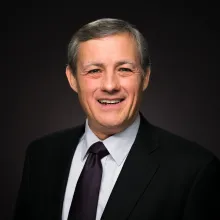
Gary Petty is a 1978 graduate of Ambassador College with a BS in mass communications. He worked for six years in radio in Pennsylvania and Texas. He was ordained a minister in 1984 and has served congregations in Longview and Houston Texas; Rockford, Illinois; Janesville and Beloit, Wisconsin; and San Antonio, Austin and Waco, Texas. He presently pastors United Church of God congregations in Nashville, Murfreesboro and Jackson, Tennessee.
Gary says he's "excited to be a part of preaching the good news of God's Kingdom over the airwaves," and "trusts the material presented will make a helpful difference in people's lives, bringing them closer to a relationship with their heavenly Father."
