
Robin S Webber
Leviticus Sixteen (16) and the role of the human High Priest is but a type of the present awesome reality of us being able to be served by Jesus Christ, who is not only our heavenly high priest forever, but the forever sacrifice as well, embedded as one! Thus enabling us to directly pass through the "veil of His flesh" and enter our Heavenly Father's presence in time of need.
This transcript was generated by AI and may contain errors. It is provided to assist those who may not be able to listen to the message.
Well, I want to welcome everybody that is with us today, those that are here in person, those that are listening to us right now in the moment, and those that may be hearing this message in the weeks and months and sometimes even the years ahead. So we'll find out how that goes. But we want to welcome everybody. What a blessing it is that we're here on one of the marvelous high days of God.
And I would like to speak to you about that today, and that we can sing hallelujah in our minds, our hearts, and sometimes maybe in the mirror and wherever we're singing, that we have a marvelous God through his risen Son. And it is to that that I would like to speak to all of you today, and on the construct of the Day of Atonement, and how special it is the responsibility that God the Father has given his Son to us even to this day. Let me take you back, though, about 3,400 years before we go forward or go into the moment right now.
It was the tenth day of the seventh month. And people were, well, they were up early. And you think, remember, there are about two, two and a half million Israelites out there in the wilderness at times. So we might say it was a crowd. But they were all up on this day. This is one that you don't want to miss.
Like I grew up in Pasadena, the Rose Parade, you did not want to miss it. This is a part of your life. But what they were up for was it was the Day of Atonement. And something very, very special happened on that day. They all woke up. The parents, the kids, kids were a little bit restless. They were hungry, just like the children of God are right in front of me right now, missing a meal or two. And what they did especially, they all got outside of their tents, because there was this pathway, there was this road that was leading up to an edifice.
It was the tabernacle. It was the tabernacle of God. Tabernacle in Greek basically means the tent. It was the abode of God when He visited earth. And they wanted to get a glimpse, not of everybody, but they wanted to make get a glimpse of this one man.
One man alone at that time that was walking towards that tabernacle. And that was the high priest. He was dressed in white tunic, girded by a belt. You can also see a sample of that in the book of Revelation of the Greater Eternal High Priest. He didn't have on all of his ornamentation that day. He had the belt that gathered him up. He didn't have all the ornamentation because it wasn't about him. It was about going before the great God, the I Am, the one that simply is.
And he didn't have the ornamentation, and it was white because it was depicting holiness, which was so important. His day would just begin as he was walking up that path with all of those eyes. And do I dare say, hearts following him because they knew what the high priest was going to do on their behalf.
On that day, it would be a very, very busy day for him. He would actually bathe in the course of the ceremonies five times that day. He would also, ten times, wash his hands and wash his feet. Why? Because he was coming before that, which was holy. Just think of Moses, where, when he was up on Sinai, and he thought he was going to go over and chat with God. And God came back and said, Moses, take off your sandals.
Take off your shoes. The ground that you are on is holy. And so this is kind of the backdrop. The question is simply this, with this little bit of color to be added in. Why? Why was it with all the washing? Why was it with all this and that? It is because he was approaching that which is holy. Holy sometimes in our society today has lost its meaning. I'm okay. You're okay. Oh, you're doing your thing.
That's how this happens with you. And the aspect of holiness has been taken out, bit by bit, out of our society, recognizing that honor is to be given to certain individuals and certain ones. The high priest would go into the tabernacle, and ultimately he would enter what is called the holy of the holies. This is my PowerPoint. Steve, I am the PowerPoint. Okay? The audience already knows that. But anyway, what would happen is that he'd walk in through the Thames, and there'd be the sacrificial grounds, and then he would begin to go into the...
he was in the courtyard at that time where much of the sacrifice was done. But then he would step into the edifice itself. He would step into, at that time, the tabernacle later on the temple under Solomon and Herod. He would enter into what is called the holy place. Now you're inside, and certain things were going on in there. But he was not stopping today because his invitation, his invitation by the Creator God was to go much deeper.
He would go into there, and the importance of what he was about to do is he was going to step through a veil, a veil, a curtain. That curtain was about four inches thick. It was incredible fabric, the way it was embroidered and woven together. On that tent, on both sides of it, were emblems of the caribs. Emblems of the caribs. What's going on here? This is a replication of Eden, because we know that after man disobeyed, and women, Adam and Eve, disobeyed, they were thrust out of the garden, and the caribs were there to block entry back.
God had wanted so much for humanity. He made them. He created them, and he wanted them, when they opened up their eyes, to see him. The first thing to see was him, that out of his love moved from the uncreated world, and worked in this world of time and space that he had created. He wanted to make eye contact, but they made another choice, and another decision which has affected all of mankind ever since then. Because he would go through that curtain, there would be laid out before him would be the Ark of the Covenant.
And the lid of the Ark of the Covenant was known as the Mercy Seat, because we worship a merciful God. Inside the Ark itself were the two stones of the Ten Commandments. Talk about a treasure chest. Also, the rod that blossomed to show how God selected Aaron. It also had the, I think I'm loud here, moment, it also had a little urn filled with manna. In other words, showing everything that God had basically done for Israel. This was what was there. This is where heaven touched earth. This is sometimes where the Shekinah, that cloudy presence of God would come down amidst the people, and oftentimes around the tabernacle.
This was an incredible sight to behold, to be able to go into. God's presence was there. I already mentioned here, I'm just looking at my notes about the entry. The bottom line was simply this. I want you to think about this for a moment, because this is going to be the crescendo that I'm sharing with you today.
At that time, it was God's spoken and given that no man was to enter beyond the curtain, save one. No man was to. At all. Period. And only to appear once a year. If you want to have fun and stay awake during this message, have your pen out. Here's the important part. Only once a year. With this official over Israel, only one man could go behind that curtain and have this situation with God.
And only once a year. Period. That was the beginning. God was teaching the people, the children of Israel, a lesson about him, but it doesn't stop there, and it moves down to this day why you and I are able and do keep the—pardon me—keep the Day of Atonement. So very important. In the course of that day, this one man would sacrifice a block for himself and for his household, and he would also separate two goats chosen by lots, because man alone would not have known which of those goats to sacrifice. You just think about in the New Testament, in the Gospels, where two men are placed before man, Jesus of Nazareth, beaten up through the night and now on stage, and another man, a zealot named Barabbas.
Here is one man, the Son of God, of whom Jesus is and was and always, and over here was a gentleman named Barabbas. Do you know what Barabbas means? Think about it. Abba. On one side you have the Son of God, and over here you have one named Barabbas.
That means Son of the Father, and the audience out there chose the man named Barabbas rather than the divine gift of the Father. That would be the sacrifice. That's why it's very important that when you go back and you look at why they were casting lots back in the Old Testament, is they were giving it to God to make the selection between the two goats. One would be sacrificed, would be the sin offering, would be that great offering for a year to come until the next time. The other one was to be set aside to have hands laid on his head, and there would be a transfer of the sins of the people, and he would be sent out into the wilderness.
I'm just giving you some of the background if you haven't had time to think about it of what and why we are here today. And it was a powerful moment in the collective life of Israel. It was an awesome moment that mortal man was coming before God. Coming before God, one man. I'm given to this having been a teacher, but it'd be kind of interesting. Matt, are you there? Stay there. That's fine. But we're here.
Let's say we're the house of Israel. We're on the outside. We're the ones looking for the priest going up the road. And he passes through us, and now he's walking. Matt and that, oh yeah, that's solid ad with him. I've just did that. And one man is going down this corridor, corridor, corridor.
And where that door there has the curtain over it, he goes through that curtain, remembering that no man can come into me without permission and die. And he goes in, and in that small area back there, now behind the curtains, he is in the presence of God. He does not see God. He is in the presence of God. But he's in the presence of God with that Shekinah.
Think of yourself being in that moment where you are again in the presence of God and what it must have meant. It was a powerful moment. It was an awesome moment that mortal man was coming before God. Later in the day, the priest emerged, and all the crowd goes like this. It must have gone well. He came out, and we have a God that has forgiven us for another year.
The question I simply bring to all of you today on this, the Day of Atonement 2026, is simply this. What do we, as the spiritual Israel of God, we are the spiritual Israel of God? That's how Paul defines us in Galatians 6 in verse 16. And we are new covenant Christians. We are disciples of Jesus Christ. What do we gain from this holy day that we can take out with us?
And what can we place in our lives today and every day forward? The title of my message is simply this. Standing in awe of the heavenly high priest.
Standing in awe. I gave a message, which maybe you'll get next year in Redlands this past Sabbath, on just the aspect of 1 John 3, 1 through 2, where it says, and we shall see his face. Talking about us when we're resurrected, that we are going to literally see the face of God. And what does that do for us? And what is that all about? And to recognize that Jesus Christ is not merely our Savior. He's not merely the Lord of our life. He's not merely the shepherd of the sheep. He's not merely the great interrupter of the universe, but our high priest, our personal, heavenly high priest, who has gone beyond that realm, up there now, beyond any curtain of time and space, and is up there with God the Father, serving as our high priest and advocate, who willingly intervenes on our behalf before our Heavenly Father. With that stated, let's understand initially, God designed this biblical festival that we're keeping as a complete spiritual time out, physically. It was to be a solemn pause and a reflection of a merciful God and a shepherd of the sheep that he had called on that pilgrimage from Egypt to the Promised Land.
And it was to be before the great abundant harvest of thanksgiving, which we call the Feast of Tabernacles. That before, ultimately, that we might be able to serve under Jesus Christ, as we were hearing about earlier, to recognize that we have to prepare ourselves. We have to get our carnal shoes off, because when we go into the millennium time, we are going to be a kingdom of priests. That's what God calls it. And priests are teachers. And the first thing that we learn to do with God is to worship Him, to give Him glory, to give Him praise, to give Him honor. Stand still and see what He will do for us. God realized that only a nation, whether physically or spiritually, fully reconciled to Him at one man, at one with God, with His purpose, His way of being, could move forward and fully rejoice and properly receive His blessings, what we might say, enter into the joy of the Lord. And that's a part of what the Day of Atonement is about.
To prepare ourselves, to humble ourselves, to recognize a little bit of our fuel is running out and we're a little low on our tank, but to recognize God does that for a purpose, to enable us to know who He is, of which life comes forth. He is life. He's not going to have life. He wasn't was life. He is. He just simply is. And that He wants us to understand what He is like and to humble ourselves before Him.
When we understand in the sequence of God's plan of salvation for humanity and the role of the Feast of Atonement, the body of Christ pauses then now to spiritually prepare. And that's what we're doing. His purpose, it never changes. Join me if you would in 1 Peter. Let's get into some Scripture 1 Peter. And let's look at chapter 2. 1 Peter 2 and verse 9.
But you are a chosen generation. You are a royal priesthood. You are a holy nation, His own special people, that you may proclaim the praises of Him who called you out of darkness into His marvelous light, who once were naughty people, but are now the people of God, who had not obtained mercy, but now have obtained mercy. Behold, I beg you, as sojourners and pilgrims, abstain from fleshly lust, which war against the soul, having your conduct honorable among the Gentiles, that when they speak against you as evildoers, they may be your good works, which they observe, glorify God in the day of visitation. So we are to be called. It starts with God.
I think that's something that we need to remember about the Atonement Day. To get rid of self, quit standing on the platform of self. Look what I know. Look what I do.
We would not be here today. We would not know the things that we know other than by God's grace, by God's favor. Remember what it says in 1 John 4. He loved us first. He, the uncreated, the one that came through time and space and began to work with our minds and hearts, did that because he, you know, we always say, who goes first? He loved us first. And for us to return that love, not only towards him, not only to love God, but to love our fellow man, is the only hope towards at-one-ment and unity. First in the body of Christ and beyond and in families.
And you can pull that out again and again and again.
Join me, if you would, in 1 Peter 1, 16.
1 Peter 1, 16.
Peter says up in verse 14, "...as obedient children, not conforming yourself to the former at-lust, as is in your ignorance, but as he who called you is holy, and you also be holy in all your conduct, because it is written, Be holy, for I am holy." And he's quoting out of Leviticus. That's why the Bible comes together. The Old Testament is not the end of the story. It's a part of the story.
That typology then goes forward and builds and builds up to our time today. To recognize that we today here, observing the day of atonement, we go back, we think sometimes, well, that's fossilized religion somewhere back in the Sinai. Yes, there was a Moses. Yes, Moses was a deliverer. Yes, Moses in a sense was a lawgiver, as he brought the Ten Commandments down from Mount Sinai. But you and I on this day, we worship one that is greater than Moses. We worship the second Moses.
We worship a deliverer. We worship a lawgiver. We worship Jesus Christ, the Son of God.
So you see these typologies going back and forth, building up and building up and building up, and you know what? God isn't done yet. There's going to be more coming, and you can be a part of that. Join me, though, if you would, in Revelation 5 and verse 10. Oh, I didn't do Peter, did I? Did I do Peter? 1 Peter 1? Oh, 1 Peter 1, 16. Because as it is written, be holy, for I am holy. Okay, join me if you would in Revelation 5 and verse 10. In Revelation 5 and verse 10.
Because you find this kind of leaping from the beginning of the Bible to the end of the Bible, and here we are in Revelation, and in verse 10, and it says here that God has made us kings and priests to our God, and we shall reign on earth. Again, being a priest, and or as some translations mention, a kingdom of priests, is to teach, to teach others. Now today, in this lifetime, I'm a pastor, I'm an elder, and I have the opportunity not only to serve brethren throughout the week, but to talk to them and to preach to them about God on the weekend. This is going to be our responsibility in the future, that when somebody comes up to you and says, what is this all about?
You're going to be able to mirror and remember that phrase out of Isaiah 30 verse 21.
This is the way. Walk you in it. And maybe we'll be like a millennial Andrew. Andrew was so good at connecting people with Jesus Christ. That's kind of—well, what did Andrew do? Well, he's the one that brought the little boy with the bread and the fish, made history. Andrew went out, found him, took him to Christ, made the connection. Andrew was the one that brought Peter to Christ.
And sometimes we're going to be like that. We're going to say, well, this is the way. Let's go up to Jerusalem. Let's learn his way so that you can walk in it. And then you can meet—you can meet Jesus Christ when you go up to Jerusalem during the millennium. And then he's going to have a whole sermon like this, and it's only two words. Follow me. Makes it real simple. This is the way, and follow me if only we could do that every day of our lives.
What was offered to ancient Israel is a—but a type and a forerunner of things yet to come.
This law was imposed upon a covenant people to show that by its very nature that it was incomplete.
It was a kind of planned obsolescence that even with the tabernacle and the wilderness and the goats and everything that goes with that, it was not done. We were only halfway in the story. And to recognize then that more was to come. The law by itself makes nothing perfect. Join me if you would in Hebrews 11. Said—excuse me—Hebrews 7 and verse 11.
Why don't we kill goats today? Why don't—did you bring the goat in? No, they didn't. Okay. So there's more—we got to read Hebrews 11 here. Notice what it says here. Notice what it says here. Hebrews 11—no, I see Hebrews 7 verse 11. Pardon me.
But it is yet far more evident that in the likeness of Melchizedek, there arises another priest who has come not according to the law of a fleshly commandment, but according to the power of an endless life. For he testifies, you are a priest forever according to the order of Melchizedek. For on the one hand there is an annulling of the former commandment because of its weakness and unprofitiveness. For the law made nothing perfect. Yet on the other hand there is the bringing in of a better hope through which we draw near. And as much as he was not made priest without an oath, for they have become priest without an oath. But he with an oath by him who said to them, the Lord has sworn and will not relent, you are a priest forever according to the order of Melchizedek. By so much more, Jesus has become a surety of a better covenant.
That surety. That's when you put something on the line to say, this is really going to go through. I'm not kidding. He was a surety of a better… Also, there were many priests because they were prevented by death from continuing. But he, because he continues forever, has an unchangeable priesthood. Therefore he is also able to save to the uttermost those who come to God through him. Since he always lives to make intercession for them, he is our elder brother. He is that good shepherd that gives his life and goes after the one rather than the ninety and nine. And you know what? He's still doing that. He's still doing that today, here in 2026. And he lives to make intercession for such a high priest was fitting for us who is holy, harmless, undefiled, separate from sinners, and has become higher than the heavens.
Who does not need daily as do the high priest to offer up sacrifices? First for his own sins, and then for the people's. For this he did once for all when he offered up himself on that altar of Golgotha in Jerusalem. It is at that point that the victory had been won.
The big one. Now, even now, two thousand years later and moving into the future, yes, I'm not in a wonder world. The details still need to be worked out here below while we're waiting for him to return and set up the millennium. Now it says this. Now this is the main point of the things which we are saying. You know, one thing about the main point, the main point should always remain the main point because it is the main point. And sometimes we can get off in, off as Skip was mentioning in his message. We can get over our skis.
And we need to pull back, hear God more, talk less. Now this is the main point of the things we are saying. We have such a high priest who is seated at the right hand of the Father. So why was this different? What came about with the New Covenant? Why did this need to occur? Number one, under the Old Covenant, there was no perfect mediator in the priesthood. There was no perfect mediator advocate. Number two, there was no perfect atonement in the numerous sacrifices.
Number three, thus there is no perfect sustaining forgiveness as the result of both. Let's consider this further as we're going through Hebrews 8. I'm going to kind of repeat this again because I see it in my notes here. Hebrews 8 went through three. Now this is the main point of the things we are saying. We have such a high priest who is seated at the right hand of the throne of the magistice in heaven. Notice a minister of the sanctuary and of the true tabernacle. The heavenlies, the heavenlies, that is the true tabernacle. That is the true tabernacle. That's where God the Father and Jesus Christ, our high priest, reside, which is the Lord erected and not man. For every high priest is appointed to offer both gifts and sacrifices. Therefore, it is necessary that this one also have something to offer. For if he were on earth, he would not be a priest, since there are priests who offer the gifts as according to the law.
Who served the copy in the shadow of the heavenly things as Moses was divinely instructed. And Moses was divinely instructed. Moses was following what God asked him to do. For he said, See that you make all things according to the pattern shown to you on this mountain. But now he has obtained a more excellent ministry, and as much as he is also mediator of a better covenant, which was established on better promises. For if that first covenant had been faultless, then no place would have been sought for a second. Because finding fault with him, he says, Behold, the day are coming, says the Lord, when I will make a new covenant with the house of Israel and with the house of Judah, not according to the covenant that I made with their fathers in the day, when I told them by the hand to lead them out of the land of Egypt, because they did not continue in my covenant. And I disregarded them, says the Lord, for this is the covenant that I will make first in with the house of Israel after those days, says the Lord, and I will put my laws in their mind and write them on their hearts, and I will be their God, and they shall be my people. There will be ultimate atonement.
Ultimate atonement. Hebrews 9 verse 6. Now, when these things have been prepared, the priest always went into the first part of the tabernacle, performing the service.
But in the second part of the high priest went alone once a year, not without blood, which he offered for himself and for the people's sins committing in ignorance. The Holy Spirit indicating this, that the way into the holiest of all was not yet made manifest while the first tabernacle was standing. It was symbolic for the priest's present time, in which both gifts and sacrifices are offered, and which cannot make him who performed that service perfect in regard to the conscience. And it goes on, verse 11. But Christ came as a high priest of good things with the greater and the more perfect tabernacle, not made with hands. That is not of this creation.
And not with the blood of goats and calves, but with his own blood he entered the most holy place. Notice this, the parallel of the Day of Atonement of Old. This is, can I say something as friends?
This is a spiritual power statement. But Christ came with good things with the greater, more perfect hand, not made with hands, not with blood. And then he says, and he entered the most holy place.
Scripture is saying something to us here. Once and for all. Once and for all. Earth man, the high priest, he was allowed to go in for a bit into the Holy of Holies. Recognizing that the Holy of Holies, by the way, is a cube.
And in antiquity, a cube was thought of as being perfection. You see that later on with the heavenly Jerusalem in Revelation, where it's made, the heavenly Jerusalem is made in a form of a cube.
Because it's holy. You see these things that you have to go back in the Old Testament sometimes. But here's the bottom line. Tammy, I may walk here for a moment, so, but here's the bottom line.
I'll do this. I'll be like David. Maybe move this thing around.
I'm here. The high priest would sometimes, probably, as he's about to go into the Holy Place, before he went into the Holy of Holies, he kind of looked back to see the crowd.
Then he'd go through the most holy place underneath the tabernacle and the tent. But then this would open up. Then he would come here, sprinkle the blood on the mercy seat. The mercy seat being a typology of God's throne here on earth. And he would do, quote unquote, for those of you that grew up in the 60s, he would do his thing, God's thing that he asked to do.
But then he would turn around. And he would exit.
He was no longer, quote unquote, in the presence of God. You see this verse. It's saying that when Christ, David, in your song, was risen, he was not only risen, but he was ascended and went up. He was received by his father in the heavenly cart, and he was exalted. He's on the right hand of the father. It's not like the restaurant, In-N-Out Burger. He didn't go in and out and back down. He's up there now at the right hand of our father above as our advocate. You see, sometimes when we need an advocate down here below, we get a lawyer, and the lawyer's clock starts ticking, doesn't it? We don't have to do that with Jesus Christ. He's already paid the price for us, for his time, his death, and his father accepted it. We can go to our father through Christ freely, freely, without barrier. And I'd like to go over a couple of those verses with you here in a moment.
I want to skip a little bit here.
One second.
Give me just a second.
Yeah, let's go to Hebrews 4. If you join me there, please. Hebrews 4. 14. Let the full meaning and the power sink in today of what our Heavenly Father has given us to his Son. Hebrews 4. 14. 16. Seeing then that we have a great high priest who has passed through the heavens, Jesus, the Son of God, let us hold fast our confession. For we do not have a high priest who cannot sympathize with our weakness, but was in all points tempted as we are, and yet without sin. Now notice this. Let us therefore come boldly into the throne of grace, that we may obtain mercy and find grace, grace to help in time of need.
It's not by our works. It's by God's grace. Are there works? Absolutely. That's not the—but the first step is receiving the grace of God to enter and to recognize what God has done for us. And here's the bottom line. It says to come boldly, boldly. The door is open.
I'm here to hear you out.
And I can hear God, the Father, saying, if I don't understand, I know my son understands, he's been down there with you.
He's worn that physical tent called flash, and I'm listening through that hearing aid of him, and that's why you come to me in his name.
Let's understand this. Some things that we want to think about when it comes to Hebrew 14th. Number one, it says to draw near. Actively, in spiritual, in spiritual translation, place ourselves before God.
Maybe, I was going to say, get beyond your mind's eye, open your eyes, and understand whose presence that you are in. If you want to close your eyes out of humility, find two. But it says to come boldly, to find mercy, to find grace, to find help and time of need. It says, in other translations, drawing near. Drawing near. Actively, in spiritual transition, place ourselves before God, going through the veil of Jesus Christ, and deposit ourselves in his presence.
Live it. Experience it. Just like priest of old coming before the mercy seat behind the veil.
It says to come with confidence. In ancient times, one had to be invited by the king to enter his presence. Think of the story of Esther, where that story of where the genocide of the Jews was about to take place throughout the kingdom, and Mordecai sends that message to Esther, and says, do this. But again, there's a door.
Let's look at Richard's door over there. Richard, you're the doorkeeper.
To be out here on this side would be life for Esther, and she could go her own way. Keep her crown as one of the queens, one of the wives of whoever there, the king. If she went there by herself, if she went through that door, no one could enter that door without permission.
They would die. Kind of a little bit, just like the one man coming through the veil, but let's understand something. And Mordecai, her kinsman, came back and said, but who knows? But for such a time as now, the kingdom has come to you.
I'm telling you, as a representative of Jesus Christ, I say that humbly, the kingdom of God has come to us in that sense now, in part, not in fullness. That's at the resurrection. And we have been given permission from God the Father and Jesus Christ to go through that door into the heavenlies, into the most holy spot, the throne of God, and petition him, because we've got a passport called the name of Jesus Christ, that when we ask in his name, you know how we say that with some people? No, they know how to open doors.
He is the door. Jesus said, I am the door. I am that goat that was sacrificed long ago.
But when I came down, I came as a shepherd. And when you ask in my name, know that you can be on full throttle, whatever your need is, whatever has come your way, and you can come before and have an audience with my Father. Can I make a comment? Is that not neat?
Is that not worth living for? Is that not worth rejoicing when we recognize the day of atonement of yester-age, which we can appreciate? But that was just a step to what would come with the new covenant, because again, we're not just with a Moses and an Aaron, but we're with Jesus Christ, who's not only the king of the universe, but he is the heavenly high priest who gave his life for us, and now lives up there and exists. He is the sacrifice. He is the way. And we need to be reminded of this as we go to the Feast of Tabernacles, as we experience the eighth day, as we live our life all the time here in San Diego, La Mesa, Spring Valley. Dennis, I grew up in San Diego. I wandered later, but I know the town here. And Steve, you're the two witnesses now, your buddies. Okay, so I got out of that one, didn't I? I've had a lifetime of that.
So to recognize, I'm just sharing on this Day of Atonement of how to be at one with God. I'm talking to myself. I fall short. But he wants us to think high, and he wants us to think big.
When they kept the Day of Atonement of the Esther Age, it was towards a fall harvest coming up. That's what Tabernacles is. But we are approaching with joy in our heart, with enthusiasm in our step, with understanding that this is not just a harvest of the vineyards up in Temecula, but we are portraying and we are getting into the eye of our heart, our mind's eye, that there's going to be a human harvest. This is not the only day of salvation. This is not the only day of salvation. It is a special time, and God is calling firstfruits. And it's not because of us, it's because of him and his grace and his love. But a world is going to come about once the millennium begins, and you're going to be a part of that.
You need to see yourself in this as we go through these festivals.
I've told you the story before about Walt Disney. Remember he got cramped in up in Anaheim, couldn't have any space to expand, so off to Florida buys the whole county, where some of my relatives lived, buys the whole county. And then finally it's coming up, it's building up, and then it's almost done. And a couple of the mucky mucks, kind of the high guys in the Disney Corporation say, you know, it's really a shame that Walt's not here to see this.
And the other guy answered back, oh no, he was. That's why it's here.
We need to have—now that's the Magic Kingdom—we need some kingdom kingdom, and to have that vision, to begin with that end in mind, which is so very important. Just to finish up now, we're going to be appearing before the throne of grace. That's what it's called. I don't call it that. It's grace. That's where it begins. God's desire for love towards us, as he sat down—I'm using a human term—but had that conversation with the word, he said, let us make man in our image and after our likeness. Can I make a comment? His love for us began before time.
He wanted, in that sense, to have a love affair with you and me that would last and spill back into eternity.
That's why it's called the throne of grace.
One thing I want to share with you about grace, talking about sin, and this is a day where you ask to reflect on sin, to ask for forgiveness of sin. It's called a throne of grace.
Sometimes people don't have a good handle or definition on grace, and think, okay, well, at least I got justice. No, no, I want to share something here. Grace is better than justice.
Receiving justice is what we deserve. Receiving mercy is conditional based upon what we might do in return. In other words, good behavior, good works. But grace is experiencing what we don't deserve and can never warrant by what we might perform, by what we might perform, but rather what God is doing in us as we strive to yield to his ways. It's called redemption, to redeem.
We don't have it in our back pocket. We don't have it in our wallet. We don't have it, ladies, in your purse. We are rescued by God. We are rescued as much as a person that's drowning. A drowning person cannot save themselves. There needs to be an intervention. There needs to be an interruption. There needs to be that hand that comes from behind and brings them to shore.
They could not have made it on their own. None of us could make it on our own.
The day of atonement is a all in some of you are newer, but let me use this line. Simply this, all of God's holy days from the New Testament Passover to the two high days on the days of 11 bread to Pentecost to trumpets, which we observed a week and a half ago, to the Feast of Tabernacles to the eighth day. They are all two things. Please shut this down if you want to.
These are all festivals of faith. They are not festivals of work. They are not stuck in the Old Testament. They are festivals of faith, and all of them are centered on Jesus' life and death and resurrection and given to us as a gift by his Father.
John 17 and verse 20. Let's conclude.
You know what was on our Savior's mind the last few minutes of his life, on that last night of his humanity, and not only teaching the disciples of his there that had been with him for three and a half years, but speaking to us. But speaking to us.
In verse, notice what it says here. Verse 22. If I had not come to them, they would...
Oh, you know, that's 15. Pardon me. I want 17. Pardon me. 1720. Boop, boop. Okay. Notice what he says here. We'll conclude with this.
There is more happening in that room that night than meets the eyes.
Remember how I greeted our church family out there that's streaming today? Well, you were Jesus' church family that he was talking 2,000 years down the line. He was not just speaking to the people in the upper loft. Notice what it says. I do not pray for these alone, but also for those who will believe in me through their word. Notice now, this is the orchestra's revving up in Jesus' mind and what he wants to share. I do not pray for these alone, but also for those who will believe me in through the word. That they all may be—notice?—one, as you, Father, are in me, and I in you.
That they also may be one in us, and that the world might believe that you sent me, and the glory which you gave me I have given them, that they may be one just as we are one.
I in them and you in me, that they may be perfect in two—no, one, unity, at one meant—and that the world may know that you sent me and have loved them as you have loved me.
Father, I desire that they also, whom you gave me, may be with me where I am, oneness, that they may behold my glory which you have given me, for you loved me before the foundation of the world. The anthem of oneness, the anthem of holiness, the anthem of sacrifice, a sacrifice as we understand that we are in touch with the heavenly throne, is to recognize that this life is not just going to be a breeze. Remember, as we go and you start thinking about the future and the millennia, the resurrection at Trumpets, the millennium and the thousand-year period and then the eighth day is to recognize one thing. God has promised us something really special. He's promised us a crown. But we learn by reading the scripture that before we bear a crown, we've got to bear a cross. That's the deal. Humanly, you can't make that up, but those were Jesus' words. He said, if they have persecuted me, they will persecute you. But by doing that, we know because of what Jesus did and is now passed through the veil of heaven and is up there at the right hand of his father, that we can cry out, that we can talk to God in person. Don't hold off on that this year. We're at the Day of Atonement. We've gone through the veils.
Make this a point. I'm talking to myself to enhance my appearance before God in prayer, to share those things that need to be shared, knowing that he cares.
May this continuing Day of Atonement continue to fill you with the bread of life as you wait to get back to the kitchen. But just something you need to remember talking about the kitchen.
As we hold on to this, there's going to be a wedding supper up in heaven one day. Can I tell you? It's going to be a whole lot better. And you and me, we want to be there, don't we? Amen.
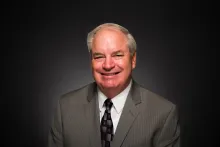
Robin Webber was born in Chicago, Illinois, in 1951, but has lived most of his life in California. He has been a part of the Church of God community since 1963. He attended Ambassador College in Pasadena from 1969-1973. He majored in theology and history.
Mr. Webber's interest remains in the study of history, socio-economics and literature. Over the years, he has offered his services to museums as a docent to share his enthusiasm and passions regarding these areas of expertise.
When time permits, he loves to go mountain biking on nearby ranch land and meet his wife as she hikes toward him.
