
Roy Holladay
This transcript was generated by AI and may contain errors. It is provided to assist those who may not be able to listen to the message.
I see some people here from Cincinnati. Just can't get away from them. We have a lovely hall here. It's a beautiful setting, and it's really nice that you can have a hall that you can use on a regular basis. We've been striving to find something like that. Haven't found it as yet. I thought before I began the sermon, I'd maybe give you a few updates, and cover some information.
About a week ago, I was put back on the council. One of the council members resigned. I was next in line. And as a result of that, I was put back on. So I was able to sit in on all the council meetings this last week, as well as now being on the management team. I can say that truly we, as a church, are on the cusp of several opportunities for really preaching the gospel. We're all familiar with WGN. I assume that you get that here in this area. Well, WGN, right now, one of our latest programs, has been down in the $10, $60, $70 cent per response. Now, that might seem like a lot, but back in the day, the worldwide Church of God was spending millions of dollars on media.
About the lowest response ever got was $4 or $5 a response. And when you consider inflation – the fact that was 20 years ago – you realize that actually 10 to days is probably more like $5 then. But we're just building an audience. Actually, when this first came up, I signed the contract for WGN. When Peter Eddington brought it to me, I looked at that and I said, well, there's no question that we should go ahead and do this.
Now, the Church has been accused of cutting funds off in different areas like Latin America, so we can save money to pay for WGN. And that's simply not the truth. We had $480,000 set aside for TV in the budget last year that was approved by the General Conference of Elders.
We were a little less than 100 – well, a little over 100,000 short. Peter mentioned to me that he felt by cutting back on the amount of advertising we were doing for the good news – the card packs that we were sending out – doing more advertising over the Internet that we'd be able to save the money to cover a year. Now, we have a contract, but that contract basically says in four weeks we can opt out. So, the program wasn't doing well, costing a lot more money. At any time, we can say we cancel, and in four weeks we would.
But right now, we are really doing very well with it. We're just building an audience. You don't build an audience in six months. Give us another year or two, and I think you will see the cost-per-response go down quite a bit. So, that's one of the things that we're really excited about. The second is our new website development. One of the big strategic activities we said we would do is emphasize the website.
We're in the process of developing an interactive website that, as far as I know, there's only one other church organization that has anything like it. That would be the Mormons. Of course, they've got a lot more money than we have to invest in something of this nature. But the idea behind it is that everything we have, we tag. When I say we tag, we've hired a few individuals part-time.
They're going through every sermon that's been given. We have about 4,000 sermons linked to the internet. Somebody's got to sit there and listen to those sermons. They got to say, well, this sermon covers the topic of love. It's love for family. Maybe it's love for God. It's love for children. Those tags have to be put in there. Every article that we've ever written has to be tagged. So, you've got to go through and you've got to say, well, these are the major topics that are covered in this. Now, we expect this all to be done around May of next year before the general conference.
And if somebody came and they wanted to check the website for a topic, I'll just throw out love. Maybe they get a hundred sermons. They type in love and a hundred sermons pop up and 500 articles. And so, they've got a tremendous amount of information to research. And it will certainly help all of us, I think, as members. If you want to go and look up a topic or a subject or a scripture, you'll be able to do so.
This will also be interactive in the sense that you can go to an article if it refers to an area of the Mideast. There will probably be a link there. A map will pop up. There may be a video. The video will pop up and you'll watch maybe a minute or two minute video about a certain section of the Mideast. And so, it's the type of thing that's really going to appeal to people, we believe. And we believe that this will be a tremendous part forward. So, those are two major items that we're going to be doing.
I've been asked because there are a lot of people know that I know Dennis Luker. Denny Luker and I have been friends. My wife and I have known him for 50 years. Norm and I came to Ambassador College back in 1959. Mr. Luker came in 1959. 1960. And he graduated in three years. He had gone and had an engineering degree from Delaware. He played football four years in Delaware. And you don't play football as a halfback for four years without being pretty tough. He wasn't just sitting on the bench. He played those four years. So, you know, he has that as a background.
But what I'm getting at being on the management team with him, at 10 o'clock every morning, we have a meeting. And I'm not in Cincinnati. Sometimes I'm there. But most of the time, I'm home. So I'm on teleconference. And every morning we have those meetings.
We all get down and pray. Many times, there might be eight or ten individuals. And everybody in that group will pray one after another. And we will ask God to guide and direct what we're saying, our discussions. There have been times that we discuss an authority issue, don't know what to do. And then he will say, let's pray.
So we'll just stop the discussion. I'll get down on our knees and pray. Now, I've been in Cincinnati during doing all of this. So, you know, I know I hear it on the phone. And there will be occasions if they're going around the room. They'll start with me, or I'll end up as the last one. And all of us will pray.
So we believe very strongly, knowing in that. I just had a few comments concerning Latin America. I appreciate what Brady mentioned. I have the stats here in case any of you want to take a look at it. It has to do with the ad campaigns. Almost every book that we have is mentioned front and back here. The Ten Commandments booklet is the one that we've got the most response to.
We've had 14,621 responses to ads for the Ten Commandments booklet. The next is Las Blenus Otisius. That's the Good News magazine in Spanish. And as Brady mentioned, in a period of two weeks, we had 10,000 people. 10,100. In 80, to be exact, who responded. At one time, there were 19,000 on that list. And out of that, we did not get all the list. When there was a changeover, we got 10,000. There were 9,000 that disappeared somewhere.
So we felt we needed to build the list back up to around 20,000. So we've been able to do that. And again, I can understand their excitement concerning this.
He discussed the fact that one man trying to take care of all of that whole region is quite an impossible task to really know everything. So we're discussing, and we did discuss after we had this meeting with Brady was there, Scott Hofker, as he mentioned, Mark Rowan. We have also Fred Nancy wasn't in the meeting. But we discussed it would be good to divide Latin America up just like we do Africa. We can put a man over one or two countries.
When we do that, then he can be acquainted with that in a much better way than one man trying to take care of the whole region. So that's something I believe that we will do. It's something that just simply makes sense. He also mentioned that the people were absolutely surprised that ministers would sit down and eat with them. Every one of these men on the teleconference mentioned that. Peter Eddington, Peter's in charge of media, and Matt Finchel were down there for the feast, and they mentioned the same thing. They would sit with the people they'd eat. They would talk to them. They'd go to their motel room, speak to them. People said, this has never happened before. The ministers would always go off to a hotel somewhere and need to be in the hotel.
They would never sit here and eat with the members. Now, you and I would think that's funny, but I guess that's the way things were done. So they have been pleasingly surprised.
There are a number of projects that we're going to be doing.
Down in that area, we're going to start the Youth Corps summer camps.
We're already helping with scholarships. Recently, we sent $25,000 down for scholarships for those who are attending with us and young people going to college.
We're looking at how can we train ministers, and it is true we need indigitous men who can take care of pastoring, looking after the flock. I was struck by the Scripture he gave because the council this year, in talking about the coming general conference of elders in May, decided that we would go back to a theme that we developed several years ago. That's Christ-centered leadership. That we're going to be emphasizing that as a general theme.
You might remember we did that for about two or three years. I was on the council. I remember Denny Luca and I both gave sermons at the GCE that year. I gave one on humility. He gave one on love. Then we had an individual make a presentation on Christ-centered servant leadership.
Well, it was rolled out to all the ministry, went out to all of the regional conferences.
We had one whole general conference of elders devoted to it. There were a lot of articles written in the United News, I should say, on it. We talked about it quite a bit. It was in the process of really being developed. One day we had a presentation on how to use Christ-centered leadership and delegation. How to apply it when you delegate responsibilities to others.
Well, it was right after that we had a council meeting. I can remember to this day that we had some council members who got up and said, I don't know what this is all about.
Back in worldwide, they introduced all of these new teachings. I wonder what this is about. Maybe it's trying to introduce some new teaching. Basically, they just shot it out of the water.
And they went with godly leadership, this being a component of it, but it's just sort of not mentioned that often. So we want to get back to that, use that as a basis for how the ministry is supposed to be serving God's people and looking after them.
I mentioned about the home office. We're in the process of remodeling the kitchen at the home office. I understand this has come up on occasion, I don't know about here, but on the internet that the, I guess the story goes that the council wants to have this elite kitchen to help take care of them. And really what happened was last year at ABC, we had students come to ABC who didn't have enough money. And so they couldn't buy food a lot of times. They would come in the morning, have nothing, they didn't eat breakfast for lunch. Maybe they had a piece of fruit or a piece of bread, something of that nature. And we got to thinking, you know, this isn't right, we need to do something. So the idea was floated. Why don't we go ahead and have a commercial kitchen? And that's what they're doing this year. They're providing breakfast and lunch for the students. We also have a lot of meetings throughout the course of a year. There are four council meetings, there are camp meetings for the camp directors, feast meetings, there are all kinds of meetings that take place that we could provide dinner for these men. And they don't have to go out to restaurants and save a lot of money. I know thought she could do it for about a third of what you would spend in a restaurant. And be better food, we'd save money. So we were given some estimates on how much this would cost. We had some inspectors come in. They said, yes, this is great.
So we started the remodeling and we found that it's going to cost about $26,000 more than we thought.
So we have pulled back really in one aspect of it. They recommended that we have a certain size pipe to drain the water out. You know, the sinks in the kitchen and also a commercial dishwasher.
Well, when both of them are hooked up, the inspectors said the pipes that we installed are not big enough. So it would cost $26,000 to rip the floor out again, lay down four-inch pipes, and do this all over. So we're going to do it without a commercial dishwasher. You know, it's basically what it's coming down to. Aaron Dean suggested that maybe over in one corner, we could put a regular dishwasher, run it outside, and then you can dig a ditch a lot cheaper and you can rip tile out our concrete floors and run it outside and hook it into a drain. We can use that. Many of you will remember the controversy that arose around having the move to Texas. That seems to be when a lot of our difficulties arose, you know, at that time.
And when that was not, let's say, re-confirmed, we talked to the administration about, let's take a look, because we'd never really had a real look at how can we use the home office that we have presently. Can we expand it? Can we get by there? You know, what can we do? Well, we found that, yes, we can. There was a three-stage program proposed. First stage was to remodel the kitchen, make a bigger conference room, and build a new TV studio. Well, right now, the only thing we're able to do is the kitchen, but eventually we hope to be able to do the others. But in looking at the building, we found that utilizing the space we have, that we can actually do a lot more. We can be able to put a lot more employees in there. When we build the new TV studio, the area where the old one is, will be converted into a giant area workspace. We could probably put about 10 or 12 cubicles in that area. If we have to hire 10 or 12 people in the future, it would be a perfect workspace for them. Just so happened about that time that there were two companies that merged, and I think we had a member who was an employee. One of the companies was giving away all of their cubicles. They had these cubicles. They were wired for, I think, electronically for telephone, electricity, and so on. And we got them. So all we have to do when we need more space is put these cubicles together, and we've got the separate space for individuals to work in.
So that's another thing. One of the expansion ideas, the building was built with the idea that we could always move the back wall. It's a tilt wall. You tilt it up, you can remove it, originally we were going to build 40 feet off the back wall. Well, now we realize we can build 80 feet off the back wall. And so the idea was, let's make an auditorium there. It could be used for the ABC students, as well as church services. And we could also then take the present ABC room and make work space there. We could build maybe a conference room or two. We could, if we needed to, take the warehouse, move the warehouse off-site. Warehouse space is some of the cheapest things.
And we could use the warehouse. We could certainly build another conference room in there, and then use it likewise for office space. We have enough office space where we are to last us for years, into the future. In fact, we just had a minister from Australia, his son, and his was his son in his son-in-law, who came to visit us. In fact, one of the reasons he was here in the U.S., he came over for a conference, but they were going to go skiing. But it was to look at our property and look at the hillside down the backside. We have about, I think it's three, three and a half acres down there. Could that be built on? Now, his son is a structural engineer. He is an individual who approves buildings. And so they went down and looked at it, and he came back and said, we could very easily build down in that area. We could build a garage. You know, parking could be down there. We could build a floor over it. Any number of things that could be done, he felt it was extremely feasible to be able to do that. So if we needed to, we could actually add another building in that area. Those are just some of the things that, you know, we've been looking at and trying to think of how can we save money. When the move to Texas was proposed, no one had ever really sat down, taking a look at the building, and decided how it could be utilized in a better way.
Now we have a much better understanding of that. As I said, I have some of these sets here, if you'd like to take a look at them. This past week, I believe there have been four letters that have come out.
I don't know if all of you get those or not, but we have published a letter. We have only one UCG affiliated church organization in Latin America, any country. We cannot have a competing organization. So in looking at Latin America, it says the rules of association of the United Church of God permit only one UCGIA affiliate entity in each country or geographical area.
And as Brady brought out, since we, UCG, does have its own congregations in those areas, the others are not. So, you know, we are not, let's say, recognizing the others at this time.
And so there's a letter on that. There's also a letter that delineates all of the opportunities and times that we have tried to reconcile with the Latin ministry. And there are at least four times that that has occurred. And many of these have been multitude of times over a period of time.
There was a letter, I'm sure many of you have seen this, an open letter that came to Mr.
Luecker from a number of ministers in the church. The letter concluded with a question.
And the question is, well, what can we do or where can we go from here? And it's funny that that question was asked, because that's a question the council has asked on numerous occasions. When we've sat down and we've talked to different individuals, they bring things up and we say, what do you want us to do? And we never get an answer on that. Now the question has been turned around and has come back to us. And then there's another letter out. Repeat the efforts of the council of elders to seek reconciliation. One of the accusations has been hurled against the president administration and councils that we are unwilling to talk to others. And so therefore, they keep repeatedly saying, let's talk, we don't talk. Well, there have been at least six occasions.
One was a three-day retreat. One was a two-day retreat. Another was a two-day Cincinnati. We've had numerous executive sessions where we've sat down and we discussed some of the major issues such as block voting, alternate form, you name it. We've covered it. We've written extensive papers on it. And we walk away from those meetings and the people say, yeah, I see it.
Thank you. And about two weeks later, it comes back up. And it never goes away. And it doesn't matter what we say, what we write, it just seems to keep coming back. And so it's not a matter that we haven't tried to answer. It's a matter that the answers have not been accepted. And that's a big part of it. So we have been trying to do that. We will continue to do so. Have we handled things perfectly? Obviously not. Looking back, there are a number of things that I could have done differently. I think we all do. Hindsight is always better than foresight. And we can all look back and say, yes, we can do things better. Where the council has made mistakes, we've apologized. And we've said, you're right, we're wrong here. And you apologize. But you have to apologize and you do it in writing, you do it verbally. And it's still not accepted. There's not too much you can do after that. So we truly have been trying. And in fact, Mr. Kubik and Mr.
Luker asked Norma and me to come this weekend to be here. They just thought it would be good to come.
Since we had used to pastor, you know, we pastored in St. Pete for six years.
We were always keeping the Holy Days together. And I look around the room and I see some old ballplayers. We played basketball together, softball together, and you know, both side things. So, you know, we know a lot of you here likewise. And he just felt it would be good to get someone out from the management team, the home office, and you'd be able to come out and assure everybody that, you know, we are going to continue on. In fact, after services, I might mention if you have any questions, we will be here. And we will look forward to seeing you. And I'd be more than happy to answer your questions. Now, having said that, I better get into the sermon or we won't have time for the sermon today. I'm going to start with a quiz, and this is a quiz that I'm sure every one of you here can pass. Every time I mention that we're going to have a test or a quiz in a Bible study, people get all excited about this. But this is an easy one. Five questions. Who murdered Abel?
Who killed Abel? Who killed the babies in Bethlehem? Who betrayed Jesus Christ?
Third question. Who was it who lied to Peter about how much money was received when a piece of land was sold? Was that Sally? Susie? Tom, Dick, or Harry? Where would you find that? Who caused Israel to be punished by numbering Israel? Now, I'm sure that most of us know at least four out of five of those, and probably all of them. Let's take a look at these and let's answer the question. Who killed Abel? Well, we would all immediately say Cain did, because guess what? The Bible says Cain killed Abel. And so, you know, it's in the Bible. And why did he kill him? Well, probably out of jealousy, anger. But you find that Cain was much like people are today in society. They want to be thought of as good, but they don't always want to do good. Now, God looked at his offering and Abel's. He accepted Abel's. He didn't accept Cain. And what did God tell him? Well, you know, if you do what's right, won't you be accepted? He told him that sin lay at the door. Let's go over to John chapter 8, verse 44. John 8, 44. And let's notice that there's more to the story than just Cain and Abel. We read in John 8, 44, you are of your father, the devil. Now, Christ is talking to the Jews and religious leaders of his day. And it says the desire of your father you want to do.
He was a murderer from the beginning. He does not stand in the truth, because there is no truth in him. When he speaks a lie, he speaks from his own resources. For he is a liar, and he is the father of it. Now, I want you to notice that the devil was a murderer from the beginning. So, who was it who inspired Cain to kill Abel? That was Satan the devil. He was there in the background. Did he not tempt Adam and Eve and lead them astray off into sin? Do we think that after they were driven out of the garden that he just went off somewhere? No, he was still around.
And we find that by the end of the time before the flood was around 1656 years from creation to the flood, about 120 years prior to that, society had become so violent, people had become so evil in what they were doing, that God said, I'm going to destroy all flesh. And yet Noah found grace in the eyes of the Lord. So, Noah was the only one at that time who was obedient. Now, not only did Jesus Christ say that Satan was a murderer for the beginning, but he said that the people who were there, who were present at that time, that those people were children of Satan. Now, what if you said that today on the air? All of you people out there listening to me are children of the devil.
It would go over like a lead balloon, would it not? But Christ told them that, and he said, the desires of your father you will do. So, whatever he desired, he said, you will do.
So, human beings, their actions and their decisions are not always just based on their own human nature, their own human desires, but are motivated by Satan. And I believe the Bible is very clear on that. Who killed the babies in Bethlehem? Well, we think of Herod, because Herod gave the order. When the wise men came by, he looked and said, okay, how old is he? When did the star appear? And all of this. So, all the male children two years and younger, he had killed in the area of Bethlehem. Yet, let's go over to the book of Revelation, Revelation 12.
Beginning in verse 3, we read this. Another sign appeared in heaven.
And behold, a great fiery red dragon, having seven heads and ten horns, and seven diadems on his heads. And his tail drew a third part of the stars of heaven, and threw them to the earth.
Now, we've always felt, starving, the symbol of an angel, that this is talking about the original rebellion. Here you have Lucifer. He influences one-third of the angels. They rebel against God, and they're cast down to the earth. Let me ask you a question. Did God not know that Lucifer was influencing a third of the angels? Do you think all this was going on in secret? And he had absolutely no idea what was going on. That God was over here on his throne, and Lucifer's out here doing all of this dirty work, and God is not aware of anything going on. I believe he was aware of it.
And he didn't stop. He didn't intervene, because he needed to know which of the angels would obey him, and which were not going to obey him, which were going to be faithful, and which were not. But let's notice the last part of verse 4 here.
The dragon stood before the woman, who was ready to give birth, to devour her child as soon as it was born. So here we have the dragon trying to destroy Christ. The child refers to Christ here. So it's very clear that he was behind it. He inspired this.
Okay, who killed Jesus Christ? Well, we can say the Roman soldiers did it. We say Pilate gave the orders. We say the Jewish leadership stirred the crowd up to say, Crucify, and finally led to his crucifixion. Again, there was the inspiration and guidance of Satan. Over in Luke 22, beginning in verse 1, Luke 22, verse 1, we read, Then Satan entered Judas, surname Ascarat, who was numbered among the twelve. So here we have Satan entering into Judas. He becomes possessed by the devil. Now verse 21, Christ said, Now Jesus Christ knew he was going to be betrayed. How did he know? Well, he knew all of the prophecies. He actually was the one who inspired the Old Testament writers to write the prophecies. Now, can you imagine what we find that Christ was crucified before the foundation of the world?
This was all planned out. God knew what was going to happen. And so, can you imagine that here's the earth created, and the one who created it, who spoke, you know, and all came into being, he realizes, well, you know, after human beings are created, about 4,000 years, I'm going to come on the scene. If 4,000 years go by, he comes. He's born of a virgin. He grows up. He lives 30 years. He begins his ministry. He knows his ministry is for three and a half years. And then, finally, we get down to the last Passover. He realizes this is it. And why does he pray?
Father, if there's some other way, remove this cup from me. Now, was he saying, I don't want to die?
I think he knew he had to die. I mean, there was no question about that. But he did it. Did he have to go through the horrible beating, scourging? Did he have to be crucified? Could they just, you know, stab him, shoot him, do something less painful? And, of course, the answer was no.
You prophesied. These are all the prophecies. You will fulfill them. And so, Christ willingly did what his father told him. Let's notice, though, in verse 47, it says, While he was still speaking, behold the multitude, and he who was called Judas, one of the twelve went before them, and drew near to Jesus to kiss him. And Jesus said, Judas, do you betray the Son of Man with a kiss? And then in verse 53, Christ said, When I was with you daily in the temple, you did not try to seize me. But this is your hour. In other words, this is where you have the authority. This is your hour. And the power of darkness.
So, Christ acknowledged that the power of darkness, Satan the devil, was there and he was present.
He was the one who influenced them all to have Christ murdered and killed. Now, down through the years, we find many clear examples in the Scripture, the Bible, about how Satan influences God's people to sin and leads people astray. What about Ananias and Sapphira? That's the one we're talking about. Over here in Acts 5, let's go over to Acts 5, where they lied about the money they received for a piece of land that they sold. Now, we can think they did this out of pride. They did it to impress. Remember, after the day of Pentecost, when the church first started, a lot of people stayed around because this was all new. They had to learn about the right way of life, about Jesus Christ. And so, they were being taught this way of life. Many people put money up, sold properties, so that these people could stay, be financed, and so on.
So, we find that this, though, was inspired by Satan the Devil. Chapter 5, here in the book of Acts, in verse 1, says, a certain man named Ananias with Sapphira, his wife, sold a possession, and they kept back part of the proceeds, his wife being aware of it, and brought a certain part and laid it before the apostles' feet. And Peter said, Ananias, why has Satan filled your heart to lie to the Holy Spirit? So, who was the one who was behind this was Satan the Devil.
And the keep-back part of the price of the land for yourself, while it remained, was it not your own? You had the property, you didn't have to sell it. While it remained, it was your own. After it was sold, it was not under your own control. You could have given as much or as little as you wanted to. Why then have you conceived this thing in your heart? See, they said, made a big display about it, we sold it for this amount of money, we're giving you all the money, and they kept it back. And they realized that lying to God's servants is lying to the Holy Spirit here. And so, Satan will work on our weaknesses. Your weakness may not be my weakness.
Now, I use a singular there, should use a plural. Your weaknesses are not my weaknesses, necessarily, and vice versa. And you'll find that Satan will work on our human weaknesses. The Bible describes the lust of the flesh, the lust of the eyes, the pride of life that we all wrestle with and contend with. We have vanity, we have pride, we have greed, we have human emotions, people have power, lust for power, position, ambition, all of these things. So, if we give into this, if we give into any of these, this is where we give Satan an inroad. He then can egg us on, influence us, because we've opened the door to him. What we want to learn how to do is to keep that door shut, slam it shut, so that he cannot get in to influence us. So, let's look at the last example. In 1 Chronicles 21, beginning in verse 1, we have the example of King David. David numbered Israel. Why did he number Israel? He wanted to find out how many fighting men did he have? How big of an army did he have? And you see, God was not real pleased with this, because God doesn't depend on size. God used 300 on one occasion to defeat an army. God doesn't need numbers. Verse 1, chapter 21, now Satan stood up against Israel. Satan the devil was against Israel, and he moved David to number Israel.
David said to Joab and to the leaders of the people, go number Israel from Beersheba to Dan, and bring the number of them to me, that I may know it. And Joab answered him and entreated him, and said, May the Lord make his people a hundred times more than they are. But he said, Don't do it, David. You don't want to do this. And why should, last sentence, why should he be a cause of guilt in Israel? Nevertheless, King David's word prevailed against Joab. Therefore, they departed, and went out, and they numbered everybody. Verse 7, God was displeased with this thing. Therefore, he struck Israel, and David said to God, in verse 8, I have sinned greatly. So, David realized he has sinned, and God gave him several choices. What should I do as punishment here? So, we find David sinned by numbering Israel, and that he was directly influenced by the devil.
You and I live in this world. When you're converted, you're not taken out of the world, are you? You have to live in the world. And you and I are subject to our own human nature. We're subject to the society around us, and we're certainly subject to the influence of Satan, the devil. The Bible reveals in 1 Corinthians chapter 2 that there are three spirits. There's a spirit in man, there's the spirit of God, and then it says there's the spirit of this world.
There is a spirit in influence that is emanated in this world. And if you and I are not close to God, if you want a title for this sermon, close to God, if you and I are not close to God, we will be sifted. We will be sifted by Satan, the devil. No human on his own, by his own power, his own strength, his own might can resist a great archangel. You simply do not have that ability, and I do not. Let's go over to Luke 22 again. Luke 22 is an interesting chapter, but Luke 22, beginning in verse 31, Jesus said to Simon, notice, Simon, Simon, indeed, Satan has asked for you. Now, he was focusing on Peter. Now, what did he ask? Well, give me Peter.
Well, what would he have done with Peter? He would have destroyed him, or he would have corrupted him to use him to perhaps corrupt the rest of the apostles. It doesn't say, but he asked for him.
Why? That he may sift you as wheat. He wanted to get rid of Peter, but Christ said, I have prayed for you. Has Christ ever prayed for us? Do you think Christ has ever prayed for you, that God would hold on to you? Do we pray to God that he would hold on to us? Many of us sitting here today are here, not because we're greater, mightier, more righteous, had more knowledge and so on than others, but because God held on to us for some reason. We're here. And so, he said, I pray for you, that your faith should not fail. When you have returned to me, strengthen your brethren.
What does he mean, return to me? Well, right after him, he said, well, Lord, I'm ready to go with you, both to prison and to death. I'll die for you, Peter said. And Christ said, well, before the rooster crows tonight, you'll deny me three times. We know that when Christ was crucified, all the disciples left him. They went off and they went fishing again. Now, when they, when Christ was resurrected and appeared to them, Peter and the apostles returned. You know, they were there. They realized what God said was, that happened, that he was resurrected. They began to believe their minds were open to understand this. And when Peter did, then he strengthened the brethren, the church, and the other apostles. Now, Satan wanted to sift him. You and I are on our own, by our own power, cannot resist or overcome the devil. We will one day judge, the Bible says, angels. For us to judge Satan and his demons, we have to overcome them. And so, you and I have to be able to resist the devil. And are you stronger than Satan? The answer is no. Peter was not. Christ said, I had to pray for you. So, here we are individually as members of God's church. How close to God are you? How close are you? As a congregation, how close are we as a congregation to God?
You know, as a body of believers. And how close are we to one another in our fellowship, support, and encouragement? Because you see, in the future, our hanging in there, remaining faithful, may rely upon that. If we are not close to God, Satan the devil, it is possible for him to sift us. It is possible for him to attack us. You and I need to be seeking God's protection on a daily basis, on a regular basis, asking God to be with us, to protect us, to guide us, to lead us. The 2 Timothy chapter 2 beginning in verse 24 tells us. It starts out by talking about the approach that the ministry should take. A servant of the Lord must not quarrel, but be gentle to all, able to teach, impatient, in humility, correcting those who are in opposition, if God perhaps, will grant them repentance, so that they may know the truth, that they may come to their senses. You know, God wants us, and he did in the past. When he called us, we came to our senses. We were being misled, misdirected, and it says to escape the snare of the devil, having been taken captive by him to do his will. So this is true of what's happened to us in the past. Now, this certainly may be a valid translation, but there are other possible translations. Notice what the King James Version says. I've just read from the new King James Version. King James says that they may recover themselves out of the snare of the devil, who are taken captive by him at his will. So that puts a little different slant on it.
Then the Living Bible covers all possibilities. Notice the Living Bible. It says, then they will come to their senses and escape the snare or trap of slavery to sin, which he used to catch them. So what is the trap that Satan sets out there? We know what a trap is. You said a trap, an animal walks, steps on it, and is got him. Well, the same thing is true. Satan the devil sets a snare, a trap for us. And as he says here, Satan's trap of slavery to sin. We all sin, but are we a slave to sin? You can become a slave to addictions. You can become a slave to a sin, something that you do just consistently over and over. So it says, to escape out of the slavery to sin, which he uses to catch them, when he likes, and then they begin doing the will of God.
So the implication is, if we can escape from the snare of the devil, then we can begin to do the will of God. The rest of the words study the Bible in any case, that that's probably a little more accurate translation. Over the years, rather, when you look at the history of the Church of God, you look at the history of the New Testament Church, you go down through the centuries and you look at the Church, you will find that in the context of history, the struggle that we have always had in the Church is to maintain the purity in the Church, to stay united, and to move forward together. Many of you will remember back in the 60s and 70s, how many in here have been in the Church for 40 years? Could I see your hands? We got quite a few of you, been in the Church. Some of you don't look 40. You were a little bitty baby, you know, at one point in the Church. My wife's family, just to give you a point of reference, her dad was listening to the broadcast in 38 and 39, sent money in to start Ambassador College in 47. They attended the first feast in Big Sandy.
They received notice about Belknap Springs and Sigler Springs, but in those days, you didn't drive across country in a car back in the early 40s. The roads simply were not that good. But back through the 70s, I remember quite vividly, 72, 74, 76, 78, 79, we had problems in the Church. 86, when Mr. Armstrong died, 95, you know, from 86 to 95 seemed to have been a very troubled period. 95, the bomb went off. And, you know, here we are sitting today. Back in 1974, as an example, the associated churches began. And the associated churches began with about 35 ministers leaving the Church and 4,000 members leaving the Church. 1978, another prominent minister left the Church.
And we had maybe a dozen or more ministers and 3,000 people. How many people left the Church during the time when the state of California attacked the Church? I know in Chicago, we had a few people who left. You know, as a result of that, there were some who left when Mr. Armstrong died because they thought that God would never allow him to die. 95, obviously, we had great numbers leave the Church. 98, we had a few thousand leave the Church. And 50-plus ministers leave the Church at that time. You know, these things have happened consistently over a period of time. Now, Norm and I know very well back in 1974 because we were in San Antonio. We were very happy there. We loved that area. We had, you know, four of our children there. It seemed to be an ideal place for your children to grow up. And one day, we were at a giant yard sale we were doing.
In fact, it was so big, it made television in the local area. But we were pricing things.
And I had a member come up and say, did you hear what happened in Corpus Christi? And I said, no, I haven't heard anything. So he told me that the church pastor there had announced to the deacons, elders, leadership in his area that half the ministry was going to leave the Church, maybe a third of the members, or it could have been the other way around, a third of the ministry leaving half the membership. And he had attended a conference out in West Texas, and this had been announced there. And, you know, what are we going to do about it? So I get on the phone, I call Big Sandy, and I hear that Ted Armstrong is flying over. I thought, well, he knows about this. Why would he be coming to Big Sandy? So I went back to the sale, and I got to thinking maybe this was purely an accident he is coming over. So I called Big Sandy, I think I talked to Mr. Neth. It was an accident. They knew nothing of this. So the next Sabbath, I think Bill McDowell, Ron Kelly, maybe Wes McCullough, Leroy Neth, they're all down, and Corpus Christi. That Sunday, the Falcon Jet came around, picked all the church pastors up in Texas, in that particular region. We're all there for the infamous Big Sandy Conference that it was called at that time. Eight hours on Monday, we have a conference. The regional coordinator at that time, his assistant, were fired. You might remember the next Sabbath. Mr. Armstrong flew back from the Philippines. The next Sabbath services were canceled around the world, and these men said, you can't cancel Sabbath services, and they started their own church. And so that's when the 35 left, and they took the number of people.
Next week, I get a call from my wife on Thursday, and she started crying, and what's wrong? We're being transferred! And it wasn't quite that bad, but she was, you know, we thought we'd stay in San Antonio for quite a while, but we were transferred back to Richmond and Norfolk. They lost 350 people out of those two congregations. And so we were, this was on Thursday, Sabbath, I gave a sermon. We were out of there.
We went over, kept the Passover, days of Unleavened Bread in Richmond on Wednesday, I think it was that week. My wife came back, packed, and sold the house. I never came back, except to pick them up and leave, and drive the family over to Richmond. We were gone.
That's the quickest transfer that I've ever had, but it was necessity. Men were being pulled out and sent back to the East Coast, because this is basically where all of that was occurring.
Well, this has happened a number of times. Now, why do I mention this? Because we have to realize that historically, if we just try to look at things as they're happening, and don't look at the history, don't look at the New Testament, don't look at what's happened to the church down through the ages, don't look at what's happened even in our modern time, then sometimes we can be taken aback when certain things happen. We need to realize that Satan the devil will come after every one of us. He has a certain way of attacking, divide and conquer. You look at the United Church of God, and you look at all of the opportunities, as I articulated earlier in the announcements that God has put before us, that we're on the cusp of the opportunity of some major breakthroughs in preaching the Gospel. Satan doesn't want that. Satan hates true Christians. He absolutely loaves you because he knows that one day you will rule over him, and so he detests God's people.
And so we read back here in Matthew chapter 24 that in the end times, beginning here in verse 9, Matthew 24.9, in times things are going to get so bad that true Christians will be offended and will turn on one another. Let's read it. Verse 9, then they will deliver you up to tribulation and kill you, and you will be hated by all nations for my name's sake.
And many will be offended and betray one another, and will hate one another. Then many false prophets will rise up and deceive many, and because lawlessness will abound, the love of many will grow cold. But he who endures to the end, the same will be saved. So the emphasis is on the fact that we've got to endure. Now, none of us like to think that a brother would betray us, and yet I look around this room and I know that probably the majority of us, instead of doing that, would be willing to die for one another. You know, you ask yourself the question, would you be willing to die for another brother in God's church? And that's happened down through the ages, and I think most of us would certainly be willing to. How does Satan get to people?
How is he able to influence them? How is he able to begin to undermine us? We need to understand that. Let's go over to Luke 17, verse 1. Because what I'm talking about here today is something that we personally need to be thinking about.
Chapter 17 of the book of Luke, verse 1, Christ makes a statement that seems a little incongruous, but he said to his disciples, it is impossible that no offenses will come, the world to him through whom they do come. So we find that there will be offenses. It's impossible for them not to come. What is an offense? Well, it's something that causes a person to stumble.
You know, you can stumble over almost anything. A teaching, a correction, you know, whatever it might be. People stumble. Now, when that happens, Satan will work on that.
We all stumble over certain things, and when it involves other people, we think we've been treated unfairly. Have I always, as a minister, treated everybody I've dealt with absolutely 100% fairly?
No. It's amazing over the years. I've gotten phone calls occasionally. Somebody said, you know, years ago, you said this, you advised that, and this is what happened. That wasn't right.
And I shake my head, and I say, you're right. That wasn't right. Now, I apologize.
And, you know, that takes people aback, because they've never heard the minister apologize.
But, you know, if you've done something wrong, you need to apologize for what you've done.
Well, you find Satan will work on us. If we think we've been treated unfairly, we stumble over something, what generally happens? Well, you begin to get a little resentful. Get angry.
You begin to focus on it. It just sort of festers. It's like a splinter in the flesh. It begins to puss up, and it begins to be sore, and it becomes a sore point. You get angry. And why does that lead to? It leads to bitterness. And bitterness is where Satan will certainly come along.
Satan could pick any of us off, sift any of us, if we become bitter and resentful.
Being close to God is the key. You and I must be close to our Maker if we're going to overcome bitterness. Hebrews 12, beginning in verse 12, describes bitterness, how it springs up. And verse 12 says, therefore strengthen the hands which hang down, and the feeble knees.
Make straight paths for your feet, so that what is lame may not be dislocated, but rather be healed.
Pursue peace with all people, and holiness without which no one will see the Lord. So this should be our modus operandi, our approach. Looking carefully. Notice, we are to be very careful. Lest anyone fall short of the grace of God, lest any root of bitterness bringing up cause trouble, and by this many become defiled. So notice it talks about a root of bitterness. You can have a plant, roots go down, a tree, roots go down, the tree or the plant grows up. So here you have things that happen that cause a root of bitterness. And then the fruit that is produced by that root of bitterness is not good. And so it says that many would be defiled. Now notice the term falls short here, and the Greek means to come too late or to be too tardy. It means to be left behind in the race and so to fail to reach the goal, to fall short of it. In Hebrews 4, we find the same word being used here again. Hebrews 4, verse 1, therefore, a sense of promise remains of entering his rest. Let us fear, lest any of you seem to come short of it. We're a little late, we come short. We don't finish what we started.
Now back over here again in Hebrews 12, we find where it begins to talk about to fall short or to fall back. Actually, in the Greek here, there's a preposition, aplo, which means to fall away or to fall from. And the implication here is to fall back from. There's a level of spiritual maturity, perhaps, that we have obtained. We've grown. And then we regress. Protestants like to say, backsliding. We fall back. We don't reach it. So we were there once, and then we began to fall back.
And we don't get back to where we were. The word, bitterness, means an intense resentment or hatred, bitter resentment, spite. And so we've got to be very careful of that.
James 3, verse 13. James 3, 13 explains here that there is two types of wisdom.
Verse 13 says, Who is wise in understanding among you? Let him show by good conduct that his works are done in the meekness of wisdom. But if you have bitter envy and self-seeking, the word self-seeking means selfish ambition, trying to put the self forward.
In your hearts do not boast and lie against the truth. This wisdom does not descend from above, in other words, does not come from God, but is earthly, sensual, demonic. So it's of this earth, it's sensual, physical, and it's demonic. For where envy and self-seeking exist, confusion and every evil thing are there. But the wisdom that is from above, in other words, from God, is first pure, then peaceable, then gentle, willing to yield, full of mercy, good fruits without partiality, and without hypocrisy. That's the type of wisdom that we want. And so, rather than the big question comes down, that if we're not going to allow Satan to get to us, how do we stay close to God?
Well, Ephesians 6, we'll just read two or three other scriptures here, Ephesians 6 gives us the answer. Ephesians 6, you might remember, talks about putting on the armor of God.
In verse 10, though, it says, finally, my brethren, Ephesians 6, 10, be strong in the Lord, in the power of His might. So where does our spiritual strength come from? It comes from God, it comes from the Holy Spirit, the power of His might that He gives us. And then it says, put on the whole armor of God, you may be able to stand against the wiles of the devil. So you and I have to stand against His scheming. It says, we do not wrestle against flesh and blood. Our enemies are not other human beings, but against principalities, against powers, against the rulers of the darkness of this age.
So our struggle is against the spiritual wickedness in high places. That's what we wrestle against.
Now with that in mind, let's go back to James chapter 4 again. We realize that first of all, we need power to be able to overcome. Without the power of the Holy Spirit, we simply cannot do that. In James 4, verse 7 and 8, we have a three-step process delineated for us. Number one, therefore submit to God.
Number two, resist the devil. Number three, verse eight, draw near to God. Let's go back and read the whole verse. Therefore, submit to God, resist the devil, and he will flee from you.
So if you don't want Satan the devil around, you resist him. What does resist mean? Well, we all know what resist means. Picture Thanksgiving Day. You've eaten half a turkey, pile of dressing, cranberry sauce, you've had a piece of cake, an apple pie. Now here's a pecan pie, and it looks so good. And people are saying, I'll go ahead and have a little piece. And you say, I can't. You have to resist that, don't you? You have to say, no, I've had enough. I'm full. If I eat a little more, that's going to be too much. So you resist it. Resist means you don't give into it.
You've resisted it. So when it comes to resisting Satan, you know, Satan doesn't come along like a dancing girl, dressed like a ballerina dancing. No, he throws temptations in front of us. And whatever your weakness is, that's the temptation. If it's sex, he'll throw that out. If it's pornography, he throws that out. If it's over-drinking, he'll throw that out. If it's something else, you know, whatever it is, he will put that in front of you. And so you have to resist it. You have to say, no, I'm not going to do that. Now, how do you do that? Well, first of all, you have to submit to God. Submitting to God means, here's God's Word, here's God's instructions. You do it. You submit to it. Submit means you place yourself under the authority of, and we place ourselves under the authority of God. We submit to Him, and then we draw near to God.
So it's a matter of, who are you near to? If you're afraid of heights, and here's a big canyon, it's 5,000 feet down, you don't get over on the edge and look over. You know, when I do, when I get to something like that, I lie down flat on my tummy, and I sort of crawl up, and I peer over, because, you know, I don't want to fall over. You know, maybe we all have different ways that we cope with that. But you draw near to God, that means you pray, you study, and you fast. What have we heard ever since we've been in the church? Pray, study, and fast. Stay close to God.
So when you're close to Him, Satan will flee. If you submit yourself to God's authority, so you don't follow Me, you don't follow any human being. We're all men. You follow God.
He's the one who is our leader, and so He's the one that you follow. So you submit, you resist, you draw near. Now, 1 John 5 and verse 18 gives the same promise, so to speak. 1 John 5 and verse 18. John writes, we know that whoever is born of God does not sin. That means doesn't practice sin, doesn't live in sin. It is a way of life. But he who has been born of God keeps himself, and the wicked one does not touch him. So we don't want Satan to touch us. The word keeps himself, as a margin says, means he guards himself. You're on guard constantly. And if you are, the wicked one will not touch you. If you were a guard, a security guard, or you're in the military, and you're a guard, and here's a base camp, and the enemy is all around, you're guarding the camp, you go to sleep. What's going to happen to you? Well, you may wake up with your throat slit. If you're not alert, somebody could sneak up on you. So when it says that you keep himself or guard yourself, that means you guard what comes into your mind. You don't just watch anything on TV. You don't just read anything. You just don't do anything. You guard the influences on you. You guard the influences on your mind, your thoughts, so that things can't be put in there. You don't have to resist something if you never let it in. So you guard yourself against the wicked one. Then in Hebrews 13 and verse 5, we find that if we do this, that we have an absolute promise from God. Brethren, we are the church of God. We are God's people. Those who have God's Spirit, we know, are a part of that body. And God has promised us this.
Let your conduct be without covetousness. Be content with such things as you have.
For He Himself has said, I will never leave you nor forsake you. That's an absolute promise from God. Now, in the Greek, there's emphasis that you don't get here in the English.
It's, I will not, I will not, I will not leave you. I will not, I will not forsake you.
And so it's an emphasis. So if this is true, God says, then you may boldly say, the Lord is my helper. I will not fear what man can do to me. God's with me. And if God is with you, that's all you need. You have God on your side. So God says that He will never leave us. You'll never forsake us. That He is our helper. He is there to guide us. And then in Matthew 28, Matthew 28, we're told Jesus Christ right before He ascended to heaven, some of His last instructions to the disciples said this. Verse 18, Jesus came and spoke to them, saying, all authority has been given to me in heaven and on earth. So our elder brother, our high priest, has all authority. He has power. Go therefore, make disciples of the nations, baptize them in the name of the Father, the Son, and the Holy Spirit, teaching them to observe all things I've commanded you, and lo, I am with you always, even to the end of the age. So He promises to be with us even to the end. Have we reached the end? But we're still going. Not there yet. He promises to be with us. The church will continue. Now, I'm here today to tell you the church is going to continue.
It will go forward. The work of the church will continue. There's going to come a time we know there will be a famine of the Word, but that hasn't happened yet. And so God will continue, the church will move forward, and the work of that church will move forward.
Now, you and I must do one last thing. Matthew 6, one last scripture, verse 9. Matthew 6-9.
Here's the model prayer. Notice the principle out of this model prayer. We don't focus on that often. In this manner, therefore, pray, our Father in heaven, hallowed be your name, your kingdom come, your will be done. On earth, as is in heaven, give us this day our daily bread.
Now, you notice it doesn't say our monthly bread, our yearly bread, our weekly bread. Give us our daily bread. So we should be asking daily that God would bless us. We live in a country where, if you run out of food, guess what? You go down to the local publics or local store on the corner, you go buy something. We don't think anything of it. Now, there are a lot of people, millions, billions in this world don't have that opportunity, and they pray that God would bless them.
I'm pastoring one of the churches I pastor in his room, Georgia. We have about 20-25 members there.
Most of them are out of work. Most of them are elderly, and the majority of them have health problems, severe health problems. We've had three people die in the last couple of years.
And, you know, we have those types of situations. When they pray, give us our daily bread, they literally mean it, because they know if it's not for God. I don't know how some of them make it, haven't been working for three years. How do they pay the rent? How do they pay the utilities? How do they have the money to come to church? You know, they're just barely getting by, but God has blessed them. Brethren, we need to pray the same thing, but let's notice an application. I'm going to give you an application of that principle. Give us our daily bread, now, verse 12, and forgive us our debts as we forgive our debtors. Do not lead us into temptation, but deliver us, notice, from the evil one. Do we pray daily that God will deliver us from the evil one? We should.
We shouldn't take that for granted. We should ask God, Father, you know, today, you know, I'm out here, I'm going to go to work. I need your help. There are all kinds of temptations, problems, difficulties out here. Help me. You know, I don't have the ability on my own to be able to do this, and God will give us the help. There are certain things that you need to pray for on a daily basis, and deliver us from the evil one is one of those things.
So, brethren, as we go forward into the future, realize that Satan the devil wants to sift us. He wants to destroy us. He wants to divide us. He wants to divide and conquer. You know, this has always been his plan. We need to pray because we need to pray collectively for our congregation here locally, for the church at large, for ourselves. Deliver us from the evil one should be in our daily prayer.
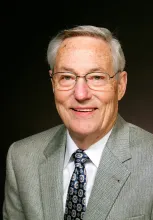
At the time of his retirement in 2016, Roy Holladay was serving the Operation Manager for Ministerial and Member Services of the United Church of God. Mr. and Mrs. Holladay have served in Pittsburgh, Akron, Toledo, Wheeling, Charleston, Uniontown, San Antonio, Austin, Corpus Christi, Uvalde, the Rio Grand Valley, Richmond, Norfolk, Arlington, Hinsdale, Chicago North, St. Petersburg, New Port Richey, Fort Myers, Miami, West Palm Beach, Big Sandy, Texarkana, Chattanooga and Rome congregations.
Roy Holladay was instrumental in the founding of the United Church of God, serving on the transitional board and later on the Council of Elders for nine years (acting as chairman for four-plus years). Mr. Holladay was the United Church of God president for three years (May 2002-July 2005). Over the years he was an instructor at Ambassador Bible College and was a festival coordinator for nine years.
