
Victor Kubik
Twenty-four Feast messages from Scotland, gathered into one Sabbath report.
Revisit the Feast of Tabernacles in Scotland through 76 pages of notes, from parables and the transfiguration to loyalty, humble service and the end of war and disease. Isaiah 51:3, Isaiah 2:1-4 and Zechariah 14:16-17 frame the hope of the coming Kingdom of God, when the wilderness becomes like Eden, the sick are healed and the nations finally learn God’s way of life.
You may entitle this message "Report from Scotland." "Report from Scotland." My wife and I went to the Feast in Scotland, and my wife is an assiduous note-taker. And so I have 76 pages of notes here that I would like to review. So we can do this two different ways. We can go through all 76 pages and 24 messages, and we could probably do it in 720 minutes, which is about 12 hours, and cover everything at the Feast, or we can go for the 45 minutes. So if you want to go the 12 hours, let's have a raise of hands. Only see two of them. Okay.
The welcome service on Friday evening was from a Scottish elder. And this is where I learned about British humor. He told us that in Scotland, there are a lot of breweries. And so, in fact, there were tours of breweries while we were there. And he said, so just bear in mind, the air you breathe is a lot of whiskey vapors that are around.
He also told us that there's what they call the Stone of Destiny, which you may be aware of, the stone in theory that Jacob put his head on when he was off to his future father-in-law's. And so that has been, and I read up on this. And I'm not sure how much is truth and how much is fill in the blanks by people who want it to be true. But this is the stone upon which many of the monarchs from the United Kingdom, both from England and Scotland, upon which they were then raised to their kingship or queenship. And so that was about an hour, hour and a half drive away. And so we tried, jumped in the car, went there, and we made it about a half an hour. And then Google Maps said, you'll have about an hour delay before you because of the heavy traffic for whatever reason. So we tried going a back route, gummed up another half an hour, and then turned around and went home. We didn't get to see it, but they say it is in the Perth Museum. We tried, but didn't quite get there. They say they take it back to England. They took it back there for King Charles' coronation.
So anyway, it was a historical thing there. And the opening message from Alex Preston, which I thought was odd because that name at first, I thought, what is he talking about? Because that's the name of the son of the pastor in Charlotte, North Carolina. No, it's not the same Alex Preston. So he opened up and said, turn to Jude 12, and he said, this is God's love feast, the feast of godly love. And so therefore he followed up with Matthew 7:7 and said, ask, seek, and knock, basically to ask for godly love every morning during the Feast. And so that was the opening sermonette on Friday evening.
Then the second message was the festival coordinator, Jason Godfrey. And that's when he told us that there were about 500 people there. And he said the waiting list is almost the same length for a lot of people. They simply, what I found is they did not accommodate people that had more than two children. I figured out why. In the hotel, they have family rooms with a bed in one room and then a couple of bunk beds in another room. So my daughter with three kids got an Airbnb a few miles away, and the other daughter had the oldest child go stay with grandma. And so they split a room, worked out for them. But it was a popular interest.
So, and this is, and I hadn't heard, Mr. Godfrey said something I hadn't heard before, but it really rang true when he said, the Bible starts with a garden, and it ends with a garden. The first garden was the Garden of Eden, had Satan, but the garden at the end, Satan will have been banished by that time, and the world will then be blossoming. But first, of course, there will become a time of devastation. In Isaiah 51, verse 3, he quotes from the scripture, For the Lord will comfort Zion, He will comfort all her waste places; He will make her wilderness like Eden, and her desert like the garden of the Lord; joy and gladness will be found in it, thanksgiving and the voice of melody.
So it's really, and I thought, well, that really captures an interesting hope that we have for the future. It's because we always wonder, what's the Garden of Eden like? Well, it's going to be restored for that delightful time. And so Mr. Godfrey, the theme that he said, it was a time to increase our hope and expectation. And so the Bible speaks of a hope with a certainty, and we know that God will do what He says.
And he went on to say, here's the things that we hope for. The hope of God's protection in Psalm 119:114, about God being the hiding place, the shield, and we place hope in His word. He also said there's hope of eternal life and inheritance. And there he quoted Titus 1:2, in hope of eternal life which God, who cannot lie, promised before time began. So there was a plan here. And he's pointing out this is simply part of the plan. He followed up with 1 Peter 1, verses 3 and 4. Blessed be the God and Father of our Lord Jesus Christ, who according to His abundant mercy has begotten us again to a living hope through the resurrection of Jesus Christ from the dead, to an inheritance incorruptible and undefiled and that does not fade away, reserved in heaven for you. So the hope of eternal life and an inheritance, then that hope motivates people, motivates believing Christians.
And he goes on, and this was, like I say, the main opening message. In Hebrews 10:24-25, And let us consider one another in order to stir up love and good works, not forsaking the assembling of ourselves together, as is the manner of some, but exhorting one another, and so much the more as you see the Day approaching. So we're motivated because we know the truth and we know what's coming.
And in the interest of time, now these are available this last week. I got the links, so if any of these messages you want them, just let me know and I can send them along to you.
That was Friday evening, the opening evening of the Feast. And the first day on the Saturday morning, the first day of the Feast, Dr. Wayne Topping gave a Bible study that morning. Now, I don't know how many of you know Wayne Topping. He was at the Feast two years ago in Estonia. He lectures at medical schools all over Europe, and I first met him in January of '79. And we both slept since then. But I've known him for a little while. And so he's very meticulous. Being a professor, everything is going down the line. And so in Estonia, when he gave a sermon, he had a PowerPoint that went with it, that projected up right behind him. He had over 110 slides in less than one hour. So he was going boomity boom boom as he's going through that. I had to laugh because I had a PowerPoint the next day and I had one slide. Now it had 12 points, so point one, point two, and it kept all on the same slide. We got a good chuckle out of that one.
But he was very meticulous on the Saturday morning, the first day of the Feast, because he went through parables, why Christ spoke in parables, and then he went through a number of the parables and the value and the purpose of them. And he went through some of the English definitions of metaphor and simile, so that when things are described as being like or as, a metaphor, a physical thing being an example for a spiritual lesson. And he went through a number of the parables. He talked about hyperbole, exaggerations to make a point, and gave some of those examples as well.
And introducing the parables about the Kingdom of God, and then what those lessons were for us, he talked about the treasure in the field, the pearl of great price. In other words, the Kingdom of God is valued. It should be valued above everything else. It's worth sacrificing anything else for it.
And he quoted Romans 2, verse 13, not the hearers of the law (in other words, those with intellectual knowledge) are just in the sight of God, but the doers of the law will be justified. In other words, you can't just know it. You actually have to do it.
He talked about the example of the mustard seed and about faith the size of a mustard seed, in Luke 13. And he described it as, the Kingdom of God is like the mustard seed. And He called it the least of all seeds. Now, it isn't technically the smallest seed, but it's the smallest seed that they knew of, of the people and the audience that He was speaking to. And so that very tiny seed resulted in a very large herb. He talked about the yeast parable, about how the kingdom of heaven will spread like yeast and will be leavened, will grow dramatically from within.
And then he did point out that Christ preached for three and a half years, and how many disciples did He have at the end of three and a half years? About 120. That's in Acts 1, verse 15. In other words, it was very slow growth initially, yet by Pentecost there were 3,000 people baptized. In other words, all of a sudden it was an explosion of growth. Acts 2:41 speaks of 3,000. Acts 4:4 speaks of 5,000.
And so he went through, like I say, a number of the parables. And so we don't know when this rapid expansion could occur, but it could happen as it did on that first Pentecost after Christ's sacrifice. He went through the parable of the ten virgins and about five that prepared and five that didn't. What I found intriguing was all of them were sleeping. It wasn't just five of them sleeping. They were all asleep when the bridegroom came.
If we then look to the sermon on the first day, again Alex Preston from Scotland. So this was the fourth message here. His was entitled "Loyalty and Meekness," and his focus was really that we should, that not only do we have, because we're, he quoted 1 Peter 2, verses 9 and 10, being a chosen generation, a royal priesthood, a holy nation, His own special people, but it's not just enough to be there. You have to submit yourself to what God expects of you.
And so, so it's really, what he was saying is you should be faithful to your sovereign, which is God, and be humble in your loyalty. You can't be smug by saying, well, look at me, I'm a believer, and you're not, so therefore I'm special. So we will be rewarded for belief with a position of responsibility. And so in Revelation 1:6, He has made us a kingdom of priests to His God and Father. And what's a priest? He's a servant. And so we will be in the administration of God's Kingdom.
And he goes through the example of Queen Elizabeth, who was loyal to her office. And he quoted Genesis 49, about how the scepter will not depart from Judah. So they're looking at, because then they have the crowning of the British monarchs, has been on what they believe is that Stone of Destiny.
He did cover how King Saul had pride, personal pride or arrogance, and disloyalty. He started out humble, but in two years of having authority and responsibility, he became arrogant and disloyal. And numerous times he was disloyal to God. So the people wanted, before him, the people wanted a king because Samuel the prophet's sons were doing ungodly things. And so Saul became the king, but Saul proved that he was not worthy of the job. And that goes on to be described then as to how that occurred.
We'll flip to the next message. Then, on the second day of the Feast, we had the sermon video from John Elliott, so I won't go over that. But that was a split sermon. Then the live speaker sermon was given by David Elliott, who is from England. And he stood up and identified himself as the son of John Elliott, which made everybody laugh because it was a different John Elliott than the one who had just spoken. That's the guy who came up and greeted me in the hotel lobby. He knew me, but I didn't know him. Turns out he grew up with my son-in-law, and they've been friends for a long time, 40-plus years.
But his focus was, he spoke about the transfiguration. It's written in Matthew, Mark, and Luke, where their faces shone like the sun, their clothes were shining exceedingly white, their robes were white, meaning righteous, and the bright sunlight reflected from the snow. And so we can't really look on God because it's so bright. But he went through a number of these examples about the appearance of the likeness of the glory of the Lord. Ezekiel is describing that in Ezekiel 1.
And then, energy, and he made this note, energy can't be destroyed. It's just changing forms or shapes. And so I hadn't thought about that a lot, but you're right. Energy just changes, causes forms to shape. But the appearance of Christ, and he went through that, the appearances, the countenance was like the sun shining in its strength, in Revelation 1, verse 16. Revelation 4, He who sat there was like a jasper and a sardius stone in appearance; and there was a rainbow around the throne, Revelation 4:3, in appearance like an emerald. So that may be the description of the throne. It may be that the actual glory of God was much brighter than the throne that He was sitting on. He talked about Revelation 19, about the white horse, called Faithful and True, eyes of flame. So there was a lot of descriptive terminology that the Bible uses in his message.
And so he gave the example of how people grow. And he talked about a caterpillar and how it turns into a butterfly. And he said, when you're a caterpillar, think of a teenager. Doesn't quite have everything all together yet, but they're learning. And they have opportunity and hope for the future. And then he noted that a monarch butterfly can migrate 3,000 miles. That's a long way for a little butterfly. So our hope and destiny is greater than a butterfly. And the change is also significantly, is most significant.
I'm flipping through pages because we're not taking 12 hours today. That's okay. I'm on page 28 right now. We only have 76 to go, or 76 total. And he put down that we'll have new names, our new identity. And if we took a look at the past biblical pattern, Abram became Abraham, Sarai became Sarah, Jacob became Israel, Saul became Paul. And he said, each saint will receive a glorified, magnificent body, radiant and powerful, not bound by the current rules of physical existence, able to teach, can eat and drink if desired, but they'll all get a new name of some sort. And Revelation 22, verses 1 through 5, goes through that, explaining that.
Day three, the sermonette was given by Mitch Moss, who works for the Church in Cincinnati, Ohio. I think he's a photographer and does other things in the publication department. But he gave a sermonette, and he summed it all up. And he said, from a kid's book, where we're at is kill the dragon and save the maiden. And if we look at it, well, that kind of describes where the world is right now. Is that killing the dragon and saving the bride. And so his sermonette involved basically following the holy convocations, the Feasts that God has provided.
He went through some of the descriptions. A booth is like a tabernacle, but a temporary dwelling place. And everything was created during the creation of mankind in that week. And it was described as very good. And he went through the definition of tabernacle and pointed out Moses couldn't go in, in Exodus 40, about setting up a tabernacle of meeting, a tabernacle of the tent of meeting. And the glory of the Lord filled the tabernacle. And Moses was not able to enter the tabernacle of meeting, because the cloud rested above it, and the glory of the Lord filled the tabernacle. God was still separated from man at that time, and the separation was caused by sin.
And of course he did quote 1 Corinthians 3:16, Do you not know that you are the temple of God and that the Spirit of God dwells in you? So he points out God is expanding the Kingdom step by step. Satan will eventually be cast into outer darkness, and a new heaven and a new earth will come. And of course ultimately God will dwell with mankind. That's what God is working toward.
If we take a look then on day three, the sermon was by Jeff Richards, who pastors in Oregon. And he said, common promises made by fallible human leaders, they can't deliver on those promises. Peace and prosperity is one example, because you can't have one without the other very easily. Because if you don't have peace, you won't have prosperity. And if you have prosperity but no peace, the prosperity will go away. In 1928, they promised a chicken in every pot and a car in every garage. A year later, the Depression hit. World War I was not called World War I when it happened. It was called the War to End All Wars. Didn't turn out that way.
And so he talked about the coming Kingdom of God, about how the Kingdom of God will be a kingdom of priests. The nuts-and-bolts administrators of God's Kingdom will be those who are the emissaries of God's Kingdom. And they will be rebuking nations from afar off. In Zechariah 14, verses 16 and 17, everyone who's left of the nations, this is when Christ returns, will keep the Feast of Tabernacles. If they don't, there will be no rain. Sort of like the summer in Arkansas this year. We had the summer of little to no rain. It was very dry. In fact, it was about 100 degrees when we got on the airplane and went to Scotland, and we got there and it was in the 60s in the daytime and the upper 40s at night. And we got home and it was in the 60s in the daytime and upper 40s at night back here in the Ozarks. So we had references to the drought this summer. So we know what is going to come if people want to make that decision to not follow God.
The one was about war and prosperity. Another one is about health, what's coming. Many people will have been maimed and have diseases. But in the world tomorrow, there will be no sickness or disease. Now, we know that health care is very expensive. Can you imagine if everybody was safe and healthy? We wouldn't need urgent care, because those things wouldn't happen. And so we read Isaiah 35, verses 3 through 6, how God will strengthen the weak hands, make firm the feeble knees, say to those who are fearful-hearted, be strong, do not fear, and go through it. So God will restore sight, hearing, and speech.
He went on to quote in the book of James, if people are sick, call an elder, anointing. Then he pointed out Paul had great faith, but sometimes the answer is not now, or it could be down the road somewhere. And of course today, a lot of proposed medical cures have a lot of side effects that are actually worse than the original disease.
The next point he had was about the economy. And he said, you know, if you don't have a need for an army and fighting criminality, you don't have to spend money on those things. And so there won't be a need for those kinds of services. And he points out that 85% of the budget in the U.S. and Britain will not need to be spent. Government, ta-da, wow, that's a pretty big number. So you wonder how the country can get along, get along with tithes and offerings. They don't need to be heavily taxed.
On day four, the first split sermon was from Grant Langford. I don't know if he's from the UK or Australia, but it wasn't an American accent. And his title was "The Promised Land." I better speed this up here. But he follows the parallels and the transitions between the Old and New Covenant. And in the Old Covenant, God worked with the nation. But now, God works with individuals more. And so there were signs that he says were outward, but now they're internal. And so there were many representative types in the Old Covenant, but the New Covenant has a spiritual reality. And so an example would be the Ten Commandments were personally written by God on tablets of stone, but now they're written inwardly on our hearts and minds, and not as an outward display, but as a personal commitment.
The second split sermon on day four was Tim Franke, and he called his "The Final Message," and he reviewed the messages to the seven churches. And he went through Revelation 22, verses 6 and 7, where he said, this is a message to His servants. That's what we are. We are the servants of God. And so in that verse it says, Blessed is he who keeps the words of the prophecy of this book. So blessed is he who keeps the prophecy. In other words, if you're a vigilant person, one who lets the vision of what God has in mind for his [unclear], you know where it all ends. And so we have to ask, does this vision of what God has in mind, does it cover our conduct on a daily basis?
Day five, the sermonette was by Joe Jacoby, who's a deacon from Chicago, Illinois. And he talked about a chasm between humanity and God. And he went back and talked about, on Mount Sinai there was lightning, the earth was rumbling, the people were afraid, wanted Moses to speak, not God. They were afraid of God, said, Moses, you tell us. And God was the mediator, as well as Aaron as a mediator. Well, today we have Jesus Christ as a High Priest, because in 1 Timothy 2:5, there is one God and one Mediator between God and men, the Man Christ Jesus. So Jesus is fully God and fully human.
We then go to day five, David Bensinger from Boise, Idaho. And his title was "War, Peace, and You." Then he postulated this idea. In a thousand-year millennial period, at about year 672, what will it be like? Oh, well, that's interesting. I hadn't thought about that.
And then he is heavily involved with the Church in Burma, now called Myanmar. And he talked about the warfare and the civil war they've had ongoing there. Now, he also mentioned that elders Jeff Richards and Dan Apartian helped with the speaking from the U.S. Well, it seems to me that's about 2:30 in the morning, our time, to be able to speak. Am I right? Well, thank you. I know how that is, because I was online at 4:30 this morning for the Eastern European group. But about 110 to 120 people.
We have, in Eastern Europe, we have several of their refugees that came from Myanmar, or Burma. A couple live in Finland and one in Norway. They have, usually at the Feast in Estonia; this year, they were in Hungary for the Feast. And then there is an elder from England, Davidson Lay Beh, who speaks frequently to his homeland people. His daughter was at the Feast in Scotland, a bubbly young lady. But the war has been ever present there. He was explaining that there was a coup in the country about five years ago. They had an election, and all the winners were arrested. So, well, that didn't work out.
So, going on, he said there are 27 major conflicts going on in the world, 28 in Africa. And so, looking at why there's war, social, psychological, and he says fighting is simply bargaining through violence. I guess that would be right. And so he dealt with war, how does war end, total defeat of one group by another, negotiated peace, and went through a number of scriptures on peace.
On day six, the first split sermon was given by Dan Apartian. I've heard of him. And I'll let him go through that with you. It was basically an intense Bible study on a Hebrew word. You may have heard of that word, hesed.
The second split sermon on day six was Vincent Thompson out of San Antonio, Texas. And he also spoke about rulers in Christ's dominion being administrators in the Kingdom of God. And he emphasized it was about humble service. So our future calling is to be those humble servants to assist in the administration in God's Kingdom. And it's really a focus on internal qualities that we must be developing in order to be a disciple and a child of the living God. And how to avoid being like the rulers of the Gentiles who lorded it over others, and we are not to be that way. So the Son of Man did not come to be served, but to serve, and even gave His life for that. So the model of Christ's leadership is humble service.
If we go to the, let me get my note here. Oh, that's why I was confused. I'm the one that gave that message on the Last Great Day in the morning. And so that was, I gave one there with regard to how God the Father will eventually be reunited with His family, quoting Ezekiel 37, about how God has been having a fatherless family, and now they will regain the opportunity, all of mankind, to be rejoined as a family. And so that was the morning of the Last Great Day. And then the afternoon, they had split sermons. Wait a minute. I got my pages mixed up. I think that's right. Oh, that was day eight. But day seven, a split sermon by Stephen Kennedy. I got those dates mixed up there.
So the first split sermon by Stephen Kennedy pointed out, and this is really one of my favorite verses about the Feast, in Isaiah 2, verses 1 through 4. But it talks about the establishment of God's Kingdom. And then it has this phrase, all nations shall flow to it. Water doesn't flow uphill. And yet it'll be a mountaintop, and all the nations will flow. In other words, it'll come naturally. It'll be not a hard decision. It'll be an easy decision for people, because they will see the benefits of that when they want to learn God's way of life.
And that's very different, because currently we have deception, conflict, death, greed. And people will have to unlearn violence, fear, competition, and death. No more having to produce the weapons of destruction. And then he went through the four seals and the four horsemen in Revelation 6, about religious deception, war, famine, disease, and death.
And so then if we go to the, let's find it. Like I told you, it was only 76 pages of notes, and I didn't cover everything. There we go. The second, day seven, second split sermon, Ralph Redline from Oklahoma City, called "Love the Mystery." To a lot of people, God's plan is a complete mystery. They don't know, and they don't know that they don't know. The word mystery is in Scripture 22 times, at least 22. In Greek, it can also be called secret. And so it's a matter of revealing the mystery. He did speak of the book Mystery of the Ages.
And he explained about the incredible things that he learned since coming into the Church, looks like 45 years ago. And quoting scripture about, how precious also are Your thoughts to me, O God. And he emphasized that to be saved, you have to endure to the end. You can't come up and say, I'm saved now. That means you didn't study Scripture very well. So you must endure to the end. And he talked about the bride making herself ready.
So that's the notes that I have for today. I didn't have a detail on Steve Clark, who gave the second sermon on the Last Great Day, but I do have the links for all of the messages, if you would like them, for all the sermons and sermonettes that are available for Scotland. If you ever wish to go to Scotland for the Feast, it is a delightful place. The food is a little different. You've got to have a full wallet. That much we learned. And you've got to get ready to drive on the other side of the road, unless you're already driving in Japan or some other place. So it was a delight. But we had a good offering of opportunity to hear God's Word, and would certainly invite everybody to penetrate the messages and to get the full value from them.
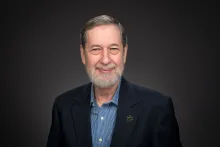
Tim Martens is the pastor of the Northwest Arkansas and Springfield Missouri congregations. Prior to becoming a pastor, he has had successful careers in business and education as well as being a newspaper columnist.
