

John Elliott
This transcript was generated by AI and may contain errors. It is provided to assist those who may not be able to listen to the message.
And now, to give us the first message this afternoon, we have a visiting pastor.
That's hard to say. Mr. John Elliott.
Thank you, and happy Sabbath, everyone!
Greetings to you online, including Yuma, Sholo, and those who were not able to be with us today. We hope your Sabbath is going very, very well. It's a real treat to be here on the first Sabbath, where the Phoenix congregations are now combined into one.
God is about oneness, Jesus said in his prayer before he died, that it was his great desire that we would be one as he and the Father are one. And it's wonderful to see more and more of God's people here. We also appreciate the contingent from Sioux Falls, South Dakota. It's like visiting my old home congregations up there. We have several individuals that are visiting here today, and many visitors from elsewhere as well. Of course, you've come in for the Women's Weekend. We're delighted that you're able to be here.
Over the past dozen years or so, my wife Mary has led Phoenix Women's Weekends. And the theme of each of those weekends has been interesting to watch develop.
She would begin thinking and talking with the team of ladies. They would discuss various ideas. But each one would spring from a scripture in the Bible. And then the various activities and the seminars, the speeches, would pull off of that scripture, pull off of that theme. It's been very personally inspiring to me to see people begin to focus on something and then get creative with it and how it interacts with their lives, and then to encourage one another to love and good works. As the theme for this year's weekend began to develop, I remember last year Mary asked me after studying, she came out and said, what does it mean exactly to store up treasure in heaven? What is the treasure and how do you do that? You know, Jesus says to store up your treasures in heaven, but how does one actually do that? And my immediate answer was, let me think about that. You know, the Word of God takes some meditation. It takes some study.
And I remember Mary studied more over the months and she would come in and say, hey, I found a scripture that goes with that. Found another passage today that goes with that. Here's something else I've learned that goes with that. It's an interesting thing when we look in God's Word and actually spend the time to meditate, to think about, to pray, to study. And so she and her team set this year's theme as, where's your treasure based on what Jesus said in Matthew 6 verses 19 through 20. Where's your treasure? It's good for us to think about where is your treasure.
When Jesus says to lay up for yourselves treasure in heaven, what does he mean? Have you identified what he means? Does that mean something to you? Is it sort of a general term? How do you lay up treasures in heaven? Does that mean I have a bank account in heaven and I need to put some gold or something in there? How would I get there? How would I find my account? What would I take? Would I be like so many people and pack stuff in my coffin or in my grave?
I want to take this, I want to take that. And variably, physical people will put physical treasures. Some people even were buried in their Cadillacs because they wanted that. But what does he mean about treasure? It's good to ask the five W's. Who, what, why, where, when, and how of treasure in heaven. What is that talking about? Today I'd like to note some of God's statements in the very beginning of the Bible and the very end of the Bible.
They in a sense sort of bookend all the scriptures in between. And it's really rich about this very topic of putting and building and storing treasure in heaven. The title of the sermon today is A Treasure in Heaven and it springs off of what Jesus said to lay up for yourselves treasures in heaven. Now the one thing that I've always looked at that verse, even this morning, it's hard not to read that verse without saying it's about me.
He said, I'm telling you, lay up for yourselves treasures in heaven. Well, it sounds very I-me, doesn't it? Sounds like something I have to do, something I need to do. What is that going to do? Buy me something? Is that going to buy me passage? Is it going to have a bigger account when I get there? What is that? You know, God is not usually about us doing things about ourselves.
In fact, God is not asking you to do something apart from Him and His Son. He's actually asking us to do something in concert with what they're doing, to be part of a process that is laying up treasures in heaven, as we're going to see.
Actually, laying up treasures in heaven is their work and has been their work from the very beginning. You'll know that the Lamb was slain from the foundation of the world, as we heard in the opening prayer. We need that Lamb. We need that Passover. We are sinners. We are focusing on putting our treasures somewhere else. But we need help. We need the Lamb.
We need the Father. We need the relationship with them. The saints were predestined before the foundation of the world. God has been working in a process, and He's developed our environment and our future in order to have treasures in heaven. When you think of the New Covenant for the saints, it is really about us joining their work. If you don't want to know what the work of God is, look in the Bible about what the work of God is. The work of God is really the transforming of carnal humans through a conversion process into the children of God.
That's the work that they have been doing. Jesus said, my Father and I have been working, and we are working. And they work very hard. They work so hard that the Father even gave us His Son. Let's go back to John 3 and verse 16, and look at that incredible statement through the light of the work that they are doing.
For God, the Father, so loved the world that He gave His only begotten Son that whoever believes in Him should not perish but have everlasting life. He is wanting children with everlasting life. That is the treasure that the Father and Son have given, devoted themselves to. What about you and me? We're about to take Passover.
We think of the great commitment that He had, and then we are asked then to step into the same type of crucifying the old self, getting rid of the physical, and start sowing to the spiritual to walk in a new man, to unite with God and His Son. How committed are we to this work that the family of God is doing to bring earthly humans into heavenly children?
God said in Exodus 19, verses 5 and 6, If you will indeed obey my voice and keep my covenant, then you shall be a special treasure to me above all people. Yes, God is developing, and He is laying up, and He is bringing treasures that will be eternal. And you and I are to be part of that process. However, we do have an alternate choice, don't we? We can lay up treasures in earthly physical things where moth and rust destroy, where people steal. Those things are meaningless. They're worthless.
And yet, they're so important to us. It almost requires us to do a certain disconnect, and here's the reason why. God made us physical, and He put us in a physical world. We have these physical needs and physical ambitions. Yet, if we focus on the physical, it's very much in the here and now. But God made us physical so that He can teach us about the Eternal and have us embrace it with His help. If we embrace that, then the physical realm has done us a great service. It's kind of been a nursery, as it were, for the children of God to be ultimately born into His family. So the Women's Weekend theme is showcased by the Bible's opening and closing chapters, things that are written in there. It's very interesting to find that they really form a key to where our treasure should be, and it's right there very, very visibly. We're going to take a look at why we'll make their investments instead of foolish. If you invest something, you want it to last, right? Well, this is an investment that really has the opportunity to last, but if we misplace our investments, they can just evaporate, just be gone, and how foolish that would be. As the Bible opens, we see one of the first eternal continuances. So I would title that an eternal continuance. And that, believe it or not, you might not realize, but in Genesis chapter 1 and verse 1, it says, in the beginning, God. That is the ultimate eternal continuance, is God and his family. When you do something with God, you partner with God, you get involved in building treasure with God, the one thing that's going to happen is it's never going to go away.
It's an eternally continuing thing you begin to get involved in. Talk about a great investment opportunity. A foundational concept. He is the Eternal, the Eternal One. He is forever.
He knows the term forever is associated with God and is the things that he makes, covenants, relationships, they go on and on forever. So here in Genesis 1, we begin to find, first of all, God. And we have to realize that whatever is involved in God goes on and has gone on forever. So that's a good place to start. It's a good thing to be related to. Eternal continuance then becomes the theme of what God does also, not just himself, but everything he does. He doesn't do things haphazardly and they kind of, oh, that broke, we'll throw that away. He's not a disposable being as far as creating things that are disposable. He does things well thought out that are permanent. For instance, in verse 1 it says, this God created the heavens and the earth.
God creates things. And now let's go back to Revelation and notice something in Revelation chapter 21 and verse 1. We're just going to look at three chapters of Genesis and the last three chapters of Revelation. And here in Revelation chapter 21 and verse 1, I saw a new heaven and a new earth. Oh, this God not only creates a wonderful physical heaven and earth, but now a new heaven and a new earth. This goes on forever. He says down in verse 5, he who sat on the throne, I assume that's the Father, said, behold, I make all things new. This is the God that is creating things that will a type now, but a reality later. And the types that we observe, that we participate in right now, that we're so used to, don't go away. They become realities that go on forever and ever.
We look, for instance, about the God-family attributes in verse 3. Then God said, let there be light, and there was light. It's interesting. I pondered for years on what the meanings of this might be. Until it dawned on me, God showed up. Sun, moon, and stars are in day four. God showed up. Let there be light, and there was light. If we go back to Revelation chapter 22 and verse 23, when He creates the new heavens and earth, guess what happens? Revelation chapter 22 and verse 23. A big, big, big feature of the entire heavenly realm in the future is this.
The city had no need of the sun or of the moon to shine on it, for the glory of God illuminated it. The Lamb is its light. Now, the city is illuminated by God, but if we read on, and the nations of those who are saved shall walk in its light. Now, the nations of those who are saved by this context don't appear to live in the city. Remember, Jesus talked about us being over cities, plural. Five cities, ten cities, two cities, New Jerusalem. God will be over New Jerusalem. But He talks about nations of those who are saved will walk in the light of God, coming out of New Jerusalem. And the kings, notice, of the earth, of the new earth.
The kings of the earth bring their glory and honor into it. Aren't we supposed to be kings? And they have glory, and they come there, and they bring their brightness. The Bible says that the children of God will shine like the sun in the kingdom of their father. That's an attribute of the God family. Immediately after creating man in their image and in their likeness, they established a festival as the first thing that was done. After creating us humans in their image and likeness, they created a feast. The feast was the Sabbath, of course. In Genesis 2, verse 3, God blessed the seventh day and sanctified it. He made a holy day, which is a convocation, a convoking. We are convoking or assembling here today. It's a day of the family of God coming and being together. The picture is a time in the future where the family of God will be and live together. We see the Sabbath created here. Let's compare Revelation chapter 21 and verse 3. Revelation chapter 21 and verse 3. And I heard a loud voice from heaven, saying, Behold, the tabernacle, the dwelling of God, is with men, and he will dwell with them, and they will be his people, and God himself will be with them and be their God. So right from the beginning, what we're seeing here is a dynamic relationship that God is inviting us into with an individual who is permanent, eternal, does things that last and continue. It's very important that we understand the difference between that and physical things we might get ourselves involved in. You know, all festivals are types.
All holidays are something, but all festivals are types, and every festival of God will live out, will be lived out. Every festival will have its time that it really takes place.
The shadow will become the reality, and all the things that we portray in the festival will take place. In contrast, in the physical realm, none of the holidays can take place. Not one. Tomorrow people will worship. There's no meaning, there's no future, there's no event, there's nothing that's going to happen. Any holiday throughout the year, there's nothing. Nothing could take place in the future to do with those. So begin to see now a little bit more about this God. Not only does his plan and not only does his creation move forward, and not only does he have this objective, but all the things involved in it, even the covenants, as we've talked about recently, the covenants have extensions all the way into eternity.
It's pretty exciting when we think of the calling that God has given us, and that he really is moving us towards something that is eternal, well thought out.
We find that God is the source of life, and the dictionary definition is the condition that distinguishes organisms. Life is the condition, and that condition is only something that God himself can put an organism or anything into. All life comes from God.
You know, he created life in us humans and animals and plants. But then in Genesis chapter 2, verse 9, notice something else. He also begins to offer a higher form of life that, once again, only he can do. Genesis chapter 2 and verse 9, And out of the ground the Lord made every tree grow that is pleasant to the sight and good for food, and the tree of life was there. The tree of life. God is the source of life. We have a tree of life here. We have Jesus Christ the bread of life. We have the water of life. We have the spirit which gives life. Life comes from God. So partnering and being involved in something with God tends and trends to life. Let's compare in Revelation chapter 22 and verse 2.
Revelation, right back at the end of the book, Revelation 22 and verse 2, Here in New Jerusalem, from the throne of God and the Lamb, in the middle of its street, and on either side of the river was the tree of life. The tree of life which bore 12 fruits, each tree yielding its fruit every month. The leaves of the tree were for the healing. The healing, healing can mean stitching together. It can mean just what God is about, a continual oneness of the nations. It doesn't have to mean that somehow they're sick or they're broken. But for the oneness, God's life and his mind are about unity, about oneness. Now concurrently, we have Satan. Satan is trying to get us distracted and he wants us to join him in building up treasures on earth. The efforts are temporary at best. They involve temporary things, temporary opportunities, temporary people. There's nothing permanent about Satan and anything that he offers or the things that are the people that are involved with that. We know from 1 Peter 3 that the earth and the works that are in it will be burned up. So if we start sowing, we start building treasures in the things that are going to be burned up, well, it's like shooting yourself in the foot. What kind of an investment is that? And Jesus was really speaking to that and saying, look, I'm going to tell you about investing your life and your time here. There's one way that you can join us in what we're doing. And there's another way that you can be really physically short-sighted and it's not going to work out. It's just not going to work out. Next thing we find in Genesis, Genesis chapter 2 verse 21 is God created marriage. Now you might think, well, I know I'm married or I was married once or I want to be married. We generally all fall into one of those categories. Or I don't want to be married. I guess there's that category too. So, but there's marriage and you know, God creates marriage, but He, if you think about it, only creates lasting marriage.
Lasting marriage. In Genesis chapter 2 verse 21, we begin to find how this marriage comes about. The Lord God caused a deep sleep to fall on Adam and he slept and he took one of his ribs and closed up the flesh in its place. Then the rib which the Lord God had taken from man, he made into a woman and he brought her to the man. So just like the first Adam had a wife that was made from him, the second Adam, Jesus Christ, we are made from Him and we become part of His body. We eat His blood. We eat His flesh and blood, as it were, through Passover. We are made up of God, the Father, and Jesus Christ living in us. And in that sense, being the body of Christ, we also, as His wife, as His bride, will have that unique combination that Adam and Eve had. In verse 24, therefore a man shall leave his father and mother and they shall be joined to his wife and they shall become one flesh. And we know elsewhere that they shall not separate till death. That's a lasting marriage. That is a marriage that is more than just, hi, I like you. That's, hey, you got part of my rib. Hey, I gave my blood for you. Hey, I gave my life for you. I'm giving. I'm living for you. This is a very, very close relationship. And how far does it go? Well, in Revelation 21.9, we read at the end of the Bible, Come and I will show you the bride, the lamb's wife.
Eternal condition of the first fruits. Their covenant terminates when the door is closed and they go into the wedding. And that relationship goes on throughout the book of Revelation to the very last verses where it says, the spirit and the pride say, come. It's a lasting relationship.
So we see the lamb's wife. Come and I'll show you the bride, the lamb's wife. Here Jesus Christ is called the lamb, slain from before the foundation of the world. All right. That was, it was planned. He is our lamb. He is our Passover lamb. We marry the lamb. Clear into eternity. He's called the lamb. These things are not short term and his wife is with him.
In Genesis chapter 3 and verse 5, we read this statement that it's not that easy because we're humans. We need a lamb. We need Passover. We need somebody to die for us. We need help.
For God knows that in the day you eat of it, your eyes will be open and you will be like God, knowing good and evil. Wow. All of a sudden I'm distracted. You'll be a superstar. You'll be famous. You'll be rich. You'll be this and people really think you're great and it'll be about you. And we're like, oh yeah, yeah, yeah, yeah. And so the woman saw that the tree was good for food. It was pleasant to the eyes. The tree is desirable to make one's wife. She dove into the physical realm and she gave to her husband and he ate. That is typical. You and I do it too. Can't just say, oh you do. We tend to go through our day and we also have opportunities that appeal to the flash, appeal to the mind, appeal to the pride of life, etc., etc. But we have this lamb and we didn't store treasures in heaven. We stored treasures in earth and sometimes we still do and it's very good that God is there. Let's go to Revelation chapter 20 verses 14 and 15. Revelation 20 verse 14.
We find here that sin, which results in death, sin in the ways of death and the grave, were cast into the lake of fire. That's where we will go or where we would go if we did not have a Savior and if we were not working in that process of conversion. This is the second death. If you notice in the margin, this is the second death, the lake of fire. And anyone not found in the book of life was cast into the lake of fire. If we look in chapter 21 in verse 8, the cowardly, unbelieving, abominable, murderer, sexually immoral, sorcerers, idolaters, and all liars shall have their part in the lake which burns with fire and brimstone, which is the second death. Those things are short-sighted and they don't have any eternal long-lasting consequences.
So we have two rival suitors for the woman. Eve. She was deceived by one suitor. The church.
Even Jesus said that if even the elect could be deceived, you know, we have this other suitor that's trying to get the woman, the potential bride of Christ, the espoused bride of Christ, away.
In Genesis chapter 3 and verse 15, we read of this.
And I will put enmity between you and the woman, between your seed and her seed. So here we have these two suitors. We have Jesus Christ and we have the church. We have enmity, hostility, between Satan and the woman, between your seed and her seed.
The result of this is, he will bruise your head and you shall bruise his heel.
If you want to see this play out, we just go back to Revelation. Revelation 21. I'm sorry, Revelation 20 verse 11. Revelation 20 verse 11. Then I saw... verse 10 should be, not 11. Revelation 20 and verse 10.
The devil who deceived them was cast into the lake of fire and brimstone.
Two suitors. Now we know what's going to happen to him. Who would it be smart and wise to link up with?
Once again, everything physical is heading for the lake of fire, ultimately, including the God of this world. Where do you and I want to be?
There are many eternal continuances in Scripture. For instance, in Revelation, in these chapters, we see things like the 12 tribes which God had in Israel. The 12 tribes are 12 gates in New Jerusalem. The 12 apostles are said to be 12 foundations of New Jerusalem's wall. The 144,000, which will contain those of us who become the firstfruits at Christ's return, are stated to be 144,000 cubits of the wall of New Jerusalem.
You and I see when we start getting involved with God, now it reaches forward, it reaches back, it's permanent, it's long-lasting, it's valuable, it's meaningful. But when we slip back and say, oh, here's an opportunity, there's an opportunity to sow for the self, to sow for the flesh, there's really no wisdom in it whatsoever. Modern treasure is often associated with gold. You know gold, price of gold, everybody knows the price of gold, right? But it's actually fool's gold. People in prophecy say gold and silver were thrown into the street. What kind of investment is that? It's the investment of fools. But Jesus said, buy from me, buy from me. Gold tried in the fire. Gold tried in the fire. Another is 24-karat gold. Gold that's had all the drops. We've gone through the conversion process and put away the sin, and what's left is righteousness, a bride that's washed clean and made herself ready and is in white garments. We notice in Revelation 21 18 that the city of New Jerusalem was pure gold. It's interesting because New Jerusalem is actually, in one instance there in the 21st chapter, is the bride. And the bride is pure gold. And the city is pure gold. It's interesting what God's treasure is and what God is developing. That should be the treasure that we are working to develop as well.
God is developing treasures in heaven that have eternal continuance.
They last forever, and it's really, really fabulous. So we could ask the question, what treasure will your efforts contribute to? Becoming important and wealthy?
What will the consequence of that be? Becoming an eternal treasure of God? What will the consequence of that be? That's really the choice that's there. That's what Jesus is speaking to.
What efforts will we contribute to? Will we contribute to something dramatic about me becoming a legend? Or will we contribute to the eternal treasure of bringing many sons and helping God bring many sons and daughters to glory, to brightness, to be part of the light that shines forever? So as we finish this up, let's ask the question, how can I lay up treasures in heaven? Well, the Scriptures tell us that as well. One way, it's very clear from Genesis 3, is don't follow Adam and Eve. Don't sow to the flesh. So that's one.
Revelation 21 verses 6 through 7. Notice here, Revelation 21.6, and he, God the Father, said to me, it is done, I am the Alpha and the Omega, the beginning and the end. Now, he's not the only Alpha and Omega, the beginning and the end. Jesus Christ is also the Alpha and the Omega and the beginning and the end, as is stated later on here. Just going by the presumption that he who sat on the throne, verse 5, is the Father.
The Father and the Son work so closely together. It's very difficult to separate out and say, well, this one does this and this one does that. They both say that they both will give us life.
And here's the Father. Notice what he says. He says, I will give of the fountain of the water of life freely to him who thirsts for that.
If we want God's Spirit to lead and guide us, if we want to become children with the mindset of the God family, if we thirst, Jesus said, we will be very filled. He told the Samaritan woman at the wells, I can give you water that you'll never thirst again. And if that's what we really want, then we are helping participate with God in laying up treasures in heaven.
He says, verse 7, he who overcomes, now that's a big word, he who overcomes.
Military term means to win, to win over Satan, to win over self, to win over all the poles of the flesh, to win over, hey, I want the here and the now and I want to interact and sow my treasure on earth, but I'm going to die to that. I'm going to change with God's help with his mind into a spirit-loving, serving, godly individual who performs righteousness. That's one who overcomes. A big word, isn't it? It involves a lot. And this is how you lay up treasure in heaven, is by overcoming. And the one who overcomes shall inherit all things, and I will be his God, and he shall be my son. You and I have been called to participate in God's work. It should become our work, not just God's work, our work with God that we all participate in, we all help out with. Notice in chapter 22 in verse 14, blessed, how supremely blessed are those who do his commandments. What are his commandments? His commandments are life, his commandments are love, his commandments are joy, his commandments are peace. His commandments reflect the mindset of the family of God.
They may have the right to the tree of life, which we read about back in Genesis. And they may enter through the gates into the city, another reality of the type of Jerusalem that's a type of heaven God's throne today. You know, there's so many things that God is doing. God has called you and me to participate in his work. It's not you or me laying up treasures for ourselves, somehow stacking up some stuff. They'll get payback later. No, it's participating in the treasures that God is wanting. God is building, converting children into his family. Satan wants to get you excited about building sand castles. God wants us to be excited about building an eternal family with him.
So Jesus Christ gives some investment insight in Matthew 6, verses 19 and 20. And he says this, do not lay up for yourselves treasures on earth where moth and rust destroy and where thieves break in and steal. But you lay up for yourselves treasures in heaven.
By overcoming and living righteously, you will be treasures of God in heaven.
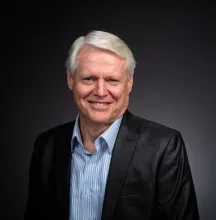
John Elliott serves in the role of President of the United Church of God, an International Association.
