

Frank Dunkle
This transcript was generated by AI and may contain errors. It is provided to assist those who may not be able to listen to the message.
Well, let's begin the sermon. They come in all sizes. They last for indefinite periods of time. And they affect all of us in a variety of ways. What is they? They equals trials. As you know, and I know, if you watched any television or read any newspapers or heard any news on the air, our country's been through a lot. Houston, Texas, Southern Texas, virtually all of Florida has been through a lot of devastation and a lot of trials. And my heart goes out for them. In fact, we had watched—I'm retired now. My wife's retired, so we can watch a little more on the news. I'd love to watch the news and try to keep up on it. We watched so much of the flooding that I was afraid to go out and drive my car. And we might run into some floodwaters here. Oh, yeah, there are no floodwaters yet in Cincinnati. So we were okay. But it bothered us that much. But as I thought about it, how resilient are human beings that they can look at their—basically, their life savings, their homes, everything they had being destroyed, especially in the Florida Keys and some of the southern areas, you know, where it first hit—Rockport and Texas and some of those areas down there. Where the hurricane initially hit down in that area. Well, how devastating is that? How resilient are these people who go back and they say, I have nothing, but we will rebuild. And you think about when we have trials. I like the quote those mentioned sometimes we see the closed door, we don't see the one that's open. But sometimes if we have trials, we can focus so much on the trial that we forget that there is a way out. And so I'd like us to consider when we think about trials. First of all, who's this from? Who's this from? Are all trials God's doing? Did God do Arvy? Did God do Irma? I don't know. Do you know?
What about Satan? He's the prince of the power of the air. And what about just natural circumstances or abnormal natural circumstances? The wrong right time or the wrong time at the wrong season or whatever. Because there are several situations in the Bible, and I'm not going to focus on this. Just mention that where God does punish. If you read Haggai, he said, do you wonder why you don't have any food? Do you wonder why you go to the fields and you don't have much crop? Do you wonder why you have your money that seems like it drops through your pocket like you have holes in it? Do you wonder why all those reversals? He said, consider your ways.
So any time there's trouble in our lives, we need to say, I need to take a look at myself. We need to take a look at ourselves as a nation to see if we're going the right way. Could this be a wake-up call from God? Possibly. He's done that before.
What's he going to do to the people who don't come up to keep the feast? After he's here on the earth, after he's king all the earth.
You know, everybody's going to come up to Jerusalem to keep the feast, whoever's left of the nations. But if Egypt doesn't come up, there are going to be plagues upon them.
So sometimes God can punish directly, okay? But sometimes Satan can punish too, out of his wrath. Remember, God has allowed him to still be the acting ruler of this earth. Christ has already qualified, or, if you want to put it that way, Christ has already deposed him.
Remember when he slunk away after he promised Christ all the kingdoms of this earth? Christ said, get behind me, Satan, get out of here. And he left. And then the angels came and ministered to him in Matthew 4 and Luke 4.
So, what does that tell you? That Satan the devil still has power. Satan the devil is going to send out a flood after God's people. Satan the devil persecutes people.
Satan the devil goes around as a roaring lion, seeking whom he may devour. He is called the prince of the power of the air. Does he have something to do with earthquakes, with hurricanes, with tornadoes? Possible.
So, is it Satan taking out his wrath against God's favorite people? Now, why are they his favorite people? Not because they're better than anybody else, but because they were chosen to do a job. Israel was chosen to do a job, and they haven't done it.
So, Satan hates them because they're God's chosen people. He hates us. And he stirs other people to hate us, for no reason. Well, you only gave me $10 million this year. You're supposed to give me... I'm holding out for $11 million. I don't like you. You only gave me $10 million.
What? We didn't have to give you anything. They paid the United States? You have us.
I never really liked the Yankees very much because I like the Brooklyn Dodgers. The Dodgers used to always lose to the Yankees in the World Series when they got in they lose. The Yankees were winning almost every year. They had such great players, and they were good players. I like the Yankees now. Not that they're my favorite team, but I like them.
But, you know, people didn't like them. They even had a musical called Damn Yankees.
People didn't like the Yankees. Why? Because they were good! Because they got on top!
And so, if you're doing well in this world, they don't like you. A lot of that comes from satanic inspiration.
Satan has demons out there influencing the world. God has angels out there countering them regularly.
You can read that in Daniel. He got to go on guard over here. One of the good angels said, You have in Revelation, who's stirring all these things in the end? Satan the devil. Demons stirring the nations.
Not what I'm going to talk about. Also, things time and chance happens to everybody.
Time and chance happens to everybody. That's about an Ecclesiastes 9 and verse 11.
Naturalness. Sometimes it's just a freak of nature that these things happen, and they squand into that area, and it slammed into it. But no matter what, trials hurt. If you have individual trials, they hurt. They can hurt us. Accidents can hurt us. Natural disasters can hurt us.
Health issues can hurt us. Job loss can hurt us. Death of a loved one can hurt us. And various other issues can hurt us.
We all have trials, some way. Heartache, headache, backache. And as I get older, I realize my days are fewer than they were when I was young.
When I was young, I didn't think anything could happen. I didn't think I could slow down. I didn't think anything would keep me from right now.
I just finished refurbishing my bike, taking it from the basement, bringing in dark garage, and pumping up the air, getting it all set to go so I can bike a little bit.
I had one yesterday and rode for a little bit, and it felt good. But my knees aren't as stable because I had two meniscus tears, one in each knee, repaired.
But still, there's a little bit of instability there.
When you get older, you're back. When you do something, your back is hurting. Why do I have this back pain? I never used to have this back pain. Why do I have this?
Because you're getting older. I'm getting older.
Why do we have all these trials and difficulties? How do we look on them?
And I want to give you some strategies, four strategies, to make sense out of our trials.
Four strategies to help us make sense out of any trial that comes our way, either humanly, physically, individually, corporately, or community-wise, or nationally.
How can we look on those? How we can cope? So the sermon title is Strategies for Coping with Trials.
Strategies for Coping with Trials.
Strategy number one. First of all, before I even go to that, let me make one comment.
God can intervene anytime.
God can intervene if it's Satan trying to cause it. God can intervene if it's something natural that's going to occur.
God can stop punishing us if he chooses to.
So God can intervene anytime. Remember what Abraham said? God told Abraham and Sarah.
He said she was going to have a child in her old age, and she laughed. He said, Is anything too hard for the eternal?
God could have stopped Harvey. God could have stopped Irma.
God could have kept Kelly Teeth, sweet young woman in Cincinnati from dying of cancer.
God could have kept a little boy from being hit by a car.
God can do anything, and has done many things, some of which we don't even notice.
But let's see how we can cope with understanding these strategies.
Number one. Strategy number one.
Realize, trials are, number one is, for our good.
For our good.
If we realize that, we're halfway home. There's something good about this trial that's going to happen.
Something good is going to come as of this trial. Look at James chapter one.
James chapter one, verses two and three.
James chapter one, verses two and three.
Trials are for our good. If we get that in our heads, when trials come.
James one, verses two and three.
James writes this, and he says to the twelve tribes, verse two, he says, My brethren, count it all joy when you fall into various trials.
Who counts it a joy when you have a trial?
Who says, I'm so happy my mother died last week.
I'm so happy that my little baby died. I'm so happy that this person has cancer.
I'm so happy that I lost my job.
Not many of us.
But God says, count it all joy when you fall into various trials.
Knowing that the testing of your faith produces patience.
And what is the outcome of all that? Verse twelve.
Blessed is the man who endures temptation or trials.
For when he has been proved, he will receive the crown of life.
If we're not too so short-sighted that we could only see the closed door.
If we see the open door, we say, yeah, there's a ray of light out there.
There's light for us.
He will receive the crown of life, which he has promised those who love him.
So you think about it, but a trial comes.
We don't normally look on it as something that's going to be good.
We look upon it as something that's bad.
Oh, man, how long do I have to put up with this?
How much do I have to keep on putting salon pots on my back?
I just put it on this morning again, by the way. So you talk instead of knocking on the door.
An Australian dream for my knees.
But I have hope that one day Australian dream will help my knees.
Now, I know my knees will always be this way, but I exercise.
I ride my bike, stationary bike, and now I've ridden the stationary bike 20 minutes every night, virtually every night. And I ride it a pretty fast clip that I'm able to keep on going.
It's getting better and building up.
But my knees will always be somewhat unstaked.
I know that I'm not going to get out and jump and run around like I used to do.
But look for good. Think of the long run.
Hebrews 1211. Hebrews 1211, just one book.
Before this, we read this. Hebrews 1211.
Now, no chastening. No chastening seems to be joyful for the present.
And when you have a tryout, what do you feel like?
God must not love me. God must not love me.
You know what I read? When God trims us back, He loves us.
Now, when you read about what does He do, John 15?
Every branch that produces fruit, He prunes it.
That can produce more fruit.
You aren't having that trial because you're no good.
It reminds me of my basketball coach when I was first going out.
He said, don't be discouraged if I yell at you.
If I yell at you, it's because I think you have promise.
If I don't yell at you, you better worry, because I then think you're hopeless.
So when trials come, it's because God wants us to be better.
Not because He thinks you're a loser, not because He doesn't like us, not because He hates us, not because He delights in punishing us.
He says, I want you to be better.
But in Hebrews 12 and verse 11, He says, I believe it's Paul wrote to the church, or the Hebrews, in the church.
Now, no chastening seems to be joyful for the present, but grievous, and it does.
When you're in a trial, it doesn't, you know, say, this feels so good after that sort of bag.
Feels so good not to be able to have mobile, to be able to be mobile with my legs.
Nevertheless, afterward, it yields the peaceable fruit of righteousness to those who have been trained by it.
It's for our good.
We will be able to have some good that comes from that trial.
And Romans 8, 28, one of my daughter's favorite scriptures, my daughter Jan here, Romans 8, 28.
And we know, notice, we don't think, we don't hope, we don't theorize, we know that all things, that includes bad things, and good things, all things work together for those who love God, and are called to those who are called according to His purpose.
All things work together for good.
Do we understand that? Do we believe that?
When a trial comes, we can realize it's for our good.
That puts us in a mindset that's positive, a mindset that's expectant.
Strategy number two, in your trial, here's how to face it, here's how to face these trials and code, you can know, you will succeed.
Strategy number two, you will succeed.
You will be successful in fighting this trial. You'll be successful in coming through this trial. You will succeed. Strategy number two.
Psalms 50, verse 15, one of the scriptures I found when I was first learning to pray, I was in Pasadena, California, my freshman year of college, when I was dropped off, I had come from Pennsylvania, I had never been farther than Kansas, and that was only when I was six years old, most of the time I was in Pennsylvania once in a while in Ohio, but back in Pennsylvania, very solid, maybe New Jersey, all farther I've ever gone.
Now all of a sudden we go to Texas and I catch a ride with a guy, a college student, going back to college in a police car, get out there, and he says, you're sharoo, or you can stay until we begin the school year. I checked in and everything, and he said, and if you get lonely, he said, he's up there.
They showed me where the prayer closets were in Del Mar. They had little booths where you go in their air conditioner, not air conditioner, but they had circulating fans and a little kneeling pad and a little small, lower stool that you could put your Bible on. So in that time, I started to go through the Psalms, so I would read a part of the Psalm and I would pray about it.
Psalm 50, verse 15 is one that really struck me. Psalm 50, verse 15.
Sometimes it got lonely, and sometimes I didn't know what to do. I was out there as an 18-year-old, not knowing. My parents were all the way across the country, and those times you didn't have cell phones or you could contact them or do FaceTime or whatever. So your likeliness of calling them was remote. I don't know that I ever called them.
We wrote letters back and forth once in a while, but Psalms 50, verse 15.
Call upon me, God says, in the day of trouble. I will deliver you, and you shall glorify me.
Now, what does deliverance mean? Does it mean I'm going to take the trial away right away?
Does it mean I'll deliver you for what is best? You'll see at the end what I conclude with. God always wants what's best for us.
Sometimes we don't even know what's best for us.
God has to sometimes teach us and show us and lead us, by experience or by knowledge, to know what's best for us.
Here's what I read. Call upon me. In the day of trouble, I will deliver you. How he does it? When he does it? Does it say? Just says, I will. And you shall glorify me.
So one thing we can know, that when we're in a trial, when a trial comes our way, either personally or nationally or community-wise or church-wise, you will succeed.
Remember Paul's statement? I can do all things through Christ who strengthens me. Psalm, that's Philippians 4.13. I can do.
Succeeding means you will learn, you will know, that God can do it. And that you can do it. And come out the other end in the best way. When a trial comes, hurts. But you say, it's going to be for my good. You say, why is it going to be for my good? Because God is for me. Why is it going to be for my good? Because God has promised I will deliver you. I have to do something, too. I have to pray. I have to try to keep in a right attitude. I have to search myself. Malachi, he says, consider your ways. Any time a trial comes, it could be a trial from somebody else. It could be somebody else's problem they give you a trial. Any time that trial comes, we should consider our ways. Am I doing something wrong? Am I doing something that misses? Is there something I could be doing better? Is there some change I could make in my life that will be more pleasing to God? When God pours out the plagues, the seven last plagues and vials of destruction on this earth, you know what he says? I waited for them to repent, and they wouldn't do it. When he poured out the plagues on Egypt, he waited for him to repent, and he wouldn't do it. He had to kill his first board, and then even after that he recanted, Pharaoh did. So God says, consider your ways. Sometimes after considering your ways, you say, no, it's not me. I read through the book of Job. You know, God was a... God loved Job. God said, hey, Satan, if you've seen Job, there's nobody like him. He's so good. Perfect. Do you think God was lying? He was. But he was perfect by his own strength and steam. He did not rely on God as fully as he needed to. So all of his friends comforted him first, and then he started to tempt again. You know, God, you wouldn't have this happen to you. Bad things happen to people when they're good? No. You must have done something wrong. Job, check yourself and repent. Job kept saying, I haven't done anything wrong. I don't know why God is doing this. I wish I could talk to God and tell him, why are you doing this to me? Why is this happening to me? You know I serve you faithfully. You know I yield to you. Why is this happening to me? But Job kept saying, well, if I could talk to God, don't dare now, but if I could talk to him man to man, I'd really tell him. Now we begin to see an attitude. He said, you know, who did he think he is? Anyhow? And God says, yeah, I am anyhow. Where were you when I made the heavens? Do you know how many tons of earth it took to make the earth? Where were you when I put the sun in the sky? Can you keep the sun burning? Can you light a fire and keep it burning all the time? And heat something 93 million miles away and never burn out? That's what God does. Could you make animals so they can fly through the air? Birds? Fowls? You just put up a bird feeder. We love watching it. We see all these birds and come. And I say, you know, how did God make so many different colors?
You think the birds look like he's just another beautiful little fish? Oh, look at that cardinal. Isn't that so pretty? And look at that blue. What a nice blue you that has. They don't do that. Why did he make them that way? For us, our trees are just turning red. We have red maple in our front yard, too. And one of them is half green and half red, starting to turn. Why didn't he just have it go from green to rock brown and just fall off? Some of them do that. Most of them go a little bit of orange or yellow or whatever. That's so beautiful. Why did he do that? Who enjoys that? We do. God made it. God can do anything. Philippians 1, verse 6. Don't discount it. Philippians 1, verse 6. Final Scripture on point 2. Here's what we can know. God will never give up on us. Never give up on you. You can give up on you, and you can give up on Him. Philippians 1, verse 6. Being confident of this very thing, that He who has begun a good work in you will complete it until the day of Jesus Christ. Philippians 1, 6. One of my favorite books, by the way. It's so encouraging.
He who has begun a good work in you will complete it until the day of Jesus Christ. You can know you will absolutely make it because God won't give up on you.
And it's through His strength, plus your putting forth your effort. Remember, whatever your hand finds to do, do it with your might. So you've got to pull out all stops and fighting your... those people who lost their homes, they go... don't go down there and say, let me put up a hammock now, and I'll lie here in hopes that my home gets rebuilt.
They go in and they start removing the trash. And I am amazed that you see on some of the newsreels or news film of the videos how much junk is already out in front of their homes. Part of the drive walls taken out, some of the furniture is out on the side of the road to be removed. I mean, those people got right at it.
They didn't just sit in a hammock and hope that everything gets rebuilt. That's the same way with trials. So again, you will succeed. You will succeed. With God's help and with our determination, you will succeed.
Strategy number three. As a result of your trial experience, you will grow in character.
Number three. You will grow in character. Trials have a lasting impression upon us all.
What we go through in life will make us better. My wife had seizures. Samantha did not inherit that. Hers was not like that. She had epilepsy. 11 years.
We went through epilepsy. I saw her nearly die many times. I thought she was the one.
So I know what it's like to see people that are hurt and sick. Thank God she has some medication. Normalized her. She's been able to be seizure-free for 25 years.
She was able to drive a car. She was able to do anything she's a normal person. People would do her before they got...she seemed a little bit robotic because when she was not having a seizure, she was recovering from a seizure.
And so, as a result, they didn't see her wonderful personality. The reason I married her is the beautiful personality she had. Beautiful person she was.
Afterwards, people who met her when we went back to Canada for a second, we didn't know your wife was this child. We just walked because she was coming in and out of seizure.
But it made an impression on me. I hurt for people that hurt. It gave me a whole lot more compassion for people. The feel for those who aren't quite able to cope.
It lets me pray for them. It lets me remember them virtually every day. It lets me tune in to them when I think about them to send them a note and a Picard and send them encouragement because of that experience.
That experience taught me compassion. What will your trauma experience teach you? You will grow in character.
2 Corinthians 12, verses 7-10. The Apostle Paul had something that afflicted him. Some think it was a demon. Some people think it was his eye affliction. Not quite sure what it was, but in 2 Corinthians 12, verse 7, he said, "...unless I should be exalted above measure by the abundance of revelation." Because apparently God enabled him in a vision to see into the third heaven and to see what it was like up there. He was talking about it like he was detached from it, saying, I knew a man who did this. He was talking about himself.
He said, "...lest I should be exalted above measure because of the abundance of revelation, a thorn in the flesh was given to me, a messenger of Satan to buffet me, lest I be exalted above measure." So that sounded like maybe a demon was after him trying to give him trouble. Others think, too, it was a message that this problem had to do with his eyes as well.
"...concerning this thing I pleaded with the Lord three times that it might depart from me, that I would not have this trial, this difficulty. I prayed to him three times and he said to me, my grace is sufficient for you. I'm not taking this trial away now." Why? "...for my strength is made perfect in weakness." Because when you have to look up at me, when you have to look up and seek help because you know you don't have enough strength to make it yourself, then God gets the glory. But when you can do it yourself, I can turn around my flat house. My house is being flooded because I left the bathtub water on. Oh, I can turn around the floor.
But when you can't solve the problem yourself, you've got to look to someone else and notice what he says. "...Therefore," Paul wrote, "...I most gladly boast in my infirmities. Why? That the power of Christ may rest upon me. Therefore I take pleasure in infirmities, in reproaches, in needs, in persecutions, in distresses." For Christ's sake, because he's doing it because of Christ. These are coming his way. If he would not follow God anymore, he wouldn't have any problems. And that's the difficulty with us as Christians. Sometimes you want to give up. It would be easier if I just gave up. Yeah, it would be. For a while. Then you'd be in deep trouble with God. Deep trouble. Oh, yeah. You may do well right now in this world. And I know of people who've left God, and the first thing they tell me when I met them afterwards, Oh, I've got so much in my bank account. I'm out of this. I've got a new car. I've got this. Good. Do you think the new car is going to drive you into the kingdom? Do you think your finances are going to buy you a nice position? It won't. You follow God and His Word. You don't follow people. You don't follow men. You don't follow ideologies. Unless it's God's ideology, you follow the Word of God. So He says, therefore I take pleasures, for when I am weak, then I am strong. Trials help build spiritual muscles. And we're going to need spiritual muscles to help us through. I used to like weight, doing some weightlifting, not heavy, and I wasn't into it seriously. And I could pump up the 48-inch chest and almost 20-inch arms. Five seconds. I could do it easily. My dad was a weightlifter. I don't do much weightlifting. I do real lightweights to tone myself. I don't do heavy weights anymore because my chest was getting so big, my buttons were popping when my stomach wasn't as big. My chest was popping the buttons more than my tummy does. But I don't do it anymore, and I don't need that kind of strength. But God gives us strength. Strength to fight. Strength to battle. Strength to make it through. So know that you will grow in character. 1 Peter 4, verses 1 and 2. 1 Peter 4, verses 1 and 2. I could not have few more verses in this chapter. Peter, like James, talks about trial and enduring trials. 1 Peter 4, verses 1 and 2. Therefore, since Christ suffered for us in the flesh, arm yourselves also with the same mind. Know that probably suffering is going to come to you because Christ said, they did this to me, they'll do it to you. For he who has suffered in the flesh has ceased from sin. Why? Because, while in this case, Christ suffered in the flesh, ultimately put to death. But you and I, when we suffer, it makes us take a look, take stock of ourselves so we can quit sitting. That he no longer should live the rest of his time in the flesh for the lusts of men, but for the will of God. Makes you realize that whatever that lust you were going after that caused the problem can be cut off.
Notice verses 12 to 16. Beloved, don't think it's strange concerning the fiery trialers to try you. Is those some strange thing happen to you? When we have a trial, we think we're the only one in the world that has that trial. Nobody has cancer like I do. Nobody has migraine headache like I do. Nobody has bum knees like I do. Nobody has a backache like I have.
We all think ours is unique. Ours is a mountain. No, it's not. God says, no, it's not. But rejoice to the extent that you partake in the sufferings of Christ's suffering. For when His glory is revealed, you may also be glad with exceeding joy. Because you know what? Our brethren all over the world suffer things too. We don't even realize. Our daughter Susie, when we flew to the Philippines, I went over there in 1991, and we were able to take her with us.
She was a college student. Our other daughter was married. We were able to take her with us. And she told us that when we came back, she said, I'll never be the same. After seeing what those beautiful people did with limited funds, they had like $280 second time for the feast. And they had to travel a distance to get there. I forget how many dollars it took for bus fare alone. And where they stayed was like sharing a dormitory. And the way they shared the dormitory, they just had a curtain in between them and another family.
And they basically had one or two items of clothing, because I often saw, as I walked through that area, clothes hanging on the line that they would wash. But I can tell you, when they came to church, those Filipino children and families were immaculate. I never smelled any odor.
I never saw them in dirty clothes or tattered. I never saw their hair in tangles or the ladies of the men to the shovel. Why? Because they did with what they had to do with. They made it with what they had. And we can do it, too.
We can make it, too. That's verse 13. Notice verse 14 says, If you are reproach for the name of Christ, blessed are you, for the Spirit of God, and the Spirit of glory and of God, rests upon you on their parties last week, but on your part he is glorified. But let him you suffer as a murderer, a thief, or an evildoer, as a busybody and other men's affairs.
If you deserve the suffering, we'll take it. But he said, if you suffer for Christ, then he must suffer as a Christian. Let him not be ashamed, but let him glorify God on this behalf. Remember the disciples when they were beaten at the temple? The gebaleos said, let them go, that they're doing whatever they're doing in Acts 5. Whatever they're doing, if it's a man, it'll come to nothing. If it's of God, don't fight it. So they, okay, they listened to him, then they brought them in.
Then let's give them a good beating first. And then they strictly told him, don't preach the name of Jesus Christ again. And those men went out of there, not with their tails between their legs. But they went out rejoicing. That they could be counted worthy to suffer a little bit for Christ, considering all that he suffered for you and me. That's the attitude we have to have.
And know that we will grow in character. We will be able to take it where our perspective will be godly and not self. First, 19. First 19. Therefore, let those who suffer according to the will of God commit their souls, their lives, to him, in doing good as to a faithful Creator.
Commit ourselves to God. That's number three. That's strategy number three. He will grow in character. Romans 5, verses 3 to 5 is the capstone scripture on this point. Romans 5, verses 3 to 5. Paul writes, talks about trials, triumphs, and he talks while he's in trouble.
But Romans 5, verses 3, he says, And not only that, God gives us grace to stand, not only that, but we also glory in tribulations. How do you glory in tribulations? I don't know you do it right away. Probably two and a half times. When a trial comes, you don't say, Oh, give me again, hit me again, harder, harder. You don't say that. How many kids say, give me another one, Dad? All of them do, because that's attention. Some kids will act out because they need attention. One kid used to go to his dad and say, I'm getting out of storage, Dad.
I think I need a little spanking. I'm going to get a mood. I think I need a spanking. And some kids will say, they just beg for me to deal with it. Yeah. You know what? Try giving them some positive attention. They probably won't want negative attention.
Some kids want attention so badly, they'll even get it by getting spanked. Which is sad. They should get it positively. If they need to be spanked or dealt with, yes. Give them punishment. It doesn't always have to be spanking. They can be depriving of privileges. It can be timeouts or whatever. So he says, verse 3, not only that we glory, because verse 3, now, Romans 5. Not only that, but we also glory in troubles, in trials.
Kids don't say, give me some more. You're hurting, but it's hurting. Knowing that tribulation produces perseverance. You know what? When you have a trial, you've got to keep on going. Through difficulties. And perseverance, character. And character, more than that, hope.
When you have a trial, you say, when's this going to be over? I have to see hope. I'm writing to a young woman that we knew from college. She was in prison. She's been there over six years. I've written here, intermittently, over the time. My wife and I have actually visited her in another state. And she wrote the last time and said, it's getting really difficult. I have only about a year and three quarters to go.
But it's really getting difficult being here.
I just pray that I have the strength that I keep writing and courage. You're here saying, see, hope. Realize you're going to be out in a certain time. Realize you've already gone through these people concerns over your time. You only have one third to go. You're already over the hump. Keep looking ahead. See, trials can help us have hope. Don't lose hope.
People in the prison camps, they'd say the Siberian concentration camps, the ones who died, were the ones who gave up hope.
They didn't hope of ever getting out. They just spared it. I remind them that Christ has come to release the captives.
And that Paul was a prisoner when he said, I can do all things. He couldn't do all things himself. He was a prisoner.
So he goes on to say, perseverance, character, character, hope. Not hope does not disappoint because the love of God has been poured out in our hearts. God gives us as much as we can use by the Holy Spirit who was given to us. God gives us what we can use to help us through. So, strategy number three, you will grow in character. You will grow in character. Spiritual muscles will be accomplished, will be made.
Final strategy number four, you will be able to help others. You want to shorten it? Strategy four is you will help others. Even if it's only by your example, not by your words. The cheerfulness of this lady in a wheelchair. I still remember her in New York City. She would come in every week and somebody had to help her up the elevator. We met in an old hotel and help her out that she would come to. I don't know. I think her name was Helen.
It wasn't Helen Aruvedstein. The last name was Aruvedstein. I don't know if it was Helen Aruvedstein. A little Jewish girl, woman, probably in her forties. At that time I was in my twenties. I would go up to her and meet her all the time.
Shake hands and greet her and all this. She said, what good do I have? What good can I do? I can't do anything for the church. I said, your presence here means a lot more than somebody who would bring up a table. Just you coming here with a smile on your face despite what you have to go through to get here inspires people. Thank you for that. Our example. So you will help others. Because experience that you have...
My wife was having seizures. One boy fell off the back of a pickup truck. The tailgate of a station wagon. They were going over some rough roads and he just fell off. He was at a ball field on a highway. But he fell off and started having seizures one after the other. They called me and I came running over and said, So when Don, how to take care of it, how to... It just triggered that because of Lord his head.
So he had a few more after the Lord. They never had it anymore. The fact that that's happened to me and my wife. My wife hates to hear anybody who has a seizure. Hates it bothers her terribly because she's been through that. Experience helps you to help others. 2 Corinthians 8 verses 1 to 5. The Macedonian brethren had suffered a lot of poverty. Their poverty did not just discourage them. Their poverty led them to be giving. Paul writes about it in 2 Corinthians 8.
He says, 2 Corinthians 8 and verse 1, Moreover, brethren, we make known to you. The grace of God bestowed on the churches of Macedonia. I want to tell you how much God's grace has been to the people in Macedonia. Verse 2, Open your hearts to us. Sorry, verse 2. Verse 2, That in a great trial of affliction, the abundance of their joy and their deep poverty abounded in the riches of their liberality. They were poor. They were abundantly poor. But they said, you know what?
Those poor states of Jerusalem need our help even worse. I'll help them. And notice what he says. For I bear witness that according to their ability, whatever they had to give, yes, and beyond their ability. More! They were freely willing. They didn't have much to give, but what they had, they gave. Why? Because they had experienced poverty. They didn't want someone else to have to go through it. Verse 4, Emporring us with much urgency that we would receive the gift.
Paul could have said, you know, you don't need to give anything. Just pray for them. You know, do what you can to help those on the way and come through the area to try to collect. But you don't have to give anything. You're so poor. They said, no. They begged us for the urgency that they might be, that we might receive the gift and the fellowship of ministering to the saints. Verse 5, And this they did.
They gave. Not as we had hoped. Oh, disappointed him? No. What does he mean by that? Notice the last part. But first, they gave themselves to the Lord, and then to us by the will of God. So they said, you know what? Whatever God needs us to do, will do. And whatever you want us to do, will do. They gave themselves to Paul and into the hands of God, and their poverty led them to give an abundant blessing to those who were poor saints in Jerusalem.
So that's what it was about. So their poverty led them to help the poor saints in Jerusalem because they could feel for them. 2 Corinthians 1, verses 3 to 7. 2 Corinthians 1, verses 3 to 7. Very clear here. Blessed be the God and Father of our Lord Jesus Christ under this strategy, for you will help others.
Blessed be the God and Father of our Lord Jesus Christ, the Father of mercies, and the God of all comfort, who comforts us in all our tribulations, that we may be able to comfort those who are in any trouble. Comforts us.
I think of times when I've been in the hospital, not very much. Thank God. But when I had my knees repaired, to see my wife come in, to see my daughter come in, to see a friend come in afterwards. It was like you're in this strange place and you see somebody come to see you. Or my wife, would you have her shoulder repaired, replaced in surgery, which she did on her left shoulder. For somebody unexpectedly come walking in with some flowers.
Here you are in this strange place, not knowing anybody, being poked and wrapped and awakened and shot and everything else. And you see this familiar face come in. What that does for you, what a comfort that you feel. I remember visiting this woman that I'm telling you about, that we had sat beside and cheered at basketball games at Ambassador College. She sat in the stands right by us. She ate dinner with us. We went out before the prom a year. She went out with us. Now she's in prison. She had been in there nearly a year.
My wife were going to the feast in that area, so we made time to go see her. And we walked in and they brought her into there. They called our name to go up, and we walked into the little cubicles. She was always last in. And we saw her.
We talked with her for about an hour. They allowed us. Before we left, we put our fingers on the glass. She put her fingers on the glass up to us. It was so sad. But I could know the comfort that she felt by seeing people that were familiar that she knew. And we did that a few times. We saw her a few times in prison. We tried to send her letters and cards to try to keep her. I sent her a picture of a Jack Ruby steakhouse.
I said, this is where we went for after atonement, or this is where we went after one of the holy days. If you get out of prison and you come back to where you are settled, we will take you to Jack Ruby steakhouse. I sent her a picture of this. So she gave her some, again, that's a silly thing, but it's a physical thing that she can give her to hope for. I'm 76, I'll be 78 when she's out.
I hope I'm okay by then. And when she's on 78, I'll take her to Jack Ruby steakhouse. We will as a treat for her. But again, comfort. So it says, God, who comforts us in all our tribulation, verse 4, that we may be able to comfort those who are in any trouble with the comfort with which God, with which we ourselves are comforted by God. For the sufferings of Christ abound in us, and so our consolations also abound in Christ. Verse 7, he says, our hope is for you. Our hope for you is steadfast, because we know that you are partakers of the sufferings, so also you will partake of the consolation.
You've felt the sufferings, we hope you'll feel the consolation. And with that consolation that you feel, we hope to pass it on to others. You will help others. Remember, Christ said he chose not to come down with a silver split in his mouth. He could have been born like, who was it? Siddhartha Gautama, the Buddha. He could have been born with a silver spoon in his mouth as a prince on a mountain somewhere. He could have lived many years being waited on hand and foot.
He chose to take on this form of a serpent, and it be moved. And look at Hebrews. I don't want to miss this one. Hebrews 2, verses 17 and 18. I'm just about finished.
I try to finish it an hour and a half, and I'm sorry for taking a few minutes over time. Hebrews 2. Hebrews 2, verses 17 and 18. Therefore, in all things, he had to be made like his brethren, that he might be a merciful and faithful high priest in things pertaining to God, to make propitiation for the sins of the people. For in that he himself, verse 18, has suffered being tempted, he is able to aid those who are tempted. What we go through in life, like Christ, it gives us the ability to help others better.
Now, I don't have to commit suicide to know how to help people who are suicide potentials. I've been trained, and I have helped people avoid being suicidal, avoid their suicide attempt. I have. I didn't do it because I went through it. But had I tried it one time myself and then came back from it, I probably would be more effective.
I thought that I want to try. People who've dealt with others in various types of afflictions, people who've lost babies, people who have sometimes become therapists today, advocating for that baby to not be aborted with clinics that are pro-life, not pro-death. That's a blessing to have people who can understand you. Many women are therapists because they've helped kids, young people who've been abused, because they know what it feels like to be abused. They themselves, in some cases, were abused.
I have not been abused like that, but I still have dealt with many. Because who usually does the abusing? A man. And when you have a man who sits there and says, I'd be on your side, I often tell him, if I were back there, they would have to come over, 200-pound plus a beat to get to you. I would have stood in their way if they tried to hurt you and help them to understand. And when I can have compassion and understanding, I believe it helps them heal better than when they talked to a woman who'd just been through it with what they've gone through.
So that's my stand, and I've dealt with many of them, especially in college, coming out of homes that were less than Christian. I've been able to deal with that, but not because I experienced it, but because I had experience dealing with it. So hopefully you can use your experiences at strategy number four. You will help others with it. In conclusion, remember the four points.
For forgotten, strategy number one, therefore, aren't good. Strategy number two, you will succeed. Strategy number three, you will grow in character. Strategy number four, you will be able to help others. In conclusion, remember God loves you. God loves all people. Everything He does or allows is for our good, ultimately, because He is love. He'll never allow us to be tried above what we are able. 1 Corinthians 10, 13. He says, when you're in His hands, nobody can take you out of His hands. John 10, 28, and 29. And Hebrews 13, verses 5 and 6. Let's read this last one in conclusion. Here's what He says.
God is on our side. He will be with us always. One of His very names, Yahweh Shammah, the God who is with us. So anytime trials come, take a look at ourselves, realize that for our good, we can overcome. We can use those trials to build character, that we will succeed, and that we'll be able to help others. Because God is for us, not against us.
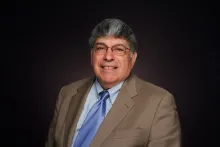
Gary Antion is a long-time minister, having served as a pastor in both the United States and Canada. He is also a certified counselor. Before his retirement in 2015, he was an instructor at Ambassador Bible College, where he had most recently also served as Coordinator.
