

Roy Holladay
This transcript was generated by AI and may contain errors. It is provided to assist those who may not be able to listen to the message.
Well, one can only say, wow, you have special music. What talent and ability. Thank you very much. Very uplifting for all of us. I'm just amazed at Mr. Cody's sermonette, if that's his first sermonette. I don't believe most of us would have been that accomplished, done as good of a job. Very, very fine lesson. I think that's something that I will remember, and I too would like to find out the end of the story.
The rest of the story. Brethren, we are sitting here today as the most blessed group of people on the face of the earth. Why are we the most blessed? Simply because we have been handpicked by God to be a part of his family and to be given an opportunity of wonderful positions of leadership in the world tomorrow.
As the New Testament and the Bible tells us, we are the elect of God. We are the chosen ones of God. We've been called and set apart to be holy, to be trained for a special calling that God is working out. And you and I, not because of any of our righteousness, not because of who we are or anything that we've done, but because of God's love, his mercy, his compassion, God has called us. I want you to notice the calling of the early apostles when God began through Christ to deal with them back in John 1. The book of John 1, verse 35.
John 1.35. Here's where Christ began to assemble his team, on which he was going to begin to build the New Testament church. And again the next day, verse 35, John stood with two of his disciples. And looking at Jesus as he walked, he said, behold the Lamb of God. And the two disciples heard him speaking, and they followed Jesus. Then Jesus turned and seeing them following, said, what do you seek? And they said to him, Rabbi, which is to say when translated, teacher, where are you staying?
And he said, come and see. And they came and saw where he was staying and remained with him that day. Then verse 40. One of the two who heard John speaking followed him was Andrew, Simon Peter's brother. And he found his own brother, Simon, and said to him, we have found the Messiah. We've actually found him, which is translated, the Christ.
And he brought him to Jesus. And of course, Christ addressed him, and he was chosen. You'll find in verse 43, it says, the following day Jesus wanted to go to Galilee, and he found Philip and said to him, follow me.
So here was the selection process of the apostles. They were expecting, hoping for a Messiah to appear. And when Christ appeared, apparently God, working with them, helped them to understand that he was the Messiah. And Christ told his disciples that they had to follow him. Now, every one of us sitting here today have gone through a very similar experience. We have been called to be the disciples, the students of Jesus Christ. We're being trained. We're being prepared. We are the ones who have been handpicked. In Matthew 13, in verse 45, is a description of what I believe all of us have gone through, what we have done.
Verse 45, it says, again, the kingdom of heaven is like a merchant seeking beautiful pearls, who when he found one pearl of great price went and sold all that he had, and he bought it. Brother, this parable applies to us. Why? Because we have found the pearl of great price. We have found God's way of life.
When I say found, obviously, God has called us and opened our minds. But God has revealed his way to us, and it's described as a pearl without value. You couldn't put value on it. And God has called us to understand that truth. This parable applies to each one of us. We've done what this parable has said. We've given up everything to go out and purchase that pearl, to buy it. And we realize that when we were called, we were baptized, that we had to make a commitment. We had to commit ourselves to follow God, put Him first in our lives above all people, and never deviate from that. And that's a decision not just for this life, but for all eternity.
In verse 44, back up here, just one verse, you find again another parable that describes very much the same thing. Again, the kingdom of heaven is like treasure hidden in a field. Which man found and hid, and for joy over it, goes and sells all that he has and buys that field. So you and I have to be willing to give up all that we have to follow Christ and to serve Him, which might even be our lives. Now, in the first century, God raised up a group of men and women.
It's called the church. To work through. We are today a continuation of that first century church. This is the work of God today. We believe that God is working through His church to accomplish the commission that He's given to us. And when you talk about the commission, our mission that God has given us as a people, as a church to do, we realize that that work is not our work.
It is the work of God. And we use those terminologies. We talk about what's going on in the work of God, what's being accomplished. And we use that type of language. Jesus Christ, back in John 4, verse 34, talked about the work that God had given Him to do.
And you notice here, Jesus said to them, My food is to do the will of Him who sent Me, and to finish His work. So what Christ was accomplishing on earth was not just His own personal work, but to finish the work of the Father. I believe, brethren, that we have been called today to help finish the work at the end time. It appears that we live at the very close of this age, a period of time that seems to be escalating and marching very quickly towards end-time prophecy and events that can take place.
And we see all around us prophecies that we've talked about for years of Europe uniting, as an example, organizing and having a military, common currency, and all of this, the Mideast. The Scriptures that deal with the United States and our fall from power, our lack of resolve in all of these areas. And we're beginning to live through this. We see it. And we understand that. And so God has raised up a work at the end time to be able to take this Gospel to the world. In chapter 5 and verse 30, Jesus Christ went on to mention in John 5.30, I can of myself do nothing as I hear I judge, and my judgment is righteous, because I do not seek my own will, but the will of the Father who sent me.
So Christ very clearly said that He could do nothing of Himself. And yet He was God in the flesh. And, brethren, here we are, the Church of God, and God resides in us today through the Holy Spirit. And we can do nothing of ourselves. I mean, if we try to do something, and it's contrary to what God wants, it will go nowhere.
God Almighty is the one who opens doors. God is the one who paves the way, who gives direction, gives the power, the strength, the energy that we need to be able to accomplish. As John 15, verse 5, Christ told His disciples, verse 5 of John 15, I am the vine, you are the branches, he who abides in me, and I in him bears much fruit, for without me you can do nothing.
So our strength is not enough. Our resources are not enough. We need the direction, the guidance, the inspiration of God. So what is the source of power that motivates God's people, that helps us to be able to do a work? Acts 1, verse 8, right before Christ ascended to heaven talking to His disciples, He says, But you shall receive power when the Holy Spirit has come upon you, and you shall be witnesses to Me in Jerusalem, all Judea, Samaria, and to the ends of the earth. So that power source is the Holy Spirit. Christ does the work today through His church, through His people, collectively, and He energizes us and gives us the power and the motivation of His Spirit.
Where did the apostles in the first century, if you want to use more of a vernacular term, get the fire in their belly? Where did they have the desire and the fervent desire for doing the work of God that they were given? You see, they were handpicked by Christ. They were trained for three and a half years.
Christ ascended to heaven. He said, You wait for the Holy Spirit. And on the day of Pentecost, they began to preach very powerfully. Well, Matthew 28 and verse 18, right before Christ ascended to heaven, He gave them a charge. And this charge has motivated God's church down through the centuries. And it is still the charge that we have today. It never goes away. Jesus came and spoke to them, saying, All authority has been given to Me and in heaven and on earth. Now, I want you to notice one thing. The leader of this church, who is Jesus Christ, absolutely states that all authority has been given to Him.
On the earth and in the universe, God the Father has given Him that responsibility. And so therefore, He says in verse 19, Go therefore, make disciples of all nations, baptize them in the name of the Father, the Son, and the Holy Spirit, teaching them to observe all things I have commanded you. And lo, I am with you always, even to the end of the age, to the end of time. That's our time, Breitling. We are living in the end of the age. So they were given a commission and a mission. Now, you stop and think about those twelve apostles.
Here they are. There are twelve of them. They have been to cause they received the Holy Spirit. Now, how are they going to go out and preach the gospel? What method did they have? What means did they have? Well, God began to perform miracles, did He not? Signs and wonders in such a way that multitudes, crowds, were drawn by the thousands to them. They were given a mission almost impossible. But it is possible through Jesus Christ. And the same thing is true today. When we sit back and we think, well, we need to go to the whole world with the gospel.
Seems like almost an impossible charge. And yet, God is the one who will open the doors and make things possible. I see sitting here in front of me today many people born the heat of the day, as far as the work of God is concerned.
They've been laboring to help preach the gospel for decades. We have members here who have been in the church for thirty years, forty years, fifty years. My wife and I just celebrated our 50th, not wedding anniversary, but baptismal date. And there are many of you who can say the same thing.
You've been involved for decades in doing the work of God in proclaiming, helping to proclaim the truth. We do that by our examples, our tithes, our offering. And you might just say that you have proven that this is your life. This is the driving force that motivates you. Your existence and calling is to do or help to do the work of God. And it is a team effort. It's not something done by one person, it's done by us collectively. The first century apostles began on the day of Pentecost to preach a powerful message.
Three thousand were converted. God backed them in a way that he hasn't always done. God works in various ways and uses various methods. And at that time, he used signs, wonders, miracles, and he opened certain doors. Let's go to Acts 5. Acts 5. And we will begin to read here in verse 12. Acts 5, 12. It says, Through the hands of the apostles, many signs and wonders were done among the people, and they were all with one accord in Solomon's porch. And unto the rest dare join them, but the people esteemed them highly, and believers were increasingly added to the Lord, multitudes both of men and women.
And so they brought the sick out into the street and laid them on beds and couches, that at least the shadow of Peter passing by might fall on some of them. And a multitude gathered from the surrounding cities to Jerusalem, bringing sick folk and those who were tormented by unclean spirits, and they were all healed.
So God used signs and wonders to back very powerfully the early New Testament church in the ministry. Well, the mission of the church remains the same today. We are to go to the world with the gospel. We're to make disciples. We're to teach those disciples. And just as they did, we have to rely upon the power of God, not our own strength. The Bible describes the church as a small flock. Now, we can look around, you know, the Cincinnati Home Office churches are some of the largest that we have. And yet, when we look at a city of 300,000 or 400,000, how many God has called here, or you look at New York City or Chicago or LA or some of the huge megaplyses of this world, you find that we truly are a very small flock.
But one thing we have, we have the power of the Almighty God behind us. We have God to guide us. God has promised to always be with us, even to the end of the age. So what we see is that you and I are continuing to do the work that we've always done, and we will continue to do that into the future. We have the responsibility of preaching the gospel to the world. We have the responsibility of preparing a people. We have a responsibility of training our youth, and you find ABC very paramount in that. We have summer camps. We know the importance of a trained ministry with the emphasis on that, and we want to continue moving ahead with that.
We understand the importance of keeping the Feast of Tabernacles. When United first started, back in 1995, there were three major thrusts. One was to keep the Feast, preach the gospel, take care of the people. Those were our marching orders. That's what we understood. We have been trying to do that, and we will continue to do that, because that's an obligation and responsibility that God has given to us. Our marching orders are found in the Scriptures. And as a group, I believe collectively we as a church have striven to do that with our strength.
In John 14, in verse 12, Jesus Christ made an interesting statement. Most assuredly, I say to you, He who believes in me, the works that I do, He will do also. And greater works than these He will do, because I go to my Father. So Christ said that His disciples in the future would be doing greater works than even He did. Look at all the crowds that Christ spoke to, all the people that were healed during that time.
The apostles collectively went out into most of the known world, and all of them went out preaching. God backed them very miraculously, and they made an impact during the first century. But yet, when you begin to look at it today, we as an organization have the opportunity to reach many more people with the Gospel, with the truth, with the good news of the world tomorrow than they did. Why? Because of the instruments that we have that have been developed in this end time. Do we think that it's a fluke or just something that happened that when we come down to the very end time, that over the last 100 years, all of these tremendous, fabulous inventions have come about?
Things like telephone, telegraph, radio, TV, the internet, web, you go on and on satellites for transmitting information. I mean, there is literally an explosion of technology at the end time. We don't find that God is sending his ministers out today to perform public stupendous miracles that attract crowds, but God has provided a means and a method for preaching the Gospel today in even greater numbers.
When you look at the potential of our websites, the internet, we literally have the opportunity to impact millions of people around this world. And it's absolutely mind-boggling, the opportunities that we have, to literally reach out and go across borders. In the past, there are countries, areas of the world that we cannot even begin to reach. And many of those have computers now, websites. They can come. And they can come across our websites. We have literally published millions of booklets, good news magazines, and articles that have gone out to the public.
And when you look at also the videos that go out and the opportunity that we're going to begin here shortly with television, our own personal examples, truly we can begin to have an impact. And a lot of that rests upon God and His opening doors before us. Brethren, we will continue to focus on fulfilling that commission, that job, that responsibility right until the very end.
And that's why God has called us today. God has been merciful in calling us. We're being trained for positions. But we have also been called to assist in doing this work of God. When you begin to look at the United Church of God, you begin to analyze the opportunities, responsibilities that God has given to us. You find that there's a certain strength, certain vitality, certain strong points that the Church possesses and that God has given to us. I'd like to focus on some of those because these are made possible, obviously, through God's Spirit.
One of the strong points that United has, and I've already articulated it to begin with, is the care of the members, local congregations. We started with an emphasis that we were not just going to be a video church, that we were going to provide pastors who would pastor congregations, who would take care of those. And in John 21, verse 15, Jesus Christ talking with Peter showed him that he had a responsibility, all of the apostles did. In verse 15, when they had eaten breakfast, Jesus said to Simon Peter, Simon, son of Jonah, do you love me more than these?
And he said to him, yes, Lord, you know that I love you. He said to him, feed my lambs. And he said to him again a second time, Simon, son of Jonah, do you love me? And he said to him, yes, Lord, you know that I love you.
And he said, tend my sheep. And he said to him the third time, Simon, son of Jonah, do you love me? And Peter grieved because he said to him the third time, do you love me? He said to him, Lord, I know all these things. Or you know all of these things. You know that I love you. And Jesus said to him, feed my sheep. So three times he emphasized this.
Now, you only had to say it once, and I'm sure the apostles would have said, yes, sir. And you would have moved forward. But the command is to feed the flock. When you read the Apostle Paul's epistles, because Paul's letters are some of the most cogent letters that we find in the New Testament.
Most of them are written to churches, some of them to pastors, and they describe the relationship that the Apostle Paul had with many of these congregations, many that he personally had raised up. In 1 Thessalonians 2 and verse 7, we find here Paul's approach to the church in Thessalonica and to those people that he dealt with. And it shows you that he had the heart of a pastor.
He had the heart of a shepherd to look after the sheep. In verse 7, he says, we were gentle among you just as a nursing mother cherishes her own children. And there is nothing, there is no more vivid description of gentleness, kindness, and love than a mother putting a nursing child to her breasts, sitting in a rocking chair, singing to that child, humming, and both of them as content as one could be. And this is what Paul said. He was gentle among them, just like a nursing mom would be. Verse 8, so affectionately longing for you, we were well pleased to impart to you not only the gospel of God, but also our own lives, because you had become dear to us.
So they didn't just preach the gospel, but they gave of their own lives. For you remember, brethren, our labor and toil for a laboring night and day that we might not be a burden to any of you, we preach to you the gospel of God. And you are witnesses in God also how devoutly and justly and blamelessly we behaved ourselves among you who believe.
As you know how we exhorted and comforted and charged every one of you as a father does his own children. So you get an inkling, an insight into how the Apostle Paul dealt with the church.
When United first started, this was one of our main focuses. It continues to be to establish congregations and to pastor those congregations. We are still totally committed to that calling. We're totally committed to that. And we realize that as the ministry ages, that it is going to be imperative to begin to train new ministers. That is a continual focus.
The beloved members of God's church, the sheep, the flock, are those who set every Sabbath in the congregation. The ministry is entrusted as loving shepherds to feed them, to nourish, to protect. And that's the calling that God has given us. To me, this is a strength of the United Church of God and continues and will be a strength to care for the members, not only for adults, but also for our children.
This is why there is such an emphasis on family. There is an emphasis on pre-teens. We have pre-teen camps. We have the summer-winter camps for our youth. We have young adult programs. We have the international programs, youth programs that our people can get involved with.
We have the Good Works program. We have all kinds of initiatives to be able to look after and to take care of God's people worldwide. And so, this continues to be a major strength. I believe another strong point of the Church is our commitment to doctrinal purity, to maintaining the doctrines and the teachings of the Church. We are warned in the Scriptures, especially at the end time, that there are going to be many false teachers and prophets who will come along.
In Matthew 24, I think this is one of the first chapters I read in the Bible. One of the first booklets I got was 1975 in prophecy. In reading through that, giving an overview of prophecy, you find Christ mentioning here. As He said on the Mount of Olives, and the disciples came to Him privately, saying, tell us, when will these things be? What's going to be the sign of your coming and of the end of the age?
And Jesus answered and said to them, take heed that no one deceives you, for many will come in My name, saying, I am the Christ, and will deceive many. And then verse 11, many false prophets will rise up and deceive many. So He's not saying that people won't be deceived by them. And then in verse 24, for false Christ and false prophets will rise and show great signs and wonders to deceive, if it were possible, even the elect, even the chosen ones.
See, I have told you beforehand. So we're warned not to be deceived, not to be taken in. You see, people can perform signs and wonders. There is a false source of power out there also. And you have to look to the person's fruits, to their works, what they teach, their example, their lives. One of the things that we have within the United Church of God is a process that has been developed to maintain the doctrinal purity of the Church. No one man can change doctrine. The council cannot. The chairman cannot. The president cannot. No small group cannot. The fundamentals, beliefs of the Church were considered so important that they were actually written into our Constitution so that they would be there.
It will take three-quarters of the ministry to ballot, to change a doctrine of the Church. And before that's done, every elder will have a chance to look at it, comment on it, as well as the membership of the Church. So we have that wonderful safeguard to prevent heresies, false teachings from coming in to undermine the Church. That's a strength that we have, and that strength will continue into the future, because this process, I believe we all agree with, and we will continue. I believe another strong point is the type of governance that we have within the Church.
It doesn't depend upon one individual. Our system of government is more collegial with trying to get as many people involved as possible. No matter what happens to one person, the Church goes on. You find that we are set up with a general conference of elders.
That's all of the elders. They select the council. The council has the responsibility of giving overall direction and oversight to the Church. The administration then has the responsibility of carrying that out. And you find the general conference of elders, and we have the annual meeting coming up in May, have the responsibility of approving the strategic plan, the operation plan, and the budget, and selecting members to the Council of Elders. The Council of Elders serves at the pleasure of the general conference of elders in the sense that they can select and they can remove.
One of the blessings we have is something that we focused on about three years ago, and that is an ongoing strategic plan and operation plan. When I say ongoing, what we have with that is a continuity for the Church. When there are changes in personnel or leadership, the Home Office staff still has the strategic plan to go by. They still have the operation plans to go by.
This continues to guide our strategies, our plans. They're all laid out, and they're not just laid out for one year. We have plans set and goals set that guide us for years into the future. You go back and you read through Paul's writings. He emphasizes, I think, as much more than anyone, the fact that God has done everything according to a plan, according to His will, according to His purpose. All of those words are used in the Scriptures. What you see is the fact that this gives us a continuity of planning, a continuity of purpose, a continuity of goals and objectives.
The overall mission of the Church does not change. It carries on. How it's carried out sometimes can change, but the overall mission and job continues on. So we have this as a strength, and that we continue to move into the future.
There are, if you look into the Scriptures, times when the Bible indicates that there have been transfers and shifts of responsibilities and duties. You could actually give a whole sermon dealing with this, but I would just like to cite one example, that of Elijah and Elisha. You all remember Elijah the prophet. God did many great things through Elijah. God brought a drought on the country. He contended with the prophets of Baal. There are a number of miracles that God worked through him. Yet there came a point when God replaced Elijah with Elisha. It doesn't say that Elijah was doing anything wrong. It just says that God replaced him. Elisha asked if he could be given a double portion of the Spirit to be able to do the work. Both were servants of God. Both were used greatly by God. And 2 Kings 2, I won't go there, but you'll find the story of Elijah and Elisha, the transfer of responsibility. And you'll find that Elisha carried on with the work of the prophets. And there are many examples, Joshua and Moses, these type of examples in the Bible. You also find that there are times in the Scriptures when different approaches were used or needed. Let's go over to Acts 15. Acts 15.
You'll find the example of Paul and Barnabas. Paul and Barnabas were working together. They were going around preaching. God was using them very powerfully. But there was almost like a duplication here. Both of them were excellent ministers. And here they were sort of tag-teaming together. Now, I believe that God had a purpose to separate them. And there was, if you want to call it, a different approach between how they viewed things. In verse 36, after some days, Paul said to Barnabas, Let us go back to visit our brethren in every city where we preached the word of the Lord and see how they are doing. Now, Barnabas was determined to take with him John called Mark. But Paul insisted that they should not take him with them, the one who had departed from them in Pamphylia, and not gone with them to the work. Now, Barnabas was willing to give John, Mark, another chance. Let's take him. He left us. He didn't know what was right at that point. But let's give him another chance. Paul said, No, I don't want to. And so there, as verse 39 says, The contingent became so sharp that they parted from one another. Barnabas took Mark, sailed to Cyprus, Paul chose Silas, and departed, being commended by the brethren to the grace of God.
And so you find that Barnabas gave Mark another opportunity. Both of these men were faithful servants of God. Both of them remained faithful servants of God. Both of them were used by God. Both of them served in different areas. And so you find that there are times that God will perform various functions, various responsibilities and duties also. And I think that was the particular case here. Brother, there's a section of the Bible I'd like to finish up with in 1 Peter, chapter 2. In 1 Peter, chapter 2, beginning in verse 9. Maybe I'll say we will almost finish with this. And the reason I'd like to read this is this is a section of the Bible that gives a great deal of information about what God thinks about His Church, what God thinks about you and me. It shows us how God views His family and our duties and our responsibilities. In 1 Peter, chapter 2, beginning in verse 9, we read, You are a chosen generation, a royal priesthood, a holy nation, His own special people, that you may proclaim the praises of Him who called you out of darkness into His marvelous light, who once were not a people but are now the people of God, who have not obtained mercy, but now have obtained mercy.
Now, this is a scripture that has a tremendous amount of meaning and should for each one of us in our own personal life and also collectively. Let's go back to verse 9 and analyze this to a certain extent. In verse 9, it says, You are a chosen generation. The word chosen means selected or marked for favor or special privilege. You and I have been selected, and what a privilege it is to sit here today. What a privilege it is to be called at the end time. What a privilege it is to understand the truth. What a privilege it is to have a part in the work of God that God has called us to. Just stop and think. We are referred to in the scriptures as the firstfruits. We're part of God's family. The many sons and daughters who are going to inherit eternal life eventually, we are the first. The vanguard, the beginning, the one that God is calling and training, just like Christ trained his disciples. So we are being trained today to deal with the rest of humanity and the world tomorrow. A great, wide-thrown judgment. You can talk about what a tremendous privilege it is to be chosen. And who did the choosing? Well, God has done the choosing. He's the Creator. He's the ruler of the universe. He has selected us. And you'll notice here it says we are a chosen generation. Generation here, we're a chosen family, our race. In the Old Testament, we realize that God chose and worked through Israel. And they were his people. Today he has chosen a spiritual family. We are the spiritual family of God. And when one of us hurts, the rest of us hurt. When one person suffers, the rest suffer. When one goes through a trial, the rest of us go through a trial. You can use the analogy of the body. Your body doesn't matter if it's the foot. If you hurt your foot, the rest of the body sympathizes with the foot, does it not? If you break your arm, the rest of the body sympathizes with that broken arm. If you have some type of difficulty, you do. So we are that family. We're spiritually Israel. We are the Church of God, the Children of God. We are the kingdom of God in embryo today, awaiting the time of the resurrection when we can be born into that very family of God. And it goes on to say that you are a royal priesthood. Brethren, we are a kingly priesthood. That's what this implies. We are a priesthood. We're royal. You have the job of priest and king combined. Because in God's kingdom, there's not going to be the separation of church and state as we know it today. There's going to be God's truth, God's way of life. His law is going to guide and direct everything that we do. And so those two jobs will be put together. Revelation 5 and verse 10 refers to the future time when Christ will make His followers kings and priests, or a kingdom of priests. So, brethren, we are a chosen people. We're a royal generation. And then it goes on to say you are a holy nation. The word holy means set apart. In this case, we've been set apart for service to God.
We've been characterized by perfection and spiritual purity. Now, you can ask the question, are we holy? But we have been set apart, have we not? We've been called by God. It doesn't mean that we always maintain the high standards that we should. But that does not negate the point that God has personally called you. He's called me. He's put us in His body. We are a group of people who have been set apart for sacred service, for a responsibility.
That's what God sees when He looks down, and He looks at you, or He looks at me. My children, my family, those in training, those being prepared, and God is working with us. It goes on to say that we are His own special people.
We are special to God. Now, King James Version, I believe, uses a language, peculiar. And you might say, yeah, some people think we are peculiar. But that's not exactly what this word is talking about.
It has to do with being specially chosen. The New English Bible translation says it this way. A people claimed by God for His own. We're God's people. We are His sons. And we can have the confidence that the great God in Heaven chose us and has placed us in His body. We're special to Him. This means that we belong to Him. We're His possession. He owns us. He's paid for us with Christ's sacrifice. And yet He is offering to give to us eternal life, to live with Him forever. Our minds cannot begin to phantom the depth of love and mercy and grace that the great God has extended to us.
Why He would ever start a plan where He would create the physical mass, the physical universe, create human beings out of dust, place within us a brain united with a spirit and man so that we have the ability to think and reason. And that God makes contact with us and that He is working through us to develop His character, His very approach, mind, ideas within us so that we can be a part of His family forever.
You see, you and I, as it goes on to say here, are to proclaim the praises of God, or the wondrous deeds of God as it's translated in others, to show forth the virtues of God, to make known the perfection of God. When people look at us, what should they see? They should see Jesus Christ. When Christ told the people, you know, look, you want to know what the Father looks like, have you seen Me?
If you've seen Me, you've seen the Father. Now, that's something that we strive for. We don't quite reach that, do we? But that's what we strive for, to be in that way. We show forth God's virtues, His character, His example. Our example can have a profound effect on other individuals. And we've been called to proclaim the wondrous deeds of God, and part of that is not only just our example and our character, but what we do, the calling that God has given to us to preach the gospel.
And it goes on to say in verse 10, you who once were not a people, at one time we were nothing, we're not a people, and we're nothing of ourselves today. But now we are the people of God. We are God's chosen ones. And so God has extended His mercy to us. We hadn't obtained mercy, but now we have obtained mercy. Before our calling and selection by God, we weren't anything. As I read in 1 Corinthians 1, we're reminded that God did not choose the wise of the world, the mighty of the world, the great of the world, the intelligency of the world, the gifted, the rich.
He didn't call all of those. God called the weak, and He called the weak because He wants to show mankind. When people are resurrected in the Great White Throne Judgment and people living in the millennium, they will see that God took a group of weak ones. And He gave us His Spirit, and He worked in us and through us, and as a result of that, was able to do or work. And God will be able to say, you see what I was able to do with them.
If you yield to me, I can do the same with you. And so God is working through us. We were nobodies and nothings, and we are of ourselves. But we have been chosen by God for a wonderful purpose and a fantastic future. Back up to chapter 13 of the book of Hebrews, in verse 5. Here's a scripture that we read quite often. We tend to apply it personally, which we should, because it is a personal message to each one of us.
But also like for us to think of it in the context of collectively as the body of Christ, the Church of God. We read here in verse 5, So God has promised us as a church that He will never leave us. He will never forsake us. That if He gives us duties, responsibilities, charges, commissions, that He will be with us and that He will be there to the very end. As we read back in Matthew 28, I will be with you to the end of the age. And so we have these promises as anchors that we can hold on to and never let go.
So we can have total faith that God will be with us always to do the work of God.
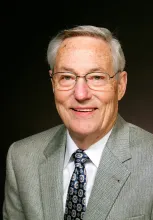
At the time of his retirement in 2016, Roy Holladay was serving the Operation Manager for Ministerial and Member Services of the United Church of God. Mr. and Mrs. Holladay have served in Pittsburgh, Akron, Toledo, Wheeling, Charleston, Uniontown, San Antonio, Austin, Corpus Christi, Uvalde, the Rio Grand Valley, Richmond, Norfolk, Arlington, Hinsdale, Chicago North, St. Petersburg, New Port Richey, Fort Myers, Miami, West Palm Beach, Big Sandy, Texarkana, Chattanooga and Rome congregations.
Roy Holladay was instrumental in the founding of the United Church of God, serving on the transitional board and later on the Council of Elders for nine years (acting as chairman for four-plus years). Mr. Holladay was the United Church of God president for three years (May 2002-July 2005). Over the years he was an instructor at Ambassador Bible College and was a festival coordinator for nine years.
