

Roy Holladay
This transcript was generated by AI and may contain errors. It is provided to assist those who may not be able to listen to the message.
Brethren, we sit here today as part of the most blessed group on the face of the earth. We've been handpicked by God Almighty to be a part of this group. You're not here by accident. You're not here just because you showed up. You're here because God Himself, the great God of the universe, picked you out to be a part of His family and to have a wonderful opportunity for positions of leadership in the world tomorrow in God's Kingdom. We are the elect of God, as it's referred to. We're called holy. We're set apart. We have special training and service. When you look at all of the opportunities that God is going to give His people, we have some of the greatest opportunities to be trained and to prepare for the future. I want you to notice the calling of the early apostles. Let's go back to John 1 and verse 35. John 1 and verse 35. You'll find that Christ began to assemble a team together. He was putting together the foundation that was going to be the foundation of the New Testament church, the apostles who would write a number of the books of the Bible and who would also go out proclaiming the gospel. In verse 35, it says, The next day John stood with two of his disciples, and looking at Jesus as he walked, he said, Behold the Lamb of God. And the two disciples heard him speaking, and they followed Jesus. And Jesus turned and, seeing them, said to them, What do you seek? In other words, what are you after? And they said to him, Rabbi, which is to say, when translated teacher, Where are you staying? And he said to them, Come and see. And they came and saw where he was staying. And remained with him that day. Now it was about the tenth hour. And one of the two who heard him speak followed him was Andrew, Simon Peter's brother. And he found his own brother, Simon, and said to him, We have found the Messiah, which is translated the Christ. And then you'll find in verse 43, The following day Jesus wanted to go to Galilee, and he found Philip and said to him, Follow me. Brethren, you find that when the disciples were called by Christ, and here's one example, they said, We have found the Messiah. And they wanted to follow him. And where he went, they went. You and I, likewise, have been called by God. And we have found the Messiah. We have found the truth. We have found the right way. For six thousand years, man has been struggling to know the right way to live, the right way to go. And God Almighty, for whatever reason, not because of our goodness, our righteousness, not because we've done anything great, but because of his mercy and grace, reached down and picked us out, and he has placed us here. I think Matthew chapter 13 and verse 45 describes where we are, and certainly ties in with what I just read.
Matthew chapter 13, and we will begin to read here in verse 45, It says, Again, the kingdom of heaven is like a merchant seeking beautiful pearls, who when he had found one pearl of great price, went and sold all that he had and bought it.
You and I have found the pearl of great price. That's why you're here. We have found what everybody else is looking for. This parable applies to us This parable teaches that you have to give up all and follow Jesus Christ, and that's exactly what we've all done here. When you were baptized and you went under the water, you professed that you were willing to bury the old man, rise up and live a new way of life, and you were going to live a way where you were totally committed to go God's way, and that you would never deviate from that. That decision was not just a decision for this life, it's a decision for eternity that we are going to follow God. Notice verse 44. Likewise, 13 verse 44, again, the kingdom of heaven is like a treasure hidden in a field which a man found and hid, and for joy over it goes and sells all that he has and buys that field. Again, this is a parable about hidden treasure, and we've made a commitment to dedicate our whole lives to God. Now, I see a room full of individuals that, by the way they live, by their actions, by the fact that we strive to obey God, that we are striving to dedicate ourselves completely to God. Now, in the first century, God raised up a group of men and women called his church, and he was going to work through that particular group. You and I today, brethren, are a continuation of that church. This is the work of God. We are God's people, and God has called us. We believe that God is working in his church to accomplish the commission, the job that he has given us to do. But when we talk about the work, and that's an expression we use all the time, you know, how's the work going or what's happening in the work, we realize that it's not our work. It's not ours, because if it's ours, by our effort, it won't accomplish anything. In John 4.34, let's notice the example of Jesus Christ when he was on the earth.
John 4, and we'll read here in verse 34. Jesus said to them, My food is to do the will of him who sent me and to finish his work. Now, Christ came to the earth to do the will of God, we know to be a sacrifice, but also to finish the work that God had given him to do. You and I have been called today to help finish the work. We have a responsibility today. We live at the end of the age. We live at the very end of man's rule on this earth. And we've been given a job to do, and that job implies that we have to be able to work together. And we have a responsibility to finish the work. And Christ said when he talked about what he was doing, it was his food, it was his meat, it's what he lived for. And the same thing, I believe, is true of all of us.
In John 5 and verse 30, John 5.30, Christ said, I can of myself do nothing. Now, he was God in the flesh, and as God in the flesh, he said, I can't do anything of myself. But he said, as I hear, I judge, and my judgment is righteous, because I do not seek my own will, but the will of the Father who sent me. So Jesus Christ could do nothing of himself. And if he could not, can we? You see, when we try to do work on our own efforts, our own plans, our own thoughts, it won't work. If we are in line with what God is doing, then it will work. And God Almighty has established his church at this time. And let's notice in John 15 and verse 5. He's called us to do a work, but again, we can do nothing with our own strength under our own power, our own direction, our own guidance. It has to be by the will of God. And in verse 5, John 15, Christ said, I'm the vine, you're the branches. He who abides in me, and I in him bears much fruit. For without me, you can do nothing. We cannot do anything without Jesus Christ. He provides the strength and the direction. So why does the source of the power, the strength that we as a church have to accomplish the work of God, where does that come from? Well, in Acts chapter 1 and verse 8, Acts chapter 1 and verse 8, right before Jesus Christ ascended to heaven to go back to the Father, he told his disciples this, you shall receive power when the Holy Spirit has come upon you, and you shall be witnesses to me in Jerusalem and all Judean, Samaria, and to the end of the earth. So the power that God gives to his church is the power that comes from God himself, the Holy Spirit. Christ does the work today through his people, through his church collectively, and we collectively are involved in that.
Now, in the first century, when the apostles began to preach and to go out and reach out to the world, where did, if I could use a vernacular, where did the apostles get the fire and the belly? Where did they get the zeal, the strength to want to do the work of God?
Well, they were commissioned, they were challenged back here in Matthew chapter 28, beginning in verse 18, by Jesus Christ. Matthew chapter 28 and verse 18, Jesus came and spoke to them, saying, All authority has been given to me in heaven and on earth.
Notice that all authority has been given to the leader and the head of this church. Jesus Christ is the head of the church. All authority on earth as well as throughout the universe has been delegated to him by the Father. And then he said, in verse 19, Go therefore, because of this, we have that authority behind us as a church, as a people, go therefore and make disciples of all nations, baptizing them in the name of the Father and of the Son and the Holy Spirit, teaching them to observe all things that I have commanded you. And lo, I am with you even to the end of the age. So they were given a commission, a job, a responsibility, a mission. It was almost like a mission impossible. It is impossible for us, but through Christ, all things are possible. The Bible tells us. Many of you sitting here have borne the heat of the day when it comes to doing and assisting and helping with the work of God. You've been laboring and helping with the preaching of the Gospel through your example, tithes, offerings, direct involvement, some in working for 30 years, 40 years, 50 years. Norm and I this past week, we're just talking about, we passed a milestone, 50 years for both of us having been baptized. Now, I look around this room and I know that there are a number of people here who go way beyond that. And so we have individuals who obviously, by the fact that they're still here, they still have that fire in the belly, that zeal, that drive that they have been faithful for all this period of time, and still want to see that Gospel go out. This is our life. This is who we are. This is the driving force behind what we do by everything that we accomplish. In the first century, you'll find that the apostles, beginning on the day of Pentecost, began to preach very powerfully. And they preached. God was with them. And they taught the good news of the coming Kingdom of God. God backed them with many signs, with wonders, with miracles. God opened doors before them supernaturally. And you'll find that the apostles began to shake the world, in a sense, at that time. In Acts 5, beginning in verse 12, we read this, that through the hands of the apostles, many signs and wonders were done among the people. And they were all with one accord in Solomon's porch. Yet none of the rest there joined themselves, but the people esteemed them highly. And believers were increasingly added to the Lord in multitudes of both men and women. So that they brought the sick out of the street, laid them on beds and couches, that at least the shadow of Peter passing by might fall on them. And a multitude gathered from surrounding cities to Jerusalem, bringing sick people and those who were tormented by unclean spirits. And they were healed. So you'll find that God used signs, wonders, miracles in the first century to attract crowds. People would be drawn to the apostles. They would witness. And in many cases, there would be hundreds and thousands of people converted. The mission of the church remains the same. We still today have the responsibility of going to this world with the gospel. We have to rely upon the strength that God gives us. The Bible uses the term that we are a small flock. We're not a large group. You look at the city of Cincinnati, and even though we have a sizable group of us right here, compared to maybe 300,000-400,000 people, we're small. We're tiny. And yet we have been commissioned by God to go to this world.
How are we going to be able to do it? Because we have the power of the Almighty God behind us. We have that power living in us. God is with us. He's promised to always go with us, even to the end of the age. And so we find that as we begin to progress into the future, that we are still going to place an emphasis on preaching the gospel. That's why we're here. We're going to continue to emphasize preparing a people that we need to be ready for the coming Kingdom of God, of training our youth, of having summer camps, knowing the importance of a trained ministry and to provide trained ministers, also the importance of keeping the feast. When the United Church of God began in 1995 in Indianapolis, there were three main directives that came out of that. Preach the gospel, take care of the people, keep the feast. And we got all of that up and running and beginning. And we've never stopped because that again is the marching orders. Our marching orders are found in the scriptures, in the Bible. And as a group, as a church collectively, as a family, we need to strive to do what God has called us to do with all of our hearts and to realize that there's not going to be a slacking off from that, but to do a greater work. The power of God is a source of our strength. In John 14 in verse 12, Jesus Christ, shortly before his crucifixion, told his disciples, Most assuredly, I say to you, he who believes in me the works that I do, he will do also, and greater works than these he will do, because I go to my Father. Jesus Christ drew huge crowds, five, ten thousand people. He healed probably hundreds, maybe thousands, of people. And yet, he told his disciples, you will do greater works. The twelve apostles went out, and you find that each one of them went to various areas of the world. They went preaching the gospel, and they literally were able to go to most of the, what we would call the civilized world back at that time. You and I today have the opportunity to reach even many more people than they did. They expanded on what Christ did, but when you stop and think about the opportunities that we have today to preach the good news in the kingdom of God, look at the potential of the web that we have today. Literally, we can reach out to millions of people through our websites that we have over the internet. We have a dozen plus websites that we use, and we have the opportunity today to go to places where no one thought he could go before. In the past, to think to go into Red China, some of these areas that were heavily dominated by communism, it was impossible. But today, that's possible. People have satellites, they have computers, and they have access to the word of God going out. Millions have read our booklets. Millions have read the Good News magazine. We're now approaching the opportunity for television. Our examples are always there. So we find that we, as a church, will never deviate from this calling. This is the commission, the responsibility, the duties that God has given to us. And so, brethren, we're going to continue on in that direction to fulfill that. This will be a focus of God's church to the very end, to preach the gospel as strongly as we can, with the inspiration and guidance, obviously, of God.
Now, when you look at what God is doing through His people, and you look at the United Church of God, there are a lot of strong points that we, as a church, have. There are a lot of strengths that we have. And sometimes we don't focus on those or look at them. But I think one of the greatest strengths is what we started out with from the very beginning. And that was the care of the congregations, the care of the members. We said right up front that we were not going to have a church where you just played videos, but that there would be pastors provided for congregations to help the members, to guide and to lead and to direct them. In John 21, Jesus Christ, in talking to Peter, made an interesting charge to him. Still holds true for all of us today. For anyone who is in the ministry or has the opportunity to serve. John 21, beginning here in verse 15, we read, So when they had eaten breakfast, Jesus said to Simon Peter, Simon, son of Jonah, do you love me more than these? And he said to him, Yes, Lord, you know that I love you.
And he said to him, Feed my lambs. Feed them. And he said to him again a second time, Simon Peter, son of Jonah, do you love me? And he said to him, Yes, Lord, you know that I love you. And he said to him, Tend my sheep. And verse 17, he said the third time, Simon, son of Jonah, do you love me? And Peter was grieved because he said to him the third time, do you love me? And he said to him, Lord, you know all things. You know that I love you. And Jesus said to him, Feed my sheep. So one of the responsibilities that the church started with in the first century was to take care of the local congregations. The same is true today. When you read through Paul's epistles, you're struck by the love and the care that the Apostle Paul had for the church. Paul's writings, many of them are written to local congregations. Many of them are written to church pastors. And as such, they give an insight from an apostle, Paul, who was the apostle to the Gentiles, on how he instructed ministers to deal with the church and what he thought of local congregations and the people within those congregations. One example is back in 1 Thessalonians 2. There are many that could be cited. But in 1 Thessalonians 2, beginning in verse 7, we see clearly the example here.
Paul wrote, But we were gentle among you, just as a nursing mother cherishes her own children. There is nothing more, as an analogy that I could think of than this, to show tender care. A mother who has a baby, who nurses that baby, sits down in a rocking chair, holds that baby to her breast, and she's singing to the child. The child is cooing. And there is a bond that develops there. There is a bond that doesn't break, because there is a love factor between the two of them. And this is what the Apostle Paul said that he did. We were gentle, just like a nursing mother with her child. And so affectionately, in verse 8, longing for you, we were well pleased to impart to you not only the gospel of God, but also our own lives, because you had become dear to us.
A lot of times we don't use that type of terminology, but he said, you've become dear to us. For you remember, brethren, our labor and our toll, for laboring night and day, that we might not be a burden to any of you. We preach to you the gospel of God. You are witnesses, and God also held devoutly and justly and blamelessly we behaved ourselves among you, who believe. As you know, how we exhorted and comforted and charged every one of you as a father does his own children. So you emphasis on exhorting, comforting, and charging, just like a father who loves his family and he's doing what is best for them. So again, when United first started, this was one of our focuses, our major focuses. We established local congregations with pastors of those congregations, and we are still committed to that responsibility.
We know that ministers are getting older, and they're going to have to be replaced, and we are committed to educating and training a ministry who can serve in the congregations. The beloved members of God's Church, the sheep, the flock, you, are all to be taken care of and looked after. The ministry is entrusted as loving shepherds to feed, nourish, and protect God's Church, God's people. I believe this is a strength of the United Church of God. This is a strength that God has given to us, a strong point. Not only do we just care for adults, we care for children, for young people. We have started ABC. We have an emphasis on the family. We have pre-teen camps. We have summer and winter camps. We have the youth programs, young adult programs, challenger programs. We have the programs overseas that many of our young adults are able to participate in. There is a realization that as we move forward into the future, the next generation must come along. The next generation must assume responsibilities. The next generation must take on the duties and the responsibilities that many of us in a few years will just be stepping aside from. Another strong point of the Church is our commitment to doctrinal purity. We believe in doctrinal purity and trying to maintain the right teachings of the Church.
We're warned in the Scriptures in a number of places that at the end time false teachers, false prophets will come along. In Matthew chapter 24, beginning in verse 3, this is one of the first chapters I read in the Bible when I first got literature from the Church of God. I remember receiving the booklet, The United States and Britain in Prophecy, and then 1975 in Prophecy. Matthew 24 was quoted, I think, quite often in the 75 in Prophecy.
You'll notice here, beginning in verse 3, as He said on the Mount of Olives, the disciples came to Him privately, saying, Tell us, when will these things be? And what will be the sign of your coming and of the end of the age? And Jesus answered and said to them, Take heed that no one deceive you. Now, why would He say this? Unless it could happen, unless there were going to be deceivers. For many will come in My name, saying that I am the Christ, it will deceive many. Then in verse 11, we find then many false prophets will rise up and again deceive many. And in verse 24, For false prophets shall rise up and show great signs and wonders to deceive, if possible, even the elect. See, I've told you before, what you see is a situation that there are a lot of people in the world and society, if they see some type of a sign or wonder, something that looks supernatural, they automatically assume that has to be of God. And yet the Bible tells us to look at people's truths, look at what they say, look at their life, look at their example. And we realize that Satan the devil can have false signs and wonders. And so we have to be careful. And Christ was warning His disciples. We have lived to see some of these prophecies take place. One of the blessings that we have in the church is a process that has been approved to maintain the doctrinal purity of the church. No one man can change the doctrine. The council cannot change the doctrine. The chairman of the council cannot change the doctrine. The president cannot change the doctrine. A small group of people cannot change the doctrines of the church. We felt that this was so important that the fundamental beliefs of the church are incorporated in our constitution. And there it will take three quarters of the ministry to approve a doctrinal change. Now in the past we know a small handful of men imposed doctrinal changes on the church. That cannot happen as long as we have this approval and this policy.
You find that not only does it require three quarters, but although the ministries would have an opportunity to read over, give input, as well as the membership. This is a wonderful safeguard to prevent heresies and false teachers from coming in and undermining the church. This is a strength that we have, and this will be a strength that will be maintained again as we move forward into the future. I believe another strong point of united is our form of governance. That it doesn't depend on just one individual. That our system of government is more collegial, which means that there are many more people involved, many more are given opportunities. And no matter what happens to any one of us, the church will go on. The church will continue forward. We're organized with the general conference of elders, and they have the responsibility, the overall responsibility of approving the budget, approving the strategic plan, operation plan, and to select members of the council, or to remove members of the council. The council has been given oversight and responsibility of the church as a constituted board, and then the administration has the responsibility of carrying out the directives. So the council of elders serves at the selection of the general conference of elders. They can appoint and they can remove.
One of the strengths that we have, and this is something that we began about three years ago, is the establishment of a formal strategic plan and operation plan. This is something that we've had in the past, but not to the degree that we do now. When there are changes in personnel, the leadership of the church and the home office staff continue to follow the strategies and the plans that are laid out because they are articulated. The plan set goals and guides for us for several years. It's not just a one-year operation plan, strategic plan. They said goals, targets that we shoot for over a period of time. This gives us continuity of planning, continuity of purpose, continuity of goals and objectives to be able to continue on into the future. The overall mission never changes. Go to the world, preach the gospel, care for the flock. But how it's carried out can sometimes change. So we have this as a strength.
There are times you find in the scriptures that transfers or shifting of duties and responsibilities take place. We have very precise and exact examples in the Bible. Moses handed off responsibilities to Joshua. We have an example in the Bible of Elijah. God used Elijah to do many great things. He prayed that it not rain, didn't rain for three and a half years. He also dealt with the prophets of Baal. We know the miracles, the interventions that God did on the behalf of Elijah. And yet God shifted Elijah to another location on earth and let somebody else take over the responsibilities of leading the prophets. In 2 Kings, we find the story of Elijah and Elisha. God transported Elijah's son, and Elijah carried on in the work of the prophets. We see that this is something that occurs and did occur even in the Old Testament. Both of these were men of God. Both of these were used mightily by God. But there were occasions when duties and responsibilities change. Let's go to the book of Acts, chapter 15, and we'll notice there are times when different approaches might be needed. In Acts, chapter 15, we'll begin in verse 36.
We have the example of Paul and Barnabas. In verse 36, it says, After some days, Paul said to Barnabas, Let us now go back and visit our brethren in every city where we have preached the word of the Lord and see how they are doing. Barnabas was determined to take with them John, called Mark. But Paul insisted that they should not take him with them, the one who had departed from them at Pamphylia and had not gone with them to the work. So here we have Barnabas wanting to use Mark. Paul said, No, we couldn't trust him in the past. I don't want to use him. Now, Paul didn't, but Barnabas was willing to give him another opportunity. And so you find that there was a contention between them because of this. In verse 39, it says, Now, God undoubtedly allowed this because here you had two men, probably both of the rank of apostles, and they were joined at the hip. They were going along together, and they both could go out and do the work. And so what you discover is that Barnabas takes Mark and he departs, and he goes and preaches the gospel. They both remained faithful servants of God. They both served in different areas. They just simply didn't serve in the same capacity that they were before, but they were still preaching the gospel to the world. And so we find these examples sprinkled throughout the scriptures that show us how things were done occasionally here in the Bible. There's a section of the Bible I would like for us to focus on as we move towards the end of the sermon that gives a great deal of information about how God looks at you and me, what God's view is of us, and what we're doing, how God views his family, how he views our duties, our responsibilities, and the calling that we have. It's found in 1 Peter 2 beginning in verse 9. 1 Peter 2. You are a chosen generation, a royal priesthood, a holy nation, his own special people, that you may proclaim the praises of him who called you out of darkness into his marvelous light, who once were not a people but are now the people of God, who had not obtained mercy but now have obtained mercy. There's a lot contained in these two verses. Many times we read over them and we don't stop to digest them, think about them, meditate on them. Let's back up to verse 9 here where it says, you and I are a chosen generation. The word chosen here means selected or marked for favor or special privilege.
And what a privilege we have. What a calling we have. Think of what we have been called to. Out of all of the billions of people who have lived and died, God has called a handful of people, just like he did the 12 apostles to start the early New Testament church. God is calling the first fruits now. We're being trained, we're being prepared to assist Christ in ruling in the world tomorrow, the great white throne judgment. It's a privilege to be called now. Many sons and daughters will be eventually born into God's kingdom, but we have the opportunity to be among those who are the first to believe. We're the vanguard. You talk about a privilege. We're the most privileged people in the face of the earth from that perspective. To be called now, have our minds open, to know the truth, to be given God's Spirit, to be in training for positions of rulership. We find here that we are a chosen generation, or a chosen family, or race, or people. In the Old Testament, God chose a physical family. He chose Israel, and God worked through them. Now God has chosen a spiritual family, and that's those of us here. We come from various backgrounds, but yet, once we have God's Spirit, we all have one thing in common. We have God as our Father. We have His Church to help nourish us, like a mother does. And so we find that we are a spiritual Israel, the Church of God, the people of God, that God is working through. Now we read on in verse 9 here that we are a royal priesthood. You and I have been called to be trained as priests. You might say we're kingly priests. You find the job of king and priest being combined. That's why it says royal priesthood here.
In God's Kingdom, there's not going to be separation of church and state, as you find today.
At that time, we will rule, and we will teach God's law, and the law of God will become the foundation of all society. And we will teach. Several religious authorities will be combined. There will not be distractions, as we see today. In Revelation 5.10, it talks about how God is preparing us to be kings and priests, or a kingdom of priests. And so you and I are going to be a royal priesthood. And we are in training today. You look at the royal family in England. Prince William, Prince Harry, those who grow up as little children, they began to be trained by education, by custom, tradition.
They began to be taught what it would be like to take over the position of rulership. In many cases, they may have to wait 30, 40, 50 years or more. But you and I are in training. And what a wonderful blessing that is. Verse 9, we go on to read where it says, you are a holy nation.
The word holy means to be set apart to the service of God. We have been set apart and dedicated to God. It's also characterized by perfection and spiritual purity. You and I are to seek for perfection and purity. Now, we all understand we fall short of that. That's the perfect standard we don't measure up, but that's what we strive for. But I want you to notice it does not say that you might be a holy nation. It says that we are a holy nation. The word holy again meaning to be set apart. So we are among a group of people who have been set apart for a sacred service to God.
To carry out whatever responsibility and duty that God wanted to give us at that time. In ancient Israel, they were also set aside, but they had additional or other responsibilities. So what we observe is God is looking at us and he sees us. Now, in verse 9, it goes on to say that you are his own special people. We're special to God.
When you think of another human being who's special to you, there's nobody any more special to me than my wife. She has stuck with me for 47 years. And we have a relationship. How can you have something that's been nurtured for 47 years with someone else? It just doesn't happen. Well, God looks down, and when he looks down on us as his children, his family, we're special. We're dear to him. And King James Version, I think, says we're a peculiar people. Now, you probably have a lot of friends who would agree with you on that, that we are peculiar.
But it really doesn't mean that. It means that we are a specially chosen people. The New English Bible translates this as a people claimed by God for his own. We have been claimed by God as his own. God says, that's mine. You're my people. We were bought and paid for by the blood of Jesus Christ, his sacrifice. So we belong to him. We're his possession. We're his family. And God wants us and that family forever. Now, notice going on here, we are a special people that we may proclaim the praises of him who called you out of darkness into his marvelous life.
You and I proclaim the praises of God. Other translations say his wondrous deeds or his virtues. We make known his perfection. When Jesus Christ walked this earth, he said, if you've seen me, you've seen the Father. When people look at us, who should they see? They should see Jesus Christ reflected back to them. His example, how he would live, because Christ lives in us. And you and I are to be an example of his character, of his mind, of his actions, of what he does. And we also proclaim his wondrous deeds, I'm sure by example and also by word and by action.
And we have that responsibility. And as it goes on to clarify, we've been called out of darkness. We've all been like a person lost in a cave and not being able to see. An even better example of that would be someone who's in a cave, who's never seen light, and he walks out into the daylight for the first time. And all at once, he sees the grass. What's that? He sees the trees. What's that? He sees maybe a bird flying.
And these are all things that are totally different to him. Well, this is the way God has been with us. There was one time we were in total darkness. God lifts the blinders, gives us sight. We see. And now we see things that we've never seen before. God opens our minds and gives us that understanding. Then in verse 10, who once were not a people, but now are the people of God. So you and I were not a people in the past.
Before our calling and selection by God, we were nothing. As we read in 1 Corinthians chapter 1, God didn't choose the wise of the world, the mighty of the world, the great of the world, the intelligentsia of the world, those who have a lot of money, talent. God has chosen the weak of the world. And the question is, why has God chosen the weak?
God's chosen us because we can't glory in his sight. Now maybe sometimes we do, but as the weak, God can tell those later on who are resurrected or he deals with, look at these people. And we were nothing, and God was able to work through us. And so God can say, look what I can do through you.
And so God has chosen us. We're nobodies. We have come from nobodies to the members of the family of God. We've come from nobodies to being apart, the kingdom of God and the embryo. And God has chosen us. But we have been called, we have been chosen to be prepared as well as to do a work.
Now in Hebrews chapter 13 and verse 5, we read a scripture that is an extremely inspirational scripture. It's one that normally we apply to ourselves personally, which we should. Now I read it all the time for that reason. But let's apply it collectively. Let's apply this to the church, to the responsibilities and the jobs and the duties that God gives to us collectively. Enjoying the work, it says, let your conduct be without covetousness. Be content with such things as you have.
For he himself, see God himself has said, I will never leave you and I will never forsake you. So God's not going to leave us. He will not forsake us. Brethren, we realize that God is with us always to accomplish the work that he's given us to do. God is always with us individually to help us to grow, to overcome, to face the trials, the tests, the difficulties that we're faced with. And he is promised that he will never leave nor forsake us. Those are anchors. Those are promises. That's a commitment that the great God, the leader of this church, who has sung Jesus Christ and the Father himself have made to us that you and I can hold on to.
Never let go of that we are those people that God is working through to do his work. So, brethren, God will always be with us, and God will be with us to the end to accomplish and to do the work that he has set before us.
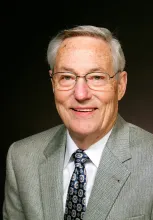
At the time of his retirement in 2016, Roy Holladay was serving the Operation Manager for Ministerial and Member Services of the United Church of God. Mr. and Mrs. Holladay have served in Pittsburgh, Akron, Toledo, Wheeling, Charleston, Uniontown, San Antonio, Austin, Corpus Christi, Uvalde, the Rio Grand Valley, Richmond, Norfolk, Arlington, Hinsdale, Chicago North, St. Petersburg, New Port Richey, Fort Myers, Miami, West Palm Beach, Big Sandy, Texarkana, Chattanooga and Rome congregations.
Roy Holladay was instrumental in the founding of the United Church of God, serving on the transitional board and later on the Council of Elders for nine years (acting as chairman for four-plus years). Mr. Holladay was the United Church of God president for three years (May 2002-July 2005). Over the years he was an instructor at Ambassador Bible College and was a festival coordinator for nine years.
