

Don Ward
This transcript was generated by AI and may contain errors. It is provided to assist those who may not be able to listen to the message.
Does God keep His law, especially the Sabbath? You might say, well, of course He keeps His law, but what about the Sabbath? Well, some have asked that question in recent times. Some in the Church of God concerning, does God keep His law and does God observe the Sabbath? Would God be God if He did not obey His immutable spiritual law? So let's examine those questions today and see if we can come to a better understanding of the nature, the qualities, and characteristics of God. There are four principal ways whereby humans can attain knowledge.
The secular world, the intellectual world, the world of so-called education, only recognizes three ways. One way is through the five senses, which is called empirical knowledge. Another way is what is called experiential knowledge, the knowledge that is gained through experience, and the other way be through human reasoning, putting two and two together.
But the Bible tells us that there is a fourth way for gaining knowledge, and that way is revelation. The world denies revelation, knowledge gained through revelation. However, the true knowledge concerning the nature, qualities, and characteristics of God must be revealed. God is spirit. John 4.24, God is invisible.
Yet through revelation, we can understand the nature, the qualities, and characteristics of God. Let's go to 1 Corinthians chapter 2, 1 Corinthians chapter 2, where Paul makes the very declarative statement that we know the things of God through revelation. In 1 Corinthians chapter 2 and verse 9, But as it is written, I have not seen nor ear heard, neither have entered in the heart of man the things which God has prepared for them that love him. But God hath revealed them unto us. How would you know anything about the kingdom of God, the wonderful world tomorrow, or anything in the spirit world, if it were not revealed? You cannot see God. You cannot touch God.
You cannot come to the knowledge of God through the five senses, through human reasoning, or any other way, through experience. You can't cut any of those methods. But God hath revealed them unto us by his spirit. Of course, the spirit is enabler. The word of God is a very substance of the revelation. Christ says in John 6, 63, the words I speak, they are spirit and they are life.
So the spirit and the word are, in that sense, equated. It has revealed them to us through his spirit. For the spirit searches all things, the deep things of God. For what man knows the things of a man, say, the spirit of man, which is in him, even so the things of God knows no man, but the spirit of God.
Now we have received not the spirit of the world, but the spirit which is of God, that we might know the things that are freely given to us of God. Do we know and know that we know? Let's go to Matthew 16, more about revelation and how we come to the knowledge of really understanding God. Remember our question, does God keep his law? Does God observe the Sabbath? And in going through this, you should be able to come to a much deeper and fuller understanding and appreciation of God and application to your own lives with regard to this.
In Matthew 16 and verse 13, Jesus came to Caesarea Philippi. He asked the disciples, whom do men say that I am? They said, some say that you are Jeremiah, John the Baptist, Elijah, one of the prophets. He said unto them, but who do you say that I am? Simon Peter answered and said, you are the Christ, the Son of the living God. And Jesus answered and said unto him, blessed are you, Simon Bar-Jonah, for flesh and blood hath not revealed it unto you, but my Father, who is in heaven.
So he didn't come to that knowledge through empirical knowledge, the five senses, experiential knowledge through experience or human reasoning. It was revealed knowledge. God reveals many of his qualities and characteristics through his name. There are three primary names of God in the Old Testament. If you're reading in the Old Testament and you see capital all caps, L-O-R-D, all caps, L-O-R-D, the primary name, the Hebrew word there, is Yahweh. Yahweh means the I am that I am. Turn, please, to Exodus. In Exodus chapter 3, verse 14, 13 and 14, we'll see this.
Yahweh means the I am that I am, the ever living one. There's an interesting thing that we'll point out here. It's just sort of a side point to this in just a moment after we look at this. The Y-W-V-H Yahweh is called a tetragrammaton, the four letters that which is written. The Jews came to be so superstitious about the name of God that they just wrote the consonants, and the vowel points were then added later, and they lost even how to correctly pronounce the name of God. Back during the time that the King James Bible was being translated, they thought that perhaps the most accurate pronunciation of Yahweh into English would be Yehovah.
Yehovah. And in more recent times, scholarship has gone toward Yaveh.
In Exodus 3, this is the chapter Moses is called and asked to go lead Israel out of Egypt. And Moses said unto God, this is Exodus 3, 13, Behold, when I come into the children of Israel and shall see unto them the God of your fathers that sent me unto you, and they shall say to me, what is his name, what shall I say unto them? And God said unto Moses, I am that I am, and he said, you shall say unto the children of Israel, I am the ever existing one, the one who is and who always will be the Eternal. That's perhaps the best translation.
Now, Yaveh is used in compound with several other words, as we'll note in just a moment.
Another primary name of God is El, and when you see all caps, G-O-D, in the Old Testament, that's L. It means the strong one, and L is also used in compound with many other words.
And then the other primary name is Adonai, which you'll see, capital L, lowercase, O-R-D. All three of these are used in compound with other words.
For example, let's look at Exodus 6. Interesting little side point here.
In Exodus 6, verse 2, God spoke unto Moses and said unto him, I am the Yaveh, the ever living one, the I AM that I AM.
And I teared unto Abraham, unto Isaac, and unto Jacob, by the name of El Shaddai. See, El, the primary name, the strong one, Shaddai. Shaddai comes from Shadd, and Shadd is a Hebrew word for a woman's breast, which literally means the sustainer, the nourisher, the one who, with gentle loving care, watches over, takes care of Israel and the people of God.
Yet, when you read back in the Pentateuch, back into Genesis, you'll find the use of Yaveh, El, and Adonai. So when Moses wrote that, he used the name that was applicable that revealed the quality or characteristic of God that needed to be revealed in the context of the situation that he was writing about. I appeared unto Abraham and to Isaac and to Jacob by the name of God Almighty, but by my name Yaveh was I not known to them. See, this term, God Almighty, it depends on how you, the inflection of your voice, you say, God Almighty, or, you know, God Almighty is the one, the nourisher, the sustainer, the one who takes care of you, who nurtures you, who places his arms around you, the God of all comfort, the Father of all mercies. So a side point there, but where we're going with this now is to Jeremiah 23 and verse 6, because we are wanting to answer the question concerning, does God keep his law? Does he observe the Sabbath? And to a large degree, that is revealed in his name. So we've noted the three primary names of God. We've noted one compound with El, and that's God Almighty. And here in Jeremiah 23 and verse 6, we'll see that Yahweh is used in compound with Sitkanu, which means God our righteousness. So let's read Jeremiah 23 and verse 6.
In his days Judah shall be saved and Israel shall dwell safely, and this is his name, whereby he shall be called the Yahweh our Sitkanu, our righteousness. So one of the names of God is Yahweh's Sitkanu. God is righteous. God's righteousness. Also in Jeremiah 33 and verse 16. Let's turn there to Jeremiah 33 and 16. You'll see once again Yahweh used in compound with Sitkanu. Now you might say, what on earth does this have to do with answering those questions? Well, you have to follow it through. In Jeremiah 33 verse 16, In those days shall Judah be saved, Jerusalem shall dwell safely, and this is the name whereby she shall be called Yahweh Sitkanu. So it's word for word, 23.6.
Virtually all the commentators try to make the case that this means that God is the one who imputes righteousness to us. And in a certain context that is true, we can only become righteous through God and Jesus Christ. There's no other way. Righteousness has to do with being justified and in good standing with God. No amount of the ritualistic law, no matter how many ceremonies that you go through, and in fact, no amount of even keeping the spiritual law will justify you. That is, pay for sins that are passed. Let's go now to Galatians 3, 21. Galatians 3 and verse 21.
You have to put the whole picture together and of course what happens in the world of religion, especially Protestantism, and jumping to conclusions based on one or two verses and wanting this cheap grace gospel to be the way into the kingdom of God or the way, as they would say, to heaven. In Galatians 3, 21, is the law then against the promises of God, God forbid, for if there had been a law given which could have given life, verily righteousness should have been by the law. Now, in this particular case, she was talking about justification, right standing before God, that all the law giving, all the law keeping, all the ritualistic law could not justify you or bring you to a right standing before God. However, commandment keeping is linked with righteousness. You have to follow the whole thing. Let's go to Deuteronomy 6, verse 25. Deuteronomy 6 and verse 25. Hopefully we'll put a picture together here today that is irrefutable with regard to God and His righteousness and how we become and can become the righteousness of God. In Deuteronomy 6, verse 25.
And it shall be our righteousness, it shall be our righteousness, if we observe to do all these commandments before the Lord our God as He is commanded us. So there is a link between commandment keeping and righteousness. Righteousness has to do with a state of being and also a state of doing, as we shall see. Now, to Psalm 119, verse 172.
One of the definitions, I suppose, you could say, of righteousness in Psalm 119, verse 172.
I was talking with a minister, well, actually it was a minister's wife up at the council meetings this past, when was that, week before last or sometime. It was recently.
And they were talking about sermons and so on. So one minister's wife said, well, I can't understand, and she was talking to Bill Bradford's daughter, said, I can't understand your daddy's sermons and Dr. Ward's.
And Bill Bradford's daughter said, well, some people like milk and some like meat.
But that was the end of that conversation.
In Psalm 119, 172, my tongue shall speak of your word, for all your commandments are righteousness.
So there is definitely a link between the commandments and righteousness and obeying the commandments and righteousness. However, commandment-keeping in and of itself will not justify you. In Luke 1 and verse 6, it's interesting to note this, that when God selected the parents of this one, notice about the parents of this person. In Luke chapter 1 and verse 6, let's read verse 5. Luke 1-5, There was in the days of Herod the king of Judea a certain priest named Zacharias, of the course of Abiah, and his wife was of the daughters of Aaron, and her name was Elizabeth.
And they were both righteous before God, walking in all the commandments and ordinances of the Lord blameless. So they were, under the terms of the Old Covenant, doing the things that they were supposed to do in walking in righteousness. However, they had not had the gospel preached to them in the sense that it was preached on the day of Pentecost and from that day forward. Only faith in the sacrifice of Christ and repentance can bring you into a justified or righteous state before God. There is no other way. It says clearly in Acts chapter 4 that there is none other name given. This is verse 12. There's none other name given under heaven whereby men must be saved. So let's go to Galatians 2.15. But in this, in the sense of Paul writes a great deal about you cannot attain unto righteousness through the law. It is by faith. And then the Protestant world jumps to the conclusion, well, it's just faith and faith in what Christ has done. And then that will be imputed to you as if in the sense of I could pull off my shoe and give it to you and you now my shoe.
Or Christ could pull out his faith and hand it to you and you would have Christ's faith.
Now faith is a gift and it is also, faith is a gift, and also it is predicated on doing what God says.
In Galatians 2.15, We who are Jews by nature are not sinners of the Gentiles, knowing that a man is not justified by the works of the law, but by the faith in Jesus Christ. No amount of ritualistic law or commandment keeping would pay that price. The wages of sin is death, so someone had to die.
And of course, Jesus Christ is our propituation. He died in our stead that we might be justified by faith in Jesus Christ, or faith in Christ, and not by the works of the law, for by the works of the law shall no flesh be justified. But there is a big however that Paul uses, or the word, but. But if while we seek to be justified by Christ, we ourselves also are found sinners, as therefore Christ, the minister of sin, God forbid.
For if I build again the things which I destroyed, I make myself a transgressor. So Christ is not the minister of sin, and even though you're justified by faith in the sacrifice of Christ, then that justification is dependent upon repentance. What do you repent of? You repent of breaking God's immutable spiritual law, and that hearkens back to all your commandments or righteousness, Psalm 119 verse 172. So righteousness, in the sense of being just and right-standing before God and your sins are forgiven, requires faith in the sacrifice of Christ.
However, righteousness is also a state of being. It is not just an action that is imputed to another being. So let's go to Ezra 9 and verse 15. Ezra, Ezra and Nehemiah, you've got Chronicles, Second Chronicles, and Ezra. Probably don't turn to Ezra every day. In Ezra chapter 9 and verse 15. In Ezra 9 and verse 15, O Yave, when you see the G-O-D, capital G-O-D, that's Elohim.
O God, Elohim of Israel, you are righteous. You are righteous. That's a state of being.
God is righteous. God is righteous. You have that in your mind.
God is righteous, for we remain yet escaped as it is this day. Behold, we are before you in our trespasses, for we cannot stand before you because of this. Also in Psalm 116, Psalm 116 verse 5.
So righteousness is a state of being, and God is righteous. Now, if righteousness is a state of being, God is righteous.
Would God sin? Would God observe the Sabbath? Or is that only for man?
Well, it does say that Sabbath was made for man and not man for the Sabbath.
But what about God? Does He observe the Sabbath? In Psalm 116 verse 5, gracious is the Lord and righteousness. And righteous is the Lord and righteous.
So Yahweh is righteous. Yes, our God is merciful.
So let's notice the meaning of the word righteous in these two verses.
The word righteous in both Ezra 9 and 15 and Psalm 116 verse 15, the Hebrew word is tzadik or sada'dik. It means just, lawful, righteous. Notice the word lawful.
It means correct. It means justified. It means vindicated. So if you are righteous, you are lawful. Could you be righteous and be unlawful? I don't think so.
So the principle meaning then of righteousness in these two verses is to be just and to be lawful.
God is just and God is lawful. Now righteous and righteousness has two dimensions that is a state of being and a state of doing. God is righteous and we're to become the righteousness of God. Let's go down to 1 John chapter 2 and verse 28. 1 John chapter 2 and verse 28. And now little children, 1 John 2 and 28. And now little children abide in him, live in him, that when he shall appear we may have confidence and not be ashamed before him it is coming.
If you know that he is righteous, which I think we've established quite clearly from various passages, if you know that he is righteous, you know that everyone that does righteousness is begotten of God. So if you're going to do righteousness, it is a spiritual dimension and God is involved in it. All of man's righteousness is as filthy rags before God.
And we are to become the righteousness of God. Let's go to 2 Corinthians now.
2 Corinthians chapter 5 verse 17. And we'll notice and note that we are to become the righteousness of God in Christ. So we want, playing in the back of our minds, God is righteous.
Righteousness has to do with being lawful, with being just. So if God, the great law giver who has given the law to human beings as to how to direct their behavior and to become like God is, would God obey His law? Would He ever disobey His law? Would He still be God if He disobeyed His law?
In 2 Corinthians 5, 17, therefore if any man be in Christ, He is a new creation. All things are passed away, behold, all things will become new. And all things are of God, who hath reconciled us in self by Jesus Christ. We were enemies of God because we were sinners. Paul talks about this in Romans 5. If when we were enemies of God, we were reconciled to God by the death of His Son, we shall be saved by His life, and so on. We reconcile faith in the sacrifice of Christ, who died in our stead, and have given to us the ministry of reconciliation.
One of the weakest points that we have had, sadly, in the history of the Church of God for the past several decades, and I just this past week was saying, I wonder what God really thinks about us.
I wonder what He thinks about how things have developed.
We really need to be the way we are. He has given to us the ministry of reconciliation to know that God was in Christ, reconciling the world unto Himself, not imputing their trespasses unto them.
See, all the sins forgiven and removed as far as the east is from the west.
Upon faith and sacrifice of Christ and repentance, and have committed unto us the word of reconciliation. Now, then, you are ambassadors for Christ, as though God did beseech you by us. We pray you in Christ's stead be you reconciled to God, for He has made Him to be sin for us, who know no sin, that we might be made the righteousness of God in Him. Become you therefore perfect even as your Father in heaven is perfect.
If we are to become the righteousness of God, well, God must be righteous.
In fact, let's go to Romans 9.14. Romans 9.14.
Once again, does God keep His law? Is God just? Does He observe the Sabbath?
In Romans 9.14, what shall we say then? Is there unrighteousness with God?
Is there any unrighteousness with God?
All your commandments are righteousness, so it would seem to me logically that the opposite of righteousness would be disobedience to God's immutable spiritual law.
What shall we say then? Is there unrighteousness with God? God forbid.
There's no unrighteousness with God. And then Romans 6.13.
And here's an amazing section, passages, scriptures, verses starting Romans 6.13.
Of course, the first part is about baptism.
That we're crucified with Christ when we go under the watery grave of baptism.
Come up to serve in newness of life with our old man and sins buried in the watery grave of baptism.
In Romans 6.13, neither yield your members as instruments of unrighteousness unto sin.
Now, probably every baptized member in this auditorium here this afternoon can give the Bible definition of sin that we quote so often of 1 John 3.4, where sin is the transgression of the law. Some Mormon kids were, well, they were, you know, at Brigham Young doing their mission work in the summer in our neighborhood last summer, down in Houston area.
And they had a white shirt and tie, and they went around knocking on doors and waiting to give you the Book of Mormon. So, they finally came to our door. I was sitting out on the front porch, and they began to talk. I said, well, I already have a Book of Mormon. I said, you know, it's filled with misspellings, grammatical errors, and contradictions. Ha! Oh, no, it's not. I said, well, maybe I'll take the Book if you can give me the Bible definition of sin. And so they started. And none of them came out with 1 John 3.4.
Sin is the transgression of the law. They left disappointed. Neither yield your members as instruments of unrighteousness unto sin. So, one of the definitions of sin. Sin is the transgression of the law. But yield yourselves unto God as those that are alive from the dead, your members as instruments of righteousness unto God.
So, if unrighteousness is sin, and sin is the transgression of the law, then righteousness must have to do with obeying God and His immutable spiritual law. For sin shall not have dominion over you, for you are not under the law but under grace. You are not under the death penalty. What then shall we sin because we are not under the law but under grace?
God forbid. Know you not that to whom you yield yourselves servants to obey, His servants you are to whom you obey, whether of sin unto death or of obedience unto righteousness. Once again, you have this link between obedience and righteousness. But obedience, in and of itself, didn't justify you and give you right standing before God and reconcile you to God. That was faith and repentance. Faith, especially, in the sacrifice of Christ. But God bethinked that you were the servants of sin, but you have obeyed from the heart that form of doctrine which was delivered you.
You were that, but now you are something else. Being then made free from sin, you became the servants of righteousness. I speak after the matter of men because of the infirmity of your flesh. Whereas you have yielded your members' servants to uncleanness and iniquity, and iniquity is lawlessness, unto iniquity, even so now yield your members' servants to righteousness unto holiness. For when you were the servants of sin, you were free from righteousness. What fruit had you then in those things, whereof you are now shamed? For the end of those things is death.
The wages of sin, as he says in just a second here, is death. But now being made free from sin and become servants to God, you have your fruit unto holiness and the end everlasting life. For the wages of sin is death, but the gift of God is eternal life through Jesus Christ our Lord. So if God were to sin, would He cease to be God?
See, the truth is that God cannot sin. If God broke His spiritual law and became a sinner, what then? He's the Redeemer. There would be no redemption for Him. The fact is, God cannot lie and God cannot sin. And when we are born into the family of God, we will be the righteousness of God and not given to sin. He is what He is.
God is righteous. He is what He is. He is everything and more. He is everything and more that the Bible says He is. Let's go now to 1 John 1.5. Remember 1 John was written to combat Gnosticism. The Gnostics taught that at the top of the chain was bands of light that represented God. And as you went away from those bands of light, you finally came into darkness and lose contact with God.
And eventually, to the Prince of Darkness, the Demiurge, who created the physical, the Gnostics taught a dualistic nature of man. Notice what 1 John 1.5 says. This then is the message which we have heard of Him and declare unto you that God is light, and in Him is no darkness.
God is light. So there is no unrighteousness with God. God who is promised, God who cannot lie. Search the Scriptures, you'll find no place in which God places Himself above the law. Whatever God says He is, He is. Our goal is to become the righteousness of God, as we've read from 2 Corinthians 5.
So now, does God observe the Sabbath? Some have speculated as to whether or not God observes the Sabbath. Some say that God has no need to observe the Sabbath. He doesn't need to rest.
He's not going to worship Himself on the Sabbath. So why would He keep the Sabbath?
And does He keep the Sabbath? Well, the answer is so clear in the Bible that it's astounding.
Let's go to Genesis 2. You know, I wonder what it's like around the throne of God on the Sabbath day.
You just have to sort of wonder what that is like. Is it different? I don't know for sure, exactly, but let's read this. In Genesis 2.1, Thus the heavens and the earth were finished, and all the host of them.
And on the seventh day God ended his work which he had made, and he rested on the seventh day from all his work which he had made. And God blessed the seventh day and sanctified it, because that in it he had rested from all his work which God created and made.
We want to look at three words here. Verse one is rested. The Hebrew word for rested is Shabbat. S-H-A-B-A-T-H. It means to cease, to desist, to rest, to keep or observe the Sabbath. So God ceased from his work, and he kept Sabbath.
Look at the word blessed. Blessed is the Hebrew word barak, B-A-R-A-K, barak's popular word in the Middle East and other places.
Barak is not exactly barak as in Barack Obama, but it's bara.
It means, blessed means to invoke divine favor. God blessed the Sabbath day. He invoked divine favor. It also means to kneel, to be adored, to praise, to salute.
God blessed the Sabbath. He invoked divine favor on the seventh day, and he sanctified it.
The word sanctified, kadash, means to concentrate, to sanctify, prepare, dedicate, be hallowed, be holy, be separate, to honor, to set apart, to keep sacred.
He sanctified the Sabbath day, the seventh day. He set it apart.
Now you go to where the Ten Commandments were given in Exodus 20, and the wording is the same except for the word rested in Exodus chapter 20.
Exodus 20, verse 8.
Remember the Sabbath day to keep it holy. It doesn't exactly say it in Genesis. It says, you sanctified it. But remember the Sabbath day to keep it holy. The word holy, there are two main words we talk about here with regard to God in holy and sacred. Holy things have God's active presence within them. The saints are called holy because they have God's active presence within them.
The ground on which Moses stood was holy because God's active presence was there.
Holy things have God's active presence within them. There's something different about the Sabbath day.
I can sense it. It begins on Friday afternoon. It might be part of the biological clock.
There is something that happens and a calm, and there's a difference. The Sabbath day. The Sabbath day. Remember the Sabbath day to keep it holy. So it is a holy day.
Six days shall your labor and do all your work, but the seventh day is the Sabbath of the Eternal, your Elohim. Yave your Elohim. And in it shall you not do any work, you or your son or your daughter, man-servant, maid-servant, cattle, stranger that is windier, gates. For in six days the Lord made heaven and earth, the sea, and all that in them is, and rested the seventh day. Wherefore the Lord blessed. Same word is in Genesis 2 verse 3, and hallowed it. And this word hallowed is the same word as translated sanctified in Genesis 2.3. Now the word rested here is pronounced nuwok in the Hebrew. It means to rest, to settle down, to repose, have rest, be quiet, to cause to rest, to obtain rest. So the Bible makes it very clear that God observes the Sabbath.
I guess someone might argue, well, that was just a one-time thing. He just did it one time after creation. He had to rest because he was really tired from that. The word spoke and it was done.
But then the trap that people would fall into, those who like to go around quoting this and misapplying it, in some cases, Jesus Christ the same yesterday, today, and forever. God does not change his character, his being, of who he is. That verse should forever settle it in our minds.
And some want to try to disparage God for allowing people to be killed in ancient times, in what's called sometimes Old Testament times. God knows what is best for you and I, for our future. He knows and he knew what is best for every person who has ever lived.
God is not a respecter of persons. It says it very clearly in the Bible. He's not a respecter of persons. Could he be God if he were a respecter of persons? He designed a great plan of salvation that is all-inclusive. No one is excluded. Every person who ever lived will have an opportunity to be in the family of God. Let's go to Romans chapter 11.
One of the great questions that students asked me through the years, especially in teaching fundamentals of theology, was it summarizes why does God do things the way he does?
Can you answer that one? Well, Paul answers it here. Why does God do things the way he does?
Why did Israel have to be blinded so the Gentiles could be grafted in, and then Israel be grafted back in? Why does God do things the way he does things? Well, Paul addresses that in Romans 11.33.
O, the depths of the riches, both of the wisdom and knowledge of God. How unsurgeable are His judgments and His ways past finding out.
For who hath known the mind of the Lord, or who hath been His counselor, or who hath first given to Him, and it shall be recompense unto Him again.
For of Him and through Him and to Him are all things, to whom be glory forever. Now we go back to verse 30.
For you, as in times past, have not believed God, yet have now obtained mercy through their unbelief.
Even so have these also now not believed, that through your mercy they also may obtain mercy.
For God hath concluded them all in unbelief, that he might have mercy upon all.
Why does He have to do it that way? I don't know, but He explains in the next verses that we just read.
He might have mercy upon all. O, the depths of the riches, the knowledge of God, who hath been His counselor. He knows what He is doing.
The commandment, for example, you shall not kill, refers to doing no murder for unjust causes.
In Revelation 19, let's go there, when Jesus Christ comes again with the saints, riding on the great white horses, clothed in white linen, which is the righteousness of the saints, as it describes here, He's going to wage war. A lot of people are going to die.
That doesn't mean, necessarily, that they have committed the unpardonable sin. I don't guess. We'll interrupt ourselves for just a moment here and go to Revelation 9. We'll come back here to 19. In Revelation 9, when these trumpet plagues begin to be poured out, it seems from the point that the trumpet plagues begin to be poured out that no one repents. I don't know that for sure, but there's a way this sounds. In Revelation 9, verse 20, And the rest of the men which were not killed by these plagues, yet repented not of the works of their hands, that they should not worship devils, you see, once you give yourself over to the wrong spirit, and you cross a certain line, this seems no way back, that they should not worship devils and idols of gold and silver and brass and stone and of wood, which neither can see nor hear nor walk, neither repented they of their murders nor of their sorceries, nor of their fornication, nor of their thefts.
So in Revelation 19, verse 11, as I said, when Christ comes again, a lot of people are going to die. He talks about the blood being up to the bridles of the horses in the valley of Jehoshaphat.
And I saw heaven open, and behold, a white horse. And he that sat upon him was called Faithful, True, and in Righteousness, he doth judge and make war. His eyes were as a flame of fire, and on his head were many crowns, and he had a name written, no man knew, but he himself. And he was clothed with a vestured dipped in blood, and his name is called the Word of God. And the armies which were in heaven followed him upon white horses, clothed in fine linen, white and clean. And out of his mouth goes a sharp sword, that with it he should smite the nations. And he shall rule them with a rod of iron, and he treads the winepress of the fierceness and wrath of Almighty God. And he hath on his vesture and on his thigh a name written, King of Kings and Lord of Lords. Verse 18, that you may eat the flesh of kings, the flesh of captains, the flesh of mighty men, the flesh of horses, and of them that sit on them, and flesh of all men, both free and bond, both small and great. Of course, you know there's the warning in Matthew 25 of the 10 virgins, five foolish, five wise. There comes a certain point in time, if you're not ready, it seems to be too late. But God is just in everything that he does. God is the perfect fulfillment of his immutable spiritual law. We have said this over and over again, that the spiritual law defines the very nature, the very qualities and characteristics of God. We would not know what righteousness is if it had not been revealed to us through the pages of the Bible. So I wonder why anybody would question whether or not God keeps his immutable spiritual law. God does not set himself above his own word. Then he would be breaking his own word and would make him a liar. And we are to become the righteousness of God. So, brethren, let's strive to become the righteousness of God. Let's strive to be the ministers of reconciliation.
Let's keep the big picture burning brightly in our hearts and minds. Let's do everything that we can do to make this world a better place here and now. And let's do the things that God has put in his word so clearly revealed to us that God is righteous. And in him, there is no unrighteousness.
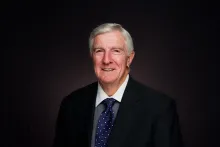
Before his retirement in 2021, Dr. Donald Ward pastored churches in Texas and Louisiana, and taught at Ambassador Bible College in Cincinnati, Ohio. He has also served as chairman of the Council of Elders of the United Church of God. He holds a BS degree; a BA in theology; a MS degree; a doctor’s degree in education from East Texas State University; and has completed 18 hours of graduate theology from SMU.
