

Mario Seiglie
This transcript was generated by AI and may contain errors. It is provided to assist those who may not be able to listen to the message.
And so we come to this afternoon of this Day of Pentecost, a day that is not only a feast of God, but it is also a high day, which makes it doubly important. It's also a Sabbath, and a very special Sabbath. So God has a lot of meaning that He has in His Word about this Day of Pentecost, of which I'd like to share again so many wonderful truths. No matter how much we study it, there will always be just like a beautiful diamond with all the different facets, with different gleams and colors that come out of the same Bible. It is very inspiring to read God's Word and what He says about this Day of Pentecost. I know we had a nice lunch, but God's Word is always more interesting than any movie that we have ever seen. People can stay two hours, even three hours, spellbound by a movie. Afterwards, you don't really remember too much. You don't grasp too much meaning. Whereas this Day of Pentecost is going to have meaning not only in this life, but in the coming life as well. First, I've given you a handout. Because I'd say about two months ago, I thought, how could you explain the different feast days, their meaning, and their application in our lives in a very simple way? I call them God's Feast Steps of Salvation.
It's like going up some stairs. I like this analogy because stairs mean you have to go up. It takes a certain amount of effort. So, the same way as we progress spiritually, it's going to take effort. Of course, we don't do it by ourselves. God is helping us. But also, each step is a development. It is an increase in spiritual maturity. So, I'd just like to go over it real quickly with you, starting with a Passover.
You can see there are certain keywords. The first one is Justification, which is used extensively in the New Testament. The concept is also found in the Old Testament. David certainly used it, and others. But justification basically means having that faith in Jesus Christ. It means obedience to God's laws. It means repentance of our past sins. It means having grace, which is God's favor, and unmerited pardon, and forgiveness.
So, this is the first step in this ladder of spiritual progression. And it's also, each one of these, symbolized by one of the feast days. The second one has to do with the days of Unleavened Bread, which you can use the word Separation.
Where God tells us to be holy, be a living sacrifice, not be of the world's false values. And so, once we are justified, we are no longer involved in this world's value system and its way of thinking. And so, we become a separate group.
The called-out ones. That's what the term Eclassia, or what we use church, it means the called-out ones. The people that have been separated for a special and sacred use. Then we come to this Feast of Pentecost. That would be the third step in God's Feast Steps of Salvation, which has to do with Sanctification, which is God's Spirit in you. It's a process, a lifelong development that you have of the Holy Spirit making us more and more like Jesus Christ being more filled with the Spirit.
So, it's progressive. It's something that, as it was brought out in the message this morning, we don't always produce the same abundant fruit, but in the long term, we should be progressing in this sanctification, this way of thinking less in a worldly manner and thinking more in a spiritual manner or spiritual way. Then come trumpets, and we can describe that as glorification, where these saints are transformed from flesh, from matter to spirit, which is another substance, but it's not made of molecules or atoms.
It is not something that degenerates like matter and energy do. And then we go to the next one, atonement, which is purification. This is when Satan is restrained during those thousand years. The world is going to be purified of all of this violence and all of this terror going on. We just had a terrible tragedy.
They named it as the worst massacre in the United States history, where 50 people were gunned down at what they call it a gay club in Orlando, Florida. Over 100 people got shot this morning, very early morning. There were 300 people out there, and from the FBI report, it was an Afghan terrorist, a person that was involved in radicalization, and that he came in with one of these assault rifles and pistols, and for three hours just shot right and left until a SWAT team came and killed him.
So that's very different from the purification. I wonder if people kept these feasts and had this spirit, how different this world would be. We wouldn't be mourning people that basically, who knew? There were all different types of walks of life, and all of a sudden they just found this satanically induced attack. Satan is alive and well, unfortunately, on this earth. But the Day of Atonement is a time when the earth is going to be purified of Satan's influence. He's not going to be around to magnify hate and greed and violence. It won't be there. And it's one of the steps of salvation.
And then we have Tabernacles, which we can define as beautification. The beautification of the earth. It will return to an Eden-like environment. The animals will all be tamed. There won't be thorns. There won't be poisonous animals.
And it will be a time when the earth is going to be beautified. It says that the desert will turn like a rose. Everything will be converted. It will be a process. It will take a thousand years to beautify the earth. But that's what the Feast of Tabernacles represents. I added the last scripture, Acts 3, 19, and 21, to the one I had given in Garden Grove. This is an updated graph because there it talks about the times of restoring all things. The restoration of all things. But that's talking about going back to the time of Eden and beautifying before the curse came out. Thistles and thorns grew, animals became violent, and human nature also ran rampant.
And then we have the last great day, which we can call evaluation. It's going to be a period when so many of the ignorant who just lived and died in this life without knowing what it was all about will come up. And it will be a period, the Great White Throne. But it's not going to be a judgment of summarily condemning everybody. No, it's a time of evaluating. And yes, they have all come short of the glory of God, but they will have the Book of Life open so that they can have their names inscribed in it if they meet the conditions that we see in this graph. Are you willing to go through justification? Are you willing to go through separation? Are you willing to go through sanctification? Do you want glorification? Do you want to be part of the purification and the beautification? If so, then you also will be part of God's kingdom one day. And finally, when the New Jerusalem arrives, we're going to have filiation in the sense of complete filiation, which means when a family is established. The filios means family, means the children coming into a family type of relationship. That's when God the Father will bring the New Jerusalem down, and we will all be part of a spiritual family. That's the ultimate goal that God has for all of us. So it's good to keep that in mind with these different words. We have eight words. So we had seven species, and we have nine fruits. Now you have eight words to remember in these feast steps of salvation. And in a sense, filiation is part of the last great day, and people being evaluated and being brought in as children of God as well. But the New Jerusalem, of course, is the cherry on top of the ice cream at the very end. So just like the feast days represent steps in our development and our salvation, God uses symbols in the Bible to explain spiritual truths that are very vital to Him. And we want to focus on Pentecost in particular. In John 16, verse 25, let's turn there. John 16, verse 25, Jesus Christ said to His disciples, These things I have spoken to you in figurative language. Oh, another way. Some translations have it. Symbolic language. But the time is coming when I will no longer speak to you in figurative language, but I will tell you plainly about the Father. And so there were going to be wonderful truths that were going to be revealed. One of the ways was through the Holy Days, as the disciples understood better the meaning of the Holy Days. So they understood this ladder or steps of salvation much better. Notice, this isn't something that religion teaches that Christianity focuses on. Why? Because it is something revealed by God's Holy Spirit.
Notice 1 Corinthians 2, verse 9. 1 Corinthians 2, verse 9. Traditional Christianity has many fine values, but as far as doctrines, they are still deceived by Satan. They have included pagan systems to substitute God's truths, philosophy. So they don't teach these plain and simple truths of the Bible. In 1 Corinthians 2, verse 9 through 16, Paul said, But as it is written, eye has not seen, nor ear heard, nor have entered into the heart of man the things which God has prepared for those who love him. That has to do with those few steps of salvation. The world doesn't understand them. It says, But God has revealed them to us through his Spirit. For the Spirit searches all things, yes, the deep things of God. We have God's Spirit. We can search the deep things in God's Word. He can open our understanding to these wonderful spiritual truths, which are better than anything that man has out there. If we were just having a competition about truths in this world, I'll tell you, there's nothing comparable. Everything else is like a cheap glass of jewelry compared to a diamond. You look at every one of the chief Christian teachings of this world, and they're all shiny, but they're false. Adoration of Sunday in Christianity. That is a false crystal. Yes, it shines, but it's fake. It's not produced by God. It is part of Satan's deception. How about Holy Friday that the Muslims teach that they go to their mesquite, and to their meeting places on Friday? They call that holy. Well, that's another fake crystal. Yes, it shines. Yes, it gets your attention, but it's not the diamond. It's not something genuine that has the real quality behind them. How about this about going to heaven? You heard about a famous sports figure that died, and they're talking about him in heaven. Yes, all of that type of celebration. No, that's another fake crystal. That's something that is not biblical. That person's asleep. He's going to wake one day, but he's not either in heaven or hell or some place in between. And so it says here that God, through his Spirit, reveals to us the deep things of God, the deep truths that he has in his Word. It says, for what man knows the thing of a man except the Spirit of the man which is in him? We can understand human things because we have that Spirit in man. A gorilla can't explain to you a mathematical formula, but a human being can because we have the capacity to reason in a mathematical way. Well, it's the same way he's saying here that you can't understand the spiritual things unless God's Spirit is working in you. It says, even so, no one knows the things of God except the Spirit of God, or through the Spirit of God that is in you. And this is the understanding that we receive. He says, now we have received not the Spirit of the world. We're not going into all of these false theologies that are taught out there. Clever scholars and theologians have come up with to justify how this shiny piece of crystal is trying to pawn off as a diamond. Because it's still low quality. It's not something created by God. It's not the genuine things. I think some ladies sometimes have been given jewelry and it's supposed to be this fine diamond, and then they drop it and the thing breaks and they realize they got fooled. It's the same way, religious deception. You think it's the genuine thing when it's not. It goes on to say, now we have received not the Spirit of the world, but the Spirit, and it should be, which is from God that we might know the things that have been freely given to us by God.
These things we also speak, not in words which man's wisdom teaches, but which the Holy Spirit teaches, comparing spiritual things with spiritual. So we have to have God's Spirit so we can compare what our Spirit, that God gives us, that Holy Spirit, to understand the Bible. Understand these simple steps of salvation. That's why we're here. Because Pentecost is one of those great truths. As we will see, it has to do with our destiny, with what God is developing in each one of us. He goes on and says, but the natural man does not receive the things of the Spirit of God, for they are foolishness to him. And neither can he know them, because they are spiritual, he's earned. But he who is spiritual, who has God's Spirit, judges all things, yet he himself is rightly judged by no one. The world shouldn't be judging us, because they lack that spiritual element. For who has known the mind of the Lord, that he may instruct them, but we have the mind of Christ, God's Spirit working in us. And so, each one of these feasts are called in the Bible, shadows of things to come. Let's turn to Colossians 2, verse 16. This is actually a very badly translated verse, because translators did know exactly what it was being meant here. They translated it in a negative way, when it should have been translated in a positive way. It says, So let no one judge you in food or in drink, or regarding a festival, or a new moon or sabbaths, which are a shadow of things to come, but the substance is of Christ.
What he's saying is, brethren, don't let these heretics that were trying to pawn off this false philosophy on you, and he said, don't let them criticize you for keeping these things, because they were doing it. He says, verse 18, Let no one cheat you of your reward, taking delight and false humility and worship of angels. So these people were criticizing God's people, trying to pawn off these false teachings. He said, don't let them do this. Don't let them get in here. Don't let them teach you this false philosophy. Don't let them criticize you for keeping these things, because God's feasts are not something that are past fulfilled, but they are something in the future. They are yet to be fulfilled. We need to be keeping them, because they're still active. They still have not been completed.
Now, a lot of people don't realize that what Paul was saying there actually has a connection.
Paul is actually drawing this picture from something that Jesus Christ had said. Remember, it says that with the Holy Spirit, you'll understand things? Well, Jesus Christ mentioned about the fulfillment of these feasts, and that they were shadows of things to come. In essence, that's what he said during the Passover.
The thought is taken from there. Notice in Luke 22, verse 15 and 16. Luke 22, verse 15 and 16. This was during the Passover. Jesus said to them, With fervent desire, I have desire to eat this Passover with you before I suffer.
For I say to you, I will no longer eat of it until it is fulfilled. This shadow is going to one day be fulfilled in the kingdom of God. And so they understood the feasts are shadows. They are symbols of future events that will be fulfilled by God. They made the connection. Paul brought it out not only in Colossians, he also brought it out in 1 Corinthians 11, verses 25 and 26. He said in the same manner, he also took the cup after supper, saying, This cup is the new covenant in my blood. This do as often as you drink it in remembrance of me.
And what were they supposed to remember? Just what he had done at that time? Something in the past? He says, For as often as you eat this bread and drink this cup, you proclaim the Lord's death till he comes. That's in the future. And so it's not something that's already obsolete and just remains in the past.
They were taking that because they said, This is looking to the future kingdom of God, when Christ is going to fulfill the Passover meaning completely.
So these feasts are shadows or remembrances of Christ and what he will do in the future to fulfill them. The substance of that realization. He is the substance. And so, of course, people that don't understand these things, they interpret Colossians 2.16 in a whole different way. When he was actually saying, Brethren, these are things that you should keep because they are going to be fulfilled in the future. Just like Jesus Christ told the disciples, and I told the Corinthians that this is why they're keeping the Passover.
And so, Pentecost is also a shadow of things to come. And by the symbolism, we are going to see, just as that first harvest after Christ's first coming, which is a small harvest in comparison to the greater harvest in the fall.
Let's go over the ceremony real quickly in Leviticus 23.
These are shadows of things to come.
Leviticus 23.10 And we're going to see how everything here that was a shadow was fulfilled.
By Jesus Christ in his first coming, and he will ultimately fulfill it completely in his second coming. So Leviticus 23.10 It says, Speak to the children of Israel and say to them, This is not Moses, this is the Lord spoke to Moses. God is giving him the instructions.
Speak to the children of Israel and say to them, When you come into the land which I give to you, and reap its harvest, then you shall bring a sheaf of the first fruits of your harvest to the priest. He shall wave the sheaf before the Lord to be accepted on your behalf. On the day after the Sabbath, the priest shall wave it.
Continuing on, he says, And you shall offer on that day when you wave the sheaf a male lamb. Again, these are all representative of Christ's ultimate sacrifice. He was the lamb. He had to do with the day of Pentecost and all the symbols involved with him. And then verse 14, it says, Mr. Garnett already explained that. He shall be a statute forever throughout your generations and all your dwellings. And you shall count for yourselves from the day after the Sabbath, from the day that you brought the sheaf of the wave offering, seven Sabbaths shall be completed. Count fifty days to the day after the Sabbath, and you shall count for yourself from the day after the Sabbath, from the day that you brought the sheaf of the wave offering, three days to the day after the seventh Sabbath. Then you shall offer a new grain offering to the Lord. You shall bring from your dwellings two wave loaves of two tenths of an ephah, which is the weight. They shall be a fine flower. They shall be baked with leaven. They are the first fruits to the Lord.
So again, they had a sermon at the beginning of the fifty days and then at the end of the fifty days. And this was the Pentecost harvest. It started with the symbol of taking a wave sheaf, which was just a handful of grain, usually barley, as it has been brought out. And you had to wave it before God to be accepted, again, as a way of giving thanks. But it goes even beyond that, because as we will see, that first waving took place at the same time Jesus Christ was resurrecting, was rising from the dead. That was on that Saturday, as it ended, and the high priest waved that before the Lord, that Jesus Christ was coming out of that tomb three days and three nights after he was buried. And so that's why the Apostle Paul talks about the resurrection of Jesus Christ as the first fruits, because he was symbolic of that wave sheaf that was being presented. And it was fulfilled to the very hour and day. That's when you began counting the fifty days. And Pentecost is simply the Greek for the translation fifty or fiftieth. That is the literal translation. Pentecost means fiftieth, because it fell on the fiftieth day. And so you have this beautiful analogy of the Pentecost harvest depicting the resurrection. First, the resurrection of Jesus Christ, which he did at that very Saturday evening as the sun set. The high priest in the temple was waving the wave sheaf, and Jesus Christ behind him was coming out of the grave. That's why when the disciples came later on, that's when they found the empty tomb. He wasn't there, and then later he appeared. And all of that took place from Saturday night to that Monday morning. That whole period of time was there because he was fulfilling. Notice 1 Corinthians 15 verse 22. It says, This talk about all of humanity. Everybody that has died from the time of Adam to the time that eventually the last person that is born in the millennium, as far as we understand, that's basically with the second resurrection, that's basically people that have already been at least conceived. But from the millennium, we're still going to have people born into that generation.
And so it says, they all have a right to a resurrection. Verse 23, it says, But each one in his own order. Now the term order here is like a military term, which means in different... Like in a military parade, you have different groups of troops. They're all coming in different orders. And so it refers to a very large group of people that come up, just like in a military parade. And then comes the second battalion and the third battalion. So here it's the same way. And he says, Christ the first fruits. That's the wave sheaf that has been presented. He was accepted by God the Father. Remember, Mary couldn't touch him until he went up and he was accepted by God the Father. Then he came down and then Mary hugged his feet. And so he is the first fruits. Now sometimes a person says, well, why is that in the plural? Because it was a wave sheaf. It was one handful that was wrapped up. So it was one person, but it's called the first fruits of the harvest. It's referring to Jesus Christ. And then it goes on to say, afterward, those who are Christ's at his coming. So you see, there are no people in between that are up there that have been resurrected to a spiritual life. You have to wait until the next battalion comes in. The first one was just Jesus Christ, right? He was leading the parade. And then we have this first group of people that are those that receive God's Spirit in this life who persevere to the end, who are faithful. They are going to be part of those first fruits of God. And then it goes on, verse 24, then comes the end when he delivers the kingdom to God the Father. And of course, that has to do with the whole period of the millennium and the Second Resurrection, the judgment also of those inveterate and those who have completely destroyed their character. And they are the incorrigibly wicked, right? Those are all... That's a period when he finally has to deliver the kingdom to his Father. But we want to focus on these two parts, which are the wave sheaf offering and then the end of those 50 days with Pentecost, where these two loaves are waved before God to be accepted just as the wave sheaf was.
Now, it's very different, though, because the wave sheaf was just one tiny part of that first harvest. And whereas here at the end, you take from this harvest and you have these two loaves of bread that are presented to God.
And they have leavened. The wave sheaf doesn't have leavened, but these two loaves do. So that's why this message is titled, A Tale of Two Loaves.
The church is called a kind of first-roots, just like the wave sheaf was a type of first-roots, symbolically. So is the church. Notice in James chapter 1.
Starting in verse 18, it says, It says, He's talking about all of mankind. We are the first fruits. We are part of that Pentecost harvest.
And so the church is the church of the first fruits. It's also called the firstborn. Let's look at that scripture in Hebrews chapter 12, in verse 22. Hebrews chapter 12, verse 22. It says, So when a person receives God's Spirit, as they persevere, they have their names registered in that book of life. And so people die. They don't continue with their consciousness. But that name is inscribed in that book because they have a right to be resurrected when Jesus Christ comes back. That's why they are called here the firstborn, the church of the firstborn.
Not because there's only one, but it is like the firstborn of mankind. Remember, the firstborn are the ones that have the inheritance that is double that of his brothers and sisters. The firstborn are the ones that receive the responsibilities.
And so God is calling now people to be part of those firstfruits of being the firstborn. Notice, continuing on, in verse 23, to the General Assembly and Church of the Firstborn, who are registered in heaven, to God, the judge of all the spirits, of just men made perfect. And that's what happens to the spirit of one of these firstborn. They are perfected by God. They're not conscious, but when your spirit goes up, God stores it, puts it away, but in a perfected form. So that when a person is resurrected, they are not resurrected with their faults.
God has cleaned that whole CD disc of all impurities. And so that's why it says here that they are the spirits of just men. And let's talk about just people here. Made perfect.
And curiously enough, one of the famous founding fathers of the United States, I don't know how much he was aware, how close he was to the truth. It was Benjamin Franklin. And he put that on his epitaph there in his tombstone.
He said, here lies Benjamin Franklin, the body of Benjamin Franklin printer. Like the cover of an old book, its contents torn out and stripped of its lettering and gilding lies here, food for worms.
But the work shall not be lost, for it will be, as he believed, appear once more in a new and more elegant edition, revised and corrected by the author. And that's what our spirit is revised and corrected and calls it perfected.
So once it's resurrected, it's ready. It's not something he's going to do at the last minute. So I thought that's pretty interesting that God already has that process. Once that spirit goes up, it's purified and perfected and then stored for that future when it's given a spirit body.
Now, these two loaves had to be waved. They had to be presented before God, just like Jesus Christ had to be accepted. These waves are accepted, but not by their own merit, not because they're perfect like Jesus Christ, because that's why they have leavening.
And so I brought with me these two breads to symbolize these loaves, these barley loaves. And so the high priest had to present these before God, just like he did with the wave sheaf offering.
And brethren, this is the church of the firstborn. The Old Testament and the New Testament loaves that God has been inserting and completing until Christ's coming. It's something that is presented to God the Father. And let's look in Hebrews 11, just one chapter before this. Hebrews 11, verse 4, we see here, in symbol with the two loaves, all of the men and women of faith from the time of Abel through the Old Testament and then through the New Testament until our time. Because this second loaf has not finished being completed. It has not been totally filled yet. Notice in Hebrews 11, verse 4, it says, This is by faith Abel offered to God a more excellent sacrifice than Cain, through which he obtained witness that he was righteous, God testifying of his gifts. And through it, he being dead still speaks. And so in that sense, we have this loaf and Abel is called the just. In the Bible, he's the first one because Cain disqualified himself, Adam and Eve disqualified themselves from that first resurrection. But here we have, in that sense, this first loaf. Abel is the first part of the wave-sheaf offering that is presented at Pentecost. And he had sins. He wasn't perfect, but he had faith. He followed God and he began the process of this first loaf as best as we understand it. We have to qualify because symbols can mean different things. But if you put the whole Bible together, you see that there's this wave-sheaf offering. And then who are the ones that are called? The people in the church. But how about the Old Testament? Yes, they're also going to be part of the first resurrection. And that they are going to be accepted by God and are being accepted by God through Jesus Christ's sacrifice. Continuing on, we see here Enoch. He was also mentioned here, verse 5, By faith Enoch was taken away so that he did not see death and was not found because God had taken him. For before he was taken he had this testimony that he pleased God. So again, part of the bread. You're adding to these people that have been waved before God. Their spirits have been perfected. They are awaiting that first resurrection. Continuing on, we have Noah, verse 7, By faith Noah, being divinely warned of things not yet seen, moved with godly fear, prepared an ark for the saving of his household, by which he condemned the world, and became heir of the righteousness, which is according to faith. So all of these people knew they couldn't do it on their own, but they depended on God. They had that living faith. And so you see the loaf growing throughout the Old Testament. It goes on then with Abraham in verse 8, By faith Abraham obeyed when he was called. We see then Sarah, verse 11, by faith Sarah, so there are men and women included in this loaf that is being added throughout the Old Testament. We have Isaac mentioned, Jacob, Joseph, Moses, Rahab, who turned her life around. Also is part of this Old Testament bread. And so we go all through the Old Testament as God calls, chooses these people that lived and died by faith. And notice at the very end that it's clarified, it says verse 38, These people of whom the world was not worthy. They weren't any special. There weren't any millionaires. There weren't any rich and mighty and famous. But the world was not worthy of them. They were simple, ordinary people. But God's Spirit was guiding them. They were obedient, submissive, humble, and accepted God's forgiveness for their sins.
They wandered in deserts and mountains and dens and caves of the earth. And all these, talking about the Old Testament, saints, having obtained a good testimony through faith, did not receive the promise. So, okay, here we have again this Old Testament loaf that has been completed by the time we get to the New Testament. All these are the people that, although not perfect, they maintained the faith. They continued the way of life to the very end. And notice what it says. It says in verse 40, God having provided something better for us, talking about the people of the New Testament, that they should not be made perfect apart from us. So it's not just one loaf that was waived. No, there were going to be two loaves that were going to be waived until the time of Jesus Christ. And so these loaves now in the New Testament included the apostles, those 120 original... We don't know if some of them fell away eventually or not. We know there was a falling away. So that doesn't mean you're guaranteed. Once you're in the church, you have to be faithful. You have to remain. Because you can fall out of this loaf. You can be plucked out.
You can be taken out. You can go back to the world. You are not going to be part of that. So you have to remain faithful if you want to be those that are waived and accepted and are going to be the first fruits, the resurrection of the first fruits of God.
You notice that there were 120 special persons there. There weren't any rabbis that we know of. There weren't any high priests. God has always called ordinary people to do extraordinary things through God's Spirit.
In the same way, through the centuries, we have the description of the churches in chapters 2 and 3 of Revelation. And that's talking about all of these people being added in the different church eras and history. They're being completed. And what is happening now? Well, what we believe is that this second loaf, through the different periods of church history, now we come to the last two pieces.
The Church of Philadelphia and the Laodicean period, which marks at the very end of man's history before God's intervene. And so here on this one, we believe that this is part of the Philadelphian era still.
We know not everybody is of the faith, not everybody is up to it, but we are a church that's getting that gospel out, is taking care of God's people, maintaining faithful. And hey, I see Homer Moore here. Yeah, that's Homer Moore here.
I see that's Linda Appie. Yeah, she's there too. See? Yeah, Tom Sanchez. He's there. Yeah, Bill Wozner. I see him. You see there's a little piece of him here, too. And Wolf Spengler and all of these faithful people.
Dave Wallach and over there, John, he's a more Jewish type than I've usually seen here, but he's part of it, too.
But we have to persevere to the end. We can lose being part of that loaf.
We can quit being waved before God for different reasons. We can quit. We can get disillusioned. And then we disconnect ourselves. And then that loaf that's being waved no longer includes us. It says that in John, in 1 John, it says that we should be very careful, because when he comes, that we are not found ashamed. Everybody else is getting resurrected and not us. What a desperation that's going to be.
And so we go to the latter part of the Bible, which is the book of Revelation. And we have Revelation 7, verses 1-4.
Let's read this. Revelation 7, 1-4. It says, This is when that tribulation period has taken place. The Lord is about to begin. Then I saw another angel ascending from the east, having the seal of the living God. And he cried with a loud voice to the four angels, to whom it was granted to harm the earth and the sea, saying, Do not harm the earth, the sea, or the trees, till we have sealed the servants of our God on their foreheads. And I heard a number of those who were sealed. One hundred and forty-four thousand of all the tribes of the children of Israel were sealed. Usually we are called the Israel of God. God considers us a spiritual descendent of his people. And this vast peace that before Christ comes back has to do with the hundred and forty-four thousand, plus an innumerable multitude as well.
They're going to compose the last part of that second loaf. Because when Christ comes, then the two loaves have been completed, and those are the ones that are resurrected at Christ's coming. But the story does not end there. Because what is going to happen during the millennium? Why, so many more people are going to be called. They're going to have access to God and to God's Spirit. So we're going to talk about a huge loaf that is going to be weighed before God during that thousand-year period. There's going to be many more conversions than there ever were prior to Christ's coming. So that's going to be a huge amount of people that will be coming to the understanding. They will come to Jerusalem. They will learn God's ways. Satan will no longer be there to deceive them. And then, what happens with the second resurrection? After the thousand-year period and the Great White Throne Judgment, as we say, why there's going to be all of these people being resurrected from all the periods of history. I sometimes travel to Latin America, and you look at all of these Mayan pyramids and people that never knew Jesus Christ and followed blindly their priests and leaders. But what fault of theirs was it that they happened to be born at that time? But they also are made in the image of God, as in, Adam, all die, so in Christ, all shall be made alive, including the Mayans, the Aztecs, the Africans, the Indians, and the Chinese. And so, you talk about a big loaf. That's going to be the largest loaf of all! Of course, they still have leavening. They have to come through those steps of salvation, as we did. But they also will have access to eternal life one day. Their day of Pentecost will begin. It doesn't mean anything now, but they will have their day of Pentecost. They will have the awakening, the spiritual understanding to know they have access to God's Spirit as well.
And that will be the final harvest, the ones that take place in that second resurrection. And so, brethren, this is the story of two leavened loaves of Pentecost. And the history of how they are waived and accepted through the sacrifice of Jesus Christ, and the process of being sanctified by the Holy Spirit. Therefore, let's remain faithful to the end. For we are symbolically part of what? We are part of those two loaves of Pentecost.
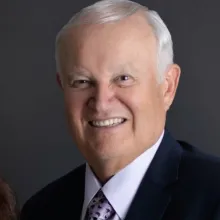
Mr. Seiglie was born in Havana, Cuba, and came to the United States when he was a child. He found out about the Church when he was 17 from a Church member in high school. He went to Ambassador College in Big Sandy, Texas, and in Pasadena, California, graduating with degrees in theology and Spanish. He serves as the pastor of the Garden Grove, CA UCG congregation and serves in the Spanish speaking areas of South America. He also writes for the Beyond Today magazine and currently serves on the UCG Council of Elders. He and his wife, Caty, have four grown daughters, and grandchildren.
