

Don Ward
This transcript was generated by AI and may contain errors. It is provided to assist those who may not be able to listen to the message.
The title today, The Three Books. The Three Books. One book is called The Book, and the other book is called A Book. And I can assure you that you want your name in both of those books. The book in one says A Book. And whether your name is written in the two books will depend on how well you're living by the third book. So the title, once again, The Three Books. So what do you think the first three books are? The first two books are. The first two books. The first two books are The Book of Life and A Book of Remembrance. The Book of Life and A Book of Remembrance. And the third book is The Book of Moses, or The Book of the Law. So let's note what Scripture has to say, first of all, about The Book of Life. And we want to note the first appearance in Scripture of what's called here God's Book, which is sometimes called God's Book, or The Book of Life. Turn to Exodus 32 and verse 32. Exodus 32 and verse 32. There's so much in the Scripture, of course, we can't ring out of it all that's in there, but just some of the high points with regard to this. So in Exodus 32 and verse 32, the context of this is the golden calf incident in which Moses went up on the mountain to receive, once again, the Ten Commandments after the tables of stone had been broken. And when he came down, he saw this pagan celebration going on. They had made a golden calf, and some were naked, and they were dancing and having a festive affair in a pagan way. And so God, of course, is not pleased with this. In Exodus 32 and verse 29, Notice, I will go up unto the Lord. It would be interesting to do a study on how many times Moses went up to the Lord, and Moses returned unto the Lord and said, All this people have sinned a great sin, and have made them gods of gold. Yet now if you will forgive their sin, and if not blot me out, blot me, I pray, you out of your book which you have written. Blot me out of your book. Blot me out of the book of life. If you won't forgive their sins, then blot me out of the book of life. Of course, that took tremendous courage to do. As you know, Moses was a mediator of the Old Covenant, and he also was an intercessor and interceded for Israel many, many times on their way to the Promised Land. And the Eternal said unto Moses, Whosoever has sinned against me, him will I blot out of my book. Therefore now go, lead the people into the place of which I have spoken unto you. Behold, mine angel shall go before you. Nevertheless, in that day when I visit, I will visit their sin upon them.
Of course, from this you can understand that God can forgive, but there still may be consequences, as we see in the next verse, and the Eternal plagued the people because they made the calf which Aaron made. So forgiveness doesn't mean that there are not consequences. So this is the first time that God's book, also known as the Book of Life, is mentioned. We can glean a lot from these two verses. We learned that Moses went boldly before God and said in everyday language, If you don't forgive these people of their sins, then bot me out of the book. He was willing to forfeit his eternal life on behalf of Israel. How many of us would do that if we were in that position? Scripture says in Numbers 12.3, so let's turn to Numbers 12.3. We'll just go ahead and begin in verse 1. In Numbers 12 and verse 1, Moses and Aaron spoke against Moses because of the Ethiopian woman whom he had married. He had married an Ethiopian woman. And they said, has the Lord indeed spoken only by Moses? Now, if you recall that Miriam was a prophetess, and so she had had God to reveal things to her. We could turn to Exodus 15, I think it's verse 20, quickly, and we could see that she was a prophetess. When they came up out of the Red Sea, she led Israel in a great victory song.
In Exodus 15, 20, Miriam the prophetess and sister of Aaron took a temporal in her hand, and all the women went out after her with timbrels and with dances. And Miriam answered them, Sing you to the eternal, for he had triumphed gloriously. The horse and his rider had the overthrown in the sea. So Miriam and Aaron held high offices in Israel, and they were criticizing Moses because he had married the Ethiopian woman. Then in verse 3, Now the man Moses was very meek above all the men which were upon the face of the earth.
Now what does that mean? He was meek above all men upon the face of the earth. When God came to Moses, when he was out in the desert, keeping sheep and first began to speak to him, the incident at the burning bush, which he heard about in the Shermanet, he said, along in the course of God asking him to lead the people out, he said, Who am I?
Who am I that I should do this? I can't speak well, they won't listen to me, and so on it goes. So he was a meek man. He had this attitude of, Who am I that I should be chosen to lead your people out of Egyptian bondage? In contrast to Aaron and Miriam, who spoke against Moses for marrying the Ethiopian woman, in their self-righteous indignation, they said, Has not God also spoken by us? In the wake of their criticism of Moses, God came down and made it clear to them who was in charge. So we continue here in verse 4, The Eternal spoke suddenly unto Moses, unto Aaron, and unto Miriam, Come out, you three, under the tabernacle of the congregation.
And the three came out, and the Eternal came down in the pillar of the cloud, and stood in the door of the tabernacle, and called Aaron and Miriam, and they both came forth. And he said, Hear now my words, if there be a prophet among you, I the Lord will make myself known unto him in a vision, and will speak unto him in a dream. My servant Moses is not so, who is faithful in all mine house.
With him will I speak mouth to mouth, even apparently not in dark sentences. And the similitude of the Eternal shall behold wherewith then were you not afraid to speak against my servant Moses. The anger of the Eternal was kindled against them, and he departed, and the cloud departed from off the tabernacle. And behold Miriam became leperous, white as snow. And Aaron looked upon Miriam, and behold she was leperous. Now notice what happens here, even in the wake of this. His brother, who is the High Priest Aaron, his sister, who is a prophetess, criticized him for marrying the Ethiopian woman.
God was not pleased at all, and he came down, and Miriam became leperous. And notice what happens. Verse 11, and Aaron appealed to Moses, Aaron said unto Moses, Alas, my Lord, I beseech you, lay not the sin upon us, wherein we have done foolishly, and wherein we have sinned.
Let her not be as one dead, of whom the flesh is half consumed, when he comes out of his mother's womb. And Moses cried unto the eternal, saying, Heal her now, O God, I beseech you. So once again, Moses intercedes, courageously goes before God, and says, Heal her now. But God had a reply, and the eternal said unto Moses, If her father had but spit in her flesh, should she not be ashamed, seven days let her be shut out from the camp, seven days, and after that let her be received again. And Miriam was shut out from the camp, seven days, and the people journeyed not, till Miriam was brought in again.
The fact that Moses was a meek man in spirit did not mean that he was not courageous. And one of the great admonitions given to the man who succeeded Moses, Joshua, was, Be of a good courage, Joshua. Be of a good courage. Be of a good courage, Joshua. So we see that Moses was a person meek above every man on the face of the earth who would stand up and intercede for the people.
Moses was a type of Christ. He was the mediator of the Old Covenant and the intercessor between God and the people. Today, Jesus Christ is the mediator of the New Covenant. He is our High Priest. He is our intercessor. And He ever lives to make intercession for us. Let's notice 1 Timothy. 1 Timothy 2 will begin in verse 1. A great admonition for us, especially in the times in which we live, because it says that we should make prayer for all men everywhere. This is a time, of course, to pray for the leaders of the land, because a nation will go eventually in the direction of its moral and spiritual leadership.
So will a state. So will a city. So will a family. And so will each one of us. In 1 Timothy 2.1, I exhort to you, first of all, supplications, prayers, intercessions, and giving of thanks be made for all men. So all of us are given a role of interceding. Interceding for all men, sighing and crying for the abominations that are upon us.
For kings and for all that are in authority, that we may lead a quiet and peaceful life in all godliness and honesty. For this is good and acceptable in the sight of God, our Savior, who will have all men be saved and to come into the knowledge of the truth. For there is one God and one mediator between God and man, the man Christ Jesus. So we look at Hebrews 7.25. We turned there recently in a sermon as well. That Jesus Christ is our intercessor, the mediator of the new covenant.
And we look now at Hebrews 7.25. Wherefore, he is able, that is, Jesus Christ, to save them to the uttermost that come unto God, by him, seeing he ever lives to make intercession for us. We have been called to a life of overcoming. We have entered into a covenant of sacrifice. We gave a sermon recently on the covenant of sacrifice, taken from Psalm 50.
We've been called to this life of overcoming and living a life of sacrifice so we might inherit eternal life. So that our name would be in the book of life. Now let's go to Revelation 3, verse 5. Revelation 3, verse 5.
This is part of the message to Sardis, one of the seven churches to whom messages were sent. As you might recall, at the proceeding at the first part of each message to the seven churches, a characteristic or characteristic plural of Christ are given. You look at this first verse here, Revelation 3.1. And unto the angel of the church and Sardis right, these things says, He that has the seven spirits of God and the seven stars, I know your works, that you have a name that you live, but you are dead. So characteristics of Christ are given at the beginning of each one of the messages. Now you look at verse 5. We shall see that overcoming is one of the central themes of the book of Revelation, especially the message to the seven churches. So let's read verse 5. He that overcomes, the same shall be clothed in white raiment. White raiment is the symbolic of the righteousness of the saints.
Be clothed in white raiment, and I will not blot out His name out of the book of life, but I will confess His name before my Father and before His angels.
Time after time in the book of Revelation, we're told that we must overcome in order to inherit eternal life. And overcoming is one of the central themes of the messages to the seven churches. In fact, it is the qualifier for receiving eternal life and the blessings that go with it. So let's look at each one of these admonitions here with regard to overcoming. First of all, to Ephesus in Revelation 2 and verse 7, we'll read in all seven of these messages, there is, He that overcomes.
So first of all to Ephesus in Revelation 2 and 7, He that hath an ear to hear, let him hear what the Spirit says unto the churches. To him that overcometh, every reward is prefaced by to him that overcometh. And we read Revelation 3.5, to him that overcometh, I will not blot his name out of the book of life. To him that overcometh will I give to eat of the tree of life, which is in the midst of the garden or the paradise of God.
Now to Smyrna in verse 11, He that hath an ear, let him hear what the Spirit says unto the churches. He that overcomes shall not be heard of the second death. Of course, we'll read Revelation 20 later on, which says that if you are cast, everyone whose names are not written in the Lamb's book of life will be cast into the lake of fire, which is the second death.
In verse 17, a message to Pergamos, Revelation 2.17, He that hath an ear, let him hear what the Spirit says unto the churches. To him that overcomes will I give to eat of the hidden manna, the hidden manna. I gave a sermon on the hidden manna one time. Look at that, see if you can discern what the hidden manna is. And we'll give him a white stone, and in the stone a new name written, which no man knows, except he that receives it.
Then in verse 26, to Thyatira, He that overcomes and keeps my works, and to the end to him will I give power over the nations, and he shall rule them with a rod of iron as vessels of a potter. Shall they be broken to shivers even as I received my father? Then in Revelation 3.5 we've already read once, we'll read it again.
Overcoming, you can see that every church and the reward is preceded by He that overcometh. Revelation 3.5, He that overcomes, the same shall be clothed in white raiment. And I will not blot out His name out of the Book of Life, but I will confess His name before my father and before His angels for Philadelphia. Revelation 3.12, quite a verse. You ought to read it, meditate on it, think about it. What does it really mean? What does it really say? Perhaps we just gloss over it. Verse 12, And then in verse 21, The Laodicea, what does Laodicea get?
What is it prefaced by? In verse 21, Revelation 21, verse 7, The Laodicea describes the New Jerusalem, and Jerusalem, once again, in the special music. In Revelation 21.7, He that overcomes shall inherit all things, and I will be his God, and he shall be my son. Now I notice verse 27, And there shall in no wise enter into it anything that defiles New Jerusalem. Neither whatsoever works abomination or makes a lie, but they which are written in the Lamb's Book of Life.
The key to overcoming is to live by faith. We notice this in 1 John 4, verse 4. So to overcome, according to this verse we're about to read, you have to have faith. We want to talk about faith here for just a moment in conjunction with this in 1 John 4, verse 4. In 1 John 4, verse 4, You are of God, little children, and have overcome them, because greater is he that is in you than he that is in the world. There in the world, therefore speak thee of the world, and the world hears them.
And so we must have Jesus Christ in us in order to overcome. And then you look at chapter 5, verse 4. For whosoever is begotten of God overcomes the world, and this is a victory that overcomes the world, even our faith. Who is he that overcomes the world? But he that believes that Jesus is the Son of God. So Christ in you, the hope of glory, living by faith. In simplest terms, what is the definition of faith? In simplest terms, the definition of faith is to believe God and do what he says.
Believe God and do what he says. In Abraham, the father of the faithful is the example that is given in Romans 4. Now let's look in James 2, and we'll see how Abraham became the father of the faithful as a part of it. And of course, as one of the greatest tests of all, he was commanded to sacrifice his son, the son of promise, Isaac. In James 2, verse 20.
In James 2, verse 20. But will you know, vain man, that faith without works is dead? Was not Abraham, our father, justified by works when he had offered Isaac his son upon the altar? God said, go under with your son, take him and sacrifice him before me. And Abraham obediently went, Isaac obediently went, Isaac a type of Christ. Isaac said, where is the offering, father? And Abraham said, God will provide. And as the knife came down, the voice cried out, stop, and they saw a ram caught in the thicket. Was not our father Abraham justified by works when he had offered Isaac his son upon the altar?
Seeing you how faith wrought with his works and by works was faith made perfect. How is faith made perfect by doing what God says to do? You may say you have faith, but show me your faith by your works. And the scripture was fulfilled which said, Abraham believed God and it was accounted or reckoned unto him for righteousness. It was not imputed in the sense of something about, well, the righteousness of Christ is imputed to us sort of in a magical way.
The word has to do with reckon laid to your account. It was reckoned unto him for righteousness and he was called the friend of God. You see then how by works a man is justified and not by faith only. You can't just say, oh, I believe. It must be accompanied with the obedience and doing what God says to do. Now we go to the Old Testament again in Daniel 12. The prophet Daniel wrote of the Book of Life in Daniel 12.
As we turn there, we rehearse about faith. See, you're not going to be in the Book of Life if you don't repent of your sins, exercise faith in the sacrifice of Christ, be baptized, receive the laying on of hands. That's how you get your name in the Lamb's Book of Life. And so the prophet Daniel, he writes of the Book of Life in the time of the resurrection. If we're going to be in the resurrection, of course we have to live the life of faith. In Daniel 12, verse 1, And at that time, what time? It's the time of the end. And at that time, Michael shall stand up upon, or shall stand up, the great prince, which stands for the children of your people.
There shall be a time of trouble, such as never was since that was, even since a nation, even since the same time. There was a nation, even to the same time. And at that time, your people shall be delivered. Everyone shall be found, written in the Book of Life. Everyone that has their names written in the Book of Life will be resurrected.
Obviously, if your name is not written in the Lamb's Book of Life, you will be resurrected to judgment at a different time. And many of them that sleep in the dust of the earth shall awake, some to everlasting life, and some to shame and everlasting contempt. And they that be wise shall shine as the brightness of the firmament, and they that turn many to righteousness as the stars forever and ever. But ye, O Daniel, shut up the words and seal the book, even to the time of the end.
Many shall run to and fro, and knowledge shall be increased. And we talked about that last week, from the time that the abomination and desolation is placed, there shall be 1290 days. Blessed is he who comes to the 1335 days. If your name is not written in the Book of Life, you will be deceived by Satan, the Beast, and the False Prophet.
Look at Revelation 13.8. We also read this last week. Revelation 13 and verse 8. And all that dwell upon the earth shall worship him whose names are not written in the Book of Life of the Lamb, slain from the foundation of the world.
Everyone whose names are not written in the Lamb's Book of Life. The deception that is coming will be so great that if it were possible, the very left would be deceived, as we will read in just a moment. Now we look at 2 Thessalonians 2 and verse 10 about this deception, and the one who sits there in 2 Thessalonians 2. Verse 3, Let no man deceive you, by any means, for that day shall not come, except there come an apostasia of false teaching first. And that man of sin be revealed, a sin of perdition, who opposes, exalts himself above all that is called God, or that is worshipped, so that he as God sits in the temple of God. In Revelation 13, the first few verses, we see that he gets his power and authority from Satan the devil. In fact, it seems that he is possessed by Satan the devil in the temple of God, showing himself that he is God. Now you look at verse 9, The last of them whose coming is after the working of Satan, with all power and signs and lying wonders, with all deceivableness of unrighteousness in them that perish, because they receive not the love of the truth. How are you going to avoid being deceived by loving the truth? Making sure that your name is written in the Lamb's Book of Life, because they receive not the love of the truth that they might be saved. And for this cause, God shall send them strong delusion. God shall send it because they didn't love the truth. They slumbered and slept as five of the ten virgins did in Matthew 24. They were not really with it, as they say.
And for this cause, God shall send them strong delusion that they should believe the lie. A is not a...you don't find the indefinite article. The lie is Satan, through the beast power, saying that Christ has come. There's one sitting in the temple. They fall for it. Everyone whose names are not written in the Lamb's Book of Life will be deceived and worshiped the beast. That they all might be damned, who believe not the truth, but had pleasure in unrighteousness. Now we look at Matthew 24, verse 15. At the time, this great deception, and this one sitting here, who places the abomination that makes desolate, spoken of by Daniel the prophet, in Daniel 11. Daniel, in Matthew 24, in verse 15, When you therefore shall see the abomination of desolation spoken of by Daniel the prophet, stand in the holy place, so close, mean a place marked off, set aside the holy place, whosoever reads, let him understand. Look at verse 23.
A miracle. You remember that the ones of Pharaoh's witchcraft people, the magicians, were able to duplicate the miracles that were performed by Moses and Aaron. Of course, God did them through them. And shall show great signs and wonders insomuch that if it were possible, they shall deceive the very elect. So we can ask ourselves, is my name written in the Book of Life?
We've given a brief overview of some of the main verses with regard to the Book of Life. There are other verses, but here are the main ones. So, is my name written in the Book of Life? Is your name written in the Book of Life?
So now let's focus on the Book of Remembrance. The Book of Remembrance is noted in Malachi, and we once again reiterate, if you go to Malachi, we're going to read, first of all, a verse out of chapter 2, a little bit of a backdrop to Malachi. Of course, Malachi was the last of the prophets. He wrote somewhere around 420 B.C. The word Malachi comes from the Hebrew word malak, which means messenger. The word malak can refer to a human being or to a divine being.
There are five messengers mentioned in Malachi. Malachi himself, the priest, John the Baptist, Jesus Christ, and Elijah to come. Malachi is written as a dialogue, but it is a monologue. That seems like a contradiction. By that I mean that one person, and the person is God who is inspiring the words of Malachi. He is inspiring Malachi to write, and Malachi then is writing it in the form of a dialogue, in other words, two people. Verse 2 will illustrate. Malachi 1-2, I have loved you, who says the eternal, yet you say.
So this goes back and to between what God says and what they say. But God is the one doing all of the talking. In Malachi 2-17, the great rhetorical question of Malachi, you have weared the Lord with your word, yet you say. Worrying have you weared him when you say. Everyone that does evil is good in the sight of the Lord, and he delights in them, or when or where is the God of judgment.
So the great rhetorical question of Malachi is, where is the God of judgment? So all of these things, corrupt things, are going on, and some people are crying out, well, where is the God of judgment? When is God going to set everything right? And then chapter 3, in essence, gives the answer, and it first of all goes to the ultimate answer, and that is Jesus Christ and that great prophecy here in Malachi 3-1. In Malachi 3-1, behold, I will send my messenger, Malak, and he shall prepare the way before me. That messenger is John the Baptist, as we'll see from Mark 1 in just a moment.
He shall prepare the way before me, says the Eternal, I'm sorry, he shall prepare the way before me, and the Eternal, whom you seek, shall suddenly come to his temple. Even the messenger, the Malak of the covenant, and that is Jesus Christ, whom you delight in, behold, he shall come, says the Eternal Host. But who may abide in the day of his coming, and who shall stand when he appears? So it shows about him coming and refining. Now we go to Mark 1 and verse 1. We'll be coming back to Malachi if you want to hold there. In Mark 1, we see the beginning of the fulfillment of that prophecy very clearly here in Mark 1 and verse 1.
The beginning of the gospel of Jesus Christ, the Son of God, as it is written in the prophets, Behold, I send my messenger before your face, which shall prepare the way before you. The voice of one crying in the wilderness, prepare you the way of the Lord, make his paths straight.
So Jesus came proclaiming the gospel of the kingdom of God. John the Baptist prepared the way. You're looking later here in this chapter, verse 14. Now after that John was put in prison, Jesus came into Galilee, preaching the gospel of the kingdom of God, and saying, The time is fulfilled. The kingdom of God is at hand. Repent you and believe the gospel. And so Jesus Christ is the ultimate answer to the question of, where is the God of judgment? Now look at Isaiah chapter 11. We note the words of the prophet Isaiah. So Jesus came proclaiming the kingdom of God when justice and righteousness shall fill the earth.
Many of the prophets write about the justice that is going to be administered in the kingdom of God. Here in Isaiah chapter 11 we get a prophecy showing that Jesus Christ will judge righteous judgment and administer the government of God in the kingdom of God. In Isaiah 11, verse 1, There shall come forth a rod out of the stem of Jesse, and a branch shall grow out of his roots. That branch is Jesus Christ. And it talks about that in Zechariah chapter 3 and also Zechariah chapter 6. And the Spirit of the Eternal shall rest upon him, that is, this branch of Jesus Christ. And the Spirit of the Eternal shall rest upon him, the Spirit of wisdom and understanding, the Spirit of counsel and might, the Spirit of knowledge and the fear of the Eternal, and shall make him of quick understanding and the fear of the Eternal.
And he shall not judge out of the sight of his eyes, neither reprove after the hearing of his ears, but with righteousness shall he judge the poor and reprove with equity for the meek of the earth. And he shall smite the earth with the rod of his mouth and with the breath of his lips, and he shall slay the wicked. You get an account of that in Revelation 19. When Jesus Christ and the armies come through the sword of his mouth, he smites the nations.
And righteousness shall be the girdle of his loins, and faithfulness the girdle of his reins. The wolf also shall dwell with the lamb, and the leopard shall lie down with the kid. And the calf and the young lion and the fatman together and a little child shall leave them. And so we come into the millennial setting in which righteousness reigns.
But it began with this fulfilling of this prophecy. So the future, in responding to the people that time, gave this prophecy. But we go back to Malachi chapter 3 and 4, them of that time, and also the prophecy moves to us in our time in chapter 3. So this question, once again, rhetorical question is, where is the God of Judgment? So where is the God of Judgment? Where is the God of Judgment right now?
The God of Judgment is where he's always been. He's on his throne in the third heavens. And it's not to say that he does not pervade the universe.
Malachi 3.6, For I am the Eternal, I change not. Therefore, you sons of Jacob are not consumed. In other words, if God were to administer judgment right now to them or to us, we would be consumed. But through his love and mercy, he's provided a Redeemer, one who goes in our place, a propituation. He goes in our place, and we can have our sins remitted.
Even from the days of your fathers, you're gone away from mine ordinances and have not kept them. Returning to me, I will return, and you say, as the Eternal Host, but you say, Where in shall we return? In other words, what have we done? It's so terrible. And then God begins to tell them, robbing and tithes and offerings and other things that they have done. And then the prophecy shifts to the end times.
Verse 13, Your words have been stout against me, says the Eternal, yet you say, What have we spoken so much against you? You have said it is vain to serve God, and what profit is it that we have kept His ordinance, and that we have walked mournfully before the Eternal Host? And now we call the proud happy, yes, they that work wickedness are set up, yea, they that tempt God are even delivered. Then, when that's going on, people murmuring, complaining, saying, Where is the God of Judgment? and all of that kind of thing. Then, verse 16, Then they that feared the Eternal spoke often one to another, and the Eternal hearkened and heard it, and a book of remembrance was written before him for them that feared the Eternal and thought upon His name. So we can ask ourselves, Am I in the book of remembrance? Are you in the book of remembrance? Is our name written there? And will it continue to be there? And they shall be mine, says the Eternal of Host, in that day when I make up my jewels. That day is a prophetic utterance that generally indicates at the beginning of the millennium when the rewards are offered. They shall be mine, says the Eternal of Host, in that day when I make up my jewels, and I will spare them as a man spares his own son that serves him. Then shall you return and discern between the righteous and the wicked, between Him that serves God and Him that serves Him not. And of course, the lines between right and wrong have been so blurred in our world at the present time that even the prophecy and the prophet Isaiah cries out in chapter 5, Ode to them that call evil good and good evil. So we can ask ourselves, Is my name written in the Lamb's Book of Life? So where is the God of Judgment right now? Well, He's where He's always been, long-suffering, merciful, not willing that any should perish.
Now the third book.
We have looked at the Book of Life, a book of remembrance. Now the third book. The third book is the Book of the Law. How well we apply God's immutable spiritual law will, to a large degree, determine whether we are in the first two books. How well we apply God's immutable spiritual law will determine, to a large degree, whether we're in the Book of Life and whether we are in the Book of Remembrance. On the day of Pentecost, when 3,000 people were baptized into the New Covenant Church of God, at that time what we call the New Testament Scriptures did not exist. Note the words of Paul to the young evangelist Timothy. Let's go to 2 Timothy. 2 Timothy 3, verse 15. 2 Timothy 3, verse 15.
2 Timothy 3, verse 15. And that from a child you have known the Holy Scriptures, which are able to make you wise unto salvation through faith, which is in Christ Jesus. Now they basically only had the Old Testament. But there are many Messianic prophecies. And of course, on the day of Pentecost and after the day of Pentecost, they were preaching Christ and Him crucified how sins can be remitted, how you can be justified, how you can receive forgiveness, how you can receive the Holy Spirit. All Scripture is given by inspiration of God and is profitable for doctrine, for reproof, for correction, for instruction in righteousness, that the man of God may be perfect, thoroughly furnished unto all good works. So we have our handbook of how to live. The Word of God. Now through the book of Acts, the general epistles, Paul's epistles, and the book of Revelation, through all of that and the Gospels, we know much more than the brethren knew on the day of Pentecost, 31 A.D. They had the Old Testament, the scrolls, the Old Testament. But as Jesus taught and as the Church of God has taught through the ages, the immutable spiritual law of God is eternal. When Jesus faced the three great temptations from Satan the Devil, He repelled each temptation of Satan with the Word of God. Let's look at that, Matthew 4. We want our names in the book of life. We want our names to remain in the book of life. We want our names in the book of remembrance.
Jesus, after He was baptized, was led away into the wilderness to be tested and tried by Satan the Devil, and three great temptations are recorded here in Matthew. With each temptation, notice the response.
In Matthew 4, verse 4, Satan said, If you be God, turn these stones into bread. Matthew 4, we quote very often, but he answered and said, Man shall not live by bread alone, but by every word that proceeds out of the mouth of God.
The book of the law, the book of Moses. In this case, I'm using it in the generic sense, for all of the Word of God. Verse 6, Satan tempted him, saying, Jump off the pinnacle, God, I'll pick you up. Verse 6, he said, And to them, if you be the Son of God, cast yourself down, for it is written, He shall give his angels charge concerning you, and in your hands they shall bear you up, lest at any time you dash your foot against the stone. Jesus said unto him, It is written again, you shall not tempt the Lord your God. And then, perhaps the greatest temptation was to offer him the kingdoms of the world. If he would bow down, that is, if Jesus would bow down and worship Satan, verse 10, Then Jesus said unto him, Get you hence, Satan, for it is written, You shall worship the Lord your God, and him only shall you serve. We especially note Matthew 4, 4, over and over again, Man shall not live by bread alone, but by every word that proceeds out of the mouth of God. When the rich young ruler came to Jesus asking him, What must he do in order to receive eternal life? What did Jesus say? Look at Matthew 19, verse 16. Matthew 19, verse 16.
This is very important. Do you hear the words of Jesus Himself?
Matthew 19, verse 16.
And behold, one came and said unto him, Good Master, what good thing shall I do that I may have eternal life? How do I get my name in the Book of Life? Are you going to write a book of remembrance about me? And he said unto him, Why call you me good? There is none good but one that is God. But if you will enter into life, keep the commandments. And the rich man said, Which? And Christ enumerated some. And this man said, Well, I've done this from my youth. And Christ said, Then if you'd be perfect, go sell everything you have, and give it to the poor, and the young man went away sorrowful. He cannot rend his goods, much less his heart. Now we go back to the Book of Malachi. In this prophecy, we have repeated over and over again the past several decades in the Church of God, Matthew 4, 4, every word of God, Malachi 4 and verse 4, the Book of the Law. Remember the Law of Moses, my servant, which I commanded unto him in Horeb, that is, Mount Sinai, for all Israel, with the statues and judgments. Behold, I will send you, Elijah the prophet, before the coming of the great and dreadful day of the Lord, and he shall turn the heart of the fathers to the children. The heart of the children of the fathers, lest I come and smite the earth with utter destruction. The Church of God understands the immutable spiritual law of God. It understands that it is not done away with. That's one of the great understandings that was restored in the Church of God and has been restored. And we understand Isaiah 42, verse 21. It says that Jesus Christ will come and magnify the law and make it honorable. So Jesus Christ came and he taught us the spiritual intent of the law, along with the other New Testament writers. Let's note what the Scripture has to say in Psalm 19, verse 7, with regard to God's immutable spiritual law. In Psalm 19, verse 7, Jesus said, if you would enter into life, you must keep the commandments. What is implied by that? The implication is you have to repent of breaking God's immutable spiritual law. On the day of Pentecost, the apostle Peter stood up and said, that, repent, be baptized, and you shall receive the gift of the Holy Spirit. What do you repent of? You repent of breaking God's immutable spiritual law. What is sin? Sin is the transgression of the law. In verse 3 and 4, here we see in Psalm 19, verse 7, the law of the eternally is perfect. Converting the soul, the testimony of the Lord is sure, making wise and simple the statues of the Lord are right. Rejoishing the heart, the commandment of the Lord is pure, enlightening the eyes. The fear of the Lord is clean and enduring forever. The judgments of the Lord are true and righteous altogether. More to be desired than gold, yes, than much fine gold, sweeter also than honey in the honeycomb. A perfect law of God. Look at Romans 7.
A book of the law, the whole word of God. Man shall not live by bread alone by every word that proceeds out of the mouth of God. Whether your name is in the last book of life or the book of remembrance will to a large degree depend on how you apply the immutable spiritual law of God. In Romans 7, verse 10, And the commandment which was ordained to life I found to be unto death. Why? Because the wages of sin is death, but the gift of God is eternal life through Jesus Christ our Lord. For sin, taking occasion by the commandment, deceived me, and by it sin slew me. Because the wages of sin is death. That is a law. Wherefore the law is holy, and the commandment holy, just, and good. Was then that which is good made death unto me? God forbid. But sin, it wasn't the law, it was sin that it might appear sin. Working death in me by that which is good. That sin by the commandment might become exceeding sinful. For we know that the law is spiritual, but I am carnal sold under sin. So let's note what Moses instructed, what God instructed Moses to do after that. He had written the book of Moses, the book of the law, in Deuteronomy chapter 31. I would encourage you sometime, I think this is the second time I've said this within recent months, to really read and study the last four or five chapters of Deuteronomy. I think you will be amazed at what you will see there. A lot of prophecy there, even for the end times. In Deuteronomy 31, verse 24, It came to pass when Moses had made an end of writing the words of this law in a book, until they were finished, that Moses commanded the Levites, which bear the ark of the covenant of the Lord's saying, Take this book of the law, put it in the sight of the ark of the covenant of the eternity of God, that it may be there for a witness against you. For I know your rebellion and your stiff neck. Behold, while I am yet alive with you this day, you have been rebellious against the eternal, and how much more after my death.
And so the book of the law was placed there in the ark of the covenant. Now we notice Hebrews 8, verse 6. What does that mean for us today? Here is such an astounding part that I wish that we could all get this. I taught it at Ambassador for the last several years there, and have mentioned it often. It is quite simple, a mistranslation here in Hebrews 8-6, speaking of the new covenant. But now hath he obtained a more excellent ministry, that is Jesus Christ, by how much also he is the mediator of a better covenant, which was, and the King James says, established upon better promises. Now that word that is translated, established there, is nomenothaio. I just say nomenothaio, but it's nomenothaio. Nomenothaio? Say that a few times. Here is Strong's definition. Laws that are enacted or prescribed to be legislated, to be furnished with laws, to sanction by law. And so this should read, But now hath he obtained a better, a more excellent ministry, by how much also he is the mediator of a better covenant, which was furnished with law upon better promises. The new covenant is furnished with law. Look at verse 10. For this is the covenant that I will make with them. After those days, says the Eternal, I will put my laws into their mind. It will not be written on a piece of paper and put in a body made for the tables of stone and for the words of the covenant and Aaron's pot of manna that budded, not in the ark of the covenant. I will put my laws into their mind and write them into their hearts, and I will be to them a God, and they shall be to me a people. And in chapter 10, a similar thing is said. Chapter 10, verse 15, Whereof the Holy Spirit also is a witness to us, after that He has said before, This is the covenant that I will make with them after those days, says the Eternal, I will put my laws into their hearts and in their minds, and I will write them, and their sins and iniquities will I remember no more. See, we have a new knowing within. We have a new conscience, and through the sacrifice of Christ, we can live in the Holy of Holies, as He says here.
Verse 19, Having therefore, brethren boldest, to enter into the holiest by the blood of Jesus by a new and living way, which He had consecrated for us through the veil, you know, the veil was rent when Jesus died, making it possible to enter into the Holy of Holies, that is to say, through His flesh, and having a high priest over the house of God, let us draw near with a true heart and full assurance of faith, having our hearts sprinkle from an evil conscience, and our bodies watch with pure water. So, brethren, we have briefly looked at three books.
So much more could and should be said about these three books. The Book of Life, the Book of Remembrance, and the Book of the Law, also called the Book of Moses. So, once again, we must ask ourselves, is my name written in the Book of Life? Is my name in the Book of Remembrance? And am I living by every word that proceeds out of the mouth of God?
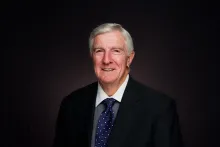
Before his retirement in 2021, Dr. Donald Ward pastored churches in Texas and Louisiana, and taught at Ambassador Bible College in Cincinnati, Ohio. He has also served as chairman of the Council of Elders of the United Church of God. He holds a BS degree; a BA in theology; a MS degree; a doctor’s degree in education from East Texas State University; and has completed 18 hours of graduate theology from SMU.
