

Don Ward
This transcript was generated by AI and may contain errors. It is provided to assist those who may not be able to listen to the message.
The title of the Bible study, God's Messengers. We will mainly focus on the book of Malachi. If you would, turn to the book of Malachi. Malachi is one of the richest books in the entire Bible because of the many aspects that are contained therein, the many lessons. Of course, we can't bring out everything that's there. The name Malachi comes from the Hebrew word malach. I would ask you to write at least these few things down because these would be very important germane to what we're going to talk about today. You need to view yourself as one of the messengers of God. Paul writes to the Corinthians and says, now you are ambassadors for Christ and ministers of reconciliation. So you, no matter whether you hold an office in the church, no matter what your station is in the congregation, you are one of God's messengers. God has called you out to represent Him in this age at this time. So the name Malachi is derived from the Hebrew word malach. Here's the interesting thing about malach. Malach can refer to a spirit being or a human being. Oftentimes, the Hebrew word malach is translated messenger. So especially those two important points, it can refer to a spirit being, it can refer to a human being, and it is oftentimes translated messenger. The equivalent of malach in the New Testament is the Greek word angelos. A-G-G-E-L-O-S. The G-G in Greek has this en sound, so when this is translated into English, they spell angel with an N. A-N-G-E-L. Los Angeles, supposedly the city of angels. So angelos is the same as malach in the sense that it can refer to a spirit being or a human being, and it is often translated as messenger. So malachai literally means the name my messenger.
The book of malachai paves the way for the transition from the old covenant to the new covenant. Very important prophecy that we'll talk about later. In fact, you will see the introduction of one of the greatest prophecies of all time. One of the great and last messianic prophecies in the Old Testament is found in the book of malachai.
The time setting for malachai is thought to be somewhere between 460 and 420 BC. Malachai was the last of the Hebrew prophets, and so Israel goes about, and more specifically Judah, goes for 400 years without a prophet on the scene. The next great messenger to come after malachai is John the Baptist, and he's prophesied here in malachai. Let's talk about now the literary style of malachai. Malachai is a monologue written in the form of a dialogue. What do I mean by that? Monologue is one person is doing the talking. In this case, God is the spokesman. God is the one who is doing the talking and is doing it through his messenger, malachai. It is a monologue, but it's written in the form of a dialogue. Dialogue means two people talking. For example, in Malachai 1-2, I have loved you, says the Eternal. Remember, God is the spokesman. It's a monologue. Then he gives the people's part. Yet you say, wherein have you loved us, was not Esau Jacob's brother, says the Eternal, yet I loved Jacob. Look at verse 7. You offer polluted bread upon mine altar, and you say, and you say, wherein have we polluted you, in that you say, the table of the Eternal is contemptible. So you get the idea now of a monologue. God is doing the talking, and he gives what the people are saying. Now the people are not literally saying this in every case per se, but through their actions and what they're doing, that's what they're saying. Verse 13, but you have profaned it in that you say, the table of the Eternal is polluted. How were they saying that? By their actions. And the fruit thereof, even the meat, is contemptible. You said also, now listen to this, behold what a weariness it is, and you have snuffed at it, says the Eternal of Host, and you bought that which was torn, and the lame, and the sick. Thus you brought an offering. Should I accept this of your hands, says the Eternal, so they were instead of bringing the best of the flock, they were bringing those the injured and the sick of the flock to offer as a sacrifice. And one of the great rhetorical questions, and the greatest rhetorical question perhaps in this book, is Malachi 2.17. You have weared the Eternal with your words. Notice this, yet you say, wherein have we weared him? When you say, everyone that does evil is good in the sight of the Eternal, and he delights in them. Or, where is the God of Judgment? Look at all the things that are going on in this nation. Look at all the things that are going on in the church. And where is God in all of this? Why doesn't God just step in and stop it all?
Then in chapter 3, verse 13, your words have been stout against me, says the Eternal. Yet you say, what have we spoken so much against you? You have said, it is vain to serve God, and what profit is it that we have kept His ordinance and we have walked mournfully before the Eternal Host? In other words, I'm doing everything that you've asked me to do, and look at me. Look at my life. Whatever it might be, I'm sick, I'm in bad health, I have this problem, I have that problem, and yet I'm trying to serve you. Why won't you bless me? So you get the flavor here of what it's about, monologue written in the form of a dialogue. Now let's highlight the messengers in Malachi. There are five messengers that are mentioned in Malachi. We're going to highlight these five messengers, and then we're going to focus on a bit of in the historical sense of the messengers. In Malachi 1-1, the first messenger is Malachi himself. Malachi 1-1, the burden of the word of the Eternal to Israel by Malachi. So Malachi is the messenger who is bringing this message and is preserved for us today. Now the next messenger is identified in Malachi 2-7.
We're going to read 2-1 to begin with, because chapter 2 to a large degree is directed toward the priest. And now, O priests, this commandment is for you.
In verse 7, for the priests' lips should keep knowledge, and they should seek the law at his mouth, for he is the Malak, the messenger of the Eternal Host. So that's the second messenger. Now we go to chapter 3 in the first verse. Behold, I will send my Malak. Now in the first case, the messenger here is a human being. In the second case, Jesus Christ came in the flesh, as we shall read in just a moment, but he is also divine. In Malachi 3-1, Behold, I will send my Malak, my messenger, and he shall prepare the way before me. That's John the Baptist, and we'll see later and more in detail. He shall prepare the way before me.
And the Eternal whom you seek shall suddenly come to his temple, even the Malak, the messenger of the covenant whom you delight in, and that is Jesus Christ, behold, he shall come, says the Eternal Host. So John the Baptist, the third messenger, Jesus Christ, the fourth messenger. And then we go to Malachi 4 in verse 5. Behold, I will send you Elijah the prophet before the coming of the great and dreadful day of the Lord. So the five messengers are identified in Malachi, Malachi himself, the priest, John the Baptist, Jesus Christ, and Elijah. From a historical perspective, we go all the way back to the Garden of Eden, the creation of Adam and Eve. Adam, of course, was to be God's messenger on earth, and Eve, his help-meet, was also to help him in that. And all human beings, whether they be male or female, God desires for them to be eventually his messengers, his representatives, his ambassadors to the world. So Adam and Eve had the opportunity to be God's messengers for good upon the earth, but they rejected God and ceased to be his messengers, and they were cast out of the garden. Abel is listed as one of the faithful in Hebrews 11, the second son of Adam and Eve. Then, in Genesis 5, we see two of God's faithful messengers catalogued, and these two messengers are Enoch and Noah. Enoch and Noah. Enoch walked with God for 300 years, and Noah was on the scene for 120 years, according to Genesis 6. Then after Noah, the next messenger that is specifically mentioned is Abraham. Now, a lot of people talk about, Shem probably played a great role in this transition period between the flood and the calling out of Abraham, because, of course, Abraham is descended from Shem.
Then Isaac, then Jacob, the nation of Israel. Then God raised up prophets, raised up the judges, and he also, after they entered into the land of promise, raised up the priesthood. So you see these messengers from the Garden of Eden. Abel was righteous, listen to Hebrews 11. See, Enoch walked with God for 300 years. Noah was on the scene for 120 years. Shem probably filled in the interim period. It's, according to legend, Shem killed Nimrod and chopped his body up into little pieces, and shifted across the known world and said, if you don't turn from your idolatry, this is what's going to happen to you. And so Babylonian mysticism and paganism went underground to a large degree after the flood. Then Noah, I'm sorry, then Abraham is called out, and he has given the blessing. Through your seed, all the nations of the earth will be blessed. And what is that seed? That seed is Christ. Galatians 3, 15, and 16. And then the promises were passed from Abraham to Isaac to Jacob. And then the Bertharite promises to Israel and the Scepter to Judah. And the priests were on the scene serving as the messengers we read from Malachi 2.7. Then John the Baptist, and Jesus Christ, and then the apostles, and then all of the people from circa 2000 to the present time. And here we sit as ambassadors for Christ and messengers in that long, tenuous line that God has ordained to preserve His truth. The greatest messenger of the Old Testament was the Word, the One who became Jesus Christ. I want us to really focus on this and really understand this. Look at 1 Corinthians 10 and verse 1. 1 Corinthians 10 and verse 1. 1 Corinthians 10 verse 1. Moreover, brethren, I would not that you should be ignorant have that all our fathers were under the cloud and all passed through the sea, and were all baptized unto Moses in the cloud and in the sea, and did all eat the same spiritual meat, and did all drink the same spiritual drink, for they drank of that spiritual rock that followed them, and that rock was Christ. So the One who became Jesus Christ was on the scene, leading Israel into the Promised Land. The greatest messenger in the Old Covenant was the One who became Jesus Christ. The greatest messenger in the New Testament and under the New Covenant is Jesus Christ. We go now to Hebrews chapter 1 and verse 1. Hebrews 1 verse 1. In Hebrews 1 verse 1, God, who at sundry times in a different ways spoke in times past unto the fathers by the prophets, hath in these last days spoken unto us by his son. The word was made flesh and dwelt among us. John 1.14.
Hath in these last days spoken unto us by his son, whom he hath appointed heir of all things, by whom also he made the worlds. Now let's see how Jesus Christ led Israel into the Promised Land. You must clearly understand that the words that we talked about at the beginning, the Hebrew word malak and the Greek word angelos, that each of these words can refer to a human being or they can refer to a divine being. So who led Israel to the Promised Land? There have been certain ones who claim that the one who became Jesus Christ was a created being based on a few titles of the one who became Jesus Christ in the Old Testament. There's one in Australia who teaches that there was the counsel of the gods, the Elohim, and that these were created beings. Jesus Christ was like the chief of the Elohim, and he was the one who came to the earth. There was a man in the early days of nominal Christianity named Arius who taught that Jesus Christ was a created being, and that doctrine is called Arianism. The Jehovah's Witnesses basically teach that the archangel Michael is the one who became Jesus Christ, a created being.
See, if God could create gods as he is God just by the act of fiat, then it wouldn't be a family relationship, per se. If we understand that for a family relationship to exist, there has to be the Begettle and birth. The plan of salvation that God and the Word worked out was so awesome. We can try to explain it to some degree, and to some degree we can, that this one who existed in eternity, it says in Hebrews 7 verse 3 that he is without father, without mother, without descent, without beginning or end of days. This one who is of the order of the priesthood of Melchizedek, Jesus Christ. So he gives up his station, his glory, and he comes to the earth and takes on the form of a man, and dies then because he is the Son of God. He is worthy to pay for the sins of the whole world. So that we can receive the divine essence from the Father, and through a process of Begettle, and then birth at the resurrection into the family of God, so that we are, quote, literal sons of God out of the very loins of you use a human analogy, just as we're out of the loins of our parents. And if you say then that the one who became Jesus Christ is a created being, then you take all of that away. Because Jesus Christ is a forerunner of our salvation. He is a firstborn among many brethren. Let's go down to Exodus 7. I think that is, I don't want that. I think I want Exodus 13. In Exodus 13, who led Israel to the Promised Land? We have read from 1 Corinthians 10-4, and the rock they followed was Christ. Does the Old Testament agree with the New Testament? Is the one who led them, the one who became Jesus Christ?
In Exodus 13, verse 17, it came to pass when Pharaoh had let the people go that God led them not through the way of the land of the Philistines, although that was near. That's way up north, sort of rimming the edge of the Mediterranean Sea. That was way, way shorter and way, way easier in the way God led them. God led them not through the way of the land of the Philistines, although that was near. For God said, let's per adventure, the people changed their mind when they see war and they returned to Egypt. So he led them in a way in which I'm not going to go back home tonight. When I was five years old, we were living about a mile and a half, I guess, by the road, maybe longer than more than that, for my grandparents. And I asked Mother, I said, well, I want to go spend the night with grandparents. Now, I'm five years old. Listen, five years old. And there was a shortcut through the woods, about a half mile through the woods. So I put my little stuff in a brown paper bag and I went through the woods. We got to Grandmother and Grandpa's house. We call them Papo and Memo. Oh, somewhere probably around 334 o'clock. Man, I messed around there a little. I like to go there. They had interesting things. I can meddle in their drawers and pull out different stuff and so on. And so, but as it got later in the day, I began to think, I don't want to be here tonight. Someone go back home. So I didn't even tell my grandparents I was leaving. I just slipped off and went back through the woods to the house. So God said, I'm not going to let Egypt do that. Not Egypt, Israel. They're not going to be able to return to Egypt.
Verse 18, But God led them, the people about through the way of the wilderness of the Red Sea, and the children of Israel went up harnessed out of the land of Egypt, meaning that they were orderedly, that they were probably in some kind of marching formation. Moses took the bones of Joseph with him, for he had straightly sworn the children of Israel, saying, God will surely visit you, and you shall carry up my bones away from here with you. And they took their journey from Succoth and encamped in Ethan at the edge of the wilderness, and the Eternal went before them by day, and a pillar of a cloud to lead them the way, and by night in a pillar of fire to give them light to go day and by night. That's what God did. He took not away the pillar of the cloud by day, nor the pillar of fire by night from before the people. And you can read the last few verses of Exodus, where when they raised up the tabernacle in the wilderness, that the glory of God filled that tabernacle, and they didn't move unless the cloud moved or the pillar of fire moved. Maybe we ought to turn there and read that. You turn to Exodus 40. Exodus 40. And verse 33, they reared up the court round about the tabernacle, and they set it up. Moses finished the work. Verse 34, Exodus 40. 34, then a cloud covered the tent of the congregation, and the glory of the Eternal filled the tabernacle. And Moses was not able to enter into the tent of the congregation because the cloud abode thereupon, and the glory of the Lord. The glory of the Lord means God's presence. God's presence filled the tabernacle. And when the cloud was taken up from over the tabernacle, the children of Israel went onward on all their journeys. But if the cloud were not taken up, then they journeyed not till the day that it was taken up. For the cloud of the Lord was upon the tabernacle by day, and the fire was upon it by night, and the sight of all the house of Israel threw out all their journeys. Who led them into the Promised Land? Now we'll pick up this problem aspect that I mentioned about. We'll go back to Exodus 23, and hopefully we can understand this very clearly. In Exodus 23, this term of the angel of God's presence, some talk about it. Here it talks about an angel. And some misunderstand this. The context determines whether or not Malak in the Old Testament refers to a divine being.
And we're going to see here hopefully some interesting things about this. In Exodus 20, in verse 20. Not 20, 23. Exodus 23 in verse 20. Exodus 23 in verse 20. Behold, I send an angel a Malak. Now God is speaking here in the third person.
And Moses is the one who is writing this. Remember it says in John 5, Christ said, I think it's verse 37 and 38, John 5, that you have neither seen his shape nor heard his voice at any time. Speaking of God the Father, Jesus said that he came to reveal the Father. Behold, I send an or a Malak. Remember it can be a divine being or a human being, a Malak before you. In this case it is a divine being to keep you in the way and to bring you into the place which I prepared. Beware of him and obey his voice. Revoke him not.
For he will not pardon your transgressions. No angel has the power to forgive sin. Mark that well. No angel has the power to forgive sin. There is only one name given under heaven whereby men must be saved. It's Acts 4.12. He has the power to pardon your transgressions. Only God can forgive sin. Beware of him. Obey his voice. Well, in chapter 20, who thundered the Ten Commandments from Mount Sinai, the one who became Jesus Christ? If we believe what is written in John 5, you have neither heard his voice nor seen his shape at any time. I'll hold your place. Let's read that. John 5.
Get it into our gray matter in all the ways that we can. John 5, verse 37, And the Father himself which has sent me had borne witness of me, you have neither heard his voice at any time nor seen his shape.
And you have not his word abiding in you, in whom he has sent him you believe not. Search the Scriptures, for in them you think you have eternal life, and they or they which testify of me, and you will not come to me that you might have life. See, if you don't have the Son, you don't have life. That's 1 John 5, 12.
Okay, back in Exodus, verse 20, Once again, Behold, I send a Malak before you, to keep you in the way, and to bring you into the place which I have prepared. Beware of him, obey his voice, provoke him not, for he will not pardon your transgressions, for my name is in him.
Yaveh, the Eternal, was the name that Moses had asked, you know, whom shall I say and sent me? Yaveh was the one who interfaced with Moses, and no record of an angel talking to Moses. God spoke to Moses face to face. We'll see something in just a moment about this.
Verse 22, But if you shall indeed obey his voice, and do all that I speak, then will I be an enemy unto your enemies, and an adversary unto your adversaries, for mine Malak shall go before you, and bring you unto the Amorites, Hittites, Perizzites, Canaanites, Hivites, Jebusites, and will cut them off.
So is this messenger the one who became Jesus Christ? So let's examine the possibilities. This being has the name of God in him. The only angels that are called by the name in the Bible are Michael, and anything that has El in it, El is one of the primary names of God. So you have Michael, Gabriel both have the primary names of God in them. And Gabriel was and is the primary messenger angel, and Michael is the primary warrior angel for Israel. And then there was Lucifer who rebelled and became Satan. Moreover, this messenger, this Malakir, has a power to pardon sin. Such power was never vested in angels. Pardon sin. Some might argue that the angel of reference is Michael since the literal meaning of the Hebrew name Mikael means who is like God. But a human being, Joel, for example, Joel is a compound name of Yahweh and El. Joel is about the holiest name in the Bible. But it could be a human being.
Michael is not in and of itself a primary name of God. There's no clear evidence that the name Michael is used for God in any place in the Bible. But there is a place in the Scripture that equates the angel Malak who spoke to Moses out of the burning bush with Yahweh. Let's go there. Exodus 3 and verse 3. You probably read this a hundred times more or less, but you probably have not focused on this aspect.
In Exodus 3, let's start in verse 1. Exodus 3.1, And Moses kept the flock of Jethro, his father-in-law, the priest of Midian. He led the flock to the backside of the desert and came to the mountain of Horeb, even to the mountain of God, even to Horeb.
Horeb is another name of Mount Sinai. And it's interesting here that later Moses would lead Israel out of Egypt and come to this very mountain, and there God would give the law. And the Malak of the Eternal appeared unto him in the flame of fire out of the midst of a bush. So the angel, and in some translations they capitalize Angel. Remember, Angel can refer to a divine being or a human being, and the angel of the Eternal, and sometimes you see all caps L-O-R-D, when you see all caps L-O-R-D in Hebrew, that's Yahweh, the eternal one, the ever-living one, who can refer, this name can refer to the Father or the one who became Jesus Christ.
That's a very important point to know, too. The context let you know. So the messenger of the Eternal appeared unto him in a flame of fire out of the midst of a bush, and he looked, and behold the bush burned with fire in the bush was not consumed. And Moses said, I will now turn and see this great sight why the bush is not burnt, and when the Yahweh saw that he turned. So now it says, messenger of the Eternal, and then Moses turns and he says, and Yahweh spoke to him out of the bush after he turned aside to sea, turned aside to sea, and then this G-O-D, capital G, lowercase O-D is Halloween, called unto him out of the bush and said, Moses, Moses, and he said, here am I.
Now, lest God was sort of playing hide and seek, angel here, the messenger was the one who became Jesus Christ. Moses was told to pull off his shoes because the ground whereon you stand is holy ground. So God was present, and one could argue that an angel got Moses' attention. The angels of the Eternal spoke to him out of the burning bush, and when he turned, it was Yahweh instead of an angel.
I'm submitting that in all probability the messenger was Yahweh to begin with, the messenger of God the Father. Was God playing hide and seek with Moses? Was he playing name games with Moses? It seems clear that the messenger and Yahweh are one and the same being. Now, one of the best known messianic prophecies of all time, and the last messianic prophecy in the Old Testament is Malachi 3.1.
So we go back to Malachi. Everything that I've said there is in our study paper on the nature of God and Christ. It is on the website, both the ministerial website and the member website. I believe the paper on the nature of God and Christ is on the member website, and you can read. There's a whole section there about who led Israel to the Promised Land. In Malachi 3.1, here we see very clearly that messenger can be used to denote Jesus Christ, the one who became Jesus Christ. Once again, we read it, Behold, I will send my messenger, my angelos, and he shall prepare the way before me, John the Baptist, and the Eternal, whom you seek.
Now, actually, that word there is not eternal, it's Adonai. When it's capital L-O-R-D, it's one of the primary names of God. It means Master or Lord, as translated, whom you seek shall suddenly come to his temple, even the malak of the covenant. So you see very clearly that you can hear in this case, malak is clearly the one who became Jesus Christ. A messenger of the covenant is Jesus Christ, the one who led them into the Promised Land. According to Corinthians, I've read from Exodus, it's the one who became Jesus Christ.
And the messenger of the covenant, whom you delight in, behold, he shall come, says the Eternal of Hosts. Now, let's go to Malachi, I mean Mark, chapter 1. In Mark, chapter 1. Here, Jesus Christ himself is quoting Malachi 3.1. In Mark, chapter 1 and verse 1. The beginning of the gospel of Jesus Christ, the Son of God, as it is written in the prophets, Behold, I send my messenger before your face, which shall prepare the way before you. No questions, John the Baptist. The voice of one crying in the wilderness, Prepare you the way of the Lord, make the path straight. John did baptize in the wilderness, and preached the baptism of repentance for the remission of sin. No questions, John the Baptist. Now we go forward to John, chapter 2, when Jesus Christ officially begins his earthly ministry when he was about 30 years of age. He attended a wedding feast at Cana with his mother and some of the family. In John, chapter 2, and this is the famous miracle of turning the water into wine. In John 2, 11, this beginning of miracles that Jesus in Cana of Galilee and manifested forth his glory, his very God power, his divinity, and his disciples believed on him. Afterward, he went down to Capernaum, he and his mother and his brethren, his brothers and sisters. In this case, brethren is referring to physical family and his disciples, and they continued there not many days. And the Jews' Passover was at hand, and Jesus went up to Jerusalem. Jesus Christ began his earthly ministry officially at Jerusalem when he was about 30. His earthly ministry ended in Jerusalem when he was 33. He was betrayed and all of that in Jerusalem and crucified just outside the city on the hill called the skull of Golgotha. So the Jews' Passover was at hand, Jesus went to Jerusalem and found in the temple those that sold auction and sheep and doves and the changers of money sent. He shall come to his temple. Of course, this part about the temple is dual in nature. In that, he did come to this physical temple. And the first thing that he does, the first official act recorded of his ministry in Jerusalem, is that he cleanses the temple and he drives the money changers out. And thus, in the church today, as we shall see toward the end, what is he doing? With regard to his temple.
So verse 14, he found in the temple those that sold auction and sheep and doves and the changers of money sitting. And when he had made a scourge of small cords, he drove them all out of the temple and the sheep and the auction and poured out the changers' money and overthrew the tables. And said unto them that sold doves, Take these things from here, make not my father's house and house of merchandise. And his disciples remembered that it was written, The zeal of your house hath eaten me up. He has such zeal for his house that he was willing to die for it. So Christ came and became the sacrificial lamb, the New Covenant Passover, as in 1 Corinthians 5.7. We read that on trumpets. So the Lord, as mentioned there in Malachi 3.1, is Jesus Christ, as verified by Christ when he asked the scribe, If David called Adonai, Lord, then whose son is he? The answer, of course, is the Son of God. Look at Psalm 110. This is one case in which the father is referred to as Yahweh. In Psalm 110, verse 1, The Yahweh said unto my Adonai, David is writing this, you see it's a Psalm of David, The Yahweh, the father said unto my Adonai, the one who became Christ, Sit you at my right hand until I make your enemies your footstool. So who is now seated at the right hand of the Father, as in several places in the New Testament? It is Jesus Christ.
Now we'll go to Matthew 22, verse 44, where Jesus Christ himself quotes this when he was in a debate with the Pharisees, the scribes, and so on. In Matthew 22, verse 42, verse 41, While the Pharisees were gathered together, Jesus asked them, saying, What think you of Christ? Whose son is he? And they said unto him, The son of David. Now he is the son of David after the flesh, as it says in Romans 1.3. But he is the son of God by the resurrection from the dead.
So Jesus asked them the question. They said, Well, the son of David. They're looking for the Messiah to come from the house of David. He said unto them, Well, how then does David in spirit call him Lord, saying? The Lord said unto my Lord, Sit you at my right hand. In other words, the Father said unto the one who became Jesus Christ, Sit you on my right hand till I make your enemies your footstool. If David then called him Lord, how is he his son? And no man was able to answer him a word. Neither dared any man from that day forth ask him any other questions.
In Matthew 16 verse 18, the messenger suddenly come to his temple. And he cleansed that temple when he came to it, as we have read from John 2. But he had a greater mission than just cleansing a physical temple. Because, as you read in Hebrews, the temple that he is now building is a tabernacle, a temple not made by hands. In Matthew 16, 18, And I say unto you, You are Peter, and upon this rock I will build my church, my spiritual temple. And the gates of hell, the gates of the grave Hades, shall not prevail against it. I will give unto you the keys of the kingdom. How do you enter into the kingdom? And of course, it's doing the basic doctrines of Hebrews chapter 6. So Jesus Christ gave them the keys to the kingdom. And this temple that is being built now, go to Hebrews chapter 8. We have referenced this already, but we've not turned there. In Hebrews chapter 8, Hebrews chapter 8 verse 1, Now the things which we have spoken, this is the sum, We have such an high priest, who has set on the right hand of the throne of the majesty in the heavens, the minister of the sanctuary, and of the true tabernacle which the Lord pitched, and not man. Where is he? Set on the right hand of the throne of the majesty in the heavens, just like it says in Psalm 110 and verse 1, and like Jesus Christ told the Pharisees in Matthew 22, 42 through 44, that he is the Son of God. And he is building this spiritual temple. So there's no question that the messenger of Malachi 3.1 refers to the one who became Jesus Christ. Now we go to Colossians back a few pages to Colossians chapter 1.
Colossians chapter 1, Ephesians, Philippians, Colossians. Colossians chapter 1 and verse 14. See, once again we get into this thing about whether or not Jesus Christ is a created being. Jesus Christ and God the Father, the one who became Jesus Christ the Word. In the beginning was the Word, the Word was with God, and the Word was God. The same was with God in the beginning, and through Him, by Him, were all the worlds made. Without Father, without Mother, without beginning, end of days, made one like unto the Son of God, abides a priest eternally after the order of Melchizedek. Colossians 1.14. In whom we have redemption through His blood, even the forgiveness of sin, who is the image of the invisible God, the firstborn of every creature. Now some try to use this verse 14 to say, well, He's a created being. He was created. But this word, prototikos, you compare it with Revelation 1.5, He is the firstborn from the dead. He is the first one who lived in the flesh. He is the captain of our salvation. He paved the way. He went before us. He's the first one who lived in the flesh, filled with the Spirit of God, who died and was resurrected to a spirit being once again establishing the family relationship of begettle and birth. And we're going through that same process. The firstborn, for by Him were all things created that are in heaven, that are in earth, visible and invisible. And so that means the angels. Jesus Christ created them. Of course, He was under the direction of the Father. The Father directed. He spoke whether they be powers. All things were created by Him and for Him. And He is before all things, and by Him all things consist. And He is the head of the body, the church who is the beginning, the firstborn from the dead, as in Revelation 1.5, that in all things He might have the preeminence. For it pleased the Father that in Him should all fool as well. And through Him we can have that same life essence. Time after time in the Scripture, we know that the only way that sin can be forgiven is through the blood of Jesus Christ. It's not through any angel. Angel has no power to forgive sin. Angels were not promised sonship. We go back now to Hebrews 1.5. How are we doing for time? Hebrews 1.5. Hebrews 1.5, For which of the angels said he at any time? You are my son, this day have I begotten you. He never did. They were not begotten, they were created to whatever state they are.
And again I will be to him a father, and he shall be to me a son. He never did. Verse 13, But to which of the angels said he at any time? Sit on my right hand until I make your enemies your footstool. So why were they created? Are they not all ministering spirits sent forth to minister for them who shall be heirs of salvation? And as it says in Romans 8 verse 17, we're heirs of God and joint heirs with Jesus Christ. And as it says in Hebrews 2, he's not ashamed to call us brethren because we are all of one. Maybe we can read that we're here. Hebrews 2 verse 10, For it became him for whom are all things, and by whom are all things, and bringing many sons unto glory, to make the captain of their salvation perfect through sufferings, for both he that sanctifies and they who are sanctified are all of one, that essence coming out of the very being of God, for which cause he is not ashamed to call them brethren. Brethren, we are recipients of the divine nature from the very essence of God. It is not possible for a created being to die for the sins of the world since none of them is the begotten Son of God. Jesus Christ is the only monogacy, unique one, first born from the dead Son of God.
And it's not possible for angels to become heirs on the same plane of existence as we are. We are heirs of God and joint heirs with Christ, as I mentioned, Romans 8-17. Now, in the message to the seven churches, let's go there to Revelation 1. First of all, Revelation 1.
In Revelation 1, verse 10, I was in the Spirit on the day of the Lord.
Hey, Kuriake Camaro, we talked about this on trumpets, the correct translation, I was in the Spirit on the day of the Lord. It heard behind me a great voice as of trumpet and a vision of Jesus Christ walking among the seven candlesticks. Then in verse 19, John is instructed, Write the things which you have seen, things which are, the things which you'll be hereafter. The mystery of the seven stars, which you saw in my right hand, and the seven golden candlesticks, seven stars, and the angels of seven churches, and the seven candlesticks which you saw are the seven churches. Under the angel of the church of Ephesus, write. Now, did John write a letter to a spirit being?
Under the angel of the church in Ephesus, write. Remember the word angel in Greek? Angelos can refer to a human being or a spirit being. Would it make sense for John to write a letter to an angel? Who is communicating this letter to the churches?
So we look at Revelation 1 verse 1. The revelation of Jesus Christ, which God gave unto him. So the revelation is of God. It starts with God the Father. It is given to Jesus Christ. Most people say, oh, it's the revelation of Christ. Well, you have to read the whole thing. The revelation of Jesus Christ, which God gave unto him to show unto his servants things which must shortly come to pass. And he sent and signified it by his angel unto his servant John. Now, John is to communicate this to the churches. So would then John turn around and write a letter to his spirit being? I don't think so. In this case, it would be the pastor of the church. You can look at Strong's, one of the definitions given here, the messenger, the principal one of the church. Now, these seven letters, there was a mail route that consisted of these seven churches, so literal seven churches.
Some have talked about this being seven church eras in which the principal characteristics of each church is represented by each era. And then it's a message for all peoples at all times, because at the end of every message it says, He who hath here let him hear what the Spirit says to the churches. So all of these conditions can be extended at any time, at our extent, I would say, any time in the Church of God. And by Church of God, I mean everybody that has God's Spirit. The Church is a spiritual organism. Everybody that has God's Spirit is of the Church of God. So under the messenger, the Angelos of the Church of Ephesus, write these things. Now, look at Colossians chapter 4. We'll see here an example of what happened. In this case, it was one of the letters that Paul had written, but I'm sure basically the same principle applies to this.
In Galatians chapter 4, verse 16, And when this epistle is read among you, Cause that it also be read in the church of the Laocesians. So it shows that these letters were passed around and were read by the pastors of the churches. And when this epistle is read among you, Cause that it be read also in the church of the Laocesians, that you likewise read the epistle from Laocesia.
Now let's go back to Malachi chapter 3.
In Malachi chapter 3, we left off reading at the end of verse 1.
So let's look at Malachi 3 and verse 2.
In Malachi chapter 3 and verse 2, But who may abide the day of his coming? So the messenger comes to the temple of the Lord whom you seek, But who may abide the day of his coming? Who shall stand when he appears? For he is like a refiner's fire and like fuller soap. He shall sit as a refiner and purifier of silver. He shall purify the sons of Levi, and we are typical sons of Levi. We are the royal priesthood. Now the Church of God, the holy nation, Purge them as gold and silver, That they may offer unto the eternal an offering in righteousness.
Then shall the offering of Judah and Jerusalem be pleasant unto the eternal, As in the days of old, and as in the former years. Now there is an all-probability duality in this, Of greater fulfillment going to take place At the beginning of the millennium and continuing into eternity. And I will come near to you to judgment, And I will be a swift witness against the sorcerers, against the adulterers, Against false-wares, against those that oppress the hireling of his wages, The widow of the fatherless, And those that turn aside the stranger from the right, And fear not me, says the eternal host. So those who are being called out now in the church age, They are going through the fiery trials of purification, And they are being judged now. This is brought out very clearly in the first epistle of Peter. Let's go there. First Peter chapter 1. Remember Peter was told that he would not get out of his physical life alive without dying in martyrdom, that he would be crucified upside down. And in spite of that, Jesus Christ himself telling him that. Peter is really what I would call the apostle of hope. And Peter is writing here, First Peter chapter 1 verse 6, Wherein you greatly rejoice, though now for a season, If need be, you are in heaviness through manifold trials, That the trying of your faith, Being much more precious than of gold that perishes, Though it be tried with fire, Might be found unto praise and honor and glory At the appearing of Jesus Christ, Whom having not seen you love, And whom though now you see him not, Yet believing, you rejoice with joy unspeakable and full of glory. So we are going through the fiery trials now as gold tried in the fire, Just as it says in Malachi chapter 3. Now look at 1 Peter chapter 4 verse 12. Beloved, thinking not strange concerning the fiery trial, Which is to try you as though some strange thing happened to you. All that would live godly in Christ Jesus, Paul writes to Timothy, Will suffer persecution. But rejoice insomuch as you are partakers of Christ's sufferings, That when his glory shall be revealed, you may be glad also with exceeding joy. If you be reproach for the name of Christ, happier are you for the Spirit of glory, And if God rests upon you, on their part he is spoken of as evil, But on your part he is glorified. But let none of you suffer as a murderer or as a thief or an evil doer, Or as a busy body in other men's matters. Yet if any man suffer as a Christian, let him not be ashamed, But let him glorify God on this behalf. For the time has come that judgment must begin at the house of God. So this going through the fiery trials and the purification process, And all of that is upon us now. And if it first begin at us, what shall be the end of them that obey not the gospel? And if the righteous scarcely be saved, where shall the ungodly in the center appear? Well, they'll appear in the second resurrection, and they'll be judged. They'll be given an opportunity. Wherefore, let them that suffer according to the will of God, Commit the keeping of their life essence, or souls, to him and well-doing, as unto a faithful creator. So this process of the fiery trials and this analogy of the fire and being purified by the fire is in the writings of Peter and also Paul. Let's go now to 1 Corinthians 3. 1 Corinthians 3. The Corinthians were all puffed up over who was the greatest among them, who spoke more often in tongues, who had the greatest gifts, who was the greatest minister, and all that kind of stuff.
Paul writes them in the first part of the 1 Corinthians 3 that they were yet carnal, verse 3, 1 Whereas there is among you, envying in strife and divisions, or not you carnal, and walk as men. For while one says, I am of Paul, and another I am of Apollos, are you not carnal? Who then is Paul, who is Apollos, but ministers, by whom he believed, even as the Lord gave to every man? I have planted Apollos watered, but God gave the increase. 2 So then he writes and tells them, to a large degree this is directed toward the ministry, but it can be applied to all of us. For other foundation can no man lay, but that is laid, which is Jesus Christ. Now if any man build upon this foundation, gold, silver, precious stones, would haste double. Every man's work shall be made manifest, for the day shall declare it, because it shall be revealed by fire. And the fire shall try every man's work of what sort it is. You know, it's not a literal fire per se, but it's a fiery trials in the furnace of life. Verse 14, well, I got it finished. 13. Shall be revealed by fire, and the fire shall try every man's work of what sort it is. If any man's work abide, which is built thereupon, he shall receive a reward. If any man's work shall be burned, he shall suffer loss, 14. But he himself shall be saved, yet so as with fire. And I believe this is more directed toward the ministry. The ministry has a great responsibility to teach and preach the brethren the truth of God, and with every fiber there being as much as they possibly can. And to a large degree, it is their responsibility. And the burden is up on them if they go astray to some degree. Yet I know that it says that every knee shall bow and every tongue shall confess. We shall all give account unto God. But the ministry has a big role to play.
Verse 16, know, you know, that you are the temple of God, and that the Spirit of God dwells in you. If any man defile the temple of God, this is the frightful part about all of this, if any man defile the temple of God, him shall God destroy. For the temple of God is holy, which temple you are. Of course, you could take that as your individual temple if you do something to destroy your individual temple, or if you do something to destroy another person who is in the church of God, or if you take it upon yourself, try to destroy the church to do whatever you might do to it. It's the Word of God. We are to offer spiritual sacrifices now. Romans 12 verse 1, I'll just quote it. Let's turn to 1 Peter chapter 2. As you're turning to 1 Peter chapter 2, Paul says in Romans 12.1, I beseech you, brethren, by the mercies of God, that you present your bodies a living sacrifice, which is your reasonable service. So to be a living sacrifice, that purification process and offering up spiritual sacrifices is what we are to be doing now. In 1 Peter 2, verse 3, If so be you have tasted that the Lord is gracious, God has favored you with divine favor, He has called you in His marvelous light, to whom coming as unto a living stone, that's Jesus Christ, disallowed indeed of men but chosen of God and precious. You saw also, as living stones, are built up a spiritual house and holy priesthood to offer up spiritual sacrifices acceptable to God by Jesus Christ. So we in that sense, typical Levites now, that we are being purified, tested, and tried in the fiery furnace of life and to offer up spiritual sacrifices. Now let's look at the final messenger that is mentioned in Malachi. I'll go back to Malachi chapter 4, and Elijah is mentioned here in Malachi chapter 4. Malachi 4, 4 Remember you, the law of Moses, my servant, whom I commanded unto you in Horeb for all Israel, with the statues and judgments. And God, thunder the ten commandments, the statues, and judgments from Mount Sinai as in Exodus 20, 21, 22.
The thin, tenuous line of messengers through the history of the Church of God is barely discernible at times in the course of human history. You go back to the time after the fall of the Roman Empire, and even the time leading up to the fall of the Roman Empire, the Christians had come up with such persecution under the Roman Emperors and those false Christians, and sadly some of the Jews, that the Christians were hiding and often times and fleeing from one place to another. It's very difficult to trace those principal messengers. We know that John lived into the 90s AD, and then there was a disciple mentioned in history of polycarp and polychretes, and after them it's pretty hard to really discern who is a true minister and who is not. And you come all the way down through the ages to our day. And the time in which Herbert Armstrong came on the scene, and the various challenges that were contained in the various churches of God then, they were scattered and divided on many issues. But some of the main things was, of course, the fact that the law of God, the spiritual law of God, is to be obeyed. And you really can't repent. What do you repent of? Sin is a transgression of the law, according to 1 John 5.3. And if there is no law, there is no repentance. So we have the restoration of the law, the restoration of the Holy Days, and one of the main things, the understanding of who God is and the sense of the nature of God in Christ, that God is, through Christ, bringing sons and daughters to glory, that God is not a closed trinity, that the purpose of God is to bring us into His family. That's the reason we're created, for God so loved the world. And so those understandings were restored. Now, some of the other enders, what we thought maybe was so important, we know that there are a lot of articles and books that were written about various things and prophecy have come and gone. But that very essence, the very trunk of the tree, those vital things have been restored. Now, let's see what Jesus Christ says about this. Verse 5, Behold, I will send you, Elijah the prophet, before the coming of the great and dreadful day of the Lord. He shall turn the heart of the fathers to the children. And, of course, there have been a lot of sermons given, especially in the Youth Day at the Feast about this and the role and importance of fathers and the family, the physical family, doing this. And it is very important. The greater importance of this is to turn the heart of the children in the spiritual sense. Lest I come and smite the earth with a curse. Now, let's go to Luke 1.13 and see what John the Baptist really did, who came in the spirit and power of Elijah, what his mission was. Luke 1, verse 13, But the angel said unto him, in this case, the word angel there, angelos, is a spirit being, The angel said unto him, Fear not, Zacharias, for your prayer is heard, and your wife Elizabeth shall bear you a sign, you shall call him John.
And you shall have joy and gladness, and many shall rejoice at his birth. He shall be great in the sight of the Eternal, shall drink neither wine nor strong drink, and he shall be filled with the Holy Spirit, even from his mother's womb. And many of the children of Israel shall he turn to the Eternal, dear God. There are three, Jeremiah, John the Baptist, and Jesus Christ, who had the spirit of God from their mother's womb. And he shall go before him in the spirit and power of Elijah, to turn the hearts of the fathers to the children. John the Baptist wasn't married, and it is not speaking of the physical family per se, though it can be applied, and the disobedient to the wisdom of the just to make ready a people prepared for the Eternal. And so the Elijah to come, John the Baptist, did that for the first coming. So let's see what Jesus Christ said about this. Go to Matthew 11.
Did John the Baptist fulfill his role in Matthew 11 and verse 7?
Matthew 11, 7. And as a departed Jesus began to say unto the multitudes concerning John John the Baptist, What went out you into the wilderness to see? A reed shaken with a wind? But what went you out to see? A man clothed in soft garment? And behold, they that wear soft clothing are in king's houses? But what went you out to see? A prophet? Yes, I say unto you, and more than a prophet. For this is he of whom it is written, Behold, I send my Angelos, my messenger, before your face, which shall prepare the way before you.
Verily I send you among men that are born of women, as there not arisen a greater than John the Baptist, notwithstanding he that is least in the kingdom of heaven is greater than he. So John the Baptist did fulfill the role that he had been given. And we go to Matthew 17.9, where John the Baptist is mentioned again. In Matthew 17.9, this is after the vision of the transfiguration where Peter, James, and John were taken up on the mountain, and they saw Jesus Christ transfigured before them, with his face shining as his sun, his raiment as white as the light. And behold, there appeared unto him this, verse 3, Moses and Elijah talking with him.
Verse 7, And Jesus came and touched them, and said, Arise, and be not afraid. They were like in a trance-like vision. And when they had lifted up their eyes, they saw no man save Jesus only. And as he came down from the mountain, Jesus charged them, saying, Tell the vision to no man until the Son of Man be risen again from the dead. And his disciples asked him, saying, What then say the scribes that Elijah must first come? And Jesus answered, and said unto them, Elijah truly shall come and restore all things. But I say unto you that Elijah is come already, and they knew him not, but have done unto him whatsoever they would. Likewise shall also the Son of Man suffer of them. So John the Baptist did come, and he did fulfill the role of the Elijah to come at that time. Now the ultimate restoration, we go now to Acts chapter 3, the ultimate restoration will come through, will come through whom?
The ultimate restoration.
Acts 3, 17. And now, brethren, I don't want you to be ignorant, as did many of your rulers, and they're ignorance, they killed the Prince of Life, verse 15. But those things which God before had shown by the mouth of his prophets that Christ should suffer, he has so fulfilled. Repent you therefore, and be converted, that your sins may be blotted out, when the times of refreshing shall come from the presence of the Eternal, and he shall send Jesus Christ, which before was preached unto you, whom the heaven must receive unto the times of restitution of all things. The restoration of all things will take place at the beginning and through the millennium and into eternity, when the times of refreshing shall come from the presence of the Lord, and he shall send Jesus Christ, which was preached unto you, whom the heaven must receive until the times of restitution of all things, which God has spoken to the mouth of all his holy prophets since the world began. But Jesus Christ commissioned the Church to go forth and preach the gospel to all nations and to prepare the bride for the marriage supper of the Lamb, what's on the emblem of the United Church of God preaching the gospel and preparing a people. So, brethren, we stand at this time that thin, tenuous line of messengers that have labored in God's vineyard from Abel to the present day. Let us not sell short any one of us, because God has invested a lot in each one of us.
And sometimes when I begin to feel like, well, it's all in vain or this, that, or the other, then I say, Father, I know you have invested a great deal in me and that you gave even the life of your son, that my sins may be blotted out. And so he has for each one of us.
So, first and foremost, the spiritual application in the Church is what we need to think about. Of course, it's applicable to the family as well. Turn the hearts of the children to the fathers, and the hearts of the fathers to the children. But first and foremost, we need to make ready a people prepared for the turn of Jesus Christ. Someone said, How do you turn the hearts of the fathers to the children? If you were speaking about Abraham, Isaac, and Jacob, because Abraham, Isaac, and Jacob are dead, the answer to that is simple in the same way that John did. They were dead when John was on the scene, and he turned the hearts of the children to the fathers, because the promises were made to the fathers.
John came on the scene. He did the work of Elijah. So it has to do with a spiritual application. John came preaching a baptism of repentance, and John did baptize and prepare the people to be receptive for Christ's message when he came. Do you know when Paul came upon Apollos, or if you want a word when Apollos came upon Paul, and Apollos was preaching mightily, and Paul asked Apollos, Have you received the Holy Spirit since you believed? And what did Apollos say? We have not so much as heard. And he was baptized by Paul. So our work in preparing a people for the turn of Jesus Christ must go way above and beyond just the law written on our inward parts. In order for that to happen, we have to be actually exercising judgment, mercy, and faith, not crying out, Where is the God of Judgment? Because what do we say up front? Now we are ambassadors for Christ and ministers of reconciliation. So we must not be asking, Where is the God of Judgment? God is where He's always been. Like it says in Malachi 3.6, Therefore I am the Eternal, because I am the Eternal, long-suffering, merciful, therefore you sons of Jacob are not destroyed. So we have to be doing the first works now, exercising judgment, mercy, and faith before God. And Christ, through His Spirit, through His power, and our diligence and our faith, we will be ready for the marriage supper of the Lamb.
And God will be able to say, Well done, thou good and faithful servant, enter into the joys of my kingdom. And we will have on that wedding garment white linen, which is righteousness of the saints. So, brethren, let's really keep in mind as we go out to the feast that we are Christ ambassadors, ministers of reconciliation, that we stand in that long tenuous line from Abel to the present day. It is an awesome thing to contemplate, to meditate on. And once again, I hope you have a great feast.
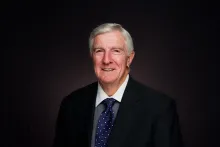
Before his retirement in 2021, Dr. Donald Ward pastored churches in Texas and Louisiana, and taught at Ambassador Bible College in Cincinnati, Ohio. He has also served as chairman of the Council of Elders of the United Church of God. He holds a BS degree; a BA in theology; a MS degree; a doctor’s degree in education from East Texas State University; and has completed 18 hours of graduate theology from SMU.
