

Gary Antion
This transcript was generated by AI and may contain errors. It is provided to assist those who may not be able to listen to the message.
Well, good afternoon, everyone, and it is afternoon now, even though we started in the morning, so it's nice to see you. Nice to be with the AM Church once again, and we certainly want to thank the choral group for their presentation today. It was wonderful, and we appreciate all their hard work, and I know I've seen them coming in and heard them coming in, and to do their practicing and do their preparation. And you don't know how many times they've gone over some of those hymns to make them acceptable, but then when you think about all the wonderful results that will come from it, as brethren all around the world are able to have not just music, you know, the piano playing, but they'll have actually a group singing with them, because some of our groups are pretty small. So it's a wonderful project. It's been a long project, Mr. Shoemaker's kept at it, and the various ones from the ABC class as well as from the church have been willing to come and give their time to do it. So thank you for that. We have a wonderful ABC year beginning already. We have 40 students. We had 39, and then one person joined right as we began, and we have the possibility of one other person still coming, if provided her health is okay. She's having that checked out now, but she really wants to come. So it's a great group. It's more collegiate than any other group we've had, because typically we've had several older people there, and this year we only have one older person in attendance. So we have a lot of college age and just beyond college age students who are attending ABC. But it's a very nice class. It's so far very enthusiastic, energetic, and polite. So I certainly appreciate them, and we're glad that they're here, and I'm sure you'll meet them in between as they come for the afternoon service. There's also a pictorial on the board. It's a pre-pictorial, so you can get a chance to see what some of them look like and match the faces with the names so you can know who they are. If you were taken captive or sent to jail for 2,100 days, or approximately six years, that would be a long time to be kept in a confined space. 2,100 days or six years. Our young people are serving their terms in school. Those six years, it takes 12 years to get in. And indeed, some young people look upon going to school as, I'm going to jail. And when is this over? I can't wait for the recess. What's your favorite class? Recess. I can't wait. What's your favorite time? Summer break. But school and education is one of the most important aspects of life. It will affect how we turn out as human beings, and it will affect the success that we will have. School should be a fun time and a valuable time that will affect the rest of our children's lives. School is just beginning for some and is almost ready to begin for others. For college-age students in most areas, they won't start until right after Labor Day or maybe even a week after Labor Day. Others have started already. As ABC started this past week, and some students, I understand, have gone back to school already, and others are yet to go back to school. There are three dimensions of education, schooling, that I'd like us to consider today. To take a look at these three dimensions and understand them, so that we can learn how to achieve the best education possible for our children. While this sermon is aimed at school and college-aged individuals, we may all learn because education is a lifelong experience. It's something all of us go through, and it's something all of us should be aware of. So the first dimension of education are the teachers. You know, without a teacher, you don't have education. You don't have, let's say, formal education. We all need teachers.
There have been some notable ones in the world, such as Lao Tzu, the founder of Taoism, who is called the old philosopher, and so erudite, and so learned that many of his writings and many of his symbols are yet to be interpreted by individuals. Confucius. You're all familiar with Confucius, Confucianism in China. And how Confucius, many of the sayings, the master said this, the master said that, many quotes come from Confucius. Buddha. Buddha was called the enlightened one, the one who came to bring the four noble truths and the eightfold path, and the middle way, or the balanced way of life. Socrates and Plato, among the Greeks, are looked up to as great teachers.
Solomon, who is the wisest man who ever lived, who kept for us, at least preserved for us, a number of his gems of wisdom in the book of Proverbs. And, of course, Jesus Christ, because remember, Jesus Christ was not only a preacher, Jesus Christ was also a teacher. His disciples came to him and he sat down and taught them. So there are many teachers. Teachers are really important. To be a good teacher, you have to prepare. To be a good teacher, you have to take classes. You have to be trained. You have to be credentialed. You have to learn how to do the grading system and learn how to develop your own curriculum. You have to participate in extracurricular activities. I marvel sometimes when I've gone with our grandchildren to some of their events and watched the energy and time and effort put in to putting on shows or musical events and other events and how much those teachers really engage themselves. One article I read said teachers, one requirement to be a teacher is you've got to be fun and you've got to be fair. There are two things that make a teacher successful, that they're fun and that they're fair. Teaching is not an easy job. A teacher doesn't just stop when they go home. And oftentimes, when I go home, I take papers to grade. So I'm sitting there watching the Reds lose again and grading my papers. Or I'm watching the Bengals get beat up and I'm grading my papers. So the teacher's work isn't just done when he finishes teaching. And there's a lot of preparation and there's a lot of work to put into it. Now, most teachers will tell you they probably learn more than the class does because even though you may teach that same class year after year, you're trying to answer questions and as you go over it and you look at it and say, you know, I didn't notice that before. I said, I want to look into that. I want to find out what that means.
I want to find out what this means. I want to be ready. And sometimes a student will ask a question in the class that you kind of, you know, slept over yourself one time and they ask it and you're not sure the answer and you have to go find the answer. So a teacher's job is not easy. In fact, James 3, verse 1, James chapter 3, verse 1, in this first dimension of education, the need of good teachers.
In James 3, verse 1, you could probably remember some of your teachers as I'm giving this sermon to you. I'm remembering some of my teachers. And you can remember the ones that you liked and you can remember the ones that you didn't like. Chapter 3, verse 1, chapter 3, 1, My brethren, be not many masters or teachers, knowing that we shall receive the greater condemnation.
God's going to hold teachers to greater judgment. Why? Because they have tremendous influence over the individuals that they serve. Tremendous influence over them. I'll read you a quote on that in a moment. It's a weighty responsibility. Some of my favorites that I remember, Mrs. Malone, my fifth grade school teacher, she was encouraging and helpful.
Ms. Knox, my eighth grade homeroom teacher and my English teacher, was just barely larger than a midget. But Ms. Knox had such a command of vocabulary that she could shred anybody into pieces. She could humiliate them with her words better than she could if she had a sword. And so I saw these big guys who used to get away with things in other teachers' classes.
In her class, they shrunk into their chairs. Because she could, with her tongue, whittle them down to nothing. And yet she was a very fair teacher and a very kind teacher as well. Mr. Edgar, my basketball coach and phys-ed teacher, he was always nice. He was always encouraging, and he was the one that said to us, Look, if I yell at you, don't get upset, because you better worry if I don't yell at you. Because if I yell at you in basketball practice, it means I think you have potential. If I don't yell at you, it's because I don't think it's worth it. So he was very encouraging, but he was encouraging a good basketball coach. Ms. Crens, my French teacher, she was such a nice lady, and she gave a lot more of her life than just to French. She also helped us with the yearbook, and I remember her staying after school many hours to help us as we worked together with her, senior students, to put together our yearbook. I also remember Mr. McCracken, who, by the way, Mr. McCracken was at my 50th anniversary, which I just attended this past summer, 50 years of graduating from high school. I saw a lot of my buddies and a lot of my friends, and so we still recalled and we still rehearsed. I'll talk a little bit more about students in a moment.
Mr. McCracken was there, and he's a very nice man. He was my math teacher. He was the one that encouraged us, and four of us made him very proud because we all took the test to come study in the University of Cincinnati, which had a co-op program and were offering two scholarships. It was for all the schools in the district, and four of us from our school did math, higher math at our high school, and we were selected to go.
Four of us took the test, and my buddy and I must have come in third and fourth, because the number one and two were the other two guys, and they got the scholarship to Cincinnati. His class scored one, two, three, and four among a lot of other schools taking this awful test that we took. It was an awful test on math, all types of math, and when we finished, he called us all and he said, these two got it, but I'm proud of all four of you. He was a very encouraging man. And then Mr. Ragney was one of the basketball coaches and Mr. Malarkey, too. But Mr. Ragney, he wrote me a note. I always remember it in my yearbook. He said, May bad luck follow you all the rest of your life, but may it never catch up. May it follow you all the rest of your life, but may it never catch up. And I always remember those teachers. You probably remember yours, too. Let me read you another quote in Isaiah 5, verses 20 to 23. Because this principal, a school teacher, must be sure that he is teaching what's correct, teaching right principles. And I'm not so sure that all of our teachers in the school systems are doing that. But Isaiah 5, verse 20, he says, woe to them that call evil good and good evil.
Woe to them that just turn it upside down, that don't teach what's proper and what's effect, that put darkness for light, light for darkness, that put bitter for sweet and sweet for bitter. It's incumbent upon a teacher to teach truth. It's incumbent upon a teacher to teach those children in a positive way, because teachers have a lot of sway over their students. Notice verse 21, woe to them that are wise in their own eyes and prudent in their own sight. Some teachers just smug. Some teachers knew it all. They were the know-it-alls, and you didn't have a chance to talk with them. They weren't engaging and they weren't approachable. And I had a lot more teachers than the ones I mentioned. These are the ones that tend to stand out in my mind over the years in my grade school and high school experience.
He says, woe to them that are mighty to drink wine and men of strength to mingle strong drink. Again, don't mix. Don't let your judgment be distorted. In verse 23, which justify the wicked for reward, aha, play favorites, and take away the righteousness of the righteous from him. So it's important to teach the truth, and it's important to be accurate. 1 Corinthians 14.9, another principle among the teachers, and by the way, I'll come to another scripture for you in a moment, but 1 Corinthians chapter 14 and verse 9 tells you why I'm setting all this up. 1 Corinthians 14 and verse 9. I certainly know the teachers at school aren't always going to teach biblical-sound principles. They ought to. They need to, but they may not always. 1 Corinthians 14.9 says this, breaking into this tongues chapter thought, just a principle, so likewise, you, except you utter by the tongue words easy to be understood. I think that's a key for a teacher, to be able to teach students in a way that they can understand it, not to impress them with his learning, but to try to get his learning across to them in a language they can understand. When I went to school, there were some doctors in college, not an ambassador, but another college. Oh, they could throw the words around, and they were highfalutin and all. What good does that do you if you don't understand what's being taught? And to put it in the language of the people, that was a key. And good teachers could. I had a math teacher, Mr. Bain. He was a nice man. He was so smart, we all said his eyes were bulging out. Literally, he had one eye that did bulge, that was bulging more than the others made fun of. He was so smart in math, but he couldn't teach it. The only way we could learn is to follow how he did the example on the board, but if he were to tell it to you, you couldn't understand him. So he was brilliant, he was bright, he was intelligent, but you couldn't understand him. So it's important, he says in verse 9, And likewise, except you utter by the tongue words to be understood, How shall it be known what is spoken? For you shall speak into the air. You're just saying words out there, but they're just wafting off. They're not really going into the ears of people and making sense. I want to read to you a quote about the need for good teachers.
This is, quote, is, If only one hundred bad teachers, The importance of competence on the part of each teacher is emphasized by the fact that the average elementary teacher who retires this year will probably have taught approximately one thousand American citizens, and the average high school teacher about five thousand.
Let us examine the educational ill effects of only one hundred ineffectual high school teachers who retire. If those one hundred are not good teachers, guess how many people will be affected? Fifty thousand American citizens would not have received adequate instruction in high school. Fifty thousand, if only one hundred of those teachers, were not teaching effectively. So it is important to transmit the truth. If I teach something is true, and it ends up going into your mind and you walk off. And I've had this happen to me. I've heard somebody in club, in a spokesman's club or ambassador club, make some statement in his speech, and I took it and wrote it down, whatever the fact was. And I went off and I repeated it to thousands at the feast. And those people went and repeated it to others. Later on, found out it wasn't the true fact. It was distorted. How many people were given and how many spread the wrong message? Lots. And how do you call that back? You don't even know where they went and to whom they said it. So it's really important to be true and to be accurate. If you have a good teacher and if you've had good teachers, great. You young people, if you have a good teacher, treasure them. And many young people want to be teachers. I know a lot of girls will say, I want to be a teacher. And a lot of them, they get into high school, I want to be a teacher. Why? Because they had a good teacher. Let's face it, your children, if they're in grade school, they're going to be in their presence for about six or seven hours a day. They don't change teachers.
If you have a homeroom teacher, that's a teacher you're going to see every day, longer than you would some of the other teachers, especially if you have her for a class as well, or him for a class as well. If you have a good teacher, great for you. If you have a poor one, you may have to work harder to be able to get a good grade and to make it. You may have to say to yourself, I don't like this teacher, but you know what, I need what he's teaching me. I need what he's teaching me, so I better listen and I better learn.
My daughter Jan, when she was in fourth grade, she didn't have a very good teacher. She was in a class that ended up being both a fourth and fifth grade or a third and fourth grade, and that teacher had to spend part time with one, part time with the other. I feel sorry for that teacher, too. But just the way her lack of motivation, her lack of care, lack of concern caused my daughter's grades to dip that year, what she normally made good grades.
And when we went to Arcadia, California, we moved out there, we went to the teacher and talked to her about my daughter's experience and so on, and that teacher was wonderful at Holly Avenue. She was a wonderful teacher, and my daughter's grades went right back up again. Teachers do make a difference. But you know what? Parents are teachers, too. Grandparents are teachers, too. And you brethren are teachers, too.
Whether it's by example or by words, we all can have an effect on our children or on the children of our church.
Teachers. The responsibility in ministers are teachers, too. One of the requirements of a minister, 1 Timothy 3, 2, is that they be apt to teach.
We all have responsibility on our shoulders that when we give a message to deliver the truth. Ephesians 6, verse 4. Parents are teachers, too. Parents should not just abandon their children to high school or grade school. They should not just send their children off and say, you do it all. And I know some parents home school. Good for you. If you do, I'm not saying that's the best. I'm not saying it's the worst. I'm saying that's your choice. But if that's your choice, you are a teacher. You're not just a parent. You make your children understand you're not just their mom or their dad. You're their teacher now. When you go into that role, school time, I'm your teacher. I'm no longer your mom at this point. I'm your teacher. And you need to be a teacher that teaches them well. Ephesians 6, verse 4. And he says, You fathers provoke not your children to wrath, but bring them up in the nurture or discipline and admonition of the Lord. We have a responsibility, as parents, and fathers as used here, but parents certainly both, have a responsibility to teach their children. Show interest in your children's schooling if they're taught outside the home, which many are in the public school system. Show interest in them. Ask them questions about what's going on. How was your day today? Tell me what you learned. Let them know that you're interested. Give them marks to strive for. If you get straight A's, we'll get you this, and so on. Or give them something to reward you. Hold up to them some rewards. And give them encouragement. Let them know you care. Let them know you're interested. And never demean their teacher. Your teacher's no good anyway. They're no good. I remember one time, our sophomore, my daughter's sophomore year, Jan, her sophomore year of college, we were just getting ready to go to the feast in England. And we needed to take off time to go to the feast. And so she went into high school, and she was... And every teacher gives their little syllabus and whatever, and the teacher said, I don't... This one, I think it was a math teacher... I don't make any exceptions for testing. If you miss a test, you fail.
And you miss the class? Tough. So, I thought, oh boy, this is rough, because my daughter's going to miss a couple of tests, or a couple of... You know, going to the feast. So, I called in to the secretary, I said, I want to make an appointment with this man. And I said... I find that... She said, well, you know, she'll just miss those two tests. I said, I don't care. When you fail a person because they're doing what they believe is right, they're doing their religious conviction. That is wrong. And so, I said, I want to talk to this man. And she said, well, sir... And I said, religious liberty, our country was founded on religious liberty, how can you do this? And she said, sir, in this school, we have 95 teachers. We only have three stinkers. And he's one of them.
So, we prayed about it, and before I got a chance to go in, my daughter went into class, and there was a loud speaker system. She said, Jan Antion, please go report to the Vice President's class, Vice President's principal's office, whatever. And it's Vice Principal's office, so she... Oh, no, what did my dad do this time? And so, she went to the Vice Principal's office, and it was the Vice Principal for class leveling. And he said, well, you know what? We're changing you from this class to this other class. She walked into that other class a couple days late, so the lady gave her her syllabus, and it said, I will do everything possible to help my students succeed. And so, she was able to go to the feast, come back, take whatever test she may have missed, no problem. It was just a total opposite switch. But again, teachers require our respect as we can give it to them. But don't down them. Don't sit there criticizing them all the time. Or even taking your children's part. One parent said, you know, if you get a spanking at school, you get a second when you come home. If your teacher has to spank you, some state's still spanked, by the way. I think Texas is one of them. Some state's still spanked. They're still allowed to do that. If you get a spanking at school, you come home, you get one from me, too. So again, show support. Show interest in your kids' schooling. Ask about their learning. And don't abandon your children's knowledge to merely becoming from school. You need to teach them, too. Because what aren't they going to get at school? Deuteronomy 4 and verse 9. Deuteronomy 4 and verse 9. This is all in the same point on teachers. Thankfully, I only have three dimensions, so I should be able to finish in plenty of time. Deuteronomy 4 and verse 9. He says, only take heed, Moses writes under God's inspiration, only take heed to yourself and keep your soul diligently, lest you forget the things your eyes have seen, lest they depart from your heart all the days of your life. But teach them to your sons and your sons' sons. Now, daughters are assumed in there as well. Teach the principles of godliness to your children. Teach them about life. Teach them about godly principles. Teach them about God's law. Teach them about His way of life. That's a responsibility you can't expect the school to give to your children. It's important to talk to them about things that they might pick up and knowledge that they might receive. All of us in the church can help our young people. I'm telling you, going to school these days is not even anywhere near what it was like when we all went to school. Grade school and high school and all the challenges, all the issues that they face. Show interest in them. Hey, how did school go? How are you doing? Did you just start school this week? How's it going? How are you doing? Just little comments can help them know you're interested in them and want to see them succeed. I know we have our Sabbath school program, and thank you to those who are running it. That gives students a chance to rub shoulders with others of like beliefs.
But encourage each other. Talk to each other. Talk to them. All of us can show interest in children and their schooling. All of us are students, by the way, because we're called disciples, and that is students for life. So not only are we as teachers, but we're also students. We need to keep that in mind. I'm going to read you a quote from a book called Love Dad. Love Dad, page 10. It's a great book. It's published after this man died at age 41.
He was a newspaper columnist from up in the state of Washington. It said he left work before his kids got up. And unlike many fathers, Patrick Connolly took the time every morning to share his thoughts and love and a note to his boys. Some are tender, some are funny. Some instructive. Together they create a legacy of caring, made all the more moving because they're published humanly, because Connolly died in 1984 at the age of 41. Now, let me just read you one of them. I'll have two more later on. Here's what he writes to his kids. He says, Dave and Rich, he scribbled and died and they just kind of copied his writing. So he would write it before he left, grab his coffee, orange juice, or whatever, and write it and just leave it on his table and he'd go. And when the kids would get up later, they would read what Dad had to say.
Dave and Rich, be good in school today. By that, I don't mean get good grades. I mean behave yourselves. Good grades are nice and you should shoot for them. But the way to get ahead is to behave. He talked about conduct, conscious conduct, and it just says, Love, Dad. I'm going to read you two quotes about... This one, let's see, is this the one I want to read?
Yeah. Oh, this is the second dimension of students. I'm into the second dimension. Sorry. This is the second dimension on students. I'll read this one to you. Edison. A six-year-old came home from school one day with a note from his teacher in which it was suggested that he be taken out of school. He was too stupid to learn. His name? Thomas Alva Edison. Too stupid to learn. Take your kid out of school. So some kids have a harder time getting started. Some are not so initially gifted in getting going as students.
Here's another one about students. Einstein. A boy was so slow to learn to talk that his parents taught him abnormal a thought that he was abnormal. His teachers called him a misfit. His classmates avoided him and seldom invited him to play with them. He failed his first college entrance exam at the university in Zurich, Switzerland. A year later, he tried again. In time, he became world famous.
His name? Albert Einstein. So don't give up on kids because they have maybe a rough beginning or a rough start. But the second dimension, then, is students. You have teachers, you have students. I have several aspects for students to be good and to be able to accomplish and be successful in school.
Number one, students need to have an attitude. We all have attitudes. My daughter used to say to me, my younger daughter, Dad's in an attitude today. Well, you know what? We're always in an attitude. It depends on what. She would mean Dad's in a bad attitude today. But she would say, Dad's in an attitude. We're always in an attitude. But the attitude we want to have when it comes to school is, what can I learn? I'm going to learn something today. I want to learn more.
I want to find out how to multiply. I know how to add. I can count. I can recognize my numbers. I know my alphabet, but can I read? I'm going to see if I can read. Run, Dick, run. See Jane run? You know. Jane goes up the hill. Whatever. Jane dropped the bucket, or whatever. The pail. The bucket's too long. The point being, you have to learn. Have a quest. What am I going to learn today?
I can't wait to see what I'm going to learn today. Have a desire for knowledge. Proverbs 1, verses 2-9, extols education, and talks about why young people need to have education. So attitude is really important. This is the first one. Proverbs 1, being under the dimension of students. Proverbs 1, verses 2-9, To know wisdom and instruction. This is what the purpose of the Proverbs was, but it's the purpose of education too.
To know wisdom and instruction. To perceive the words of understanding. To receive the instruction of wisdom, justice, judgment, and equity. And everything you learn, young people and old people, everything you learn as a building block that forms foundations for the next level in your life. Think about it that way. You're adding levels of education into your life, wherever you are. If you're a first or second year student, if you're kindergarten, you're learning how to get along with people, you're learning how to color in the lines, you're learning how to do certain things.
And if you're older, if you're in grade school, you're probably learning how to read well, and you're probably learning how to write well, and you do your cursive writing, and you learn how to print, and all the rest. These are all good things. These form who you are. These help you succeed in life. Verse 4, he says, To give subtlety to the simple, to the young man, knowledge and discretion.
A wise man will hear and will increase learning, and a man of understanding shall attain to wise counsels. Verse 6, to understand a proverb and an interpretation, the words of the wise and their dark sayings. I'm trying to understand this, and don't be afraid to ask questions in school. If you don't understand something, ask a question. Raise your hand! Miss Jones, could you please explain that again? I didn't quite get it. Sure you can do that.
You want to understand. The fear of the Lord is the beginning of knowledge, but fools despise wisdom and instruction. At the base of your life is that fear of God. My son, hear the instruction of your father. Here, listen, pay attention, and forsake not the law of your mother. And verse 9, why? What does all this training do for you? For they shall be an ornament of grace to your head and chains or necklaces about your neck.
They'll be jewelry. They'll be like an adornment on your head, and they'll be like jewelry around your neck, because they'll be precious to you. If you learn, if you have an attitude that says, I want to learn something today, what am I going to get today from school?
What can I learn? You know what Confucius said? One of the great teachers, he said rotten wood cannot be carved. You can't make anything out of rotten wood. You've got to have good wood. That's attitude. If your attitudes are not good when you go to school, whatever it is, college or high school or any, you're not going to pick it up. You're not going to learn. Church, you're not going to pick it up. All right, so attitude is important. Another thing that's important under students is to listen. Don't be distracted in school. How many times does the Bible say, incline your ear?
Incline your ear. Listen to what I have to say. Incline your ear. It also talks about when you enter the house of God, be more ready to hear. Be more ready to hear. Be attentive. Be ready to listen. In school, I always tell my students, if you listen carefully to me in class, you'll do well. If you get distracted, you won't. You'll miss key points. If you're not listening carefully, you're not going to hear what I stress. You're just going to hear words. So if you listen carefully, you'll do very well in school.
So again, listening. Don't be distracted by others. Don't be looking around, playing around, daydreaming, drawing pictures, doodling, passing notes, and so on. That's not going to help you learn. It's going to distract you. Number three, respect. Respect. 1 Peter 2, verse 17. Respect for your teachers and respect for your fellow students. Show respect, which means you look a second time at them, which means you look back again, which means you look up to.
1 Peter 2, verse 17 tells us this very short three-word sentence. Honor all men. Now, if you have a female teacher, you can dishonor her, but men teachers don't. Honor all. Honor all. That's the key. We need to show that honor and respect in school. How many times have I hurt and watched her be hurt and just went along with students picking on some teachers infirmity?
One lady was a little bit ditzy as a teacher. She was a science teacher. She would turn her back. Kids would do all types of things. Another teacher was big and brawny and strong, but not real bright. And at times, he wasn't aware what was going on. And before his class was over, one of the students in the front took his gradebook, passed it back and went around the room and ended up in one of the desks in the room. And when he's classed, the bell rang. Class dismissed.
Where's my gradebook? What happened to my gradebook? Who took my gradebook? He was ready to go to another class. And then everybody sat there. Nobody would tell. So he made us all sit, and we were all late to the next class until somebody kind of coughed it up or whatever. I remember another teacher finally found one of the students, because since this teacher would turn around, they had little small pieces of chalk. They would bounce the chalk off, throw the chalk up at the front, and would boing!
Bounce off the blackboard or the greenboard and bounce down again. You look around, who threw that? Nobody would say anything. They'd turn around again. Boing! Another one would go out to work. Oh, the one time he turned around when they thought he wasn't going to turn around, and he saw the guy who threw it.
This man was a farmer, I think, during the summertime. He was brawny and big. He grabbed his paddle. He bent this kid, probably about ninth grader, over the desk. The kid's chest was on the desk. His rump was against the desk.
And he hit that kid so hard that the paddle broke. And that kid was kind of a tough guy, but I saw tears coming out of his eyes. They didn't show respect. In other cases, they picked on a person's infirmity. When you make fun of teachers, it's not a good thing. It's not a good thing. Name-calling, pranks, picking on peculiarities or infirmities, and taking advantage of them. Our teachers deserve our respect, especially at ABC. Our teachers really deserve our respect. Don't they, Mr. Thompson and Mr. Johnson? Yes, they do. Okay. Here's a quote. Two college presidents were comparing their experiences. One said, when I retired, declared one, I would like to be the superintendent of an orphan asylum. Then I wouldn't get any letters from parents. Another one said, that's not a bad ambition, replied the other, but when I retire, I want to be a warden of a penitentiary. The alumni never willingly come back. So that was his way of dealing. Here's another one. Nobody likes me at school, said the son. The teachers don't. The kids don't. The superintendent wants to transfer me. The bus driver hates me. The custodians have it in for me. I don't want to go. You have to go, insisted the mother. You're healthy. You have a lot to learn. You've got something to offer. You're a leader. Besides, you're 49 years old. You're the principal. And you have to go to school. Be nice to your teachers and administrators, okay? Respect. Number four, under what a student needs, is friends and classmates. Be aware of your friends and classmates. It's nice to have friends. Find the good friends. Find the friends that you can uplift, and they uplift you. Don't find the friends that will tear you down. And we know there are all types of kids at schools that can do that, and there are kids at schools that can bring you up. Proverbs 13 and verse 20. Proverbs 13 and verse 20. We read this about friends. He that walks with wise men shall be wise. See, that's a choice that is made to walk with individuals who are decent. But a companion of fools shall be destroyed. Why? Because he'll be where they are when they're destroyed. You want to choose your friends. You want to choose those that be selective, who share some of the same values, who are going in the same direction, who have the same approach, and who have the same goals. Proverbs 22 verses 24 and 25. Proverbs 22 verses 24 and 25. Make no friendship with an angry man, and with a furious man, don't go. Lest you learn his ways and get a snare in your life. So it's really important to pick friends selectively.
I want to share with you how the paraphrased or new Living Translation puts Proverbs 1 verses 10 and 11 and 15. Proverbs 1 verse 10. My child, if sinners entice you, turn your back on them. They may say, come, join us. Come on, we're going to go do this prank. We're going to go have this fun. Let's hide and kill someone. Let's ambush the innocent. And here's his reply in verse 15, his encouragement. Don't go along with them, my child. Stay far away from their paths. So in school, you'll have friends, lots of them. There'll be lots of them around. Be selective. Choose the ones who are going to uplift you, and you can uplift. Don't choose the ones who are going to drag you down, because every school has them. That they can drag you down. Also, be kind to your friends, how you treat them, how you look on them. In my 50-year reunion, there were people who never came back. I went once at 30, went back at 50. There were people that lived right in the town, who would not come back. And they said it was because of the way they were treated by other class members. How you treat them will make an impression. Be kind and be nice. Don't hurt them. And I know kids like to poke fun at each other. Sometimes that fun hurts more than you know. And some of those young people never came back. Not to their 30th, not to their 50th, and they lived right in the town where it was held.
What a shame. Number five, under students, have fun. Have fun. You only pass through school once. There'll be some of the most fun times in life. Cheering at sporting events. Team spirit participating where you're able to do so. Have fun. Let school be fun. It ought to be fun. You only pass that way once. Sometimes it feels like work because you have tests and studies to do, homework to turn in, but school is a beautiful time for you. Have fun in school. Number six, be an example. Be an example. Proverbs 20 and verse 11. Proverbs 20 verse 11. We find what this great teacher, Solomon, and others like him put together in this wisdom book. Proverbs 20 and verse 11. Even a child is known by his doings, whether it be his work be pure and whether it be right. Even a child is known. Your example means a lot. Ecclesiastes 7.1. A good name is to be chosen. Keep that good name up. I followed my brother and my cousin and my other cousin to high school. They all went before me. Antion's an unusual name. Most people will pick it out right away when you're Antion. They all set an example for me that I didn't dare let them down. Teachers would come in and say, well, I expected you to do good on that test because your brother did good. Or your cousin did good. So it was an expectation there and I didn't want to let down my family name. So I worked hard not to let down my family name. You have a name. Maybe you're the first in the family that comes to school. What will they say when your siblings come to class after you? Oh, no. Here comes Antion. What will they say when you come to school and when your children, your brothers and sisters come after you? Oh, no. He was a terror to have in class. I wonder what his brother will be like or his sister will be like.
But when you set a good example, they have high expectations and good expectations of you. So be an example. Participate where you can without violating your values. Various activities of sports, of yearbook, chorale, band, pep band, chess club, the ones that weren't real active and other things, they could join the chess club. Others could join. I was in science club! Guess what we did in science club? Nothing.
I never went to one meeting. There was no meeting. Just at the end of the year, I got a picture in the yearbook. You're in science club because I took science class. I guess I was in science club. You could even join the letterman's club. What did we do in the letterman's club? Nothing! I didn't even know I was the secretary of the letterman's club until the end of the year. I was secretary of letterman's club.
What did we do? We ordered jackets and sweaters. Each person did that. So, big deal. But I was a part of that. So you can join some of these clubs. You can have a part. But again, school is fun. Students. But remember, brethren, we're all students. When you come to church, go to Bible studies, come more ready to listen, come with the right attitude, come to listen, come with respect, come to get along with your fellow church members, have fun, too, and be an example to each other. They all apply to all of us, not just to the children. Number three, the dimension of knowledge. Did you know? Number three, the third dimension, is knowledge. Did you know every minute? This is a few years ago. Every minute, 2,000 typed pages more than double the Obama health bill. Every minute, 2,000 typed pages are added to the knowledge of this world, the knowledge in this world, the fund of knowledge. After one day, just one day, 24 hours, guess how long it would take you to read that, if that's all you did? Five years. To read all the knowledge that is entering this world in one day. I remember one man who made it his job to read the entire encyclopedia. I think it was Britannica, but it may have been Americana. He read the entire encyclopedia. Good job! But now, you know what? That's expanded. And what he read then is not true today. A lot of knowledge and information has been added. He's got to go back and read it all over again, find out what he missed. All right. After... I want to read you a quote from Love Dad, page 3. Love Dad, page 3, about knowledge. He wrote, Good morning! Good morning! He says, Good guys! Give him a positive comment. Good morning, good guys! Welcome back to school. It's going to be a great underline year for you both. Learning things you never knew before, sharing your knowledge, with others. This is a start of a whole new part of your lives, a brand new adventure, full of excitement, new friends, new things to do. I sort of envy you for all that. I don't have a bunch of advice to say, except do what you know is right. Even if it's the hard thing sometimes, have a wonderful day. Love Dad, do the right thing, no matter what. I thought it was a really nice quote. Proverbs 18 and verse 15, knowledge provides our foundation for our future. Proverbs 18 and verse 15. Proverbs 18 and 15, the heart of the prudent gets knowledge, the ear of the wise seeks knowledge. Seek knowledge, seek to learn. These are all foundational. What do we learn? We learn the alphabet, we learn numbers, we learn math, we learn history, we learn English, we learn geography. All are important to our future. Why? Because when you apply for a job and I read your application, and your words are misspelled and your grammar is horrible, I might say, if this is how careless they are with their grammar, how careless will they be in doing a project? If this is how they spell words, I'll have to spell check everything they do for me. Everything they send out, I'll have to spell check myself because they can't spell. And by what they've written on there, there's no way the spell check could even tell what they mean. It might give three or four options based on the number of letters that are missing or mixed up.
So it's important to your life. The heart of the prudent gets knowledge. Get knowledge. Seek it. And the ear of the wise seeks knowledge. Remember, Hosea 14 says, my people are destroyed for lack of knowledge. You see, you want to mix with that knowledge that you get in school, the building blocks for your educational future. You want to also add to that the knowledge of God, the knowledge of God's ways and His laws. Proverbs 4, verse 5, still in this area of knowledge, this third dimension. Proverbs 4 and verse 5, we read this. Get wisdom. Get understanding. Forget it not. Neither decline from the words of my mouth. In other words, listen, pay attention. Verse 7, wisdom is the principle thing. Therefore, get wisdom. And with all you're getting, get understanding. In order to have wisdom, you have to have knowledge, the facts. Then you have understanding, which means I recognize, know the meaning of those facts. And then you could take the facts, which you understand, to make a right decision, based on your moral values, based on the principles and teachings of the Scriptures. I want to read you a quote from Graduating into Life, page 82.
The love of study derives fresh vigor from its enjoyment. This is particularly true to the man who recognizes that education is not merely the road to earning a living, but the gateway to knowledge, which makes living worthwhile. Here's another quote. The prime purpose of attending high school or university or grade school is to gather the materials that will enable you to get on with your purpose in life. Anything else is irrelevant. Knowledge helps add to our purpose in life. Let me share with you a couple of quotes. Studies have shown that the halfway point of all human knowledge is located less than 10 years ago. This was a few years back. That is, man's knowledge has doubled within the past decade. So that was the same one as said about every 60 seconds. Here's another one. Did you know some startling facts that you might learn in school? Did you know that Panama hats originally came from Ecuador? They should be called Ecuadorian hats. Did you know that the Irish potato came from Peru? Did you know that bananas grow, pointing up? Did you know that there are more people of Irish descent in the United States than in Ireland? And did you know that it takes 9,000 years to count to one billion? It's hard to believe. One, two, three, four, five, six, seven, eight, nine, ten, ten, twelve, thirteen, twelve, thirteen, thirteen, nine thousand years later, I get to one billion. Nine thousand years! A staggering figure, isn't it? How big is a trillion? Even greater than that. Okay, I want to read you one more final one on this one, this quote. The founding purpose of early colleges. See, the knowledge that we learn needs to have God in it, too. We need to not forget our great God, because the Bible tells us that people are ever learning and yet never able to come to the knowledge of the truth. 2 Timothy 3, 7. And that we need to have a knowledge of the holy, Proverbs 9, 10. Because that helps us understand where that knowledge should fit in our life. Listen to this. Eighty-eight of the first 100 colleges founded in America were organized to promote the gospel and the claims of Jesus Christ. Eighty-eight out of 100 wanted God to be evolved in the knowledge and the experience. Every collegiate institution founded in the colonies prior to the Revolutionary War, except for the University of Pennsylvania, was established by some branch of the Christian Church. Even at the University of Pennsylvania, evangelist George Whitfield played a prominent part. The building of the present university was built for the purpose of accommodating the crowds which wanted to hear Whitfield preach. A decision of Ben Franklin and other supporters. A statue of Whitfield stands on the campus today as testimony. The early one said, you know what? You need God in the mix, so you don't just go off on your way and become secular. In conclusion, then. In conclusion. I want to share with you one more love-dad. Page two. Dave and Rich. Happy last day of summer vacation. At last, you can go back to school. All summer, you've been learning from personal experience, which means you did the things you learned about, like turning bales and visiting Sitting Bulls grave. In school, you will learn from books, which requires imagination and concentration.
You will also learn many skills, such as mathematics and reading, which will make the world a more interesting, more understandable place for you to live. Love, dad. For our school-aged children who are ready to go to school, anticipating school, there are new clothes, new pencils, new pens, perhaps new computers, new lunch boxes, new backpacks, new classes, new teachers, new classrooms, new classmates, new environment, new experiences. They all await you. However many of those six years of your confinement are left, have a great year becoming educated. For the rest of us, may we all continue to be educated for the rest of our lives.
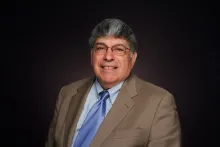
Gary Antion is a long-time minister, having served as a pastor in both the United States and Canada. He is also a certified counselor. Before his retirement in 2015, he was an instructor at Ambassador Bible College, where he had most recently also served as Coordinator.
