


Gary Petty
This transcript was generated by AI and may contain errors. It is provided to assist those who may not be able to listen to the message.
So now we're ready for the second split sermon of today, where this is our golden anniversary, the 50th year.
And 50 years is a long time. It is the same time span as it has been brought out, that the Jubilee cycle in the Bible was 50 years long, where the land had a limit to how much it could be sold for a certain amount of time.
Every 50 years, the debt of the nation was forgiven. Things went back to their original owners. The land was never to be accumulated by few, and this is the way God had it, to have equality, where even bad decisions did not have a permanent consequence, but the family, the generations, could revert back to that land that would come back to them. We wouldn't have the homelessness and the abject poverty that we see around us even today.
Now, if there is one principle that God wants us to learn in the Bible, it's to learn from our experiences. Paul told the Corinthian brethren that many of the things that were written in the past of their history were lessons to be learned from, as he mentioned in 1 Corinthians 10, 11, and 12. It says, Now all these things happen to them as examples, and they were written for our admonition, upon whom the ends of the ages have come. Therefore, let him who thinks he stands take heed lest he fall. If a person doesn't learn from the past, that's a quote from George Santayana. He said, those who do not remember the past are condemned to repeat it. And here we have in the Bible telling us the same thing. God does not want us to repeat the same mistakes that the Israelites in the Old Testament did. The message version of these verses says the following.
These are all warning markers, danger in our history books, written down so that we don't repeat their mistakes. Our positions in this story are parallel. They at the beginning, we at the end, and we are just as capable of messing it up as they were.
Don't be so naive and self-confident. You're not exempt. You could fall flat on your face as easily as anyone else. Forget about self-confidence. It's useless. Cultivate God-confidence.
And so over these 50 years, we have learned a lot. And we are here because we're still in the process of learning. So I'd like to go over three lessons in the past 50 years that we should strive to cherish. And the first of these lessons is that doctrine is absolutely crucial. The Bible shows it is the great unifier, but it can also be the great divider.
Jesus Christ was very upfront. He made no apologies about this principle. He said in Matthew 10, verse 34 through 37, So truth is something hard to accept. It is one of the most difficult things for a human being to own up to. We all have our prejudices. We all have our self-image. And truth can be a very harsh reality. And so it can divide. It doesn't necessarily unify.
And in 1 Timothy chapter 3, verse 15, the church is described as the church of the living God, the pillar and ground or foundation of the truth. So the great divider in the Bible is not race. It's not color. It's not status.
It's not wealth or intelligence or beauty. But it's about holding on to or not holding on to the truth. And it will be a great separator in the future as God eventually will intervene in the world. What is going to separate the world into two camps? It says in 2 Thessalonians chapter 2 verses 9 through 13. It says, The coming of the lawless one is according to the working of Satan, with all power and signs and lying wonders, and with all unrighteous deception among those who perish, because they did not receive the love of the truth. So God gives us that love of the truth. That's not something that we just worked it up on our own. God had to open our minds so that we could receive the truth, that love of the truth, just as the first message brought out that love is the basis. And we can call it the skeleton, but we flesh out that love with God's truths.
He continues to say here that they might be saved, and for this reason God will send them strong delusion that they should believe the lie, that they all may be condemned who did not believe the truth, but had pleasure in unrighteousness. But we are bound to give things to God always for you, brethren, beloved by the Lord, because God from the beginning chose you for salvation through sanctification by the Spirit and belief in the truth. So God is working His purpose down here below when He gives that understanding of the truth, and so doctrine is absolutely crucial.
And from what we see in the Bible, there are the four big ones, the distinctives that He says separate the world's ways from God's ways. And the first one is the Sabbath.
It is the only commandment of the ten that is named as a sign, and the word sign in the Hebrew auth means that it is a monument, as it's described in the dictionary. It's a monument. It's a place that is going to bring attention to it. It is also a beacon. It draws attention. And it is also a signal. It's something, a marker that makes a person stand out.
The second one has to do with the feasts, which give us the plan of salvation in seven steps that God is currently carrying out. He has fulfilled three of those steps. He has four left. We already have had the Passover as a fulfillment of Christ's sacrifice.
That's in the past. That marker has already been reached. Then we also have the Days of Unleavened Bread, which is the separation of a people of God that they are separated from the sins they are being worked with and sanctified. And then finally, we have Pentecost, which on the Day of Pentecost they receive God's Spirit. But we're not yet to the fourth feast, which is the Feast of Trumpets, which announces the coming of Jesus Christ. So we are between the third and the fourth feasts as far as the historical record goes. Then we also have the biblical foods, which is bodily sanctification. God says, I am holy. You are to be holy.
You're supposed to take care of your body, and you sanctify it with the food that you put into it. He separated certain foods. Most of the foods that he prohibits are from animals that are scavengers, that are part of his cleanup crew, just like we have shellfish, and they're working away in the ocean to clean it up. What are human beings doing? They're eating God's cleanup crew, and the ocean is getting more and more polluted. They just had that hurricane back in the area of New York a couple years back, and it flooded that whole area of New Jersey.
They mentioned that because they had oyster beds, which formed a natural barrier to the storm tides that came in, they said if those oyster beds would have been there, they would have been a natural protection. But since everybody took the oysters away, then that was Hurricane Sandy that caused such great devastation. And so, again, this is one of those distinctives. As Peter said in Acts, he says, I've never eaten anything unclean.
If Jesus Christ would have taught him that, hey, now you can eat anything you want, why? He would have been eating unclean foods, and he never did eat unclean food.
The problem there in Acts 10 was that now he was not to call anybody unclean. Gentiles were not to be unclean. And when he went to Jerusalem, the big charge against him was that, oh, now you're eating unclean foods. No, no, you are eating in the home of unclean Gentiles. So the accusation was with whom he was, not with what he was eating. And so then we have the fourth distinctive, which is tithing, which is the material sanctification.
So notice how you're supposed to sanctify a day. You're supposed to sanctify the annual feasts. You're supposed to sanctify yourself as the temple of God's Spirit, that you're supposed to eat certain foods to keep yourself healthy and clean before him. And then fourthly, you're supposed to sanctify a certain amount of what you earn. The tenth is God's. It is holy. And so again, these are the distinctives that, of course, how many people have the love of truth to be able to apply them?
Now, they're not the only ones, but I call them distinctives because they separate people. And then we have the love of the truth, which has to do with our salvation. In Philippians chapter 2 verse 12, it says, work out your own salvation with fear and trembling because we can't change others. But we're going to have to give account of our own lives before Jesus Christ one day. And so we have to do our part and take care of this salvation because it can be lost.
And so we have been saved from our sins. We are being saved. And eventually, in the future, we will receive that full salvation. It's a process. It hasn't ended yet. Now, I'd like to go to the second lesson about these 50 years. And again, everybody has their different lists that they could have. These are three that I can give in this brief time that I have. The second one is the type of church government matters. The type of church government matters. As Proverbs 28 says, when the wicked rise, men hide themselves, but when they perish, the righteous increase.
Proverbs 29 too adds, when the righteous are in authority, the people rejoice. But when a wicked man rules, the people groan. And as long as we have a human nature, we need to have checks and balances because you might have the most wonderful period of time. But then, as you have changes in the people, sometimes a wicked man will rule. And then, you've got to go into hiding in the sense of having to not be so visible until that passes. And of course, then, when the righteous rule, everybody can come out of the woodwork and celebrate because they're not going to be persecuted. And so we can't control who eventually heads things, but we do need to have checks and balances. Notice what it says in Jude verses 3 and 4. It's only one chapter. It warns the following. It says, Beloved, while I was very diligent to write to you concerning our common salvation, I found it necessary to write to you, exhorting you, to contend earnestly for the faith which was once for all delivered to the saints. So the truth is in the Bible. God is not extending the Bible, and you're not supposed to add to it. It says, For certain men have crept in unnoticed, who long ago were marked out for this condemnation, ungodly men, who turned the grace of our God into lewdness and deny the only Lord God and our Lord Jesus Christ. I like the way the message version, a modern version, has it, puts it more in the vernacular. It says, Dear friends, I've dropped everything to write you about this life of salvation that we have in common. I have to write insisting, begging, that you fight with everything you have in you for this faith entrusted to us as a gift to guard and cherish. What has happened is that some people have infiltrated our ranks. Our scriptures warned us this would happen. Who beneath their pious skin are shameless scoundrels. Their design is to replace the sheer grace of our God with sheer license, which means doing away with Jesus Christ, our one and only Master.
And so it is interesting, as you study the Bible, that God never placed only one man over everything.
At minimum, He had two. Always the civil was separated from the religious. Even someone like Abraham did not have all authority, because when Melchizedek came, the priest at that time, and he paid tithes to Melchizedek, he knew the priesthood was something that he was not in charge of. We also have Moses over the civil government, but we had Aaron over the priestly or religious government. We had judges and kings, but we also had priests to offset them. There was a famous case in 2 Chronicles, chapter 26, of King Uzziah. The king, he was a good king, but it says that he got lifted up in his power, and he wanted to have the priestly power and authority as well. And so he went into the temple and with an incense, and 80 priests stood up to him and said, don't do this! You are not to be in charge of the religious life of the people. And King Uzziah refused to listen and continued headstrong, and all of a sudden, leprosy appeared in his forehead and eventually spread throughout his body. And he was removed as king, and he lived the rest of his life as a leper. Why? Because God knows, as long as we have human nature, you can't put all power in one person. You need to have something to offset it, to somehow a check or a balance to it. We see in the New Testament that Christ trained and chose 12 apostles, not only one. Peter was even rebuked by Paul. If Peter had been charged, he would not have taken that criticism from some lower person. But Paul was his peer, as were the other apostles. And so there was a collegial spirit. They were to work together those 12, and then others like Paul that came along. They gave them the right hand of fellowship. They realized he was part of that tear, and they worked with each other. Each one had strengths and weaknesses, and they had to have the spirit of servant leadership and be willing to humble themselves in the positions they had and not feel their own oats.
While we have human nature, we need checks and balances. In the multitude of counselors, the Bible says there is safety and there is also wisdom. Notice in Matthew 20 verses 25 through 28 what Jesus Christ told them. It's interesting that he put them to succeed him. He was going to die very shortly after this. And he said, you men are there, and you're going to have to work it out. If you have the spirit of humility, it's going to work out just fine. And so he says to him, you know that the rulers of the Gentiles lord it over them and those who are great exercise authority over them, yet it shall not be so among you. It's one of the most important statements about government and the entire Bible. You are not going to copy that type of lordship over people. But whoever desires to become great among you, let him be your servant. And whoever desires to be first among you, let him be your slave. Just as the Son of Man did not come to be served, but to serve and to give his life a ransom for many. So it was at this latter stage of the church, these last we're celebrating 20 years now, 21 years in the United Church of God. And one of the great things that was brought to us was the need to have godly servant leadership among the ministry. And I remember that must have been like the year 2000 that we got the message from a minister that just brought that home to us. And I'll tell you, I took that to heart. I studied that, and I always say thanks to that godly servant leadership teaching, I became a better minister because I learned much better how to be a servant to people and not trying to be a lord or a master over people. Doesn't mean you don't have authority, but you don't use it as a club. Just like a good shepherd, he has the rod or the club, and he has also the shepherd's crook. Well, the rod is not to be used on the flock. That's to protect the flock from the predators. You're supposed to use that crook, which has the hook where you can get them out of the briars. When they get into trouble, you gently wrap it around their necks and you pull them out of trouble. And so you learn this lesson about church government is very important. It matters where we are at. And thirdly, the third lesson is we still have a great work to do. As it says in Matthew 24 verse 14, it says, And this gospel of the kingdom will be preached in all the world as a witness to all nations, and then the end will come. God will eventually pull the plug, but he hasn't done so yet. In the contemporary English version, it says, When the good news about the kingdom has been preached all over the world and told to all nations, the end will come. God will intervene.
So we still need to get that gospel of the kingdom of God to the rest of the world.
That's our identity. That's part of our DNA as a church. That's why we actually put that as our first of the mission statements to preach about the kingdom of God and Jesus Christ to all the world and then to feed the flock, to take care of them. But we are not a church that is inward looking. It is outward looking. It has a work to do. It has a mission to carry out. As Jesus Christ mentioned in Matthew 24, verse 45 through 47, it says, Who then is faithful and wise servant, whom his master made ruler over his household, to give them food and deucesen? Blessed is that servant whom his master, when he comes, will find so doing, working, serving his master. Assuredly, I say to you that he will make him ruler over all his goods. This promise still remains up to today. We are still in rehearsal We are still in a rehearsal every Sabbath. We prepare. We are learning. We're practicing, putting it into practice. But that great play is going to be one day carried out. We'll see if we're up to the task that God wants us to do.
We are practicing, learning, proclaiming, and preparing because we don't know when we will be called to greater things, but we have to be ready. And so, one final thought. What about in these 50 years, all those faithful brethren that have preceded us, that are asleep in Christ? What about them?
For Paul, who was so close to God and the scriptures, the future was so real, so clear, so wonderful, he was able to say the following words in Philippians 1, verses 1 through 23.
He said, For to me, to live is Christ, and to die is gain. But if I live on in the flesh, this will mean fruit from my labor. Yet what I shall choose I cannot tell. For I am hard-pressed between the two, having a desire to depart and be with Christ, which is far better, nevertheless, to remain in the flesh, is more needful to you. And then in Philippians 3.10, he says that I may know him, and the power of his resurrection, and the fellowship of his sufferings, being conformed to his death, if by any means I may attain to the resurrection from the dead. But for him, it was so real, he knew that last breath that he would take, that last moment of consciousness, he knew the very next moment of consciousness, whether it was going to be thousands of years long or just a few years, he knew that for him, it was the next instant he would be rising up with his spiritual body to meet Jesus Christ in the air and to be with him forevermore. And he just said, look, I know if I die that the next moment of consciousness I will be with the Lord. He took this from some of the teachings of Jesus Christ, as Jesus said in John chapter 5 verse 25, Most assuredly I say to you, the hour is coming, and now is, when the dead will hear the voice of the Son of God. That's why he said he would be with Jesus. And those who hear will live. They will come back to life.
So in this 50th anniversary, these are lessons for us to remain faithful to the end.
Those great rewards are still in front of us. We have not reached them yet. So let's remember these three lessons to be able to persevere to the end. And the best thing, which is almost absolute certainty, that the next 50th anniversary, we will be celebrating with Jesus Christ and all of us in that coming kingdom.
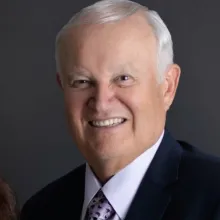
Mr. Seiglie was born in Havana, Cuba, and came to the United States when he was a child. He found out about the Church when he was 17 from a Church member in high school. He went to Ambassador College in Big Sandy, Texas, and in Pasadena, California, graduating with degrees in theology and Spanish. He serves as the pastor of the Garden Grove, CA UCG congregation and serves in the Spanish speaking areas of South America. He also writes for the Beyond Today magazine and currently serves on the UCG Council of Elders. He and his wife, Caty, have four grown daughters, and grandchildren.
