
C Mitchell Knapp
This sermon was given at the Wisconsin Dells, Wisconsin 2008 Feast site.
This transcript was generated by AI and may contain errors. It is provided to assist those who may not be able to listen to the message.
Well, good morning, everyone. It is a pleasure to be here. It's so good to keep the Feast of the Lord, which we are doing. It doesn't matter the location so much, or how you feel, or whether it's been a good year, or a disappointing year, or even a bad one, if life is trying at the moment, even. It's still so good to keep the Feast. And it's not just the Feast. We have the Autumn Festival, Harvest Festival, going on down the road, if you noticed. But we have the real Autumn Festival. We have the Feast of the Lord. And it's just wonderful to be here. Linda and I are so very thankful and joyous to be here after six years of having been at other Feast sites. It's really great to be back here and enjoy the music and everything else. Of course, the Wisconsin Dells would be an absolute beautiful, wonderful, glorious, empty place without you, because our fellow worshippers, the people, the family, really makes the Feast. That's what really does it. It's not empty. It's very, very full. It's nice to have the surrounding physical beauty, the gorgeous weather and everything we've had, pleasure, but the congregation makes the Feast. It's good to be here with so many friends. Hard to keep up with everybody. Sure, we haven't found everybody quite yet, even yet. But friends that we care for and we pray for, it's really much more than a treat for us. It was so nice to see the young people singing. Just thinking back, God is preparing, you know, getting ready for what's ahead, and there they are, among others. We started out, if you noticed in that video, with way fewer than that. Don't worry. God knows how to take care of us. He knows how to do his work. This is exciting. It kind of gives you a thrill to be up here, not the complete paralysis that I recall from, you know, 40 years ago when I started public speaking. But it's a thrill to be here and to be in this situation. I'd like to make just a couple of comments on the Feast film, which was so very inspiring. It brought back so many memories. Thanks to our parents, who responded to God's calling all those many years ago, our family has had just wonderfully rich lives in the Church and in the truth of God. And we're so deeply grateful. My mother, Mrs. Phyllis Knapp, is here in the Dells, keeping her 59th feast this year. I do remember that swinging bridge. It just had two little cords on each side, and a kid, and maybe a small adult, could have just slipped right out under and landed in the river. And I remember those big, mean kids that were pestering the girls, not to mention the little kids like me. I was four years old. I mean, I was almost four and a half. Started to slip. I was thinking like a 60-year-old for a minute there. Anyway, I remember that, and I remember Mr. Armstrong even made an announcement about their bad behavior, which gratified me.
And I remember begging Dad to let me go across the bridge with the big kids. Bert McNair talked about him. There were some other college students. They got to hike, and I remember being, oh, I just felt shut down. And it's so envious that they could go. Finally, Dad, about the fourth day, took me across the river on the bridge, you know, and brought me back. But there's just so many good memories. You have your own, perhaps, back that far, feast memories. It's good to do that. I did meet Mr. Armstrong that year. He wasn't a tall man, but he was still a threat to a four-year-old. I mean, four and a half. And it was a miserable occasion. I didn't enjoy it all. Dad picked me up, and my mom picked my sister, Janice, up and marched us down to the front in front of everybody. And it's kind of intimidating. And then by and by, this man came up and got very close to me and started to put his hands out toward me. So my first words to him were, you know, I think, wah, is how you do it. Except louder, you know, loud crying. And then he resorted to bribery. He tried to buy me off by letting me play with his fountain pen, but I saw through it right away. Kept on crying. Eventually got the job done, and he performed the blessing of little children by laying out of hands for me. And considering everything that happens since is probably a good idea. But just a word about this historical project. It is too important to let slip away. It was and is obviously so that through many miracles over the years, God planted a work of His own among men at that time. Among the sons of men, God was active. And we must not forget it. So we need to follow up this project and write a thorough history of that.
I'll start out with a simple statement today. God's law is good. Now, some people rail on the law, and they hate it. They don't believe it. But we know that God's law is good. Furthermore, the law of God is the cause and producer of all good and goodness. From relationships to physical prosperity to health to blessings both spiritual and physical of all kinds. The law is the underlying engine and the cause of good things. And that is the law that God spoke and the way that He gave us to live how to think and act. Understanding the laws and the judgments, the statutes of God, how they work through cause and effect, the law causes goodness, educates us and moves us forward in our spiritual growth and converts us and makes us wise. If you notice in Psalm 19 and verse 7, verse 7 of Psalm 19, the law of the Lord is perfect. Doing two things, converting the soul and the testimony of the Lord, which is ascendant, is sure making wise the simple. So the law converts us, what kept in the spirit, in spirit and intent. That's what God uses to convert us and to make us wise. Two things we, two big things we desperately need, or maybe the biggest things. Further, the law will cause and be the cause of the peace of the millennium, as it is in our lives now. It is the law of His kingdom. In fact, it's God's family law, and that's the title of the sermon, God's family law. Most people don't realize this profound truth. Most people don't have the slightest idea of the treasure that we have and how good and wonderful a treasure and a gift God's law is to us. So today I'd like to look at God's law and show that it is an integral part of the Feast of Tabernacles. We're here keeping the Feast, and that means we are concentrating on the law. And also the law is the means by which God builds His family. And of course these concepts are related, because the Feast pictures the millennium. And so, of course, we're keeping it a law, because that's what will produce the millennium, that way of life. Let's be a little bit lopsided. The first part is much larger than the second one, and it's not because of material. It's a matter of the timing, what time we have, even the experienced highly trained professional speaker like myself. When only given an hour, you know, you can only pack maybe four or five hours in at the most. So we'll talk fast and try our best.
It really is such a huge subject, so let's scratch the service and show that the law is a part of the Feast, part and parcel with. And also that the law, then, because we're picturing the Feast, that's what's going to bring the millennium and the way of life and the peace of the millennium. First of all, it's always good to define terms, so let's do that first. This also could be a major huge study. So we'll just take one aspect that relates to our purpose here and ask, how does God define His law? And I'm going to go to Psalm 119. So we're jumping from 19 to 119. This is a psalm that's dedicated to the law of God appropriately. It's the longest chapter in the Bible. And in this psalm, which is also being the longest, it has 176 verses, there are seven synonyms for the law and then a summary word that are used. As a matter of fact, there are only four verses out of the 176 that don't have one of these synonyms for God's law in it. Here are the synonyms. First of all, the word law, mentioned in the first verse. Well, I think let's just read the first three verses here. Blessed are the undefiled in the way. It's an overview word. It's used as a summary word, generally including all of the definitions. The way. Blessed are they who are undefiled in the way, who walk in the law of the Lord. And blessed are they that keep his testimonies. That's the next synonym. That has to do specifically with the Ten Commandments. And that seek him with a whole heart. Verse 3, they also do no iniquity. They walk in his ways, already mentioned. You have commanded us to keep your precepts, or principles of wisdom, diligently. Verse 5, I said, I said three, it's actually the first eight verses. Oh, that my ways were directed to keep the statutes, some specific laws, coming under, supporting the Ten Commandments. Then shall I not be ashamed when I respect unto all your commandments. These are directives, direct commandments. And will praise you with uprightness of heart, when I shall have learned the righteous, thy righteous judgments. And that's one of the other words. I think we're on number six. And then verse 8, I will keep your statutes. Oh forsake me, not utterly. So there are statutes again. And then verse 9, going on to verse 9, talks about the way, taking heed where there to according to thy word. So word then is the seventh of the synonyms mentioned here. Just mention the first nine verses. And you go all the way through, and every verse but four has at least one mention of these synonyms. And of course, since they're written in stanzas, each one has eight or nine mentions of the law.
The word way is a general description, and it actually is is used to encompass everything because all these other seven words, the law and synonyms, demonstrate and show us the way of life. It's sort of the result or what comes out of keeping the law. So what we see is that God describes His law in many aspects. It's not a narrow definition at all. And that's actually one way to put the first section here. It's not narrow at all. For example, God's law starts with the testimony. And if you would like to go to the Webster's dictionary and look up testimony, you don't even have to have a Bible dictionary, but the testimony, one of the major definitions, of course, is speaking in court. And another one has to do with Ten Commandments. It is God's testimony. When you speak of the testimony, it's even in the regular dictionary, the standard dictionary, it refers to the Ten Commandments. God's testimony, what He testifies to man. And this is expanded to the five books of Moses, you know, the Torah or the law, and then to the entire Bible. So in other words, God's law equals His words, or His word. It's used synonymously. Sometimes we use the law, and there are several smaller delineations. Sometimes we mean something specific about the law or His word. But sometimes it means everything that God says. Notice in Deuteronomy 8 and verse 3.
I'll skip to the middle of the verse. It says, man in Deuteronomy 8 verse 3, does not live by bread only, but by every word that proceeds out of the mouth of the Lord.
Does man live? So we're supposed to live according to the law. What what is that? He's saying we're supposed to live according to all, not part of the Bible, not just the New Testament, not just the Old Testament. Some people believe that. Some people, but Samaritans, believe that only the first five books were inspired. And you have Heinz 57 variety of people who choose different parts of the Bible and say, well this is good, but we don't pay attention to that, and so on and so forth.
But what God says is I want you to listen to every word I have said. So the word, or the law of God, is everything that He has said and made available to us. The law of God simply means all of His words. And each of God's words is so profound and true that it is given the authority of God Himself.
And we were commanded to live by every one of them. Now there's another partially synonymous term. It's not a direct synonym, but for the law or the word of God, and that is the gospel, or the good news. Matthew 28 verse 20. Verse 19, Go therefore and teach all nations, where commanded to go preach the gospel, Christ said, the gospel of the kingdom. Verse 20, teaching them to observe.
Now I'm having trouble with my glasses, so I may have a little once in a while I read something wrong so you can test me here. Teaching them to observe several of the things that I have commanded you. Well, you know, that was contrived, but I did read it wrong. It says, teaching them to observe all things that I have commanded you.
What do you know? Same exact thing said in the Old Testament. Every word of God, and of course Christ quoted that in Deuteronomy 8.3 as well, Matthew 4.4, and said the same thing. Live by every word of God. And what he told them when he told them to preach the gospel was to teach them all things, not just a few, that I have commanded you.
So what is the good news? Well, it's every word that proceeds out of the mouth of God. The whole idea. The gospel. The restoration, as we heard, of everything. Taking the whole thing. For instance, you know, Mr. Rhodes commented the other day on our our bleak outlook for our economy and our nation in general.
And it is bleak. But if you read all the words which were commanded to study, teach, and learn, it all comes out well in the end because the kingdom of God is the end result. So it's a message of hope. Straight around from the Old Testament to the New Testament, it says the same samey samey all through the whole Bible.
That's a real big important understanding that we need. So the gospel, then, the good news, is also a description of God's law or word or testimony. It's what he everything that he has said to us.
Now, Psalm 19 praises God's law in many different ways. David's understanding of of God's words as he meditated on prompted him to write in verse 97, Oh, how I love thy law. It is my meditation all the day. And I I think about it all the time. So this whole psalm was developed out of that love of God's law because of his deep understanding of the results of God's law.
He wasn't just meditating. When I first read this read this years ago, I thought, man, it'd be kind of tough to just think about the Ten Commandments over and over and over. There are only ten of them and they're important, but you know I learned later that he was he was thinking about the cause and effect relationships because the law causes good. Disobedience to the law follows things up and causes trouble for you.
He was meditating on how God's law works to produce good and straighten things out. The cause and effect aspect, the beauty and the peace and the true love and the good feelings and the good relationships and the trust and the financial stability of individuals, corporations, whole nations, the good news and the wholesomeness that is produced by living the way that God has set out for us. That's what David was meditating on and he came to just love God's law in his way. So his conclusion was, oh how I love thy law, I think about it all the time. God's law is good. And we move from an elementary knowledge of the basic Ten Commandments to a deeper understanding of the entire history of God's works and his system of law. And we see cause and effect when individuals and nations obeyed or disobeyed, fulfilled or just wiped out on the law. And we come to know and understand God himself and grow and always spiritual. This is actually how we come to know God. We read we should know the Lord and know the Father intimately. How do you do that? It's through the law of God, his words, all of his words. So the law is the engine of everything and of course this would be true. God's law is just another way of describing everything that God tells us. So God has defined his terms. Now there's a related question that's important to mention and that is the question of what yields a deeper understanding of God's law? How do you gain? Because there's a progression. You can't just keep the first basic rules and then say I'm okay or have all wisdom or be spiritual and mature or have insight or good character. There's a growth process. And so what is it that yields a deeper understanding and a growth in this? And the answer is in Psalm 111 10 as well as in other places. Psalm 111 and verse 10. It's a good memory verse. A good understanding have all they that do his commandments. So it's not just obedience to the letter of the law, of course, requires the Spirit to keep God's law in spirit and truth. Another subject but not directly on point. Another vital subject but not directly on point for this study today.
A good understanding have those people who take action and do God's commandments. Let's compare this with Proverbs 16 and verse 3, which says, this is the third verse of Proverbs 16. One of my favorites applies in so many ways in life. Proverbs 16 verse 3, commit your works unto the Lord and your thoughts will be established. In other words, take action! You can know all kinds of stuff. Talk to a man who said, you know, I came into the church and I heard it preached, you know, you are responsible if you know the truth. If you have heard it, if God has enlightened you to a small degree or a great degree, you're now responsible for keeping it and following up. You don't just kind of say like so many do, well, Saturday is the right Sabbath and continue keeping Sunday or nothing. Just they happen to know it as an intellectual point. Well, big fat deal to quote, you know, a famous American philosopher, my father-in-law. Big fat deal! So you know it, let's see some action! And that's what God says. Commit your works unto the Lord and your thoughts will be established. This can mean if you're following God's way, then you make plans that God will help you to, you know, fulfill your plans. But it can also and does also just mean in general, your thought processes will be established. And boy, do we need that! Take a look around. God's law establishes, makes us stable in our thoughts. Now, interestingly, God says this. Man says, you show me, you know, you tell me about this and I'll decide. We see this to each other, of course, and rightly so in some circumstances. Why should I buy your product? Why should I accept this idea? You know, I have to analyze it. But when it, not a bad idea when it comes to God, God says, no, no, no, no. I'm the father. You're the kid. I'm God. You're human. I'm big. You're small. Deal with it. You know, if you want understanding for me, take action and do what I say. And I will fulfill my part of it. And I just, recalling this inspiring film we saw earlier too, again, perhaps you noticed Mr. and Mrs. Armstrong kept the Holy Days for seven years just because God says to keep them. And finally, God enlightened them. I don't know why it took seven years. And you think, you know, well, whatever was me, I might have taken 20. I don't know. There's all kinds of unknown things there. But God, in the seventh year, opened their minds because of obedience. How does understanding come? Through obedience.
So to summarize then, God defines His law, His Word, His way, as starting with Ten Commandments and expanding to include every word He has spoken to us. That's what the law is.
Again, it's a huge subject. There are many other aspects, but that's good for today, for this subject. Now, let's review God's stated reason for keeping the Feast of Tabernacles. What does God tell us? We do it for several reasons. To summarize, we bring a Holy Day offering. And anciently, that was the focus of the Feast. You come up to God to bring an offering to them. And we come to the Feast of Tabernacles. We bring an offering. And we give that offering. And that it can be big or small, depending on our circumstances. God is concerned with the attitude, not the amount. But what does it stand for? Why do we do that? Well, it stands for us, coming up to God to present ourselves like Christ did. The first fruits are called on to present ourselves to God completely. And we symbolize that by the Holy Day offering. That's the first thing. That's all of the Holy Days. At the Feast, we picture the Millennial World tomorrow. At a time of peace and prosperity, we do this by using second tithe that we have saved to eat well and to celebrate. That's important. That's a part of the Feast. And it's fun.
And third, we picture the temporary nature of our physical life by living in temporary dwellings, reminding us that we have a limited amount of time. We need to make it count. There are lessons to be learned. This is education. This life. It's preparation. We need to pay attention. We've been enlightened to understand that. So we are instructed in the way, or the law of the Feast. There are laws for a lot of things. And there's a law of the Feast, how to keep the Feast of Tabernacles, and how to do these three things. So here are the stated reasons reading from Deuteronomy chapter 14 and verse 23. So we could turn to Deuteronomy chapter 14. This is about the subject. This chapter is talking about second tithe. It comes down to verse 14. Pardon me. Chapter 14 verse 23. And he says, well, verse 22, you shall truly tithe. So you can afford it. Verse 23, you shall eat before the Lord your God in the place which he shall choose to place his name there, the tithe that you grain in this gnat, everything, your second tithe. The last part of the verse. So that you may learn to fear the Lord your God always.
So this is the stated reason for coming to and keeping the Feast of Tabernacles, to fear the Lord your God always. Now, a quick definition here, just explaining about the fear of the Lord in the Old Testament. Beginners and casual observers would read that, and they would say, well, look at that. The Old Testament God is just, he's a fearful God. And of course, they wouldn't know a thing they're talking about. The fear of the Lord, in the Old, used as it's used in the Old Testament, means more than just being afraid. It refers to those who fear enough to obey God, fear or respect enough to obey God. And that obedience leads to a knowledge and an understanding of God's way of thinking. That is, his law of love.
And that's what the law describes, is love, as Paul mentions. And that understanding, when you gain a deeper understanding, that leads to a deep respect and love for God, because of what his word does, the effect it produces. And that leads to a robust and a close relationship with God built on truth and faithfulness and trust and understanding and profound agreement with God as we grow and mature more and more with God in his way, slash, law, slash, words. God's his way, what he says. We come to just absolutely agree with it and love it, come to the same state that David came to. So you move from obedience, just because of God's authority, you obey, to more knowledge and understanding, and from there to respect and love in this close personal relationship with God. In other words, you come to know God through his law. That is the only way you can know God. And as I say, most people have no, not a clue that that's true, but it's profound and it's the basis of all the creation to understand and know God and obtain spiritual life. It's just lost on most people. We have a tremendous treasure in understanding even that much of the law. Whatever amount of understanding we have this year, more than last year, not as much as next year, it's a treasure from God, a gift from God.
Those who have this personal fervent friendship in relationship with God were referred to as God-fearers, just as a description of them. And the general description of the personal relationship that the righteous have with God is called the fear of the Lord. So it's good to understand that and broadens the meaning of the term. Now, down in verse 26, we have the secondary reason why we keep the feast. And it says, You shall bestow that money for whatever your soul lusts after, oxen, sheep, wine, strong drink, not too much, but it's just fine. In everything in balance, don't be a glutton, certainly don't be a drunkard, but enjoy all these good things more than you would usually be able to. And you shall rejoice, you and your household, a directive to rejoice.
So we keep the feast then, first to learn to always maintain and build that close, personal, fervent friendship relationship with God. And secondarily, we are directed to celebrate with joy. Not just come to the feast and keep it, but do something with joy. And if you, maybe, you're like me, and sometimes you kind of run low on energy and you kind of run low on joy.
The joy quotient you've seen on TV and all these political things during the debates, and the happiness quotient, the graph goes down and starts sliding when something is said, and then it goes up. Well, maybe your joy graph is kind of sinking, like, for example, on maybe, say, the sixth day of the feast, when you're a little bit tired already. And that can happen.
That's the time to take a little bit extra rest, of course, and ask God, because he says he gives us, he puts his love in our mind and he sheds it abroad in our heart. Romans 5-5. What does that mean? That means you might not have love, compassion, concern for someone. Joy and faith, and a lot of other things, and you're kind of running low spiritually. And you ask that, and God puts it in you. It is his righteousness and his joy, and his love and compassion for somebody. He just can't stand the jerk, you know? And you try to think nice thoughts and it just won't come, and you pray, you know, I know you don't have this attitude toward him. He's been acting jerkily lately.
He's mean to me, but I know that you see the good in him, and so help me to have your concern, your attitude towards him. You're trying to watch your description.
I've experienced this. You probably have two. God puts his love, his compassion, his faith, his joy. He puts it in your mind when you didn't have it before. And so that's just a hint about the feast, you know? Ask God for the joy, and also get your sleep. That helps. But we are directed these two things. Now let's go to chapter 31 in Deuteronomy, and notice that there are some other specific instructions and purposes that we were given in chapter 31. There are four purposes here in this section of Deuteronomy 31 verses 10 to 13.
So I'm going to read part of it fast. Moses commanded them, verse 10, at the end of every seven years and the solemnity of the year of release in the feast of tabernacles.
Verse 11, when all Israel has come to appear before the Lord your God in the place which he shall choose, and you shall read this law before all Israel in their hearing. Just a comment about the every seven years. Apparently this was a specific part of it, maybe the whole thing, not sure. But they read out of the law at every holy day and especially at every feast. It wasn't just every seven years, that was a specific direction. Now notice then in verse 12 we have four purposes for the feast. This is why we're here, and it's interesting just to notice how specific it is and how direct. Gather the people together, men and women and children, and your stranger that is within your gates, that they may hear and that they may learn and fear the Lord your God, so the fear the Lord has mentioned, and observe to do all the words of this law. And so the four purposes of the feast are hearing and learning, that there's as much teaching as a part of the feast of tabernacles, and teaching and learning what? Well, all of God's words, as he said. Now the third one is building a stronger fear of the Lord relationship with God, and then fourth actively fulfilling and observing the law, in other words obedience. So you have hearing, learning, relationship, obedience.
Those are four purposes, four things we're supposed to do. They're takeaways.
Well, maybe hearing isn't because you're finished with it when you heard, but this is what you gain. This is the purpose for keeping the Feast of Tabernacles.
Then in verse 13, the building a relationship with God is mentioned again, it's repeated, in the context of child-rearing. And that there are children which have not known anything.
You don't know anything when you start out, so we need to teach the children, as we have been taught, so they can learn to have this fear of the Lord relationship as well.
So that's just a repetition, putting it in the context of child-rearing, pointing out once again how important it is that you who are children, even if you're young, maybe you're just barely beyond the coloring book stage. Or maybe your parents are trying to get you to exit that stage to the next one, which is actually taking real live notes. Somewhere around 6 or 7, right in there.
Doesn't matter how young you are, it's really important for you to know the law of God, too.
You're included. So you just say it's important to understand God's Word, or His law, as young as possible. And God includes you right here, as well as many other places. But I'll just bring that up here to reiterate what Mr. Corbett said a while ago. It's so important. And you don't just come along and grow up and do whatever you want to and not think seriously. And goof off, and then turn 18, and you have good character. Because you're 18 and grew up in the church, not so. Just like David, you start young with the activities that you have, which almost all of them are. The church is kind of rare. You have all those seven days, and only a little bit of one day is at church.
And it's the character you're building all that time that's so important, making it so very important that you, as a child, and as a young person, on into the teens and so on, as you grow up, know and learn about the law, and specifically at the feast. So reading and teaching the law, and the whole Bible, is an integral part of keeping the feast. You can have an autumn fest. The Wisconsin Dells Autumn Fests is being held. I saw the sign that says, oh wait, wait! We're already having it! It's down there at the theater, you know?
But I didn't say it, because nobody would listen. Or if they did, they might have hauled me off, you know? So I didn't say it out loud. But you know, you can have an autumn fest. You can have a real party. You can save your second tie. Then come have a real good time. But it won't be the feast of the Lord without reading and learning about God's law and His way. All this is connected with the meaning of the feast, which pictures the millennium when God will come and tabernacle, dwell with man. It's the whole way of life throughout the world. At that time, that is, the whole way of life throughout the world will be focused on one's relationship with God, man's relationship with God, and the earth will be as full of God's law as the ocean is full of water. And that's what we're picturing here by studying the law, God's words, every single day of the feast. And this would, of course, be true that we would read God's word at the feast, because faith comes by hearing and hearing by the Word of God. Paul wrote Romans 10.17, listening to and having the Word of God, His law, His words, His testimonies, spoken, read, and expounded, builds faith. And that's what the relationship with God is, trust in God, this close relationship. So naturally, we would read the law. And it's not the feast without the reading and the expounding and the teaching of the law. Now, we can learn more by an Old Testament example of keeping the feast, and that's in Nehemiah chapter 8. It's actually the whole chapter.
I won't be able to read the entire thing, and would encourage you to just read through it. Very inspiring, just to cover that. But this actually starts on the day of trumpets and goes all the way through atonement, then the whole feast of the eighth day. The story. All the people gathered themselves together. This follows a long period of time when they hadn't been bothering to keep the Holy Days. Or maybe just a little bit or a few. It was just a serious, it was the sin of Israel, the sin of Judah in this case. And they were just being revived. Talk about a revival. This is a revival. All the people gathered themselves together, verse 1 of Nehemiah 8, as one man, that is in unity, into the street that was before the water gate. And they spoke unto Ezra the scribe to bring back the book of the law of Moses, which the Lord had commanded to Israel. And I think it's interesting to note that on more than one occasion here, the people actually came to the priests and asked, can we have more? Would you throw in an extra Bible study? Let's do it again tomorrow, the day after the Feast of Trump. It's even though it's not a Holy Day. It was the people that were the priests were doing their job, apparently, but the people said we want more.
Because he realized how important the law of God is. And Ezra the priest, verse 2, brought the law before the congregation, both of men and women, and all that could hear with understanding upon the first day of the seventh month. This is the Feast of Trumpets. And he read therein, before the street that was before the water gate, from morning until midday, before the men and the women, and those who could understand, apparently, the children that were old enough to understand, and the ears of all the people were attentive unto the book of the law. So basically, the morning was dedicated to education in the law and the way of God. And the afternoon, the rest of the day, into the evening, was dedicated to celebrating and having a good time. That's about what we do here.
You know, we go till midday. Of course, there's one evening service. Of course, Isaiah mentions that, opening night at the feast. And on Holy Days, we have a little bit different schedule. Speaking of the film again, I had this on my mind, but I do remember going to morning services, walking, trying to keep up with Dad, the whole family, walking back to the tent, and, you know, mama scraping up something neat, and then barely getting that, walking back to the tabernacle for afternoon services, and then walking, it was, I don't know, maybe a mile, back to tent city again, and for supper, and then walking back, this time with blankets, you know, to come into that chilly hall with no side walls during a freezing rainstorm. And three services were not as good as one service, I'd say. That's my opinion. Just my opinion.
But I'm telling you, at that point, a couple of the people on the film mentioned this. At that point, the brethren were hoping for an extra Bible study. It was a very heady time, and I can't remember that much, you know, at those young ages, but I remember very much my parents and their enthusiasm.
Well, that's, it was the same thing here. The people were looking for the priests to do extra.
So the morning was dedicated to teaching the law in the afternoon to celebration. He stood on a pulpit of wood. He describes how they did it and so on. It was a raised stage about like this, and so that everybody could see. And then the service started with an opening prayer. Verse 6, Ezra blessed the Lord, the great God. All the people answered, Amen, Amen, with lifting up of their hands. They bowed their heads, and they worshiped the Lord with their faces to the ground. So they started the service, and they read in the book, verse 8, in the book of the law, of God distinctly and gave the sense and caused them to understand the reading.
So it was more than just reading. The scriptures were being expounded as well.
And so people say, well, why do you do it that way? Well, we have the law which tells us to, and then we have an example of how the righteous priest Ezra, and also Nehemiah did it, when they were pleasing God. And so this being some of the many words of God, that's why we do it. This is part of God's law as well, how to do the feast. So they were doing exactly what Moses had told them to do in Deuteronomy a thousand years before to celebrate and to study the law.
As I say, we learn about God through His law and His Word. And if we don't have that, we can't know God. So the central and basic reason we keep the feast is to study and learn the law and the words and the way of God in that sense. I don't know if you've ever thought about it this way, but the feast, what is the feast dedicated to? The feast is dedicated to the law of God and the study of His Word and the understanding of it more deeply. And secondarily, it's dedicated to the result of studying the law, which is joy and celebration. This does set up a chain reaction.
The reading of God's Word and His law is so inspiring. It's the gospel after all, the message of hope to the world, that the subject matter causes and produces the feast to become the celebration of joy that it's supposed to be. I can say, without the law, you can have a good time and a party, but you cannot have the joyous feast of the Lord with inspiration from God without the teaching and learning of the law of God at the Feast of Tabernacles.
Now, there are some other things that I'd like to note here in chapter 8, but not to read the whole thing. Verse 9, they were very sorrowful because they read the law, and the first reaction is, oh, woe is us. We've left God, and we're going to be cursed, and we're really in terrible shape.
They saw their sins. So then He said to them, Nehemiah and Ezra, both actually, go your way, verse 10, and eat the fat, and drink the sweet, and send portions, feast gifts, mainly food, of course, unto those to whom nothing is prepared. For this day is holy unto our Lord, and don't be sorry, for the joy of the Lord is your strength.
So they were admonished to set aside the normal burdens and things that they were carrying, and especially the fact that they just read that they had brought on curses and were in trouble with God. It says, neither be you sorry, don't be sorry, for the joy of the Lord is your strength. So Levites repeated that and told everybody, so the people went their way to eat, verse 12, and to drink, and to send portions, and to make great mirth, because they had understood the words that were declared unto them. It wasn't just the first part about the curses and punishments.
It was the second part about the blessings for repentance. There's a solution to all this, the message of hope that we have. So he told them to snap out of your sorrow mode. You might not be in sorrow, maybe just kind of be bummed out some days or better than others, you know, and some circumstances are different than others. There is sometimes cause for sorrow in our lives and being burdened. This may be hard for you if you have suffered loss, have a friend whose sister died during this feast, and he drove home and went to the funeral, saw her only for a little few minutes, and then the funeral and drove back. And he's now back here at the feast. And we know of others who have suffered terrible losses. When you think about what God sees, He at the same time is answering prayers. There are weddings going on and great joy and mirth and babies born. Other times people are dying. And God sees this all at the same time. He answers our prayers. He's able to handle everything. It's just the kind of maturity and spiritual and mental strength that we're developing as well. It may be hard when you have—it is! I've been there, too—sovered a great loss just before the feast. And you may be carrying pain and sorrow. This sometimes happens as part of life. But no matter the situation, the best thing to do and the best way to move forward the healing and the recovery is to pray and leave it in God's hand. And you might have to do that several times a day.
Been there, too. Leave it in God's hand and then focus on the joy of God—the end of the story of God's Word and His promises. So they were told to do that at that time. And they had reason to really worry. And it is true that we sometimes do this. No matter what the situation, though, God says, put the brakes on and stop what you're normally thinking about in your normal activity. Completely change your way of life or your daily habits. Come to the feast for eight days and experience the joy of the Lord. He'll help in that.
Sometimes it's a hard thing to do. We have to just rely on God's help. Well, verses 13 through 18 record the fact that they finished trumpets and they went on to atonement and on through the feast. They discovered, verse 14, by reading the law that they were supposed to live in temporary dwellings. So they went out and they made booths. They have all that story. They had not kept it in so long. They had just forgotten about it. Oh, we're supposed to go out and make booths and sit under them. And you know what they did under the Sukkahs.
They sat. Each day they sat for a little bit and they meditated. What about the law of God? It's part of the Feast of Tabernacles. And so they did that in verse 17. It was a great time. It was the biggest and greatest feast, not the only one, but the greatest one since Joshua, the son of Nun, unto that day. And there was very great gladness. Also, I wanted to mention in verse 18, day by day, from the first day to the last day, he read the book of the law of God. And even on the eighth day, it says, so they had services every single day of the Feast. So it's summarized then. God's law is an integral part of the Feast in every aspect. The Feast is dedicated to the teaching and learning of God's law, His words, all the words that proceed forth out of His mouth. And we come to hear, to learn, to build our relationship with God, and to have a great joy, and to obey His word, and specifically His law of the Feast. We come to celebrate and do this all with joy because of God's promises and His words. Now, let's go to the second part of the sermon, which is much smaller. And as I say, another huge topic, but we just need to make the point here. Every family has a law or a culture. You have a family culture, whether you know it or not. Suppose you know it. If you think about it, it includes rules, it includes habits, whether they're good or bad. You know, it's kind of sloppy around there, or it's always very neat, or when you eat breakfast, it's just what you do. Customer, customary ways of interacting and going about daily life, it would include how conflict is handled or not, how structured you are, how flexible, how close, how trusting, how affection is shown within the family, how sloppy or fastidious, social interactions, attitudes, manners, politics, religion. It's just a myriad of things. Most families don't write down their family law. I have it, and you probably haven't written your family law or constitution that describes how your family acts. I don't have time for that usually, but if you haven't written it, it doesn't matter. It's still there. You have a family law, and you have a family culture. We identify with our family. We're the Joneses, and we do it this way. We get up at 4.30, and we go out and milk, and we come in, and I'm talking about my grandparents, and also some very close friends out in South Dakota who do that very same thing.
But we have a family culture, and we identify where the McGillic hut is, and we do it this way.
And, you know, I was thinking, some people who might think that they know God, but don't know the law, haven't studied the law, haven't come to the feast and learned and studied the law, they might say they're in the family of God. You know? Well, this is the family of God, and we do it this way. By the way, what do we do? We're not quite sure what the family of God does, but we know because we have read the Constitution, the law of this family. The sum total of the parts of these rules and customs of our family is the law, and it either produces a functioning, successful, productive thing of a few more adjectives. Loyal, happy family, or maybe something less than the ideal. Well, don't worry, don't feel guilty. Everybody is less than the ideal, but, you know, your family culture produces how your family is, good or bad results. And, I'm just going to start over because I actually forgot the second half of that sentence.
That's what you get when you try to go on to the next one in preview. So, anyway, so I'll start over.
Our family culture does produce how we are and how our lives are. It produces either, you know, great results, sometimes less than less than great. But the family of God is different because God did write down the family law, and that's the law we've been talking about here. The loyalty, the love, the honesty, the diligence, the enthusiasm, the joy, the faithfulness, and the mercy, and all those other things of the family of God, doesn't just happen by accident. Like the N'er-do-well kid who one day turns 18, he's not automatically in dude with excellent character. And the same thing with the family of God. Doesn't happen by accident. It's because every single member of the family will have gone through extensive and intense training to develop these traits of character.
That's what we're doing right now. We're in the process of preparing those traits of character.
And what is it that produces these good results? Well, we've already said that 25 times, the law of God. But let's go to Isaiah 11 for one scripture to demonstrate this. Isaiah 11.
And starting reading in verse 1 of Isaiah 11, And there shall come forth a rod out of the stem of Jesse, referring to Christ, And a branch shall grow out of his roots, And the Spirit of the Lord shall rest upon him, that is, shall rest upon Jesus Christ as the King of kings, And the Spirit of wisdom and understanding, And the Spirit of counsel and might, And the Spirit of knowledge and of the fear of the Lord. Now, I find this fascinating. The fear of the Lord isn't just being afraid of God, as I mentioned. It describes a close relationship. But here is Jesus Christ, who is the Lord, described as having the fear of the Lord.
It's that same attitude and the same spirit that the God family has, what we have here is a list of family values of God's family law, His family culture.
And of course, when He takes over His King, that's going to be reflected in the entire kingdom around the world. And it, of course, must be developed in us as we go along. It must be developing in us in our lives now. So let's continue reading about the family values.
And shall make Him of quick understanding in the fear of the Lord. I mentioned again that relationship attitude. And He shall not judge after the sight of His eyes.
We tend to, and we try to be fair and equitable, but sometimes we don't see everything. He won't judge just after the sight of His eyes or reprove just by what He has heard.
You know, here's say, we tend to do that. Here's some gossip. But like His notch, you'll tend to believe it, or at least part of it.
But with righteousness shall He judge the poor and reprove with equity and fairness for the meek of the earth. And He shall smite the earth with the right of His mouth, with the breath of His lips shall He slay the wicked and bring righteousness to the fore. And righteousness shall be the girdle of His loins and faithfulness the girdle of His waist.
So righteousness, faithfulness, your word is your bond and your law.
If God says He'll do something, it might be thousands of years. He might have to wait years for you to come along and be ready to receive it, but He will most certainly do it because He said so He's faithful. And then it talks about some of the conditions in the millennium, the wolf with the lamb and so on. Then verse 9, but these are very important verses, just skipping over them for the moment. They shall not hurt nor destroy in all my holy mountain. Now that is a major family value. The law of God sets up a society where you don't have crime.
They shall not hurt or destroy in all my holy mountain. For the earth shall be as full of the knowledge of the Lord as the waters cover the sea. Everybody will know the family values, God's family law. And we're talking about all of the words that proceed forth out of the mouth of God. In that day there shall be a root of Jesse who shall stand for an ensign of the people. To him shall the nations seek and his rest, this world, it's called a world of rest and peace, will be absolutely glorious. Just think of how much we waste, how much wealth we just waste and burn up in this world. I don't believe that we can conceive of a world like this. We have all these descriptions. It's just there's an element of faith of just trusting God to teach us. I can put myself forward in some ways, but there's so many second, third, and fourth, and fifth level results. We have the law of unintended consequences. With God's law, it's the law of intended consequences, and we're so far off on the other side we can't even imagine the full glory of the world to come. Well, one of our family values is that we study to learn the values of, I guess I said that doubly there, one of our family values is that we study to learn our family values.
Most people will kind of grow up and they just absorb them, and that's normal.
It's way better when the parents not only live them but teach them directly. Sabbath services every week, go to the Feast of Tabernacles, Holy Days. But this is a lifetime project, this learning project. We work at it because it's our family law, as the called and chosen saints of God. And we know that living according to it will sweeten our lives, our relationships, our families, our church now, and ultimately the entire world that we are going to have a part in. God has given us a blueprint worth so much it can't be valued. How could you possibly set a value on having a successful life? It shows a plan that makes life good for those who use it to build their lives. They build their lives around God's law instead of trying to get away from God's law. In the earlier you study and learn it, the earlier you can avoid making costly, harmful mistakes. In the earlier you can take advantage of a lifetime of assistance and help directly from God. There is a place in God's church and in God's family for you, if you're eight, you're unbaptized, you're just a kid, or you're a teenager now. There is a place for you. There's no age discrimination with God, of course, because you know to Him, a 150-year-old is about a mere child. He views us all. We're children before God. Just because you're young does not mean that God doesn't know your name and He has called you, He has set a place in His church for you, and He has set a place in the kingdom of God for you and His family, His spiritual family. There's really a special emphasis in the Bible on the value of the law to young people. Valuable to everybody. But quoting from Psalm 119 where we were, and I skipped lightly over verse 9 because I was going to read it now, "'Wherewithal shall a young man cleanse his way? By taking heed there into according to your word.'" David, as we heard just a minute ago, was probably about 15 at that earliest point when he was fighting off the bear and then the lion and trusting God in that.
So how do you make up for youthful stupidity and mistakes that cost you later? Well, you get back to living according to God's law and it starts to straighten out your life, even if you do go off the track. And the best, of course, well, everybody does, but makes their mistakes so on. But the best is to try from early on to go God's way. Because you have the promise of God being with you, giving you personal assistance, your whole life. It starts with the lay-on of hands and the blessing of little children, which many of you here, many of us, have had done to us. Now, I want to mention one other, and that's Lamentations 3, verse 27. Lamentations 3, verse 27, "'It is good for a man that he bear the yoke in his youth.'" In other words, it builds strength of character and it teaches wisdom to bear the burden. What does that mean? Well, the yoke, or the burden, is not defined, and it could mean hardship and difficulty, because that builds character and teaches wisdom. But it might just as well mean a teenager taking on the responsibility of choosing the right way and seeking God's truth and studying his family law when he's very young. So, taking on the yoke or the burden, Christ says, take my yoke, my responsibilities. It's light in the end. It's the lightest of all, and you miss out on so much trouble. So, there are youth here, young people, I don't know how young, 6, 8, 10, certainly by 10, up into the teens, those ages, and you are probably looking forward to meeting somebody that you really fall in love with someday, maybe quite a long ways, and maybe not too many years from now. And then you're probably hoping that it'll turn into a very deep love, and you'll get to get married to a special person. I know you're thinking this because I thought this. Everybody thinks this. And when you have a family, what kind of a family do you want? Do you want to have a disappointing love and a lot of fights, or just kind of a blah existence and kids that give you trouble? Of course not. We don't want that. We want a happy marriage and a successful family, and good kids, and fun, and excitement, and joy, and success. That's what we want. Well, the idea here is that God offers a blueprint to build a good family. It's the same one. He's in the process of building his spiritual family, but it's the same law that builds our families, and is especially good as a gift, as an offering to a young person. If you receive it when you're young, it's all that more joyous and good. Well, I just wanted to mention that. Actually, I have a long list of all the benefits of keeping God's law, which you don't have time to read, so I won't try. I'll read a couple, though. Here are some of the things that God's law does for you, and as a tool that produces and accomplishes results. Here are some benefits. You get to know God the Father. Without the law, you can't do that, or Jesus Christ. You get to succeed in the purpose for which God has created you, and you get to build a strong, happy marriage and family. You mentioned you can neutralize youthful mistakes. You get to secure the family blessings that God can pour out of the windows of heaven upon you, and gain understanding and wisdom, and develop the mind of Christ, and fulfill your calling, and prepare for leadership in the world tomorrow, and build the family of God one person at a time, and the list goes on and on and on, if you want to get really detailed. The blessings of God's law are so many and so great that we don't have the ability to understand and to accept all of them. It's just so much. So, summary main points.
We come to the Feast to study the law. We come to the Feast because of understanding the law, to have a joyous celebration of worship to God. And we come to the Feast to learn the way of building God's wonderful family in the world tomorrow. The same way, by the way, that we build our families now, which is especially useful and helpful for the young people.
So, the law is the precious Word which came out of the mouth of God. The law, His words.
It's a great treasure. And by the grace of God, you have it, and I have it. We possess understanding of God's Word as a direct gift from God. It's the pearl of a great price, the most valuable thing. Cherish and cling to, and study and meditate upon, and value and obey, and fulfill, and love and uphold, and treasure the precious Word and the law of God.
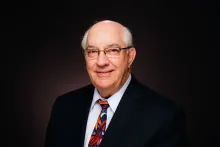
Mitchell Knapp is a graduate of Ambassador College with a BA in Theology. He has served congregations in California and several Midwestern states over the last 50 years and currently serves as the pastor of churches in Omaha, Nebraska, and Des Moines, Iowa. He and his wife, Linda, reside in Omaha, Nebraska.
