

C Mitchell Knapp
This sermon was given at the Branson, Missouri 2011 Feast site.
This transcript was generated by AI and may contain errors. It is provided to assist those who may not be able to listen to the message.
Well, good morning, everyone. It's a wonderful blessing to be here. It's wonderful to keep the Feast of Tabernacles again. Period. If you keep the Feast, it's a wonderful thing. We used to give the introduction and say, well, how many have been here for so many years and how many have been here for the first time and all those things? We have been keeping the Feast here. I just thought you might be interested in this up-to-date statistic. If the average is 30 years, we have about 600 people here, we have kept 18,000 Feasts, and that's conservative.
I think that within this room, we have kept probably more like 25 to 30 Feasts. There is a lot of Feasts going and keeping that has gone on. It is an absolute privilege. We are just talking about this, how you start thinking about it, and then you think about the meaning of it and what it means for each one of us, and how the eventual effect that we are picturing is just like 4th grade. I just thought, that's how I felt when I was in 4th grade. There are elements of dread.
There is the sermon, there is the Bible study, and there is parking and special services, and there is anointing, and there are leading songs five times. Mr. Kinsey and I are trading. There are more responsibilities, and it is not quite like 4th grade. I won't be able to run out in the backlot and play baseball or something. But still, the feeling and the excitement is just like 4th grade. We are here at the Feast. Once again, what a privilege.
We are holding a church service on a Thursday in the fall, worshipping God by observing special Holy Days that were given 3,500 years ago. These are special days. They aren't national or business holidays, but they are special family days of a special family. These days are called the Feasts or the Festivals of Yahweh, the Feast of the Lord. It is not our party. We are coming to join Jesus Christ the Lord at His festival.
That is important to start out, to have that orientation. This isn't our thing. This is God's thing that we are doing. So we always ask, and as we generally always do, why are we here? What is the purpose for this? What I would like to do is review the great purposes that God has for us, for us being here in Branson and various other places around the world. Why are we doing this? There are great purposes for us to keep the Feast of the Lord. Yet again this year, and every other year for the rest of our lives.
Think about this. This is a lifelong commitment to keep this Feast until we are gone. Here is the reason for reviewing the great purposes of God for these days. Because when you study and focus on the purposes of this Feast, and think about what it really means, not just to everybody in general in the world, but to me, myself, and to my friends, and a broader scope as you think, you can't help but be lifted up and inspired and filled with enthusiasm.
It's not just the trip, or just the physical, that yields that enthusiasm. When you put your mind on God's purposes and goals for us, then there is less of a struggle with motivation. You don't have to make yourself study, and pray, and meditate as much as you might when you think about the purpose for everything. You want to. You want to prepare for the glory that God has for us, that He has planned for us from the very beginning. So, by keeping the Feast this year, the Father, and our Shepherd, and our Captain, Jesus Christ, they intend to have a purpose in mind, something for us to accomplish. They intend to build our appreciation, our joy, and our closeness to them both.
And when you think about that, that's a purpose. That is what gives us the enthusiasm to know what God is up to in our lives. So, the Feast is all about the Gospel of the Kingdom of God. We just had our seminars, of course. That's what we're doing, this Feast. It was appropriate that we had those just before the Feast. It's about the Gospel of the Kingdom of God, our purpose for living. That's what we're focusing on by keeping the Feast. And that's the aspect of the Feast that I'd like to emphasize today, as we begin these eight special days.
The fact that the good news of the Kingdom of God, in all of its greatness, and its enormity, is beyond us, without God's help to understand. It's just so big, we can't really...we just can't grasp it.
The Feast of Tabernacles is intended by God, and He does this every year, to have a huge impact on us, and keeping it, not just knowing about it, not just having the knowledge, but actually going and keeping the Feast of Tabernacles, should give us, and does give us, when we keep it in the right spirit, a huge increase of God's spirit. A tremendous boost. But the idea is that we have to know how to approach the keeping of it, so we do it in the right way to receive more of those benefits. God blesses the Feast and our keeping of it, period. But there are things we can do to really enhance that. Now, we pick up the story here in Leviticus 23, verse 41, and of course, we'll probably hear more about Leviticus 23 during this Feast. But this talks about the Feast of Tabernacles, and I'm going to break in to verse 40, about the middle of it. Leviticus 23, verse 41, You shall keep it, the Feast of Tabernacles, as a feast unto the Lord for seven days in the year. It shall be a statute forever in your generations. It's God's, and there's no termination date on it. And you shall celebrate it in the seventh month. It's coming down to verse 44. So Moses declared to the children of Israel the feasts of the Lord. They're the feasts of God, the feasts of Yahweh, the Hebrew word. So there's an element of faith in keeping the feast, just the unfeigned belief, unfeigned faith, as Paul said. Just knowing that this is God's feast, and it is His will, that I be here to observe it with Him at His chosen place. Several places, including this, talk about the place where He is chosen. So just coming here, you hopped in your car yesterday or the day before, or sometime, or on the plane, or whatever, but you put out some effort for transportation, and you came here. Just coming here is an act of faith and obedience, and that is worship. Just coming here builds our faith, demonstrates our faith that God has given us, because it's obedience, and that adds up to worship. It always comes down to a very personal worship of faith, just personal trust in God. That's what everything comes down to in the end. So this is the Feast of the Lord, not man, and God says, You shall keep it, verse 41. And that's the first big reason. The great purpose is that God says to you, one of the biggest things, that we were baptized, and we said, Thy will, not mine, be done. That's going to be my life from now on. I'm going to always choose your way, and put my way aside if it's different, until eventually it will be the same all the time. But if I stumble, I'm going to come back to this. I'm never giving up. This is my life from now on. We promised God baptism. And that's the first reason. It's just plain willingness to obey. Very elementary. That's the basic lesson. Now the second big reason, or purpose, that we have, that God has for us, is to learn the fear of the Lord. Chapter 14 in Deuteronomy, verse 23. And we've read this a lot also.
And you shall eat before the Lord your God, referring to the use of the festival tithe. And, you know, when you didn't have electricity, and that could sound a lot of things in the modern world, and didn't have modern transportation communications, and didn't have even the manufactured products that we enjoy, it came down to very basic things. And when you had a feast, and you had to travel there, it was mainly the food and the fellowship, and the joyful visiting. That was the focus. So you shall eat before the Lord your God, in the place where he chooses to make his name abide. God has chosen this, and here we are. And he said, even where there are two or more of you that meet together in my name, I will be there. Christ is here. He is meeting with us. So, to make his name abide, the tithe of your grain, your new wine, and your oil, the first things you heard, and your flocks, in other words, what you have saved, is the festival tithe for the feast. And you shall do this, so that you may learn to fear the Lord your God always. The purpose of the feast is educational. Now, just a comment about fearing the Lord. When you think about that, let's say, the casual observer might think, casual hearer might say, well, who wants to learn to be fearful? We're supposed to get rid of fear. I don't want to be fearful. And that's not what it's talking about, of course. Now, fear has a negative and positive sense in the Scriptures, as you know. And there is a negative fear, fearing things that shouldn't be feared. But then, you know, if you're swimming around the ocean, and you have a fear of sharks, and it's a shark-infested area, that's not an unhealthy fear. That's a real good fear. And, you know, we teach little children, now don't put your hands on the stove. You let your ass, it could be hot, and almost all of us have learned that. But we didn't believe them, and we learned it personally, touch something hot. So it's a good thing to have fear of touching the stove and other things that might damage this. Fear is good. In this case, it's fear of not obeying God for all the bad stuff that will happen as a result of our breaking the laws. It's not that we're fearing that God is a mean, petty person that would take vengeance and get mad at you. Because you didn't learn. Not at all quite the opposite. He's concerned for us.
And we would fear to disobey God for all the bad stuff that would happen, but also for the hurt and the embarrassment that we would cause ourselves before God. We have to come back and repent again, and we should have learned that lesson. There's a fear of not obeying God that is very, very healthy. But it doesn't just stay at that level. This fear of respect, well, it turns into respect. It is partly respect. And then it moves on into, as you more and more deeply respect anybody, in fact, but especially God, then that develops love.
You're not just admiring respect God, but you truly do love God. You just appreciate Him. And you're just impressed and thankful, as Mr. Dobson just mentioned, just so thankful because of all the things he's done and what he is and what he has offered to us.
What he gives to us now and has offered for us in the future and what he does for us. All those many, many things. The fear and respect turns into a love and then moves on as the years go by into an absolute devotion where you love God and you've committed yourself to Him. And you're never turning back because He is so good and continues to be to you and to all of us. And so when it talks about the God fear...well, actually that was the term they used, the God-fearers in Old Testament times. The Jews use that term. But when it talks about...when we read the fear of the Lord, it's not talking about the terror of some pagan God that is out to get us. It's talking about this fear that grows into respect and then love and the absolute devotion and commitment to God. That's the fear of the Lord that God has given this feast for us to learn more of. And there are so many ways to do that. We have so many of the lessons and experiences. It's very, very deep and very spiritual and it's way, way, way beyond that initial statement of learning the fear of the Lord.
So the feast is with the multiple days and everything, specifically the Feast of Tabernacles, because we have to get up and move and go somewhere. And all these experiences, all this effort and time expended and all that we do to keep the feast, the whole experience is designed to help us to grow in the love of God.
And you can just say that, the word, but the full meaning. We could easily switch that out with a synonym and just say, the reason you're keeping the feast, the second big reason is to learn to love God. That's what that says, although it says the fear of the Lord. That's what the fear, the basic respect develops into.
Godly love and spiritual growth are gained through keeping the Feast of Tabernacles by going through this experience. And why is that? Well, because God's presence is in the Feast of Tabernacles, and He gives His Spirit to those who obey Him. Acts 5.32. He gives His Spirit to those who obey Him. It's one thing to obey a specific thing. We, hopefully, that's what we're trying to do during our lives.
But to cut out about 10 days or more, take that out of our year, and devote that to obedience to God, doing all these different things that He has specifically told us to do, and keeping it in the way that He tells us. That's a big chunk of obedience. And the whole idea is that God gives His Spirit to those who obey Him in the right attitude. That's what's happening here, brethren. We've come to be filled up with the love of God because God is in this Feast and He gives us His Spirit. So, that's why it's such a boost every year. It's such a tremendous infusion of enthusiasm and so much learning to it.
It's like fasting in that sense. I never can study very well or concentrate as well as at other times in praying. When I'm fasting, because I'm foggy-headed and tired and probably grumpy, you're just not up to your best. And I don't do my best study in prayer during a fast. Generally, I guess maybe through some real terrible tragedy, I wouldn't care. But God blesses that because you really are sacrificing something you want and is important to you, food, and feeling well. You're putting that aside to put God first. And God blesses that. It's not that we are so much better when we fast. Quite the opposite. But God blesses that obedience and our sacrifice. And He promises in general to turn our obedience to Him. I don't mean just obeying rules, picky rules, but a wholehearted service to God. He says He will turn that into spiritual growth. And our part is to obey Him with the right attitude. So we need to remember our main focus, and that is, the deeper you go into God's plan for yourself and for others, the more inspired and enthusiastic you become through the power of His Spirit. The deeper you understand and the more you try to obey. I don't mean just the rule-keeping aspect. I'm talking about just with a whole heart, just to conform and follow Christ, who is our captain. This is the channel through which God gives us and develops the Holy Spirit and His love in us. That's the second great reason that we keep the Feast of God, the Feast of the Lord. The third reason is to study the words of God and to learn His law. Specifically, we come here to study the law. I actually gave a whole sermon a couple of years ago on just that aspect. There is much to show this, to demonstrate this. The Feast is for the purpose of studying the law of God and the many aspects of how to live life. That's what gives us the taste of the world tomorrow, as we heard in the sermonette. By living according to this giving out and serving attitude, sacrifice of self when necessary, but make sure that we're giving to others. That's the whole way of life.
The third reason is to study the words of God for the purpose of learning His laws. His laws describe this good life and this good world that we're picturing this coming in the future. I just wanted to read one of the many scriptures that demonstrate this. That's Deuteronomy chapter 31 and verses 12-13.
Sorry, I'll not read the whole thing. Verse 11, when all of Israel come to appear before the Lord, the Lord your God and the place which he shall choose, you shall read this law before all Israel within their hearing.
This was a specific ceremony, or actually action they were supposed to take every seven years. So that by the time a person was 20, which was the age of adulthood with the Hebrews, he had heard the whole law read aloud at the feast at least twice. It was only done every seven years. We have the story actually the first time they did it. So the idea is, and it's explained, so even the children, that they hear it and so on. That would happen, of course. The priest read this every seven years, and the whole congregation had it reviewed several times, that many times. But the first time was recorded in Joshua 8 and verses 30-35. I'm not going to take the time to turn there and read that.
It's just a charming six verses. Joshua 8 and you read verses 30-35, and it just ties it right in there with Deuteronomy 31. I said 12, but it's more like 10-13. But it shows that that was done by Joshua, the faithful servant of Moses. Now, in the Dines of Nehemiah, and this is about seven centuries later, a long time down the road, this was done by the exiled Jewish remnant who had returned from Babylon.
They had been taken captive, and only a few of them came back. And they hadn't, as a nation, read the law of God like God told them to at the feast. In decades, at a minimum, there might have been a few that did, but probably not. That's why they were taken away. But probably centuries. There's an interesting scripture. If you read that in Nehemiah 8, it's actually verses 8-18. It's just the last part of the...
well, it's 18 verses. Read the whole chapter. Don't worry about the numbers. But I just love to read that. In preparing this, I had to focus my mind and get back on to the subject of the sermon. I wanted to go ahead and read the rest of the book. But just three verses here. Nehemiah 8, verse 8. So they read distinctly, this is the priests, from the book in the law of God.
And they gave... they didn't just read it. They gave the sense. And they helped them to understand the reading. Now, they didn't bring their Bibles to church. The Bible wasn't written yet. They had the book of Moses and actually quite a few books by that time of the Old Testament.
But they didn't have books. The scrolls were rare. And a lot of people couldn't even read. So it was read to them. And they helped them to understand it. The meaning behind it. Verse 13. The whole story is so good. I hate not to read the whole thing. But verse 13. Now on the second day, the heads of the fathers' house of all the people, with the priests and Levites, were gathered to Ezra the scribe in order to understand the words of the law.
And so they did that. It says, verse 18, Day by day, from the first day until the last day, he read from the book of the law of God. So this is one of the great purposes. The Feast Tabernacles, as all the other holidays, they are days of education. They are education. There is the study of the law, and then there are all the experiences, and going through the motions, and doing what God says to do. Which is a lot of fun, of course.
Thou shalt be happy, smile, laugh a lot, eat a lot, and rejoice. That's not a hard thing to agree with when you think about it. But the law, of course, instructs us on so many things about all of life, and what eventually will bring the truth of what we are picturing here, the Kingdom of God. So, just to summarize these three great purposes for keeping the Feast. Number one is willing obedience. Number two is learning to love God, meaning receive more of God's Spirit. And number three is to study the words and the law of God, to specifically study more about God's way. And these all three together describe worshiping God.
This is just an overall summary of why we are here. To worship God, and then these three specific purposes that we have. Now, there's much instruction on how to keep the Feast. We're familiar with a lot of them.
By the way, in Nehemiah chapter 8, that last, most of the chapter actually, it's just a wonderful story. It brings in several elements of these, and it talks about how to keep the Feast. We're more familiar with those, so I thought I wouldn't go over the whole thing. But here's a summary of how the festival is kept. There are certain specific things that we do. I guess the first three at least, we go in order.
First of all, we are to prepare in advance. Deuteronomy 12 and Deuteronomy 14. Again, we have this in our literature. If you're a little fuzzy, if you absolutely don't know all the way to just a little fuzzy on this, go back and pull out the Bible Course.
Goodbye, what I call it. It's just the Bible Course. We have 12 lessons. The Holy Days are in one of them, and then we have a couple of other booklets. Just excellent. It has all these scriptures, so I won't turn to them at this point. But we're supposed to prepare in advance. Deuteronomy 12 and 14 talk about this, and save a festival tithe so that we can afford to come and enjoy this great feast.
And secondly, we are well in the first... I guess, maybe in the first... well, yeah, secondly. You have to figure out where the place is, where the God's people are going to keep it.
If you head on down the road and you come to a really nice city you like and turn in there, that might not be the place. You've got to find the place and then get there. Go there. So that's kind of a simple one, but I mean it's obvious, but it's true. You actually have to get there. God requires that we get up and go and take action to keep the feast.
There's a lot of meaning in that, too.
Just a summary. To get up and go to the feast, which pictures the Kingdom of God, means you have to put all your efforts. You have to focus and prepare for a long time so that you have treasure in heaven. You have a festival tithe.
Because if you don't prepare and have treasure in heaven, that is, character and learning God's way and knowledge of His truth and so on, you're not going to be able to arrive or even get there to the Kingdom of God. And there are a lot of other lessons. The whole thing is very fascinating. So we have to prepare, and then we have to actually come and make efforts.
It says the violent take the Kingdom by force. There is a lot of fighting that we have to do to attain to righteousness. We fight ourselves, mainly. There's a lot of struggle that goes into actually even getting to the Kingdom. And we picture that by the travail of traveling.
A lot of times I think about this driving down the road in the comfort of a modern car. And you can turn on the air conditioner if you want to and listen to the radio. It's just as comfortable as home in some ways.
Actually, I haven't researched this, but I have read it that the word travel in English comes from the Old English word for travail.
Most people, until maybe 300 years ago, hadn't gone... Most people hadn't gone more than 25 miles from their home, ever. Now, I don't know who knows this and how he figured it out, but the idea is they didn't go very far anyway. And most people rarely went more than 7 miles for their home. Again, I'm quoting the most authoritative person ever quoted, and it is they. I don't know who said that, so I don't know. I can't prove it.
But when we drive our nice cars, and even if you're complaining because you have an old clunker, it's nowhere near the travail. No motels, no restaurants on the way, and robbers were commonly on the roads.
And so the idea of coming to the feast meant more, or gave a better understanding of that analogy or that teaching about coming to the kingdom. The third specific thing we're told to do is to bring a special Holy Day offering. You could have as little as one cent, although I know of one Holy Day offering that was even less than that. Two mites is the smallest one I ever heard of, and that would be worth less than a cent. The amount isn't the big thing. It's supposed to reflect our love and our thankfulness. Well, I'm starting to say what other people have said. First, Mr. Barrowitz, now Mr. Dobson. But that's what the Holy Day offering is, and the amount's up to us. It's free will. So those are the three things in order. But then when we get here, we are told to rejoice before the Lord. I'd like to read back to Deuteronomy 14, and just read this one verse. It says, and you shall spend... This is Deuteronomy 14, verse 26. And you shall spend that money, the festival tithe, for whatever your heart desires, for oxen, for sheep, for wine, or similar drink. Alcohol, in balance, is just fine. Wine that makes glad the heart of man. In the Psalms. For whatever your heart desires. And of course the context is eating and partying. It doesn't include drunkenness and bad things. Just have a good... Just don't worry about your diet. If you're on a diet. Whatever you want to. Eat like a rich man. You shall eat there before the Lord your God, and you shall rejoice, you and your household. And then later it says, don't forget the others. Just whatever you want. The feast is supposed to be an abundant life. In America, a lot of this lesson is just plain lost. And that's going to change. We've got some tough times ahead. But the feast generally would be a time when you lived on a much higher standard of living. Higher on the hog, as they say down in these here parts. I know very well because I'm Springfield. Don't live there now. But just quoting my dad, or actually my great aunt. These here parts. Referring to this place here. But living higher on the hog, or higher standard of living. Just having a nicer and easier time of it. And if you don't usually have such an easy time of it. And life isn't so rich like we have in the United States at this time. Then you appreciate that difference. We're picturing a world of abundance. And so there is eating. And then there's another one. And that is, I'm just going to mention verse 27. Go right on here. It talks about, don't forget the Levites. And it says, don't forget the widows and the fatherless. In other words, those who have need. Don't forget the other people. And so there's eating. And enjoying a better lifestyle than usual. But then there's the sharing of it. Now, both of these two, eating and sharing, which are specifically commanded. They imply fellowship. It implies a party. You go back in history, they had dances and they had celebrations and all kinds of different ceremonies. It was just fun. They had one ceremony where they marched around. This is later when they were at Jerusalem. They marched all the way around and went down to the pool of Siloam in the water ceremony. But they had the official Levites that played in the band. But when they did this water ceremony at certain times, everybody thought he could play a flute.
Or could play one note on some homemade instrument. Anybody could join in the parade and go down there. They say it was sometimes very, very huge, very large. There's just many, many activities. And of course in that culture they would have some different than us. But it was just a fun time with many things happening. The whole idea of eating and eating together. And then especially sharing. It says, like in Nehemiah, if you go back and read chapter 8 this evening or whenever. It says, and they sent portions for those for whom none was prepared. Because they were just learning how to keep the feast. And there were some people that didn't have much and came anyway. So we have feast gifts. That's the idea of sharing. But the idea of eating together and then sharing is taught. It implies fellowship. It implies a great family reunion. And that's basically what the feast is. It's a family reunion. A great shared annual experience where we get together. And then, so that's fellowship, eating and sharing. And then the last one, these add up to seven or eight, depending on how you count them. That's study and learn. We've already covered that. So seven points that are specifically delineated that we are to do to keep the feast. Number one, festival tithe, prepare. Number two, go to the right place and get up and go there. Number three, bring a whole idea offering. Number four, rejoice. A lot of instruction on that. New Testament as well. Number five, eat. Number six, share. And number seven, study. I actually hadn't counted them up until this year, a couple months ago. And there are those seven things. And if you make fellowship a separate part, then you have eight points. So you can do that if you want to. So it's just a wonderful plan. And like I say, I love to read that in DMI 8, because these are people who hadn't done it for a long time. And if there's one thing that will cause you to really appreciate something, it's losing it. And they had lost it. And they had a second chance, as it were, to understand what God was telling them, and how they could be blessed, and how they could bring back their nation. Because they had lost their whole nation. And so they were all ears. They were really listening. I was talking with my mother a few years ago here, and talking about how good the food is from the pulpit. And what good spiritual food you receive. And she said, you know, one of the biggest things, and one of the most important things, as to the value and the richness of the diet that you hear from the pulpit, one of the biggest things is how hungry the people are. And I just, he just dawned on me, well, that's right. That really is true. I'm speaking up here at the moment. Most of the time I'll be listening, too. The biggest experience we all have together is listening. And the question is, how hungry are we? Well, these Jews were desperately hungry. They hung on every word of the priest. They wanted to hear the sense of it, and the explanation, and what that means. Because they had lost it. And we are in the happiest situation of not having lost it. We still have the invitation of God, where God says, come to my feast. I'll come back to that in just a minute. Come to my feast that I am throwing. So, overall, the 7 lessons we have, the physical things that we do, are to teach spiritual lessons. The activities, the food, the fun, fellowship, meeting new people, visiting with old friends, studying, as we do in services, singing, laughing. There's an excellent article, by the way, in the feast brochure on laughing, by Alan Hamilton.
Review that when you can. I know there are jillions of things to read. But that was a really good article about the feasts made for laughing, and happy times. As a matter of fact, and maybe I should have just read all 11 verses in Nehemiah. But it says the people, when they heard the law, they broke into tears.
Understanding what they had lost. And it said the priests had to go out and comfort them. And say, don't be this way. Don't think on the negatives. They said, be thankful, and you shall surely rejoice. The priests, the Levites, went out and told the people, because they didn't have just one man speaking, they didn't have PA, they had, I guess they were woodshedding.
Many different small groups. And the Levites went out and taught all the people. And they said they comfort them because they were so overwhelmingly sad at their loss. They realized, they said, no, let's think about the positive. We've gotten it back. We have a second chance. We have God's law here, which teaches the goodness of His way. And we're keeping the Feast of Tabernacles, and here we are on our own land. And there's so many analogies back and forth from that to us. Here we are, we're keeping the Feast. We're at the House of God, the place where you shall choose. We have these things, and we haven't lost them. This is just a tremendous thing that we are doing here today. I think we all appreciate that. It's just good to review these things.
All these physical things that we're doing, therefore a great spiritual purpose in there to help us to learn great and good spiritual lessons. The overall thing being our love for God and understanding His way is law. So those are the how-to of keeping the Feast. I'd like to go back to the main focus here, and that's the purpose and the spiritual impact of keeping the Feast.
Because that's what all these things that we do here physically, that's what they're for. By keeping the Feast, we picture the Kingdom of God. The first step is the physical world of tomorrow. We say the world tomorrow, the world coming, the millennial rule, the first thousand years of eternity.
A thousand years is a long time. Just a blip on the screen compared to eternity, if that much. But we look forward to that because that's the first part of it. And that's when we, as first fruits, as those who obey, with the right attitude, that it was with understanding in the Spirit, out of devotion and love for God. That's when we have our first assignments. That's when we begin this whole process of eternity of being in glory and not having things that hold us back physically.
So by keeping the Feast, we picture the coming Kingdom of God, the first part of it, the world tomorrow, the millennium. The world of peace and prosperity and unity. We can't even imagine how different things will be.
But the nature of everything will be changed. Satan will be gone and not able to stir up things. It's just going to be so good. It's hard to imagine it. We can't really have to wait and see it, what God has for us. But I'd like to note that the Feast is also called the Feast of In-Gathering in Exodus 23.16.
It's not just the Feast of Tabernacles. It's the Feast of In-Gathering as well. In other words, it is a fall harvest feast, a harvest home. They used to have that in England. We have, I think they still do. We have Thanksgiving here. All over the world they've had festivals. When the crops were in, it's sort of a natural thing to do. Well, there's that aspect of the Feast of Tabernacles as well.
As a matter of fact, you might say it came from the Feast. God is the creator of all. It does picture the great fall harvest, the start of the kingdom when He returns, when Jesus Christ returns. And there are prophecies of the Old and New Testaments and the Millennial Rule of Jesus Christ and ourselves. As we begin our new life forever, we'll be hearing about these things through the Feast.
Old Testament examples from the prophets, the Psalms, about many different aspects of the Kingdom of God. New Testament examples we just brought out in the Kingdom of God seminars that the theme of Matthew is, at least I did, I think part of this was in the lecture that was sent out. The theme of Matthew and the Gospels is the Kingdom of God. But you go back to the Old Testament, the theme is the Kingdom of God.
Throughout the prophets, Psalms, the Kingdom of God is the theme. All the way to Revelation, the Kingdom of God. It's the theme of the whole Bible, and it correlates directly with the Feast. So the Feast then of in-gathering, the two names are the same thing.
The Feast of in-gathering, which we're keeping, pictures the great harvest of the Millennial Rule of Christ and of the First Fruits, ourselves. And it's the same as the Feast of Tabernacles, which just means little booths or dwellings. Because the Tabernacle that we're talking about starts in the Millennium when Christ comes back. And that's when Christ comes to earth, and Tabernacles, or dwells with man in peace.
And that's the tie-in. In-gathering, the harvest, that's the same as what God will do when He does Tabernacle with man. So we have those two names to explain two aspects of the same thing. I thought I'd mention something here about... We have some volunteers on the Special Services Department and in parking. There are several of the youth. Young men, we don't have any girls this year.
They're welcome too, but we have young people doing that. And we have basically young people helping in all kinds of different aspects of the feast. And in church, usually, and all kinds of things. In the Bible, first of all, there's no such thing as a teenager. They were invented, I think it was right after World War II. Teenagers were invented, sometime in the last century anyway, by advertisers. God just says there are children and then there are adults.
When you pass 12, there's certain responsibility. I remember my dad saying, well, you're 12 now. That means you're going to have to take on more responsibility. You'll have more opportunities, but you're going to be more responsible now. And then 20, when that was the age of full responsibility. So we say teenagers, I don't know how I'm going to get out of it because it's in the language.
But all the youth, children, teenagers, young adults, there's an artificial separation made in this society that shouldn't be made. With God, what He offers to us is His laws, His truth, and His promises. Now, it's true that a young child, you know, children aren't ready to take on all the responsibilities and so on. But what are the promises to children and older children, commonly called teenagers? How do they differ from the promises to adults? Well, on the one hand, you have all the promises to the children. And on the other hand, you have all the promises to the adults. And would you like me to give you a list?
It doesn't exist. They're the same promises. So some kids were saying, well, what does God expect of us? You know, what does He expect of me? Well, here's the good news and the bad news. The bad news first. Everything He expects of the adults. He just has all His promises and requires of you everything if you want to be in His kingdom. And so that's the bad news. It's the same thing. And the good news is the same thing. It's everything. God expects everything of you. There's no difference except that you do have the blessing of starting early.
Talked to so many adults who said, oh man, I wish I had known this when I was a kid. Well, you've been just like those of us who grew up in the church. You know, you would have taken it for granted and had to learn. And, you know, there's a little bit of difference in whether you know it or not when you're young. But man, what a huge advantage and what a blessing.
And so I just wanted to mention that because all these promises of glory and of wonderful greatness and of life without restriction. Just being free to do basically anything you want to. That's given to us. Now, I have to have a quick caveat. Before God gives the power for you to do anything you want to. Want a nice big Cadillac? Or maybe the latest iPod or something. Something you really like.
So, command and create it. This is the power God's giving to us. You want to go somewhere real fast? It's the speed of thought. Miles Prowar doesn't come into it, you know, or the speed of light.
The power that God is offering to us to have a body. Now, this doesn't mean as much to young people as it does to old ones.
There are certain old ones here. I don't know if you watched me walk across the stage. I didn't trip lightly like I used to. I was able to walk and I'm real thankful. But, you know, the knees wear out and the back stiffens up and the neck... And then you get into... those are the aches and pains. But then you get into really serious pain and major disease. And then pretty soon you die. You can run, but you can't hide. It's given to man once to die. Hebrews 9.27 tells us, and so to have a body that cannot experience pain, and will not, no matter how hard you press, ever get tired. Just those two alone are fantastic. But then to run and go, you don't have to have a car because you can go faster than the fastest car with ease. Or an airplane, or an interstellar rocket ship or something. It's the speed of thought. The power that God is offering to us is just so... it's so amazing. It's bigger than we can think of. I'm about to come to that point, but I just wanted to point out to those of you who are younger, that you're not behind in any way except in age. So you go through your ages and grow up. You will soon enough. Everything is offered to you. And even earlier than many, many people that God caused during adulthood. And nothing is held back. But also everything exactly the same is required. There is another deep spiritual meaning of the feast I'm going to mention briefly. I'm not going to give it what it deserves, but just to mention this. And that is, Mr. Dobson mentioned this while ago, Psalm 133. How good and how pleasant it is for brethren to dwell together in unity. We'll sing that sometime during the feast. In order to dwell together in unity, you have to serve each other. And you have to have this attitude of...you're not like the joke. You know, after me, you come first. No, you come first. And I'll step back and you go ahead. Well, let me help. And the attitude of serving and helping and putting others first is just absolutely necessary. Or else we can't have unity even at a small group of 600 people or so. Much less the whole world. And that's necessary. And what I think is really fascinating here is we are picturing in this feast glory. And the glory of, for one thing, a glorious body that doesn't have any problems. But in John 17, I'd like to just notice this. Now I am no longer in the world, but these are in the world. Christ is praying His prayer to the Father. And I come to you, Holy Father, keep thou through your name, those whom you have given me. This is verse 11. That they may be one as we are. Now skipping down to verse 21, this is John 17, three verses, 11, 21, 22.
Verse 21, that they all may be one as you, Father, are in me, and I in you. That they also may be one in us. And verse 22, and here is a definition of what glory is. We're looking forward to a glorious body, to our glorious world, to a glorious eternity.
And here is the seed of glory. This is where it starts and it has to start here. And the glory which you gave me, you know, give them this unity. And the glory which you gave me, I have given them.
Well, what was it? They didn't have glorious bodies. They were just apostles, you know, they had a lot of hard work ahead of them, and persecution, and then they died. So He hadn't given them that glory. What glory was it that Christ gave to them? That they may be one just as we are. If you're going to avoid war, you're going to have to avoid the problems of human nature, and you're going to have to have unity, so you can have no glory at all. It's impossible to have a glorious future unless you have unity. And it starts in the individual. Peace between you and God. And so don't worry about adding everything up and measuring up.
You worry about your relationship with God and serving your relationship with others. First God is serving and living His way, and He will take care of the magnification. But that's the seed of glory, is unity, and that's what we're here to keep. The unity of working together and demonstrating love to each other, and the whole community, and everybody we run into, it's just great. Now let's go back to Exodus 23. Leviticus 23, pardon me. We read verse 41 and 44. It says, You shall keep the feast before the Lord. You shall keep the feast tabernacle before the Lord. He talks about keeping it, it's the Lord's feast and so on, but He says, keep it before the Lord.
And what does that mean when you keep the feast before? Well, it means in front of. In other words, God is right there, and it's like He's the Father and the children like playing on the floor. You know, they're before Him. In this case, we're not that kind of children. What it means is to keep the feast with the Lord right in front of Him, before Him. He's the host, He's at the head of the table, and we're all at His table. And we're eating at this party, because the physical food that we eat symbolizes the spiritual food that we're eating, which is the study of His Word. He's the host, and He's at the head of the table.
And, you know, we say, have a good feast. And, of course, that's good. But notice, even built into the language, it's selfish. It goes, go take a good feast. We don't mean it that way. But the very word, the way the expression is, go have and get yourself a good feast. Well, there's a lot of joy to be gotten, and that's good. But the point is, if you're going to keep the feast with Yahweh, with God, with the Lord Jesus Christ, sitting at His table, Him being at the head table.
This means giving all the children, giving God a good feast. How many have prayed for a good feast? I have, definitely. How many have prayed and asked God, please help me to really give you a good feast? I've been praying that for a few years, and I've forgotten even who told me that. Oh, I just remembered. Another minister, I heard him speaking about it. And since then, I just thought of that concept, so pass along. If you keep the feast with God, or before the Lord, it's with Him, that means the idea is to give Him a good feast.
Now, this feast can be the best feast ever. We say that, too. Well, may it be the best feast ever, or this was the best feast ever? It can't be, and physically, it can't be. You know, you have some that are better, some reigns, some shines. Some days, you know, you're the windshield, and other days, you're the bug, as the old saying goes. I mean, life goes up and life goes down.
Some feasts are better. Sometimes, you know, you're sick for part of the feast. Other times, it's just that's the way life is. But in terms of spiritual growth, each year we add on to what we had before. This can be the best feast ever. So we're looking forward to this glorious future. We're going to be hearing more sermons about it. We walk around most of the time with your co-workers. You can't talk about what you're really thinking. You know, the battles you're fighting inside, and looking forward to the kingdom, and thinking about God, and praying for all this.
You can't do that, but you can hear it, the feast. So let's not let this slip by and be like shallow hell. There was a movie out a few years ago. We live in a shallow world. Let's think more deeply. Let's think about the important things, and don't be afraid. Talk about what's really the spiritual things going on inside of our heads. I don't mean, confessing your sins to everybody. I mean the battles and just what's going on as you learn and go through this life with God.
So the feast is a whole experience. And so I just want to encourage everybody to just observe this feast with God foremost in our minds. And not to skip our prayer. The feast, as I mentioned, learning experience can only be a godly and supernatural experience if God is at the center of this. By the way, I know I'm not telling you brand new knowledge. This is a reminder. We need to just keep this in the forefront. It's the feast before God, keeping the feast with God, giving Him a good feast.
So we're invited to this glorious future. We still have this. We haven't lost it, and it's a real pleasure. Quickly, some advice. You've probably heard this before. You've probably given it before. It's good to review it. Service. You must serve and give and share. As it said, send portions. Nehemiah 8.
Send portions to others. Share your life. You don't have to give a feast gift to everybody. Everybody would go broke. But we're responsible for giving to each other and sharing. That's important. That's how you receive the benefit by giving and sharing. Attend every service. It should be obvious. But if you treat it like a class, which it is, then you'll be there. Pay attention. Take notes. There's going to be a test. It'll be after the feast.
Show respect to the spiritual teacher. That's Jesus Christ. Then discuss it later. Speak about the feast to really keep it well. Now, you should set goals. I have a list of 18 goals here. I'd like you to have it completed by the last... No, no, I don't. The advice goes this way. Set two goals. Otherwise, it'll be overwhelming. By the third day, you'll say, oh, phooey. You'll just fall by the wayside. Be patient and joyful. You don't have to learn every goal. Learn every spiritual lesson at the feast. Keep the feast the best you can. Set a couple of goals, maybe just one, to do this feast. Perhaps in fellowship. Meeting X number of people. I've known people who have done that. Please do have this goal to have the concept of giving God, not just getting, but giving God a good feast. So the Feast of Tabernacles, in the end, is about faith. As I mentioned at the beginning, faith takes God's Spirit. It's hard to believe the Gospel. Everything about how hard it is, it's like Zacharias, Father John the Baptist. Gabriel came, the angel, and said, your wife's going to, you know, it doesn't matter if she's 85 and so are you. Your wife's going to have a child, and he's going to be a prophet and introduce the King of Israel. It was so great, Zacharias couldn't imagine. He said, huh? I think he's, you know, whatever, huh? I was in Hebrew. I think he probably didn't say anything, you know. And then he recuperated and said, oh, how am I going to know this? Just too much. When you think of everything that God is offering us, let's say they took this group of people, and one of us became the presidents of Mr. Obama, and several of us were, we don't even have enough to fill out the Congress. But we were going to run the government because we know the Bible, and, you know, no, we don't know how to do that, and we'd mess it up. Good. So we shouldn't think that. So why should we think that we're going to rule the world and judge angels? And each one of us have several cities under our responsibility. Why should we think that? It's unbelievable! The Gospel is of the Kingdom, of a good world. It just doesn't fit into your mind. Paul described this human tendency to underestimate God's promises of the Gospel. This is 1 Corinthians 2, verse 9.
But as it is written, I has not seen nor ear heard, nor has entered into the heart of man the things which God has prepared for those who love Him. The pagans never even, they didn't have an idea that we were the children, the actual children of God. They had all kinds of ridiculous ideas, but to be empowered and given a new body of great power, and become rulers over the Kingdom of God, and bring many millions, and even eventually billions of others into His very family. No, no, no, no. That's way beyond human imagination. It's just not fathomable by a normal, average person. It's too big to grasp, but it says God has revealed them to us through His Spirit.
By His Spirit, we can understand how this would happen. If we have unity here, and we're operating with the Spirit and serving, and demonstrating love to each other, and growing to love God and each other more through keeping this feast, we can see that's the seed. And God then will multiply that into the glory. We can understand that because He's revealed it to us.
God has offered us so much. Now, there's one thing...
Just about time to stop, but I want to read one thing. This is the only actually Scripture that I didn't paste into my notes here, so I'll read it from 2 Samuel 7. This is when the Davidic covenant was given. He had built his nice cedar house, his beautiful home, and he was thinking, you know, I'm dwelling in cedar, and God still has a tent. You know, the tabernacle is a tent. And so he says, I know I'll build a house, a permanent house, a temple. So he went and asked Nathan the prophet, and Nathan said, great idea! But later, go and do everything he said. But later that night, if you read... This is 2 Samuel 7, another charming chapter. I spent way too much on this, preparing the sermon, and then had to catch up. But later that night, God came to Nathan the prophet, and he corrected both Nathan and David. It wasn't a good idea. Basically God said, what are you talking about? This is modern English and maybe the Bronx. Hey, what do you mean?
So I'm sure he didn't say it that way. But he said, have I ever needed a house? I've been living for hundreds of years in the wilderness here, and I haven't needed a house yet. You're going to build me a house? No, you're not. Go tell David my servant, I'm going to build him a house. And he gave him the Davidic covenant. He would have a house of rulership forever. And that would eventually bring Christ along and then include all of us. It was a tremendous thing. And to say the least, David's mind was boggled severely. He couldn't believe it. He had no idea. Because God said, I took you from the sheep coat. You're out chasing sheep to be the ruler of my people. But I had much more involved in in mind than that. Is that not what he has said to us?
He brought us to a place where we wanted to know about his law and keep his law. And that meant keeping the festivals and learning what they meant about his plan and so on. When you first start out, you just can't imagine. But God's in the process of teaching us. So David then, verse 18 of 2 Samuel 7, he didn't get on his knees to pray in the temple this time. David sat before the Lord. He was meditating and he said, who am I, O Lord God?
You know, why me? Haven't you ever wondered that? This is so big. Rulership? Me? This is too big. Why me? How did I get chosen? If you haven't thought that, then you haven't thought very far. I think you've all thought this. How did I get to be chosen? Man, what an opportunity! For thy word's sake, and according to your own heart, you have done all these great things. Wherefore, verse 22, you are great! O eternal God, you are so great! There is none like you! And he goes on with just abject worship, words of worship. And then he finishes up and he says, Let it please you. It's okay with me. I want to be in the kingdom. I am hanging on to it. Do what you have promised, O eternal God, my Father. It's so powerful in the emotion of it. And that's what David is feeling. And my point is here that David wrote the Psalms and lived his whole life. He wrote as one of the firstfruits to be a king in the kingdom. You look at his life and what he said and read his Psalms. And you're reading the worship of God of the firstfruits. We learn that. We learn how to worship by reading David's words. And here is his own example. We should be mind-boggled by being here at the feast and understanding what all that means. The Gospel in a nutshell. Jesus Christ is coming back to set up his kingdom. And I can have a part in it. I, little old me, can have a part in this. That's what we're saying by being here. It's just so big, but it's so absolutely true. And that's what we're doing. We're celebrating the Gospel of the Kingdom of God by keeping the feast. So knowing the feast is a huge, great, and rare privilege that means so much to us. Let's not forget to just be absolutely thankful. Let's keep this feast joyfully and humbly together. And rejoice before the Lord. Keep with the Father and Jesus Christ this feast with great enthusiasm and joy. And I do pray you have the very best feast ever.
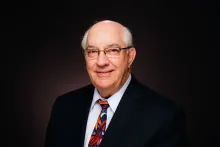
Mitchell Knapp is a graduate of Ambassador College with a BA in Theology. He has served congregations in California and several Midwestern states over the last 50 years and currently serves as the pastor of churches in Omaha, Nebraska, and Des Moines, Iowa. He and his wife, Linda, reside in Omaha, Nebraska.
