
Greg Thomas
This transcript was generated by AI and may contain errors. It is provided to assist those who may not be able to listen to the message.
Well, good morning, brethren, and welcome to the Feast of Trumpets, the year 2013. A special thanks both to Mr. Graham and Mr. Harmon on very beautiful music, inspiring. Thank you for sharing your spiritual gifts with God's people and giving us a sense of God's glory through very beautiful music today on His Holy Day. Well, again, welcome to the Feast of Trumpets. The Scriptures have many things to say about the Feast of Trumpets, which are rich in meaning and prophecy.
And I'd like to talk about some of those today, but I think the best place to begin to begin talking about the Feast of Trumpets, of course, is when we were instructed of its importance in Leviticus 23. So if you will turn there with me to Leviticus 23, beginning with you, we will take a look at the proclamation that God gives us about all of His feast days and specifically about the Feast of Trumpets.
Leviticus 23, beginning in verse 1. It says, These are my feast. So God designates that these are His feast days. And until God says these are no longer His feast days, we will continue to observe them. It doesn't matter what men say.
It doesn't matter what religious councils dictate. What matters is what God says. And God says, these are my feast. And He begins to outline His Holy Day plan through His feast. Just a quick recap of the feast and the important ceremonies that lead us up to this day, to where we are in God's plan. First, there was the Passover. And during the Passover, we learn and understand that Jesus Christ, our Savior, was killed and He shed His blood for the sins of humankind. And He promises His elect that we will not be orphans, we will not be abandoned by God.
And that is fulfilled in a Holy Day that comes up very quickly. And beyond that, the Days of Unleavened Bread, picture for us the removing of sin out of our lives. And we learn that sanctification is the process of becoming holy. And every year we are reminded through the Days of Unleavened Bread to continue to put on the mind of Christ and continue to root out sin out of our lives.
Change is a process, not an event. And also associated with the Days of Unleavened Bread is the Wave Sheaf offering. Very important ceremony. And we were reminded that Jesus Christ was resurrected as our High Priest. And His complete sacrifice was accepted on our behalf because we worship a living Savior, not a dead Savior, not one hanging on a cross or buried in a tomb, but a living High Priest.
And then we come to the Feast of Pentecost, and the Holy Spirit was given to the Church, and a calling began of the spiritual firstfruits by the Father. And indeed, Jesus Christ did not leave us orphans because He gives us the gift of the Holy Spirit to also help us in our need to put sin out of our lives.
Now let's drop down to verse 23, move on to the Feast of Trumpets. It says, And the Lord spoke to Moses, saying, Speak to the children of Israel, saying, In the seventh month, on the first day of the month, you shall have a Sabbath rest, a memorial, a blowing of trumpets, a holy convocation. You shall do no customary work on it, and you shall offer an offering made by fire to the Lord. I'm going to read this from another translation called the Holman Christian Standard Bible, because what I just read does not do justice to this verse, because it leaves out the inference of the Hebrew that this is a day of rejoicing.
Here's the translation from the Holman Christian Standard Bible. Tell the Israelites, in the seventh month, on the first day of the month, you are to have a day of complete rest, a commemoration, and joyful shouting, a sacred assembly. The Treasury of Scriptural Knowledge says this about verse 24. The Treasury of Scriptural Knowledge says, quote, A memorial here rendered a memorial of blowing of trumpets properly signifies a memorial of triumph or shouting for joy.
So I want to point out the fact that joy, which of course is obvious in God's holy days, is specifically emphasized on the Feast of Trumpets. The Treasury of Scriptural Knowledge continues here. It says, quote, As it fell in the seventh month of the sacred year, which was the first month of the civil year, of course we know that the religious year began in the spring, but getting back to this quote, which was the first month of the civil year, that is the month Tishri, answering to our September.
The opinion very generally embraced by both Jews and Christians is that it was a memorial for the creation of the world in which the sons of God shouted for joy, Job 38. So there is a history, there is a tradition of joyfulness on the Feast of Trumpets. If you've ever thought about it, in the Hebrew calendar there is a long gap of time between the days of Pentecost and the Feast of Trumpets that occurs again on the first day of the seventh month.
Why this long gap? As a matter of fact, between any of God's seven annual holy days, the longest gap that exists is between Pentecost and the Feast of Trumpets this day that we are celebrating today. And that's because it was to represent that the return of Christ would not be soon after the day of Pentecost in 31 AD. Indeed, the work of God would last thousands of years over a long period of time.
And it was there in the way that the holy days were ordained all along to tell us that it would be a time between 31 AD when the Holy Spirit was given, and before Jesus Christ himself would return to this earth. But why a trumpet? Why not a stringed instrument or another type of wind instrument like a flute?
Well, obviously, the loudness of the trumpet represented something very special. And we can understand what the loudness of a trumpet represents when we take a look at the example of when Israel was brought to Mount Sinai. So let's go there next to Exodus 19, verse 16. Exodus 19 and 16. And we will see why a trumpet is chosen as an instrument to convey a message. Exodus 19 and 16. Many of us are familiar with this story as Israel was being led to Mount Sinai to receive the law of God.
It says, then, it came to pass on the third day in the morning that there were thunderings and lightnings and a thick cloud on the mountain, and the sound of the trumpet was very loud so that all the people who were in the camp trembled, and Moses brought the people out of the camp to meet with God, and they stood at the foot of the mountain.
Now Mount Sinai was completely in smoke because the Lord descended upon it in fire. Its smoke ascended like the smoke of a furnace, and the whole mountain quaked greatly. Verse 19, And when the blast of the trumpet sounded long and became louder and louder, Moses spoke, and God answered him by voice. You see, brethren, the trumpet sound is representative of the Word of God. Depending on the event or situation, the Word of God can be frightful, joyful, inspirational, or it could be a call to action.
Do something. The blowing of the trumpet signaled a number of important events in the camp of Israel. It was part of their culture. And when the trumpets were blown, it was a message from God, the Word of God being given to the people through the sound of the trumpet. Let's go to Numbers 10, verses 1-10 and review some of the ways that the blowing of the trumpets signaled an important event in the lives of Israel.
Numbers 10, verse 10. It says, When you sound the advance, the camps that lie in the east side shall then begin their journey. When you sound the advance the second time, then the camps that lie in the south side shall begin their journey. They shall sound the call for them to begin their journeys. And when the assembly is to be gathered together, you shall blow but not sound the advance. So here are the first three directives, depending on the event, that the trumpet call sounded.
One was to assemble the congregation together at the door of the tabernacle toward Moses' presence. The second was to assemble the elders together to have a meeting with Moses. And third, to direct the movement of the various tribes that were located north and south and east and west of the tabernacle. So those were the first three. Let's find out some more. Verse 8.
So the fourth reason the trumpets were blown is when Israel went to war. And God said, I will remember my covenant with you and I will protect you and help you to win the battle. The fifth event or reason that the trumpets were blown was to joyfully remember that they were in God's presence, that he was their God and they were his people on his appointed days and for the beginning of months. So what we see here is that depending on the situation or the event, the blowing of trumpets could arouse different emotions or responses. Today I would just like to focus on one response. I would like to focus on the Feast of Trumpets as a day of gladness and joyfulness for the Church of God. Now, for those who are not the elective God, for those who are in this world and rejected God or don't understand God, the meanings of the trumpets will be a totally different emotion and a different experience than what we will have. But for the Church of God, this is a holy day with a central theme for those who are God's elect, and that central theme is one of shouting for joy. And now, of course, it is a worship day, and we approach our God with solemnity, that is seriousness and dignified behavior, because we've come to his presence. But deep in our hearts and in our souls, we should be experiencing joy. Joy that we have been called that we are God's elect. Joy that we have the privilege of understanding the meaning of his holy days and God's plan for each of us as individuals and God's plan for our life. Let's go to Psalm 81, beginning in verse 1. Psalm 81, verse 1.
I'd like to emphasize again that this is a day for God's people, a day that reflects joy. We're going to take a look here at a psalm that is purported to have been written by David for the Feast of Trumpets. Psalm 81, beginning in verse 1. And hopefully, as this holy day goes on and we continue to worship our great God, and we share our fellowship together and have a wonderful meal together, and then take another opportunity this afternoon to worship God, hopefully the joy within us will build as we deeply appreciate God's calling and appreciate the fact that his presence is right here among his people. Psalm 81, verse 1. It says, Sing aloud to God our strength, make a joyful shout to the God of Jacob, raise a song and strike the timbrel, the pleasant harp with the flute. Blow the trumpet at the time of the new moon, at the full moon, on our solemn feast day. For this is a statute for Israel, a law for the God of Jacob. So David himself encouraged everyone within hearing distance of those words of those beautiful Psalms thousands and thousands of years later to remember that for the church of God, for the people of God, the emotion that we can and should experience on this day is the emotion of joy. Now, with his background in mind, I would like to look at three joyful events pictured by the Feast of Trumpets for the New Covenant Church of God. Many people will say that the Feast of Trumpets is obsolete or fulfilled, and to that person I would ask, show me where any of these three events that we will discuss have already occurred. Show me where any of these three events that we will discuss have been fulfilled, because they haven't. Like all of God's holy days, they're all about Jesus Christ. Every one of them is about what Jesus Christ has done, is doing, and will do. And that's why as the New Covenant Church of God, we continue to honor these days and accept God's invitation in Leviticus 23 to worship him and to serve him. So here is the first of those three joyful events. That is to resurrect God's chosen faithful elect from the dead. One reason to be joyful is because God will resurrect God's chosen faithful elect from the dead. Let's go to Matthew 24 and verse 29.
Again, as I said earlier, for those whom God has not called, for those who are alive at the time of these very traumatic events, following the great tribulation and day of the Lord, their experience, their perception of the trumpets, will be far different than ours. Matthew 24 and verse 29, immediately after the tribulation of those days, the sun will be darkened and the moon will not give its light. The stars will fall from heaven and the powers of the heavens will be shaken. Then the sign of the Son of Man will appear in heaven, and then all the tribes of the earth will mourn, and they will see the Son of Man coming on the clouds of heaven with power and great glory. So if we were someone who was on the earth at that time and involved in those horrible events and had limited or no knowledge of God, that would be our perception, our emotion we certainly would mourn. Verse 31, however, And he will send his angels with the great sound of a trumpet, and they will gather together his elect from the four winds and from one end of heaven to the other. So in this prophecy, Jesus Christ says that his angels will bring together his people. By the way, this word heaven is translated here as a poor translation. It gives the impression that these elect are coming from heaven. The Greek word is a rhanos, which means sky. This is properly translated in the new American Standard Bible, as he will gather his elect from the four winds and from one end of the sky to the other. That's a small footnote. But for most people alive on earth at this future time, the return of Jesus Christ will be fearful. They will already have experienced horror, and they will feel threatened by this dramatic appearance of Jesus. The sound of the trumpet alarm will be horrible for them. But to the elect faithful of God, called by the Father for thousands of years, this will be an event that generations of God's people have prayed for so fervently. It will be the culmination of a prayer uttered millions of times by God's people throughout history. When each generation prayed, Thy kingdom come.
1 Corinthians chapter 15. 1 Corinthians chapter 15 and verse 50. Let's go there, please. 1 Corinthians chapter 15 and verse 50.
Again, we're in the first joyful event to resurrect God's chosen faithful elect from the dead. 1 Corinthians chapter 15 and verse 50. Paul wrote, Now this I say, brethren, that flesh and blood cannot inherit the kingdom of God, nor does corruption inherit incorruption. Behold, I tell you a mystery. We shall not all sleep, but we shall all be changed. Again, Paul talking to the elect, talking to the congregation at Corinth. In the moment, in the twinkling of an eye at the last trumpet, for the trumpet will sound and the dead will be raised incorruptible, and we shall be changed. For this corruption must put on incorruption and this mortal put on immortality, and this corruption has put on incorruption and this mortal has put on immortality. Then shall be brought to pass the saying that his retin death is swallowed up in victory. Every generation of believers of the elect, of Jesus Christ, except for those in the final generation when he returns, everyone grew old and died, or acquired a disease and died prematurely. But we can look forward to this time when God's elect will live again. And when I say live, no longer be confined to this mere physical tent that we have, in which every day thousands of new physical cells must be generated to replace the thousands of aging cells that we have within each and every one of our bodies. Oh no! We will be given the glory of being raised incorruptible.
We will no longer be mortal, but have immortality as the spirit children of Jesus Christ. You know, Paul, like so many that I personally knew in the early 1970s, sincerely believed that Jesus Christ would come within a few years. That's why he said, we shall all be changed.
He felt in his lifetime, certainly within his own life at this point, that Jesus Christ would come in his lifetime. And Paul was in error because Jesus Christ didn't come in his lifetime. And many of my beloved brethren whom I knew in the 70s, who were already in their 40s and 50s and 60s in 1971-72, died in the faith, believing and desiring for the kingdom of God to be established for Jesus Christ to return and God's chosen faithful to be resurrected from the dead. But this is a promise from God, something that we can absolutely be sure of. And it's a reason for us to be joyful on the Feast of Trumpets. Thessalonians 4 and verse 13.
Paul wrote to the congregation in Thessalonica, He said, And with the trumpet of God, and the dead in Christ shall rise first, then we who are alive and remain shall be caught up together with them in the clouds to meet the Lord in the air, and thus we shall always be with the Lord, therefore comfort one another with these words. Brethren, at the last trumpet the children of God will be raised from the dead to meet the returning Christ and join him as he returns to earth to rule to establish the kingdom of God. And they will be immediately followed by the Elector who are still alive during the return of Jesus Christ himself. For we will be changed, spiritual, incorruptible, and joyful, that what we had hoped for and prayed for, for so long, has finally come to pass. So again, the first reason to be joyful on the Feast of Trumpets is it reminds us of God's promise to resurrect God's chosen, faithful elect from the dead. The second reason is to seize control of the earth from the God of this world. To seize control of the earth from the God of this world. Let's go to Matthew 24 and 21. If you'll turn there with me.
Matthew 24 and 21.
Looking at this scripture from Matthew from a little different light.
Notice why Jesus Christ returns. The world is in deep crisis. It is on the brink of complete annihilation. As Jesus approaches the earth, the first thing that he will do is to remove his chosen elect from the crisis and bring them to him in the sky and change them in the incorruptible spirit upon everyone's gathering in the sky. Verse 31, drop down to verse 31. And he will send his angels with the great sound of a trumpet, and they will gather together his elect from the four winds from one end of heaven to the other. Now, why does Jesus Christ do this? Why is it important for him to take his elect out of the center of this crisis and to bring them together to him that gather in the sky and preparing to return to earth with him as he establishes the kingdom of God? What is the purpose of this gathering? Let's now go to Revelation 19 and verse 11. Revelation 19 and verse 11.
John wrote in Revelation 19 and verse 11, Now I saw heaven opened, and behold a white horse. And he who sat on him was called Faithful and True, and in righteousness he judges and makes war. His eyes were like a flame of fire, and on his head were many crowns. He had a name written that no one knew except himself. He was clothed with a robe dipped in blood, and his name is called the Word of God. Of course, this is Jesus Christ the Savior who shed his blood for all humanity. It says, I want you to notice that phrase. This army had fine linen white and clean, and followed him on white horses. Now let's go back to verses 7 and 8 and see if that's a similar phrase for the Bride of Christ.
For the wife has made herself ready, and to her it was granted to be arrayed in fine linen clean and bright. For the fine linen is the righteous acts of the saints. You see, the saints were doers. They weren't just talking about doing things.
They weren't dreaming about doing things. They were doing things. They were fulfilling the Word and the will of God. I want you to notice that almost the exact same phrase is used for the Bride of Christ in verse 8 and the armies in heaven. It very strongly implies in this scripture that Jesus Christ desires his saints, his elect, to join him as he returns to earth to remove all evil and establish the kingdom of God. This very elect who in their physical lives were considered weak and foolish by the standards of the world, and now they return with Christ in victory and triumph as they are the inheritors of not just the family of God, but the kingdom of God.
Verse 19, These two were cast alive into the lake of fire, burning with brimstone, and the rest, that is the rest of their armies, were killed with the sword, which proceeded from the mouth of him who sat on the horse, and all the birds were filled with their flesh. So we see that this resistance to the Christ and his saints is crushed, and the major political power in its armies, and the major religious power, and indeed Satan himself, Revelation 20, which is pictured by the next holy day, are defeated all by the conquering Jesus Christ.
So again, the second reason that we are joyful on the Feast of Trumpets is that on this day, Jesus Christ in his elect will seize control of the earth from the God of this world. That will be a game changer. That will change the course of all humanity. For 6,000 years, the God of this world has been Satan the devil.
And every human civilization and every religion within this world has been influenced by what I call Satan's Wi-Fi network. And his Wi-Fi network is open. You don't even need to have a password. The day you were born, you were automatically connected to his sci-fi network. And it is a network of bad attitudes, a network of selfishness, and a network that has created the human governments and the human religions that we see on earth today, that has caused so much suffering and misery and war.
And the time will come, pictured by the Feast of Trumpets that we look forward to, when Jesus Christ and his saints with him will seize control of the earth from the God of this world and usher in the kingdom of God. The third reason that we are here joyful today on the Feast of Trumpets is that it is a time to gather the scattered physical descendants of Israel back to their home. A time to gather the scattered physical descendants of Israel back to their home.
Let's go to Isaiah 11 and verse 11. Isaiah 11 and verse 11, and see this beautiful prophecy referring to a second Exodus. Isaiah 11 and verse 11, and it shall come to pass that the Lord shall set his hand again the second time to recover the remnant of his people who were left. Of course, the first time was what we call the original Exodus, and they were brought out of Egypt and brought into their promised land.
This will be a second time yet to occur in the future because the descendants of Israel are scattered all over the earth. Continuing from Assyria in Egypt and from Pathros and Kush and from Elam and Shaniir and from Hamath and the islands of the sea, he will set up a banner for the nations and will assemble the outcast of Israel and gather together the dispersed of Judah and the four corners from the four corners of the earth. So again, this is the second deliverance of Israel in human history. The first was the original Exodus, and this is second Exodus is for the physical return back to their home for the physical descendants of Abraham.
Isaiah 27 and verse 12. You'll turn there with me. Chapter 27. Isaiah 27. And it shall come to pass in that day that the Lord will thresh from the channel of the river of the brook of Egypt, and you will be gathered one by one, O you children of Israel. The descendants of Abraham, because of his promised Abraham, his descendants are so precious that one by one they will be gathered together.
O you children of Israel, verse 13. So shall be in that day the great trumpet will be blown. They will come who are about to perish in the land of Assyria, and they who are outcast in the land of Egypt, and shall worship the Lord in the holy mount at Jerusalem.
So again, at the great trumpet sound, after God removes the defeated armies who had surrounded Jerusalem, whom had been totally annihilated, he will restore the physical land of Israel to the descendants of Abraham. Take a look at another scripture regarding this, Jeremiah 23 and verse 3. Jeremiah 23 and verse 3. You see, God is a God who keeps his promises, and he promised, because of the faith of Abraham, to bless his descendants and make his descendants a very special people. God does not break his promises. And even when people sin, they are punished, they go into captivity, they are spanked, but God still loves his people.
And upon repentance, upon humility, God always loves and welcomes back his people. Jeremiah 23 and verse 3. Verse 5. Behold, the days are coming, says the Lord, that I will raise to David a branch of righteousness. Of course, we know that Jesus Christ is our righteousness. Continuing, a king shall reign and prosper and execute judgment and righteousness in the earth, and his days Judah will be saved and Israel will dwell safely. Now this is the name by which he will be called, the Lord, our righteousness.
Therefore, behold, the days are coming, says the Lord, that they shall no longer say, as the Lord lives who brought the children of Israel out of the land of Egypt, but as the Lord lives who brought up and led the descendants of the house of Israel from the north country and from all the countries where I had driven them, and they shall dwell in their own land.
Can you picture and imagine the joy of the descendants of Abraham being gathered from all these various areas of the earth, going back home, going back to their homeland? Why is this gathering of the physical descendants of Israel so important? It's because they will be the first physical peoples to be taught God's law. They will become the model nation that they failed to be under the Old Covenant. When I was a young boy and I would do something wrong, I used to have a relative who would say to me, Greg, you're going to keep doing that until you do it right.
And God is going to give the descendants of Abraham an opportunity to do it right. So that's a very powerful meaning behind these verses that we see, that we can look forward to a time of the joy of the reuniting of the scattered physical descendants of Israel going back home. Today we have seen three joyful events we can all look forward to, represented by the sound of the trumpet of God.
For the rebellious and unrepentant people of earth, this day will indeed have a far different emotional meaning and response than it does for the people of God. For us, we can look at these events and we can rejoice today. But we can look forward to fulfilling a prophecy. A prophecy that's written in the book of Psalms, and it's actually the last scripture that I have for us this morning. You'll turn to Psalm 47 and verse 1. I think this is a beautiful prophecy and a word from God that reflects how the New Covenant Church of God should look forward to the events and the promises of God represented by the Feast of Trumpets.
And here's what it says in Psalm 47, beginning in verse 1. It says, Welcome to the Feast of Trumpets. Amen.
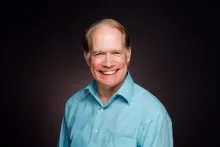
Greg Thomas is the former Pastor of the Cleveland, Ohio congregation. He retired as pastor in January 2025 and still attends there. Ordained in 1981, he has served in the ministry for 44-years. As a certified leadership consultant, Greg is the founder and president of weLEAD, Inc. Chartered in 2001, weLEAD is a 501(3)(c) non-profit organization and a major respected resource for free leadership development information reaching a worldwide audience. Greg also founded Leadership Excellence, Ltd in 2009 offering leadership training and coaching. He has an undergraduate degree from Ambassador College, and a master’s degree in leadership from Bellevue University. Greg has served on various Boards during his career. He is the author of two leadership development books, and is a certified life coach, and business coach.
Greg and his wife, B.J., live in Litchfield, Ohio. They first met in church as teenagers and were married in 1974. They enjoy spending time with family— especially their eight grandchildren.
