

Vincent A Szymkowiak
This transcript was generated by AI and may contain errors. It is provided to assist those who may not be able to listen to the message.
And now for our sermon, Mr. Greg Thomas.
Well, it's been one year since a church was wounded by a church split caused by some in the ministry. It is not my intent today to open old wounds since that's the past and that's behind us, and we're marching forward.
However, as we begin a new civil year, and since some rather dynamic changes occurred to our congregation and our association this past year, I think it would be beneficial to look at the last 12 months. Again, not to relive the past, but to look at ourselves the past 12 months, and to see how we're doing. To see if we are bearing the kind of fruits that Jesus Christ wants us to bear as a local congregation and as an international association.
Let's begin by going to Matthew 7 and verse 7. Matthew 7 and verse 7. We're going to take a look at some words here from Jesus Christ Himself. And begin asking ourselves, how are we doing? How did we do this past 12 months, this calendar year? Obviously, we don't observe New Year's Eve. This is a new civil year. We're beginning just like ancient Israel. We began their civil year in the fall, and their religious year began in the spring, a few weeks or a week or so before the spring holy days.
We, too, have a difference in understanding God's plan, revealed in His holy day calendar, and a civil year that we keep in our Romanesque culture beginning the year 2012 tomorrow. But I think it's okay, and it's certainly beneficial to ask ourselves, what we have done the last calendar year, since last year. Matthew 7, verse 7. Jesus said, ask. That's an important key. If you want to receive something from God, don't assume. Don't say, well, God, you can read my mind. Why do I need to ask? Because He wants us to ask. Because asking is part of something that's very powerful for something good to happen.
It's part of faith. Ask Him for it. Of course, God can read our minds. Of course, He knows what our needs are, but He wants us to learn to go to Him like a little child, and to ask Him. Ask, and it will be given to you. Seek, and you will find. So if you have to do more than ask, you have to seek it. Now we're beginning to get into action. We have to look for it. Seek it. Desire it. Want it.
Believe it. And you will find. Knock. Make a conscious effort. Say, God, I need your help, Father. I need your intervention in my life. I'm going to be persistent. I'm going to continue calling on you for this need.
Knock, and it will be open to you for everyone who asks, receives, and he who seeks finds, and him who knocks, it will be opened. Or what man is there among you if his son asks for bread would give him a stone? Or if he asks for a fish, will he give him a serpent? If you then, Jesus said, being evil, knowing the core of our human nature, we're selfish. Much like Mr.
Horton mentioned in the sermon, today we are recovering sinners. We are addicted to sin. And we'll be recovering from that and working on that the rest of our physical lives. Jesus said, If then, being evil, you know how to give good gifts to your children, how much more will your Father, who is in heaven, give good gifts to those who ask him? So it is important to ask. Therefore, whatever you want men to do to you, do also to them, for this is the law and the prophets.
This is the golden rule. Treat people with respect and dignity, even if they don't agree with you. Even if they're hostile to you, don't be hostile back to them. Be kind and reflect the fruits of God's Holy Spirit to everyone. Treat people like you would want to be treated yourself, even if they're not responding in the right way. So this is a scripture that Jesus is talking about having a real connection with our Father. When we sincerely and zealously ask Him, not just once, not three times and quit and give up, God isn't listening, not just quitting, not shutting things down, but when we ask over and over and over again with faith and belief in our lives, knocking, getting God's attention by that continual prayer, persistence and commitment.
Good things happen to us. Verse 13. Then He begins to give a warning. He says, Enter by the narrow gate, for wide is the gate, and broad is the way that leads to destruction, and there are many who go in by it, because narrow is the gate and difficult is the way which leads to life. And there are few who find that this Christian journey we have is a challenge.
There are pitfalls everywhere. Have you ever played a video game where all of these little creatures come out of nowhere and try to destroy your little character with a gun or whatever it is, and they just fly out from left and right and the top and the bottom and they're just constantly coming at you? Well, that is a lot like what our spiritual lives are like. There are a lot of pitfalls. Satan throws a lot of different distractions at us to get us off course.
He has a dysfunction or a perversion for every problem, every problem that you can name, can morph into a serious dysfunction or even become a perversion. He offers addictions. He has depressions. He has degenerate behavior. He offers distorted ideas. He offers the tantalizing flavor of every sin that you can imagine to defeat us, to get us off of course.
So Jesus says we have to be careful because narrow is the gate. When we have to enter that narrow gate, it is difficult, this journey that we are on. And then he stops getting into verse 15 and he talks about and warns his flock, and this is a universal principle for all ages, about religious leaders. And I have to read this and judge myself. I think everyone who has a title, a religious title, should read this on a regular basis and judge themselves. Verse 15, here's what he told the disciples, Beware of false prophets who come to you in sheep's clothing.
On the outside, they look like they're really nice guys. They may have an appearance of being righteous, of really being genuine people. He says, but inwardly they are ravenous wolves. And inwardly it's all about me. People are just something to be manipulated for their own benefit. Either they need attention, or they want to draw your money from you, or they want to control you.
They get this thrill out of lording over people. And Jesus gives a universal warning that is true for all ages of his church, for people to be careful of. He says, you will know them by their fruits. Do men gather grapes from thorn bushes or figs from thistles? Even so, every good tree bears good fruit, and every bad tree bears bad fruit. You know, someone can fake it for a short period of time. But eventually, the season comes to fall.
It comes to them, it's time to pick the fruit. And if we haven't allowed ourselves to become blinded, we can see that the fruit of an individual is either good or it's either bad. He says, a good tree cannot bear bad fruit, nor can a bad tree bear good fruit. Every tree that does not bear good fruit is cut down and thrown into the fire. He says, again, therefore, by their fruits you will know them. Not everyone who says to me, Lord, Lord, shall enter the kingdom of heaven, but he who does the will of my Father in heaven, verse 22, many will say to me in that day, that's the day of judgment, Lord, Lord, I preached about the kingdom of God.
I prophesied in your name. I said that you're coming back to earth. I cast out demons in your name. I've done a lot of great things in your name. Why, they called me Mr. And Jesus will say, I don't even want to hear it. Don't, don't, but I was one of the two, Jesus, stop it right there. I don't even want to hear it. Jesus will say, I don't know who you think you are, but I don't know you. I never had anything to do with you. But you see hundreds of, sorry, you know, I have this book, it's called the Book of Life.
Your name, Mr. is not written in the Book of Life. Because instead of serving and caring for people, it was all about you. Every instinct and everything you did was to draw and attract people to you. And there is very strong condemnation that Jesus Christ gives to those who have religious titles. Verse 23, and I will declare to them, I never knew you, depart from me, you who practice lawlessness. Now that word lawlessness is not translated very well. Actually, it comes from a word. The Greek word is anomia. And it means illegality or wickedness. As a matter of fact, the new century version translates.
Then I will say to them clearly, get away from me, you who do evil, I never knew you. So again, this word means illegality, it means iniquity, it means unrighteousness. So Jesus warns this flock that one of the many ways that they can stumble, that they can go down the wrong path and try to go through the wrong gate, is to allow themselves to be manipulated and deceived by people with religious titles. And that's something that every one of us has to be on guard for, because Jesus warned us about this universal principle that would be true, something the church would struggle with through the ages.
Brethren, if we're not blinded, it's not really that difficult to judge whether someone is genuine or false. All you have to do is look at their example, their family, their lifestyle, how they treat people, and compare that to the fruits of the Holy Spirit, and see if they're there. Or if they have more in common with the works of the flesh, slander, impatience, judgment, anger, wrath. It's easy if we don't blind ourselves to see that a person can only pretend for very long, because their genuine motives will come out in a period of time if we have our eyes open and if we're paying attention.
Again, there are ministers offering every flavor of their own agendas, and they say, in essence, show me the money. They say, follow me, because I have a special, unique, undeniable, unquestionable, supernatural truth from God, unlike all those other guys. And that's been a real problem in the history of the Church of God. Many people have been deluded and deceived over the years. Verse 24, So Jesus is saying here that a wise man builds the foundation of his spiritual life on only one thing. Not on a man, not on people with religious titles. They build it on the foundation of Jesus Christ and none other.
This foundation is rock solid, and it will keep us grounded no matter what happens in life. The foolish person is someone who follows men, who just conforms to society because they want to be liked or accepted, people who want to follow the crowd or take the path of least resistance because they don't have the character or the backbone to stand firm. And when we have these qualities, when we allow ourselves to be manipulated, then we put our ability to grow as individuals in grave jeopardy.
The teachings of Jesus are very clear here. Number one, the Father is willing to give us good gifts when we ask and we seek with zeal and diligence. Number two, the road to eternal life, he tells us, is difficult and it's narrow. There are obstacles that are put in our way to make us stumble. One of these obstacles, he mentions, is religious figures who have an outward show of righteousness, but inward are corrupt and harmful to the flock of God.
This is a warning that Jesus Christ gives each and every one of us. And again, I want to mention to you, as I said early on many months ago, that I am here to serve you. If I or any man ever, ever tell you, follow me as I take you to some place new, tell you to... Follow me because I'm going to take you to some new truth or some new place. You tell me to take a hike. You tell me, because I hope you love me, to take a long walk off a short pier.
If I ever teach you doctrine that is not biblical, if I ever say to you, follow me because I'm going to take you and move to view someplace else. I don't have that right. So it's a warning that Jesus Christ gives to his people. The third thing that Jesus mentions in these verses is that he expects positive, beneficial fruits from his followers, especially those who have leadership positions in the church.
They're going to be judged harshly, or they're going to be welcomed into the kingdom of God, either by the abundance of healthy, righteous fruit that they produce, or by the corrupt fruits that they produce because they manipulate and harm the lives of other people. Let's go to Philippians chapter 1 and verse 9. Jesus emphasizes and talks about fruits again. How did we do the last 12 months? As a congregation, how did we do as an international association, and what does that have to do with us? Philippians chapter 1 and verse 9.
Paul writes, and he's in prison at this time, he says, And this I pray that your love may abound still more and more in the knowledge and all discernment, that you may approve the things that are excellent, and you may be sincere and without offense to the day of Christ, being, here's his wish, filled with the fruits of righteousness, which are by Jesus Christ, to the glory and praise of God. So Paul is telling us here that we are grafted onto the true vine, which is Jesus Christ. Our righteousness ultimately comes from him living in us. We can't take credit for it. We should never say, yes, I'm just such a fine person. I remember years ago, a gentleman giving a sermon. He was president of a religious organization, and he said, I just want all of you to know how humble I am. And I thought, you know, that's like telling your wife that you are head of the household. If you have to tell your wife that you're head of the household, you're not. You're already past the point of no return, my friend. You're just deluding yourself. And if someone has to tell you how humble they are, they're narcissistic. They're not humble. Not at all. The fruits of righteousness come by Jesus Christ living with us. He gets the credit. He is the true vine. He generates, through the power of his Holy Spirit, the growth that is in our lives. That's what Paul is telling us here. Again, there's no secret about these fruits. As you can go to Galatians 5, verse 22, and you can see the kinds of fruits that Jesus Christ wants us to have as individuals, that he wants us to have as this congregation in Cleveland, and that he wants us to produce as an international association. Chapter 2, Philippians 2, beginning in verse 9.
Speaking in context about Jesus Christ. Philippians 2, verse 9. Therefore God also has highly exalted him, again referring to Christ, and given him the name which is above every name. And at the name of Jesus Christ every knee should bow of those in heaven and those on earth, and of those under the earth. And that every tongue should confess that Jesus Christ is Lord to the glory of God the Father. Verse 12, therefore my beloved, as you have always obeyed, he says, obeyed the doctrines, obeyed the law of God, living the right kind of life, as you have always obeyed, not in my presence only, but much more in my absence, remember he's in prison when he's writing this, work out your own salvation with fear and trembling.
Now I want to stop right there. Why is that important? Remember I talked about the pitfalls. The reason we work out our own salvation with fear and trembling is not because we believe in salvation by works. We don't think we can earn our salvation. What he is saying is that we have an active part in the process of overcoming sin and learning to be obedient.
We have to be actively involved in that. We have to make sure that we are not deceived and blinded by others. The pitfall that Jesus talked about that we just mentioned in the previous scripture. We live in a dangerous spiritual world where there are many who want to pull us down, both physical people and spiritual beings who want to use us, who want to manipulate us and want to take us off of course.
Verse 13, he says, for it is God who works in you both to will and to do of his good pleasure. And verse 13, we're reminded that God is doing a work in you. He not only has a great work preaching the good news of the kingdom of God to the world, he is doing an individual work inside of you.
And he's helping you to grow and change. He's helping to prepare you to serve in his family for all eternity. So he's doing a wonderful work inside of you as well. That's what Paul is telling us here. We have to be reminded that this work that he's doing on us is for his purposes and for his benefit, even if we don't like it.
I determined many years ago that personally God does not care what I like. He does not stay up at night worrying about, well, I wonder what makes Greg happy. He doesn't bother himself with those things. He says, what does Greg need right now? And it might be painful. How can I get Greg to grow from here to there? That's God's purpose for you. That's God's will for you. It's not about what we want. Frankly, he's just not that interested in what we want.
What he's interested in is what his purpose and plan is for us. I want you to remember that. Even if we don't understand the things that we have to go through, even if they don't make sense to us, even if they hurt, we need to realize that God works in you both to will and to do of his good pleasure.
That's very important. Verse 14. Do all things without complaining and disputing, that you may become blameless and harmless, children of God without fault in the midst of a crooked and perverse generation, among whom you shine as lights in the world, holding fast the word of life so that I may rejoice in the day of Christ, that I may not run in vain or have labored in vain. He said, I worked very hard as a congregation. He says, I hope the things that I did were not in vain. That's what he tells the Philippians. If we pay close attention to verses 14 and 15, he gives us a hint, again, of pitfalls that people and spiritual beings use in order to deceive us to make us stumble.
The two things he mentions. Complaining. Complaining is a pitfall. He refers to it as evil. Waa, waa, waa. Always complaining. Always looking at the dark side of life. The negative factor. Judgmental is pointing the finger at people because they're not like us or exactly like us. That's a real problem. That's one of the things that he mentions here is complaining. Another one is disputing. Going up to people and arguing with them.
Going up with people and trying to promote your personal agenda. In every conversation. What you think, what you want, what you like, what you know. That's a real problem. And it's interesting that Paul points these two things out. He says that the result of a crooked and perverse generation. You cannot get more powerful statements from someone writing in the scripture than that. Do all things, he says, without complaining and disputing.
Our conduct should be the opposite of evil. We should reflect joy and we should reflect unity among ourselves. We should be a bright light in a very dark world. Continuing on the theme of fruits. Let's go now to Matthew 21 and verse 17. Matthew 21 and verse 17. Remarkable and sobering scripture about the need for us to have fruit. And also about the power of faith. Which again, as I've said before, I think is the most undeveloped gift and tool in the Church of God is the power of faith.
And I put myself as the first one who doesn't have enough of it in his life. Then he left them and went out to the city of Bethany. He lodged there. Now in the morning, as he returned to the city, he was hungry. And seeing a fig tree on the road, he came to it and he found nothing on it, believes. And he said to it, let no fruit grow on you ever again and immediately the fig tree withered away. I mean, that had to be awesome to witness.
That's like something you'd see on the Wizard of Oz, right? Can you imagine the animation of that fig tree after Jesus says that immediately? It just withers away. Would that leave an impression on you or what? And when the disciples saw it, they marveled, saying, how did the fig tree wither away so soon? Now in all fairness to the fig tree, not that Jesus, you know, will have to create an organization like PETA for fig trees. So we don't abuse fig trees. Here's what the Believer's Thuddy Bible says about this verse. And you have to understand fig agriculture to appreciate this.
It says, normally the small figs appeared preceding, or at least simultaneously with the leaves. Continuing, the larger figs appeared later. Finding no figs in this tree, the Lord takes this opportunity to stress to his disciples the necessity of fruitfulness. Why? Because it should have had fruit. It had leaves. And in fig agriculture, fruit appears before the leaves at the latest simultaneously when leaves appear. And he went up to this fig tree, there are no figs. Continuing from the Believer's Study Bible, quote, The curse of the fig tree is for hypocrisy and unfruitfulness.
It's for hypocrisy because the fig tree appeared to be healthy, didn't it? It appeared to be righteous. It's growing. It has green leaves. But it has no fruits. It's hypocritical. It's unfruitful. This is the analogy. The fig tree was given a season for growth in its life. It had time and opportunity to bear fruit.
And it did not. When the time was up, it withered away. In contrast, we as the disciples of Jesus Christ, we too are commissioned to bear fruit. We have been given a certain amount of time and opportunities in our lives to develop fruit. But someday, that time and opportunity is going to be up. Will Jesus find fruit in our lives? How are we doing? I know some of you are thinking, well, you've just gone from preaching to meddling, Mr.
Thomas. I don't mean to meddle in your private life, but I have to ask the question, are we growing? Are we demonstrating fruits? Or like that fig tree, do we look healthy on the outside? But when people get close to us and examine our lives, they see no fruits. Verse 21, so Jesus answered, he said to them assuredly, I say to you, if you have faith and do not doubt, you will not only do what was done to this fig tree, but you will say to this mountain, be removed and be cast into the sea, and it will be done.
And whatever things you ask in prayer, be leaving. So just asking in prayer isn't good enough. Be leaving. That is 100% of your heart and soul in mind. You believe what you pray for. You expect it. You know that it's going to occur. Remember, faith is the evidence of things not seen. You just know it. You will receive.
Yes, Jesus Christ said that prayer with embedded faith can move mountains. And let's not think of a physical mountain. No, we're not landscapers. Let's look at the mountain symbolically here as a problem in our lives, as a personal problem that we're struggling with, that we're going through in our lives. Jesus said that if we have enough faith in prayer, believing that we can move that personal problem out of our lives and cast it so far away from us, it's like casting a literal mountain gobbled up into the sea.
You don't even see that mountain. And you don't even see a remnant of that mountain anymore after it's been swallowed up by the sea. So I'd like to explore this teaching about developing fruits. I've tried to emphasize thus far the importance of having fruits as a congregation, as an international association, and in our lives. And since we're concluding our calendar year of 2011 as a congregation and as a church, I think it's only fair and right for us to examine our fruits during the past 12 months.
This indeed was a year of transition as we healed from our wounds. So how did we do? Well, before we examine that, we have to ask ourselves, what's the standard? By what way should we judge whether we have fruits or not? What is the rules? What is the guideposts? What are the standards? What is the compass by which we should judge how well we've done? Well, the standard comes from Scripture, obviously, and it's abbreviated on our church seal, which I believe is right in front of this podium. And to put it shortly, in the abbreviated version, it's preach the gospel and prepare a people.
Let's go to Matthew 28, verse 18. This is the commission of Jesus Christ. Now, I believe in this commission. If I did not believe that this is a commission for the church, then I could just stay home on Saturdays and listen to tapes, or study workbooks, or listen to CDs, but then I wouldn't be part of something bigger than I am.
I wouldn't be pooling my resources and my zeal and my enthusiasm with other people to achieve great things. I would just make myself a spiritual hermit, and I would stay at home, and I could do that. But if I did that, I wouldn't be doing what Jesus said here in Matthew, chapter 28, verse 18. Jesus came and spoke to them, saying, All authority has been given to me in heaven and on earth.
Now, that's important before we get to verse 19, because Jesus is telling us there's nothing that can really stop you. With me behind you, with you doing what you need to do, and me behind you has all authority, you can do this. Go! Not sit, not complain, not dispute. Go! That implies movement, that implies forward direction. Go! And make disciples of all the nations, not just North America, not just the United States, of all the nations, baptizing them in the name of the Father and the Son and the Holy Spirit, teaching them to observe all things that I have commanded you.
He reminds us again, first he said he had all authority. There's really nothing that can stop us if we figure it out, that he has all authority, and I met the enemy, and the enemy is me. The only one who stops us from finishing this is us. Teaching them to observe all things that I have commanded you, and lo, I am with you always, even to the end of the age. That's our standard. So with this being the standard by which we are judged, how did we do this past year?
And I want you to remember the commission is twofold. Preach the gospel, participate in doing that in your own life, supporting someone, an organization that is committed to do that, and prepare a people. Learn about God's way, overcome and grow, learn about the truth, so that we are usable, we are putty and usable in God's hands for all eternity. First, let's review our local Cleveland congregation, some of the things we did the past 12 months. After 42 years, the Cleveland congregation found a stable home. We are no longer the Gypsy Church of God. For far, far too many years, we hauled into a building somewhere. We hauled our sound system in, hauled in our hymnals, hauled in all our stuff, had a religious service, fellowshiped for a while, hauled all of our stuff out of there, and we were gone.
And we wonder why people thought we were a cult. We cannot be the Gypsy Church of God. We need to have a presence in our communities. We need people to know that we are for real, because you can't convince them that you want to reach out to them if you're not present and for real. We're very fortunate to lease a building for about half of what we were paying for rent from the place that we left.
We have this facility for 24-7. We have a sign on the door. We have a mailbox. We are a part of this community. I have business cards that have this address on the business cards, because we want to preach the gospel. We want our lives and our examples and our congregation to be a light to this community. That is why that is so very important. I must say, I probably shouldn't say this, maybe it'll have to be edited out.
But there were many years in the past where I was disgusted at the quality of facilities that we would meet. And there were times when young nursing mothers would have to go into a germy restroom and sit on a commode to nurse their children because of the pathetic facilities that were provided for God's people. Shame on us. God's people deserve better. So I think that's a significant fruit that we developed this year as God's people locally. We have four people who are attending regularly who were not attending with us in the year 2010.
And we're very thankful to have them. We had three baptisms this year. We've gone some previous years, some entire calendar years, without a single baptism. Matter of fact, we went many entire calendar years without a single baptism in this congregation. And we had three this past year. I keep pretty meticulous records, and they show that 23 brand-new visitors attended at least one service this year. Now, this does not include guests from another UCG congregation. That would be kind of like cheating if they come in and say, Oh, what count you four?
Oh, great! No, I mean 23 brand-new people who were not part of another organism, who were not visiting from the UCG or anywhere else, they found us, either literature on the Internet. Somehow, they found out we were here, and they walked through the door. Now, some came for just one week, and for whatever reason, it didn't connect and they didn't come back. Some came for a few weeks. Some came and have been attending ever since their first visit. So again, I have to tell you that, in contrast, we went some entire years.
In the history of the United Church of God, Cleveland did not have one new visitor walk through the door. What does that mean? It means that we are beginning to reach people. Now, it's up to God to call them. It's up to God when they walk in here, if we provide the right kind of healthy environment for them to say, This is home. This is where I need to be. This is where I can grow. And we'll leave that part in God's hands. We'll do our part. We'll provide the environment of warmth and hospitality. And we'll leave the rest up to God.
We organized a local kingdom of God seminar last September. This was the first effort by a Sabbatarian group to preach the gospel in Greater Cleveland in decades. Going back to the 70s. We mailed 1,300 letters to Prime Good News subscribers. 1,300 people. They all now know that we have a congregation. They now know where the address is. They now know what time we meet. We will see the residual effects of this for years to come. Even though we were disappointed at the turnout, it was a start.
And we're going to have another second series in just three weeks. In Youngstown, 11 brand new people attended the Kingdom of God seminar in Youngstown. And some have attended the Youngstown congregation ever since they first attended the seminar. So you see, brethren, the fruits are there. We increased fellowship this year. We had five potlucks. We had a picnic on Pentecost weekend. We had a campout weekend in Litchfield. We're opening up the church hall on Tuesday evenings for Bible studies and other activities.
Because we want to fellowship more, not less. We gave a whole new generation the opportunity to serve in many new ways. And the growth has been incredible. You've seen it today in our song leader, our sermonette speaker, our pianist. Young and old, it doesn't matter.
If you want to serve, we will find a way for you to serve and grow as an individual. We're in the process of training a new generation, again, that's young and old, to pass the baton of faith on to so that they can do it in the future.
We ordained a new deacon and deaconess during the days of Unleavened Bread. We reinstituted Women's Club in May. We've had a number of service projects to raise funds. One of them was to raise funds so parents could send their children to camp. We're also finishing up a project with YEP with Warmcoats Warmhearts, which is a great way to serve the unfortunate in our very cold environment.
We reinstituted Teen Bible Studies. We've improved our recording of services to serve shut-ins. We now have video of our services, the entire service, not just a truncated sermon, but the entire service to someone who is elderly, disabled, can sit, open their hymnal, sing along with us in the hymns, and enjoy an entire, complete service. We've also built an extensive library of audio and video sermons for your growth and edification. Perhaps the most important to me as your pastor is what I call the spiritual maturity of the flock.
Now, I can't judge this by putting a statistic on it. I can't say it was four and now it was eight. I can only judge, I can only perceive by what I see and what I hear. And I perceive a healthier flock with better attitudes, greater commitment, and more obvious fruits of the Holy Spirit. Some of you are really stretching yourselves in your lives this last year.
You're doing new things. You're taking on new challenges. Some of you are tackling problems that plagued you for years. Some of you have stretched yourselves so much, you're going to need to see a chiropractor soon. But that's okay. We're seeing the fruits of God's Holy Spirit in a positive way among his people. And yes, there were those who had their own pet agendas or cynical negative attitudes or judgmental perceptions, and they didn't feel comfortable here.
And they decided to move on. And in all seriousness, may God bless them. I harbor no ill will on anyone who decided to do that. What we've done, as God's beloved congregation, is have a group of disciples who believe in their calling. They want to build up the church. They don't want to tear it down. I believe with all my heart and soul that we are a warmer, that we are a unified group of believers growing in the grace and the knowledge of our Lord. Now, there's still room for growth.
We still have a problem with gossip. And that's something that I'll cover in a sermon, hopefully very soon. But we have tremendous fruits that we have developed this past year, and we're making progress in many areas. And I'd like to thank you for that. I'd like to thank you for your example to one another of growth and commitment and dedication. I'd like to take just a few minutes to look at the fruits of the United Church of God and International Association, because we are part of something much bigger than ourselves.
We are part of an international association. The Beyond TV program continued to expand on WGN America. We have now received over 50,000 responses to all of our programs. Response is saying, send me that booklet you mentioned on TV. Send me the Good News magazine. Have a minister. Contact me. 50,000 responses. We've been on that station for less than two years. We also added the Word Network, which is a religious network.
It has 83 million potential viewers, and it has the benefit of being reached in 200 other countries on Earth because of the satellite station. In July, the area of Beyond Today began on the ION network, and it reached markets in Chicago, Los Angeles, San Francisco, and Seattle. And you no longer have to be an insomniac to watch our programs there.
They're on more natural times when people will actually be awake. Beginning in November, the Beyond Today television program began airing every Sunday morning in Brisbane, Australia. Remember, we are to preach the Gospel to all nations, not simply the descendants of Abraham, or the Western world, or the United States. That's fine, but that's not our commission. Our commission is to go everywhere. Last January, the Beyond Today TV program began being produced in Spanish. As you may recall, there's a small family production facility in Santa Rosa del Sur, Colombia, and our brethren there are producing Spanish voiceovers for the Beyond Today program.
The Beyond Today presenters, Daris McNeely and Steve Myers, were interviewed on nationwide Canadian television in July. It's called GRACE TV, interviewed were Mr. McNeely and Mr. Myers in their Ontario, Canada television studio. So we are getting a lot of recognition for the work that we are doing, for the influence that we're having on television, reaching out to people. A new feature for the web, entitled The BT Daily, is a regular five days a week web-based video commentary on relevant current topics in the news.
That has been started rather recently. How about the international area, the completion of the French hymnal for the United Church of God? It's a 217-page hymn book, almost identical to the English hymn book. We also completed the French Bible Correspondence Course Lesson 6, What is the Gospel of the Kingdom of God in Resume?, the production of a French newsletter for our French-speaking members in France, the Cameroon, Congo, Togo, Benin, and Canada.
We have a print advertising campaign. I've received a few this year, where you get in the mail, and I've logged into some garden magazines, so you get these card packs, and you open it up, and there are little cards in there, and a couple of times this year, I've seen the good news. One of our booklets advertised in that kind of a campaign. This year, 2011 through 2012 fiscal year, that campaign will reach 7.8 million households in the United States. Potential readers are offered a one-year subscription to the good news, and at least one of our nine booklets in the card pack, as inserts in the card pack. Also, our subscriber response to this campaign, in 2010 through 2011, our fiscal year, proved to be an outstanding success. With the reply cards still arriving at the home office, the current subscription count is 48,855. So that's over 48,000 people who said, I want your magazine, or I want this booklet. I want to know more about who and what you are as a people.
We have just completed and published the United Church of God Hymnal in Portuguese. It's a subset of the English version with 74 hymns, and we were able to get it to our Portuguese-speaking brethren before the Feast of Tabernacles. In addition, we've been able to increase the printing of the good news, which was just a supplement in Portuguese, to a full-color, 16-page magazine for those who speak Portuguese. We have published two more booklets in Portuguese. Are we living in the time of the end? And you can understand the Bible. We are also in the final stages of a few more booklets in that language. In July, our newest booklet, the 34th, produced by the United Church of God, was printed. It's called Is God a Trinity? And it examines a teaching that many churches admit is confusing and incomprehensible. On May 22nd, we marked the conclusion of our 12th year of the Ambassador Bible Center, sponsored by the United Church of God. Many of the 24 graduates returned home to be lights and examples in their local congregations. We have accepted 30 students for the class of 2012. We had a strong attendance at all five of our summer camps that are dedicated towards youth. They are United Youth Camps to get our kids into a zone, to get them out of this society for a period of time, to teach them God's way. We had five of them across the United States this year. We improved and updated the ucg.org website. And I can tell you that it's second to none. I visit a lot of other church websites, including churches that have multiple, multiple, multiple millions of members. And incomes that are unbelievable, and they can't hold a candle to the content and quality that we offer free on our website.
We had two year-end fellowship weekends, opportunity to fellowship more. We called them Family Winter Weekend. One was in the Northwest, and one was in Cincinnati. We had a faith budget this year. We plugged in so that we wouldn't drain our reserves, and thankfully we have some nice reserves. But so we wouldn't drain them all. We put in a faith budget. We said, we expect a million dollars to come in that we cannot account for.
That takes a lot of faith. One person died and left in a state of $770,000 to the United Church of God, all in cash and CDs. We didn't even have to sell their properties. Another person died and left well over $100,000 from their estate. That's called faith. That's called faith budget completed. That's what that's called.
But you have to step out on faith. You have to believe that God is behind you, that God is with you, that God wants to bless you as an organization, as a congregation, as an individual. That is very important. You'll notice that much of our resources, I've just mentioned some of these things, and it's certainly not all. Just so I wanted to hit some of the highlights, you'll notice many of our resources go into print media and television. And you may say, why? Well, I have to tell you that if you believe, or if anyone believes, they can primarily preach the gospel on the Internet.
It is a myth. I am a business consultant, and I can tell you that in the last few years, tens of thousands of businesses went bankrupt. Because they thought, oh, all we need to do is throw up a webpage. All we need to do is have an Internet presence, and people will flood to us. People will come to us. I'd like to give you some facts to ponder. Do you know how many websites there are out there?
Well, according to Science World magazine, as of June 2011, there are 346,403 websites on the Internet. So what are the odds when you throw up a website that people are going to find you one out of 346,443,443? With all of this competition for search and resource knowledge available on the Internet, what do you think the chances are that you're going to do anything by exclusively being on the Internet?
I'd like to give you something else to think about. This is according to an organization you can Google. It is called InternetWorldStats.com. In March of this year, only 11% of Africans have access to the Internet. That means 900 million people in the continent of Africa do not have Internet access. Aren't they important? Can we just leave them out because they don't have access to the Internet? My no. In Asia, only 23% have access.
Well, that sounds better. 11% versus 20%? That's making progress until you realize that that equals 1.9 billion people. That's what they be. Don't have Internet access in Asia. So do you still think you can preach the gospel to the world and the Internet? In Latin America, 37% have Internet access. That means 370 million do not have access to the Internet. In North America, we should be so proud of ourselves. 78.3% have Internet access. That seems like a great accomplishment until you do the math. That means 80 million people don't have access to the Internet.
So do they just die? They shouldn't hear the warning message? They shouldn't hear the gospel because they don't have access to the Internet? I don't think that would be a very Christian approach to desiring to preach the gospel. Worldwide, according to this site, InternetWorldStats.com, 30.2% of people in the world have Internet access. This means that 4.8 billion with a B don't have access out of a world population of 7 billion. I have to tell you the example of our mailing, our local Kingdom of God seminars. We sent out a mailing to a large number of people, 1300 people.
Half of our responses were people who called me on the telephone because we also put a phone number in there. Most of those said, I don't have Internet, I don't have email, you can't reach me, but I want to come and here's my phone number. What about those people? Are they not important? Of course they're important. The Internet is a great tool. After you have gotten someone's attention to a different form of media, then you can direct them to your one site out of 346 million.
And once they are directed to your site, then they can download magazines, audio sermons, booklets. They can communicate on the site. They can have give and take and talk in our blog groups and do all kinds of stuff once they find it's there. But you have to have a way to draw them out of where they're at to you alone out of those 346 million websites that exist out there.
And the way that you do that is television, radio, printed material and booklets. You know, there are still more TVs in North America than there are people. Do you think people watch TV in this country yet? You bet they do. Thinking you can preach the gospel effectively by only being on the Internet is just a slow form of death for your organization.
Of course, it's attractive because it's cheap. And yeah, we all like cheap. But sometimes you have to put your money where your mouth is. And you have to spend and use your resources, even a faith budget, in order to reach out to people so they can respond back to you, so they can even know that you exist, so that they can even know that you care for them.
Again, the Internet is attractive because it's cheap and inexpensive compared to printing magazines, printing booklets, or being on television. Now these, again, as I mentioned, are all the things that we accomplish locally and internationally, but it's a good outline of what we achieved. And I believe, considering that it's been a transition year and how we started, I believe that it was a good year that produced some genuine fruit in our congregation. Because to me, the fruit is obvious. It's evident.
And certainly is part of an international association. However, I must tell you as your pastor that it's not enough. Our master is not pleased with what we've done. He's not pleased with what little that we've achieved.
You know, if we could do these things following the year of a split, I have two questions that I keep asking myself. Question number one, what have we been doing the last 20 years when the resources were greater? Where were we? If you could achieve these things the last 12 months, what have you been doing for a lot of years when we had far greater financial and manpower resources?
The second question I keep asking myself is if a small group of dedicated people can achieve these kinds of fruits the past year. Just think of what we're capable of when we have the kind of faith that Jesus taught his disciples about that fig tree. And when you begin to apply that faith and I begin to apply that faith and we get serious about doing our job, just think what we are capable of regarding preaching the gospel to the entire world and preparing a people.
I'm telling you, brethren, that if we get our act together, no one can stop us. There is not a dark spiritual force. There are not human beings. There is not a nation. There is not a government that can stop us from fulfilling the Great Commission. If we realize that it's just in our grasp, it is that close. Let's go to our final scripture today, John 15, verse 12.
Jesus said near the end of his life, This is my commandment that you love one another as I have loved you. And I know some people are very upset at Mr. Thomas and or the United Church of God talking about love. And how dare people talk about unconditional love because it doesn't tie in with their distorted, selfish, warped personalities. I understand that. I fully understand that. But on Judgment Day, the one who makes the decision whether I enter eternal life is the man who said these words, not who penned some poison on the Internet. This is my commandment that you love one another as I have loved you. Greater love has no one than this to lay down his life for his friends. You are my friends. If you do whatever I command you, no longer do I call you servants, for a servant does not know what his master is doing. But I have called you friends, for all things that I heard from my father I made known to you. Stop right there. Jesus says, you're not just a servant to me. A master tells a servant, do this, you do that. You be here at this time. Go ahead, you do this. That's what a master tells a servant. But someone tells their friend, here's my plan. Here's what I'm going to do, and you're part of it. Here's the kingdom that I'm bringing to this earth. Here's my plan for mankind that's outlined in my holy days. Here's what I want to do in your life. I want you to serve in my family for all eternity. To help the peoples of this world overcome their addictions, overcome their sins, overcome their problems. And I'm telling you, my friend, all of my secrets, I'm telling you everything I know. That's what Jesus is saying here. Verse 16, you did not choose me, but I chose you and appointed you that you should go. Judge everyone, condemn everyone, create a blog, and spout negative poison towards everyone every day. Know that you should go and bear fruits. That fruit is found in the book of Galatians, chapter 5. Now, there are also something called works of the flesh that are there. And as I've said in the past, if someone says something insidiary or negative or condemning of anyone, it doesn't matter who they are. Just read that and compare it to the works of the flesh and the fruits of the spirit, and you determine what the fruits are and where they come from. It's just not really that hard. That's all you have to do. That you should go and bear fruit, and that your fruit should remain. Again, that fruit shouldn't be here for just my first love. It shouldn't remain for five years, and I chuck it all. Twenty years, and I abandon the faith. Thirty years, and I decide I'm just going to start staying home on Saturdays and reading a study guide. No, he says that your fruit should remain. That means until you draw your last breath. That whatever you ask the Father in my name He may give you. These things I command you that you love one another. I want you to remember the scripture we read earlier in Matthew 21 and verse 18, where Jesus expected the fig tree to bear fruit. And then He spoke about the power of faith to move mountains. This is a similar scripture. Only this one is near the end of His life. So looking at last year in perspective, we recalled how we're doing as a local congregation as an international association. Did you notice there was one area that I didn't have time to cover? There he goes meddling again. That is us as individuals. My life. How you doing?
Where are your fruits this past calendar year? Did you stretch and grow in areas that you never had before? Did you take a chance? Did you take a risk and get out of your comfort zone and do something that you hadn't done before? Even though it's scary, even though it created anxiety in you, were you willing to stretch yourself to go to another level? Did you overcome a plaguing problem with the help of God's Holy Spirit? Can you do an honest review of the fruits of the Holy Spirit and see progress? Or can you look at the other list there and say, that's me. That's me. That's me. That's me. What happens when we do that kind of personal evaluation? Well, if you're not satisfied with your own personal growth, there's still time before the spring holy days when we really focus on taking sin out of our lives and accepting the shed blood of Jesus Christ for the remission of our sins so that we are and can become new creatures in Christ. Well, 2011 is history, and we can't go back. Personally, I don't want to go back. For many of us, it was a stressful and a challenging and a hectic year, but it was one I believe with all my heart of growth. If we could achieve so many things like we did last year, in the year 2011, just think what we can do if we have the kind of faith that Jesus spoke about regarding that victory. If we not just pray, but we believe with all of our heart and mind and soul, with an expectation of what we pray for is going to happen, and we have no doubt, we have no wavering, no questioning. What can we achieve if we have the right kind of faith? The faith that Jesus Christ said could move mountains. Well, I hope you will join me in knowing and believing the best and the greatest work ever performed is just ahead. No, it did not end in 1985. The greatest, most powerful work ever to be done lies just ahead of us. The best, brethren, is yet to come with increased faith and commitment. God is going to give us the ability to complete our commission. A chain is only as strong as its weakest link, and you are one of those important links in the Church as part of the Body of Christ. That's why each of us, as individuals, needs to get our house in order, needs to become more committed with prayer, and loving one another, and fellowshiping with one another, and supporting the Church of God. That's why those things are so important. It is an incredible time to be alive in this world with the booming of technologies and all that's going on with prophecy. What a wonderful time to be alive in this world! And what a wonderful time to be alive and part of the Church of God! Let's make this coming year one of tremendous growth, one of incredible personal achievement, because the best is yet to come. Have a wonderful Sabbath!
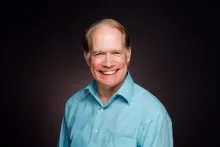
Greg Thomas is the former Pastor of the Cleveland, Ohio congregation. He retired as pastor in January 2025 and still attends there. Ordained in 1981, he has served in the ministry for 44-years. As a certified leadership consultant, Greg is the founder and president of weLEAD, Inc. Chartered in 2001, weLEAD is a 501(3)(c) non-profit organization and a major respected resource for free leadership development information reaching a worldwide audience. Greg also founded Leadership Excellence, Ltd in 2009 offering leadership training and coaching. He has an undergraduate degree from Ambassador College, and a master’s degree in leadership from Bellevue University. Greg has served on various Boards during his career. He is the author of two leadership development books, and is a certified life coach, and business coach.
Greg and his wife, B.J., live in Litchfield, Ohio. They first met in church as teenagers and were married in 1974. They enjoy spending time with family— especially their eight grandchildren.
