
Gary Petty
This transcript was generated by AI and may contain errors. It is provided to assist those who may not be able to listen to the message.
Well, thank you. Good morning, brethren, and happy Feast of Trumpets! I know we started off the service today by people blowing on trumpets, but I have my own trumpet here. It's actually a cheese stick. And we have on the refreshment table there are cheese sticks shaped like trumpets. Just to show you how much we value this day, I think Mr. Graham actually made these. I'll leave this up here in case I need a little bite to eat in a little bit. Thank you for that. And again, welcome to the Feast of Trumpets! Today we celebrate the Feast of Trumpets because of the significant meaning that it has for the entire world. For us, certainly, and eventually for the entire world. I would like to discuss the Feast of Trumpets today by going to a scripture that we often do, Leviticus 23, to see the original command that introduced the meaning to ancient Israel. So if you'll turn there with me to Leviticus 23, verse 24, and we'll read that command. Leviticus 23, verse 24, it says, Now the commentary, this treasury of scriptural knowledge, says this about verse 24, in the phrase, A memorial of blowing of trumpets. It says it's a memorial. Zichron Teruah, which is the Hebrew here, rendered a memorial of the blowing of trumpets. It properly signifies a memorial of triumph, of shouting for joy.
And that is our instruction as God's people on the Feast of Trumpets, because we have a lot to look forward to. We have a knowledge that should bring us joy and celebration and festivity on the day that we celebrate known as the Feast of Trumpets. The trumpet was used for more than just rejoicing or shouting for joy. It was also used as a sound of alarm, a sound of war. And today I would like to spend some time outlining some of the ways that the trumpet was used in ancient Israel. And then at the conclusion of that, I would like to ask a question about how we are keeping the Feast of Trumpets, and then ask a final question about what does the Feast of Trumpets mean for the Church of God this coming year? There were two types of trumpets. One was made from animal horns, and the other was fashioned or hammered into the shape of a trumpet. It was silver, but first we'll talk about the curved animal horn trumpet that's known as the shofar. It was usually a ram's horn, but actually it could be from any bovine except a cow or a calf. But it was allowed to be made from any other bovine. It usually was a ram. The length of the blast or the type of staccato of the blast gave people, gave the listener, a different message or different messages. So even though it did not play many different notes, and you could detect that today as the trumpets were blown as we began services, by the length of the notes and by using staccato, you could send a different message to the hearers or the listeners. It wasn't capable of many different notes, but it provided a clear and a resonant sound which was needed as an instrument. So let's review some of the ways that the shofar was used in ancient Israel. We'll begin by turning to 1 Samuel 13 and verse 1. The first way it was used was a signal to arms, a call to arms, a call to action. 1 Samuel 13, beginning in verse 1. You'll see an example here of when the shofar was used as a call to action. It's time to do something.
1 Samuel 13, beginning in verse 1. It says, Saul reigned a year, and when he had reigned two years over Israel, Saul chose for himself three thousand men of Israel, two thousand were with Saul in Micmash and the mountains of Bethel, and a thousand were with Jonathan and Gibeah of Benjamin. The rest of the people he sent away every man to his tent. Verse 3, something changes here. Jonathan attacked the garrison of the Philistines that was in Gibeah, and the Philistines heard of it. Then Saul blew the trumpet throughout all the land, saying, Let the Hebrews hear! Now all Israel heard it. It said that Saul had attacked the garrison of the Philistines, and that Israel had also become an abomination to the Philistines, and the people were called together to Saul at Gilgal. So you see here that this was a call to action. In this case, the trumpet was used as an alarm to gather the men of Israel together to fight the Philistines in battle. And sure enough, one of the things pictured by the Feast of Trumpets, especially in the ultimate fulfillment of the Feast of Trumpets, is a call to action when the armies of God will be gathered together to fight the nations of this world and fight those dark, demonic forces known as Satan the Devil and his spirits, and to overcome all evil and establish the kingdom of God on earth.
A few other examples we won't turn to, but I could mention regarding a call to action, is Judges 6, verse 34. Gideon blew a trumpet to gather the Israelites tribes together to fight against the Midianites and the Amalekites. In 2 Samuel 20, verse 1, a rebel named Sheba blew a trumpet to rally the tribes of Israel against David. He said, we want to reject David as our king. We don't want to accept him as the king of the northern tribes. And Sheba blew a trumpet, a call to arms. Thankfully, the rebellion was soon brought down. So again, the first reason, the first way that the shofar was used was to signal a call to action, signal to arms. The second way was an advance warning of an enemy. The advance warning of an enemy, something big, is about to happen. Let's go to Ezekiel 33, verse 1. Ezekiel 33, verse 1. Famous prophecy written about a role that the church presently fulfills, and that is as a watchman. Ezekiel 33, verse 1.
Ezekiel wrote again, The word of the Lord came to me, saying, Son of man, speak to the children of your people, and say to them, When I bring a sword upon a land, and the people of the land, take a man from their territory, and make him their watchman, when he sees the sword coming upon the land, if he blows the trumpet and warns the people, then whoever hears the sound of the trumpet, and does not take warning, if the sword comes and takes him away, his blood will be on his own head. He heard the sound of the trumpet, but he did not take warning.
His blood will be upon himself. But he who takes warning will save his life. So the result there is good. A warning was given. That individual listened to the warning. They took action, and they saved their life. Verse 6, But if the watchman sees the sword coming, and does not blow the trumpet, and the people are not warned, and the sword comes and takes any person from among them, he is taken away in his iniquity, but his blood I will require at the watchman's hand.
So you, son of man, I have made you a watchman for the house of Israel. Therefore you shall hear a word from my mouth, and warn them for me. So in this case, the sound of the trumpet is used to warn people of impending disaster. Its purpose is to provoke some to repent and be spared from the calamity that is soon to occur.
And that's one of the roles of the Church of God today. We recently conducted the Kingdom of God seminars, and no matter which Kingdom of God seminar you attended, you heard a discussion of the times of Jacob's trouble. You heard a discussion within that presentation about terrible times that are coming ahead for the United States and for the world before Jesus Christ returns to this earth. You see, this watchman's warning is part of the Gospel. In order to have good news, there has to be something else that precedes it, that makes that news so good and so wonderful.
The good news is the Kingdom of God being established on this earth. What precedes it is a warning that we fervently give to everyone who's listening through our literature, through our television broadcast, through our preaching. And of course, we balance that message. It's not a message of continuous gloom and doom. It's not a message of continuous condemnation and judgment. It's a warning message, seasoned properly so with the good news of the coming Kingdom of God.
So the Church does what we can to be that watchman. Other examples of the way the shofar was used in this way is an advanced warning of something big and terrible about to happen. Again, we won't turn there. Jeremiah 4 and verse 5, Judah was warned to repent. It said, and the sound of a trumpet would bring destruction from an army coming from the north. And of course, that will be fulfilled in prophecy. Amos chapter 3 and verses 6 through 9, it said that at the sound of the trumpet, Egypt and Israel's enemies should be afraid because God would be preparing to punish them when they heard that sound of the trumpet.
And again, that is a prophecy that will be fulfilled. The third way that the shofar was used was divine judgment followed by restoration. Let's go to Joel chapter 2 beginning in verse 1. Another beautiful prophecy that we are all very familiar with. Joel chapter 2 verse 1. Joel wrote, Blow the trumpet in Zion, and sound an alarm in my holy mountain. Let all the inhabitants of the land tremble, for the day of the Lord is coming.
It is at hand, a day of darkness and gloominess, a day of clouds and thick darkness. Like the morning clouds spread over the mountains, a people come great and strong, the like of whom has never been, nor will there ever be any such after them, even for many successive generations. Verse 3, A fire devours before them, and behind them a flame burns.
The land is like the garden of Eden, before them and behind them a desolate wilderness. Surely nothing shall escape them. This is a prophecy, of course, about the divine judgment coming upon our world very shortly. The great tribulation, the day of the Lord, and very tragic events that are going to affect the entire world, its inhabitants, and even our environment.
But there is something that follows judgment and punishment. Let's drop down to verse 15. Again, it says, Blow the trumpet and Zion, consecrate a fast, call a sacred assembly, gather the people, sanctify the congregation, assemble the elders, gather the children and nursing babes, let the bridegroom go out of his chamber. In other words, it's okay to come out now. And the bride from her dressing room, verse 17, Let the priest who minister to the Lord weep between the porch and the altar. Let them say, Spare your people, O Lord, and do not give your heritage to reproach, that the nation should rule over them.
Why should they say among the peoples, Where is their God? Then the Lord will be zealous for his land and pity his people. The Lord will answer and say to his people, Behold, I send you grain and new wine and oil, and you will be satisfied by them. I will no longer make you a reproach among the nations. So again, this was another use of the shofar, the trumpet sound of judgment and punishment, followed by mercy, reconciliation and blessings.
And this yet will occur. This is exactly, prophetically, what will occur in the near future. The fourth way that the shofar was used was to recall troops fighting in battle, to say it's enough. The time has come to end the battle. The cease fighting, the victory, is won. Second Samuel 2 and verse 25. Second Samuel 2 and verse 25. It says in this history of Israel, and in context, there was a civil war going on in Israel. Though Saul had died, some of his descendants in the northern tribes who supported Saul had propped up one of his descendants to be king, where Judah had recognized David as king. So there literally was a civil war going on at this time. Abner supported the descendant of Saul, Ishbozeth, and Joab supported David from the tribe of Judah, who was the only tribe at this time supporting David, his claim to the throne. So there was a war going on, a skirmish had occurred. Picking it up here now in verse 25. Now the children of Benjamin gathered together behind Abner and became a unit and took their stand at the top of a hill. Already many Benjamites had died from a skirmish, and now they were all solidly together on the top of a hill. It's hard to conquer the top of a hill. Have you ever read any of the stories of the civil war and the civil war battles, a little round top, and you would easily see how difficult it is to be running up with your weapons and to conquer and literally take over land that's being defended on the top of a hill. This was going to be a bloody, terrible battle. Verse 26, and then Abner called to Joab and said, Shall the sword devour forever? Do you not know that it will be bitter in the latter end? That verse, by the way, has kind of profound prophetic significance, doesn't it? Do you not know that it will be bitter in the latter end? How long will it be then until you and the people, until you tell the people to return from pursuing their brethren? Abner says, We're brethren! We all come from the same blood! We're different tribes but all descendants of the same patriarchs. We speak the same language. We are blood! We're brethren! Verse 27, and Joab said, As God lives, unless you had spoken, surely then by morning all the people would have given up pursuing their brethren. In other words, what he says, if you hadn't said something, I promise you that this fight would have gone on all night until morning before it would have been called off. Many people would have died. There would have been terrible butchery and bloodshed. Verse 28, So Joab blew a trumpet, and all the people stood still, and did not pursue Israel anymore, nor did they fight anymore. So this again is an example of recalling the troops that are fighting in a battle. It's time to stop. It's time to lay down your arms and stop fighting. And there will come a time after Jesus Christ certainly has seized control of this world and defeated the nations that the time will come to stop fighting. The victory will be won. Enough! Enough pain, enough suffering, enough carnage will have occurred, and the King of Kings will reign supreme over all the world.
So in this example, the trumpet was sounded to stop a civil war that was destroying the tribes of Israel. The biblical events that we examined so far in these first four uses of the shofar focused the trumpet being used as an instrument for alarm, for punishment, for war. But we sometimes forget that there were other reasons or events that were positive and joyful and uplifting that the shofar was used for, the reasons that it was also blown. Let's take a look at number five. The fifth reason the shofar was used was to announce God's presence and the proclamation of the law. Let's go to Exodus 19 and verse 10. God's presence and the proclamation of the law. It is written, And the Lord said to Moses, Go to the people and consecrate them today and tomorrow, and let them wash their clothes. I'm going to stop right there. I forgot to interject the context. Moses is gathering the people to meet God face to face on Mount Sinai. Now, they won't meet face to face because the people say, We can't take it. You go, Moses. You talk to this God. But at this point in time, the people are preparing to meet their Maker, the great Creator of the universe. And these are the instructions that Moses has given to them. Verse 11, And let them be ready for the third day. For on the third day the Lord will come down from Mount Sinai, In the sight of all the people you shall set bounds for the people all around, saying, Take heed to yourselves, That you do not go up to the mountain or touch its base, For whoever touches the mountain shall surely be put to death. Not a hand shall touch him, but he shall surely be stoned or shot with an arrow, Whether man or beast he shall not live. In other words, Moses is being instructed that that area is holy, because God's presence is there, and you do not defile the presence of God, Lest you pay a terrible price. Continuing, When the trumpet sounds long, they shall come near the mountain. So Moses went down from the mountain to the people, and sanctified the people, and they washed their clothes. Now drop down to verse 17. And Moses brought the people out of the camp to meet with God, and they stood at the foot of the mountain. Now Mount Sinai was completely in smoke, because the Lord descended upon it with fire. Its smoke ascended like the smoke of a furnace, and the whole mountain quaked greatly. Verse 19, And when the blast of the trumpet sounded long, and he came louder and louder, Moses spoke and answered him by voice. Then the Lord came down upon Mount Sinai. So you see, brethren, this trumpet that sounded long and was louder and louder, announced the presence of the Almighty God! That's one of the uses of the shofar. It says, And the Lord called Moses to the top of the mountain, and Moses went up. If you continued reading, you would see that the next thing that was presented to the people were the Ten Commandments.
There's coming a time in the not too far future when the presence of God returning to earth in the form of Jesus Christ, our Savior, is going to cause a trumpet to blow. And that trumpet sound will be long and will be loud, because it will announce and introduce God's presence on this earth, and the re-establishment of the law of God for the benefit of all peoples, of all mankind. So we see here that the magnificent presence of God, followed by the announcement of the Ten Commandments, was preceded by a long trumpet blast. That's a positive thing. That's a good thing. That the shofar announces the presence of God, introduces Him, and announces His presence, and proclaims His values that we know of as His law. The sixth reason that the shofar was used was to announce the year of Jubilee.
If you'll turn to Leviticus 25, beginning in verse 8. Leviticus 25, verse 8. Another positive reason. Leviticus 25, beginning in verse 8, And you shall count seven Sabbaths of years for yourself, seven times seven years, And the time of the seven Sabbaths of years shall be to you forty-nine years. Then you shall cause the trumpet of the Jubilee to sound. On the tenth day of the seventh month, on the day of atonement, You shall make the trumpet to sound throughout all your land, And you shall consecrate the fiftieth year, and proclaim liberty throughout all the land to its inhabitants. It shall be a Jubilee for you, and each of you shall return to his possession, And each of you shall return to his family. That fiftieth year shall be a Jubilee to you. In it you shall neither grow nor reap what grows of its own accord, Nor gather the grapes of your untended vine, For it is the Jubilee, it shall be holy to you. You shall eat its produce from the field. In this year of Jubilee, each of you shall return to his possession. So the year of Jubilee was intended to rebalance the economy, And to rebalance the debt in the nation of Israel, And it was to occur every fifty years.
And at that time, the properties that you had sold would be returned to your family name. As I said, the entire economy and debt would be rebalanced, Because family and land were very important to God, And protecting family and the family's ability to have their own land Was very, very important to God. This is why the trumpet was blown on Jubilee, And there is coming a time when Jesus Christ returns to earth, That this world will be in what we could say is a perpetual Jubilee. It will be a time of liberty, to proclaim liberty from sin. It will be a time for all the inhabitants of the world To take off the shackles of slavery to Satan and sin, And for the first time in their lives live in a free society That allows them to grow and develop and be everything that God ever intended them to be That allows people to reach their greatest potential. The seventh reason that the shofar was blown was the approach of the ark. The approach of the ark, and we'll need to turn to 2 Samuel 6 and verse 11 to see this example. 2 Samuel 6 and verse 11. In this event, in context, the ark had been intended to be moved earlier. Someone died because they touched the ark. They didn't carry the ark properly through poles like God had instructed. Uzzah died, and the ark was taken to this home where it remained for a while. And then we pick up the story. The ark of the Lord remained in the house of Obed-edom. The Gittite, three months, and the Lord blessed Obed-edom in all his household. God was told King David, saying, The Lord has blessed the house of Obed-edom and all that belongs to him because of the ark of the Lord. So David went and brought up the ark from the house of Obed-edom to the city of David with gladness. David said to himself, well, it must be okay now because this individual is being blessed because the ark is in his family, is in his household. So with gladness the ark was brought, verse 13. And so it was when those bearing the ark of the Lord had gone six paces that he sacrificed oxen and fatted sheep. Then David danced before the Lord with all his might, and David was wearing a linen ephod. So David and all the house of Israel brought up the ark of the Lord with shouting and with the sound of a trumpet. So similar to what occurred in Mount Sinai in Exodus 19, God's presence was among the nations, symbolized by the ark of the covenant. And when the ark was moved, his omnipresence was joyfully proclaimed by the sound of a trumpet. David was excited. It says he danced with all his might. His wife claimed that he showed a little thigh, but we don't know if that happened really or not. But he was so excited. He danced in a way that some people might have defined as undignified.
But he was just allowing the fullness of his joy and enthusiasm for the ark of the Lord coming to Jerusalem to be expressed in his manner on that day. The eighth reason that the shofar was blown was to hail the crowning of a new king. We can see an example of that in 1 Kings 1 and 32. 1 Kings 1 and 32. In context, a palace coup was attempted. David always intended for his son Solomon to be his king.
But one of David's sons rebelled. He wanted to seize the throne. And word got back through Bathsheba to David. To David, I thought you always intended Solomon to be your king, the rule after you, after your death, and not one of your other sons. And here's what David said in 1 Kings 1 and 32. And King David said, And say, Long live King Solomon! Then you shall come up after him, and he shall come and sit on my throne, and he shall be king in my place. For I have appointed him to be ruler over Israel and Judah. And Ben and I, the son of Jehoiada, answered the king and said, Amen. May the Lord God of my Lord the King say so too. So here we see the horn was being blown to announce the presence of a new king, Solomon. And we even today see this coronation custom throughout many nations of the world. When there's either a coronation in Britain, you will often see trumpets being played during the coronation ceremony. Whether it's an investiture like the Prince of Wales, or whether it's literally receiving the crown of Great Britain to this very day. Trumpets are blown during the coronation ceremony. And what do they say? They say, God bless the king, or God save the queen. So that ceremony is continued throughout this very day.
And there's coming a time when a new king is going to arrive to this earth. The King of kings and the Lord of lords, and at trumpet blast, long and loud is going to announce to the world, Hail! A new king rules over all the earth. A couple of other examples of this in the Old Testament. Again, we won't turn there.
But in 2 Samuel 15, verse 10, when Absalom rebelled against his father, his own father, he told, he instructed his servants that as soon as they arrived in Hebron, when you hear the sound of the trumpet, he said, tell everyone Absalom reigns in Hebron.
So he was using that as a ploy in order to seize the throne of Israel, using the function of a shofar to announce the presence of a new king. Well, those are all the ways that the shofar was used in ancient Israel. There was another type of trumpet. The second type of trumpet that was used in ancient Israel were two silver trumpets. If you'll begin turning the numbers, chapter 10 and verse 1. And the two silver trumpets in Hebrew, the Hebrew word katzatera, silver trumpets. And these trumpets offered a quavering, high, shrill note. Now, I've had the pleasure, I've had the opportunity to be in Rome in the Feast of Tabernacles a few years ago, and to see the Ark of Titus in Rome. And you know what's on the Ark of Titus? The Ark of Titus is to celebrate the victory of Titus over Judea in the fall of Jerusalem. And on the south panel, along with the table of showbread and a group of military individuals, are the two silver trumpets that were taken by the Romans during the fall of Jerusalem. Here's what Numbers chapter 10 and verse 1 says, And the Lord said to Moses, saying, Take the two silver trumpets for yourself, you shall make them of hammered work. You shall use them for calling the congregation and for directing the movement of camps. When they blow both of them, all the congregation shall gather before you at the door of the tabernacle of meeting. But when you blow only one, then the leaders, the heads of the divisions of Israel, shall gather to you. Verse 5, When you sound the advance, meaning now it's time to move forward, it's time for the camp to march and get on the move, when you sound the advance, the camps that lie on the east side shall begin their journey. When you sound the advance the second time, then the camps that are on the south side shall begin their journey. They shall sound the call for them to begin their journeys. And when the assembly is to be gathered together, you shall blow, but not sound the advance. Now in verse 8, The sons of Aaron, the priest, shall blow the trumpets. It was only the priests who were allowed to blow these silver trumpets. They were primarily ceremonial. And these shall be to you as an ordinance forever throughout your generations. And when you go to war in your land against the enemy who oppresses you, then you shall sound an alarm with the trumpets. So another use of these two silver trumpets was to surround the alarm for war. And you shall be remembered before the Lord your God, and you will be saved from your enemies also in the day of your gladness, in your appointed feast. At the beginning of your months you shall blow the trumpets over your burnt offerings and over the sacrifices of your peace offerings. And they shall be a memorial for you before your God. I am the Lord your God. Now these trumpets were straight. They were made. They were hammered from silver. They had a mouthpiece at one end, and they were fluted like a bell on the other end. They were about 18 inches long. Now when you look at the Ark of Titus in Rome, they appear to be a lot longer. But if you look at it closely, you will see that there was a rod used to carry them that fit into the mouthpiece. So if you look at this so-called long trumpet on the Ark of Titus, you will see a coupling in the center. So the actual trumpet itself is only about half as long. They were about 18 inches long. They were blown only by the priest for all reasons. To summon the people to the door of the tabernacle or the temple, verses 2-4. A signal for breaking up the camp to get on the move. It's time to stop standing around to get moving.
Verses 5-7. A call to arms for war and battle. Verse 9. And to celebrate the feast and new moons by blowing these trumpets over the sacrifices.
What we've seen here today is that the trumpet sound could be used for two different reasons.
One was an alarm to warn of war and impending danger, divine intervention. The other reason was to joyfully celebrate freedom or a new leader or the presence of God.
So let me ask you a question today. Which of these two reasons do you think the trumpet will be sounded at the return of Jesus Christ?
Which of these two reasons will the trumpet sound at the return of Jesus Christ?
The answer is both.
You see, for the children of God, the saints, the trumpet sound means resurrection. It means immortality. It means true liberty. It means the coronation of the King of kings. It means the presence of God and earth and the fulfillment of God once again bringing His garden back to earth that was lost at Eden.
On the other hand, to those who were unrepentant, to those who were mentally asleep, to those who ignored the warning of the watchman, the trumpet will mean alarm, danger, war, horror, and divine judgment, followed by restoration.
Depending on the decisions we make, we meaning each and every person alive, depending on the decisions we make, the return of Jesus Christ will have either one meaning or the other.
For us, the meaning is wonderful and beautiful.
But I'd like to ask you another question. Let's make this personal. Let's make this about the year 2011. Let's make this about where we are today as a people, as a church.
Which of these do you think will be the message for the Church of God during this next year?
You see, the religious year began in the spring, followed immediately by the Passover and the Days of Unleavened Bread, and that was the religious year in ancient Israel.
But the civil year began on the first day of the seventh month on this very Feast of Trumpets.
So I guess I could say or ask the question, the beginning of a new civil year that ancient Israel celebrated, I could ask the question, which of these do you think was the message to the Church of God in the year 2011? Well, I have a scripture I'd like you to turn to because I believe the message for us in God's Church today is similar to an event that happened to David, something that he experienced soon after he was made King of Israel. If you go to 2 Samuel 5 and verse 17.
2 Samuel 5 and verse 17. This was the time of transition for David.
After all of his effort and waiting, he'd been anointed many, many, many, many years before as King of Israel.
He patiently waited for Saul to get out of the way. Saul died in battle, and then there were complications with some of Saul's descendants, and there was a civil war. The northern tribes did not want to recognize David as King of all Israel. It was a time of transition.
We've kind of had a time of transition the last year ourselves, haven't we?
It says, Now when the Philistines heard that they had anointed David king over Israel, all the Philistines went up to search for David.
And David heard of it and went down to the stronghold. And the Philistines also went and deployed themselves in the valley of Rephidim.
So David inquired of the Lord. I want you to notice that he went to God.
He one on one went to God, saying, Shall I go up against the Philistines? Will you deliver them into my hand? Lord, shall I go on the offense, or should I just play it safe?
Shall I go on the offense, or should I just hold back?
And the Lord said to David, Go up, for I will doubtless deliver the Philistines into your hand. So David went to Baal-Parazim, and David defeated them there, and he said, that's what David said, The Lord has broken through my enemies before me, and like a breakthrough of water.
Therefore he called the name of that place Baal-Parazim. And of course, Baal was the Canaanite word for sovereign God, for Lord, for master.
Rari's Bible study notes says this about this word, Baal-Parazim.
It says, Literally, the Lord is breaking forth the image of waters flooding through a dam as David's troops broke through the Philistine assault.
So David, in a time of transition, wanted to know what he needed to do, and he discovered the God of breakthroughs.
He called him the God of breakthroughs. For either and I've personally known individuals and organizations who struggled for years to achieve their best or to reach their potential.
They struggled to do the right things day after day, and nothing ever seems to happen.
They trudge along for years, sometimes even decades with very little progress.
Then, all of a sudden, the God of breakthroughs intervenes, either in their lives or in their businesses.
The God of breakthroughs helps them, like a flood, break through a dam, and opportunities to open up as never before.
I want you to know and I want you to believe that the God of breakthroughs has been working in his church.
You can see it in the excitement of the brethren. You can see it in the passion of the ministry.
Many people who were an autopilot for years are now engaged like never before.
Thousands of brethren are stepping up and doing things they never did before, or never thought that they were even capable of doing.
You can see a breakthrough regarding the focus of the church.
It's a commitment to preach the gospel aggressively and to reach out to those whom God is calling, to warn this world of the coming crisis, and to offer a message of hope and encouragement.
The first Kingdom of God seminar brought about 1,500 brand new people to our congregations and around the world.
Someone who attended one of those Kingdom of God seminars for the first time is here today, keeping and observing the Feast of Trumpets.
Brethren, this is only the beginning because the God of breakthroughs is taking His church forward to follow His lead.
So on this festival of trumpets in the year 2011, as we begin a new civil year, according to the calculations of ancient Israel, I ask you to pray to the God of breakthroughs and the plead for His direct intervention, just like David did.
Ask Him to help you to have a breakthrough in your personal life.
If you've been struggling with a sin or an issue, ask the God of breakthroughs to intervene in your life.
If you've been struggling with a health issue or debt or relationship issues, go to the God of breakthroughs and ask Him to change it, to intervene and to make all things new in your life.
Ask Him to continue to open doors for His church so that we can expand our mission and our reach to preach the gospel, to prepare a people in every nation around this world. Ask the God of breakthroughs to allow our generation to be the one that completes His work, to do a work, the greatest work the church has ever done in the history of the church of God.
That's all possible, not because of us, because we're weak and limited, but it's all possible because we worship the God of breakthroughs.
We struggle, we're weak, but He can change everything.
And finally, on this festival of trumpets in the year 2011, ask the God of breakthroughs to prepare His bride to serve Christ with dedication and with commitment as never before.
The trumpet is sounding, it's time to stop holding back, and it's time to rally together the battle as a servant of Jesus Christ, to do His work and to complete the job that is ahead of us.
Let us zealously desire to hear that ultimate, joyous trumpet blast, that sound, and when it comes, we will experience the first resurrection and immortality and true liberty and the coronation of the King of kings and God's presence on earth.
May God speed that day. Have a wonderful feast of trumpets.
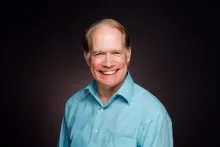
Greg Thomas is the former Pastor of the Cleveland, Ohio congregation. He retired as pastor in January 2025 and still attends there. Ordained in 1981, he has served in the ministry for 44-years. As a certified leadership consultant, Greg is the founder and president of weLEAD, Inc. Chartered in 2001, weLEAD is a 501(3)(c) non-profit organization and a major respected resource for free leadership development information reaching a worldwide audience. Greg also founded Leadership Excellence, Ltd in 2009 offering leadership training and coaching. He has an undergraduate degree from Ambassador College, and a master’s degree in leadership from Bellevue University. Greg has served on various Boards during his career. He is the author of two leadership development books, and is a certified life coach, and business coach.
Greg and his wife, B.J., live in Litchfield, Ohio. They first met in church as teenagers and were married in 1974. They enjoy spending time with family— especially their eight grandchildren.
