
David Mills
This transcript was generated by AI and may contain errors. It is provided to assist those who may not be able to listen to the message.
Brethren, what has God been doing for 6,000 years? This day shows what He has been very busy doing. He has not been on vacation. He has been very busy. And He is busy here in 2015. I think many times we don't realize just how busy our Father is and Jesus Christ. They are very, very busy with a very important part of their plan of salvation. And this day is a very vital part of it. Today we have so many world troubles. Oh, the suffering, it just keeps intensifying. I'm sure you watch the news and you hear what is going on in various parts of the world. All the suffering, the death and destruction, the bloodshed. Is God concerned? Yes, He is very concerned.
And He is busy doing something about it. He is in the process of correcting it already. He is doing something, even now, preparing the solution. It is God's purpose to pour out His Spirit on all mankind. Let's turn over to the book of Joel and read this prophecy because it relates to this very day that we are keeping the day of Pentecost.
The book of Joel, and let's turn to chapter 2 and read beginning in verse 28. It shall come to pass afterward that I will pour out My Spirit on all flesh. Your sons and your daughters shall prophesy. Your old men shall dream dreams. Your young men shall see visions.
In verse 30, I will show wonders in the heavens and in the earth, blood and fire and pillars of smoke. The sun shall be turned into darkness and the moon into blood before the coming of the great and terrible day of the Lord. And it shall come to pass that whoever calls on the name of the Lord shall be saved. And so, it is God's purpose, ultimately, to pour out His Spirit on all of mankind. Did you know that the Apostle Peter on the day of Pentecost in Acts 2 cited this passage that we've just read here from Joel? And he said, what you see when God poured out His Spirit on the day of Pentecost, what you see is the fulfillment of that prophecy that Joel gave many years earlier. But you know what Peter saw was just a beginning phase of God's purpose to pour out His Spirit on all of mankind. Did you know that there are three separate periods of time when God will fulfill that prophecy of pouring out His Spirit on all mankind? One is this very day that pictures the day of Pentecost. And that is that God is pouring out His Spirit on a firstfruits, as we heard in the message this morning, the firstfruits of the Spirit. And when God pours out His Spirit upon a people, guess what they come under? They come under the judgment of God.
Today God has poured out His Spirit upon those He has called out, His Church. And guess what? Those He has called out are in their period of judgment. It is Judgment Day for them. 1 Peter 4, verse 17 says that judgment must begin at the house of God. I don't know if many of us think about that very often, but we are being judged. This is our day of judgment. God is judging what we are doing day by day. He looks upon our hearts and minds. He's evaluating. He's guiding. He's directing us toward perfection so we can be brought into His family. But this is our day of judgment. We're not going to have another one later on. This is it. This is Judgment Day for us. How are we doing with our Judgment Day? Well, this is only the first phase of God pouring out His Spirit upon all flesh. Guess when Phase number 2 comes along? That is when Jesus Christ returns and sets up the kingdom of God on the earth, and when all nations may then learn of God's ways. And God will pour out His Spirit upon all peoples and all nations, all during the 1,000 years. And so when God is pouring out His Spirit upon all people, that will be their Judgment Day. Yes, all of those people, the nations and peoples in the Millennium, it will be Judgment Day for them. And there's a third Judgment Day that comes along after the Millennium, and that is for the rest of the dead. You read about it in Revelation 20. They will be brought back to life. All the adults and deceived peoples, billions and billions of deceived peoples from this age will be brought back to physical life. Little babies will be brought back. Little babies and infants who never even have any, won't have any memory of having lived in this age. You know, a little one-year-old or one day-old or one week-old who dies in this age has no memory. They'll have to be told, you lived in a previous age, and now you're growing up, and they'll have to have all that explained to them. And then as they grow up, children and the adults, of course, right away, they will have the opportunity to have God's Spirit poured out upon them. It's going to be billions and billions of people will have God's Spirit poured out upon them during the Second Resurrection period of time. Billions and billions and billions, and it will be their Judgment Day.
This is not the Judgment Day for the ones in that resurrection. They are deceived. Satan has been allowed by God to deceive the whole world. It is not Judgment Day for them, but it will be their Judgment Day at that time. So there are three broad Judgment periods when God will pour out His Spirit upon all flesh. And by the time it's all complete, every human being will have had the opportunity to have God's Spirit and grow in that spirit and be in the family of God. So that's a wonderful thing to think about on this day, that God will ultimately accomplish His purpose to pour out His Spirit upon all flesh, as we read here in Joel, chapter 2.
So going back to Pentecost, that's where we find ourselves in the first Judgment period, the ones that God has called out today. The ones in this Judgment period are called the first fruits. Of course, that would imply a necessitate would have not even at least second fruits. There will be later fruits after the first fruits.
We read about the Feast of First Fruits in a number of verses in the Old Testament. I would like for us to turn to Leviticus, chapter 23. The Feast of Pentecost is called the Feast of Harvest in one passage. It is called the Feast of Weeks. And in this passage, it simply is not called anything. It just tells us how to arrive at the proper day for keeping it. In Leviticus, chapter 23, verse 15, this then is the third of the annual festivals that God has commanded.
Leviticus 23, verse 15, You shall count for yourselves from the day after the Sabbath, and that is the Sabbath within the seven days of unleavened bread, from the day that you brought the sheaf of the wave offering. Seven Sabbaths shall be completed. Count fifty days to the day after the seventh Sabbath. So we begin numbering, then, seven weeks ago today with day number one, and this is that fiftieth day today. Notice in the last part of verse 17, verse 17, You shall bring from your habitations two wave loaves.
They shall be of fine flower baked with leaven. Interesting, because that certainly would perhaps show that we are in the process of overcoming and growing and putting out spiritual leaven. They shall be baked with leaven. They are the first fruits to the Lord. And in verse 21, You shall proclaim on the same day that it is a holy convocation to you. You shall do no customary work on it. It shall be a statute forever in all your dwellings throughout your generations. So we're keeping that fiftieth day today.
The very word or name Pentecost means fiftieth. You know, one time in the early years in the church, we said that Pentecost means count fifty. Well, we do count fifty, but the actual meaning of the word is not count fifty. The actual meaning is simply fiftieth. That's it. Fiftieth day that we count in order to arrive at when to keep this feast. Now, the Feast of First Fruits, I think that has been commented about quite a bit already in the messages. I'm not going to dwell extensively on that, but just a little bit, of course.
But I did want to mention the wave sheath that is mentioned here. We begin to count for Pentecost on the day the wave sheath was offered or waved. And we must go back to verse 10 to read just a little bit about that, because it is significant and it ties in with the first fruits. In verse 10, speak to the children of Israel and say to them, When you come into the land which I give to you and reap its harvest, then you shall bring a sheath of the first fruits of your harvest to the priest.
He shall wave the sheath before the Lord to be accepted on your behalf. And so this was done then on the first day of the week that occurs within the seven days of the Feast of Unleavened Bread. Did you know that the word for first fruits here, resheath, is different than the word for first fruits that we read in verse 17, referring to this day.
The word for first fruits, resheath, means the first of the first fruits. And of course, we all know that this wave sheath actually pictured Jesus Christ, who was resurrected near sunset on the Sabbath. And the next day there are verses that show that he ascended up to God's throne on the very day of the wave sheath offering.
So this wave sheath was just a type of Jesus Christ, the resheath, you might say, spiritually, the first of the first fruits. Jesus Christ is the first of the first fruits. Then after that, of course, we, as ones called out today, are the other first fruits pictured by Pentecost. So, Pentecost this day pictures the first fruits. It pictures, it does not so much picture Jesus Christ, who was resurrected and came in earlier than this day. This day pictures all of those first fruits who are going to join with Jesus Christ and be among the first ones to be in God's family.
The first ones to have God's Spirit poured out upon them. So today is a very important day, a very special day. This day reminds us of who we are. I think we need to be constantly reminded of that. We ourselves don't realize the importance of what God is doing. It's not that we are important, but what God is doing is important. James 1, verse 18 says that we are a first fruit, a kind of first fruits of his creatures.
And the word for creature is the Greek word katisma. It means an original formation. We then are one of the first fruits, an original formation, a manufactured product, a fabrication, a created thing. One of the first ones, you might say, being created to become a son of God. The Phillips translation says, for this passage, James 1, verse 18, the first specimens of his new creation were the first specimens of what God is doing. He's creating many sons to be brought into his family. And the Living Bible simply says the first children of his new family. So that's exciting to think about.
We're the very first specimens of that spiritual creation that God has in mind. Ephesians chapter 1 brings out that we're a chosen people, even before the foundation of the world. God had a plan of salvation. Could God plan ahead of time that there would be a first fruits? Well, he planned ahead of time that there would be a Passover lamb. And he certainly planned his whole plan of salvation.
Then before the foundation of the world, he predestined that there would be a progression of people that would have his spirit poured out upon them. So this feast day focuses on the Church of God. It focuses on our own dwelling. It focuses on what God has been doing in the dark and deceived world. And most people don't have any foggy idea, really, of what God is really doing.
And again, many times we don't ourselves realize it as deeply as we should. What God is doing today is a mystery to the world. Most people in the world who call themselves Christian think that God is trying to save the world today. Far from it. Far from it. But God is trying to save and is, in fact, saving a first fruits. There are seven things that Pentecost means. I'd like to bring out. I'm sure you could come up with more.
But these are seven very important things that this day means and represents. Number one, it represents a first fruits of the spirit. We'll turn to one verse on each of these seven. Let's turn to Romans chapter 8 and verse 23. Romans chapter 8 and verse 23. Not only they, but we also who have the first fruits of the spirit. Even we ourselves groan within ourselves. You know, we do some groaning. Yes, we do. Along the way. We groan within ourselves eagerly awaiting for the adoption, the redemption of our body.
We'd like to go ahead and get this process completed. I'd like that, wouldn't you? I'm sure we all would. But what are we? It's what Pentecost means. What it pictures a first fruits of the spirit. Okay, number two, Pentecost means that there is a chosen generation being prepared to be a royal priesthood and a holy nation. Let's go to read about that in 1 Peter chapter 2 and verse 9. 1 Peter chapter 2 and verse 9. And these verses certainly identify who we are, what kind of people we are.
1 Peter 2 and verse 9, you are, what are we then? You are a chosen generation, chosen out of this world. We're not in the church because of our doing. Jesus told his disciples, you've not chosen me. I chose you. So God chose us to be a part of the first fruits. You are a chosen generation, a royal priesthood. Royal has to do with being a king and priesthood has to do with being a minister, a kingly minister then. You are a king and priest, being trained to be a king and priest, a royal priesthood, a holy nation, his own special people.
And why has God called us and what should we be busy doing? That you may proclaim the praises of him who called you out of darkness into his marvelous light. So, brother, let's keep doing that. We do that in many ways.
We do it collectively by preaching this message out into the world. And we are projecting it out as powerfully on the Yondodai program, our Good News magazine booklets and articles, and our website. In every way we can, we are projecting our message out into the world, preaching the gospel, as God has commanded us to do. But also, we proclaim God's praises by the way of life that we live.
The example we set for our relatives and neighbors and fellow workers on the job to let our light shine, let them see there's something different about us. And there have to be some things about us that they like, even though they may not agree with all the things that we do. So, we are to proclaim the praises of God who has called us out of the darkness of this world into his marvelous light. That's what we are, a chosen generation, royal priesthood, holy nation.
Number three, number three, like Abraham and the patriarchs, we today, like them, are strangers and pilgrims on this earth. This, we're not citizens of this age and this world. We don't consider ourselves a part of this world. We, in fact, consider ourselves a part of a world that is to come, a kingdom that is to come. Turn to Hebrews 11 and verses 13 and 14. And this further describes the Pentecost and the type of people that we are. Hebrews 11 and 13, these all died in faith, not having received the promises, but having seen them afar off, were assured of them. It's talked about Abraham and Isaac and Jacob and Noah. So different ones have been mentioned earlier. These saw something way ahead and they embraced them and confessed that they were strangers and pilgrims on the earth. For those who say such things declare plainly that they seek a homeland. We're seeking a homeland, too, but it's one that is to come. And we confess like them that we are strangers and pilgrims. We're misfits. We don't fit into this world and the way it's going. We're citizens of a kingdom that is yet to be set up on this earth. Strangers and pilgrims, this day helps us to realize that. Firstfruits are strangers and pilgrims on this earth. Number four, this day reminds us and means that right now we are in a position described by the Apostle Paul in 1 Corinthians 11 and verses 1 and 2. Let's read these verses. 1 Corinthians 11 and verses 1 and 2.
Okay, let me see here. Just a minute. Let's go to 2 Corinthians 11 and verses 1 and 2. 2 Corinthians 11 and verses 1 and 2. All that you would bear with me in my folly, and indeed you do bear with me. For I am jealous for you with godly jealousy. For I have betrothed you to one husband, that I may present you as a chaste virgin to Christ. So this day reminds us that we are betrothed to someone. It is to Jesus Christ who is going to become our husband in the future. And we are in the betrothal stage now, espoused to marry Jesus Christ.
So Pentecost helps us to realize that. Pentecost helps us to also, number five, realize it is a better resurrection. Let's go back to Hebrews once again. Hebrews 11. Hebrews 11 and verse 35. Women received their dead, raised to life again. And others were tortured, not accepting deliverance. And why? That they might obtain a better resurrection. This chapter describes the first fruits and the struggle the first fruits have to go through. Brethren, if we have to struggle, we're not the first ones. All down through the ages, first fruits have had to struggle. They've had to be strangers in pilgrims, be different, face persecution, obstacles, even martyrdom. So why? Because God had chosen them out of the world. And they looked ahead to that homeland, something that they had as a goal for the future and a better resurrection. Yeah, the first fruits will have a better resurrection. The first resurrection will be to immortal life. The second resurrection will be to physical life. Of course, the third one to the lake of fire will be also back to physical life. So the first resurrection truly is a far better resurrection. Number six, something else to Pentecost means that we are to become the actual bride of Christ. In Revelation chapter 19, and beginning in the latter part of verse 6, it mentions that the Lord God omnipotent reigns. Revelation 19 and verse 7, Now, let us be glad and rejoice and give him glory, for the marriage of the Lamb has come. And his wife has made herself ready. That chaste virgin that we read about in 2 Corinthians 11 has made herself ready. And to her it was granted to be a raid and fine linen, clean and bright. For the fine linen is the righteous acts of the saints. And he said to me, Right, these are those, or blessed are those, who are called, that chosen generation, to the marriage supper of the Lamb. This day means then that we have the opportunity to be a part of the very bride of Jesus Christ. Now, the church is not yet the bride of Christ. The church will become the bride of Christ when the first fruits are changed to immortality and meet Jesus Christ in the air. And that marriage supper here is described. That's when the first fruits become the bride of Christ. And number seven, as far as the meaning of Pentecost, is that we are destined, the first fruits, that is, to be kings and priests and to reign with Christ for a thousand years. Turn, well, the next chapter here, Revelation 20. And in verse 4, The rest of the dead did not live again until the thousand years were finished. As we mentioned earlier, that would be that third judgment period for the rest of the dead after the millennium. And verse 6, And holy is he who has part in the first resurrection, over such the second death as no power, but they shall be priests of God and of Christ, and reign with him a thousand years. This day then means that one day we have the opportunity of reigning with Christ. And we need to think about that maybe more than we do. We have the opportunity to, with Jesus Christ, begin to set things straight in the world. Wouldn't that be wonderful? To straighten out things like all the bloodshed in the Middle East that is going on. It's so sad. We hear of people being beheaded. We see ISIS on the move expanding and the bloodshed and the brutality. But yet we can look even closer at home and we can see all kinds of problems in our own country. Wouldn't you like to be able to help straighten out the problems of the world? This day means that God is preparing those who will assist Christ in straightening out the things on this earth. Turning things around.
Brethren, as we already have indicated, it's not easy for the first fruits. It's not an easy age. It's not been easy for me. How about you? I look back over all the years, the decades. It's not been just an easy road at all. When I first was baptized, in my beginning years at Ambassador College, I remember that some of the sermons would say that we would have trials and troubles and difficulties. Well, guess what? At that particular moment in the beginning of the Church, I didn't have any trials and problems. I thought, well, you know, it's not bad at all. But they came soon enough. And troubles and problems and trials, some of them self-inflicted. I think we all have had some of those. But there have been trials and difficulties and challenges all along the way. And I don't know that we'll ever get beyond having difficulties and struggles. I think we could look at the faith chapter. We could look at people like Abel. Did Abel have it easy? No. He was martyred. Did Enoch have it easy? No. He was very possibly martyred. Noah didn't have it easy. Abraham and Sarah, Isaac, Jacob, Joseph, Moses. You can read their story. None of them had it easy. Joshua, Rahab, Samuel, David, the prophets. No, none of them had it easy at all. They had a struggle. I think we could add many people today. I've seen many, not just myself, go through trials and difficulties, but many people in the church as well have had their struggle as a first fruit. You know, think about it. The first fruits are spiritual pioneers. You know, I've always admired the pioneers. Study of the pioneers and people pushing westward in our country has always fascinated me. And how our country then spread from coast to coast with the pioneers who would head out. They did not have it easy. It was difficult. And that's what God has called us to do, to head out into territory that where it's not going to be easy. We are a type of spiritual pioneer. Pioneers must be willing to be different. They must be willing to go it alone. Some pioneers have had to just simply go it alone all by themselves. I mean, physical human pioneers. And apart from others, pioneers have to be willing to face a hostile environment. They have to be willing to rough it and to go through hardship. So it takes commitment. Brother, let's keep our commitment strong. It takes zeal. And it takes endurance. And it takes faith. And we have to go on then and endure until the end. But it won't be easy. We don't know what lies just ahead. I'll tell you, difficult times according to the Scriptures and it's getting worse all the time. How close could we be? Things could fall apart any time. That's up to God. And when God wants it to come to an end. But certainly there will be difficulties we will have to face. And there will be a struggle as we go on forward. There may be persecutions that we don't anticipate. There could be martyrdom that lies ahead for some of us. Certainly we cannot promise that any of the struggle or any of the difficulties faced by spiritual pioneers of the past could not also be faced by each of us. So we've got to be strong. We've got to keep our commitment strong. We've got to stay close to God and be filled with His Spirit. But if we endure until the end, the rewards will be rich. We will reign with Jesus Christ. We will realize a better resurrection. We will be among the saints. That is the firstfruits who are given the kingdom. The ones who will rise up to meet Jesus Christ and become His bride.
This day shows people who are not running for an office. None of us has chosen to run for an office. Right now we have a lot of people in our country choosing well ahead of time that they want to run for the top position of our country. They're running for that top position. We're not running. We did not choose to prepare to be a king and priest. But that is exactly what we have been called to do.
We are being prepared with our participation in it to reign as a king and priest with Jesus Christ. So, brethren, what must we do? I want to bring out a few things. In this last 15 minutes I have, we must, of course, keep our commitment strong. We live in a world that is lacking commitment. People who are not as good as their word and break their vows and promises constantly with no conscience.
At baptism, we committed our lives. Are we continuing to be committed? Are we faithful in prayer and study and attending Sabbath services? And Holy Day services? We must not forsake the assembling of ourselves together as is the manner of some. Is our life still a living sacrifice?
Is our commitment strong to our high calling? Number two, we must keep strong zeal for growth and doing God's work. God is doing a great work in our time. Are we excited about it? With a small number of people at that, we're preaching the Gospel of the soon-coming kingdom to the ends of the earth. And God's opened some powerful doors, such as the Internet.
To reach to the end of the earth is your heart in God's Word. Or is your heart in the passing physical pursuits and pleasures of this world? Are you growing in spiritual maturity through daily prayer and Bible reading and study and meditation and fasting? Do you take advantage of extra fellowship with brethren at church services and socials? Are you stirring up God's Spirit, fanning it into flame? Yet we need to keep our zeal strong. As first fruits, our faith is being thoroughly tried and tested every day.
We must endure to the end. Will we be obedient and faithful when it is a struggle and difficult to obey God's laws? Will we be obedient to leadership that we don't always understand fully? Yet we see that it doesn't violate any of God's laws or principles. Will we be faithful during times of change and transition or go off some other way?
Can we endure hardship and suffering? Or will we give up if the going gets rough? Jesus said it will be those who endure to the end that will be saved. We must be so committed and so zealous that we will not quit. We will not give up. We will run our race even if it becomes a grueling race. Many times, races, of course, do in this world. To the finish line. We have to go all the way to the finish line.
So, brethren, we must go forward with our mission preaching the Gospel and making disciples. We must develop a new generation of leaders. And our home office is very busy working on that. Because people do age. Down through the almost 2,000 year history of the church, this is a process that has had to go on. That we have younger ones that are willing to step forward and let God use them to provide that leadership.
It's going to take a lot of conversion, a lot of submission, and a lot of willingness to sacrifice. And realize it's not about yourself, it's about what God is doing that matters. I'd like to bring up something that I brought up last year. Some of us may remember that I appeal to three distinct categories that we have here. Each one of us is a part of just one of these categories. Number one, we have baptized members.
Baptized adult members of the church of God. First fruits. We need to grow, we need to walk in the spirit, we need to endure, we need to overcome. So that first category, baptized adult members. That covers a lot of us here. Many of us are baptized adult members of the church of God. First fruits of the spirit. This is our judgment day. Let's go with it. Let's go forward. Keep on going forward. All the way to the finish line. The second category of people here, we need children too young to be baptized.
We don't baptize children. Some of us, 14 or 15, you know, they have to come up into the adult years. Normally that's around high school graduation, at least and beyond. So there are those children too young to be baptized. And yet there are those in the Bible who served God and did not let God's word fall to the ground. That was Samuel. Jesus Christ at the age of 12, talking about God's laws in the temple. So we have in the Bible many, many examples of children that we would consider too young to be baptized today, who obeyed God and was willing to be different. How about our young people here who are too young to be baptized?
You can serve God. You can pray. You can study. You can grow. You can have a heart that wants to do God's will. Will you? I hope you will. You can begin as a young person to do what is right before God. So that's the second category of people here.
The first one, again, is adult baptized members of the church. And the second one is children too young to be baptized. And the third category would be un-baptized adults. Adults who are grown but are not yet baptized. And what about them? The Scriptures say, repent and be baptized every one of you and receive the gift of the Holy Spirit. The Apostle Peter said that in Acts 2. We have examples of ones who realized that what they needed to do and didn't.
The eunuch who talked with Philip and understood things he had never understood before. And then he said, what does hinder me from being baptized? And Philip said nothing. They found some water and baptized him. We recommend then for un-baptized adults that they repent and be baptized and receive God's Spirit.
Pray and study and do some looking into it. Seek counseling on baptism. The ministry is here to help with counseling. Be sure to count the cost. But yes, go ahead and seriously consider surrendering your life to God. That's going to take full repentance. Repentance is remorse for our sins of the past. Repentance is striving to obey all of God's laws without any compromise. There cannot be any compromise but wholehearted obedience to the laws of God. Yes, go ahead and consider surrendering your life to God. Let me just say this to anyone that continues to come. We were told at Ambassador College when I was there, You're receiving dangerous knowledge. But dangerous is dangerous if you don't act on it.
And I think anyone here that is an adult especially needs to take that to heart, ones that are not baptized. This is dangerous knowledge. You know, you're accountable for it and you cannot just sit on it. Let me just say this, that according to the Bible, God's house is going to be filled. Some people that turn down the invitation, then Jesus and the parable say, Go out into the streets, bring in the lame, the maimed, that my house can be filled. God will call someone else. He's got a certain number of people in mind.
And if somebody turns it down, then He'll call somebody else. And I think there are those who had the opportunity in this age. There will be weeping, Jesus said, and maybe some dashing of teeth when some, I don't think they will lose out on their eternal life, but some who had the opportunity today to be a first fruit but did not act on it.
And so God called someone else to take their place. And when someone later on realizes that, maybe even in the Second Resurrection, when they have an opportunity to really change and get serious about this, then they'll look back and say, Boy, look what I missed out on. I think that such could be the case. And so, yeah, we have three distinctive categories of people here. Where do you fit? And what do you need to be doing about it?
I'd like to end on a note here concerning using God's Holy Spirit. This day certainly shows that all of us need to be busy using God's Holy Spirit so that we can grow and we can be perfected so we can be brought into God's family. Let's go to the book of Galatians, Chapter 5. There are some excellent verses here for us to look at this afternoon. And it just encourages us to go ahead and let God's Spirit lead us like never before. Go ahead and walk in the Spirit. Well, let's read the verses that say that in Galatians, Chapter 5, beginning in Verse 16. I say then, walk in the Spirit.
Now think as we end this day of services here for the Greensboro and Raleigh congregations that this is a good note to be thinking about. Brother, unless all of us determine to walk in the Spirit, what does that mean? It means to be aware that God's Spirit has been given to us and it leads us. It leads us. It doesn't drive us. But it will lead us. And if we get off base, it will even help us to feel guilty about it. We do something that is wrong and we can then repent of it. So God's Spirit teaches us, guides us, and we can walk in it day by day. Are you one that is striving to walk in the Spirit? That's what we should do. Walk in the Spirit and you shall not fulfill the lust of the flesh. For the flesh lusts against the Spirit and the Spirit against the flesh. And these are contrary to one another so that you do not do the things that you wish. We've got that struggle going on. I've got my human nature to fight against. I've got my thoughts, my attitudes, my inclination and wrong directions to fight just as you do. This world is coming at me just as strong as it is at you. And so we have to walk in the Spirit and use God's Spirit to fight against the fleshly poles. Verse 18, if you are led by the Spirit, I like these expressions here. I want to just accentuate them. Walk in the Spirit and then led by the Spirit. Again, God's Spirit will lead us. It will not drive us. Then you're not under the law, under its penalty, that is. Now the works of the flesh are evident. Adultery, fornication, uncleanness, licentiousness, idolatry, sorcery. I don't think I'll read all of these. Verse 21, envy, murders, drunkenness, and the like, of which I tell you beforehand, just as I've told you in time past, that those who practice such things will not inherit the kingdom of God.
But the fruit of the Spirit, this whole passage is focusing on walking in the Spirit. The fruit of the Spirit is, and here's what we need to be growing in, love. The love of God, joy, happiness, and the abundant life that God enjoys. Peace, real inner peace, long suffering, kindness, goodness, faithfulness, gentleness, self-control, against such there is no law. And those who are Christ's have crucified the flesh with its passions and desires. And look at verse 25. If we live in the Spirit, well, I think that being led by the Spirit and walking in the Spirit is about the same thing as living in the Spirit. If we live in the Spirit, let us also walk in the Spirit. So, brethren, let us then be led by God's Spirit as never before. I hope we come out of this Pentecost realizing we need more of God's Spirit. There's nothing we need more than more of God's Spirit. And God is so willing to give it to us. I gave a sermon fairly recently that how many times, how often do we ask God, give me more of your Spirit? I need it. Yet that's what Jesus said that we should ask, and that God is so eager to give us more of His Spirit. But coming on down into chapter 6, we read even just another verse or two that helps us. Verse 7, do not be deceived. God is not mocked. For whatever a man sows, that he will also reap. And verse 8, he who sows to the flesh will of the flesh reap corruption. But he who sows to the spirit will of the spirit reap everlasting life. I like this verse and the way it fits into Pentecost as well. If we sow to the flesh, that is, if we're physically minded, and Paul brings out in Romans 8 that to be carnally minded is death, to be spiritually minded is life. So think about yourself. Do you think about the physical things almost all the time, and very little about the spiritual things of God? Well, that would be more carnally minded. Just the physical things, the things that are here and now. Or do you think about God's kingdom and put things into the context of God's overall purpose and plan more and more and more? Well, that's becoming spiritually minded. Which are we? We're one way or the other. Are we more carnally minded, more oriented, carnally minded? Or are we more directed toward being spiritually minded? Well, it needs to be the spiritually minded because then we'll be so into the Spirit. I thought about this, so into the Spirit. I didn't get a chance to look as deeply into that as I would like. But it seems like it's asking God for more of His Spirit. It is using more of that Spirit to help us to be spiritually minded, and helping us to walk in the Spirit, and helping us to be led by the Spirit. So sowing to the Spirit, maybe that's something we all can do some more thinking about. But I'm sure we all agree that we need to do that because we do want to reap everlasting life. He that sows to the Spirit will reap everlasting life. So maybe that's something we can take out of this Pentecost. How can I sow more fully to the Spirit because I do want to reap eternal life? I want to be among those first fruits that will be a part of the Bride of Christ.
Brethren, I'll just conclude with a thought or two. Let's then let, as we conclude our services for Pentecost, let's let God work in our lives through His Spirit, be continually stirred up, always feel our insufficiency and inadequacy. Always feel that deeply. Always stay humble and small in our own eyes. Stay close to God. Stay focused on the great mystery picture by this day. Pentecost picture is a mystery, the mystery of God, what He's been doing for 6,000 years and continues to do here in 2015. And guess where He's doing it? He's doing it in your life and mine and that of thousands and thousands of other first fruits that He is preparing to reign with Christ. God's very busy. He's busy with you. He looks at you and me and He says, well, what kind of growth do we need to make now in this person? He's looking at you and me and working with us. He sees how to oversee and direct our spiritual growth and development, our transformation. Brethren, let's go on into the summer inspired and rejuvenated by this feast and realization of what it means. Much love to you all. Drive safely back home and have a good week.
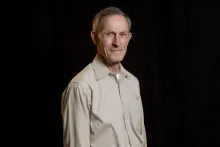
David Mills was born near Wallace, North Carolina, in 1939, where he grew up on a family farm. After high school he attended Ambassador College in Pasadena, California, and he graduated in 1962.
Since that time he has served as a minister of the Church in Washington, Florida, North Carolina, South Carolina, Oregon, West Virginia, and Virginia. He and his wife, Sandy, have been married since 1965 and they now live in Georgia.
David retired from the full-time ministry in 2015.
