

Scott Ashley
This transcript was generated by AI and may contain errors. It is provided to assist those who may not be able to listen to the message.
So, one track minded sometimes. I overlook the obvious. Hopefully all of you know that Charles Brooks is back with us today. And it's great to be able to see both he and Linda. And I might say Anne Linda and Zane are here today. So, I know that they're all very happy to be able to be here and fellowship. When you're not able to attend church and Sabbath services, boy, it makes a big difference.
And it's just a tremendous blessing to be able to assemble with God's people, fellowship, and to hear God's Word expounded. Might mention also, I spoke in Cincinnati last Sabbath, and the sermon's going to be sent out to be played in all churches. I thought about giving that sermon today, and I thought, no, I'm sure there will be a Sabbath. I won't be here. And we will play the sermon at that time. So, I decided I'd give something else. I'm going to cover a series of scriptures today that I think we all really need to focus on. Have you ever asked yourself the question, how does God view me?
How does God view you? How does God view us collectively as a people and as a church? There are many places in the Bible where God talks about His people and how He sees us. We want to go through a number of those scriptures today. When God looks at us, what does He see? When you look at yourself, what do you see? What does He see of us as a group? And what does He see of us individually? When you're on your knees, pouring out your heart to God or thanking God for His blessings, or you're praying to God and you're asking for strength and help and comfort to go through trials and problems, what does God see?
When you're going about your daily life and living and working and trying your best to live a righteous life and a good life in the society that rejects God and everything seems to be weighed against you. What does God see? So how does God view us personally? We want to take a look at that today. I think today, as we go through the sermon, that we should always be thankful for what we have.
The God Almighty, the great God of the universe, teaches us through the Scriptures that He has a certain perspective and viewpoint of His people. And I think you will find it incredibly positive when you begin to focus on how God views us, what He thinks. Let's begin as a preface to what we're going to cover back here in 1 Corinthians 1 and verse 26. 1 Corinthians 1, 26. And keep in mind as we go through these Scriptures that there isn't anything that we have done personally that qualifies us to be sitting here today.
But rather, God gets all the credit. His God who gets the credit is through His mercy, is through His grace, His love, not because of anything that we've done. As we see here in verse 26, you see your calling, brethren, that not many wise, according to the flesh, not many mighty, not many noble, or called, but God, notice what God does, God has chosen the foolish things of the world to put to shame the wise. And God has chosen the weak things of the world to put to shame the things that are mighty. And you could say God has chosen the base things of the world and the things which are despised God is chosen and the things which are not to bring to nothing the things that are.
That no flesh should glory in His presence. That's why God has done it that way. But of Him you are in Christ, Jesus, who became for us wisdom from God and righteousness and sanctification. So brethren, we need to keep in mind as we go through these Scriptures that there isn't anything that we have personally done that qualifies us for the great calling of God. God chose us specifically, as He says here, because we aren't anything human. You know, namely speaking, we aren't the great and the talented. We haven't done anything to qualify. God doesn't look down and say, well, look at that person! You know, look at them. They're a billionaire. Look what they've accomplished. You know, I think if I call them, they might do great things in my church.
No, God looks down and says, well, look at that person. He's nothing. And God chooses that person. He's strictly God's doing. He calls us. He places His Spirit within us. He's the one who accomplishes anything that is accomplished through us. Our job is very simple, to surrender, to yield ourselves to God, to allow God, through His Spirit, to work within us. Now, having said that, let's go over here to chapter 2, 1 Corinthians 2, verse 9. And this is a very exciting Scripture when you think about it, and also something that we should keep in mind as we go through the sermon.
I think we'll have a much better idea once we cover some of these Scriptures about how God thinks about us.
In verse 9, As it is written, eyes not seen, nor ear heard, nor is entered into the heart of man, the things which God has prepared for those who love Him. But God has revealed them to us through His Spirit, for the Spirit searches all things, yes, the deep things of God. Now, what this Scripture is telling us is that God has a future for us that is so fantastic, so awesome, so wonderful, so incredible, that our human minds can't begin to phantom what that calling is.
We can't put it into words when we try to articulate it. We're very feeble, but we're just simply not able to convey what it's going to be like. We can't even begin to comprehend it. So it's only through the Holy Spirit when God begins to work with us that we begin to grasp, with our limited human abilities and talents and minds, what God has in store for those who love Him. So God has a wonderful future in store for us that He wants to share with us. Now, in Romans chapter 4 and verse 17, we find a very interesting principle mentioned by Paul.
Let's notice it here. Verse 17, Romans 4, As it is written, I have made you a father of many nations, talking about the promise that God gave to Abraham, in the presence of him whom he believed, God, who gives life to the dead, and calls those things which do not exist as though they did.
So the point is, God calls things that do not exist as if they've happened.
The Scriptures that we're going to read today actually reflect this principle as we go through them. God sees us now. I mean, He looks down and He sees us as our weak human beings. He knows us.
But He also sees us for what we can become. He sees us for what the potential is, what the future holds for us. As far as He is concerned, it's a sure thing.
As verse 17, He calls those things that do not exist as though they did. It's a promise that He's made. He made a promise to Abraham. See, the example is given of Abraham. He told Abraham, I'm going to make a few nations. You'll be a father of nations. Abraham didn't live to see that, and we've lived to see the ultimate fulfillment of that during our days.
There are several Scriptures to mention that God has given us His Holy Spirit as a down payment on these promises. That once the Holy Spirit comes into you and you have been begotten by that Spirit, it is like the earnest money you put down on a house. That it holds it for you.
And so, you and I have God's Spirit, and if we remain faithful, if we do our part, we remain loyal and faithful and obedient, and allow ourselves to be led by God's Spirit. Then, when the time comes, the resurrection or our death, we have the absolute assurance and promise that, as it says here, it will occur. That it will happen. So, how does God view us and the future that He set before us? Well, let's start back here in Luke 12. Luke 12, and we'll begin in verse 31. Luke 12, 31. Let's seek the kingdom of God, and all these things shall be added to you. Now, we know over in Matthew, it says, seek you first the kingdom of God, but here we seek the kingdom of God. Do not fear, little flock, for it is your Father's good pleasure to give you the kingdom. Now, when you read, especially verse 32 here, it's one of the most encouraging scriptures you can read in the Bible. We're called a little flock, and again, we look around, we are little. We're not great. But notice it also says, it is the Father's good pleasure to give us the kingdom.
Have you ever wondered what makes God happy? I guess God excited. Jesus Christ said one of the things that makes God very happy is when He can give to His children His kingdom. If you had an inheritance, maybe you own two or three houses, two or three hundred thousand dollars in the bank, don't we wish, maybe some other property. You have a couple of children. When you die, you pass on to them your inheritance. Or maybe even before you die, you say, look, I'll tell you what I'm going to do. I'm going to give you a house and a car, and you give it to them so that you can see them inheriting it. When I die, you will inherit everything else that I have.
Don't you think that you would take delight in that and that you to see the excitement that you might give them? Another translation of this verse says, As your father delights to give you the kingdom, it is God's good pleasure or delight.
It's not something that God is begrudging you. He delights in doing this.
I think it gives you an opportunity that God has to share His kingdom. God isn't some org or harsh stern judge, as sometimes He's pictured in society or even some religions and churches.
God isn't looking for any excuse He can find to blot us out, to take away from us our reward, to sentence us to death. God is a very loving God, a very compassionate God. In fact, John said not only is God loving, but God is love. That's His very nature.
So Jesus Christ said that God is going to give to us. The Father is going to give to us, and it's His great pleasure and joy to share with us His kingdom. Now, what is His kingdom? Well, it's His family relationship. It's His level of existence. It is being in the family of God.
Now, occasionally, we're able to give our children some wonderful gifts. Most of us don't have that opportunity. Now, very few of us have small children, but I remember years ago, and we'd go to the Feast of Tabernacles. Our boys would always tell us they would like something, a toy, a special toy that they could use or play with, that they would really enjoy the feast. We tried to always be able to buy them something, a gift. With the idea, it wasn't the gift. This wasn't something that replaced Christmas. You never had that idea or connotation. But it was the matter that here is the Feast of Tabernacles. This time, pictures when Christ will be on the earth, abundance, and people will live a happy, productive life. So, what could we do to make this feast enjoyable, happy, and excited, something that they would really look forward to?
Well, what we find from the verse here in verse 32 is that God is going to take delight in giving us eternal life, sharing with us His kingdom. He will get great joy out of that.
So, that's a tremendous blessing. Now, let's go back to the book of Malachi. Malachi 3, verse 16.
Then those who feared the Lord spoke to one another, and the Lord listened and heard them.
So, a book of remembrance was written before Him for those who fear the Lord and who meditated on His name. It's Malachi 3, 16. So, who is this talking about?
It says, those who feared the Lord spoke one to another, and God listened and He heard them.
God listens and He hears. This is talking about us, brethren. Who is it today who fears God?
Stribes to obey God, keep His laws, His commandments. It's talking about us, that you and I have the right honor and respect for God. And as verse 17 says, they shall be mine, says the Lord of Hosts, on the day that I make them my jewels, and I will spare them as a man spares his own son who serves him. So, God says that if we honor and respect Him, if we fear Him in the right way, that He will become, we will become something that is very precious to Him. New International Version, NIV, translates this when it says that we will be, I will make them my jewels.
It says, His treasured possession. We will become God's treasure possession.
It means something in the Hebrew of great value. It's much more than just like a precious stone, a diamond, or an emerald, or a sapphire. But this is talking about something that is very rare, something that is valuable. As another translation translates this verse, I will make them my special treasure. You and I, in God's sight, are His treasured possession, His special treasure. We have great value to God. And when we look at ourselves, we don't think of ourselves as having much value. We probably look at ourselves and feel like we're the worst things on the face of the earth. But when God looks at us, and He looks at the outcome, He looks to the future, He looks down the road, and He sees the potential. God looks at us as His special treasure. So those who fear God, those who honor Him, who respect Him, become that treasure. Now, God sees us as human beings. He knows that we're flesh. He knows that we make mistakes, that we sin, we fall short, we slip, we do stupid things. God isn't ignorant of all of that. He understands that. But He sees us from a different perspective also. He sees what we will become through the Holy Spirit. He sees what we will become through Him living within us.
You see, we become His special treasure, and this is to someone who owns everything.
Think about it. God owns everything. You might remember the new heavens, new earth, new Jerusalem coming down. Here's a huge city, 1500 square miles, and it's a city made out of glimmering, shining gold with beautiful gemstones set around the base, forming the foundation of this. God, you could say, is a super-billionaire, trillionaire, quadrillionaire, whatever. He owns everything. And yet, when God looks down at what's precious to Him, it's not the silver and the gold. It's not the physical thing. It is you and me. We are the rare special treasure, His most valuable possession. So it's pretty amazing when you realize that this is the view that God has of us.
Now, brethren, we shouldn't walk around telling people, I'm God's special possession. They'll laugh you to scorn, or they'll scorn you. But we need to realize, and keep in our minds, that God isn't just looking down at us and saying, you know, those despicable, filthy human beings. No, God sees beyond that. God knew what you were when He called you.
You know, God understood your past, who you were. God understands where you are presently, but He also understands where you will be in the future if you remain loyal and you continue to fear Him. Now, back in 1 Peter 2 and verse 9, we have another amazing Scripture here that many times we just sort of read right over and we don't stop and think about what this Scripture connotes, what it means, you know, the application of it. 1 Peter 2 here, beginning in verse 9, we're told this, you are a chosen generation, a royal priesthood, a holy nation, His own special people, that you may proclaim the praise of Him who called you out of darkness into His marvelous light, who once were not a people, but are now the people of God, who had not obtained mercy, but now have obtained mercy. Now, there's an incredible amount of information contained in these verses. Notice here it says, you are a chosen generation. When it says, you are, put your name in there. You know, James, Linda, Janice, Wayne, whatever your name is, that's talking about you, it's talking about us, that you, whatever your name is, are a chosen generation. The word chosen means selected or marked for favor or special privileges.
And what a privilege it is to be a Son of God, a daughter of God, to be called now, to be a first fruit for God's family, to be one of His sons and daughters who will inherit His kingdom, live forever, be given the ultimate positions of responsibility in the kingdom.
I mean, what a privilege that is! We are the most privileged people on earth.
We are those chosen, privileged ones. God, who is the creator of the universe, who made everything, did that. I mean, that's His doing. That's nothing that you and I have done.
Now, notice it says, we are a chosen generation. The word generation here means family or race.
In the Old Testament, God worked through a physical family. It was called Israel, the children of Israel. You and I are now part of a spiritual family, and that spiritual family is called Spiritual Israel, the Church of God, the children of God, the kingdom of God. That's us.
We're the kingdom of God in embryo right now. And so, we are that family, that race, that group that God is working through. And what makes us a common family? Well, we all have the same Father.
We have God the Father. Through His Spirit, He lives within us. And then verse 9 goes on to say, you are a royal priesthood. Now, notice how that's worded. The word royal refers to a kingly line, royalty. We are a kingly priesthood. Priests and kings combine, because in God's kingdom, there will be no separation of church and state. In the world tomorrow, in the millennium, white throne judgment, civil authority, religious authority will be combined. There will be no distinction whatsoever. You will be a king. You will be a priest. Remember Revelation 5.10 says He's made us kings and priests. We'll reign forever. Well, the actual proper translation of that is that we've been made a kingly priesthood, or a royal priesthood. Then it goes on to say, you are a holy nation. Now, it doesn't say here, you could be. It says you are a holy nation.
Holy in the Greek means set apart to the service of God. You and I have been set apart and dedicated to God's service. Its characterised holiness is characterised by perfection and spiritual purity.
Are we holy? God says so. We are a holy nation.
Now, we have been, as a people, set apart for sacred service to God.
To be a light in an example today. To do His work. To carry out His responsibility.
That's what God sees when He looks down, because He sees His Spirit within us.
Then it goes on to say, you are His own special people. I believe the King James Version says, peculiar people. Some of you may shake your head and say, yeah, a lot of people have accused me of being peculiar. But the word peculiar here, or special people, means that we are, we're actually special to God. The New English Bible translates this, a people claimed by God for His own. God claims us.
When your children were growing up, did you ever say, I don't claim you.
Their action, what they've done, we didn't want to claim them, but they're ours. Well, God doesn't turn His back on us. He claims us. We are God's own people, meaning we belong to Him. We're His possession. He owns us. He bought us through the sacrifice of Jesus Christ. We belong to Him. Why? Why do we belong to Him? Well, notice that you may proclaim His praises. You and I are to proclaim the praises of God. Or as other translations translate it, proclaim the wondrous deeds of God, show forth the virtues of God, or make known the perfections of God. You and I, by our example, are supposed to show forth God's virtue.
Where else on earth are people going to see how God would live in the flesh, how Christ lived in the flesh? You know, Galatians 2.20 says, I'm crucified with Christ, nevertheless I live, yet not I, but Christ lives in me. And so Christ lives His life over again within us through the Holy Spirit. And so we've been called to show forth His virtues, and also to proclaim His wondrous deeds, to preach the gospel, you know, the dual application.
And then it goes on to say here, who has called us out of darkness into His marvelous light.
So you and I have been called out of darkness. Satan the devil is called the Prince of Darkness. You and I have been called out of spiritual darkness, spiritual ignorance. We've been deceived, and we've been called out of that. And we've been called out to live in the light, to show what the light is like. We are living in the light of God's way of life, understanding, and to live that way. And then verse 10 goes on to say, who once were not a people, but are now the people of God? At one time we were nothing. Nothing at all before God called us and selected us. We weren't anything. As we read earlier in 1 Corinthians 1, and Paul said, God's chosen the weak, the foolish, the despised, to shame the rest of the world.
We were nobodies, but now God has chosen us for a wonderful purpose and a fantastic future. Now, God's going to make that wonderful purpose, fantastic future available to all mankind, but we are the firstfruits. Now, brethren, let's go over to Revelation 19 very quickly.
Revelation chapter 19. And let's see here how God refers to us. Revelation chapter 19.
Continue with how God views us and what He's doing, will be doing within us.
Revelation chapter 19, beginning in verse 11, it says, I saw heaven open. He beheld a white horse, and he who sat on him was called faithful and true.
In righteousness he judges and makes war. You'll find he had many crowns. He's called the word of God. In verse 14, the army is in heaven. Follow him. Out of his mouth goes a sharp sword.
And he's going to use that to deal with the nations. And in verse 16, and he has on his robe and on his thigh a name written, King of kings, Lord of Lord.
Now, Jesus Christ is the ultimate King and will be. He's been given that responsibility by the Father. And he is ultimate Lord, King of kings and Lord of lords. This is a title that Jesus Christ will bear when he comes back to the earth. But have you ever stopped to ask yourself if he is King of kings and Lord of lords, who are the other kings? Who are the other lords? You have to be somebody. They're not angels because the book of Hebrews says very clearly that God is not place in the future, the world tomorrow, and subjection to angels.
So, who will have that authority? Well, let's pick it up in Revelation chapter 20 because the theme carries on. And verse 4, I want you to notice here, 4 through 6, I saw thrones and they said on them, and judgment was committed to them, and I saw the souls of those who were beheaded for their witness to Jesus, and for the word of God who had not worshiped the beast nor his image, not received his mark in their fore and their hands, and they lived and they reigned with Christ a thousand years. So, obviously, if they reigned for a thousand years, they're resurrected at the beginning of a thousand years, and in other words, they're dead, they're resurrected, they reigned for that millennium, but the rest of the dead did not live again until the thousand years were finished. This is the first resurrection. Blessed and holy is he who has part in the first resurrection. Over such, the second death has no power, but they shall be priests of God and of Christ, and they shall reign with him a thousand years. So, who is it who rules and reigns with Christ when he comes back, who will be kings and priests? Those who take part in the first resurrection. You and I have been called to be sons and daughters of that first resurrection. That is our calling. That includes all those who have died in past years, have been part of God's calling down through the ages and the true church, will be made alive when Christ returns. It's talking about the resurrected saints that we will rule at that time.
So, another way that God sees us when he looks at us. In the future, calling things that have not yet happened as if they are, it clearly says here, Christ comes back, he's King of kings, Lord of lords, and it says those who partake in that resurrection will rule, sit on thrones, will be priests, and so God sees us as kings and priests. He sees us as rulers under his sons. So, we are now the people of God in preparation for rulership. That's us. You are being prepared to rule in God's family.
Now, another way that God views us is back here in Ephesians chapter 1 and verse 1.
It's something that is mentioned in almost the introduction to nearly all Paul's letters to the church. Look at Ephesians 1.1, a term that is used.
Paul, an apostle of Jesus Christ by the will of God, to the saints who are in Ephesus and faithful in Christ Jesus. Paul starts his letter to the saints in Ephesus, to the saints in Rome, to the saints in Corinth, to the saints in Philippi. You go back and read the first one, two, three verses. He wasn't writing to dead people who had supposedly done a number of miracles after they died. That's what the Catholic Church does to proclaim somebody a saint. He was writing to congregations of the church members in various cities made up of people just like you and me, made up of farmers, made up of craftsmen, made up of traders, made up of people who you just were called by God. He referred to all members in the local congregation as saints.
What is a saint?
It comes from the root word meaning to sanctify, which means to make holy.
Now, we've already covered the fact back in 1 Peter 2 9 that we are a holy people. The word translated saint means one who is holy or simply a holy person. You and I have been set apart. The word means to be set apart to the service of God. We have been dedicated to the service of God. In the Old Testament, the Levites were set apart to function in the work of the temple or the tabernacle, the priests actually working within the temple or the tabernacle. And it is characterized by perfection and spiritual purity. You know, sometimes something can be holy in two different ways. The first way it can be holy is to be owned and possessed by God. If you're owned and possessed by God, the second way can be holy is to be used by God or to have His presence in it. And when you stop and think about it, both of those ways apply to us. Do they not? First, we've been set apart and selected by God. We're holy because we belong to Him. We were bought for by the sacrifice of Jesus Christ. He paid the penalty, so we become God's family. Secondarily, we're holy because God uses us, but there is a holy presence within us. It's called the Holy Spirit. So we're owned by God, selected by God, God dwells in us. So when I look around this room, I see a company of saints.
Look at the person next to you.
Look at the person behind you or in front of you.
We have Saint Mabel. We have Saint Karen or whoever the person may be. We are the called out ones of God.
The saints are people chosen by God, belong to God, being used by God, that God dwells in, and have been set apart for a purpose. It's interesting when you study the Scriptures that mention the word saint. It's an interesting Bible study if you just want to go look up the word saint. You'll find members of the church throughout the New Testament are referred to as saint. That's obvious. In the book of Revelation, you'll find the martyrdom of the saints, that the saints are going to be martyred by great religious authority that arises on the scene in the future.
You'll find that Jesus Christ returns to the earth, what does it say, with ten thousands of His saints.
And the prophets and the saints will be with Him. The Scriptures, when it talks about the saints, are talking about us, those who are led by God, guided by God, directed by God. We are the chosen of God. We're owned by God. We're being used by God. We have God dwelling within us.
So when God looks at us, He looks at His saints. He's set apart once. He's chosen once. And God looks down and He said, I chose you, instead of saying, Uncle Sam wants you.
God says, I want you. And He chose you. And you're here because of that.
Now, in 2 Corinthians 5 and verse 20, 2 Corinthians 5.20, let's look at another description of God's people. We see, again, all of these sort of give us an insight into how God looks at us, views us.
2 Corinthians 5 and verse 20. Now then, we are, what? Ambassadors for Christ, as though God were pleading through us, we implore you on Christ's behalf, be reconciled to God.
What does it mean when it says that we are ambassadors?
Well, the dictionary gives you a definition of an ambassador. He is an agent or messenger of a ruler or government representing his government in foreign territory in which he resides. The U.S. government has ambassadors to most countries in the world. We have an ambassador and an embassy in Russia, in Germany, in France, and Italy, in Spain, wherever it might be. And you have an individual who lives in a country, he's not a citizen of that country. If you're an ambassador to Russia, you can't get involved in the politics in Russia. You represent your government to that or to those people. And so, I think it's an appropriate representation because when you realize what government do we represent today, who do we represent? We represent God and the kingdom of God. We are representatives of a different kingdom, a different government, a government and a way of life that is eventually going to be set up on this earth and is going to rule the whole universe. This is where our primary allegiance and loyalty is. We represent that government, the way of life that government represents, the rulership of that government of God the Father and of Jesus Christ. And so, we personify by how we live that we represent that government. We're also messengers of representatives of that government. We represent its policies, we represent its laws, its values, its way of life, not the values of the society that we find ourselves living in, but we are to represent the values of that government. Now, when Mr. Herbert Armstrong, back in 1947, started a college, why did he name it?
He called it Ambassador College. Why? Because it was going to be an institution that taught God's law, God's people the way of life and laws of God, so that they could represent that way of life to this world and ultimately teach that way of life to all people. So, we are truly ambassadors of Christ. We represent one government, the kingdom of God. No matter what physical government we find we live under, we represent the kingdom of God. The Apostle Paul and Peter, both in their writings, mention that we today are pilgrims and strangers on this earth. We live in one place while we're waiting for and seeking our rightful homeland, God's kingdom. How good are we representing that kingdom today? How well do we represent that government? We're to be representing God's government, God's way of life in a very positive way. We should be blameless and harmless, children without fault in this age, shining like lights in the world. That's what God has called us to do. When you look at this world today, you find that it's in total darkness. Any of you ever flown in an airplane at night, you know, cross-country, it's sort of scary. You take off and you get 30,000, 40,000 feet up in the air, six or seven miles up. You'll look out your window and guess what you see?
Pitch darkness, you know, it's black down there. You don't see rivers and mountains. You don't see lakes. You don't see fields, houses, highways. It's dark. And this is the way God looks at the world. When he looks down at the world and it's spiritual awareness, his spiritual understanding, it's totally dark down there. But if you keep looking out your window, guess what? Occasionally you'll see a light. Sometimes you might even be able to spot a car light, you know, going down the road. Occasionally you'll see an isolated farm or ranch somewhere. You might see scattered lights in a small town. And when God looks down at this earth, that's exactly what he sees. Likewise, you and I are the lights of the world, but the world is lying in utter darkness and occasionally scattered here and there. There's a light over here in Cedar Town. Might be a light. You'll hear in Rome, there might be a light. Chattanooga there might be a light. You know, there are lights just scattered all over the place. And in the total darkness that we see about us, you and I, brethren, are to be the lights of this world. That's why God has called us. Now in John 10, verse 27, John chapter 10, verse 27, we see another way that God views us.
I think Christ gives us a comparison here that will help us to understand our relationship with Him and the Father. John 10, verse 27, My sheep hear my voice, and I know them, and they follow me. And I give them eternal life, and they shall never perish. Neither shall anyone snatch them out of my hands.
Now here Jesus Christ compares us to sheep. Now sheep is totally dependent upon His Master for protection, for nourishment, for leadership, for guidance. Remember Psalm 23, The Lord is my shepherd I shall not want. He makes me to lie down in green pastures. You know, He leads me beside the still waters. God is our shepherd. He provides food and water and protection. Now as it says here in verse 27, My sheep hear my voice. They know their Master's voice, and Jesus Christ is mentioned here. I didn't grow up with sheep, but I grew up with cows.
Now I guarantee you, when it came time to feed the cows or milk the cows, I could go out in the pasture and yell, Woo! Suck the jurors! And these cows would come running. Now I don't know if it was my voice or just the fact they heard something, but they would all come running. And it was amazing. They wouldn't just walk. You'd see them trotting along. They wanted what we had. So Christ compares us to she who responds to the voice of the shepherd, who trusts him. Know that he will do what's good for them, who cares for them. It's a very positive relationship because it shows trust and reliance in both ways. Notice, we recognize His voice. In other words, we study this word. We see what He has to say to us. Somebody else coming along and saying, You don't have to keep the Sabbath. You don't have to keep the Holy Days. We don't listen to that. That's not the voice that we know is in here. But notice also, it says in verse 27, I know them. Christ knows who His sheep are. And when somebody comes among them that are not part of His sheep, He knows. So the recognition goes both ways. We understand, we hear His voice, and He knows us. God knows us, brethren, another way that God looks at us. He knows who is true.
Who is honest. Who has His Spirit. Who is striving. When Christ walked the earth, it says, Christ knew what was in man. He didn't need anybody to tell Him. When the Pharisees and Sadducees reasoned in their heart, you know, well, how can this man heal somebody on the Sabbath? It says, Christ knew what they were reasoning. And He answered their question before they articulated it.
God knows us, and He knows that we are His children. And so, brethren, if we're striving to do what is right, God knows and understands that. In John 15 and verse 12, another interesting section of the Bible. In John 15 and verse 12, Christ said, This is my commandment.
That you love one another as I have loved you. And verse 13, greater love has no one than this, that He lays down His life for His friends.
Brethren, Jesus Christ calls us His friend.
He's not just the firstborn from the dead, He's the second-best-born from the dead, the captain of our salvation, our Savior, High Priest, soon-coming King, Lord Master. He's also our friend.
You know, if you knew the President of the United States, could you say, well, He's my friend.
Well, here is the Great God, and He says, I'm your friend. He laid down His life for us. Now, when you begin to think of it from that point of view, it's mind-boggling. The very one who spoke in the universe and the earth came into being, the stars and the heavens were created, you see all the incredible beauty and harmony around us, calls us friends.
Very one who came to the earth as a physical human being, who performed miracles, walked on water, fed the multitudes, died, calls us His friends.
The one who's going to return to this earth in all might and power and glory to set up His kingdom, that'll never be destroyed, calls us His friends. Now, notice verse 14. Here, chapter 15, verse 14.
You are my friends if you do what I command you. Now, there is a condition here.
If we're going to be the friends of Christ, we have to be obedient to Him.
So, you know, He knows again that we're human. We strive to do what He says.
So, you and I, brethren, are friends. In verse 15, He goes on to say, No longer do I call you servants. For a servant does not know what his master is doing.
But I have called you friends. For all things that I heard from my father I've made known to you.
Now, a master-servant relationship is one where the master dictates everything to the servant.
And many times the servant has no idea why the master says to do it. He just says, do it. So, he does it. Do what you're told. You probably maybe work for a company or so on. And you're working on something or told to do something. You have no idea how this, you know, applies to the whole. You just do it because you're told to do it.
But our relationship with Jesus Christ is not that way. It is a relationship that is defined as friendship because He wants us to know what is going on. Not a master, you know, go get my car, you know, go downtown, do this, go do that. It's not that type of relationship. He wants us to understand His purpose and His plan for us. He wants us to understand what God has in store for us. He wants us to understand why the world's in the condition it's in, what's going to happen here at the end time, what we call prophecy. The Bible calls it a mystery. It's hidden from the world, but it's been revealed to us. Christ has made known to us, through His church, that He loves us, His plan, His purpose, His calling. So, brethren, He doesn't treat us as somebody who's just a servant, but as His friend. Remember back in James 2.23, it says, Abraham believed God and he was called the friend of God. A friend is somebody that you're very close to, personal, mutually respectful relationship, and so God understands all of that with us. This is how He views us. We are His friends. Now, there's something else. There's also a deeper relationship than just friendship. Let's go over to Revelation 19.7, where we find this relationship expounded upon. Revelation 19.7.
We find, mentioned here, Let us be glad and rejoice and give Him glory, for the marriage of the Lamb has come, and His wife has made herself ready. So, the marriage of the Lamb has come. Now, the Lamb, of course, is Jesus Christ. Who is the bride? Whoever the bride is, she's made herself ready. Verse 8 gives us a very strong clue. For to her it was granted to be a raid in fine linen. Clean and bright for the fine linen is the righteous acts of the saints.
Okay, who are the saints? Well, we've already covered that. Individual members of the Church of God. So, the bride that Christ marries in His kingdom is clothed with the righteous acts of the members of the Church. The righteous acts, the righteous doing. The bride that Jesus Christ marries is us. You are the bride of Christ. We're part of it. It's all of those who will be in the first resurrection, the Church of God, collectively. You might remember back in Ephesians 5, 22-32, I was going to read that, but we don't have time. Jot that down. The whole marriage relationship of a man with his wife in Ephesians 5, 22 to the end of the chapter points to a symbolic relationship between Christ and the Church. As Paul said in going through the Scripture there, this, you know, he's speaking of, has to do with Christ in the Church. So, ultimately, our relationship between us and Jesus Christ will be much deeper than just friendship. The marriage relationship that we experience, the deepest bond that two human beings can have to one another, is a type of the relationship that we will have with Christ for eternity.
Some of you have been married 20 years, some 30, some 40, a few here 50 plus, and think back to your wedding day, if you can remember back that far, when you got married. And you married the person of your dreams, the one that you desired.
If you were a man, you saw this beautiful, radiant bride. My wife was the most beautiful woman you had ever seen walking down the aisle, or she sees me. I have to ask her what she saw there, but we see the one that we are going to get married. And we're in love with that person. We want to share our lives, our hopes, our dreams. Well, here is God. And God views us as the fact that we today are being prepared as a bride for the marriage. When a bride gets ready for a marriage, there are all kinds of details. A lot of planning goes into it. And we are being prepared to be someone who will be on the same level with the groom, with Jesus Christ. And so, He sees us as a pure, clean, radiant, wonderful bride, deeply in love with Jesus Christ, willing to follow His lead wherever He leads us. So, this is how God the Father looks at us.
And there's one other way. There are a number of other things we could cover, but let's notice in 1 John 3. Save this for last, because I think this is a very comforting Scripture. 1 Corinthians chapter 3. Notice how God looks at us here. Behold what manner of love the Father has bestowed on us that we should be called what?
What is God called? The children of God. We are the children of God. Therefore, the world does not know us because it did not know Him. Beloved, now we are the children of God. That's what we are now.
It has not yet been revealed what we shall be, but we know that when He is revealed, we shall be like Him. We're going to be just like Him, for we shall see Him as He is.
And everyone who has this hope in Him purifies Himself just as He is pure.
So, brethren, what we find is that a loving God looks down and sees us as His children.
And just as you as a parent, when you have children, whether you're a wife or a husband, you love those children, you do anything to protect them, you work long hours, two jobs, whatever it takes to provide for that family, you would die for your children. And Christ did die for us. You see here that we get a little sampling of the love that God has for us and what He thinks of us. That God the Father looks on us as His children. So, brethren, He doesn't look on us as brats. He looks on us as His children. And as verse 3 shows, again, there's an obligation that we have, and that is to purify ourselves. We have to start becoming like God now. We have to become like Him. There is... well, let's go back here. I wasn't going to read all of this, and I won't, but Romans chapter 8. Let me pick out one verse here. Romans chapter 8. And...
Yeah, verse 21 and 22 says, Because the creation itself also will be delivered from the bondage of corruption into the glorious liberty of the children of God. So you and I are those children, and we know that the whole creation groans and labors with birth pangs together until now.
Not only that, but we also who have the firstfruits of the Spirit.
So, brethren, to keep things in perspective, what you find is that the Apostle Paul here shows that the whole creation has been like a woman in labor who groans and moans in pain, birth pains, waiting for the revealing of the sons or the children of God. When you're pregnant, comes your time to give birth, and you go through the giving birth, and there's pains, and you finally deliver. There is a revealing. You haven't seen that child, even though they can take sonograms and all that today. You still haven't seen that child. That child is born. It is the most beautiful, glorious thing. A wife will pick that child up, cradle it in her arms, and cry, and all the pain is forgotten. And to have that child, can you imagine the whole creation has been waiting for that moment? The whole creation has been waiting for us, the resurrection, to be revealed as the children of God, the family of God, waiting for the first resurrection. And you and I, as the children of God, are going to be revealed in that resurrection. The whole creation has been waiting for thousands of years for the culmination of God's plan and for you and me to be revealed. We are those children that Paul is talking about here. We're among those children. So, brethren, let's not take the calling of God lightly, what God is doing with you individually, what he's doing with us collectively, what God has been doing with his servants through the years. He sees us as a royal priesthood, a holy nation, a chosen people, a people being prepared for rulership in his kingdom. As we go back home this week, as we go about our jobs, our duties, we need to think about these things. We need to think about how special we are to God, how God sees us individually and each one of us. And realize that we need to make sure that we keep our calling and our election sure. We do need to change. We have an obligation. We need to get our acts together and make sure that we live up to the calling of God. We need to see ourselves as God sees us. We need to see ourselves as we really are a holy people in the process of being prepared for the kingdom of God.
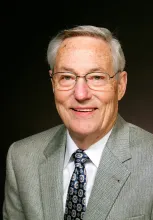
At the time of his retirement in 2016, Roy Holladay was serving the Operation Manager for Ministerial and Member Services of the United Church of God. Mr. and Mrs. Holladay have served in Pittsburgh, Akron, Toledo, Wheeling, Charleston, Uniontown, San Antonio, Austin, Corpus Christi, Uvalde, the Rio Grand Valley, Richmond, Norfolk, Arlington, Hinsdale, Chicago North, St. Petersburg, New Port Richey, Fort Myers, Miami, West Palm Beach, Big Sandy, Texarkana, Chattanooga and Rome congregations.
Roy Holladay was instrumental in the founding of the United Church of God, serving on the transitional board and later on the Council of Elders for nine years (acting as chairman for four-plus years). Mr. Holladay was the United Church of God president for three years (May 2002-July 2005). Over the years he was an instructor at Ambassador Bible College and was a festival coordinator for nine years.
