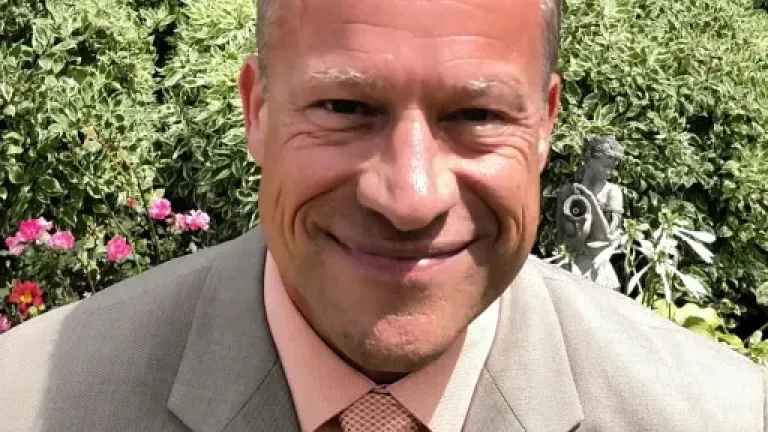

Mario Seiglie
This transcript was generated by AI and may contain errors. It is provided to assist those who may not be able to listen to the message.
Thank you very much, Sam Biera, for that. I love the way he tenderly embraces and beautiful sound.
I know one day King David is going to be resurrected, and he was a great player of the lyre, which is a type of guitar that we use today. Years ago, I read about someone that had a great impact on me. His name is Dr. Paul Brand, and he was a son of missionary religious people that went to India. He was born in India, and he had his childhood in that area of the world. Both his parents were serving as missionaries, and then they sent him back to England, where at the age of nine he started studying there. He finally went to medical school, became a surgeon, a very famous hand specialist. He could have become very rich, but instead for about 20 years he went back to India, and he helped leper victims, victims with that dreaded disease of leprosy, which today is called Hansen's disease. And thanks to him, because of his background, he was able to study why lepers lost so much of their limbs, and he found out that the disease actually attacked the nervous system, and that it wasn't that the disease itself caused the rotting of the flesh, and the deterioration of the tissues, it was that you lost the feeling. And so then people would not be aware of hurting themselves, and they would get ulcers in their hands and their feet, and eventually infection would take over, and they would lose members, just like a person with severe diabetes does too, because they just do not have feeling in their bodies. He wrote a book about pain being one of our great helpers, because with pain we're able to, you know, withdraw our members before they become seriously damaged. Or we can have a splinter in our fingers, and eventually the pain bothers us so much that we remove that. Whereas if you had no sensibility, then you could have that splinter eventually get infected, you could have gangrene, you could lose your hand, or even die. So he was the one that pioneered the work where leprosy today is not as dreaded as it was before, because now doctors know they can treat, and it's basically the nervous system that is slowly destroyed by this disease. He wrote a book called Fearfully and Wonderfully Made. I have it here. It's one of my favorite books that I read many years ago. How many have read this book? Can I see? Let's see, maybe two hands over here? Anybody? Yes, Dr. Escobar. And it's very interesting, because from his 50 years of medical work as a surgeon, seeing so many diseases, and also just seeing the wonders of the human body. And he actually titled this book according to one of the Psalms. Psalms 139 verses 13 and 14, it says, For you formed my inward parts.
You covered me in my mother's womb. I will praise you, for I am fearfully and wonderfully made.
Dr. Brand was knighted by Queen Elizabeth. He became a member of the World Health Organization.
He died in 2003, but he left a rich legacy, a very dedicated man, dedicated to his faith as well.
And I learned many things from that book. He mentioned the parallels between the physical and the spiritual body, which is the church. It is very inspiring. As he mentions, the New Testament mentions more than 30 times the relationship between the church and the body of Christ, and it compares it to a physical body. It's important the Bible emphasizes this point so many times we should also keep it in mind. So I want to share three examples that Dr. Brand brings out and makes a spiritual parallel because it does affect us. We're all here because we are members of the body of Christ, or at least preparing to be part of that body. And God uses analogies. He uses comparisons between physical and spiritual. And Dr. Brand was an expert in his field, knew the human body so well, but he went beyond just studying the human body and realizing the similarities that the church also has with the human body. And so he starts with his book, Comparing Human Cells to Members of the Church. And he brings up the difference between an amoeba, which is a one-celled organism, which is a type of an animal, and a body cell. And he calls this comparison, the loyalty of the body to the head. He says in page 53, when Jesus described the Christian life, often his invitation to it sounded more like a warning than a sales pitch. He spoke of, quote, counting the cost of selling all and, quote, taking up a cross to follow. It simply is underscoring the need for loyalty, which in biological terms means the need for individual cells to offer up service for the whole body. Sometimes following the head may involve a self-denial, including some pain. We know that well as we live the Christian life. It's not easy. When you become incorporated into a greater whole, some people would rather just be on their own and not have to face difficulties of church life, of different conflicts, differences, of personalities, all kinds of temperaments. So God was very wise when he compared it. Because if you look at the cells in our body, they all work together. When they're healthy and normal, they don't think about themselves first. They look at the greater good, what they are contributing in the overall scheme of things. He says, loyalty is first to God the Father and Jesus Christ. Then we are called and incorporated into the church the body of Christ.
We didn't choose it. We were chosen. And we are all very important to God.
The Scriptures talk to us as if we were different member cells in the body. Let's notice Ephesians chapter 4 verses 1 through 6. And let's consider it as if here we are cells of the body that are working together, contributing different types. We have all kinds of, we have over 250 different types of cells in our body. And yet they all work together in conjunction. Ephesians chapter 4 verses 1 through 6. It says, It says, God is the one that calls us. He incorporates us. We didn't choose Him. He chose us.
It says, So it takes time. Sometimes in the body we also have all kinds of things that have to get healed, have to get repaired. There are all kinds of confusing signals. Sometimes we want to eat a big candy bar. And other part of the brain says, you better not. You're gonna get pimples. You're gonna gain weight. So there are all kinds of things, and we have conflicting signals. But then finally you're able to reconcile the two. Continuing on, it says here that we have to bear with one another in love an attitude of patience, forgiveness, passing over, false, fences, endeavoring to keep the unity of the Spirit in the bond of peace. So just like the body works to keep us alive. We have approximately a hundred trillion cells in our body. And amazingly, those a hundred trillion cells all know what is going on. They identify with each other. They cooperate. A tremendous achievement. Each one working carefully, doing its part. You know, bone cells, renewing bones, removing dead parts. The whole body is like this huge city with all kinds of trucks coming back and forth in supermarkets. That's where the feeding goes on. And then we've got garbage trucks that remove what is dead. And we don't realize consciously how much is going on. But those a hundred trillion cells work together. Can't 150-200 people work together in a congregation? Can't we, as the United Church of God, around the world, can't we work together to bearing, as it says, each other in love? That's what we're all about. Endeavoring. It means making an effort to keep the unity of the Spirit in the bond of peace. The body is so important to keep in peace. When it isn't at peace, all kinds of bad things happen. It's so wonderful to have inner peace. That you can go to bed at night with a clean conscience, at peace with yourself. You wake up. You're enthusiastic. You thank God for another day of life, for an opportunity to help, to serve, to learn, to get lessons done.
All of these things are what brings that inner peace to our lives. And just like cells, if they're all agitated, all those hormones are going off, and the stress builds up, and we have all of this high blood pressure. Why? Because we haven't been able to keep our peace inside of us.
Continuing on, it says, there is one body, one church, that Jesus Christ raised up, and one Spirit, the Holy Spirit of God. Just like a blood circulating in the system, that feeds the whole body. And those little blood cells bring oxygen to every part. They're like a little portable gas station. They go all over, and they just are filling the body with energy.
And so it is here, too, that there is one Spirit that courses through us. Just as you were called in one hope of your calling. We all have one hope, just like the body has one end, which is to keep itself alive, healthy, happy. Blood cells can tell if we are happy or not.
That was what I was mentioning in the announcements about this study that had thousands of women. They were studied over a course of over 10 years, and they found out who were the ones that lived the longest and in the best condition. They said it is a person that has a positive attitude toward life and is able to keep a certain degree of happiness within their own situation. And we have aches and pains, and we have difficulties, and sometimes we have difficult people to live around. That is not an excuse to become difficult ourselves, to let ourselves be contaminated or poisoned. No, we have our lives to live. We have to do the best with what God has provided for us, just like that little cell that wants to be healthy, that wants to cooperate. It doesn't want to become rebellious and negative, because I'm going to be talking about those cells that aren't cooperative, that don't work together. Continuing on, it says here, there is one hope of your calling, which is the hope of God's kingdom. And every day, when we're able to pray, oh, your kingdom come. That is the good news. It's not this world that is not going to solve the problems. That's not where we should focus all our attention, although we have to live in it. But we look forward to the time when everything crooked is going to be straightened now, when all the injustices are going to be dealt with, when Jesus Christ is going to come back with a perfect government that won't be human nature operating at that time, there won't be excesses, there won't be contamination. And we all look forward to that one hope of our calling, just like that little cell has that hope of cooperating, of doing its part. It says we have one Lord, one faith, one baptism, one God and Father of all, who is above all and through all and in you all. So He is working through us, and He deserves, first of all, our total loyalty. Just like a good little cell, blood cells not there saying, well, I'd like to be a brain cell, or I'd like to be a tissue, blood tissue, or I'd like to, or, you know, the hair cell. No, each one has its function, and they contribute to the greater whole. We all have a part in the Church. It is God's Church, not ours. And so we strive to do what we can to do our part. Continuing on, it says here, you know, we all have a spiritual identity with God. When we are baptized, we receive the down payment of God's Spirit, as it was mentioned in the sermon that we receive a first deposit of that coming transformation into God's Kingdom. So if we learn to cooperate, to be loyal to the Head, God the Father, and Jesus Christ, and our commitment to Him, first of all, and as we're incorporated in the Church, to learn to be dedicated and loyal as well. As it was mentioned before, you know, we didn't choose the Church. God chose us to be in it. We are all very diverse. We have different functions, but all are very important. God knows what He is doing. Sometimes it's easy to spot failings and defects of others. Question their conversion, but we don't live in their skin. We can see the fruits, and we are told to evaluate, to consider, but that's different than condemning. We have to learn from it, learn not to repeat wrong attitudes or behaviors, but not be the judge.
It says in James chapter 4 verses 11 through 12, James chapter 4 verse 11 and 12. I'll read it here. It says, Do not speak evil of one another, brethren. He who speaks evil of a brother and judges his brother speaks evil of the law and judges the law. But if you judge the law, you are not a doer of the law, but a judge. There is one lawgiver who is able to save and to destroy. Who are you to judge another?
So we have to primarily judge ourselves. God is in charge.
Each one of those members are placed there by Him.
We also read in 1 Corinthians chapter 12, beginning in verse 12. I'll read this as well.
It says, So here Paul is using the example of the human body and Christ's body as a church. So he uses this analogy. It says, Just like again, I'm mentioning the blood circulation. We all receive this spirit. We renew it day by day that comes from God up above, and that helps us and strengthens us to bring that unity of faith one to the other. It doesn't matter what our background is, as it says here, whether Jews or Greeks, whether slaves are free, slaves were the poorest people at that time. They didn't even have their own property. They belonged to someone else.
No one today is as poor as a slave was then. How did they do it to just get off and be able to go to services? How difficult it was. Now granted, slavery at that time is not as horrific. They treated you sort of like a family member, and it wasn't just a completely oppressive system where there were whips all over the place. That's not the general impression. But the point was that you belonged to your master. You had to get permission, and here they'd come to services, these slaves, and they had to go right back because they had a master. And what did they contribute?
You'd think, well, what could a slave do? And yet God placed the slaves in the church to be respected, to be regarded as fellow Christians, and no partiality. And so today, sometimes we think that there is a discrimination, and there shouldn't be. At that time, even between slaves and free, he says here, let me repeat it. It says, we are all baptized into one body, whether Jews or Greeks, whether slaves or free, and have all been made to drink into one spirit. In other words, that was an equalizer, which was not known at that time. That you could have people that you did not regard according to rank or position or nationality or wealth. Now, that goes against the human nature. People like to discriminate, but that's something that God says shouldn't be developed in the church. We should treat each other with respect, just like the human body. The different cells are so vital, as we're going to see. If you don't have skin cells, it doesn't matter how well you have brain cells or blood cells, you're going to die. And there are people that have terrible skin diseases and eventually die from them, as you do every other type of disease of different types of cells. So you see, each one is essential, and that's something that takes humility. It takes a different type of looking at things. It takes quite a bit of conversion to be able to treat everybody fairly, honestly, and without discrimination. Now, of course, nobody does it 100 percent, because we are fallible and imperfect human beings. But that's what God wants us to develop into. Continuing on, it says, for in fact the body is not one member, but many. If the foot should say, because I am not a hand, I am not of the body. Is it therefore not of the body? If the whole body were an eye, where would be the hearing? If the whole were hearing, where would be the smelling? But now God has set the members, each one of them, in the body just as He pleased.
Not as it pleases us. He's in charge. He's the one that gives the account of how He does things. And thankfully, He knows how to do things far better than we. Now, Dr. Brand uses the following analogy. He says, God requires only one thing of His cells, under parentheses, that each person be loyal to the head. If each cell accepts the needs of the whole body as the purpose of its life, then the body will live in health. He has endowed every person in the body with the same capacity to respond to Him. In Christ's body, a teacher of three-year-olds is as important as the pastor, and that teacher's work may be just as significant. A widow's dollar can equal a millionaire's huge donation.
China's beauty, eloquence, race, sophistication—none of these really matter in the Church—only loyalty to the head and through the head to each other. He illustrates us beautifully in the difference between the independence of the single-celled amoeba and the dependent cells of the body.
One lives for itself, the other is for the greater whole. He says here in page 19, the amoeba, a self-contained organism, alone performs all the basic functions of life, depending on other cells only when it ingests them as food. The only thing it needs out of others is eating them up, because it's like a little animal. It searches for food and it swallows them, but it's independent. The white cell in the body, for example, those similar in construction and make-up to the amoeba, in a sense is far less free. A larger organism, the body, determines its duties and it must sometimes sacrifice its life for the sake of the organism.
The amoeba flees when it senses danger. The white blood cell moves toward danger when it sees some foreign bacteria or particle come in the body. It goes right to it, even if it knows that it will die because of it. It is built to serve the body.
A white cell can keep alive a person like Beethoven or Newton or Einstein or you and me. In exchange for its self-sacrifice, the individual cell can share in what I call the ecstasy of community, the delight of the pleasure it feels of well-being and accomplishment. In other words, there's something there which it carries out because it knows it is its duty, that's what it's for, that's what it's for, and it doesn't hesitate to carry it out.
The analogy in 1 Corinthians 12, Dr. Brand goes on to say, conveys a more precise meaning to me because though a hand or foot or ear cannot have life separated from the body, a cell does have that potential. It can be part of the body as a loyalist, or it can cling to its own life. Some cells do choose to live in the body, sharing its benefits while maintaining a complete independence. They become parasites or cancer cells. They become the armed rebellion inside the body. They will not listen to the head, they're independent, and they will grow out of hand, and they don't care. They're there to multiply and to propagate themselves even to the detriment of the human body. Regarding loyalty, or disloyalty, he writes, the body knows its hundred trillion cells by name. The first heart transplant recipients died not because their new hearts failed, but because their bodies would not be fooled.
Though the new heart cells looked in every respect like the old ones, and beat at the correct rhythm, they did not belong to the body.
Nature's code of membership in the body had been broken. The body screamed, foreigners are here at the imported cells and mobilized to destroy them. The secret to membership lies locked away inside each cell nucleus in a strand of DNA. That's where they are able to maintain their identity. They're able to differentiate cells that are not part of the body from the ones that are. And it doesn't matter, it might be a new heart, it might be some other organ, and that's why people today have to take a certain medicine, which helps them fend off that natural reaction of the body. They have to have these suppressants to suppress that attack mode that the body goes in, to be able to receive an organ from others. What is the rebellion in the body? He says, the cells function beautifully except for one flaw when they have become disloyal. In their activity, they disregard the body's needs. They multiply without any checks on growth, spreading rapidly throughout the body, choking out normal cells. White cells armed against foreign invaders will not attack the body's own mutinous cells. Physicians fear no other malfunction more deeply. It is called cancer. Each is a healthy functioning cell, but disloyal, no longer obeying the head, nor acting to benefit the rest of the body. Of course, when he wrote this, this was in the 1980s, they've made great progress now. Cancer is able to be controlled far more, and it just seems like every year they get closer to eventually solving this. But still, nobody wants to hear that dreaded word. There's a rebellion in your body, and that's cancer. That's when the cell of the body just turns against its own system and begins to multiply and to just not receive and obey the signals from the head. In 1 John 2, verses 19 through 21, we read here that some are part of the body, but either were disguised or they rebel against the body. God's Spirit is the key. In 1 John 2, verse 19, I'll read it quickly here.
The apostle John makes this point. He says in verse 19, they went out from us, but they were not of us. For if they had been of us, they would have continued with us, but they went out that they might be made manifest, that none of them were of us. But you have an anointing from the Holy One, and you know all things. I have not written to you because you do not know the truth, but because you know it, and that no lie is of the truth. So sometimes the body of Christ suffers, attacks, sometimes from the outside, sometimes from the inside. But God's Spirit is the key there, working to see if we have the common identity, to be able to be part of the healthy body that's unified.
He goes on to say here, how can any organism, the body of Christ, be composed of such diversity and attain even a semblance of unity? As the doubts rumble inside of me, a sober and quieting voice replies, you have not chosen me, I have chosen you. The basis for our unity within Christ's body begins not with our similarity, but with our diversity. That's why we must learn to cooperate with each other and not be judgmental. And we have seen some of the biggest trials do not come from the outside, they come from the inside. And you start seeing, you know, where is God's Spirit? If this is something that the spiritual circulatory system is providing that Spirit, well, we have to see fruits of it. We have to see results that are being shown by that conversion. And sometimes we are disappointed, and all of a sudden we find that, well, no, we don't have the same point of view. And so it's the Bible tells us some can be with us, but that does not mean they are adamant automatically of us. And that is something that we have to discern with time by the fruits. And I tell you, it can affect anyone in the organization. So we just have to be evaluating, examining, and doing our part. That takes us to the second analogy that Dr. Brand brings up, and that is the bone structure, comparing them to God's laws.
Now, the bones are what keeps us standing up here. If I didn't have bones, I'd just sink. I'd become like that amoeba, just sinking with all the flesh piled up. Bone gives us structure. It gives us strength. It gives us solidness and flexibility as well. Dr. Brand goes on to say, the newborn baby has 350 bones, which will gradually fuse together into 206 bones of adult humans. Did you know that? That a baby has 350 bones when it is born, and eventually, many of those bones come together and fuse. You would have to say a third of those bones, eventually, will be united, and then we end up with 206 bones out of those 350. What a tremendous miracle! And he goes on to say, but many of the baby's bones are soft and pliable, hardly showing the qualities of bone. The birth event would be impossible if a baby were not so compressible and flexible. That's so true, because it has to pass through the birth canal. Imagine if the bones during those nine months were hardened. It would never pass. The baby would never be born.
But since they're little bones, they're very flexible, 350 of them, the baby can wiggle right through. And then the bones start hardening. They start forming the structure, and they start out, first of all, not able to move very much. Then eventually, the bones get stronger, and they can crawl. And just like our first grandson, little Gabriel, he just was able to stand up here like a month and a half ago, because the bones are set. They're able to hold the whole frame upright. Just tremendous miracles that we take for granted many times.
He says, no researcher has yet discovered a material as well suited for the body's needs as the bone, which comprises only one-fifth of our body weight. In 1867, an engineer demonstrated that the arrangement of bone cells forms the lightest structure made of least material to support the body's weight. It's the lightest of the least material, and yet it supports the full body. No one has successfully challenged his findings. As the only hard material in the body, bone possesses incredible strength, enough to protect and support every other cell.
The most important feature of the bone is its hardness. When you fracture a bone, you know the importance of having hard bones because they're hard to fix later on. If you had weaker bones, they would snap all the time, but the hardness gives it incredible strength.
The body of Christ's followers also need a framework of hardness to give it shape, and I see the Church's doctrines as being just such a skeleton. Inside the body lives a core of truths that never change, the laws governing our relationship to God and to other people. These are God's laws throughout the Bible. He says, in the body of Christ also, the quality of hardness is not designed to burden us. Rather, it is to free us. Who would say, well, oh, my bones, I wish I didn't have these bones. You need them. They give us structure. They give us strength. We're able to do so much. Every time I lift my arms up, these are bones that are carrying all of this flesh together and able to form different structures with them. Continuing on, it says, rules governing behavior work because, like bones, they are hard. They are steady. They are solid.
The Ten Commandments teach us to learn something of the true nature of those laws. Rules soon seem as liberating in social activity as bones are in the physical activity. When you have healthy bones, you can jump up and down. You can run. You can do so many things. God's laws allow us so much freedom in our own lives. If we didn't have them, we would crash time and time again. Let me read to you the example of the usefulness of the Ten Commandments. He says, the first four of the Ten Commandments are rules governing a person's relationship to God.
It says, have no other gods before me. Don't worship idols. Don't misuse my name. Remember the Sabbath day to set it aside, to worship me. As I contemplate these once forbidding commandments, more and more they sound like positive affirmations.
When a young man listens to the commandments, he might think, oh, look at these things. They restrict me. They sound so repressive. I want to be independent. I want to decide on my own. But he says, as he matured, they became more positive affirmations. What if God had stated the same principles this way? I love you so much that I will give you myself. That's the first commandment. I am true reality, the only God you will ever need. In me alone, you will find wholeness. I desire a wonderful thing, a direct personal relationship between myself and each of you. In other words, he's putting them in a positive sense. Here's the second commandment, about not having idols. But what he's saying at the same time is, you know, I want a direct personal relationship with you. You don't need inferior representations of me, such as dead wooden idols. You can have me value that. The third commandment, I love you so much that I have given you my name. You will be known as God's people on the earth. Value the privilege. Don't misuse it by profaning your new name or by not living up to it. That's what it means. Don't take my name in vain. The fourth, and I'm going to add here because of course he doesn't use the term Sabbath, but it's part of the Sabbath commandment, he says, I have given you a beautiful world to work in, play in, and enjoy. In your involvement, though, set aside a day, I would put here, set aside the Sabbath day, to remember where the world came from. Your bodies need the rest. Your spirits need the reminder. The next six commandments govern personal relationships. The first is already stated positively. Honor your father and mother, a command echoed by virtually every society on earth. The next five? Human life is sacred. I gave it, and it has enormous worth. Cling to it, respect it, it is the image of God. He who ignores this and commits the sacrilege of murder must be punished. The seventh commandment. The deepest human relationship possible is marriage. I created it to solve the essential loneliness in the heart of every person. To spread what is meant for marriage alone among a variety of people will devalue and destroy that relationship.
Save sex and intimacy for its rightful place within marriage. The eighth commandment? I'm entrusting you with property. This is the one that says you shall not steal.
You can own things, and you should use them responsibly. Ownership is a great privilege.
For it to work, you must respect everyone else's right to ownership. Stealing violates that right.
The ninth commandment? You know, that I shall not lie, that I shall not have false witness against your neighbor. It says, I am a God of truth. Relationships only succeed when they are governed by truth. A lie destroys contracts, promises, and trust. You are worthy of trust. Express it by not lying. And finally, the tenth? About not lusting after your neighbor's things. I have given you good things to enjoy. Oxen grains, gold, furniture, musical instruments. But people are always more important than things. Love people. Use things. Do not use people for your love of things. Strip down. The commandments emerged as a basic skeleton of trust that links relationships between people and between people and God. God claims as a good shepherd that He has given law as a way to the best of life.
Our own rebellion from the Garden of Eden onward tempts us to believe He is the bad shepherd whose laws keep us from something good. So you can see the analogy of bones and the structure of God's truths and based on God's commandments. And that's why we are here today. Because we believe in that structure that God commands and He has placed us in the body and we are here today as part of responding to the head which tells us to keep the Sabbath day holy and to have a holy convocation. As He mentions, there in Leviticus 23, it is a holy convocation and a commandment.
So that is the way we should look at the Ten Commandments, like bones that support God's truths, and they're flexible to adapt it to modern society. So we can keep the Ten Commandments today in the 21st century as they kept it in the 1st century or way before then. That takes us to the third analogy, which is comparing the skin, the sensitivity to the touch. He brings up the example. He loves music and at that time, Arthur Rubinstein, the great pianist, was still alive, and he mentioned the dexterity that he had playing the piano. You know, I was thinking about this analogy this morning, and I had forgotten that I was able to meet Arthur Rubinstein over here in the Pasadena Ambassador College. I remember all of a sudden we had a class, and the class was halted, and Mr. Armstrong came in with Arthur Rubinstein. They were friends. Arthur Rubinstein played there at the Ambassador Auditorium, and we actually had a chance to have a question-and-answer session with that great pianist. And here he is mentioned in this book, and just the dexterity of the man. Even into the 90th year, he could still play like very few pianists have ever been able to play. He says about this, he says, 70 separate muscles contribute to hand movements. Isaac Newton mentioned this, in absence of any other proof, the thumb alone would convince me of God's existence, this opposable thumb that only in human beings can we touch with our thumb every other finger.
Now, we've got some creatures that have some type of opposable thumb, but they can't touch each finger like we do. Only human beings can do that. In 40 years of study, says Dr. Brand, I have never read of a technique in improving a normal, healthy hand. Something wondrous. Just listening to Dr. Escobar or to Teresa play, just a wondrous ability. And also, Sam, playing the guitar, just tenderly caressing it and bringing out that music, just all these wonderful abilities that we have with our hands and fingers.
In page 118, it talks about the skin that covers our hands, our fingers, our bodies.
It says, there is no organ like the skin, averaging a mere nine pounds. It flexes and folds and crinkles around joints, facial crags, and gnarled toes. It is smooth as a baby's stomach here, and rough like a crocodile there. In the book that I have, Why We Believe in Creation and Not Evolution, talks about the human skin.
It says, the skin is the largest organ of your body, and one of the most important. It has an average area of from 16 to 20 square feet. There are two million sweat glands scattered over the surface of the skin, 500 to every square inch, except on your palms and soles. There, they have about 2,000 different sweat glands to every square inch. That's why our hands can get clammy, or the soles of our feet. That's why we have the most sweat glands. Your skin is a combination of leather jacket and a raincoat to serve and protect you from the elements. It is an armor of overlapping fish-like scales to protect the tissues of your body.
On the other hand, it is full of holes. We have these sweat pores all over it, and yet it doesn't leak. Consider this miracle. Your skin is so ingeniously made that it will give off sweat, but will not permit water to enter your body, even though you are immersed in it for a long time. How does that work? Where we can just ooze out all of that sweat, and yet, none can go in and invade our body. Dr. Brand says again here in page 119, more than any other species, our skin is designed not so much for appearance as for relating, for being touched, and this aspect of skin summons up the basic function of skin with the body of Christ. In that body, skin becomes the presence of Christ Himself, the membrane lining that defines our community and enshrouds God's body in the world, the analogy of skin—soft, warm, touchable—conveys the message of a God who is eager to relate in love to His creation.
Christ was saying to us, let the world first see the beauty and feel the softness and warmth of the Christian Church, and there let it realize the underlying internal framework. As the world encounters Christ's body, what is its texture, its appearance, and feel? What is its skin? Do people see, quote, love, joy, peace, patience, kindness, goodness, faithfulness, gentleness, and self-control? Those are the fruits of God's Spirit in Galatians chapter 2.
We judge people by appearance. In the same way, we as a body are being scrutinized and evaluated. Others are drawing a picture of Christ from our appearance. And that's why, yes, it's important to have a good outer appearance. And when we come before God, we always want to wear something that He would enjoy and that we can set a good example. But even more important is what we wear on the inside. Do we show people that friendliness, that there's some of God's Spirit producing that love, that joy, that patience, that kindness? Those are the fruits they want to see. The atmosphere in a church will, skin-like, reveal the substance underneath. So that's why it's so important to maintain our sensitivity to the needs of others. Because, like the skin, it's made to touch, to feel, to bring warmth toward others. Very important attribute. This reminds me of the Feast of Tabernacles at just two months away. And how people in the community see that Feast of Tabernacles. I know I have the privilege of coordinating the Feast in Hawaii. And when I go there and I have all these people, we have the Maui theater, the personnel that prepare, we've got hotel staff, we have all kinds. And they always are saying, when are you going to come? We're looking forward to it. People in shops, people around the community, they see people that are happy, that are courteous, and that they set a good example. Of course, I'd like for it to be 100%.
It's not, but it is much better than what we see out in the world. A lot of conventions out there. Many of them are by basic Christianity, but I don't see them talking about them very often. But they are always talking about, when are you going to come? We're looking forward to it.
And so I'd like to end with the Scripture in 1 Corinthians 12, verses 24 through 27. 1 Corinthians 12, verses 24 through 27.
It says here, let's start in verse 23. And those members of the body, which we think to be less honorable, on these we bestow greater honor, and our unprecedented parts have greater modesty, but our presentable parts have no need. But God composed the body, having given greater honor, to that part which lacks it, that there should be no schism. Just talking about separation, ostracizing, discrimination, all of those terms can be used here in the body, but that the members should have the same care for one another. And Jesus Christ said, well, if you just treat others nicely, that treat you nicely, we're no different.
But it's when we're not treated nicely that you're still able to treat others nicely, that you're able to walk that extra mile to go out of your way, to be kind and gentle, even to those that are difficult. So he says here that members should have the same care for one another.
And if one member suffers, all members suffer with it. Remember how we're talking about that the whole body is aware when there's an invasion, and all get organized to attack those foreign invaders that come into the body with infections and diseases. We have all kinds of antibodies that are working in our systems to defeat them.
And in the same way here, it says that when one member suffers, we all suffer, we all feel someone that is hurting. Or if one member is honored, all the members rejoice with it. So it goes both ways here, that when someone is honored, well, we all share in the celebration. We're all happy because it's for the benefit of the church and for the glory and honor of God. Continuing on, it says, Now you are the body of Christ and members individually.
Yes, we all have a part. We shouldn't be thinking, well, I'd like to be this person or that person. How about us? Thinking, what can I do? How can I better contribute while I'm still here in the body of Christ? And I really appreciate so many people involved in serving in their ways and not looking for just their own self-glory. We want all to think.
It's not about us, it's about others. What can we do to help others in need? Continuing on, verse 28, it says, And God has appointed these in the church. First apostles, second prophets, third teachers. After that, miracles and gifts of healings helps, administrations, varieties of tongues. Are all apostles, are all prophets, are all teachers, are all workers of miracles?
No, of course not. God gives gifts as he sees it fit. Do all have gifts of healing? Do all speak with tongues? Do all interpret, but earnestly desire the best gifts? And yet I show you a more excellent way. And he talks about here in chapter 13 about the love that should be suffused in us through God's Spirit working in us.
So it's so important to have that concept that we are part of a body. We have our part. God has called us to a wonderful life of serving Him. As our head, the loyalty that He deserves, the bone structure which gives us His laws, which we all should work within, the parameters of those laws of God, which are the laws of love, expressing love toward God and toward our neighbor.
And finally, the skin of the body that is sensitive to the touch, that is not hard and callous, but it is aware of the needs, and that can give a good example of reaching out, of helping others. That's all lessons that we can all learn from this body of Christ. And so we all have a part to play. Let's remember whose body it is.
It's not our body. It's Christ's body. He's the one that paid the price to have us incorporated into it. God chose us. It's a great privilege to be part of the body of Christ. Let's remember who's running it. God the Father and Jesus Christ are up in heaven. They know what's going on down here on earth. Nobody is greater than them. Nobody can usurp or remove them from their position.
And so we have the best head possible. God's in charge. And finally, let's be thankful for what God has done with us. And let's do our part as loyal, obedient, and sensitive members for the glory and honor of God.
Years ago, I read about someone who made a great impact on me. Dr. Paul Brand – a British surgeon, spent childhood in India, son of missionary parents. Became a surgeon in England and went to India. Pioneer of dealing with leprosy – realized Hansen’s disease not as contagious as feared. It attacks the nerves – insensitive to touch – lepers lose their limbs from lack of feeling and infections. Was knighted by queen, WHO. Wrote a book, Fearfully and Wonderfully Made. Psalms 139:13-14 “For You formed my inward parts, you covered me in my mother’s womb. I will praise you, for I am fearfully and wonderfully made.” Dr. Brand died in 2003, but left a rich legacy.
Learned many things from that book – parallels physical body and spiritual body – the Church. Very inspiring -- He brings out that more than 30 times in the NT, the analogy of the Church as the Body of Christ is mentioned. Important emphasis. Want to share three examples that Dr. Brand brings out and makes a spiritual parallel.
#1. Cells -- difference between the amoeba & body cell. The loyalty of the Body to the Head.
(p. 53) “When Jesus described the Christian life, often His invitation to it sounded more like a warning than a sales pitch. He spoke of “counting the cost,” of selling all and “taking up a cross” to follow. It simply is underscoring the need for loyalty, which in biological terms means the need for individual cells to offer up service for the whole body. Sometimes following the Head may involve a sore of self-denial, including some pain.” We know that well as we live the Christian life.
The Scriptures talk to us as if we were different member cells in the body.
Eph. 4:1-6, “I therefore, the prisoner of the Lord, beseech you to walk worthy of the calling with which you were called, with all lowliness and gentleness, with longsuffering, bearing with one another in love, endeavoring to keep the unity of the Spirit in the bond of peace. There is one body and one Spirit, just as you were called in one hope of your calling; one Lord, one faith, one baptism, one God and Father of all, who is above all, and through al, and in you all.” We all have a spiritual identity with God – baptized, received down-payment of God’s Spirit. First deposit.
Loyalty is first to God the Father and Jesus Christ – the Godhead. Then we are called and incorporated into the Church, the Body of Christ. We didn’t choose it, we were chosen. Very diverse, different functions, but all very important. God knows what He is doing—sometimes easy to spot failings and defects of others—question conversion, but we don’t live in their skin. We can see fruits – evaluate – consider, but not condemn – learn from it, not do it, but not be the judge.
James 4:11-12 “Do not speak evil of one another, brethren. He who speaks evil of a brother and judges his brother, speaks evil of the law and judges the law. But if you judge the law, you are not a doer of the law but a judge. There is one Lawgiver, who is able to save and to destroy. Who are you to judge another?” Have to primarily judge ourselves. God is in charge. Cells placed there by Him.
We read in 1 Cor. 12:12, “For as the body is one and has many members, but all the members of that one body, being many, are one body, so also is Christ. For by one Spirit we were all baptized into one body—whether Jews or Greeks, whether slaves or free—and have all been made to drink into one Spirit. (Just as cells receive the same nourishment from the body). For in fact the body is not one member but many. If the foot should say, ‘Because I am not a hand, I am not of the body?’ is it therefore not of the body? If the whole body were an eye, where would be the hearing? If the whole were hearing, where would be the smelling? But now God has set the members, each one of them, in the body just as He pleased. (Not as it pleases us—He is in charge, He gives account).
Dr. Brand uses the following analogy, “God requires only one thing of His ‘cells’: that each person be loyal to the Head. If each cell accepts the needs of the whole Body as the purpose of its life, then the Body will live in health. He has endowed every person in the Body with the same capacity to respond to Him. In Christ’s Body, a teacher of three-year-olds is as important as the pastor, and that teacher’s work may be just as significant. A widow’s dollar can equal a millionaire’s huge donation. Shyness, beauty, eloquence, race, sophistication—none of these really matter (in the Church), only loyalty to the Head, and through the Head, to each other.”
He illustrates this beautifully in the difference between the independence of the single-celled amoeba and the dependent cell of the body. One lives for itself, the other, for the greater whole.
(p. 19) “The amoeba, a self-contained organism, alone performs all the basic functions of life, depending on other cells only when it ingest them as food. The white cell in the body, for example, though similar in construction and makeup, in a sense is far less free. A larger organism, the Body, determines its duties, and it must sometimes sacrifice its life for the sake of the organism. The amoeba flees when it senses danger, the white blood cell moves toward it. A white cell can keep alive a person like Beethoven or Newton or Einstein…or you and me...In exchange for its self-sacrifice, the individual cell can share in what I call the ecstasy of community—(the delight of the pleasure it feels in the feeling of well-being and accomplishment.)
“The analogy in 1 Cor. 12 conveys a more precise meaning to me because, though a hand or foot or ear cannot have life separate from the body, a cell does have that potential. It can be part of the body as a loyalist, or it can cling to its own life. Some cells do choose to live in the body, sharing its benefits while maintaining a complete independence—they become parasites or cancer cells.”
Regarding loyalty or disloyalty, he writes, “The body knows its hundred trillion cells by name. The first heart transplant recipients died, not because their new hearts failed, but because their bodies would not be fooled. Though the new heart cells looked in every respect like the old ones and beat at the correct rhythm, they did not belong. Nature’s code of membership had been broken. The body screams ‘foreigner!’ at imported cells and mobilizes to destroy them….The secret to membership lies locked away inside each cell nucleus, in a strand of DNA” (p. 44).
What is the rebellion in the body? “The cells function beautifully except for one flaw—when they have become disloyal. In their activity they disregard the body’s needs…They multiply without any checks on growth, spreading rapidly throughout the body, choking out normal cells. White cells, armed against foreign invaders, will not attack the body’s own mutinous cells. Physicians fear no other malfunction more deeply: it is called cancer…Each is a healthy, functioning cell, but disloyal, no longer obeying the Head nor acting to benefit the rest of the body” (p. 59).
1 John 2:19-21 Some are part of the body, but either were disguised or rebel—God’s Spirit key.
“How can any organism, the Body of Christ, be composed of such diversity attain even a semblance of unity? As the doubts rumble inside me, a sober and quieting voice replies, “You have not chosen Me. I have chosen you.” The basis for our unity within Christ’s Body begins not with our similarity, but with our diversity.” So we must learn to cooperate with each other & not be judgmental.
#2. The bone structure and God’s laws – solidness and flexibility.
Dr. Brand goes on, “The newborn baby has 350 bones which will gradually fuse together into the 206 of adult humans. But many of the baby’s bones are soft and pliable, hardly showing the qualities of bone. The birth event would be impossible if a baby were not so compressible and flexible….No researcher has yet discovered a material as well suited for the body’s needs as bone, which comprises only one-fifth of our body weight. In 1867 an engineer demonstrated that the arrangement of bone cells forms the lightest structure, made of least material, to support the body’s weight. No one has successfully challenged his findings. As the only hard material in the body, bone possesses incredible strength, enough to protect and support every other cell….The most important feature of bone is its hardness….The Body of Christ’s followers also needs a framework of hardness to give it shape, and I see the Church’s doctrine as being just such a skeleton. Inside the Body lives a core of truth that never changes—the laws governing our relationships to God and to other people.” These are God’s laws throughout the Bible.
“In the Body of Christ also the quality of hardness is not designed to burden us, rather, it would free us. Rules governing behavior work because, like bones, they are hard….The Ten Commandments, (teaches us) to learn something of the true nature of laws. Rules soon seem as liberating in social activity as bones are in physical activity.
(P. 84) Example of usefulness: “The first four commandments….(read section).
That is the way we should look at the Ten Commandments – bones that support God’s truths and flexible to adapt to modern society.
#3. The Skin – sensitivity to the touch –Arthur Rubinstein – dexterity – was able to meet him.
p. 163 “Seventy separate muscles contribute to hand movements. Isaac Newton: “In absence of any other proof, the thumb alone would convince me of God’s existence.” In 40 years of study, I have never read of a technique in improving a normal, healthy hand.” Perfectly, exquisitely formed.
p. 118, “There is no organ like the skin. Averaging a mere nine pounds, it flexes and folds and crinkles around joints, facial crags, and gnarled toes. It is smooth as a baby’s stomach here, rough like a crocodile there.”
Why we believe in creation and not evolution: p. 231, “The skin is the largest organ of your body, and one of the most important. It has an average area of from 16 to 20 square feet. There are 2,000,000 sweat glands scattered over the surface of the skin—500 to every square inch, except on your palms and soles, where there are about 2,000 to every square inch! Your skin is a combination of ‘leather jacket’ and a ‘raincoat’ to serve and protect you from the elements. It is an ‘armor’ of ‘overlapping fish-like scales to protect the tissues of your body.’ On the other hand, it is full of holes (sweat pores) and yet it doesn’t leak! Consider this miracle: your skin is so ingeniously made that it will give off sweat, but will not permit water to enter your body even though you are immersed in it for a long time!
Brand, p. 119, “More than any other species, our skin is designed not so much for appearance as for relating, for being touched. And this aspect of skin summons up the basic function of skin with the Body of Christ. In that Body, skin becomes the presence of Christ Himself, the membrane lining that defines our community and enshrouds God’s Body in the world. The analogy of skin—soft, warm, and touchable—conveys the message of a God who is eager to relate in love to His creation. Christ was saying to us: Let the world first see the beauty and feel the softness and warmth of the Christian community, and there let it realize the underlying internal frameworld. As the world encounters Christ’s Body, what is its texture, its appearance and ‘feel’—its skin? Do people see ‘love, joy, peace, patience, kindness, goodness, faithfulness, gentleness and self-control? We judge people by appearance….In the same way, we as a Body are being scrutinized and evaluated. Others are drawing a picture of Christ from our appearance. The atmosphere in a Church will, skinlike, reveal the substance underneath.” Important to maintain our sensitivity to needs.
It reminds me of the Feast of Tabernacles – comments made. In Hawaii, Maui Theatre, shops, hotels, long for us to come—example set, exuding happiness and courtesy in general.
End – 1 Cor. 12:24-27 We all have a part – let’s remember whose Body it is, whose running it, let’s be thankful and let’s do our part as a loyal, obedient & sensitive member glory and honor of God.
Mr. Seiglie was born in Havana, Cuba, and came to the United States when he was a child. He found out about the Church when he was 17 from a Church member in high school. He went to Ambassador College in Big Sandy, Texas, and in Pasadena, California, graduating with degrees in theology and Spanish. He serves as the pastor of the Garden Grove, CA UCG congregation and serves in the Spanish speaking areas of South America. He also writes for the Beyond Today magazine and currently serves on the UCG Council of Elders. He and his wife, Caty, have four grown daughters, and grandchildren.
