

We Have God's Work To Do
Let's Keep Our Eyes on the Goal!
Given on
Given in
Downloads
Downloads
To download a file, right-click (or long press) a link above and choose Save As.
Throughout history God's people have faced challenging circumstances and times but, with God's help, they were able to accomplish their mission. We need to keep our eyes on the goal - just as they did.
Transcript
This transcript was generated by AI and may contain errors. It is provided to assist those who may not be able to listen to the message.
Greta and I have been thinking about this material for at least a couple of months now. It's been very much on my mind. And I want to present this to you as somebody who felt they had to give this information—I had to give this information to myself first. I always say that. I always feel that I need to give whatever sermon I'm giving to me first before I can give it to anybody else. The United States election is still a part of our recent memory. And I know that speaking to a number of you, you have been very concerned about the moral direction of our nation, the political direction of our nation, and what all that means for you, your family, and God's church.
We in a church have seen firsthand the terrible outcome of a nation—our nation—increasingly turning away from God, the laws of God, the ways of God, to becoming continually more secular in nature. We've seen so many values that we held years and years ago in our nation. They are eroding before our very eyes. Not eroding in God's church, but they are eroding in our nation. And we are very concerned about that. Our national politics over the course of last several elections have been pitting Americans one against another. We are a divided camp nationally, with the liberal left and the conservative right. Our national divide doesn't seem to be getting any better, but getting worse day by day.
We have become engaged in what I think is a political civil war. The question is, is there a being out there who wants to take advantage of that anger? Is there a being out there who wants to take advantage of the fear, the frustration that our nation faces, and maybe in some ways we face because we love our nation, we love our countrymen, we want the very best for all. We've all got relatives who aren't in the church.
And yet we wonder, where is all of this happening? Well, of course, we know spiritually. We know prophetically where things are going. But on an individual basis, we wonder what can be taking place. Let's take a look at a couple of scriptures to begin with. Let's go to John 10. John 10. This is one of the scriptures I quote so often. I asked a question, is there a being out there who wants to take advantage of what's happening in our country?
And does that being want to take advantage of those of us in God's church? John 10. 10. The thief, Satan, does not come except to steal, to kill, and to destroy. Satan wants to steal our peace of mind.
He wants to kill our zeal and our hunger for the things of God. He wants to destroy the nation we love so very much. 2 Corinthians 2. 2 Corinthians 2. 2 Corinthians 2, verse 11. Well, Satan should take advantage of us, for we are not ignorant of his devices. We're not ignorant of his devices. You know, last summer I gave a sermon talking about one of Satan's devices being misdirection. They get us focused on things and getting our mind off our calling, getting our mind off what we should be doing as brothers and sisters in the faith, as the children of God, as brothers and sisters to Jesus Christ.
Satan would love to misdirect us with various devices. We're aware of some of those devices. We're aware by his very names. For example, in Job 1, verse 6—I won't be turning it, but in Job 6—he is called Satan. Satan, when you go to Brown Driver and Briggs, Hebrew and English lexicon, Satan means superhuman adversary. Superhuman adversary. In 2 Corinthians 6, verse 15—again, I won't turn there—2 Corinthians 6.15, he's referred to as belial. And that name means worthlessness or hopeless ruin. So here we've got a superhuman adversary who himself is worthless, but who wants us to have ruin in our lives. We're also aware that Satan has his methodologies.
And this is where I mentioned, I think, last time I was with you, or maybe the time before, I have been concerned about some of the things I do hear from other church areas in the United Church of God. Some of the stances some of our folks are taking, along with the lines of some of our political hot buttons, some of the groups that are out there in society today, and what some people in church feel they need to do to push some of those things.
Let's take a look at Galatians 1. Galatians 1. If you've got questions about that, you can ask me personally. I won't go through that here publicly. Galatians 1, verses 6 and 7, I marvel that you are turning away so soon from Him who called you to the grace of Christ to a different gospel. And you know, brethren, there's all sorts of gospels out there. There are secular gospels. There are political gospels. There are social, societal gospels, which is not another, but there are some who would trouble you and want to pervert the gospel of Christ.
Of course, explicitly here we're talking about religion. But in principle, there are other gospels out there, other ways of thinking out there that are very injurious to us as the body of Christ. Maybe perhaps more so to the point. Let's go to Colossians 2, verse 8.
Beware lest anyone cheat you through philosophy and empty deceit, according to the tradition of men, according to the basic principles of the world, and not according to Christ. Brethren, today there is a deafening cry for social justice, social change, social revolution. But these would be brought about by man's flawed perspectives, man's flawed reasoning, which are the basic principles of the world. We're not talking about the changes that Jesus Christ will bring when he comes at his second coming. So Satan would love to use misdirection, giving our mind on something that is of no value. And again, I give this sermon because I felt I needed it. My conscience or my thinking was becoming really—it was becoming kind of toxic as I watched world news, as I watched national news, as I watched the goings and comings in this nation. And I didn't like what I was seeing in myself.
I realized that Satan was using misdirection to get me focusing on the wrong thing.
We as God's people, we're passionate people. We are people who want to see real change take place in our society. But it's not going to come by making America great again. It's not going to come by the social gospel that is now being preached in other parts of our country.
It's precisely at times like this, brethren, where we must have a razor-like focus on what our calling is—our calling—and what we are to be doing as God's people. We are to be doing God's work.
Not joining some social group for what they feel is needed social change or social revolution.
We are a part of a social change group, a social revolution part group. We want God's kingdom to come. We're not after making America great again. We want the world to be great under Jesus Christ.
And we've got to be very careful about the way we talk about our leaders. And again, I'll stand first in line as a person who probably needs this sermon more than anybody.
We are to be respectful. We are to honor the king. We'll talk about that a little bit later.
And when that statement was made about honoring the king, who made that statement? It was the Apostle Peter. When did he make that statement? Who was in charge of the Roman Empire at that time?
Was that person an honorable person? No. But you respect the office. Because God created that office. Brethren, we of all the people on earth can look past the uncertainty that our nation faces right now. And we know there is a bright future coming.
We know there's a bright future coming that will be ushered in by the return of Jesus Christ.
Not a Make America Great campaign or Make the World Great again campaign. The world's never been that great. Where inaction and a feeling of helplessness grip so many in our nation, we can act on the directives God has given to us, knowing that God's Holy Spirit will empower us, energize us to do the work we've been called to do. Not to join a social group, but to be a part of God's true church, to help proclaim a gospel, and what we discussed the last couple of sermons I gave to you. If you want a theme for today's sermon, here it is. It took a little while to get here, but here is the theme for what I want to cover with you today. We have God's work to do.
Let's keep our eyes on the goal. We have God's work to do. Let's keep our eyes on the goal. Brethren, our spiritual brothers and sisters, through the ages, during the darkest of times, have done God's work, that God has given them, and they've kept their eyes on the goal.
We've got a rich family, rich spiritual family history in that regard. A history filled with testings and trials, blood, sweat, and tears, but a history of success, a history of victory, with the supernatural help of our great God and our great Father. Let's more fully appreciate the godly examples from our spiritual family history.
As you know, recently I went through the Beatitudes. The Beatitudes being the preamble, the preppice to the Sermon on the Mount. The Sermon on the Mount being the heart and core of the teachings of Jesus Christ. The Beatitudes represented the highest standard of thought and conduct for all believers. The Beatitudes contrasting eternal godly values with temporary worldly values. Attitudes that contrast the superficial faith of the Pharisees with the real faith we have in Jesus Christ. After the Beatitudes, which begin that beautiful Sermon on the Mount, what is the next thing that comes in order? Let's take a look at Matthew 5, starting in verse 13. Because here we have a commission that each of us have individually before God. Matthew 5, starting here in verse 13.
Matthew 5, 13. You are the salt of the earth. That's our calling. We are the salt of the earth, but if the salt loses its flavor, how shall it be seasoned? It is then good for nothing, but it is thrown out and trampled underfoot by men. If we allow ourselves to get so entangled in various causes of the world, we will no longer be the salt of the earth.
Verse 14. You are the light of the world. The city that is set on a hill cannot be hidden, nor do they light a lamp and put it under a basket, but on a lampstand it gives light to all who are in the house. Let your light so shine before men that they may see your good works and glorify your Father in heaven. So here we've got a dual commission for each of us individually. We don't need to go knocking on door to door. We don't need to walk up and down Michigan Avenue with a sandwich sign on us. But we are expected to be the salt of the earth, the light of the world, individually, quietly. And as we are those people before God, before our brothers and sisters in the world, then people will ask us questions. And when they ask us questions, then we can give them a reason and hope for what lies within us. So, brethren, in a dark world, this is where we focus our attention and our energies. In a dark world, this is where we allow our light to shine and give God glory. In a dark world, this is where we proclaim through our life's example the certainty and the beauty of the coming kingdom of God. In a dark world, this is where we help those with a feeling of helplessness that there is indeed help on the way. There is indeed help on the way and a very bright future to look forward to. This morning as I was preparing for services, I got a phone call from my lady in the Chicago area. She's been watching our broadcast for the last year and a half.
She's been reading our literature. She called and she said she wouldn't be able to make it today. She's hoping to make it next week. But she believes in keeping the Sabbath. She particularly wanted to find a church where the Sabbath was being kept. She's probably somebody, talking with her probably about my age, she's got grandchildren, but she wants very much to come someplace where the Sabbath was kept. And it was interesting as we talked, I could just tell that God was working with this lady. She had lost a son at age 23. He was 23. And she thought, I don't know what's going to happen to my son. So I began to talk to her a little bit about our belief on that subject. And she began crying on the phone. We have so much to give that's from this, let's not get misdirected into the world, into the things of the world. So I've got a couple of some examples here I want to share with you. Kind of the sub-point of the sermon is politics. Politics and politics in the Bible. What should we be doing when we have leaders we don't agree with? Sure, we honor the king, but what do our voices say and so forth? How do we act? How do we respond? Well, let's take a look at somebody we discussed a number of months ago, Daniel. Daniel stood tall for God in a godless society. Think on it, brother. Talk about living in an adverse political situation.
Talk about somebody who didn't like the government that he found himself under. Here you've got Daniel, a young man. He may have been as young as 15, maybe as old as 20.
He was ripped away from his family in all that he knew growing up to that point.
The government he was under did that to him. His country had been conquered. Thousands of his countrymen had been murdered. Other thousands of the countrymen were deported to Babylon.
Upon arriving in Babylon, the process began to re-educate him, to deprogram him, and to hold him back into an ensembler. They changed his name and gave him their education. To see a few more as there was the news that some teachers, asking third graders and younger kids to do what they found it said was when dad went In Daniel's case, non-compliance meant death. So what did he do? Just roll over and play dead? No.
Let's go to Daniel chapter 1. Daniel chapter 1. As you know, they gave him—and I'm not going to read a whole story, we don't have time for it—but they gave him a diet that he found was not going to be good for him.
And he said, you know, I simply won't do this. Now, that could have cost him his life as it was. But God's spirit worked with this young man, and he presented an argument that his overlord was able to accept. And there was a test. Daniel ate the good food that he felt he should eat, not the other. And after the test, here's what we see, verse 17.
Daniel chapter 1, verse 17. As for these four young men, God gave them knowledge and skill in all literature and wisdom, and Daniel had understanding in all the visions and dreams. So the diet he had worked wonders for him and those who were with him as they ate that particular diet. And then God blessed them. In that political environment. Now, at the end of the days when the king had said that they should be brought in, this was after roughly three years, the chief of the eunuchs brought them in before Nebuchadnezzar.
Then the king interviewed them, and among them all none was found like Daniel, Hananiah, Mishael, and Azariah before they served before the king. Therefore, they served before the king. In all matters of wisdom and understanding about which the king examined them, he found them ten times better than all the magicians and astrologers who were in all of this realm. Thus Daniel continued until the first year of King Cyrus. When you obey God, when you do the things that are pleasing God's sight, in an adverse situation, God blesses you.
He blessed Daniel. Daniel faced his priorities very squarely, and he wasn't going to be deterred. He wasn't going to be misdirected. He wasn't going to be distracted. He was going to be faithful to God, and he was going to be a light to those around him. He was going to be the salt of the earth to those around him.
Let's go to Daniel 6. Daniel 6. Was all this done in a corner? Certainly not. And as you live for God, and you do the things of God, and you are a part of the Church of God movement to help usher in the kingdom of God, that's something that is priceless for us to be a part of. Daniel 6. It pleased Darius to set over the kingdom 120 satraps be over the whole kingdom, and over these three governors of whom Daniel was one.
So he was being a light. He was being the salt of the earth. It was being recognized by those around him, especially those high in power. And over these three governors of whom Daniel was one, that the satraps might give account to them so that the king would suffer no loss.
Then as Daniel distinguished himself above the governors and satraps because an excellent spirit was in him. Our Father God is no respecter of persons. That same excellent spirit is in you. And the king gave thought to setting him over the whole realm, much like a prime minister. So here's a plot we see now starting in verse 4, a political plot. So the governors and the satraps sought to find some charge against Daniel concerning the kingdom, but they could find no charge or fault because he was faithful nor were there any errors or fault found in him.
They didn't like he had the position he had. He wasn't a native-born son. Verse 5, then these men said, We shall not find any charge against Daniel, lest we find it against him concerning the law of his God. These sorts of things will happen to us in the future. But again, Daniel wasn't a man to run away. He was a man who was going to be true to the great God. Verse 10, Now when Daniel knew that the writing was signed, he went home in his upper room with his window open toward Jerusalem.
He knelt down on his knees three times that day and prayed and gave thanks before his God, as was his custom since the early days. You know, the decree went out. You can't pray unless you're praying to this false God. Daniel said, None of that. I am going to be a light to this group of people. It cost me my life.
I'm going to be a light. I'm going to be the salt of the earth. Then he's been assembled and found Daniel praying and making supplication before God. Daniel wasn't trying to hide it. He was going to be a light. He wasn't going to allow that light to be put under a bushel. And they went before the king, verse 12, and spoke concerning the king's decree.
Have you not signed a decree that every man who petitions any God or man within thirty days except you, O king, shall be cast into the den of lions? The king answered and said that this thing is true, according to the law of the Medes and Persians, which does not alter.
So they answered and said before the king that Daniel, who is one of the captives of Judah—notice some anti-Semitism brewing there—does not show due regard for you, O king, or for the decree that you have signed, but he makes his petitions three times a day. Of course, you know what took place. They threw him in the lions' den. And again, you know what took place. God protected him. He was doing God's work. He was being the salt of the earth. He was being a light.
He was being a witness. Brother Daniel did God's work individually. We need to be doing God's work as individuals as well, being the salt of the earth, being the light of the world.
Due to his stand, beginning with what we saw in chapter 1 and on through the book of Daniel, due to his stand as salt, as light, God used Daniel very powerfully for many years. He may have lived to his mid-80s or early 90s. He served under four world-ruling kings, two from Babylon and two from Persia. He did not allow himself to be distracted by the politics of his day. One other example in this same area. Let's go back to Daniel 3. Daniel 3. You know the story of Shadrach, Meshach, and Abednego.
Again, an image was set up that was to be worshipped. And much like Daniel, these three men were not going to have any of that. Let's break into the story here, Daniel 3.4. Then a herald cried out to you, and is commanded, O peoples, nations, and languages, that at the time you hear the sound of the horn, the flute, and all these other things, you shall fall down and worship the gold image that the king Nebuchadnezzar set up. And war does not fall down, and worship will be cast immediately into the midst of the burning fiery furnace. So at that time, when all the people heard the sound, they paid their tribute.
We drop down to verse 12. It's found out that these three men aren't playing ball with the government. They are not seditious people. They're not trying to overcome the government. They are simply obeying the great gun. So it comes to the king. These are the words. Starting here in verse 12. There are certain Jews whom you've set over the affairs of the province of Babylon. Again, a little anti-Semitism there again. Shadrach, Meshach, and Abednego. These men, O king, have not paid due regard to you. They do not serve your gods or worship the gold image which you have set up. Then Nebuchadnezzar, in rage and fury, gave the command to bring Shadrach, Meshach, and Abednego, so they brought these men before the king.
Shadrach, Meshach, and Abednego knew their life was hanging in the balance. Nebuchadnezzar spoke, saying to them, Is it true, Shadrach, Meshach, and Abednego, that you do not serve my gods or worship the gold image which I have set up? Now, if you are ready at that time, you hear the sound, so he gives them an out. Maybe there was a misunderstanding here, the king says.
Verse 16. Shadrach, Meshach, and Abednego answered and said to the king, O Nebuchadnezzar, we have no need to answer you in this matter. We're not going to be deterred. We're going to not find ourselves being distracted or being misdirected. Verse 17. If that is the case, our God whom we serve is able to deliver us from the burning, fiery furnace, and He will deliver us from your hand, O king.
But if not, these three men had the wisdom and the humility to realize they didn't understand all of God's will. But that doesn't mean they weren't going to obey God and follow His will.
And maybe God's will was for them to die in that furnace. But if not, let it be known to you, O king, that we do not serve your gods, nor we worship the golden image which you have set up. Dropping down to verse 22.
Therefore, because the king's command was urgent and the furnace exceedingly hot, the flames of the fire killed those men who took up Shadrach, Meshach, and Abednego. They could have died right here. Others were dying. They didn't die. And these three men, Shadrach, Meshach, and Abednego fell down bound into the midst of the burning, fiery furnace. Brethren, that by itself could have killed them. If you're bound where you can't move and can't protect yourself in the fall, you fall headfirst or any other way, really.
That could have been the end of you. Just die the fall, but it wasn't. Then King Nebuchadnezzar was astonished and he rose in haste and spoke saying to his counselors, Did we not cast three men bound into the midst of the fiery furnace?
And they answered and said, Yes, true, okay. Looking answered, I see four men loose walking in the midst of the fire, and they are not hurt in the fourth of the form like the Son of God. So you make a stand for God, and God will stand for you. Remember when we were going through the Beatitudes, we looked at that last Beatitudes, the eighth one. The one about persecution, the one that has more ink involved in it than any of the other Beatitudes.
And that Beatitude, as we talked about, blessed are those who are being persecuted, the thought behind that Beatitude is we are going to make a stand for God no matter what. Stand for God no matter what. And that's what Shadrach, Meshach, and Abednego did.
They were going to be a light. They were going to be the salt of the earth. They were going to be an example. And to this day, we talk about that. They were not only an example of the people in their age who beheld this with their own eyes, but we preach about this wherever the Bible goes this story is talked about.
Let's take a look at Matthew 26. Matthew 26 and verse 13. There's a story here about a woman who did a good work, and her example is being discussed. But there's a principle here in Matthew 26. The woman who brought the fragrant oil to serve Christ. Notice here verse 13, a principle. Read a letter in my Bible.
And surely I say to you, wherever this gospel is preached in the whole world, what this woman has done will also be told as a memorial to her. She was a light in this example. As we look at Shadrach, Meshach, and Abednego, as we look at Daniel, they are a light. They are the salt of the earth. They are doing the work God called them to do. And we talk about them to this day.
Brethren, despite a politically charged atmosphere, despite times of uncertainty right now, despite real life-threatening dangers, Daniel, Shadrach, and Meshach, and Abednego kept their eyes on the goal. They were tremendous examples of being the salt of the earth and the light of the world through the lives they lived. And that is what we need to be doing. Let's turn our attention to the New Testament. In the New Testament, we find various ones, and certainly the church as a general rule, standing tall for God in a godless society. Standing tall for God in a godless society. I'm not going to turn to all of these. I'll turn to one of these. Let's look at Acts 2, verse 41.
Here we've got the day of Pentecost. We've got the beginning of the New Testament church in 31 A.D. Acts 2, verse 41. And those who gladly received his word were baptized, and that day about three thousand souls were added to them. Three thousand souls were added. 31 A.D. In your notes, you might jot down Acts 5, verse 14.
I'll read it for you. Acts 5, 14. And believers were increasingly added to the Lord multitudes of both men and women. That's Acts 5, 14. I'll also read for you Acts 11, verse 24. For he was a good man, full of the Holy Spirit and faith, and a great many people were added to the Lord. Think on what we read just in those three passages in the early chapters of Acts. Three thousand people added. Multitudes both of men and women. A great many people were added. When was this taking place? This was taking place under the oppressive rule of Rome. Back in the day, if Rome wanted something, they simply went out and took it. Their empire circled the whole Mediterranean.
And in the time we're speaking of, who were some of the leaders of the Roman Empire? Caligula, rule from 37, few years after we saw there on Pentecost in Acts 2. Caligula, rule from 37 to 41 A.D. when the church of God was thriving under his rule. History knows this man was cruel. He was sadistic. He was sexually perverse. He presented himself as insane tyrant. He was a vicious sadist who took great pleasure in watching people being put to death, often asking that those deaths be prolonged. So he ruled from 37 to 41, the church is growing. After him, a little few years after him, became another ruler. The fellow's name was Nero from 54 to 68.
He had his own mother murdered five years into his reign. Most Roman sources offer an overwhelmingly negative assessment of his personality and reign. Tacitus claims that the Roman people thought of him as compulsive and corrupt. Many Romans believed that the great fire of Rome was instigated by Nero to clear the way for his planned palatial complex. And there's things he did to Christians I can't mention here because of the little people we've got in the audience.
Christianity excelled under this political landscape. Was that a good thing? Well, the fact that Christianity was expanding, true Christianity, that's a good thing. But notice under what rule this took place. The politics of the age when the Christian Church was born. There's a thing called Pax Romana. Pax Romana means in Latin, Roman Peace. It was a period of relative peace and stability across the Roman Empire which lasted for over 200 years.
When did it begin? It began with the reign of Augustus. His reign began in 27 BC and it went to 14 AD. His reign began a couple of decades before the birth of Jesus Christ. His reign ended, of course, Pax Romana would go on for another many, many years, 200 years total. But Christ was about 18 years of age, we understand biblical chronology when Augustus finished his rule.
Pax Romana said to have been a miracle because prior to it there had never been peace for so many centuries in a given period of history. But 200 years of Pax Romana saw many advances and accomplishments. And it's at this time that God said, let's found the New Testament Church. Is that a coincidence? Let's take a look at a scripture in Galatians 4. We can read over some of this so quickly that let's notice something. Galatians 4, verse 4, But when the fullness of the time had come, God sent forth his son, born of a woman, born under the law, to redeem those who were under the law that we might receive the adoption of his sons.
I want to notice those first words in verse 4, when the fullness of time had come. What is that talking about? It's talking about the time, obviously, when Messiah would be born, those prophecies would be fulfilled. But let's look at this from another angle. It's striving to do in this sermon, the whole sermon. Let's look at this from a political point of view. Obviously, a scriptural point of view, but a political point of view as well. God, when the time was right, verse 4 is saying, when the time was right to establish, of course, 70 weeks' prophecy had to be fulfilled when Christ would come and all of that.
We understand that. But could the New Testament church have been easy for the New Testament church to start at 100 years earlier? The answer to that is no. Had Jesus begun his ministry 100 years earlier, Judea was in great turmoil because Rome was trying to consolidate its hold over Asia Minor and the eastern Mediterranean region. Had Christ begun his ministry 100 years later, the Jews were in open rebellion against Rome and Judea. It would have been in the middle of a major war. The church shouldn't have been found. It would have been very, very difficult. So when the Roman Empire rose up in spite of its failings, major benefits were brought by Rome.
As oppressive as they were, as ruthless as they were, major benefits were given to help the birth of Christianity. One of those benefits was the Roman road system. I'm old enough to remember where I grew up in Roseville, Michigan, the eastern suburb of Detroit. I remember the street just north of me was a street that I used to play with the kids on that block and they us. But in 1964, the equipment rolled in and that block was taken out. Interstate 94 was built where that block was. The same interstate 94 that comes from Chicago.
I grew up one block, first block south of Interstate 94. If I had a good enough arm, I could have thrown a rock from my sidewalk in front of my house into the freeway. Well, the Romans built an interstate system, so to speak, in their empire. And it was through that roadway system that Jesus Christ and His disciples would walk, that the Apostle Paul would walk, that the other disciples who became apostles, as they went on their various journeys, they would use those roads where there were those roads.
And it was a tremendous roadway system. That was a benefit that that ruthless power gave to the Christian church. Another benefit was what Rome did with the pirates of the Mediterranean. We've probably all been to Disney World, Disneyland. We've seen pirates of the Caribbean. But there were pirates, Silesian pirates, they were called. They were from other places, but they were called Silesian pirates. And it was so bad that Rome was afraid that these pirates would choke Rome from getting proper supplies. There would be tremendous starvation in Rome, much like what England thought Hitler was going to do during the Second World War with their U-boat tactics.
What got to the place that was so bad, the Romans said, look, this is Mare Nostrum, Latin for this is our sea. This is our lake. This is our pond. We're not going to allow these pirates to dictate to us. So Rome took and divided the Mediterranean into thirteen districts. And then Rome sent their fleet, and parts of that fleet would go into each of those thirteen areas. And as they were to engage the pirates wherever they found them, you think, well, you know, that's kind of a hard task.
You can't really track people in the Mediterranean, a sea. Well, Romans knew the sea gates. Romans knew the shipping lanes. They knew the ports, where they had to reprovision themselves, where they would sell their ill-gotten gain. And they began destroying these pirates. And once all the pirates were destroyed, or almost all destroyed, in one area, that fleet would go into another district, and they would start systematically wiping out the pirates. History says the Pompeii destroyed thirteen hundred pirate vessels of all sizes.
Thirteen hundred. This was accomplished in eighty-nine days. Eighty-nine days. You didn't mess with Rome. When they wanted to do something, they were going to do something. Now, again, what does that have to do with Christianity? Well, in your Bible, or in your computer that houses your Bible, you've got maps showing the missions of the Apostle Paul, missionary journeys of the Apostle Paul. Take a look at all the time Paul spent on the Mediterranean. That would not have been as easy to have been done if Rome didn't do what it did. Now, Rome finished this cleanup of the Mediterranean in 66 BC. But it was so long-lasting and done so successfully, it was not much of a problem.
They didn't destroy every pirate ship, but they destroyed so much that it was not that big of a deal anymore. And Rome, being who they were, they were a great military power, but they weren't stupid people. They loved commerce. That's one of the reasons they built those roads. In some cases, instead of destroying the pirates, they hired them. You know, you move goods for us and we'll pay you for it. And, of course, when you have the choice of having Rome sink your ship and kill you, or being put on the payroll, you went on the payroll.
It was simple as that. Another benefit of the Roman system was the mail system. You know, we talk about the seven churches in Asia Minor, the churches of Revelation. They were on a mail system that was made possible by Rome. We talk about the Bible being written, New Testament being written in Greek. Well, the Romans, they spoke Latin. There's actually, you know, I took Latin in high school.
There's actually one little area of Switzerland. I forget now what they call it. They don't call Latin, but basically it's the basis of the language as Latin. They still speak in one little hamlet there in Switzerland. But the biggest language, much like our English language, is the language of science and what have you all over around the world today. The Romans allowed their empire where the Greek language, the Greek language, was most used.
And you begin to add all these things up. At the right time, God says, we're going to establish the New Testament church. We're going to give roadways for the people to travel on, so Paul and the rest of the people can travel. We'll make the ocean, the Mediterranean safe. We will send back letters to and fro, which incidentally, that's where a lot of our New Testament comes from, those letters. And they'll be done in Greek. Now, I spend the time going through all that, brethren. They were under an oppressive, political empire. And yet the work of God flourished.
Now, there may be some who would question why I'm saying these things, but I know that some of you feel very strongly about what's happening to our nation politically. And I would share a lot of those same thoughts.
That doesn't mean we can't be on our toes. That doesn't mean we can't be lights to the world, salt of the earth, and do the work of God, and not be deterred by things we have no control over, things we have no control over. As we begin to wind down, let's turn over to 1 Peter 2. 1 Peter 2. I think Mr. Bradford has been going through Peter. Here recently. 1 Peter 2. Brethren, we are called to take the high road. That's what those beatitudes we're talking about. Take the high road. Here we see a portion of our high road that we need to be taking. 1 Peter 2 and verse 17. Where it says, Honor all people, love the brotherhood, fear God, honor the king.
Honor the king. When was this written? These were written in a time of great persecution of the church. Nero was the emperor at the time. Nero was a persecutor at the time. Now, it was he an honorable man? Well, the position God created was one that they needed to honor.
Are all of our leaders honorable people? Well, we are told to honor the position. We're told to honor the position. Let's look at...put a marker here. We're going to come back to this, but let's go over to Philippians. I'll do the same myself. Go over to Philippians chapter 3. Philippians chapter 3 and verse 20.
Let's never forget this principle, brethren. Philippians 3, 20. For our citizenship is in heaven, in which we also eagerly wait for the Savior, the Lord Jesus Christ. Our citizenship is in heaven. We must remember who we are as Christians. We must remember our calling more than ever at this time in our nation's history. We must not forget our primary citizenship. Yes, we love our nation. We want the best for our nation. But what we're doing as we are doing the work of God corporately and individually—today we've been talking about what we do individually—being a light, being the salt, what we are doing, we're preparing the world. We're preparing the world for a much better future. Let's not get caught up in these petty things that seem so good for the moment, but they're just...thinking of men. Thinking of men. I was reading the other day from—it was actually a black conservative man who was writing. He said, you know, the next time one of these academic types talks about how much they enjoy diversity. He said, ask them how many Republicans are in their sociology department. I thought that was pretty good. Let's go back to 1 Peter 2. Yeah, people can talk about we're going to be unified.
They can talk about diversity. They don't want unity. They want conformity. Brother, we are going to conform to the things of God, to the ways of God. We will be the salt of the earth, the light to the world. 1 Peter 2, verse 9, But you are a chosen generation, a royal priesthood, a holy nation, his own special people, that you may proclaim the praises of him who called you out of darkness into his marvelous light. We do that corporately through the church. We do it individually through our life's example. Who once were not a people, but are now the people of God, who have not obtained mercy, but now have obtained mercy. Beloved, I beg you, as souljourners and pilgrims. Remember this. Souljourners and pilgrims abstained from fleshly lusts which wore against the soul. Having your conduct honorable among the Gentiles that when they speak against you as evildoers, they may by your good works, which they observe, glorify God in a day of visitation. We get our good works, our life's example. Being salt, being light. Therefore submit yourselves to every ordinance of man for the Lord's sake, whether to the king as supreme or to governors or as to those who are sent by him for the punishment of evildoers for the praise of those who do good. For this is the will of God, that by doing good you may put to silence the ignorance of foolish men. Again, by being an example, by being the salt, by being the light, we set an example. We do the work by doing that. As free and not using liberty as a cloak for vice, but as bondservants of God, honor all people, love the king. Honor all people, love the brethren, fear God, honor the king. So brethren, we have been called to do God's work. Corporately, yes, but individually as well. Let's keep our eyes on that goal. Let's not allow ourselves to be misdirected or to be distracted by what we see in the world or the politics of the world. In Old Testament times, New Testament times, God was there for his people. God is going to be there for you and I. Let us make sure that we are the salt of the earth and the light of the world.
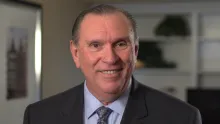
Randy D’Alessandro served as pastor for the United Church of God congregations in Chicago, Illinois, and Beloit, Wisconsin, from 2016-2021. Randy previously served in Raleigh, North Carolina (1984-1989); Cookeville, Tennessee (1989-1993); Parkersburg, West Virginia (1993-1997); Ann Arbor and Detroit, Michigan (1997-2016).
Randy first heard of the church when he was 15 years old and wanted to attend services immediately but was not allowed to by his parents. He quit the high school football and basketball teams in order to properly keep the Sabbath. From the time that Randy first learned of the Holy Days, he kept them at home until he was accepted to Ambassador College in Pasadena, California in 1970.
Randy and his wife, Mary, graduated from Ambassador College with BA degrees in Theology. Randy was ordained an elder in September 1979.
playlist
