
Chuck Smith
This transcript was generated by AI and may contain errors. It is provided to assist those who may not be able to listen to the message.
Please be seated. We'll now have the main message of the sermon presented again by Mr. D'Alessandro. I did use the life application commentary in preparation for the sermon today. Brethren, we have just come back. We've been back a week or so, maybe a little longer, from the piece of tabernacles. And when we were at the feast, we were inspired, we were encouraged, we were informed, we were instructed. We enjoyed our association, our fellowship with the brethren. Life was good. Life was spiritually good at the Feast of Tabernacles. And we enjoyed it. I don't know about you, but I found that over the years, after I get back home from the feast, I have a certain feeling. I don't know if it's an emotional thing or if it's a... I'm sure it's a spiritual issue to some degree. That's why I'm going to speak on it. But when I'm at the feast, I feel so strong. I feel so with it. And when I come home, it's not the same. It's just not quite the same. Why would that be? You know, I don't abandon my calling or I don't abandon my spiritual pursuits. But why is it sometimes that we come home from the feast and it's just not the same? Just not the same? Maybe today was a good example. Now, I don't know where you were for the feast. Some of us were at sites that had a few hundred. Some had more than that. We had some sites that, you know, had a few dozen. Mr. Kubik wrote to the ministry and sent all the various hellos from the various feast sites that went around. We didn't hear all of them there in Hawaii. But I was kind of curious. So I went through the various messages that were sent out and I took the numbers, they said, now this would be worldwide numbers and these numbers aren't exactly correct because the number in Hawaii wasn't correct. Our attendance in Hawaii actually got better as time went along. So many times the best number you have for the feast is opening night. That wasn't the case in Hawaii and in a lot of other places. But when I added them all together worldwide, we had just under 9,000 people keeping the feast with the United Church of God, which I thought was really very good considering what we've been through in the last 12 months or so. But as I was reading through some of the notes, again, I saw the zeal, I saw the passion, all the things that were there that we've enjoyed about the feast. But now we're home. And Wayne said, you know, we're all home. Now what? Now what? Let's turn to John 2. Wayne and I must have drunk out of the same glass somewhere because we've got a very similar message. Let's look at John 2 for a moment.
John 2, verse 13. Now the Passover of the Jews was at hand, and Jesus went up to Jerusalem. And he found in the temple those who sold oxen and sheep and doves, and the money changers doing business. When he had made a whip of cords, he drove them all out of the temple with the sheep and the oxen, and poured out the changers' money and overturned the tables, and said to those who sold doves, Take these things away, do not make my father's house a house of merchandise. And the clincher here is verse 17. Then as the samples remembered that it was written, Zeal for your house has eaten me up. Zeal for your house has eaten me up.
What kind of zeal are we going to have in the next 12 months before the next... until we come to the next Feast of Tabernacles? What are you and I going to do with all that inspiration or all that instruction? All those messages, the inspiring prayers that we had as we were in the various places that are always so lovely when we go to the Feast of Tabernacles, whether it be Wisconsin Delves or wherever you were at.
Gatlinburg, down in Florida perhaps, maybe someplace in Canada, always very lovely there. What sorts of things are you and I going to do to maintain and augment the spiritual high we had at the Feast of Tabernacles? If you go forward in John to John 4, we see something about Jesus Christ. In my Bible, this is mostly in red lettering. John 4 and verse 34. John 4, verse 34, My food is to do the will of him who sent me and to finish his work. That was his food.
That's what sustained Jesus Christ. He had a mission. He had a purpose. He was going to complete that mission and fulfill his purpose. He was not going to waver. He was not going to wander. He was not going to diminish. He was going to do everything that he needed to do to do just what he says here, to finish his work. Brethren, today we've got to ask the questions on whether we're going to build on the inspiration of the Feast or not. Are we going to experience a letdown?
Are we going to grow, use the Feast we've just come through as a platform for further growth or are we going to drift? If you're familiar with your English history, you know the name Oliver Cromwell. Oliver Cromwell said this, and I think it's a tremendous quotation, Oliver Cromwell said this, Not only strike while the iron is hot, but make it hot by striking.
Not only strike while the iron is hot, but make it hot by striking. We have just come through one of the greatest times of the year for us as members of God's Church. We've come through the Feast of Tabernacles. As you were listening to messages, I was in contact with some of you via email. Some of you hear messages that brought tears to your eyes, right? Right. I felt the same way. I felt the same way when some of the messages, whether they be split sermons, sermonettes, even some conversations, talking with some of the members and things they had gone through and things they had done to overcome.
We want to strike while the iron is hot. We've come back from the Feast, and we want to make it hotter by striking. In other words, we want to use that as a platform to move forward. Let's go to James. James, of course, is Jesus Christ's half-brother. Let's see what this family has to say. James, chapter 1. What does this family have to say about this issue? About our zeal, about our passion? What are we going to accomplish in the next 12 months spiritually?
James, chapter 1, verse 22. But be doers of the word, and not hearers only, deceiving yourselves. For if anyone is a hearer of the word and not a doer, he is like a man observing his natural face in a mirror. For he observes himself, goes his way, and immediately forgets what kind of man he was.
But he who looks into the perfect law of liberty and continues in it is not a forgetful hearer, but a doer of the work. This one will be blessed in what he does. This one will be blessed in what he does. You know, we have been to the feast. We've heard wonderful things. What are we going to do about it? What are we going to do about it? Brethren, I remember when the very first Sabbath I came to church, I will never forget the very first Sabbath.
You know my story, how I was not allowed to go to church until just prior to going to Ambassador College. My parents didn't like the church, they wanted me to do anything to do with the church. I was accepted to go to Ambassador College in the fall of 1970, and the minister who was visiting me said, Hey, Randy, if you're going to college this coming week, you should at least be in church one time.
I said, well, that sounds like a winner. Let's see if I can convince my folks of that. And so they allowed me to go to church. So here I was on the Sabbath, going to church for the very first time. I'd been keeping the Sabbath and Holy Days at home for the prior two and a half years. I'd sneak out of the house. Back in those days, we didn't have cell phones back in the 60s, since the early 70s.
So I'd sneak out of the house, call the minister's wife, Sonia Mantoyful. How do I keep the Sabbath? How do I keep the Holy Day? Because I would get literature, and my folks would throw the literature away. So I had to call Mrs.
Mantoyful and ask her. And I never met Mrs. Ant Mantoyful until 20 years later, 20 years later, I was giving, I think, one of my very first sermons in Chattanooga, Tennessee, 1990. And I went through that story. And she came up afterwards and introduced herself. It was amazing and very touching. But I remember that first Sabbath, I didn't even know enough to bring a Bible to church. So here I come to church, and I sit between these two guys who are ambassador college students, and I'm looking at their Bibles, never seen a Bible like those.
Big old margins. You know, they're turning their pages. These big Bibles and these big margins, and they're writing in their Bibles and all that sort of stuff. And I thought, it was almost like a sacrilege. You can write in Bibles? I didn't know you wrote Bibles. And so they've got these big margins. They're writing in their Bibles. Jack Koss and Mike Korchick, those were the two students that I was sitting between. They both became church pastors later on. But, you know, brethren, too many times we as Christians mark our Bibles, but do we let the Bibles mark our lives?
It's one thing to mark our Bibles, but are the Bibles marking our lives? Are they having an impact on the way we live and what we do? Is the Feast—you know, we said we had a successful Feast, and I understand what we mean when we say that, but in truth, you and I don't have a successful Feast until about this time next year.
We've had a full year to deal with what we've heard. We don't have a successful Feast unless we do something with what we've heard at the Feast, unless we use the Feast as a platform for future growth, coming growth.
Let's turn to Ezra 7 for a moment. After we go through Ezra, and I explain a little bit here, then I'll give you the point I'm wanting to make today. Ezra 7 I think this is one of the great scriptures in all of the Bible. It tells us so much.
This is one verse. Ezra 7 and 10 says, It says, Now that's a power-packed, spiritually dynamic verse if there ever was one. It says, I did go to Ambassador College for four years. I worked on the college's landscape crew. I really enjoyed that. I really enjoyed being able to go out and learn about the various plants and flowers, what works to grow where and how and how you prune and what you do with the various things. And, of course, the four years I was there, 70 through 74, two of those four years, Ambassador College campus in Pasadena won a national awards as the best-maintained landscape college in the country. So, a little bit of pride on that, I think.
But I remember one day we were out, and of course we had a lot of equipment for this. We were going to plant a fairly good-sized palm tree. You know, we had the truck there. It had all the equipment to download this thing into the earth.
But one of the things I remember, because it really struck me, is before we planted that palm tree, Ron Grassman, who was there on the crew, one of the full-time guys, he had a bottle of, one of the B-complexes, I forget what it was, B-12 or whatever it was, but one of the B-complexes, he had a full bottle, and he took it and he poured that in that open hole, and then we dropped that palm tree in there.
I said, Ron, what are we doing with vitamin B in this hole here for the tree? He says, Randy, that vitamin B is going to help the root system of that palm tree, so there's not so much shock. It's going to help wed the roots to the ground it's going into.
What we were doing is preparing the soil. God wants us to prepare our hearts. We need to prepare our hearts. Hopefully that took place at the Feast of Tabernacles. For Ezra had prepared his heart to seek something. I'm hoping when all is said and done for every one of us in this room, that we have prepared our hearts to do something about our situations. To seek, in this case, the law of the Lord. And not just to seek it to analyze it, not just to seek it to articulate in our minds some equation or something, but we seek it to do it.
And we do it so well we're able to teach it and teach the nuances of it. Now, with all that in mind, what do I want to cover with you today? Well, here's my point for those of you who would like to take notes. Build on the inspiration of Festival 2011 by rooting out the passion killers from your life. You know, I can joke about the weather in Hawaii, but, you know, I would... I don't think Mary would agree with me, but I would go back year after year.
Because being in that environment does something to me. I mean, yes, I love the warm weather. I love the weather. I love the weather. I love the weather. I love the weather. Being in that environment does something to me. I mean, yes, I love the warmth. I love being able to go, and, like we did so many evenings, have a very nice dinner at a restaurant where you're outside on a balcony and you're watching the sun set into the Pacific. It's so gorgeous. But the thing that strikes me about that whole setting is just how inspirational it is.
How inspirational, you know, when you're in the water and all those little creatures, you're thinking, my dad did this. You know, I can't create... well, maybe I can. I think I can create dirt. I know how to create dirt. But, you know, God created everything that's out there. Every molecule of water, every little fish, all that beautiful coral, that beautiful sun set. How many days during a feast did we see rainbows? Now, I say it rained like five minutes where we were at, and throughout the islands it rained different parts of the island.
It could have been raining where we were at and not raining where the Wacomis were at, and vice versa. You could look out into the Pacific and see rain coming down in a certain section of the Pacific, but no rain around it, just the way the islands are there. The way the currents are and so forth. You know, I thought it was interesting when we took that trip that the channel between Maui and those two other islands, Lanai and Molokai, channeled only 300 feet deep. And the whales like to come in there, and that's where they use the breeding ground to be nice and shallow, 300 feet.
You go to the other side of Molokai, you go to the other side of Lanai, it goes from 300 feet to 16,000 feet. Talk about a drop off. You know, from 300 feet to three miles, you go to the other side of those islands. But we serve, brethren, a great king. We serve a wondrous king. And we need to be passionate about our service for our king. In this coming year, let's make it a point where we remember that fact.
How wondrous our king is, our king creator, our king sustainer. And we want to be passionate about following him. Now, there are passion killers, and I'd like to go through a number of them with you today. Passion killer number one.
Why is it sometimes we feel differently when we come home from the feast versus being at the feast? Passion killer number one is that we return back to the world. We're no longer at a church service where we're singing God's praises before and after a church or visiting with God's people.
There's God's Holy Spirit at every nook and cranny in the auditorium. Everyone's got a Bible open. We've got the Holy Spirit of God that's really working in that building in a powerful way. We've got that when we're at the feast. Then we go home. And I don't think many of you, when you go to your job, I don't think your boss says, let's sing God's praises. I don't think that's going to happen. I don't think your boss is bossing and saying, you know, it's time for a Bible study. Let's have a Bible study.
You know, that's not going to happen. But there at the feast, we have that tremendous thought process that is the mind of God. But then we come back to the world. We come back to the world. Now, God wants us to live in the world. He wants us to be a light in the world because the world's a dark place. He wants us to be salt in the world because the world doesn't have a taste or a flavor of the kingdom. Let's go to Matthew 6.
Matthew 6.
Probably know where I'm going to be turning to, but that's all right. Matthew 6, verse 33. Matthew 6, 33. But seek first the kingdom of God and his righteousness, and all these things shall be added to you. At the Feast of Tabernacles, I think most of us try to maintain our spiritual disciplines. We get up in the morning. We have time with God. The first major thing we do today is we go to services. We don't go to work. We don't go to some physical carnal thing. We go to church, and we enjoy what's there. And that does something for the rest of our day. We turn over now to the book of Ephesians, chapter 5. Ephesians, chapter 5. Ephesians 5 is a chapter that talks about marriage, but it also talks about Jesus Christ and his relationship with the church.
Notice what Paul says here about what we should be doing to make sure that we keep the world where the world needs to be. Ephesians, chapter 5, verse 1.
We are to have a zeal. We are to have a passion for imitating God, our Father, and Jesus Christ, our elder brother. We are to have a zeal and a passion to love as Christ loved.
We drop down to verse 15. See that as you walk circumspectly, and not as fools, but as wives, redeeming the time because the days are evil.
It is so easy for us to come back to the world and have the world overcome our thinking. It is so easy for us to have Satan barge in where we don't want him, because we're not in church services every day. We need to redeem the time, make the time for our spiritual disciplines, maybe increase the time or increase the vitality of the time that we've got with God. Verse 17, Therefore do not be unwise, but understand what the will of the Lord is. And do not be drunk with wine, which is a dissipation, but be filled with the Spirit, speaking to one another in psalms and hymns and spiritual songs, singing and making melody in your heart to the Lord.
This is something I've touched base on in the past.
As a church culture, we don't praise God like we should.
I think sometimes we think that's a Protestant thing to even talk about. And yet it is not.
We can praise God as we're walking on a beach. I found myself continually in a state of praising God. There in Hawaii, as I was looking through my goggles at all that sea life. It was amazing, because the first time we were in Hawaii, we just had your standard old goggles, you know, your snorkel and your fins. The Mike Nelson routine there from Sea Hunt. But we spent extra money, and we got prescription goggles. And I thought, oh yeah, prescription goggles. And so Mary says, yeah, I'll get some of those. And so he takes a look at Mary's glasses and says, well, you've got astigmatism in this eye and this eye is weaker than the other eye. He's like a 20-year-old kid. And he's diagnosing what her vision is by looking through her glasses, then he gives her goggles. And I say, well, yeah, give me one of those things. And so they had an eye chart in the back. I took a look with these things. I put the goggles on. I saw better with the goggles. I thought, I've got to get better glasses. Really sharp vision with those. A better prescription than what I've got in my face right now. But when you're looking at the creation of God, if we can't praise Him for what we're seeing, if we can't thank God for the fact we have vision, that we have hearing, that we can hear the voices of our loved ones, that we have the ability to walk and to move and to do all the things that we do and sometimes take for granted, we can praise God in so many ways as we're walking through life.
It says here we should do this with one another. There's a reason why we need to be fellowshiping with one another. I know some people can't do it because of health. Some people can't do it because they're off by themselves. They're five hours from the nearest brother or sister in the faith. But you and I aren't. We are in a situation where we can be here, and your attendance here in Detroit is actually pretty good. For the most part, we do a pretty good job with attendance here. Verse 20, That's a relationship. That's the kind of thinking that we want to have. But I think it's good for us to contrast what God would want us to do with what Satan would want us to do. Let's take a contrasting look here. Let's go over to Mark 4. As I was putting my thoughts together for today's sermon, I was looking at this in a way that I never looked at before. Several remarked about this over in Ann Arbor.
We're going to look at the parable here of the sower. Traditionally and correctly, when we look at the parable of the sower, we're looking at God calling different types of people. What's going to happen is God calls different types of people. That's our traditional explanation. That's a good one. We're going to stick with that. When we look at the Scripture, there are so many layers of understanding. There's another layer here. Let me see if this might make sense. I'm looking at this section of Scripture here in Mark 4 as a believer. What this means to me as a believer. Let's take a look at this. Mark 4, verse 13. He said to them, Do you not understand this parable? How then will you understand all the parables? The sower sows the Word. Now, as a believer, let's you and I, for the time being, think about the fact that God is sowing the Word in our hearts and minds. It's what God is... He's opening up our vision. He's leading us to understanding as believers in the faith. Verse 15. And these are the ones by the wayside where the Word is sown. When they hear, Satan comes immediately and takes away the Word that has been sown in their hearts.
But it hasn't been true in our lives at times where God opens up our understanding to something and Satanists. He's right there. He doesn't want us to take that and run with it. He wants to take what we're learning to get going. He wants to bury that. He wants to divert our attention. He'll do something so we're not thinking about what we've just heard or we'll forget what we've just heard. Satan comes immediately and takes away. I think that happens to us as believers if we're not careful. We don't want Satan coming in and taking things away.
The Apostle Paul talked about how we need to pray that Satan could be restrained. He always talked about the story of Job before the feast. How God allowed Satan to do certain things. Does this happen in your life where you have intentions, desires, and before you're able to act on the scene something happens and they fizzle out. They just don't come to fruition. All those good intentions seem to die somewhere along the line.
Verse 16. These likewise are the ones sown on stony ground, who when they hear the word, immediately they receive it with gladness. There have been times in our lives as believers where we've thought a certain thought, we've been talking to one another in conversation, we've heard a sermon or a Bible study, our own study. Something comes to us and we say, that's wonderful, that's great. Verse 17. They have no root in themselves and endure only for a time. After when tribulation or persecution arises for the words, they immediately stumble. Once again, how many times have we as believers had things come into our hearts and minds and because of where we're at spiritually, we were not able to progress like we wanted to. We were not able to progress like we wanted to and we stumbled around. That's Satan. Satan's working there. Now these are the ones sown among thorns. They are the ones who hear the word, the cares of this world, the deceitfulness of riches, the desires for other things. Andrian choked the word and becomes unfruitful. Can this happen to us as believers? Where we get so distracted by things, we forget our mission in life. Our mission in life is not to be the best salesperson. Our ambition, like in my case, before I came into the ministry full-time, two and a half years ago, I was a warehouse manager. My ambition should not have been to be the best warehouse manager or later on be the best salesman. Now that doesn't mean that God doesn't want us to take our talents and use them and perfect them and be as sharp as we can be. But my ultimate goal in life was to be the best brother of Jesus Christ that I possibly could be. To be the best son of God that I can be. And yet sometimes we get diverted by the things of the world and those things choke us. They choke off our growth because our vision is not where it should be.
Verse 20, but these are the ones sown on good ground who hear the word, accept it and bear fruit. Some thirty-fold, some sixty, some a hundred. In other words, they don't allow Satan to come in and quickly steal away things. They don't allow the truth of God to hit the stony ground of our hearts, the weak spots in our spiritual lives and come to nothing. Or, you know, we don't allow things to be choked.
I think this parable has a lot to say to us as Christians in our walk with God. There was a man who lived many, many years ago, one of the greatest men of God who ever lived. His name was synonymous with righteousness. He was considered one of the three most righteous men who ever lived. Noah, Job, and this gentleman. And we've talked about him in the past. His name was Daniel. Let's turn to Daniel 6 for a moment.
Daniel 6.
Daniel 6.
Here's a man that, as a young man, you know, he was conquered by the Babylonians. They brought him to Babylon. They wanted to change his diet. They wanted to change his education. They wanted to change his name. In other words, they were going to brainwash this young man because he showed a great deal of promise. They wanted him, as a very bright man, to be a shining example of what the Babylonian Empire could be.
But Daniel would have none of it. Now, we talk about coming back to the world. Well, the world was thrust onto Daniel, but he would not have any of it.
And it's interesting because, you know, in his position, he couldn't run and hide. He was a very well-known individual, and as it turned out in his life, as he was faithful to God in his life, one of the most righteous men who ever lived, he rose to high rank, not only in the Babylonian Empire, but when Persia conquered Babylon, he also rose very high in the Persian Empire. So here you've got one individual who sees two different major empires, and he's very close to the top in both. And faithful to God doesn't give in to the world.
Daniel 6, verse 1. It pleased Darius to set over the kingdom 120 satraps to be over the whole kingdom. So each one of these 120 fellows is quite powerful. Over these, three governors of whom Daniel was one. So even more power was in his hands, that the satraps might give account to them so that the king would suffer no loss. Then as Daniel distinguished himself above the governors and the satraps because an excellent spirit was in him. Well, that excellent spirit was God's Holy Spirit. An excellent spirit was in him, and the king gave thought to setting him over the entire realm, the whole realm. So the governors and the satraps sought to find some charge against Daniel concerning the kingdom, but they could find no charge or fault because he was faithful. Again, we can be true to God and still accomplish our mission in the world and grow and develop our talents as God would want us to do. Daniel was faithful. Now was there any error or fault found in him? Then he's been said, we shall not find any charge against this Daniel. Let's find it against him concerning the law of his God.
Daniel didn't hide the fact that he loved God. He didn't hide the fact that he was true and loyal. He had a passion for the law of God. So these governors and satraps throng before the king and said, thus, King Darius, live forever. Here comes all the stuff that you almost have to have hip-waiter through as they're going to be flattering this king. Verse 7, All the governors of the kingdom, the administrators, the satraps, the counselors, the advisors have consulted together to establish a royal statute and to make a firm decree that whoever petitions any God or man for thirty days except you, O king, shall be cast into the den of lions. Now, these people were pretty smart. They thought, they thought, we're going to nail Daniel with this. He will never go for this. And we've got him. Verse 8, Now O king, establish the decree and sign the writing so that it cannot be changed according to the law of the Medes and the Persians, which does not alter. You know, these people were famous. They were so vain. They thought that their intellect was so superior that when they put something in writing, there's no need to have an eraser on their pencil.
Therefore, King Dereiah signed the written decree. Now, when Daniel knew the writing was signed, he went home in his upper room with his windows open. He says, you want to come spy on me? Have at it. He opens the windows toward Jerusalem. He kneels down on his knees three times that day and prayed and gave thanks before his God, as was his custom since his early days.
The reason this man could not be brainwashed, the reason this man had such a passion for God, is what we see there in verse 10. He put a premium on his relationship with God, and he didn't succumb to worldly thinking or the teachings of the world. Brethren, if we want to have a better year spiritually, we need to take this to heart. What we learned every year at the Feast, the tremendous passion we have and the zeal we have, we can keep that. But it takes work. It takes spiritual energy to do that. And we can do that with God's help. Passion Killer number two. Passion Killer number two is when we remove ourselves from the powerful flow of God's Holy Spirit. Passion number two, we remove ourselves from the powerful flow of God's Holy Spirit. At the Feast of Tabernacles, we are in a room, we may have had 60 people or 600 people in the room, who have got God's Spirit in them or with them. We've got a tremendous amount of God's Spirit all around us. We sing the praises of God in our hymns. We discuss it in the sermonettes, in the sermons, in the split sermons. We discuss things of God in our conversation before and after church. The Spirit of God is strong there.
To quote Star Wars, the Force is strong with this one.
Let's look at this over in Acts 2.
Acts 2, the giving of God's Holy Spirit.
Acts 2, verse 1. When a day of Pentecost had fully come, they were all with one accord in one place. Well, who is this all? These were believers who had come from all over the known world. They believed in God. They were faithful to God. They were doing all they knew to be close to God to that point in their lives. And now God was going to bless them with something very powerful.
What we see here is a group of people. We see a powerful flow of God's Holy Spirit. And when you're in that flow, it does wonders for you. So we then see here in this chapter a very moving sermon summary from Peter. And we want to drop down to verse 37. Verse 37 of Acts 2. Now when they, the crowd, the people of the assembled from all over, Now when they heard this, they were cut to the heart and said to Peter and to the rest of the apostles, Men and brethren, what shall we do?
You know, every time I look at that verse, I am encouraged. Because as a minister of God, all the people I've counseled for baptism and I've baptized, there is a constant. What do we go back 2,000 years to this point? Or just, whatever. Several hours ago, whenever last time it was, somebody came to a minister of God. What do people normally do? They go to a minister and they say, Mr. so-and-so, what do I need to do? I want to get baptized. What should I do? Same thing here. 2,000 years old. It's the way God works. It's the way His Spirit works. Verse 38, then Peter said, then, Repent and let everyone be baptized in the name of Jesus Christ for their mission of sins, and you shall receive the gift of the Holy Spirit. For the promise is to you and to your children, and to all who are far off, as many as our Lord shall call. And with many other words He testified and exhorted them, saying, Be safe from this perverse generation. Now, notice verse 41. Then those who gladly received His Word were baptized, and that day about 3,000 souls were added to them.
We see the flow and the power of God's Spirit with His people as they are banded together. That's why it is so good for us to gather together in groups.
Let's continue on to verse 42. And they continued steadfastly, and the apostles' doctrine and fellowship and breaking of bread and in prayers. You know, they realized there was a synergy here. That fear came upon every soul, and many wonders and signs were done through the apostles. Why? Because there was that energy. God's Spirit was working powerfully among that group. Now, all who believed were together, they had all things in common. They sold their possessions and goods and divided them among all, as anyone had need. Continuing daily with one accord in a temple and breaking bread from house to house. They ate their food of gladness and simplicity of heart. Again, you see the mind of God working here. Verse 47. Now, praising God and having favor with all the people. And then, lastly here, And the Lord added to the church daily those who were being saved. This is a powerful situation taking place here. There is synergy here. Where you take all the people as individuals, you put them together, and you have something bigger than what one person by themselves can do. Especially with the use of God's Holy Spirit.
So at the feast, we have this synergy, we have this power, because we have God's Spirit in numbers. We come home, you know, we may have our wife or our kids who are in a church, but you know, we've got a much smaller degree. That's why we want to come together for services.
I think sometimes it's helpful to look at the other side of the coin. Let's go over to Matthew 9.
Matthew 9. Now, I said a passion killer number two is when we remove ourselves from the powerful flow of God's Spirit. Let's take a look at that for a moment. When we are removed from that flow. Matthew 9 started here in verse 18.
While He spoke these things to the behold, there was a very powerful way of doing it. And I think it's a very powerful way of doing it. Now, after 9, started here in verse 18. While He spoke these things to the behold, there ruler came and worshipped Him, saying, My daughter has just died. Become, lay her hand on her and she will live. So Jesus rose and followed Him, and so did His disciples. I mean, here's a man with tremendous faith. We drop down to verse 23. When Jesus came into the ruler's house and saw the flute players and the noisy crowd wailing, or they were having a wake, He said to them, Make room for the girl is not dead but sleeping, and they ridiculed Him.
So here you see a spirit of faithlessness. A spirit where God's power was ridiculed, and the things of God were being ridiculed. Verse 25. But when the crowd was put outside, when the crowd was put outside, He went in and took her by the hand, and the girl arose. For a powerful miracle to take place, for a prayer to be answered, for the Spirit of God to work properly, the negative had to be put outside. Are we putting the negative outside? Or are we imbibing of the negative? Are we embracing the negative? Are we living with the negative? Are we, you know, comfy with the negative? Here we see here that the crowd had to be put outside. Now, let's look at one other example, but I want to make another thought, that I won't forget it. Let's go over to Matthew 13.
Matthew 13, verse 53.
Now, when it came to pass when Jesus had finished these parables, this is Matthew 13, verse 53, that He departed from there, and when He had come to His own country, He taught them in their synagogue. So they were astonished and said, Where did this man get this wisdom in these mighty works? Is this not the carpenter's son? Is this not his mother called Mary, his brothers James, and Joseph, and Simon, and Judas, and his sisters that are not all with us? Where then did this man get all these things? So they were offended at Him. But Jesus said to them, A prophet is not without honor, except in his own country, in his own house. Now, He did not do many mighty works there because of their unbelief.
Notice the difference. When you have the power of God's Spirit in a location, you have mighty works being done. But when you have the negative, the faithless, kind of permeating the atmosphere, nothing gets done.
So we've got each of us ask ourselves, What's living in our hearts and minds? Do we have that power of God that's going to cast out the negative? Or are we going to use the positive guide, the faithfulness of God, and to realize that God can do all things? Our God is a God of the past, our God is a God of the open doors. So many times we want to look at the great mountain that's before us. Mount Everest, whatever our problem happens to be, could be a financial difficulty, could be an interpersonal difficulty, could be something with our health.
As we read the Old Testament, the example of Israel at the Red Sea should be very instructive to us. They viewed that Red Sea as a doorway, as a blocked passage. God viewed that as an open door. All I have to do is open the door, you're going to walk through. That's exactly what He did. The Israelites had a perspective that water was going to be their downfall. No, that water was going to be a wall on either side of them so that the Egyptian army could not surround them and annihilate them. That water was going to kill the Egyptians and save them. It's a matter of perspective.
It's a matter of our faithfulness. It's a matter of what we're going to do with our minds. Let's go over to Daniel again. This time, Daniel 3.
Daniel 3.
Three young men.
And a powerful story.
Three young men, a very powerful story about the flow of God's Holy Spirit. Daniel 3.19. The Nebuchadnezzar was full of fury, and the expression of his face changed towards Shadrach, Meshach, and Abednego. He spoke and commanded that they heat the furnace seven times more than it was usually heated. These three fellows had the gall not to fall down and worship an image.
The Nebuchadnezzar had set up. So He says, you will pay with your life. Verse 20. And He commanded certain mighty men of Valor, who were in His army, to buy in Shadrach, Meshach, and Abednego, and cast them into the burning fiery furnace. And it took people who were men of Valor, because what they were going to be asked to do would cost them their lives.
These men, verse 21, were bound in their coats, their trousers, their turbans, their outer garments, were cast into the midst of the burning fiery furnace. Therefore, because the king to man was urgent, and the furnace exceedingly hot, the flame of the fire killed those men who took up Shadrach, Meshach, and Abednego. Now, it's not killing the three men, Shadrach, Meshach, and Abednego, but those that are taking up the walk there, they're losing their lives. That's how hot it was. And these three men, Shadrach, Meshach, and Abednego fell down, bound into the midst of the burning fiery furnace. And the king named Nebuchadnezzar was astonished, and he rose and hastened, and spoke, saying to his counselors, Did we not pass three men bound to the midst of the fire? And they answered, and said to the king, True, O king! Look, he said, I see four men loose, walking in the midst of the fire, and they're not hurt, and the form of the fourth is like the Son of God.
Whenever you think you're at your wit's end, whenever you think you've come to your blind alley, we need to remember our God is the God of the open door. We need to remember that just as Jesus Christ stood with these three men, just as Jesus Christ, you know, when Stephen was martyred there in Acts, chapter 7, he saw a vision in heaven open, and he saw Jesus Christ not sitting on the throne.
He saw Jesus Christ standing. When you are going through some of the most difficult trials in your life, Jesus Christ is standing with you, fully engaged in your life and what's happening with you. And we need to allow that powerful thought to encourage us and enliven us.
Hebrews, chapter 13 speaks to this point. Hebrews, chapter 13, verse 5. Hebrews 13, verse 5, last part of verse 5, where it says, I will never leave you nor forsake you. Now, when you're at your peak of your trial, Jesus Christ will stand with you shoulder to shoulder. If I can say it in this way and you've taken it the proper way, Jesus Christ is proud to stand with you. You're His brother. You are His sister. You are living up to the high bar that the God family lives up to. And He will stand there with you.
So a second Passion Killer is when we remove ourselves from the powerful flow of God's Spirit. Let's not do that this coming year. We didn't do it at the feast. Let's not do it this coming year. Passion Killer number 3. Passion Killer number 3. Allowing our minds to feed on the negative. Allowing our minds to feed on the negative. That will kill Passion. That will kill forward movement and the cause that God has given to us. I'm going to turn again to a scripture I've turned to so many times, and by the time I move out of this area, you will know this scripture pretty well. Let's turn to 2 Corinthians 12.
Because one scripture you're going to know is going to be this one. 2 Corinthians 12.
Verse 7.
Unless I should be exalted above measure by the abundance of the revelations. Paul realized he was a man that God was using. He realized a good part of his writings were going to be saved as scripture. He didn't know how much. We now know it was a good part of the New Testament. Unless I should be exalted above measure. Unless I become vain because of my works. Unless I become vain as I go to church area, to church area, and everyone wants to shake my hand and say, I have five minutes with Paul. Unless I should be exalted above measure by the abundance of the revelations. A thorn in the flesh was what? A thorn in the flesh was given to him. Was given to him.
Didn't just happen.
Was given to him. A messenger of Satan to buffet me. Unless I'd be exalted above measure. Prior to the feast I talked, we went through and discussed the life of Job. We saw how God had to sign off on Job's life. Satan said, well, you know, you do this and Job's all mine. God said, okay, you can do these things and don't take his life. Later on Satan said, well, you know, you're really protecting him, give me more access to him. God said, okay, I'll sign off on that. You can have more access, but again, you can't take his life. So over and over, God was giving Job over to these trials. Just like God is giving Paul over, giving him a thorn in the flesh.
Verse 8 concerning this thing, I plead with the Lord three times that it might depart from me.
Now, we don't know what it was, but, you know, there are other writings of Paul that give us clues. There's one portion of Paul's writings where he said, you know, I know that you, I think it's in Galatia, I think you and Galatia, you would rip out your eyes and give them to me. No, the indication was Paul had bad vision. There were other situations where he talked about the great big letters he had to write in, because his vision was bad. But here we've got a situation in the church where we've got somebody not being healed. He was obviously a man of faith. He was obviously a dynamic Christian believer. And yet, that's what it was. It was not about that. It wasn't about whether he had faith to be healed or not. What it was about, we see in verse 9. And he said to me, in my Bible, this is a red lettering, My grace is sufficient for you. Now, the grace we're talking about here is not grace that deals with forgiveness of sin. Grace is a multifaceted concept. My grace is sufficient for you, for my strength is made perfect in weakness. There is an aspect of grace that deals with our living our lives properly under God's care. There is an aspect of grace that deals with our trials.
Just as faith is a multifaceted thing. I believe everybody in this room who is baptized has rock solid faith in Jesus Christ as your personal Savior. I don't think you doubt that one wit. People say, do I have faith? Well, do you have faith in Christ as your Savior? Never doubted that. 100% there. But do we have faith God's going to heal? Well, maybe we don't have 100% there. Or maybe we don't have faith that God will protect, or that God will prosper, or God will help us with our marriage, or God will help us with our kids. Any number of areas of life where we can have 100% faith or 50% faith or 75% faith.
Same thing is true with grace. Same thing is true with grace. But the idea, the concept is here, and look at those, Paul says the last part of verse 9. Therefore, most gladly, I'd rather boast in my infirmities that the power of Christ may rest upon me.
Paul didn't want to be a self-made Christian. He wanted to be a Christ-made Christian. Which means he had to yield to the power and the grace of God the Father and Jesus Christ. He could not yield to his own intellect, or his talents, or his abilities, although God wanted him to improve on those. He had to realize, as he says here in verse 10, Therefore I take pleasure in infirmities and reproaches and needs and persecutions and distresses for Christ's sake. For when I am weak, I can't rely on myself because I know self won't get it done. When I am weak, I am strong because of the grace of God.
Now, too many times we in the church will allow our minds to feed on the negative. What we can't do, again, goes back to the idea that we worship a God at the open door. And we can't allow ourselves to be thinking along those lines. Let's go to the last one we have, Passion Killer number 4.
Passion Killer number 4 is, too many times we lose our sense of mission.
We lose our sense of mission in life.
Yes, God wants us to excel in whatever field of endeavor we're in. If we're a dishwasher, God wants us to be the best dishwasher. If we're a baker, God wants us to be the best baker. For a housewife, we want to be the best housewife. Whatever it is, God wants us to excel. But that's not our mission in life.
That is not our mission in life. And too many times, like we read about there in Mark 4, we get so choked up with the world that we lose what our mission is.
Our mission is to be the best possible son or daughter of God. Our mission is to be the best possible brother or sister to Jesus Christ. That is our mission.
Let's go to Matthew 24.
Matthew 24, the Olivet Prophecy.
Matthew 24, verse 37.
But as the days of Noah were, so also will the coming of the Son of man be. Okay. Now there's a heads up. Because we believe very strongly that we are living at the time of the return of Jesus Christ. So these verses we're about to read speak to us. For as in a day... verse 38 here. Matthew 24, 38. For as in a days before the flood, when they were eating and drinking and marrying and giving a marriage, until the day Noah entered the ark, and didn't know until the flood came and took them all away, so also will the coming of the Son of man be. So what do we see in verses 38 and 39? We see a group of people who are living to excess.
There's nothing wrong with eating, there's nothing wrong with drinking, there's nothing wrong with getting married. But when we're doing all those things to excess in an appropriate and improper manner, then that is wrong. That is sinful. And that was happening back then. And something else, verse 39, and they didn't know until the flood came. They didn't know.
We understand that Noah probably took great tours around the known world and proclaimed the gospel to the people around the world. He would go on voyages. He would have, like Paul, would go on his missionary campaign. So did Noah. He, for 120 years, he's building this ark, he's telling people what's about to come. He's preaching the gospel to them.
But they didn't want to hear it. They ignored it. Just like today, people are going to ignore the truth. People today feel secure in their lifestyle. They don't want to heed any warnings. They want to laugh at us if we talk about how bad things are.
What was the poll that came out just this last week? Something like 83 percent of Americans are concerned about the future of this country. They're concerned about the future when they see what's happening with politics, with the Democrat, Republican, when they see what's happening with morals, when they see what's happening economically. The whole gamut of things. People say, wow, we are like modern Rome. We are like modern Rome. We don't want to be like in the days of Noah. Christ had a sense of mission. We've already read that in John 4, verse 34. Christ said, My food is to do the will of Him who sent me and to finish His work. Brethren, that is our mission, to do the work of God, corporately and individually. Corporately, we want to get the gospel out. Individually, we want to be the people that God has called us to be. I'm not going to turn there, but in John 19, verse 30. John 19.30. I'll read it. So when Jesus had received the sour wine, He said, It is finished. And bowing His head, He gave up His Spirit. What was finished? His work was finished. His work of being our Savior. His work of establishing the church. That was finished. He had a sense of mission, a sense of purpose. There's only a couple more scriptures I want to turn to before we quit for today. Let's go to 1 Corinthians 2. It's one of the two I've got left here. 1 Corinthians 2.
1 Corinthians 2, verse 1.
And I, brethren, when I came to you, did not come with the excellence of speech or wisdom, declaring to you the testimony of God.
For I determined not to know anything among you except Jesus Christ and Him crucified.
Now, we have to understand who Paul was. Paul was a very educated man. He was a man of letters. He was a man who was able to quote the poets of the day, and we see that in his writings here in the New Testament. So Paul's not saying we should be ignorant. Paul's not saying we shouldn't have a good education. But what Paul is getting across to people is, look, we have a mission, and we have to realize and be centered and grounded and founded on what our mission is. First and foremost is having this understanding about who Christ was, what He did, and what we need to do about it. Verse 3.
And remember, he's talking to people in Corinth. He's in the shadow of Athens. The people of Athens wanted human wisdom. They wanted to talk back and forth and have these intellectual arguments and discussions. Paul says, I'm not doing anything. That doesn't make one wit of difference. My speech and my preaching were not with persuasive words of human wisdom. He's flying into the face of their human wisdom. But in a demonstration of the Spirit and of power, that's powerful. God's Spirit is powerful. This machinations of words by human beings, you know, debating back and forth, and this deep thought you think, that's nothing. Verse 5.
It's our mission to understand that and to proclaim that. One final chapter we want to turn to is over here in the book of Philippians. Philippians chapter 3.
Last place we'll turn to for today. Philippians chapter 3.
Paul loved this little church in Philippi. It was a wonderful little town. I don't know how little it was, but it was an impressive town. It was a town that had their own Roman garrison. It was a town that, in Rome, when they would have an establishment garrison, they would bring back some of the soldiers who were retired and let them settle here in a place like this. They had extra voting privileges. They stayed and lived to be able to retire in the Roman army. Then they were given some land and some things like that. I mean, it was very nice. And they made Philippi kind of like a little Rome. They wanted people to take a look. This is what the Sept of Ire can do. So it's a wonderful little town here. Paul loved these people tremendously. But notice what he says here, studying in verse 4. Though I also might have confidence in a flesh, if anyone else thinks he may have confidence in a flesh, I more so. Then he goes through what starts ticking off a list of various things that would be impressive to somebody of the Jewish faith. Verse 7, But what things were gained to me, these things I count as a loss for Christ. Did all that physical things? That's nothing. That's absolutely nothing. Verse 8, Yet indeed I also count all things lost for the excellence of the knowledge of Christ Jesus, my Lord, for whom I have suffered the loss of all things, and count them as rubbish that I might gain Christ. His mind is focused like a laser.
His mind, this is Paul's value system we're looking at right here. This is what he held dear. This is what motivated him. Verse 9, And he found him not having my own righteousness, which is from the law, but that which is true faith in Christ, the righteousness which is from God by faith, that I might know him in the power of his resurrection and the fellowship of his sufferings, being conformed to his death. If that by any means I might attain to the resurrection from the dead. Paul says, I've got a mission, and here's my values, and here's what I'm going to hold true to. In the last section we see here starts up in verse 12. Verses 4 through 11 we see Paul's value system, what he held dear. Now in verses 12 through 16 we see Paul's goal structure. We see his sense of mission. And it needs to be our mission as well. Verses 12 through 16. Not that I've already attained, or I'm already perfected, but I press on.
Paul says, I'm not perfect. I've not attained. I'm not perfected. I'm not mature. He says, but you know, I am in Christ, and I do have a Savior, and I have forgiveness of my past sins. Therefore I'm going to lay hold of that, as he says here, for which Jesus Christ has also laid hold of me. And he's going to move forward. Verse 13, Brethren, I do not call myself as apprehended, but one thing I do, forgetting those things which are behind. He wasn't going to be caught up in all that negative past. And he had a lot of it. We've discussed this so many times in years gone by since I've been here. How would you like to stand up in front of a group of people like this? And you're looking at a group of people like this, full well knowing that you, the speaker, tortured this one's mother. May that one's father blast him. This woman's husband is now in jail because of you. This man, you know, his kids, they don't have a mother anymore. We've got some young people in the room. Maybe they're orphans because of what the speaker did. Paul had to live with that. But he also realized he couldn't let that get him to the place where he got frozen up in life and couldn't move. He said, but one thing I do, forgetting those things which are behind. I mean, he remembered the pain, the suffering, but I said, I've got to get behind that, beyond that. Forgetting those things that are behind and reaching forward to those things which are ahead. That was his mission, to reach forward. I press, verse 14, toward the goal for the prize of the upward call of God in Christ Jesus. I press toward the goal. He had a sense of focus, a sense of mission. Therefore, verse 15, let us as many as are mature, what's mature in Eve? We saw that in chapter 2, verse 5, having the mind of Christ. Let us as many as are mature have this mind, and if in anything you think otherwise, God will reveal even this to you. If you are drifting as a Christian, you simply go to God and say, Father, I'm on the right path, I hope I'm, you know, like a laser, I'm going down the way you want, but if I'm drifting, I want you to show me. I want you to bring me back to where I need to be.
I like watching some old movies. I know Alan Patterson back there likes watching old movies, so... Remember a movie I saw many years ago, Lawrence of Arabia? Won several, I think, Academy Awards. I think Peter O'Toole was a fairly new actor in that movie. We had Omar Sharif. I remember one section of that story, it's a long movie, about four hours in length, I think. But they... Lawrence of Arabia was just starting to win over the Arabs. This is during the period of World War I. And there was a fortress on the Gulf of Aqaba. And that particular fortress was a main fortress that protected that part of the region. But all the cannons faced out to the Gulf, faced out to the water side. Nothing facing the desert side. And the reason nothing faced the desert side is because it was several days journey through some of the harshest desert in the world. They felt no one could get through that. So Lawrence of Arabia said, look, you give me 50 of your Arabs, you give me 50 of your men. We will march through that horrible desert and we will attack from the side that's unprotected and win when they're in Aqaba. And Omar Sharif said, okay, as they were looking at the expanse of what they had to go through, many days journey. Omar Sharif, the chief Arab, said, now, after so many days, we are out of water. After so many days after that, the camels, their bodies start, they start running out of the water that's in their bodies. So when the camels die, we die. And we've got to get to the other side before the camels die. And so there they decided, after a while, to start doing their march only during the evenings, the nighttime when it was cooler. And as they were marching, Lawrence was falling asleep on his camel and he started drifting. And the danger for that was, if he kept on drifting, he and his camel would go away from the main body and get lost in the desert and he would perish.
Omar Sharif saw that he was drifting, took his little whip that he had for his camel, smacked Lawrence of Arabia and said, you're drifting. And Lawrence said, it won't happen again. Because Lawrence realized that Omar Sharif had saved his life.
But then, sometimes we drift. And we can drift in a way that will take and hurt us or take our lives. That's why, as it says here, that we need to make sure that we're, you know, if we think otherwise, verse 15, God will reveal us to us. If we are drifting, and if we've got our secret sins and faults, as David talked about, then we can ask God, please, show these to me. I don't want to drift. I don't want to put myself in harm's way.
Verse 16, nevertheless, to the degree that we have already attained, let us walk by the same rule, let us be of the same mind. Brethren, today we are first out of the back from the feast. We had an inspirational feast, we had a feast where we were well fed. But are we going to use the feast as a platform for growth? A year from now, can we really say that the feast of 2011 was a great feast for us? Well, we can only say that if we used this material that we had a feast to grow. Oliver Cromwell said, not only strike while the iron is hot, but make it hot by striking. Brethren, this coming year, let's let our Bibles mark our lives. Let's mark our Bibles as we study, but let's let the Bible mark us. Let's make sure that we root out these four passion killers I've discussed with you today. If we do that, then this time next year, we will say the feast of 2011 was truly a great feast.
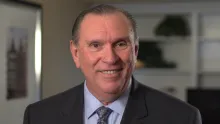
Randy D’Alessandro served as pastor for the United Church of God congregations in Chicago, Illinois, and Beloit, Wisconsin, from 2016-2021. Randy previously served in Raleigh, North Carolina (1984-1989); Cookeville, Tennessee (1989-1993); Parkersburg, West Virginia (1993-1997); Ann Arbor and Detroit, Michigan (1997-2016).
Randy first heard of the church when he was 15 years old and wanted to attend services immediately but was not allowed to by his parents. He quit the high school football and basketball teams in order to properly keep the Sabbath. From the time that Randy first learned of the Holy Days, he kept them at home until he was accepted to Ambassador College in Pasadena, California in 1970.
Randy and his wife, Mary, graduated from Ambassador College with BA degrees in Theology. Randy was ordained an elder in September 1979.
