
Robin S Webber
This transcript was generated by AI and may contain errors. It is provided to assist those who may not be able to listen to the message.
Well, once again, I want to welcome all of you. I want to welcome those that are listening in. I felt so much over the last year that more and more that the body of Christ, whoever they might be, and God knows who are His, those that have the faith of Jesus, and those that do keep the commandments, that our people more than ever need to be encouraged. They need to hear a gospel of encouragement.
They need to hear about the goodness of God. They need to hear about the hope of God, and to recognize that there is something beyond this life. And I would speak to that today. Susan and I have been dealing with a number of people within our own circuit that life, to one degree or another, has caught up with them for the moment. And life will catch up with all of us one day or another, whether we're young or old, that we will face the challenges of life.
And we will also face the challenges of death that have been visited upon all humanity since the time of Adam and Eve. But it is my hope that in this message that we'll build upon the scripture reading that was offered, that once we all leave this room together as members of the body of Christ, we'll know what our great God is doing, we'll know what He wants us to do, and we're going to know what we have in store. So not to confuse you so that you all know what I'm speaking about over the next few minutes, I'd like to give you my title up front, please. And that is simply this, as was in the scripture reading today, but we shall all be changed.
To underline that title, I'd like to begin with a story. It's a story about a wounded soldier.
And that wounded soldier was lying in a foxhole, knowing that he was about to die.
So he took out the Bible that was in his chest pocket, and he opened it, and he placed his finger on a verse to read so as to supply him comfort in his last remaining moments.
As the blood flowed down his arm, it caused his finger to stick to that verse on the page when he died. Later, when his remains were covered, attendees noted the verse that his finger was stuck on.
You might ask yourself, what verse? What was the verse? It was John 11 and verse 25. I am the resurrection and the life, and he who believes in me, even though he may die, he shall live.
What may you and I gain from this story to come to point that we might go away informed, encouraged, and full of hope on this, The Feast of Trumpets, 2018? The Feast of Trumpets is designed to give God's children certain sticking points, just like that man whose finger was stuck to the Gospel of John. The Holy Days, the festivals, give us certain sticking points to hold on to both in life and in death, both in the green pastures, by the still waters, and at times on the mountain peaks and sometimes in the deserts of life, to give us a barometer, to give us a star to guide us, to lead us through life's conditions. And when we think about the festivals, they are wonderful. They're not only prophetic, because so much of prophecy is really promises directed to the people of God to guide us, to encourage us beyond our own world of darkness, the society of darkness that is around us, and do I dare say sometimes our own personal world, which can be a world of shadows, where the light of Christ is perhaps dimmed in our hearts, in our minds, in our beings, at least for this moment. And that's why I give this teaching to you today. God's teachings through the Feast of Trumpets give us several powerful sticking points to bind our life's energies and our devotions with powerful, godly truths. One of those sticking points, and Mr. John Garnett will be speaking to that this afternoon, one of those sticking points, it does foreshadow a day of intervention of war, a day of righteous judgment upon the nations, the triumphant rescue of humanity, and the human condition by the human conditions that Jesus Christ will bring upon this earth. And everyone loves a good ending. And the Feast of Trumpets projects, as we have come to understand it, good endings for God, for ourselves, and ultimately humanity as they come to understand it. A sticking point. I want to share something with you. The God who, when we consider prophecy for a moment, the God who interrupts time and space, this is what we're talking about, the God who interrupts time and space. He interrupts human history. Are you with me? Hold on to that word interrupt. If you want to jot it down, that's fine. There's an interruption.
The other great sticking point then, in which that interruption will come up, the other great sticking point is this day pictures the resurrection of God's first fruits. This day pictures the sounding of the trumpet, the resurrection of God's beloved first fruits, the saints.
When that seventh trump blows, things are going to happen, and they're going to happen to you, and they're going to happen to me by God's grace. The God who interrupts death.
When you think of the Feast of Trumpetson, that means God not only is going to interrupt the macro world of time and space and humanity and billions or millions of people, He's going to interrupt it. He's going to interrupt it once and for all.
Well, you say, Mr. Weber, I know that. Good. But He's also going to interrupt something that's outside of time and space that is no longer.
Death. Your death. My death. My rest. My sleep. God is going to interrupt that by a miracle, and He's going to bring those that are dead, and He's going to bring them back to life.
When that seventh trump blows, that's what's going to happen. Now, the Latin word—and it is Latin, the Bible is often Latin or Greek, sometimes they're American—the Latin word resurrection just doesn't quite grab our English-speaking mind.
But when you break down resurrection and you define it out of the Latin, it simply means this. You may want to jot it down. And that is—the resurrection means to stand. To stand.
So, big deal. What's that mean? Well, let me ask you questions. When's the last time you saw somebody that died and you went into the house and there they were standing in all twos?
They're going to be standing. That which was laid flat, that which was buried, and or even that which was cremated— kind of ponder that one through—is going to be standing.
Now, let's bring this together again. Consider for a moment the paraphrase off of John 11.
I am always the standing and the life. This thought of resurrection of Jesus Christ and others that others had seen resurrected, even on the day of His death and or a Lazarus, literally lodged in people for the remainder of their life. They went through the world of antiquity, the Mediterranean basin, and all the way to India to tell them, I've seen somebody that was dead. They were alive. They were dead. I saw them stoned. I saw them crucified.
And they now stand. They are alive. And the greatest one of all, upon whom the Spirit of God has rested, now stands at the right hand of the Father in heaven.
Brethren, God gives us the resurrection to give us hope, to know that there is no stone too heavy, that Jesus is going to interrupt on behalf of His Father into this world of time and space, and even into the world of death, which is owned by Him. He owns both life and death. He has keys to both doors, whether it be life or whether it be death.
And that's your Savior. And His Father is our Father. And I'm here as a minister of Jesus Christ to tell you today about one of the greatest stories ever.
And that is going to be the resurrection of the saints in the future at the sound of the trumpet.
Yes, we have spiritually died in Christ as we go through the book of Romans. And those, even as we have spiritually died and given our life over to the King, there's also a time when we are going to, as Lazarus, to sleep in Christ. Because that's a terminology for those of you that just became an acquaintance with the word that death and sleep are often used synonymously. Because when you die, the next thing you know, you are going to be in glory. You are going to see the face of Jesus Christ.
You are going to see the saints down through the ages. By the way, you're going up with Him, as we'll come to find at the end of this message. So this morning, let's take the next scriptural step beyond John 11, verse 25, and understand what is going to occur at the moment of the new life. I call it the new life, when the trumpet sounds. When, as the Apostle Paul describes it, But we shall all be changed. As in any classroom, as at work, let's ask a few questions. What does that mean?
We shall all be changed. What does that mean? Why do we have to be changed? And what would God have us, you and me, to do now, after we depart from the Feast of Trumpets? Under God's inspiration, the Apostle Paul answers these questions in 1 Corinthians 15. We're going to go back to that today. We've been spending a lot of time. It is in 1 Corinthians 15 that he states a startling fact to grab our attention.
And that's a little bit like what Jonathan was bringing out, that the Feast of Trumpets is nothing else. It's an alarm clock about everything else that is going to be coming up. But God uses a startling fact to grab our attention. And humanity needs... Are you with me, please? We need to have our attention grabbed. Sometimes it's just shake and shake it up. Because we're going here and we're going there and we're going here and we're going there. God sometimes just has to grab us and say, stop! Be still. And as the Psalmist says, know that I am God. The startling fact that we find in 1 Corinthians 15, as you turn over there with me, is simply this.
As we are right now, brethren, as we are right now, we are not fit for what God is going to expose us to in His glorious spiritual kingdom. And that's why we have the resurrection. In 1 Corinthians 15, which oftentimes is called the resurrection chapter, we're going to turn over to verse 15 and we're going to begin there. Let's notice 1 Corinthians 15 and verse 15. Now this. Now. When that word now, that is usually a word that is used in Scripture, oftentimes in the New Testament, to get our attention.
It's a focus. It's a sticking point. Now this I say, brethren, that flesh and blood cannot inherit the kingdom of God, nor does corruption inherit incorruption. Now this can be sobering, and this can be humbling. God is saying there has to be something new that happens to those that I'm going to bid welcome into my kingdom at the spiritual level. You're not ready yet. You simply do not have the equipment to experience me or to serve me fully.
That can be disappointing to some people. Especially those that are even maybe younger. Maybe they're in their 20s or 30s and they already figured out that they have the glorified body. They go to the gym all the time. What do you mean? I mean, there's something better than this. Oh, yes, there is. So, hold on. Let's understand that while it could be somewhat discouraging, it should be encouraging that it should make us even closer to God to recognize that He has a gift for you and for me.
And when it's said and done, it is not about us. When it says that we are not fit, when it says that flesh and blood cannot inherit the kingdom of God, we come to understand one basic thing, brethren, that we must continue to expound in the body of Christ and the Church of God. That it is not by our works. Works have a role, but it is by God's grace.
Let's always remember that the kingdom of God, that God the Father and Jesus Christ bid us welcome to, the door opens from the other side. The handle is not on our side. God wants us to lean against that door. He wants us to pressure that door. He wants to know that we truly desire to be in His kingdom by the spiritual weight and the activity that we put forward. But at the end of the day, the door handles on His side.
Can you imagine what that's going to be like when the trumpet sounds and that door handle turns? And He says, I want you, Ole, to be in my kingdom. Reen, I want you to be in my kingdom. Well done, thou good and faithful servant. We better add Don on this one, okay? And Don, welcome and come.
This part is over. The next chapter is beginning. I need you. I'm going to equip you now with something very, very special. And with that resurrection, all of us are going to be bid welcome. Now, let's understand a few things. Right now, with God's Spirit, we may be able to do what we call all right in the here and now, even as we fight what we call the good fight, the Christian battle.
And, of course, Jonathan is very honest and honesty is good for the soul. We have days. We have other days. We have no days. We have in-between days. We all, the Spirit is willing, but the flesh gets weak and this happens and that happens. But for the life to come, for the life that bids us welcome after the trumpet, we're not sufficient. Let me use an example when it comes to running. May I for a second. You may be very good, especially you live in the inner city here.
Maybe you go rock down to downtown. You may be very good at running after the morning bus and you never miss. You're almost always late, but you never miss. You know, just before that door closes, you hop on the bus and you make it. And you say, boy, I can run that distance pretty well.
But you know, there's a lot of difference between running the distance, between catching a bus, and running 26 miles in a marathon and qualifying for the Olympics. There's a lot of difference. The Feast of Trumpets in its fullness, of which we speak today, and Mr. Garnett will speak this afternoon, in its fullness is not about 26 miles. It's about stepping into immortality. And that's why we have to be resurrected.
We just simply don't have the equipment right now. But Paul doesn't leave us with the fact of our inadequacy, or lingering in frustration, but then guides us to God's ultimate solution. And in so doing, lovingly and excitingly tells us about the process. Why? Why is 1 Corinthians 15 in the Scripture?
Allow me to give you two points. 1 Corinthians 15, in the story of the resurrection, is in the Scripture, for we that are the living, and those that are ailing, and those that may even be terminal on this day. Well, you say, well, who's that? Well, brethren, let's wake up and smell the decaf. No, you can't do that.
Ultimately, all of humanity is terminal, aren't we? Or is it just that death and taxes happen to everybody else? No. The reason why 1 Corinthians 15 is in the Scripture, number one, is simply this. So that we need not fear death. We need not fear death. And number two, that our fear of the process can be stymied, knowing that the resurrection, knowing that we are going to stand and that we are going to be there.
Again, let's notice 1 Corinthians 15, verse 51. Behold, I tell you a mystery, we shall not all sleep, but we shall all be changed in the moment and the twinkling of an eye at the last trumpet. For the trumpet will sound and the dead will be raised incorruptible, as Handel's Messiah would have it, and we shall be changed. Number one, Paul says, I tell you a mystery. What does that mean? We all sit around and read Sherlock Holmes? No, the term mystery is different in the Bible. It comes from the Greek word, misterion. And it's not in the sense of something that is being withheld, or like, missing clues, but this misterion or this mystery is now revealed.
It's been concealed, but it's now revealed and made known to what in the Greek would be called, the initiated, those that are being called, those that are the elect, those that by the grace of God, and you are here today by the grace of God, and His favor, and called of God, and embedded in Christ, to, when we look at resurrection, we don't look at it and say, well, how do you spell resurrection? No, we look at it as that is our future, because God has a future for the saints of God. God is taking us into His confidence right now.
The whole world doesn't know this right now. But He's taking us into His confidence, that which is outside the range of an unassisted, natural apprehension. And, brethren, that's good news. When we look at this, we begin to understand something. It's very interesting, if you look at verse 51 again, a mystery, we shall not all sleep, but we shall be changed.
Then drop down to the last line in verse 51, and we shall be changed. If you are daring enough, and you might have prayed about it, allow me to be daring today, why don't you write your name down in there? And I, who am I going to pick on? Susan Weber, how's that? Hope I have dinner tonight. I, Susan Weber, I, Lauren Osterly, I, John Velasquez, I will be changed. Because God already sees it. God sees things as if they already are. We are the only ones that at times take our own selves out of the picture.
Because we're thinking about what we're doing rather than what God has done. We're operating on our energy rather than on the Spirit of God. And notice the term we. It's inclusive. It's not just even about personal salvation. Paul is saying that the resurrection, the resurrection is not merely about the individual, it is inclusive of many others. That's very important when you understand the resurrection. We shall be changed. The Greek word for change there is alloso. And the Greek word alloso changed when you break it down in just kind of Anglo-Saxon English simply as this.
To make other than it is. That means to make something totally different. Death to life. And the fact that we shall be changed is mentioned twice. It is very important. And I'll be bringing that a little bit more. Now you notice what it says here in verse 51, and in the twinkling of an eye. I like to dwell on that for a moment. Because it's important to recognize that while the process seems immediate, you know, we always say, I'm sure you've heard many sermons on the Feast of Trumpets.
It's just going to be like that. It's just going to pop. It's got some pop. Heavenly pop. It's just going to be just like that. Yeah. In one sense, it is going to be in the twinkling of an eye. Now, let's talk about that for a moment. We talk about stars that are twinkling, and we all grow up. One of the first things that we ever learn is simply twinkle, twinkle, little star.
But let's talk about twinkling for a moment. When we talk about seeing a star, and that can be a miracle in Los Angeles, with our smog and all the smoke we've had this summer from the fires, but when we talk about seeing the twinkle of a star, it's actually the reverberation of light entering our atmosphere from stars and suns that are sometimes trillions, with a T, like toy or Tom, millions of miles away.
The light from the nearest star to us takes four years to reach us at the speed of light, 186,000 miles per second. That means when you go like that, that means light has already traveled around the globe seven times. Some of the twinkle of stars that you will see tonight, if it is clear, started its journey when the dinosaurs were alive.
Hmm. So why did I bring that up? Likewise, the Holy Days remind us God works with a plan. That He and the Word established from the foundation, we might even say before time, when there was God and there was the Word inhabiting and doing to have eternity, and before the creation that we see in Genesis, that a plan, a purpose, a methodology, with promises and provisions began to come in motion.
Your ultimate transformation, and to borrow Dr. Zimmerman's famous line, what's your name, is not an accident. It's an eternal design that comes from the recesses, not just simply of space, which is in time and space, but from eternity. And God decided, how do I know that? Join me if you would in Ephesians. Ephesians 1. Let's turn over to the New Testament here again. Ephesians 1. And if you would join me in verse 3. How exciting to open our Bibles up together as a congregation. Not only to hear the Word of God, but to look at it together. Over here in Ephesians 1, verse 3. Allow me to read it to you. Ephesians 1, verse 3. Blessed be the God, the Father of our Lord Jesus Christ, who has blessed us with every spiritual blessing in the heavenly places in Christ, just as He chose us in Him before the foundation of the world, that we should be holy and without blame before Him in love.
Be it chosen, as it were, and be found the foundation of the world, having predestined us or foreknown us to adopt us as sons by Jesus Christ, to Himself according to the good pleasure of His will, to the praise of the glory of His grace by which He made us accept it in the beloved, which again would be Jesus Christ, from the foundation. So even as the resurrection that comes upon us will be just like the twinkling of an eye, the love, the foreknowing, Jesus Christ as our High Priest in Heaven, sometimes praying for us before His Father, has been going on to that moment.
So often you that are in the trades know how often the foundation just seems like it takes forever, and it goes on and on. That's where all the work and the energy comes. And then comes, or some of us that are weekend warrior painters that have painted a few rooms, you know how you put on that first foundation and put on another coat.
By the time you get to the fourth coat, then finally, though, you put on that final coat, and it just glistens. And you say, you know what? All those Saturday nights and all day long Sundays, and every night during the week doing all this, it's worth it.
God is going to say it's worth it. You're going to say that it is worth it. Those that are challenged today between life and death are going to say it is worth it. I have run the race, and God has now taken me the rest of the distance. And I'm going to be changed. I'm going to go from life to life or life to death, whatever that equation is in 1 Thessalonians. And it's going to happen. Verse 53, 1 Corinthians 15.
For this corruptible must put on incorruption, and this mortal must put on immortality. It's not if and or, but it must. Because in our human frame, we just simply can't experience God. The way that He wants us to experience Him, up close and personal. Here Paul is answering a question asked earlier in verse 35. And in verse 35 of 1 Corinthians 15, it says, In which body do they come? Paul here is making a point. Stay with me. This is very important to understand the reaction. He's making a point.
They do come with a body. Now, to understand what Paul is dealing with, and what is the sticking point here is, dealing with bodies was anathema to the Greeks that looked upon the body as evil. They looked upon it as a tomb that an immortal soul was encapsulated in, imprisoned.
Their belief did not allow for an immortal soul, excuse me, their belief allowed for an immortal soul, but not tied to an immortal body. Are you with me? As the Greeks, their belief allowed for an immortal soul, but it did not allow for an immortal body and to be tethered to it. Hmm. And there was no thought of personal immortality. Think about that for a moment. Now, it's interesting that I mentioned Rean and Dawn here for a moment.
I could have picked many other couples. They're not going to be the only ones that are in the resurrection couples. Okay, are you with me? But I'm sure that Rean, at least today, they're both smiling, want to spend eternity again. Okay, good. They're both smiling. Okay. Is that...
Eternity is going to be different. Immortality is going to be different. But we're going to have individuality. I'm going to be Robin. Susan's going to be Susan. Mr. Mueller is going to be Mr. Mueller. Aaron is going to be Aaron. There's going to be individuality. I already knew that. Well, they didn't know that 2,000 years ago, brother. This personalizes. See, with the Greeks, when a Greek died, basically it was just thought that this immortal soul kind of comes together with the rest kind of in a blob or a glob that are then moving and transcending to what was then, as Plato would say in his philosophies, the good.
And that's where we get the term God from. It was just called the good. And it was the good because you'd escaped from this configuration of a body. This is powerful. This is speaking that even in glory, even in resurrection, even with that glorified body, you and I are going to be individuals. You're going to be recognized in the light of God the Father and Jesus Christ.
Let's take it a little bit further here. Again, you will be you, I will be me, and we will live forever with God the Father and Jesus Christ, with who they are. And they are defined. They are not a glob, they're not a blob. They are God the Father. Identity. The Word who became Jesus, the Bethlehem who is now the Lord Jesus Christ ascended.
He is an individual. He is persona. He is knowing. When you and I one day have that opportunity to come before the heavenly Fort, we're not going to say, No. It's not going to be blurred vision. Seeing three in one. It's not even going to be blurred vision. Seeing two in one. Scripture clearly tells us that there is a throne for God the Father. I presume He's going to sit on it. There's a throne of the Lamb.
He's going to sit on it. There is individuality in heaven ahead of us. Now, let's take a look and let me take a breath here for a moment. What will survive this transition in our faith? And we find that again with the resurrection when we are resurrected. What will survive in this transition then?
Number one, let's jot this down. Is our faith? Is our faith? The faith which comes by the Spirit, which is the gift of God that we have utilized, multiplied, like the pound. Number two, are you with me? The holy righteous character that is developed in us by the indwelling of God the Father and Jesus Christ with their Spirit. Number three, our works. Mr. Helge is going to be talking about that on the eighth day of the festival. That while we do not earn salvation through our works, we only earn salvation by the grace of God.
No human merit. But God does remember our works and He will reward us according to our works. Verse 54 now, let's take a look. So when this corruptible has been put on incorruption and this mortal has put on immortality, then shall be brought to pass the saying that is written, Death is swallowed up in victory. O death, where is your sting? O grave, where is your victory? Verse 56, the sting of death is sin and the strength of sin is the law. But now let's center on verse 57. But thanks be to God, who gives us the victory through our Lord Jesus Christ.
Thanks be to God. He alone grants us the victory through the Lord Jesus Christ. And that is why each of the festivals from Passover to the eighth day are a gift from the Father, but the centerpiece that He has chosen to use to set the table is Jesus Christ. It's encapsulated right here. And on this day, when we speak of the resurrection, that when that trumpet does sound, let's understand there are three things that we will receive at the resurrection. You might want to jot them down. Number one, we're going to receive immortality.
How incredible is that? No more death, no more pain, no more sorrow. We're going to receive immortality. We are, number two, going to receive individuality. We're going to have our own glorified body. In fact, God is going to call us by a new name. Oh, maybe I won't be Robin. Maybe I will be as Mr. Garnet sometimes calls me Robonai.
I don't know what the name will be, but we'll find out. We just need to get to the trumpet. I often say to some of you that we'll discuss theology. I just want to get to the trumpet, and all the rest will be laid out afterwards. I'm going to let God be God and do His thing. I just want to be in that number. Number three, number one is immortality. Number two is individuality. Number three is inclusiveness. This is not just our own personal gift that we put in our own personal closet.
We, we, we. We're going to meet the saints. We're going to meet the first fruits down through the ages. And won't that be incredible? That's just going to be beautiful. That's just going to be wonderful. I want to have you join me now in 1 Thessalonians. 1 Thessalonians. I want to focus on this for just a few minutes before we conclude.
1 Thessalonians 4, verse 13. Let's understand that in commentaries, Thessalonians is often called primitive writing. It's some of Paul's first writings. And the churches were just being established. And it seems that the Thessalonians in the Hellenistic world, some, they were being persecuted. And some of them thought, you know, because the idea, as I said earlier, of resurrection was really new to the Greek community. It was known in the Hebraic community from the time of Job that he was looking for his change. And that, when you call, I will answer. But the Greeks didn't have a read on this. And some of them, I think, were beginning to think that, well, we miss the bus.
Maybe what's going on around us right now is punishment. And so Paul lovingly defines for them and for us exactly what it is going to be like. Notice verse 13. I would not you be ignorant brethren concerning those who have fallen asleep, again, sleep and death in a sense or synonymous. Lest you sorrow as others who have no hope. It doesn't mean that when people die, we just have to kind of suck it up, not cry, not be sorrowful, because, well, after all, we're going to see them. No, no, no, no. There are very real human emotions and stages of grief when it comes to the loss of a loved one.
And God incorporated that within the human creation. But we grieve and we go through those stages and at the end, we come to recognize that there is no stone too heavy and we see the light and we know that we're going to see our loved ones again. For if we believe that Jesus died and rose again, even so, God will bring with him those who have died in Christ. And again, when we look at that who have died in Christ, I don't have time to go into the Romans and the high theology that Paul says, as many of you have experienced in baptism right here behind me, that when we baptize somebody, we baptize them into the death of Jesus as they go through the watery grave.
But then as we bring them up, it is a type of the resurrection of that newness of life as a type that as Christ died, he is resurrected. We die in Christ. We are lifted up in Christ before the Father to live our life. For this we say to you by the word of the Lord that we who are alive and remain into the coming of the Lord will by no means precede those who are asleep. You know how we often say, ladies first? Well, it's going to be different. Dead first. For the Lord himself will descend from heaven with a shout and with the voice of an archangel and with the trumpet of God and the dead in Christ will rise first.
It's interesting it says that here the Lord himself will descend from heaven with a shout, and there's karyos in the Greek. It's very interesting that it can be used both for the resurrection and also it is also a war shout. So this is a dualistic shout. The commentaries basically believe that it is Jesus Christ himself that will shout. Now I told my wife something and kind of shared a thought.
So I'm going to tell you something. We're going to put this over. It's just a suggestion because I know some of you younger people think I'm really old and maybe I was back in Sinai, but that we're just going to say, when you look at the Feast of Trumpets and we look at the festival that Jonathan mentioned, it talks about trumpets in Leviticus, but when you look at certain translations, it was really called the Feast of Shouting. It's called the Feast of Shouting.
They were shouting. Now, we're not going to go Pentecostal here. Please understand. I say that with a smile. But again, you remember the mindset, the heartset, the emotions of the Middle East. And here they are out in the desert. And you know, when you're in the desert, it is so still that you can hear things for miles, especially when you're in those ravines. I see Kylie and Shelly, you know, we're talking about. You've come out of the wilderness today from Baker, and that, you know, you look at that so often, I think of the Israelites going down those ravines and those wadis.
And so here's two and a half million people on this day, the day that we're celebrating, and they're out there, and they are shouting, as only Middle Easterners can shout in emotion. And most likely with their hands lifted up, as is the cause of people down through the ages, praying God, especially in the Hebraic community. They were shouting. What were they shouting? As Jonathan mentioned, we don't know everything per se.
It is somewhat silent in the Old Testament. More is revealed in the New Testament. I would suggest... Are you with me? Oh, I've got to get over here. This is my suggestion box, because I wasn't there and doesn't say it. I would suggest that they were shouting on that high day, set aside to proclaim and to praise and to shout before Almighty God, the God of deliverance, the God that had rescued them from slavery, the God that took them through the Gulf, the God that said that you are going to cross river, and I have a promised land for you.
I think we have something to shout about today, not that we're going to. But I think we have something to shout in our hearts, that we were enslaved. This world remains enslaved. And that second Moses, that greater Moses, that God the Father is using, is releasing us from slavery. It's allowing us to go through a greater Gulf than simply water like the Red Sea. He's allowing us to go from the shore of slavery and death to the sure shore of life and liberty to cross river, to go to a promised land. And when you and I hear that trumpet and whether we are dead or whether we are alive, I think we're going to do some shouting. See, we worship that same God. The Bible is not a book of two stories. It's one story. God's never changed his mind with his covenant people, and we're all going to be involved. Now, that's just a little thought about that. I'm coming out of my box. How do you ever try to preach the word and just say it in a whisper? I've always had that problem. I'm sorry. After 55 years of hearing the truth of God, I, as a Christian, as you are a Christian, I'm as excited as the first time I heard about this way of life when I was 11 or 12, and I can't get over it. You stick your finger in the Bible, you stick your heart in the Bible, you know that God puts the high in the high days, and look what he's doing for all of us. First, that's Psalm 4. We're going to finish up here. First, that's Psalm 4.
Then we who are alive and remain shall be caught up together with them in the clouds to meet the Lord in the air, and thus we shall always be with the Lord. Therefore comfort one another with these words.
I'm going to skip over about a page of notes. I'll give you that sermon next year. Coming through to 2 Corinthians 4. This is what I want to close on. God knows how to put the high in the high days, and he has blessed us here this morning. He says, Notice then, therefore we do not lose heart. And even though our outward man is perishing, yet the inward man is being renewed day by day. For our light affliction, this is Paul speaking with his saga, with his pilgrimage, that is recorded in the book of Acts. For our light affliction, which is but for a moment, is working for us a far more exceeding and eternal weight of glory. And while they do not look at the things which are seen, but at the things which are not seen, for the things which are seen are temporary, but the things which are not seen are eternal. We're coming up to the festivals of God. I know we are going to hear a lot during the Feast of Tabernacles and during the Eighth Day, creative, spiritually creative, constructive thought to kind of give us a taste of what Kingdom Glory is all about, what eternity, how do you express eternity? You've heard me express eternity. And we're going to hear a lot of thoughts.
The older I get, I probably think less and read and ponder. And like the Jews of old and even the Jews today, I've kind of sometimes come up with a thought that leaves some things to God. I want to get to the trumpet. That's kind of my goal. I want to get to that trumpet.
Whatever lies on the other side of that trumpet, let me put it this way, because I'm not going to abandon something here for a moment. Whatever is on the other side of that trumpet must well be worth it. It must be so incredible and so incredible that God the Father sent His very own Son, Jesus Christ, to this earth.
And that it says in the book of Hebrews, for the joy that was set before Him, He endured death, even the death of the cross. So whatever is happening today in the heavenly tabernacle, whatever the Father is going to bring to this earth, and what is going to spread from Jerusalem, has got to be so incredible that we probably don't even have the human words, but He gives us enough to get a taste, get a sense of what's happening.
And I'm just telling you as a friend, I'm telling you as a fellow traveler on this pilgrimage called Life, that it is so worth it, that it is so incredible, that you do not want to lose faith.
I want to remind you today, if you will ever remember anything that I've said over the nearly five decades of talking to you, that God already sees you in His heart and in His mind rising before Him at the shout of His beloved Son.
He sees that twinkling of the eye of your transformation, of you being that which you have not been but now are.
He sees your individuality. He sees your uniqueness. He grants you immortality.
And He grants you fellowship with others, the we and the we of 1 Corinthians 15.
You and I today, brethren, these Holy Days are teaching us a new way of being human.
A new way of being human. These Holy Days are teaching us not only a new way of being human, but how to exist in a community of new humans that have the blessing of the Father and the Spirit of the Son in us.
That's what the Holy Days are about.
Many a year ago, there was a man that was in a foxhole and he was dying.
And he reached for that Bible that was in his chest pocket.
And he took it out and he turned to one Scripture.
And even as he was dying, and even as his blood came down his arm and into his finger, he got stuck on that Scripture.
And I hope, forever more, whenever this festival comes around, or when you exist in the world of shadows, where the world looks dark around you, that you will always remember what he got stuck on.
And my prayer is that you will be stuck on it, too.
I am the resurrection and I am the life.
And even though a man might die, yet he shall live.
That's the greatest news, the most blessed news that I might be able to share with you as one Christian to another, on this, the Feast of Trumpets, 2018.
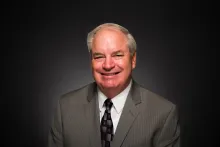
Robin Webber was born in Chicago, Illinois, in 1951, but has lived most of his life in California. He has been a part of the Church of God community since 1963. He attended Ambassador College in Pasadena from 1969-1973. He majored in theology and history.
Mr. Webber's interest remains in the study of history, socio-economics and literature. Over the years, he has offered his services to museums as a docent to share his enthusiasm and passions regarding these areas of expertise.
When time permits, he loves to go mountain biking on nearby ranch land and meet his wife as she hikes toward him.
